






Webinar Conversion Rate: Stop Losing Leads (2026 Guide)
The Ultimate Guide to Webinar Conversion Rate : Stop Losing Leads and Turn Viewers Into Buyers
Key Takeaways :
-
Webinar conversion rates are not just about the final pitch; they involve optimizing registration, attendance, retention, and post-event follow-up.
-
Average registration-to-attendee show-up rates sit between 35% and 45%, but you can scale this up with timely communication.
-
Dynamic interactive polls, real-time chat, and automated pop-up offers can boost call-to-action click rates up to threefold.
-
For professional hosts, selecting an integrated all-in-one webinar hosting tool is always the fastest way to unify your pipeline data.
-
Knowing how to organize a successful webinar from day one protects you from high lead costs and poor engagement.
Let's face the cold hard truth. Most webinars are massive leaks in terms of conversion numbers.
You spend days building a slide deck. You coordinate calendar dates, test microphones, and pour hundreds of dollars into registration ads… Then, the big day arrives.
Only a small fraction of registrants actually log in, and when you finally introduce your offer, the room goes silent. It is a painful experience that almost every digital marketer passes through at some point.
But it does not have to be that way. The top-performing online educators and course builders are not using secrets - They simply understand that your webinar conversion rate is not a single number.
It is a chain of steps, and if one link breaks, your entire sales machine stops working.
So, let us look at what is working in 2026 !
We will inspect the latest data, dismantle the common myths, and map out exactly how to convert your viewers into eager buyers without feeling like a pushy salesperson.
What is a Realistic Webinar Conversion Rate in 2026?
Go searching online, and you will find ridiculous claims. Some self-proclaimed experts boast 40% sales conversion rates from cold traffic !
Let us be realistic : Unless you are pitching a tiny group of ultra-warm buyers who already have their credit cards in hand, that is a fantasy, plain and simple.
In reality, we have to look at conversion as a multi-step journey.
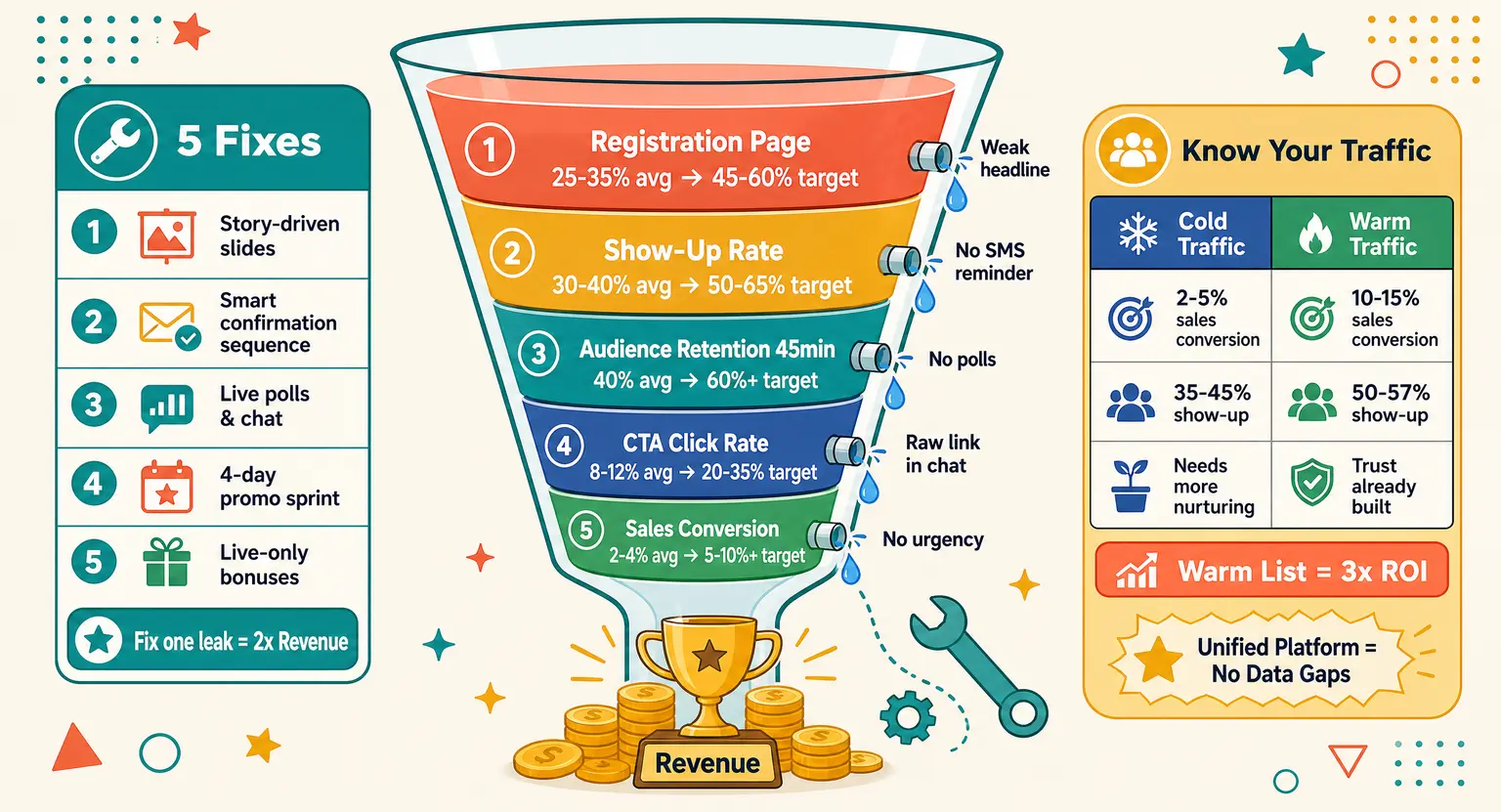
First, you have your registration page conversion rate. Typically, a high-converting landing page pulls in 30% to 50% of visitors.
Next, you face the show-up rate. Across the industry, the average live attendance hover around 35% to 45% for cold traffic, though warm traffic can pull in up to 57%.
So, what about the actual sales conversion rate? This is the percentage of live attendees who purchase your product during or shortly after the broadcast.
For cold traffic, a 2% to 5% sales conversion rate is completely normal and highly profitable. If you are presenting to a dedicated audience that already trusts you completely, that figure can easily touch 10% or more.
And this is where your choice of tech makes a real difference. If you look at real-world testimonials from course creators who switched to unified marketing backends, you will notice their numbers jump.
Why?
Because they eliminate the friction of connecting five different tools with messy integrations.
The Lifecycle of a Webinar Funnel : Where the Leaks Happen
Think of your webinar as a simple water bucket with multiple small holes. If you do not patch the holes, you will arrive at the end of the presentation with an empty bucket.
Let us trace where your leads are slipping away.
It begins with the registration page. If your headline is weak or your sign-up form asks for too much personal information, your visitors leave immediately.
Once they sign up, the battle for attention starts. People get busy, they forget, or they simply get distracted by work.
This is where a poor follow-up sequence kills your attendance numbers.
Then comes the live presentation. If your introduction drags on for twenty minutes with boring stories about your dog, you will see your attendee retention graph drop like a stone.
Finally, you have the offer phase. If your pitch is awkward or the check-out process requires ten different steps, those buyers will abandon their carts.
This is why high converting creators rely on highly optimized sales funnels. Every stage is engineered to maintain momentum, ensuring that the person who clicked your ad on Monday is the same person buying your coaching package on Thursday afternoon.
Crucial Benchmarks to Track
You cannot improve what you do not measure. To simplify your optimization process, here is a breakdown of the key metrics you should watch, alongside industry standard targets and advanced performance levels in 2026.
By carefully categorizing your analytics, you can spot the exact moment your audience loses interest.
If you have thousands of registrations but only twenty people in the room, do not touch your slides; instead, fix your reminder sequence.
If hundreds stay until the end but nobody clicks the button, focus entirely on your pricing pitch.
| Metric name | Average benchmark | High performer target | How to optimize it |
|---|---|---|---|
|
Registration page conversion |
25% to 35% |
45% to 60% |
Remove fields from the opt-in form, write a punchy benefit-driven headline, and use a fast-loading template. |
|
Live attendance show-up rate |
30% to 40% |
50% to 65% |
Send SMS reminders, use calendar invites, and offer a valuable "live-only" downloadable resource. |
|
Audience retention (45 mins) |
40% |
60% or more |
Use native engagement tools like live polls, open chats, and interactive questions to keep viewers awake. |
|
Call-to-action click rate |
8% to 12% |
20% to 35% |
Use clear, styled pop-up banners during the offer rather than just pasting a raw link into the chat box. |
|
Sales conversion rate (live) |
2% to 4% |
5% to 10% or more |
Introduce strong urgency like a limited-time bonus, and handle standard objections directly inside the Q&A. |
|
Replay watch rate (on-demand) |
25% |
45% or more |
Experiment with a live vs automated webinar setup to capture high-intent leads who cannot match your live schedule. |
5 Actionable Strategies to Explode Your Conversion Rate
Now that we have established our baseline benchmarks, let us discuss implementation. How do you move your numbers from average to outstanding?
Here are five practical, field-tested tactics that you can put into practice right away.
1. Design Slides That Tell a Captivating Story
Nobody attends a webinar to read long walls of bullet points. If your slides look like a corporate financial report from 1998, people will open another tab.
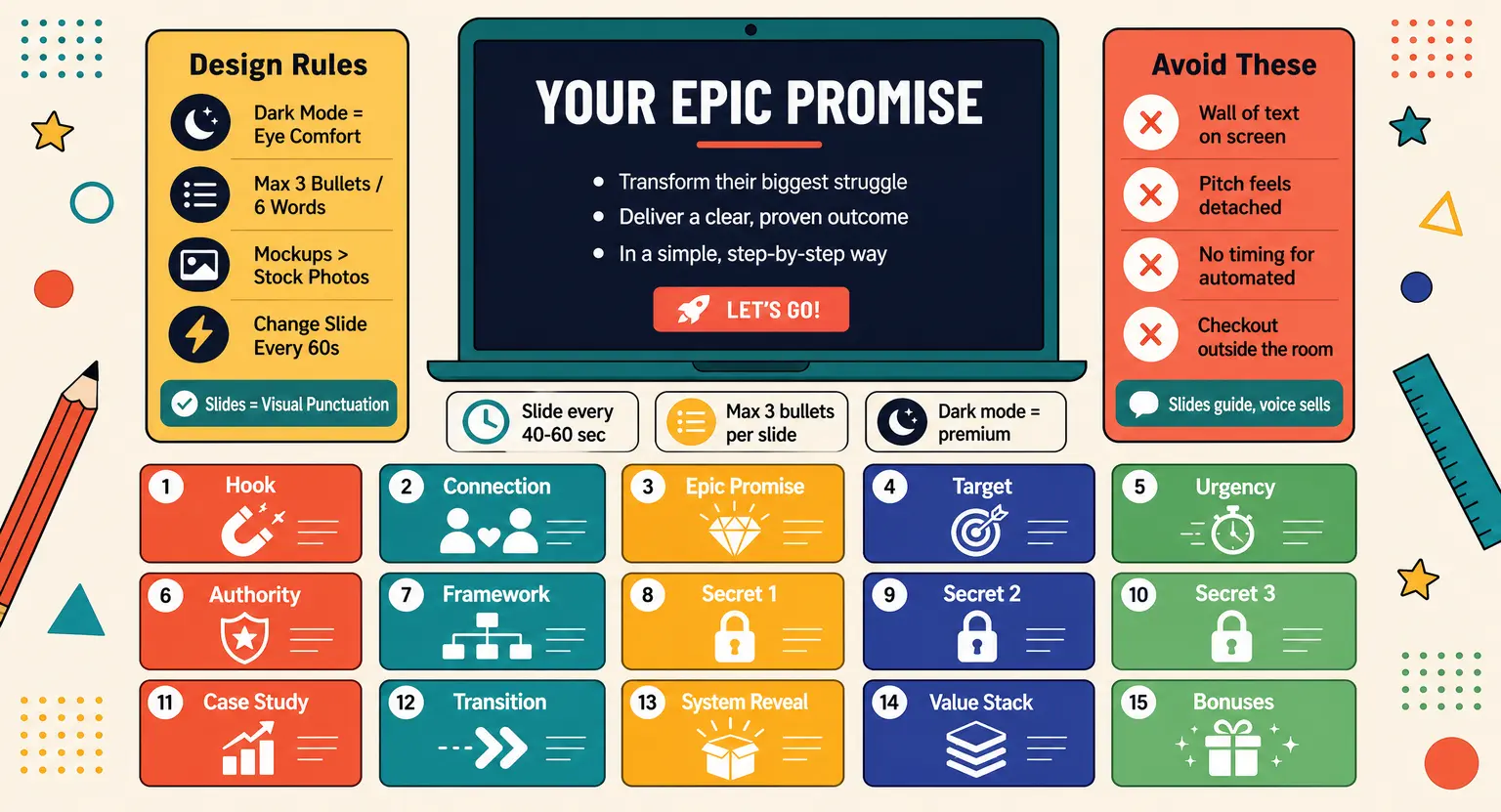
Your presentation slides should serve as visual amplifiers of your voice, utilizing large fonts, high-contrast diagrams, and relatable stories.
You should start with a proven, clean webinar slides template. Keep the design simple and let the focus remain entirely on the lessons you are communicating.
2. Implement a Smart Confirmation Sequence
Most people register for your webinar on a Monday, but by Thursday afternoon, life has gotten in the way. Do not rely on a single confirmation email to do the heavy lifting !
Instead, use a dedicated email marketing platform to schedule a strategic sequence.
Send a confirmation message immediately, follow up twenty-four hours before, then send dynamic alerts one hour and fifteen minutes before going live.
Each mailer should highlight a specific secret they will learn, building genuine excitement.
3. Leverage Interactive Engagement Features
Passive viewers do not buy. You need to keep your attendees typing, clicking, and thinking.
Fire off a quick poll within the first five minutes to get an overview of your audience's experience level. Ask questions and read out names as people answer in the live chat.
Studies show that active participation directly correlates with high conversions - When attendees interact, they feel connected to you - That connection makes your subsequent pitch feel like a natural next step, rather than a hard pivot.
4. Keep the Promotion Cycle Focused and Urgent
You must actively promote your session across all active channels, but do not start promoting too early - Industry data shows that the majority of registrations occur within the final forty-eight hours before the broadcast.
So, when you plan to promote a webinar, focus your paid ads and main list campaigns intensely over a short four-day span.
This builds a feeling of momentum and prevents your audience from putting off registration.
5. Create Urgency With True Live-Only Bonuses
If people know they can simply buy your product next week for the exact same price, they will procrastinate. Procrastination is the ultimate killer of sales funnels.
To counter this, introduce unique live-only bonuses.
This could be a thirty-minute private consulting call, a specialized template kit, or a massive discount that disappears the moment you close the broadcast window.
Make it clear that these perks will not be available in the replay.
Choosing the Right Infrastructure for Your Webinars
Many creators use separate hosting services, email systems, landing page builders, and course backends.
This is a recipe for endless data discrepancies. If your analytics do not talk to each other, you will never truly know your true webinar conversion rate, making growth impossible.
If you want to save time and sanity, search for top course platforms that provide a fully built-in webinar hosting suite alongside marketing features.
When your registrations, landing pages, tracking, and student directories always reside under the same digital roof, you can track your audience's journey seamlessly.
This kind of deep integration is exactly what we designed when building LearnyBox, giving you complete visibility over every metric without headaches and stress.
Frequently Asked Questions
What is the average webinar conversion rate?
While typical numbers vary, the average sales conversion rate hangs around 2% to 5% for cold traffic.
If you are pitching a warm or highly nurtured audience, that conversion rate can easily hover between 10% and 15%.
Keep in mind that setting the right online course pricing strategy will heavily influence this metric.
How do I calculate my webinar conversion rate?
To find your registration conversion rate, divide your total registrants by your unique landing page visits.
To calculate your sales conversion rate, divide total buyers by the number of attendees who watched the live room or replay.
Knowing how to track these ratios is a core step when planning how to launch an online course successfully.
How long should a webinar be to maximize conversions?
Historically, the sweet spot for a sales-focused webinar has been between forty-five and sixty minutes.
This window provides enough time to deliver twenty-five minutes of actionable, high-quality teaching, spend fifteen minutes presenting your product offer, and close with an interactive question-and-answer session.
Why is my webinar attendance rate so low?
Low attendance is usually caused by weak post-registration follow-up or scheduling conflicts.
Ensure you send multiple reminders across email and SMS leading up to the live session. Offering a dedicated live-only bonus will also give registrants a compelling reason to show up live instead of waiting for a replay.




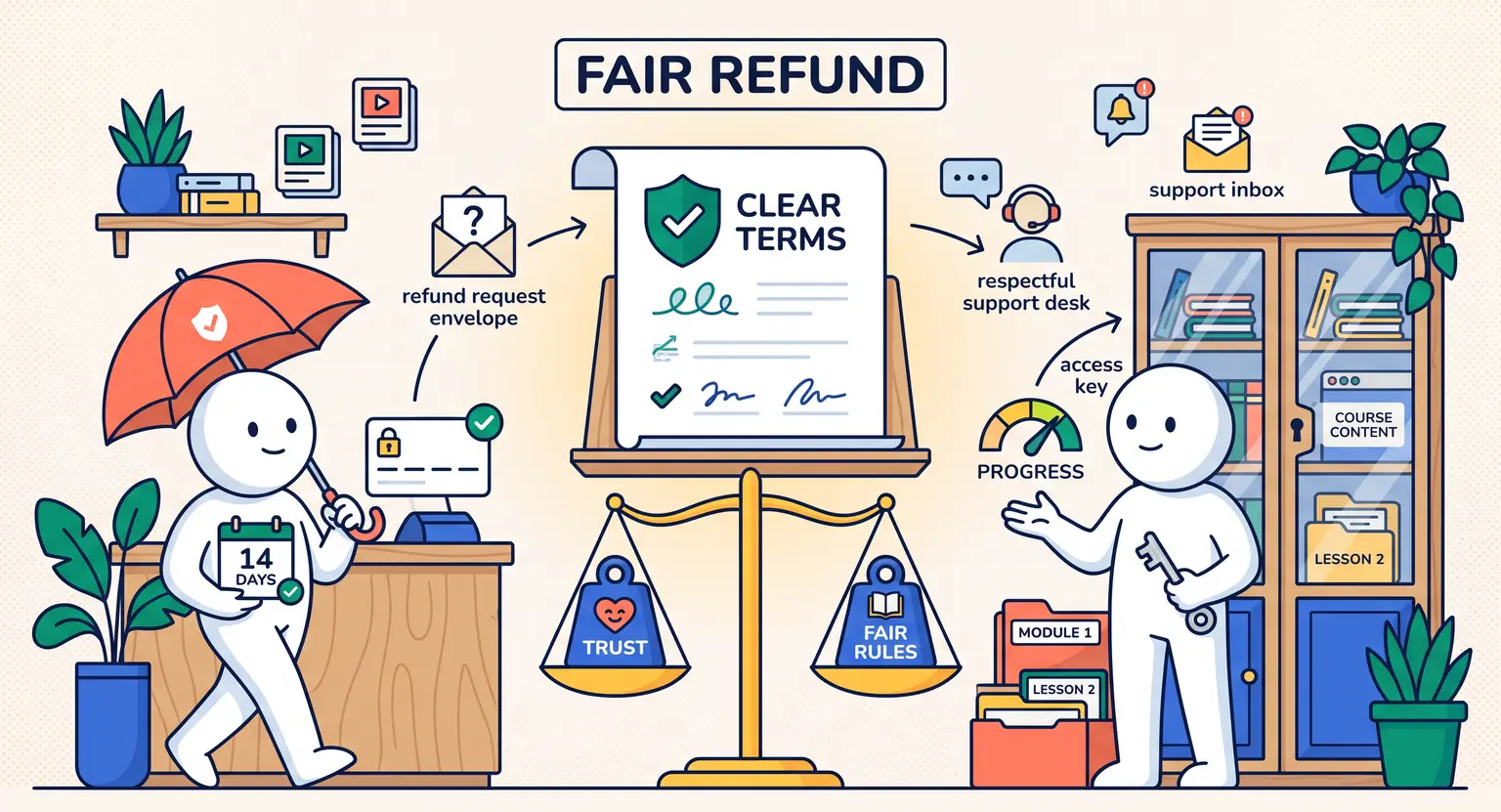 How to Create a Course Refund Policy (Templates & Best Practices for 2026)
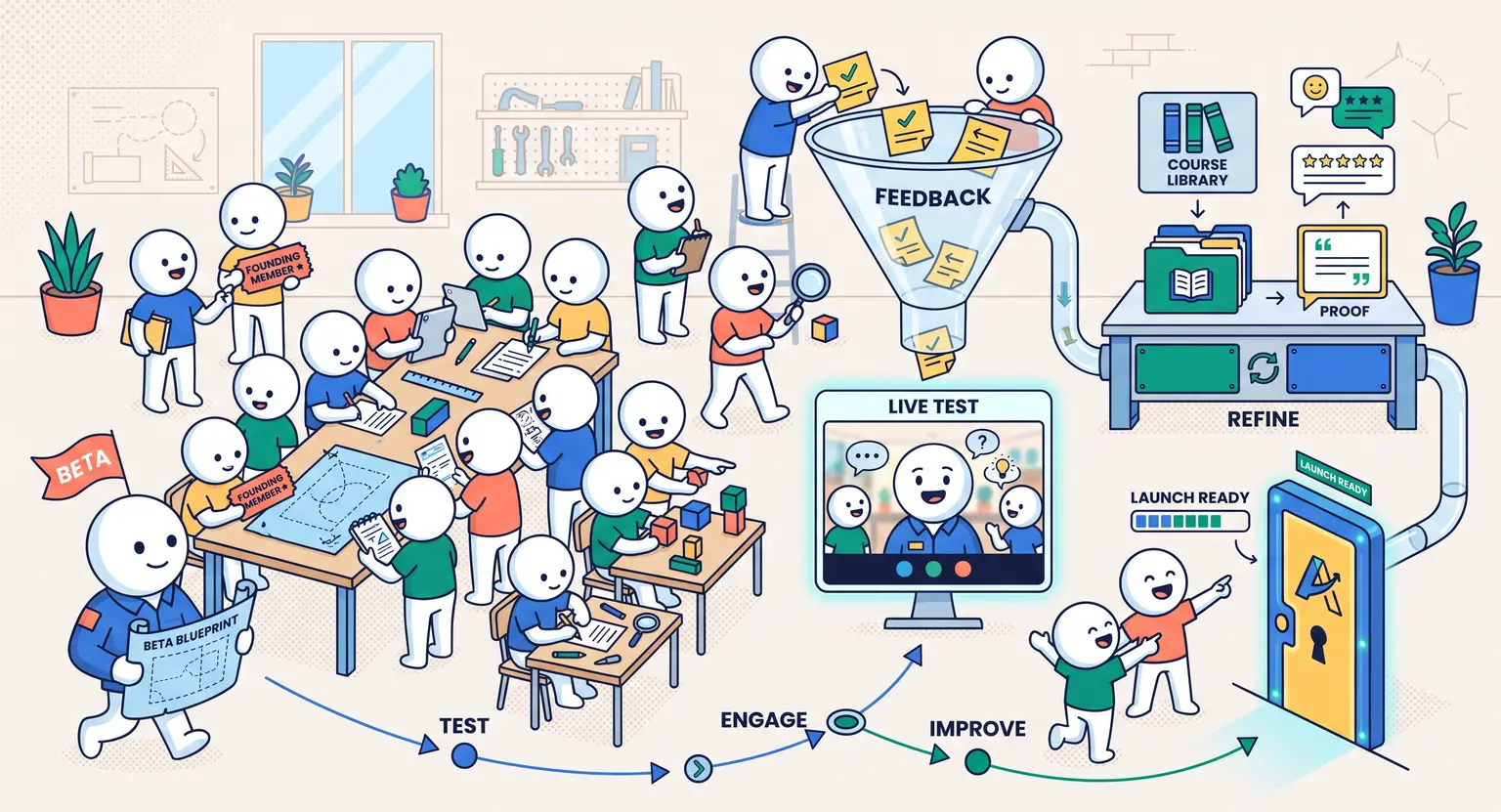 How to Run a Beta Version of an Online Course (2026 Guide)
 How to Create a Cohort-Based Online Course (2026 Guide)
 How to Sell an Online Course With a Quiz Funnel (2026 Guide)
 How to Sell an Online Course Through a Sales Call (2026 Guide)