







Create an Online Course Platform: the Complete Guide
How to Create an Online Course Platform in 6 Steps
Over the past few years, online learning has shifted from a niche alternative to a default choice - for professionals, companies, and freelancers alike. People are learning online. And increasingly, they're teaching online too.
This isn't just a trend - it's the natural result of a new generation of online training tools (SaaS platforms) that have made it easier than ever to package your knowledge and turn it into a real source of revenue.
But there's a gap between having a great idea and running an online course platform that actually performs. A lot of people underestimate it. E-learning isn't just "putting videos online" - it's a complete project with educational, technical, and commercial dimensions.
Think of it as an ecosystem to build, not just a tool to set up.
This guide walks you through the key steps to creating your own online course platform and monetizing your expertise - step by step, without the fluff.
The goal isn't to sell you a dream. It's to give you a clear, realistic, and immediately actionable roadmap for building a high-quality, sustainable, and profitable online training platform.
1. Start with the Right Foundation: Niche, Audience, and Real-World Value
Before you open any video editing software or pick a platform, you need to answer two questions that sound simple - but will shape everything that follows.
Who exactly are you teaching?
The market for online learning is huge - but being a generalist won't get you far. The creators who get the best results pick a specific audience, a specific niche.
For example, don't target "anyone who wants to learn marketing." Think instead:
-
independent restaurant owners who want to master Instagram,
-
career changers who want to get traction on LinkedIn,
-
graphic designers looking to integrate AI into their workflow,
-
HR professionals who need to build an onboarding process from scratch,
-
and so on.
Sharp positioning means your message lands with the right people - and your competition shrinks dramatically.
Does your expertise solve a real problem?
You're about to invest serious time building a course. Before you do, make sure there's a real market for what you want to teach.
Concretely, that means:
-
looking at what already exists,
-
understanding what students love - and what frustrates them - about existing courses in your space,
-
asking your target audience direct questions: their pain points, expectations, price sensitivity, preferred formats,
-
testing your concept with a mini-course or a live webinar.
If people are excited before the product even exists, you're onto something.
2. Design an online Course That Delivers Real Results
You can have deep expertise and still create a mediocre online course. What separates great training from forgettable training is instructional design.
Start with clear learning outcomes
Ask yourself one question: what will your student be able to do by the end?
Not in theory - in practice.
The more concrete and measurable the outcome, the more valuable your course will feel - and the more likely students are to complete it and recommend it to others.
Build a clear, forward-moving structure
Many online course creators assume "more modules = more value."
The reality? It's the opposite.
Your course should build momentum, not lose it.
A solid starting framework looks like:
-
4 to 8 modules,
-
short lessons (10–15 minutes each),
-
a mix of formats to keep things engaging,
-
practical exercises - even simple ones - that reinforce learning.
Video is important, but it shouldn't be your only medium. Layer in:
-
downloadable resources,
-
checklists,
-
short knowledge checks,
-
case studies,
-
a community forum, or live Q&A sessions.
Training sticks when students do something, accomplish something, and experience early wins - not just when they passively watch and listen.
3. Choose a Business Model That Fits Your Goals
Your expertise deserves to be properly rewarded - but you need to pick the right model for how you want to sell your online courses.
One-time course sales
Best suited for a well-defined topic with a clear promise - easy to understand, easy to buy.
Subscription access
Works well for a growing catalog or an engaged community. Revenue is more predictable, but the model demands a steady output of new content or a strong ongoing presence.
Certification programs
Highly valued in B2B contexts. Commands higher prices and deeper student commitment.
Hybrid model
Often the most flexible and scalable option:
-
a catalog of standalone online courses,
-
one or two premium programs,
-
one-on-one or small group coaching for students who want to go deeper.
Tiering your offer lets you serve different student profiles without stretching yourself too thin.
4. Technology: Your Tools Should Serve Your Teaching - Not the Other Way Around
The right platform to sell your online courses saves you time. The wrong one costs you time you don't have.
As an online course creator, the ideal LMS (learning management system) should give you:
-
an intuitive course builder with no technical complexity,
-
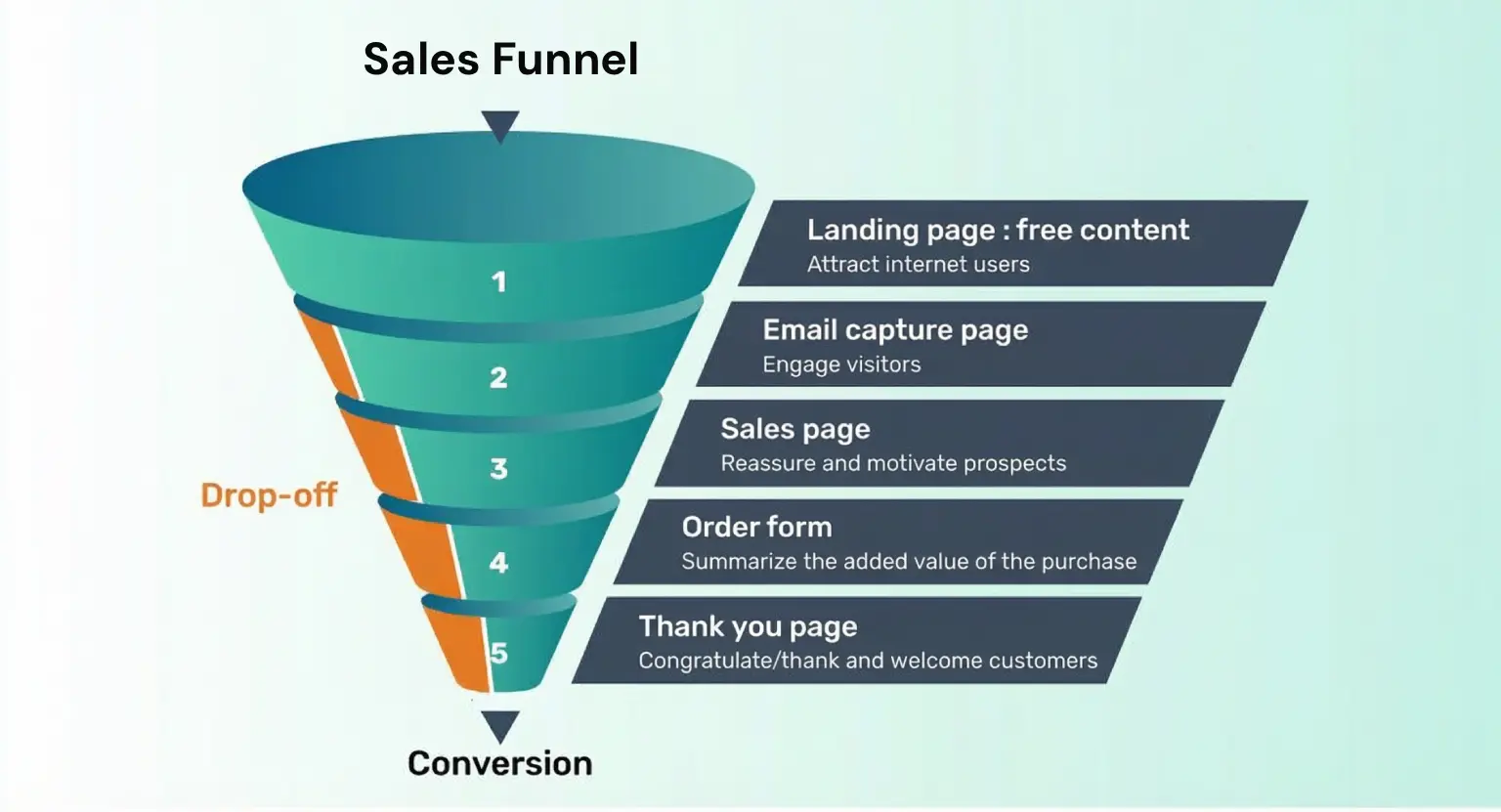
built-in landing pages and sales funnels,
-
a capable, easy-to-use email marketing tool,
-
branding options that let you make the space your own,
-
affiliate management, payment processing, webinars, and more.
For your students, it should offer:
-
a clean, uncluttered interface,
-
seamless mobile access - ideally a dedicated app,
-
intuitive navigation,
-
one central space to find, track, and manage everything.
A quick look at the main options:
-
Marketplaces: useful for validating an idea, but you don't own your audience.
-
WordPress + plugins: powerful and flexible, but time-consuming to build and potentially expensive to maintain.
-
DIY stack: Teams here, Livestorm there, Brevo on one side, Skool on the other, OVH in the middle... Doable, but you'll end up paying for multiple subscriptions and spending more time on integrations than on your actual content.
-
All-in-one platforms: the right choice for 90% of creators. Everything lives in one place, and the entire product is designed to help you grow your business as smoothly as possible.
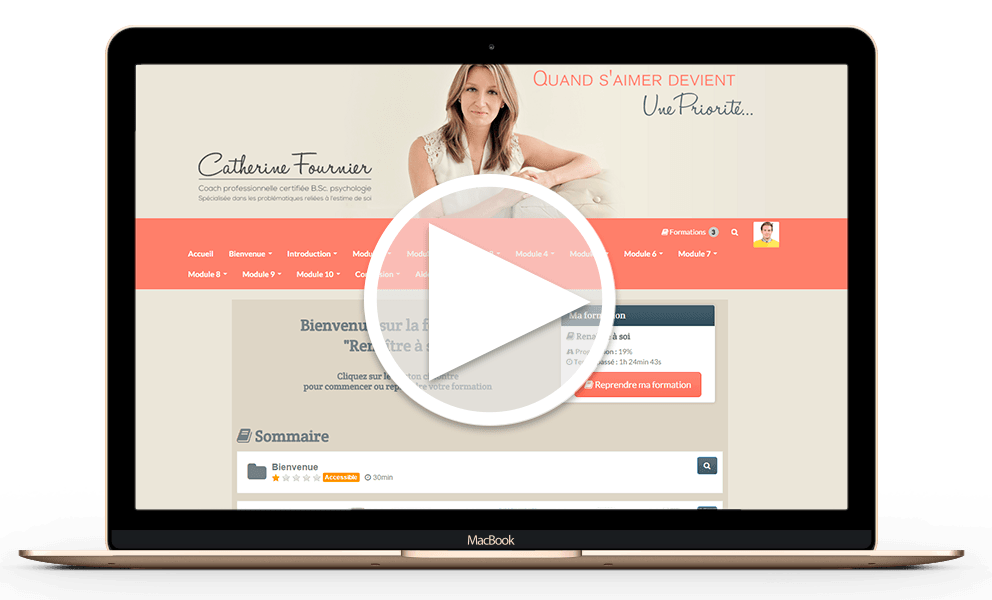
LearnyBox was built with exactly this in mind: a simple, powerful platform with an integrated CRM, landing pages, sales funnels, marketing automation, a white-label e-learning environment, a dedicated mobile app (depending on your plan), and rock-solid technical reliability.
Whether you're just starting out or already scaling, it make things a lot easier.
5. Centralize Everything to Build a Real Online Academy
Most creators start with a patchwork of tools - then quickly discover it's unmanageable: one tool for email capture, another for newsletters, one for video hosting, one for community, one for invoicing...
There are always sync issues. There's always context-switching. And it never quite works the way it should.
A centralized platform changes the game:
-
one workspace to manage everything,
-
a consistent, unified experience for your students,
-
stronger brand coherence,
-
less technical risk,
-
easier maintenance,
-
and above all: the ability to scale your business as the platform evolves with the market.
6. Launch Your Online Courses Platform and Attract Your First students
Great content alone won't make you stand out. Your launch needs to feel like an event - and your sales page is the front door.
Three elements drive 80% of conversions:
-
a clear, compelling promise,
-
transparent content breakdown,
-
strong social proof.
Add a single focused call to action, a guarantee if relevant, and a logical page flow that builds momentum toward the purchase.
Getting your first customers
Your first students won't come from ads - they'll come from you: your professional network, past clients, and social media accounts.
Invite them to a launch webinar or a masterclass.
Warm them up with a sequence of free content before your official launch.
Then amplify with:
-
targeted paid ads (Meta Ads, for example, across Facebook and Instagram),
-
an affiliate program,
-
consistent content marketing,
-
strategic partnerships.
Every channel has its own rhythm. What matters most is showing up consistently.
Ready to Build Your Online Course Platform?
Building an online training platform takes time - time to test, iterate, and learn from your first students. The early stages can be rough, and that's completely normal. But if you move forward step by step, you'll build something solid and sustainable.
Your expertise deserves to reach people. And with the right structure, the right tool, and a genuine desire to guide your students to results, it can genuinely change lives.
If you want one centralized, professional space that's easy to manage from day one, an all-in-one platform like LearnyBox lets you focus on what actually matters: your content, your teaching, and your students.
The next step?
Stop planning and start launching.
You already have the expertise. Now give it somewhere to live.
Ready to get started?
✨ Get started for free with Learnybox ✨
FAQ - Creating an Online Course Platform
1. Where do I start if I've never created an online course before?
Start by validating your idea - not with assumptions, but with real conversations. Talk to people in your network, run a quick survey, or reach out to a handful of potential students.
If you get positive signals, nail down your niche and the specific problem you're solving.
From there, sketch out a simple course outline: your main modules, key milestones, and a few lesson ideas. It doesn't need to be perfect - it needs to be actionable.
Then choose a platform that won't slow you down. An all-in-one solution like LearnyBox keeps you focused on your content instead of wrestling with the tech.
2. How long does it take to create an online course?
It depends on the scope of the project and how much time you can dedicate, but as a general guide:
-
20–40 hours for a short course (2–4 weeks of part-time work).
-
60–120 hours for an intermediate course (1–2 months).
-
150–300 hours for a full program (3–6 months).
Recording and creating course materials takes up the bulk of that time. The key lesson most creators learn the hard way: a solid "version 1" launched on time beats a perfect course that never ships.
You can always improve it based on real feedback from real students.
3. How do I price my online course?
Pricing depends on the transformation you deliver, what the market benchmarks look like, your target audience, and how much support is included. There's no magic number - only prices that fit (or don't).
Rough benchmarks:
-
Self-paced courses: $50–$500.
-
Coached programs: $500–$5,000+.
Start with a reasonable price, adjust after your first cohort, and consider offering two or three tiers (Core, Premium, VIP) to appeal to different student profiles and budgets.
4. Which platform should I use to create an online course?
All-in-one platforms like LearnyBox bundle everything you need - course hosting, sales funnels, email marketing, website builder, and in some cases a dedicated mobile app - into a single tool.
For most creators, that means less time on integrations and more time on content.
For the vast majority of course creators, an all-in-one solution is the most efficient path forward.
5. How do I attract my first students if I don't have an audience yet?
Activate your existing network first: former colleagues, past clients, LinkedIn connections. Start publishing free content consistently to demonstrate your expertise, then build toward a structured launch - a webinar, a content series, or a time-limited offer to create urgency.
Once you have early traction, use social media and a modest ad budget to test your messaging and scale what works.
6. Should I sell on my own platform or through a marketplace like Udemy?
Marketplaces bring traffic quickly, but they take a significant cut and own the customer relationship.
With your own platform, you keep more of your revenue and build your brand and email list - but you're responsible for your own marketing.
A smart approach: use a marketplace to validate your idea and get early reviews, then migrate to your own platform to build a business you fully own and control.
7. How do I build a real community around my online course platform?
Give students a dedicated space to connect - a private group or an integrated community feature.
Show up there regularly and create recurring touchpoints: live Q&As, workshops, challenges, and so on.
Celebrate student wins publicly, keep adding fresh content, and actively encourage collaboration between members.
An engaged community is one of the most powerful drivers of retention and word-of-mouth growth.