







Create Your Own Branded E-Learning Platform
Build Your Own E-Learning Platform with a White-Label LMS
Picture this: you've spent weeks - sometimes months - designing a solid, effective online training program for your learners. The content is sharp, the videos are polished, and you're genuinely proud of what you've built.
Then comes the moment you share it with your first major client. You send them the link, they click... and land on a login page bearing someone else's logo - the LMS (Learning Management System) you used to create your e-learning platform.
Once inside, it's the same story : the interface, the colors, the URL - everything reflects the LMS publisher's brand. Yours appears, at best, tucked into a corner of the screen. You created the content, but in the mind of the learner - and the client - it's the platform that takes center stage.
In a digital training market worth nearly €400 million in France alone, that kind of invisible branding isn't a minor inconvenience. Standing out, controlling your image, and building equity in your own brand is a strategic issue, not just a cosmetic one.
So how do you turn your expertise into an asset that actually belongs to you, rather than one that lives under someone else's name? The answer is strategic: the white-label e-learning platform.
Far beyond a simple branding exercise, white labeling can become a powerful lever for growth, credibility, and long-term brand value.
In this guide, we'll cover why this approach matters, walk through the five pillars of an effective white-label LMS, and lay out a practical six-step roadmap to building your own white-label e-learning platform.
1. Why Build a White-Label eLearning Platform?
Choosing a white-label LMS solution isn't just a tool decision - it's a model decision. It's the difference between building a long-term asset and simply renting someone else's infrastructure.
Here are the four core benefits of going white label.
1.1. Own your brand identity and build real credibility
Generic LMS platforms have a fundamental problem: they eclipse your identity instead of amplifying it.
When learners log into a space dominated by a third-party publisher's branding, it's not your name they associate with the learning experience - it's the platform's. Your logo, colors, and visual identity fade into the background.
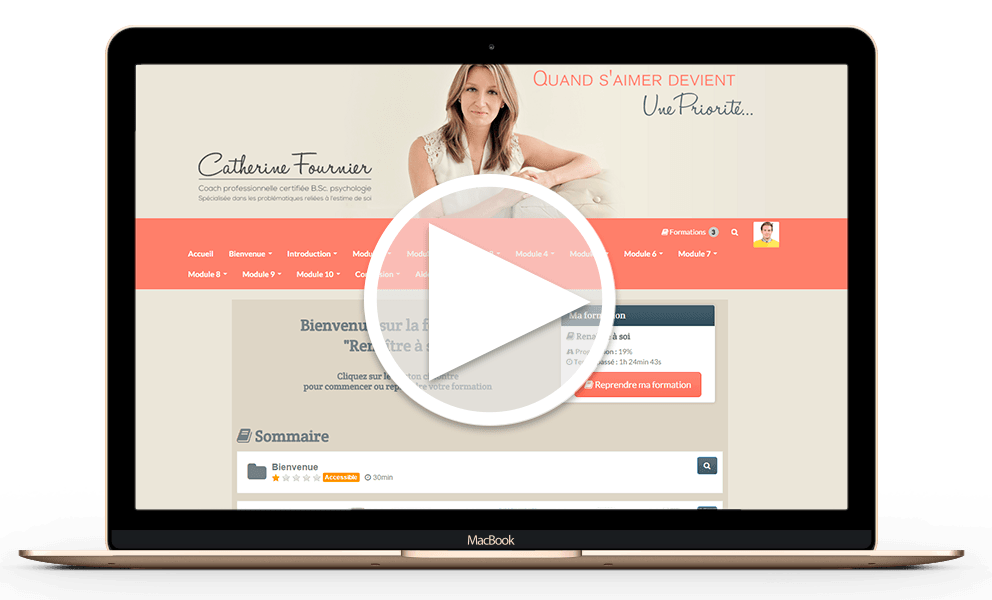
A white-label e-learning platform puts your identity front and center. Your visuals, your color palette, your domain name. Every touchpoint - from the login page to the completion certificate - is fully on-brand.
Every login, every completed module, every automated email becomes a brand impression. Over time, that compounds into something real and valuable: your expertise becomes inseparable from an environment that clearly bears your name.
1.2. Deliver a seamless, professional learning experience
In many organizations today, the learner journey goes something like this: they discover your offering on your website, explore your content, get excited about what's possible... and then, the moment they take action, they're redirected to an entirely different platform that looks nothing like what they just saw.
That break isn't just jarring aesthetically - it actively disrupts the experience. Some learners hesitate: "Is this the right place? Am I still with the same provider? Who's actually behind this training?"
A white-label platform eliminates those questions entirely.
Learners stay in your environment from first click to final certificate - discovery, registration, course access, progress tracking, certification. Everything flows. That consistency builds perceived professionalism, reduces friction, and keeps dropout rates down.
1.3. Stand out in a crowded market
When hundreds of training organizations are all running on the same handful of LMS platforms, their learner experiences start to look identical. Same interface, same layout logic, same page templates - only the module thumbnails change.
In that context, an e-learning platform that genuinely reflects your brand becomes a real differentiator. It signals your positioning: more premium, more considered, more aligned with what your audience actually expects.
That can translate directly into higher prices - and into attracting clients who are looking for a complete experience, not just a library of online videos.
Done well, white labeling communicates something simple and powerful: "We don't just sell content. We have our own training system."
1.4. Build a business asset, not just a content catalog
This point doesn't get nearly enough attention. When you use a generic third-party LMS without white labeling, you're paying a subscription, building a client base, investing in content... but the core asset - the platform itself, the infrastructure - doesn't belong to you.
With a white-label platform, you're building something that goes well beyond a "training catalog." You're building:
-
your own learner database,
-
a training environment that carries your brand,
-
structured, proven learning paths,
-
a reusable, exportable, and genuinely valuable customer experience.
If you ever sell the business or raise funding, that kind of asset carries real weight. You're no longer just offering online training - you have a named academy that belongs to you.
Generic LMS vs. white-label LMS: what actually changes
The core difference: on a generic platform, your brand is incidental. On a white-label platform, it's the thread running through the entire experience.
In practice, moving to white label means:
-
brand visibility goes from near-zero to total
-
perceived credibility shifts from the publisher to you
-
your ability to differentiate increases significantly
-
you gain real control over the experience and the data
-
what you're building has measurable value, rather than essentially none.
The upfront cost may be slightly higher - but the ROI over a few years is typically far greater.
2. The 5 Pillars of a Successful eLearning Platform
A true white-label LMS goes well beyond slapping your logo in the corner of the interface. For it to actually support your strategy long-term, five pillars need to be in place.
Pillar #1: Deep, genuine visual customization
Surface-level customization - swapping out a primary color and uploading a logo - doesn't cut it.
What you actually need is the ability to:
-
display your logo prominently on every key page
-
apply your full color palette to buttons, headings, and interface elements
-
use your brand fonts or a close match
-
operate on your own domain - for example, academy.yourcompany.com or yourcompany.com/academy.
Automated emails are part of this too: confirmations, reminders, password resets - all of it should go out from your own address and carry your signature.
No mention of the publisher should ever reach your learners. When that's all dialed in, the environment you've built genuinely feels like yours.
Pillar #2: Full autonomy over your content
For your platform to be a tool rather than a constraint, you need to stay in complete control of your content at every level.
Concretely, that means:
-
a course editor your team can use without technical skills
-
the flexibility to structure courses your way (modules, chapters, prerequisites, assessments)
-
support for multiple formats: video, audio, PDF, quizzes, and SCORM if needed
-
the ability to push updates immediately, without going through the publisher's support queue.
The faster your team can adapt content, the better you can respond to market shifts, regulatory changes, or new client needs.
Pillar #3: Complete ownership of the customer relationship
This one matters more than it might seem. Your learners - whether they're individual consumers, employees, or corporate clients - need to remain your customers, not the platform's.
A genuine white-label LMS should guarantee that:
-
the user database belongs entirely to you
-
you can export that data whenever you need to
-
all communications go out under your name
-
the publisher never uses your learner base to market its own services
-
no third-party advertising appears anywhere in the experience
In short: the publisher runs the infrastructure. You own the relationship and the data.
Pillar #4: Scalability and rock-solid technical performance
Even the most beautifully branded platform is worthless if it slows to a crawl or goes down the moment traffic spikes.
Key things to verify:
-
page load speed, especially for learners on slower connections
-
hosting quality, server redundancy, and backup policies
-
compliance with current standards (GDPR in Europe, data protection requirements)
-
actual uptime commitment - 99.9% is the benchmark to look for.
The goal is for the technology to be reliable enough to be invisible. Learners focus on the content. The tool just works.
Pillar #5: Clean integration with your existing tech stack
Your e-learning platform doesn't exist in isolation. It sits inside an ecosystem of tools: CRM, email marketing, payment processing, webinars, analytics, and more.
A strong white-label solution should connect to your existing systems cleanly, through native integrations or a solid API.
That means being able to:
-
sync learner data with your CRM
-
automate email sequences triggered by learner behavior
-
track payments and access rights in one place
-
analyze learning behaviors and tie them to real business outcomes.
Every manual task you eliminate is time you get back to focus on what actually creates value: designing, delivering, and improving your training programs.
White label, co-branding, generic solution: what's the actual difference?
These terms often get used interchangeably, but they describe meaningfully different things.
White label: the publisher provides the technology, but your learners only ever see your brand. The interface, domain name, emails - everything is in your name, with no trace of the underlying tool.
Co-branding: your logo is present, but so is the publisher's. It might appear in the footer, in emails, or on the login page. You're in a partnership model, not one of full ownership.
Generic platform: you use the solution as-is. The publisher's identity is front and center. Your brand is limited to the content itself.
Knowing exactly where a solution falls on this spectrum will save you from some unpleasant surprises down the road.
3. Build Your E-Learning Platform in 6 easy Steps
This might look like a big undertaking from the outside - but broken down into phases, it's entirely manageable. Here's how to approach it.
Step 1: Get clear on your strategy and goals
Before any technical conversation, take the time to define your framework:
-
Who is the platform primarily for: B2B clients, B2C learners, or an internal team?
-
What kind of training will you offer: short courses, certification programs, long-form curricula, hybrid formats?
-
What's your business model: one-time sales, subscriptions, enterprise licenses, or a mix?
-
How many learners are you aiming to serve in the next one to three years: tens, hundreds, thousands?
The answers shape your functional requirements and directly inform which LMS solution makes sense.
Step 2: Choose the right technical solution
This decision will shape your trajectory for years, so it deserves real attention.
Use the five pillars above as your evaluation framework. A few things worth scrutinizing closely:
-
whether a solution is genuinely white label or just a superficial reskin
-
pricing transparency (some publishers charge extra for bandwidth, user numbers, or modules)
-
how the interface actually feels for your team and for learners - not just in a demo
-
the real-world quality of support, not just the promises in the brochure
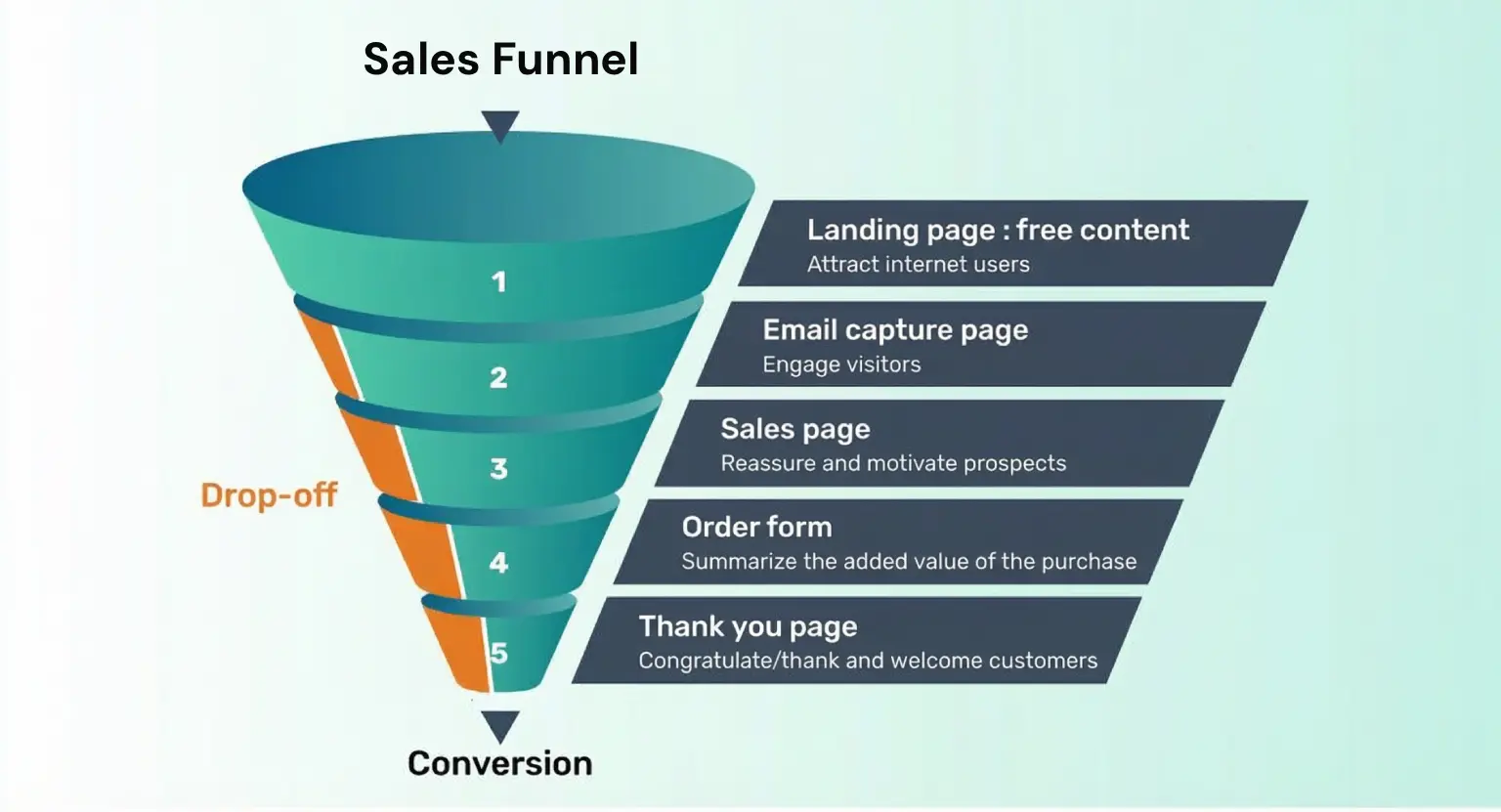
All-in-one solutions like LearnyBox are worth a close look here: they combine the LMS and course hosting with marketing tools, sales funnels, automated email sequences, and live or replay webinars - all within a single white-label environment.
Step 3: Make the platform yours
This is when your platform starts to actually look and feel like your brand.
This phase typically covers:
-
setting up your custom domain or subdomain,
-
uploading your logo,
-
applying your color palette,
-
adapting the key pages (homepage, catalog, login screen, member area),
-
customizing all automated email templates.
Depending on your LMS and how specific your requirements are, this usually takes a few days to a week. It's worth doing well - it sets the first impression every learner will have of your academy.
Step 4: Build and structure your first content
The temptation at this stage is to put everything in at once. Resist it. Start with a focused set of well-designed, well-structured courses.
Pick two or three pilot programs that represent your offering well. For each one:
-
define a clear structure,
-
mix formats (videos, written materials, quizzes, exercises),
-
build in an evaluation or validation mechanism,
-
pay attention to module introductions and transitions.
The goal isn't to have your full catalog live on day one - it's to deliver a genuinely strong learning experience that you can build out from there.
Step 5: Run a beta with a pilot group
Before the full launch, a controlled test phase is worth the time. Reach out to a small group of loyal clients, partners, or willing beta testers.
Offer free or discounted access in exchange for detailed feedback on:
-
ease of use
-
how smooth the user journey feels
-
clarity of the content
-
overall perceived quality
Give yourself a few weeks for this phase, followed by a round of fixes. The feedback you collect here will let you resolve the friction points that would otherwise quietly undermine the experience once you're fully open.
Step 6: Launch - and keep promoting
Going live isn't the finish line. It's the starting point.
To get the word out, consider:
-
emailing your existing client base to introduce the platform,
-
hosting a webinar to walk people through the training space,
-
running a limited-time launch offer,
-
updating your website to feature your academy prominently,
-
activating targeted campaigns - LinkedIn works well for B2B audiences.
From there, promotion is an ongoing effort: SEO around your training topics, strategic partnerships, thought leadership, free content. The platform is a foundation - you still need to bring people to it.
4. Three Mistakes to Avoid for your eLearning Platform
These come up consistently in digital training projects. Being aware of them makes them easy to sidestep.
Mistake #1: Neglecting the mobile experience
A significant - and in some demographics, majority - share of learners now access content on a smartphone. If your platform isn't genuinely mobile-friendly, you'll create frustration from day one.
Awkward navigation, unreadable text, videos that won't load, bugs, slow performance - any of these will drive learners away. Your LMS should offer a high-quality responsive interface, or better yet, a dedicated mobile app for your training courses.
Mistake #2: Underestimating the marketing side
Building a great e-learning platform is half the job. The other half is attracting learners, converting them, delivering a great experience, and keeping them coming back.
Without a solid marketing strategy - the right offers, effective sales funnels, lead magnets, email campaigns, webinars, partnerships, SEO - a platform can sit mostly empty despite excellent content.
This is where LMS solutions with built-in marketing and sales tools have a real edge over piecing together a stack of separate services you constantly have to keep in sync.
Mistake #3: Building everything from scratch yourself
The idea of building a fully custom e-learning platform is appealing in theory. In practice, it almost never makes sense - unless software development is your actual core business.
Development, maintenance, security updates, infrastructure, support - the costs stack up quickly. And while you're managing all that, you're not doing what actually creates value for your clients: designing the curriculum, refining the pedagogy, and supporting your learners.
A robust, proven SaaS solution frees you to focus on what you do best.
Your Brand Deserves Its Own eLearning Platform
Building a white-label e-learning platform is no longer a project reserved for large organizations with in-house tech teams. Today's LMS solutions have made this approach accessible to businesses of every size.
When you choose an LMS that lets you:
-
own your brand identity,
-
deliver a seamless and professional experience,
-
keep full control of your customer relationships,
-
and build a valuable digital asset,
you stop simply "using a platform" and start executing a real brand strategy in the training space.
In a competitive market, your brand is one of your most valuable assets. With a white-label platform, every login, every completed lesson, every certificate issued becomes an opportunity to strengthen it.
LearnyBox: The All-in-One Solution for Your White-Label Academy
Among the options on the market, LearnyBox is built specifically for this challenge.
You get a space that is:
-
fully customizable with your branding,
-
accessible via your own domain name,
-
completely invisible as LearnyBox to your clients and learners,
-
and integrated with everything you need: course creation, learner management, sales funnels, webinars, affiliate programs, email automation, assessments, gamification.
The infrastructure runs quietly in the background. Your expertise and your brand take center stage.
Hundreds of training organizations, consulting firms, and companies already use this kind of solution to deliver content under their own banner - without the complexity of managing multiple tools.
Ready to build your own academy?
✨ Book your custom demo and get started ✨
FAQ - White Label eLearning Platform
1. What is the difference between a white-label platform and a generic platform?
A white-label e-learning platform is fully customized to your brand - logo, colors, domain name - with no mention of the publisher visible to your clients or learners.
A generic platform displays the publisher's branding and severely limits your customization options. White labeling lets you build your own identity; a generic platform keeps you dependent on someone else's.
2. How much does it cost to create a white-label e-learning platform?
Costs vary by solution. All-in-one SaaS platforms like LearnyBox offer plans ranging from roughly $400 to $1,500 per month depending on features and user volume.
Building a fully custom solution typically runs between $30,000 and $150,000. For most organizations, a white-label SaaS solution delivers the best value for money with a much faster path to ROI.
3. Do I need technical skills to manage a white-label platform?
No. Modern solutions are designed to be usable without any technical background. You can build courses, customize the look and feel, and manage learners through a straightforward visual interface.
The initial setup - custom domain, branding - may benefit from a little guidance, but day-to-day management is accessible to any team.
4. Can I migrate my existing courses to a white-label platform?
Yes. Most white-label LMS platforms support importing content in a range of formats - videos, PDFs, SCORM packages. If your courses are currently hosted elsewhere, you can export and reimport them.
Some providers, LearnyBox included, offer migration support to make the transition straightforward and prevent data loss.
5. How can I verify that my platform is truly white label?
Run through this checklist:
-
Is your logo the only one visible on all pages?
-
Are you using your own domain?
-
Do all automated emails come from your address with no mention of the publisher?
-
Can your learners identify the underlying technology?
-
Are the legal notices your own?
If all five answers are yes, you have a genuinely white-label platform.
6. How long does it take to launch a white-label platform?
With a turnkey SaaS solution, you can go live in 2 to 6 weeks.
A typical timeline: 1 week for visual customization and technical setup, 2-3 weeks to build your first training content, 1 week of beta testing with a pilot group, then the official launch.
If your content is already ready, you can cut that down to 10-15 business days.
7. Is a white-label platform GDPR-compliant?
Yes, provided you choose a reputable publisher that hosts data in Europe and meets GDPR requirements.
Make sure learner data is stored on European servers, that you can export and delete data at any time, and that the platform includes the consent and cookie management tools you need.
Professional solutions like LearnyBox are built with GDPR compliance in mind and give you the tools to meet your legal obligations.
Have more questions about building your white-label e-learning platform?
Book a free meeting with our Expert