






How to promote an Online Course
8 Key Steps to Promoting Your Online Course
You did it. Weeks - maybe months - of work. The content is solid, the videos are polished, and you're proud of what you've built. You hit publish, share the link... and then nothing. The sales counter doesn't move.
This happens to thousands of course creators every day. And the reason is almost always the same: a great course doesn't sell itself. Building it is only 50% of the work. The other 50% - the part most creators skip - is promotion.
In a market where new courses launch every single day, even the best content in the world will stay invisible without a solid marketing strategy behind it. The good news? You don't need a big budget or a marketing degree to make it work.
This guide walks you through eight concrete, actionable steps to promote your online course, attract your first students, and build a sales system that runs even when you're not at your desk.
Step 1: Define Your Target Audience and Your Message
Before you think about posting on Instagram or running an ad, this is the step that makes everything else work. Promoting without knowing who you're talking to - and what problem you're actually solving - is like firing an arrow with your eyes closed. You'll waste time, energy, and money.
Three questions to answer before you write a single word of marketing copy:
1. Who is your ideal student?
Not "everyone" - be specific. Picture this person: how old are they, what do they do, what's their skill level? What frustrates them, what are they afraid of, what do they want? Give them a name. For example: "Alex, 34, works in marketing, dreams of becoming a freelance designer but doesn't know where to start."
2. What specific problem are you solving?
Your message needs to be laser-specific. "I sell photography training" tells your audience nothing. "I help enthusiastic beginners shoot stunning landscape photos - no professional equipment needed" is a message that lands. The difference is enormous.
3. What transformation do you promise?
Your student is at point A - frustrated, stuck, unsure where to begin. Your course takes them to point B - confident, skilled, moving forward. Summarize that journey in a single sentence: "By the end of this course, you'll go from 'I have no idea where to start my career change' to 'I have my first interior design client.'"
This clarity work is the foundation of everything. Every ad, every email, every social post gets better when you've done it. Tools like LearnyBox also let you segment your contacts and send even more targeted messages to each type of prospect.
Step 2: Build a Sales Page That Converts (Your 24/7 Salesperson)
Every promotional effort you make - ads, emails, social posts - funnels into one place: your sales page. If that page doesn't do its job, all the traffic you drive to it is wasted. Think of it as your most important salesperson. It never takes a day off, and it needs to be excellent.
The 7 essential elements of a high-converting sales page:
-
A promise-led headline. Lead with the transformation. Skip vague intros. Example: "Become an Interior Designer and Build a Career You Love - in 6 Months, No Degree Required."
-
A short intro video (optional but powerful). 2-3 minutes where you introduce yourself and explain what's possible. Video builds emotional connection faster than any written paragraph.
-
The problem and your solution. Describe your ideal student's frustrations in their own words - then position your course as the clear, structured answer.
-
Detailed course content. Break down the modules, video hours, downloadable resources, and bonuses. Be generous with the details - it builds confidence.
-
Social proof. Specific, outcome-focused testimonials from early students or beta testers. Screenshots of real messages, short video clips - anything that shows results, not just enthusiasm.
-
A money-back guarantee. A 14- or 30-day satisfaction guarantee is the fastest way to remove purchasing hesitation. If you believe in your course, you have nothing to lose - and plenty to gain.
-
Clear, repeated calls to action. Use visible buttons with active, specific language: "Join the course now" or "Start your transformation today." Repeat the button at multiple points down the page.
You don't need to be a developer to build this page. Platforms like LearnyBox offer drag-and-drop page editors with conversion-optimized templates you can customize in minutes.
Step 3: Build a Community on Social Media
Social media is one of the most direct, organic ways to reach your audience and build a community around your expertise. But the biggest mistake course creators make here is trying to be everywhere at once.
The golden rule: be excellent on one platform before spreading to others. Pick the network where your ideal student actually spends time:
-
Instagram: Great for visual topics - creativity, lifestyle, wellness, food, photography.
-
LinkedIn: The go-to for B2B training - management, business, freelancing, professional skills.
-
Facebook: Strong for community-building through themed groups.
-
TikTok / YouTube Shorts: Ideal if your training lends itself to quick tips and shareable video content.
-
YouTube: The king of long-form educational content - tutorials, case studies, mini-masterclasses.
Apply the 80/20 content rule
Your audience doesn't follow you to see ads. Keep them engaged with this simple split:
-
80% free, genuinely useful content: your best tips, mini-tutorials, behind-the-scenes looks, answers to common questions. Prove your expertise and actually help people.
-
20% promotional content: course announcements, student results, special offers. This lands much better when you've already delivered real value.
Build an editorial calendar (3-5 posts per week), vary your formats (carousels, short videos, stories, live sessions), and most importantly - engage with your community. Reply to every comment, ask questions, start conversations. That's how followers become students.
Step 4: Use SEO and GEO to Get Found on Google and ChatGPT
SEO (Search Engine Optimization) is the art of ranking in Google's top results. Its counterpart for AI-powered search is called GEO (Generative Engine Optimization) - it's how you get recommended when someone asks ChatGPT or Perplexity a question in your niche.
Unlike a social media post that disappears after a few hours, a well-optimized blog article can drive qualified, free traffic for years. It's one of the best long-term investments you can make.
Start a blog that answers real questions
Write articles that directly answer the questions your target audience is already searching for. If you sell an organic gardening course, write posts like "How to start a permaculture vegetable garden" or "10 beginner gardening mistakes to avoid." Each article is a front door into your world - and proof that you know what you're talking about.
Target the right keywords
Use free tools like Ubersuggest or AnswerThePublic to find the exact phrases your audience types into search engines. Write the way they talk - use their vocabulary, not industry jargon.
Prioritize long-tail keywords (three or more words) - they're less competitive and the search intent behind them is much stronger. "Online course to build a WordPress site" will convert better than just "WordPress."
Optimize your sales page for search
Your sales page needs SEO too. Make sure your primary keyword appears in the page title, URL, and section headings. Rich, well-structured content performs better in search rankings - and for the people actually reading it. SEO is a long game: the first meaningful results typically take 3-6 months, but the compounding traffic is well worth the patience.
Step 5: Build Your Email List (Your Most Valuable Asset)
Social media algorithms change overnight. Your email list belongs to you. It's your most direct, most profitable communication channel - with an average ROI of $42 for every $1 invested. Every address on that list represents someone who has explicitly given you permission to stay in touch. That's an incredibly valuable relationship.
a. The lead magnet
To get someone's email address, you need to offer something genuinely worth exchanging it for. A lead magnet is free, high-value content that solves a specific problem for your target audience. Strong options include:
-
A PDF checklist ("10 steps to a thriving vegetable garden this season")
-
A 15-minute mini video training
-
An ebook or comprehensive guide
-
A ready-to-use template (a budget tracker, a content calendar, etc.)
-
Access to a free webinar
b. The welcome email sequence
Once you have the email address, don't just drop people into a promotional newsletter. Build the relationship first with an automated welcome sequence:
-
Email 1 (immediate): a warm welcome and delivery of the lead magnet.
-
Emails 2-5 (spread over a week): deliver even more value - your best tips, your personal story, case studies that demonstrate results.
-
Email 6: introduce your course as the natural next step for those who want to go further.
-
Email 7: a special offer for new subscribers - a bonus or a time-limited discount.
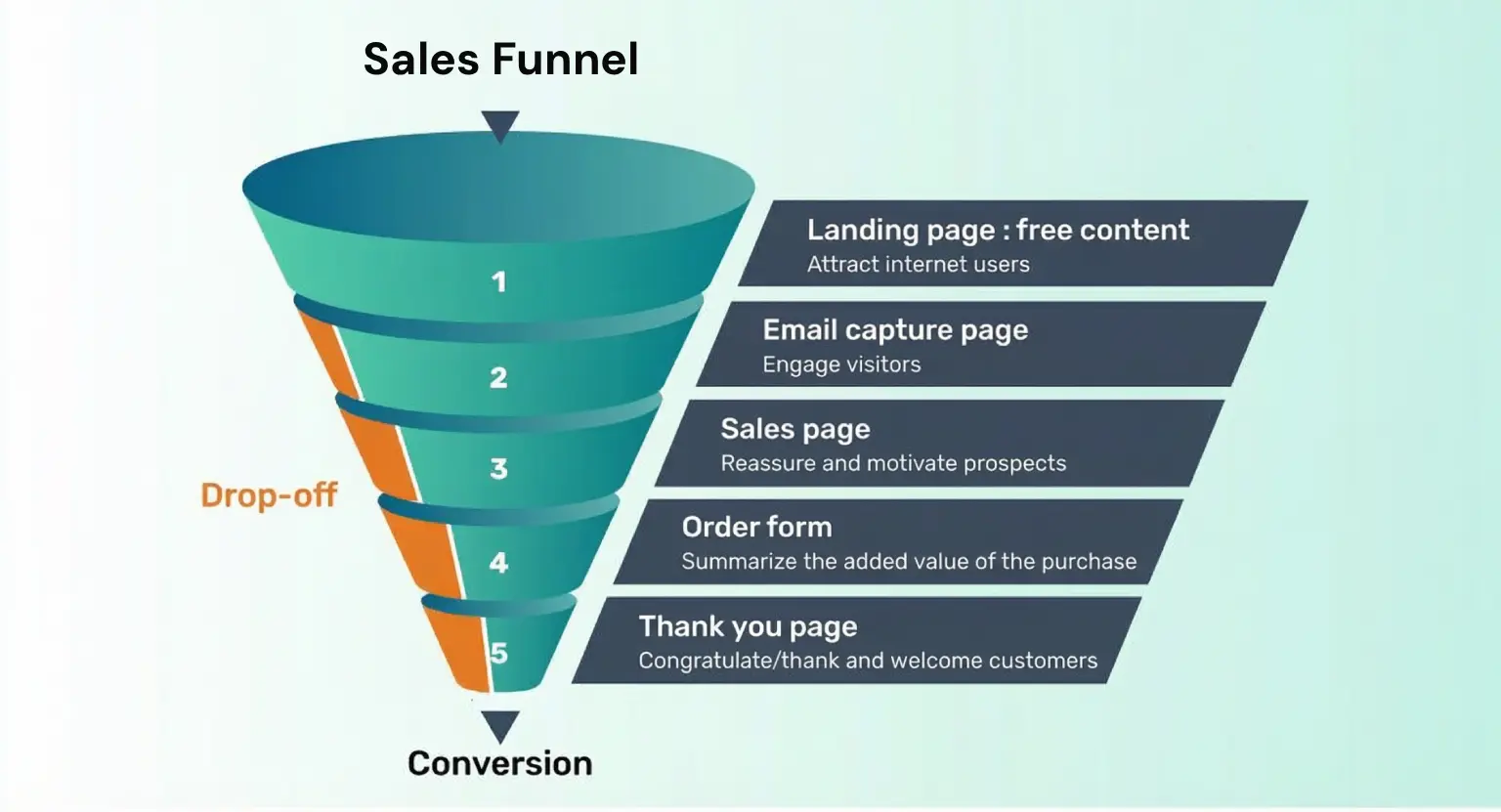
Platforms like LearnyBox let you build these automated sequences and full sales funnels - from email capture to checkout - all from a single dashboard.
Step 6: Run a Launch Webinar (the Highest-Converting Format)
If you could only use one strategy to promote your online course, this would be it. Webinars consistently deliver the highest conversion rates of any format - anywhere from 10% to 40% on well-executed sessions. In an hour to an hour and a half, you create direct connection, deliver real value, handle objections in real time, and generate urgency - all at once.
The structure of a webinar that sells:
-
Introduction (5 min): introduce yourself, establish your credibility on this specific topic, and tell participants exactly what they'll walk away with.
-
Core content (40 min): this is the heart of the session. Teach something genuinely useful across three key pillars of your expertise. Don't tease. Give your best material - even those who don't buy should leave feeling like they learned something concrete.
-
The bridge (5 min): connect the content you just delivered to your course. "If you want to go further, get there faster, and have support along the way, here's what I've built for you..."
-
The offer (10 min): present the course, its benefits, its content, and a special webinar-only deal - exclusive bonuses, a discount valid for 24 or 48 hours. Real urgency, not manufactured scarcity.
-
Q&A (10 min): answer questions live. This is where you address lingering objections and reassure the people who are still on the fence.
Announce your webinar 1-2 weeks in advance to your email list and across your social channels. Tools like LearnyBox handle registrations, automated reminders, and replay hosting - no technical headaches required.
Step 7: Invest Wisely in Paid Advertising
Paid advertising is an accelerator - it amplifies what already works. It doesn't create demand where none exists. So hold off until you've made your first organic sales (through your email list or social media) and confirmed that your offer and message actually resonate.
The three platforms to test first:
-
Meta Ads (Facebook/Instagram): excellent for B2C courses. Interest-based targeting is powerful and flexible. You can start testing with $10-20/day across different audiences and creatives.
-
Google Search Ads: you're reaching people actively searching for a solution to their problem. Purchase intent is higher here. Works best when people are already searching for keywords related to your course topic.
-
YouTube Ads: video pre-roll is a powerful format for demonstrating your course content and teaching style. You can target specific YouTube channels your audience already watches.
Start small: allocate a test budget of $200-300 at $10-15/day. Identify which audience/message combination performs before scaling up. And one rule that applies to every platform: never send paid traffic directly to your sales page. Route it through a lead capture page first. You'll collect the email address - and that relationship will be worth far more than a single sale.
Step 8: Build Partnerships and Launch an Affiliate Program
Why limit yourself to your own audience when you can tap into someone else's? Partnerships and affiliate programs are among the fastest ways to expand your reach without proportionally increasing your workload.
Win-win collaborations
Look for creators who serve the same audience as you but aren't direct competitors. If you teach nutrition, a fitness coach is a natural partner. You can run a joint webinar, bundle your courses at a combined price, or simply cross-promote each other's work.
The power of affiliation
An affiliate program lets others - satisfied students, bloggers, niche influencers - promote your course in exchange for a commission on each sale (typically 20-40%). It's a 100% performance-based model: you only pay when you get paid.
For it to work, equip your affiliates well: provide them with visuals, email copy, talking points, and anything else they need to promote confidently. You'll also need a reliable tracking system to attribute sales correctly. LearnyBox includes a built-in affiliate management system that handles link tracking and commission payouts automatically.
Promoting Your Online Course Is a Marathon, Not a Sprint
Selling an online course takes method, patience, and consistency. Don't expect overnight results - but know that every action you take today is compounding. Every blog post, email, and social post is a brick you're laying in the foundation of your business.
A realistic month-by-month plan:
-
Month 1 - Lay the foundations (Steps 1-3): clarify your audience, sharpen your sales page, and start posting consistently on one social network.
-
Month 2 - Build your long-term assets (Steps 4-5): publish your first blog articles and create a lead magnet to start capturing emails.
-
Month 3 - Shift into high gear (Steps 6-8): run your first launch webinar, test a small paid ad budget, and reach out to potential partners.
Managing all these channels and tools at once can get overwhelming fast. That's exactly where an all-in-one platform makes all the difference.
With LearnyBox, every one of these eight steps is covered from a single dashboard: a conversion-optimized sales page builder, email marketing and automation, an integrated webinar tool, a turnkey affiliate program, and complete, customizable sales funnels. Thousands of independent course creators use it to sell and promote their courses without juggling ten different subscriptions.
FAQ - Promoting Your Online Course
1. How long does it take to see the first results?
It depends on the channels. Social media and email marketing can generate your first sales in 2-4 weeks if your messaging is clear and you're showing up consistently. SEO takes longer - expect 3-6 months before organic traffic starts building. The key is not stopping. Every action you take today is compounding toward your future results.
2. What's the minimum budget I need?
You can start at zero using free channels: social media, a blog, and email marketing. If you want to accelerate with paid ads, set aside a test budget of $200-500 to run experiments on Meta or Google Ads. The essential rule: validate that your course sells organically before spending on advertising. Ads amplify what already works - they don't create demand from scratch.
3. Do I need to be on every social media platform?
No - and spreading yourself across five platforms at once is a reliable path to burnout. Pick one network where your audience lives and become really good at it before adding a second. Posting five times a week on one platform will consistently outperform posting once a week on five.
4. How can I promote my course if I don't have testimonials yet?
Offer your course at a reduced rate or for free to a small group of 5-10 beta students in exchange for honest feedback and written testimonials. You can also use positive reactions to your free content - comments on posts, replies to your lead magnet - as early social proof. And you can always lead with your own before-and-after story to demonstrate your expertise firsthand.
5. What's the best strategy for a first launch?
A webinar launch. Spend 2-4 weeks building your email list with a lead magnet, then host a free webinar where you deliver real, actionable value and close with a special offer at the end - exclusive bonuses valid for 48 hours only. This format combines education, direct connection, and conversion, with success rates that are hard to match with any other approach.
6. Do I need a large audience before selling?
Not at all. Some course creators generate thousands of dollars from a list of just 200 highly engaged subscribers. Quality beats quantity every time. A small audience that trusts you will always outperform a large audience that barely knows you exist. Focus on building real relationships regardless of the numbers - that's where the value actually lives.