







How to Create Engaging Course Content: 2026 Completion Rate Secrets
How to Create Engaging Course Content : 2026 Completion Rate Secrets
Key Takeaways for High Engagement
-
Focus on micro-learning segments to respect student time.
-
Integrate real-world application tasks immediately after theory.
-
Use comprehensive e-learning solutions like the LearnyBox platform to manage interactions.
-
Prioritize audio quality and personality over high-budget cinematography.
Let's be honest for a second. Most online courses are boring. People buy them with high hopes, get through the first three modules, and then life happens.
By 2026, the average person is bombarded with so much digital noise that "just okay" content doesn't stand a chance.
If you want your students to actually finish your course and get results, you have to stop thinking like a lecturer and start thinking like a mentor who actually gives a damn.
The shift from passive learning to active participation is the only way to survive in this economy.
So, how do we fix this? It starts with the very foundation of your material. You can't just slap together a few PowerPoint slides and call it a day.
But don't worry, it is not as hard as it sounds once you understand the psychology of your learners.
They aren't looking for an encyclopedia; they are looking for a shortcut to a specific transformation.
They want to know that you understand their struggles and that you are right there in the trenches with them.
That is the secret sauce to engagement that most big platforms completely miss.
The Power of Structure and Micro-Learning
Structure is the skeleton of your course. If the skeleton is weak, the whole thing collapses.
I see too many creators making 45-minute videos that cover seven different topics.
That is a crime against learning.
In 2026, our brains are wired for smaller, digestible bites.
You should be breaking your big ideas down into tiny, actionable steps. If a video is longer than ten minutes, you probably need to cut it in half.
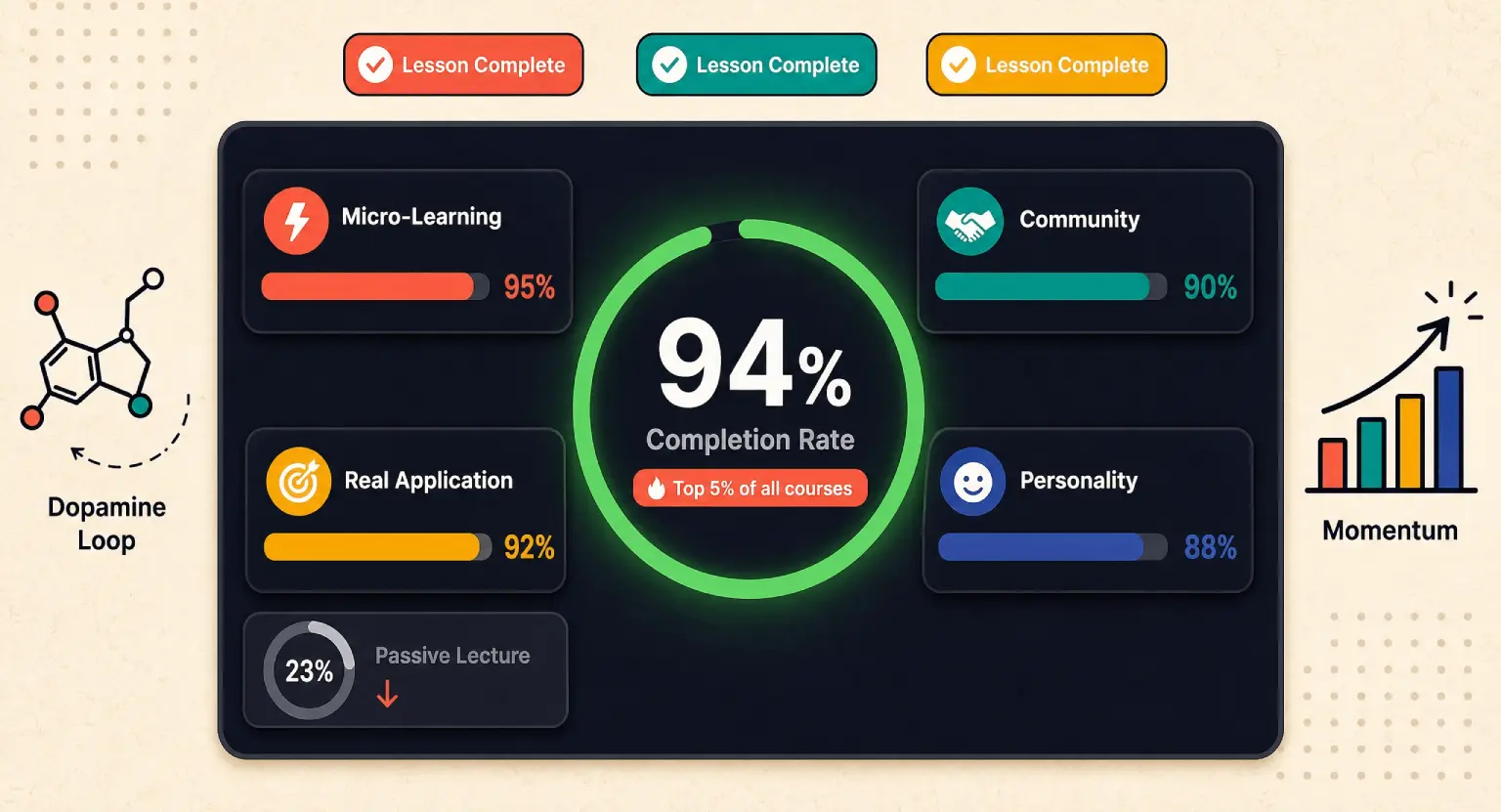
This approach gives the student a dopamine hit every time they check off a lesson, which keeps them moving forward.
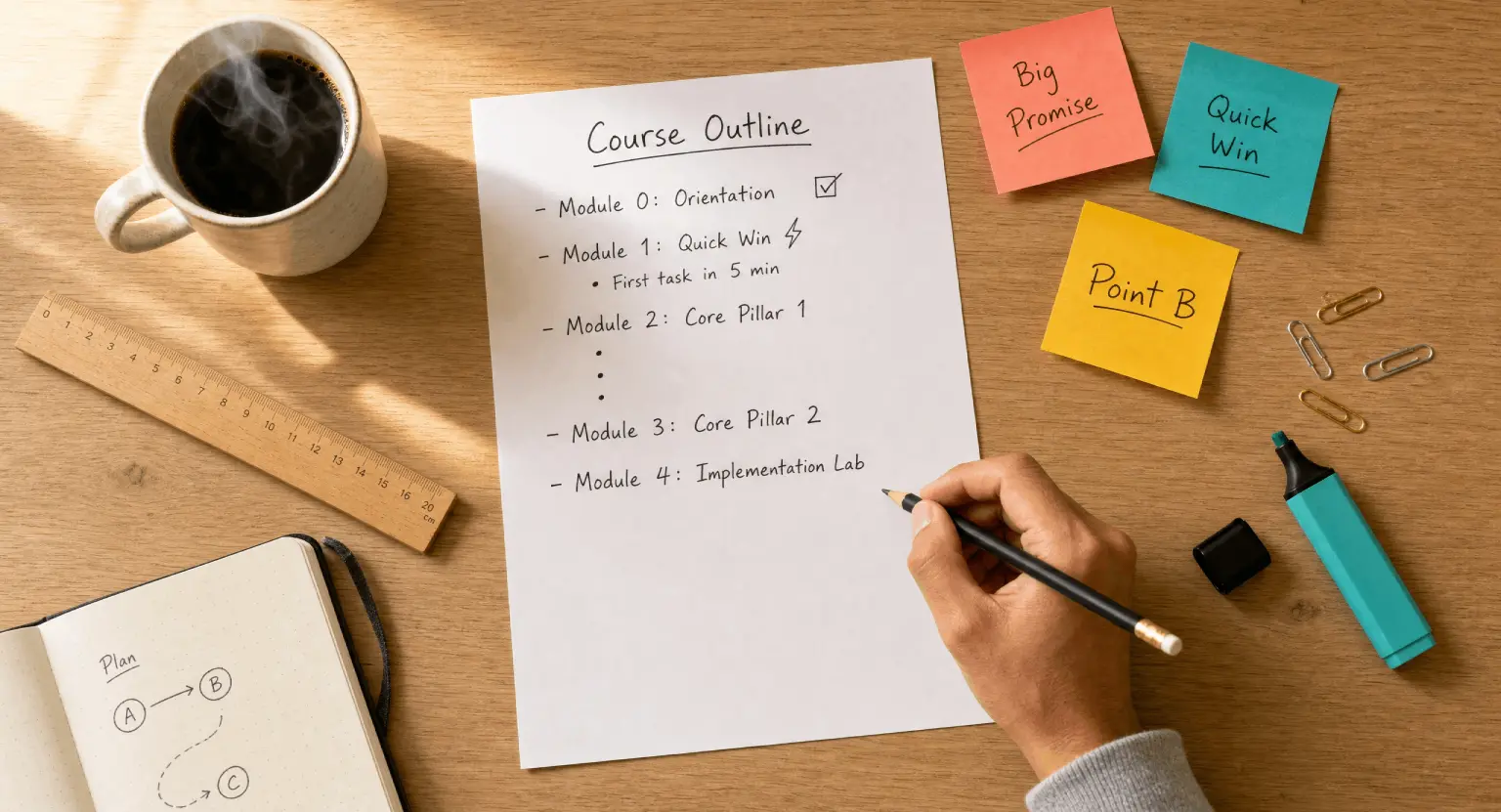
But structure isn't just about length; it is about the logical progression of ideas. You need to lead them by the hand from point A to point B without any confusing detours.
When you sit down to plan, think about the one specific outcome for each module. If a piece of information doesn't serve that outcome directly, throw it out.
You can learn more about building this framework in our guide on effective curriculum design.
A well-organized course feels like a journey, not a chore, and that keeps the momentum high.
- Use descriptive, curiosity-piquing titles for every lesson.
- Include a "What you will learn" summary at the start of each module.
- End every video with a single, clear action step.
- Provide downloadable checklists to help students track their progress.
And remember, your students are busy. They are watching your content while on the bus, during lunch breaks, or late at night.
By keeping things tight and structured, you make it easy for them to fit learning into their chaotic lives.
When they feel like they are making fast progress, they are much less likely to quit. It is all about building that feeling of "I can actually do this."
The Difference : Engaging vs. Passive Content
Before we go further, we need to look at what actually separates a high-impact course from one that collects digital dust.
It isn't just the quality of the information; it is the delivery method.
Modern learners expect a certain level of dynamism.
They want to feel like the content was made for them, not just for a generic audience.
Let's compare the traditional approach with the 2026 "Engaged Human" approach to see where you can improve.
| Feature | The "Old Way" (Passive) | The "2026 Way" (Engaging) |
|---|---|---|
| Video Style | Long-form lectures with static slides. | Short, high-energy clips with B-roll. |
| Interaction | Only email-based support. | Live Q&As and integrated community forums. |
| Application | Testing at the very end of the course. | In-lesson quizzes and immediate tasks. |
| Personalization | One-size-fits-all pathway for everyone. | Adaptive content based on student goals. |
Visuals and Personality : Stop Being a Robot
I can't stress this enough : your personality is your biggest competitive advantage.
In an age where AI can write a script in three seconds, your students are craving a real human connection. They want to see your face, hear your stories, and even see your mistakes.
When you are filming, talk to the camera like you are talking to a friend at a coffee shop.
Use your hands, change your tone, and don't be afraid to be a little bit weird. This vulnerability builds trust, and trust is the ultimate engagement fuel.
Regarding technical visuals, you don't need a Hollywood budget, but you do need to follow video production best practices to keep things professional.
Good lighting and clear audio go a long way in keeping someone's attention. If the audio is fuzzy, people will click away in seconds.
But don't let perfectionism stop you. A "done" course that is authentic and helpful is a million times better than a "perfect" course that never gets launched.
Focus on being clear, not just being pretty.
But hey, visuals aren't just about your face. Use screen recordings, diagrams, and even simple sketches to explain complex ideas.
Our brains process images much faster than text. If you can show rather than tell, do it.
I like to use a mix of "talking head" shots and screen-shares to keep the visual rhythm interesting. It breaks up the monotony and helps different types of learners - visual, auditory, and kinesthetic - all get the most out of your hard work.
Bottom line? Engaging content is built on a foundation of empathy. Stop thinking about what you want to say and start thinking about what your student needs to hear to take the next step.
When you combine micro-learning, a solid structure, a dash of personality, and a thriving community, you create an experience that is impossible to ignore.
It is time to stop being a "course creator" and start being an experience designer.
Your students, and your business, will thank you for it.
Building a Community That Lives and Breathes
Course engagement shouldn't end when the video stops. In fact, the most engaging courses are often more of a community than a curriculum.
People stay for the results, but they keep coming back for the people. By integrating a community aspect into your offer, you create a space where students can celebrate wins, ask for help, and network.
This social pressure (the good kind!) encourages them to keep up with the rest of the group. It is much harder to quit when you feel like part of a team.
You can see how this works by checking out some of the success stories from other creators who have built thriving ecosystems around their knowledge.
Use polls, challenges, and leaderboards to gamify the experience. When a student feels seen and heard by the instructor or their peers, their engagement levels skyrocket.
It turns a lonely learning experience into a shared adventure. And honestly, that's what makes teaching fun for you, too.
Frequently Asked Questions
How long should my course videos be for maximum engagement?
For 2026, the sweet spot is between 4 and 7 minutes per video. Shorter bursts prevent cognitive overload and allow students to complete modules during small pockets of free time throughout their day.
What is the best way to handle student questions in a pre-recorded course?
Using a platform that integrates community features is vital. You can host monthly live office hours or use a dedicated forum where students can help each other, which builds a sense of belonging.
Do I need high-end equipment to make my content engaging?
While clear audio is non-negotiable, your authenticity matters more than a 4K cinema camera. A clean, well-lit smartphone setup is often more relatable and engaging than a sterile, over-produced studio environment.
Explore Further
- Start building today with an all-in-one solution for course sales.
- Learn how the market is changing by visiting the LearnyBox homepage.





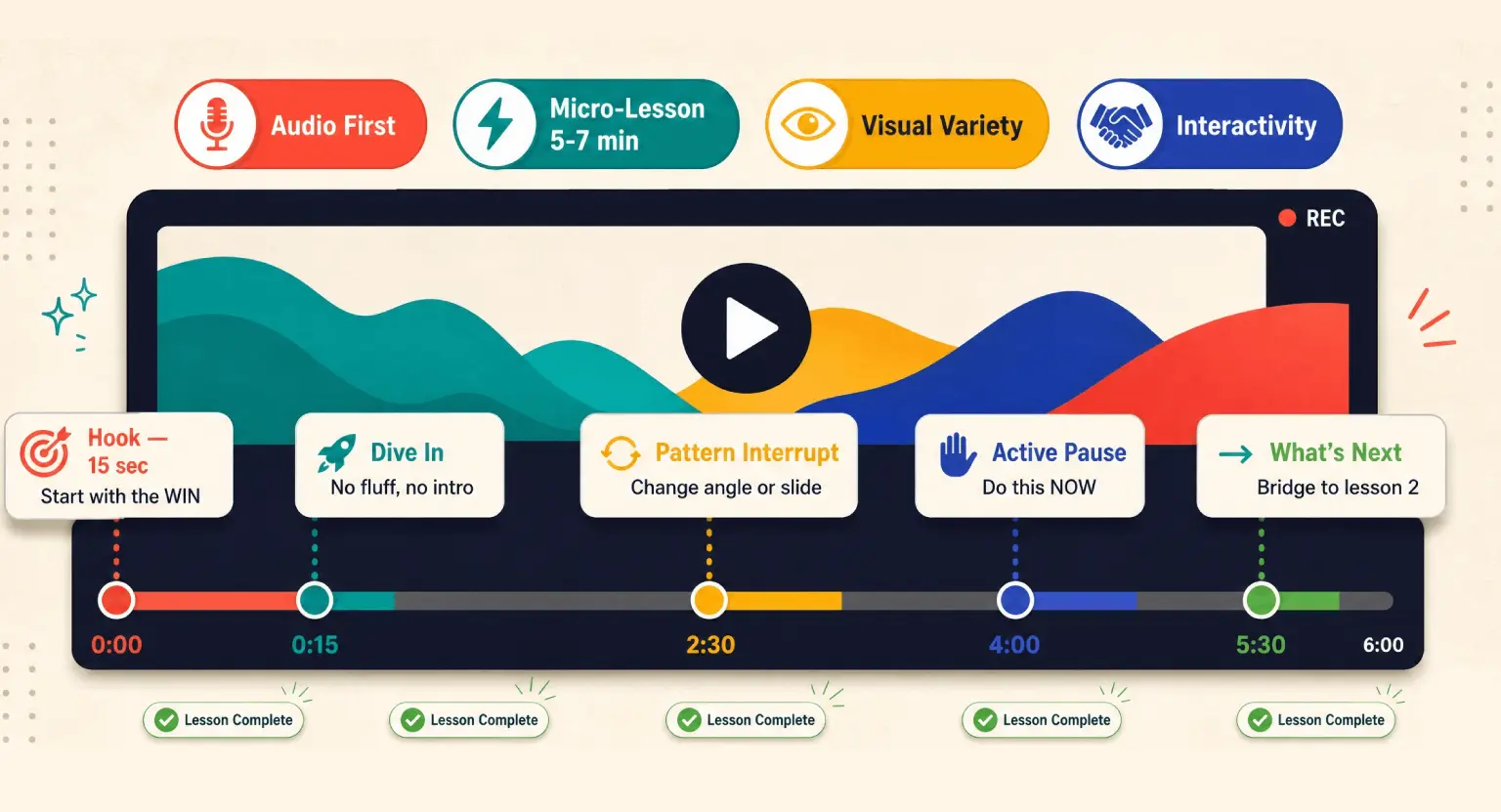 Video Lessons Best Practices: Expert Guide for 2026 Success
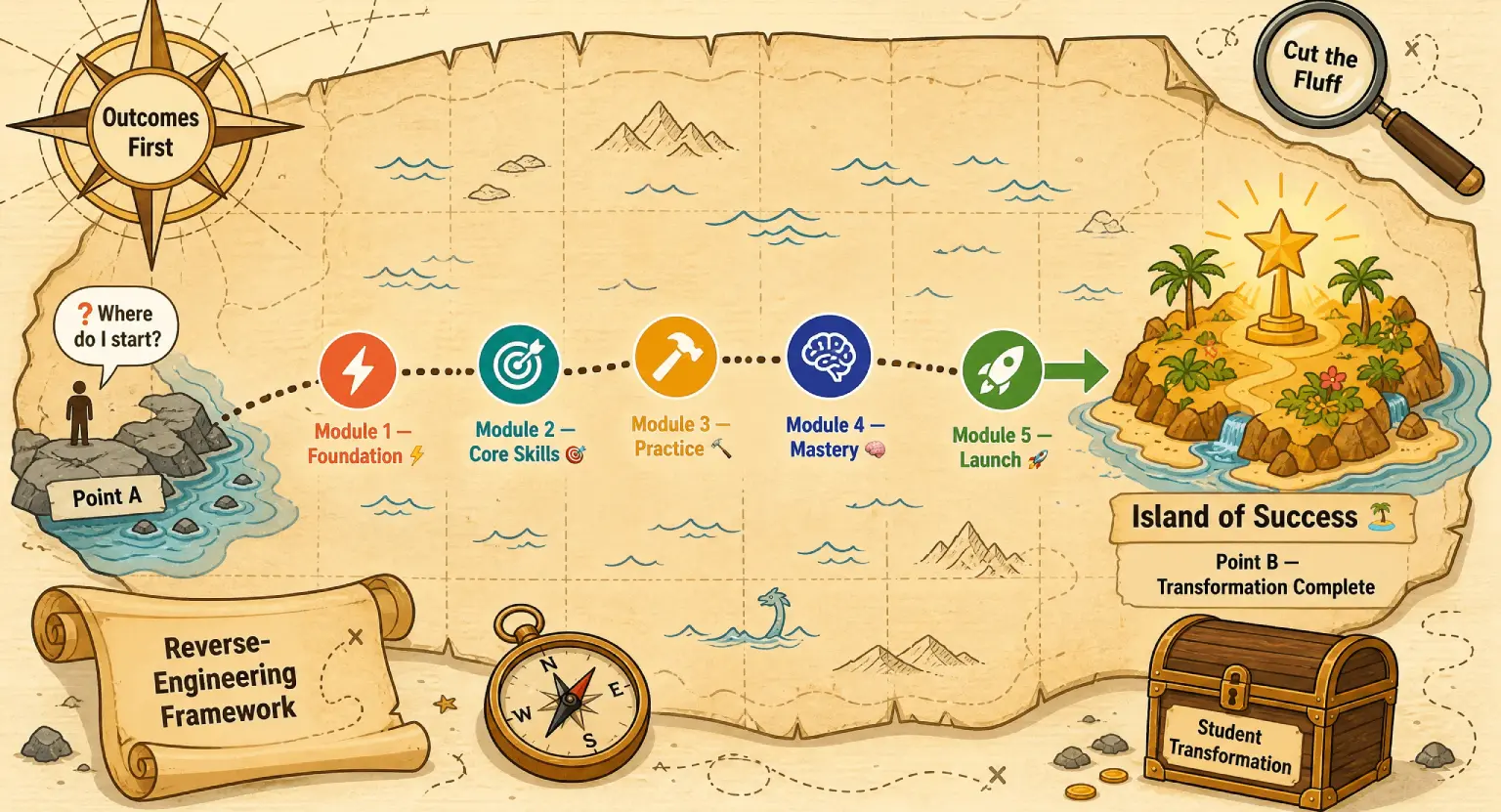 Master the Art: How to Create a Course Curriculum That Actually Works in 2026
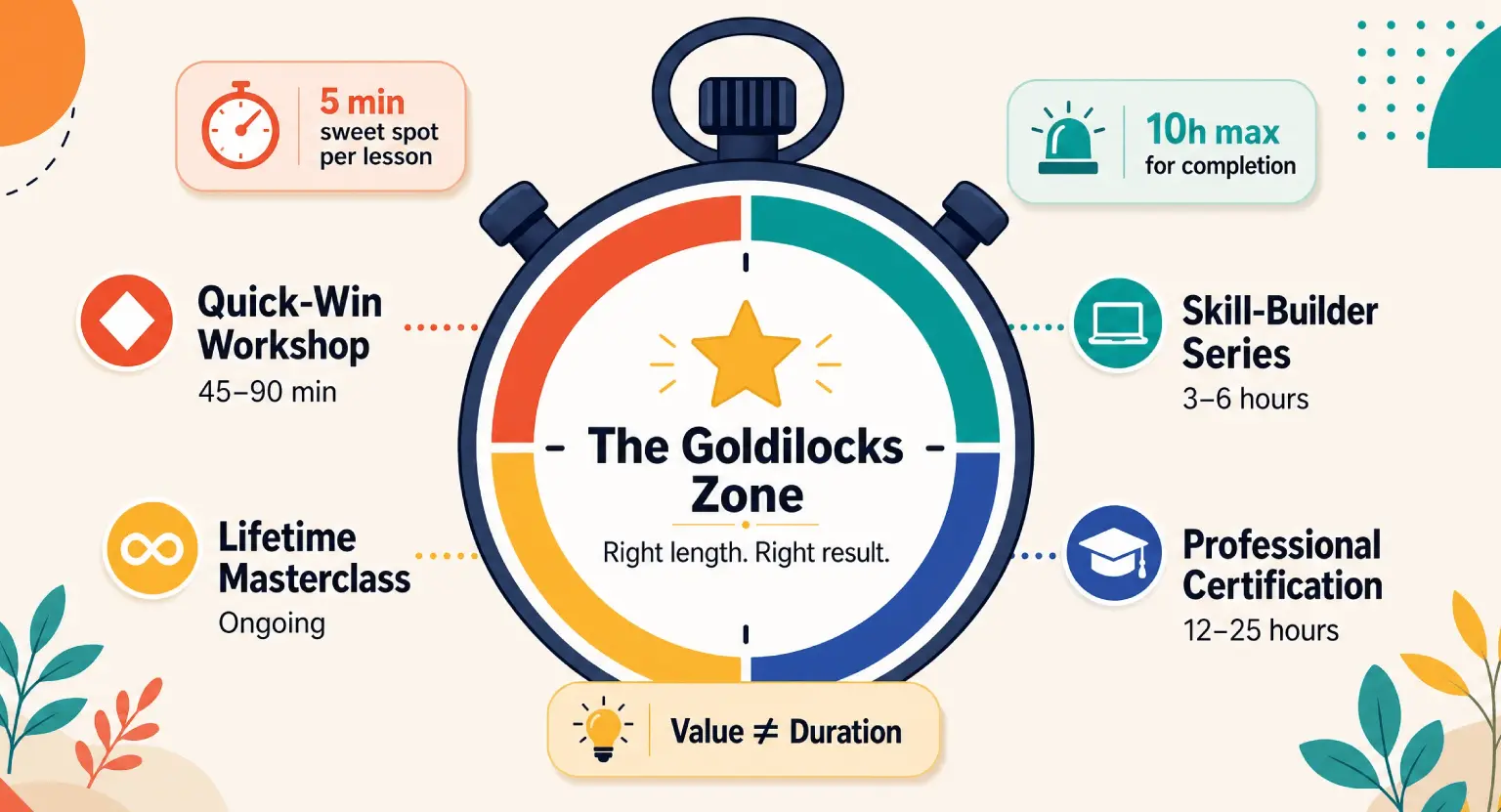 How Long Should an Online Course Be? (2026 Guide for Experts)