








How to Validate an Online Course Idea: A Human-First Guide for 2026
How to Validate an Online Course Idea : A Human-First Guide
Key Takeaways
-
Validation is about finding a specific "Micro-Transformation" people will pay for.
-
Pre-selling is the only 100% accurate way to gauge market demand.
-
Use no-cost learning management system tools to launch your test pages quickly.
-
Beta groups provide the feedback needed to refine your curriculum before the final build.
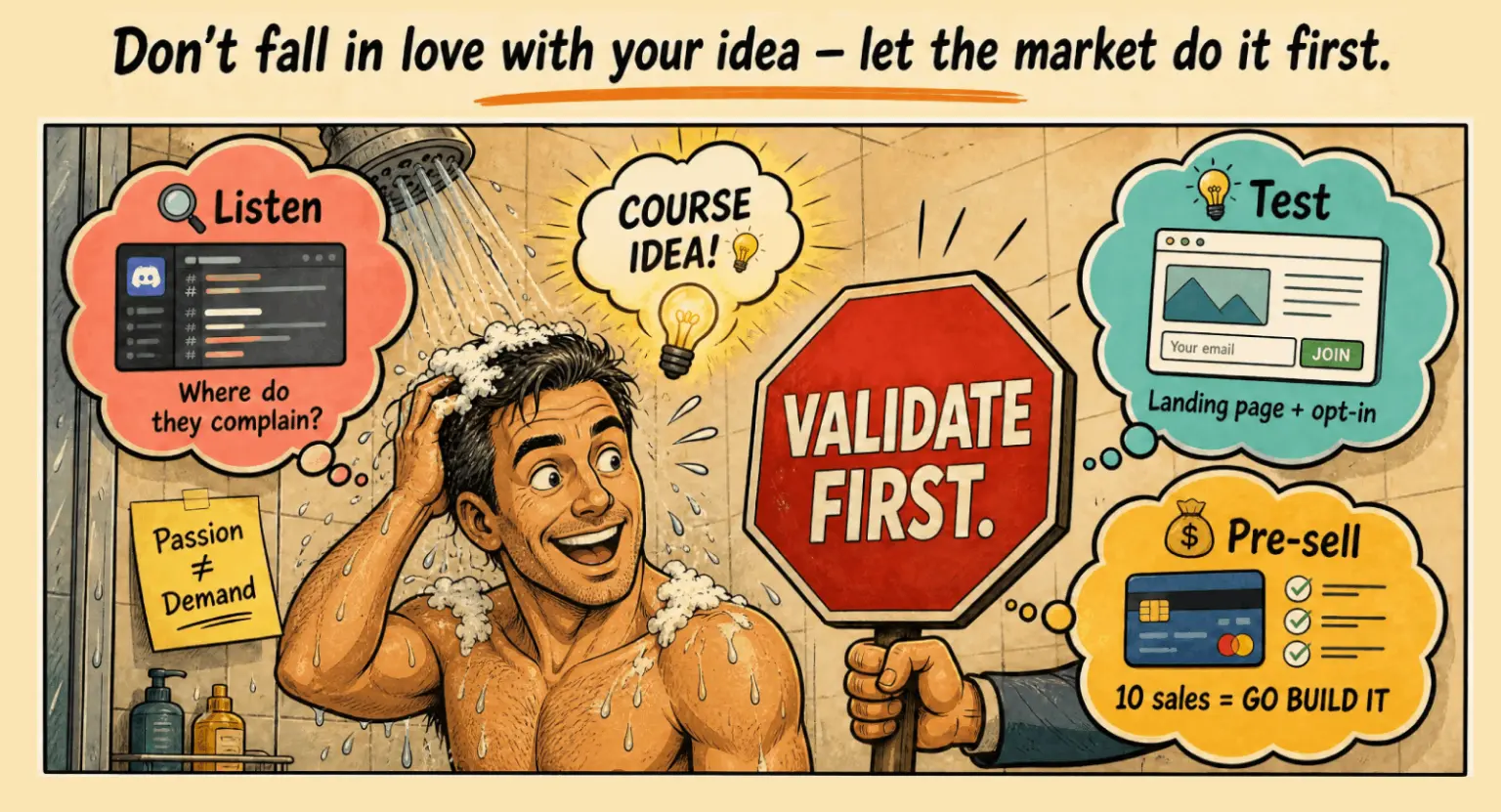
We have all been there. You have a brilliant idea for an online course while showering, and by lunchtime, you are already picking out a brand name and colors.
But wait.
In the fast-moving landscape of 2026, the biggest mistake you can make is falling in love with your idea before the market does. Passion is great, but data pays the bills.
So, before you spend months sitting in front of a camera, we need to find out if your audience actually wants to buy what you are selling.
And honestly, validation is not just about "checking a box."
It is about having a conversation with your potential students.
It is about understanding the exact pain point that keeps them awake at night.
If you can solve that one specific thing, you will have a platform to monetize your expertise that lasts for years.
But if you guess wrong, you end up with a digital product that gathers dust on a virtual shelf.
Let's look at how the pros are doing it this year.
Market Intelligence : Listening Before Talking
Social media algorithms in 2026 are incredibly sophisticated, which makes market research easier than it used to be.
You do not need expensive focus groups anymore. Instead, you need to go where your people are already complaining.
Are they in niche Discord servers?
Are they asking "how-to" questions on specialized LinkedIn groups or AI-driven forums?
But do not just look at what they say they want; look at what they are already spending money on. If people are buying books or attending webinars on your topic, that is a green light.
- Search for "how do I" and "help with" followed by your topic on social platforms.
- Audit your competitors but look at their negative reviews - that is where your opportunity lies.
- Check Google Trends and YouTube search data to see if the interest is rising or fading.
- Look for "content gaps" where people are asking questions but no one is providing a clear, simple answer.
Actually, the best validation often comes from a simple "smoke test."
This involves creating a tiny piece of content that addresses your course's core promise.
If a 60-second video gets high engagement and specific questions, you are onto something.
If it gets crickets, it is time to pivot the angle.
Remember, we are not looking for "likes" here. We are looking for "Tell me more" or "How can I do this?" comments.
Those are the real signals of intent.
The MVP : Minimum Viable Promotion
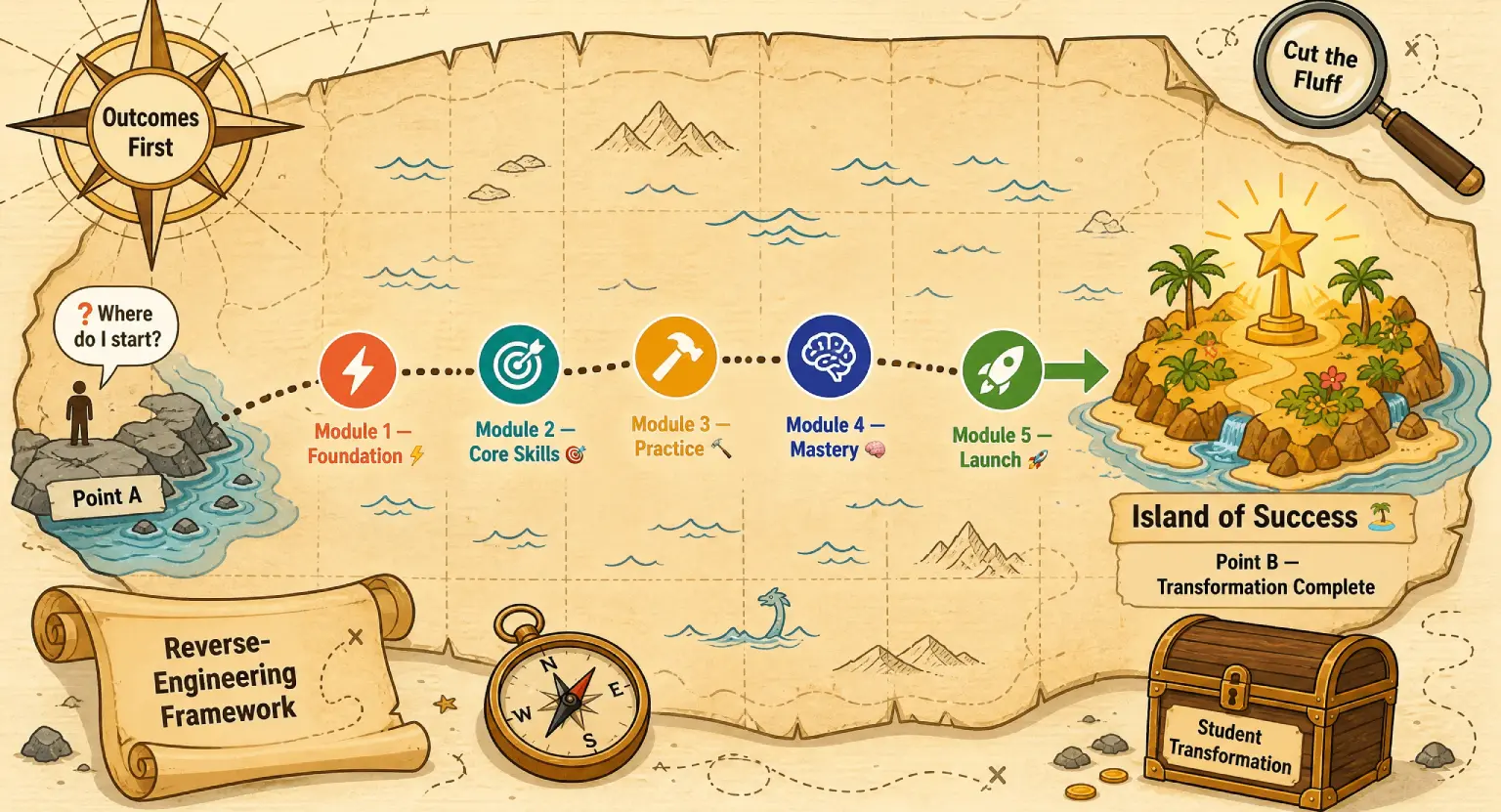
Once you have a general sense of interest, it is time to get specific. This is where outlining your educational modules becomes vital.
You don't need the whole course mapped out, but you do need the "Big Transformation." People do not buy courses; they buy the version of themselves they become after finishing the course.
So, create a simple landing page that highlights the end result, not just the features.
So, what goes on this page?
A clear headline,
three bullet points about the transformation,
and a call to action.
In 2026, effective creators often offer a "Founder's Special" or a "Beta Price" to get those first few students in the door.
This isn't about the money yet - it is about commitment.
When someone gives you their email or a small deposit, they are telling you that your idea has merit.
But do not stop at just a signup; ask them one question on the "Thank You" page:
"What is your biggest frustration with [Topic]?"
The answers you get will become your marketing copy later.
| Validation stage | Goal | Primary tool | Success signal |
|---|---|---|---|
| Social Listening | Identify Pain Points | Forums / Search Data | Recurring questions |
| Lead Magnet Test | Test Interest Level | Opt-in Page | High Conversion Rate |
| Pre-Sale / Beta | Financial Validation | Checkout / Waitlist | First 10 Sales |
Pre-Selling : The Only Real Proof of Demand
I know it sounds scary to sell something that doesn't fully exist yet. But this is exactly what the most successful infopreneurs do.
By setting up a pre-sale, you are effectively letting your audience fund the development of the course.
And if no one buys? You simply refund the few who did and go back to the drawing board without having wasted three months on production.
This is the ultimate safety net for your business. It allows you to build with confidence.
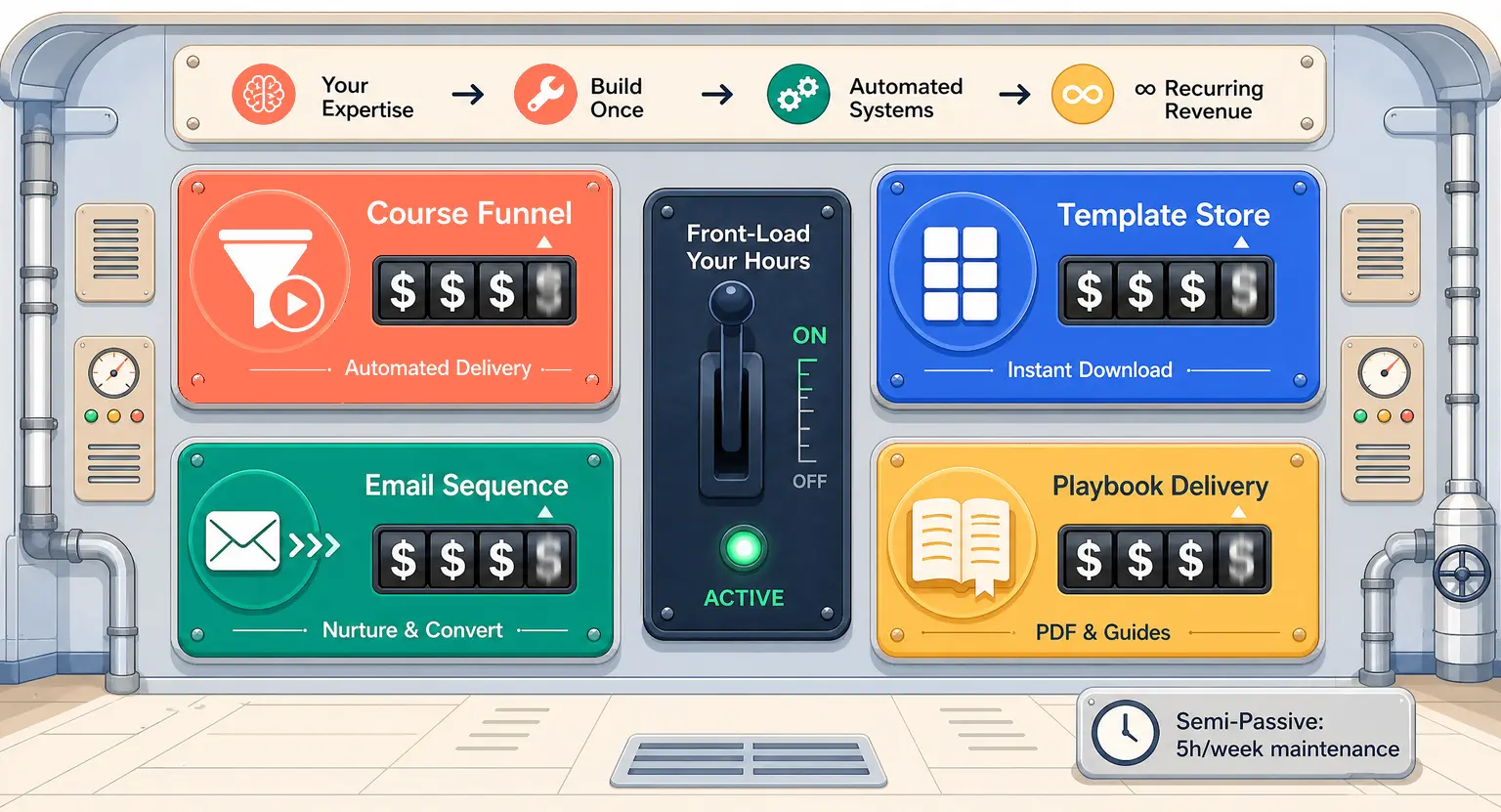
When you move into the pre-sale phase, utilizing automated marketing sequences can help you maintain momentum without being glued to your screen.
You want to lead people through a journey : from identifying their problem to showing them your unique solution.
But keep the offer simple.
Tell them the course is coming soon, explain what they will learn, and give them a reason to buy now (like a 50% discount or a live Q&A session).
If you get 10-20 sales at this stage, you have a winner. If not, it means the offer or the audience targeting needs work.
But wait, what if you are stuck on who your audience actually is? This is often the biggest hurdle.
Spend time identifying your ideal learner profile before you spend a dime on ads. If you try to teach everyone everything, you will end up teaching no one anything.
Specificity is your best friend in 2026. A course on "Marketing" will fail, but a course on "Email Marketing for Boutique Pottery Owners" will likely fly off the digital shelves because the value is immediate and obvious.
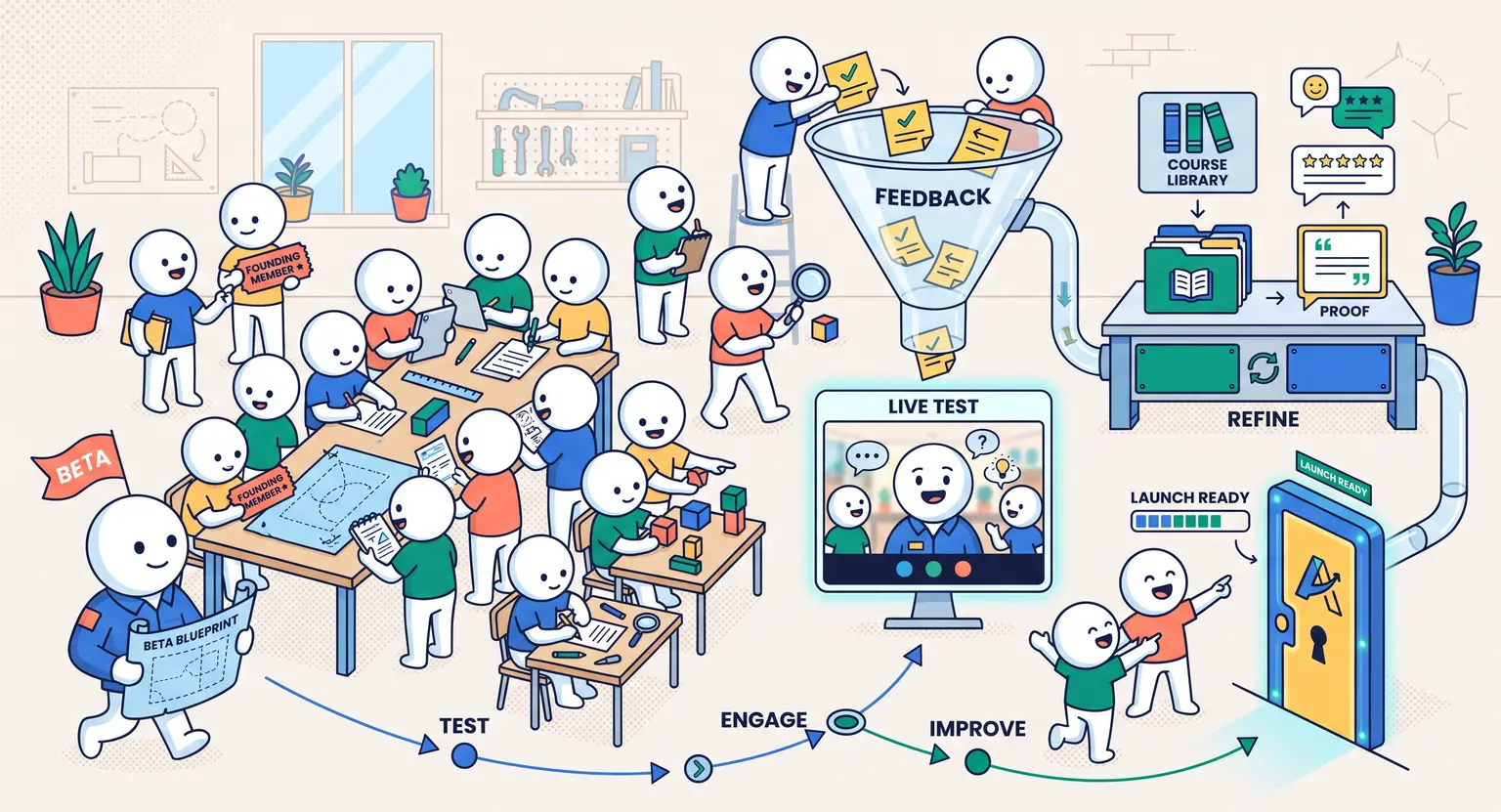
Refining Through the Beta Group
So, you've got your first few sales. Congratulations! Now comes the fun part.
Instead of locking yourself in a studio, run a "live beta."
Teach the material weekly via live sessions.
This allows you to see where students get stuck. If three people ask the same question during Week 2, you know exactly what needs more detail in your final recorded version.
This real-time interaction is worth its weight in gold. It makes your final product 10x better than if you had guessed what people needed help with.
Moreover, these beta students become your first case studies. Their testimonials will be the social proof you need for your "Big Launch" later on. And because they were part of the process, they feel a sense of ownership and are more likely to refer others.
By the time you finish the beta, you will have a validated, tested, and high-quality course ready for the world. It is a win-win for everyone involved.
You get a proven product, and they get a transformation at a great price.
Actually, the most important thing to remember is that validation never truly ends. Even after your course is "done," you should always be listening for new trends and shifts in your industry.
The creators who thrive in 2026 are the ones who stay flexible and keep their fingers on the pulse of their community.
So, go out there, start those conversations, and find the idea that people are literally begging you to build. You've got the expertise; now you just need the proof.
Validation is not a hurdle; it is your roadmap. By the time you start your full build, you should have the confidence that comes from knowing your students are already waiting for the "Join" button to appear.
Happy building!
Common Validation Questions
How long should the validation process take?
In 2026, efficient validation usually takes between two to four weeks. You should focus on gathering meaningful interactions or small financial commitments rather than trying to build a massive audience first.
Can I validate an idea without an existing email list?
Yes, you can leverage community forums, social media groups, or targeted ads to test demand. Use a no-cost learning management system to set up a simple landing page and see if strangers are willing to sign up for your waiting list.
What is the best way to handle a failed validation?
A failed validation is actually a success because it prevents you from building a product nobody wants. Take the feedback from your tests, pivot your angle, and try a different micro-transformation for your audience.


 How to Create a Course Refund Policy (Templates & Best Practices for 2026)
 How to Run a Beta Version of an Online Course (2026 Guide)
 How to Create a Cohort-Based Online Course (2026 Guide)
 How to Sell an Online Course With a Quiz Funnel (2026 Guide)
 How to Sell an Online Course Through a Sales Call (2026 Guide)