








How Long Should an Online Course Be? (2026 Guide for Experts)
How Long Should an Online Course Be? (2026 Guide for Experts)
You have a vault full of knowledge, and you are finally ready to share it. But then that nagging question hits : how long should this thing actually be?
If you make it too short, people might feel cheated. If you make it too long, your students will get overwhelmed and quit by module three.
Look, it's 2026, and the digital landscape isn't what it was even two years ago. Our attention spans haven't necessarily shrunk - they've just become more selective. People want results, and they want them without the fluff.
So, forget the idea that "longer is more valuable." In the modern world of e-learning, value isn't measured by the pound or the hour.
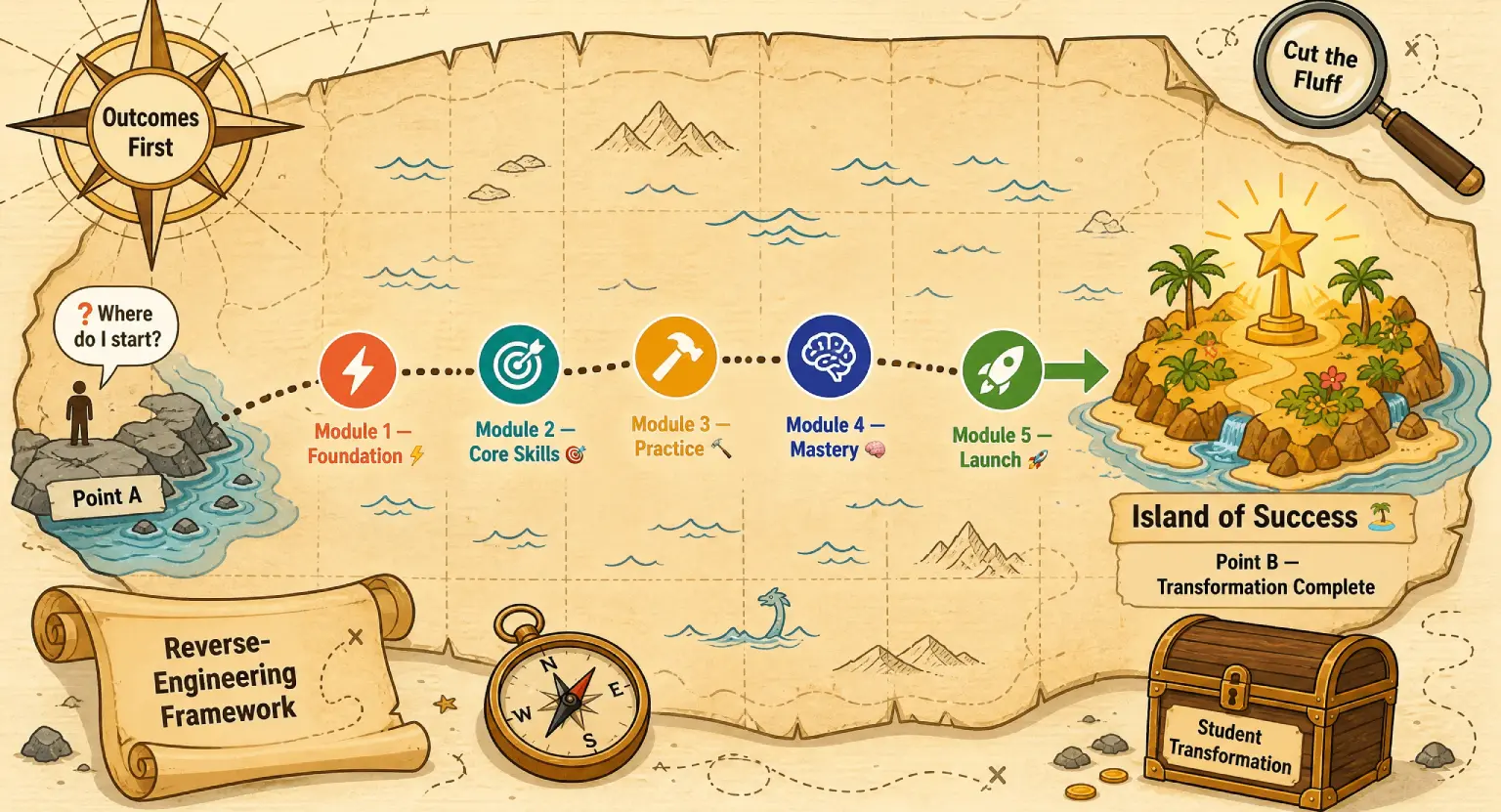
It's measured by the transformation. If you can take someone from point A to point B in two hours instead of ten, you aren't "losing" eight hours of value; you're saving eight hours of their life.
That is what people pay for now. But there's a middle ground you need to walk.
Key Takeaways
-
Transformation over Time : your course length must match the complexity of the promise you made.
-
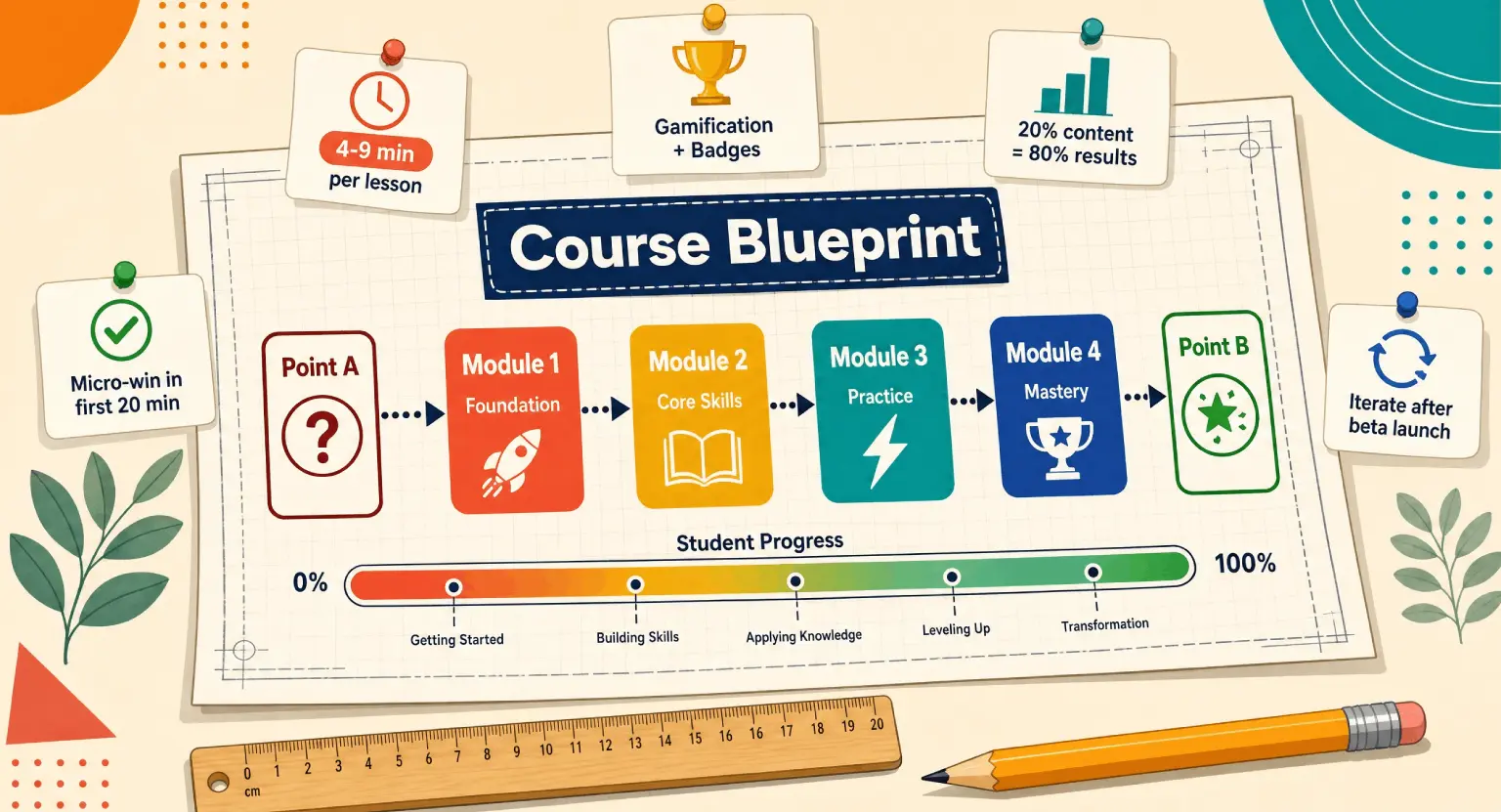
Micro-Modules : aim for video lessons between 3 to 7 minutes to keep dopamine levels high.
-
Strategic Pricing : use an online course pricing strategy that reflects the outcome, not just the duration.
-
The 10-Hour Cap : for most skill-based courses, exceeding 10 hours drastically lowers completion rates in 2026.
Finding the "Goldilocks" Length for Your Niche
The truth is that "ideal length" depends entirely on your topic.
If you're teaching someone how to use a specific AI tool for photo editing, thirty minutes might be plenty.
However, if you're training someone to become a certified permaculture designer, three hours isn't going to cut it.
You have to look at the "burden of learning." High-intensity topics require more digestion time, meaning your course needs more space to breathe.
But here is the kicker : we've seen a massive shift toward "hybrid" lengths. Instead of one twenty-hour monster, creators are breaking things down into specialized "sprints." This keeps the momentum going.
And when you sit down to decide how to structure an online course, you should think about the shortest path to the first win.
Once a student feels that initial success, they'll stick around for the longer modules later on.
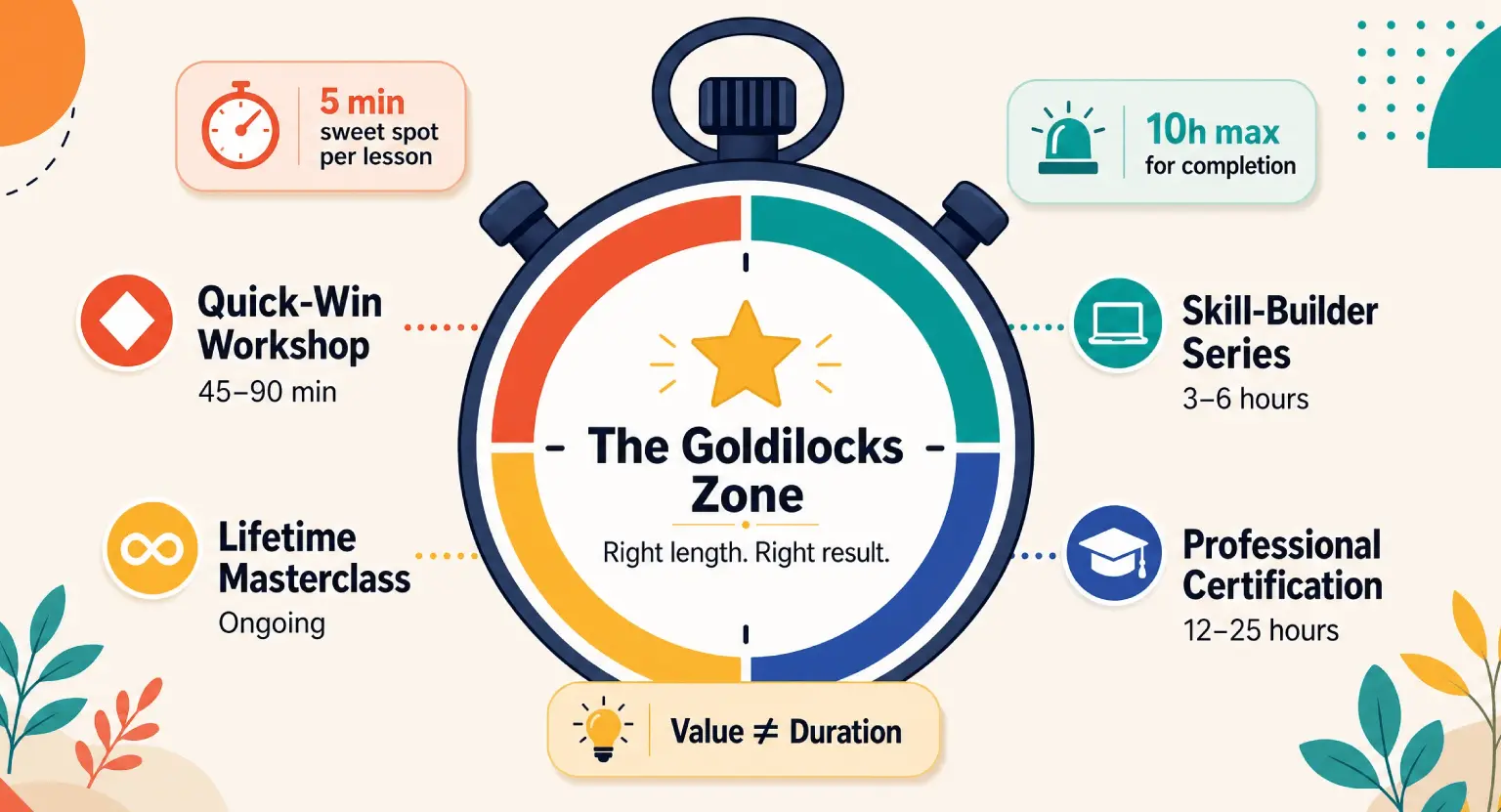
Wait, don't just guess these numbers. We've crunched the data across thousands of successful launches to see what actually works for different levels of education.
It turns out students actually appreciate brevity when it's packed with high-quality insights.
| Course category | Target runtime | Typical student goal |
|---|---|---|
| The "Quick-Win" Workshop | 45 - 90 Minutes | Solving a specific, immediate problem. |
| The Skill-Builder Series | 3 - 6 Hours | Mastering a new hobby or software tool. |
| The Professional Certification | 12 - 25 Hours | Career pivots or deep technical mastery. |
| The Lifetime Masterclass | Undefined (Ongoing) | Membership-based continuous growth. |
The Psychology of Module Duration
Let's talk about the actual videos inside the course. In 2026, the "death by PowerPoint" model is officially buried. Your students are likely watching your content on a mobile app during their commute or while at the gym.
If a single video is 45 minutes long, they'll never find the time to start it.
But if that same 45 minutes is broken into seven bite-sized lessons?
They'll binge-watch the whole thing like a Netflix series.
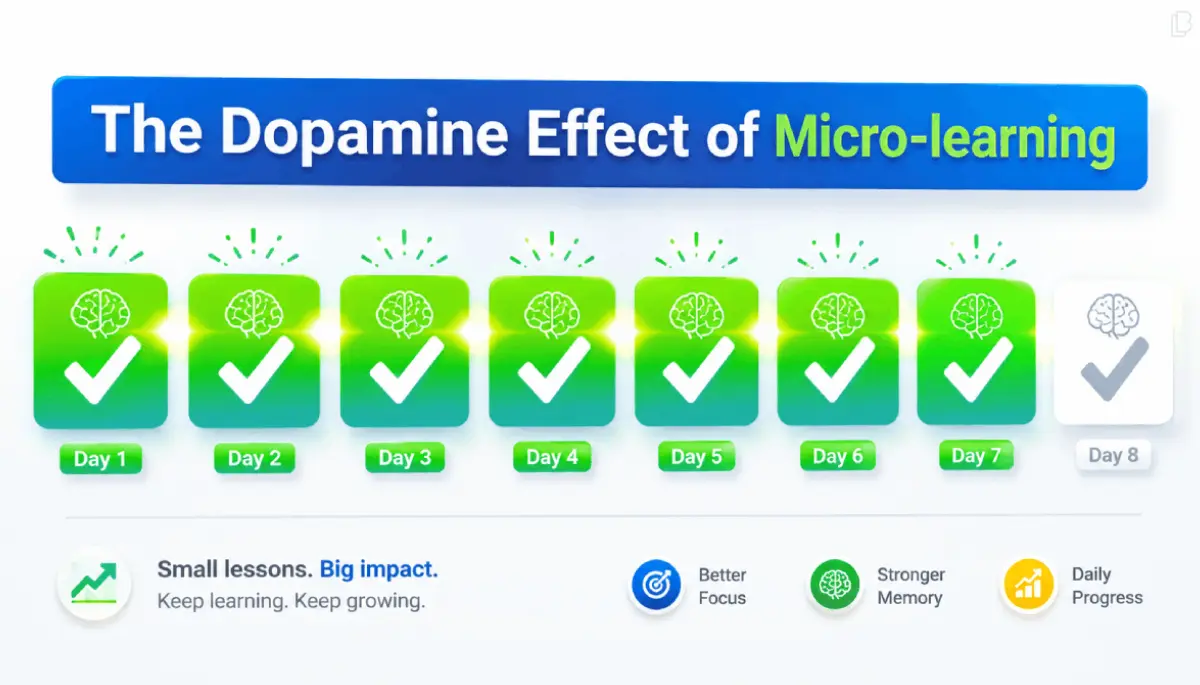
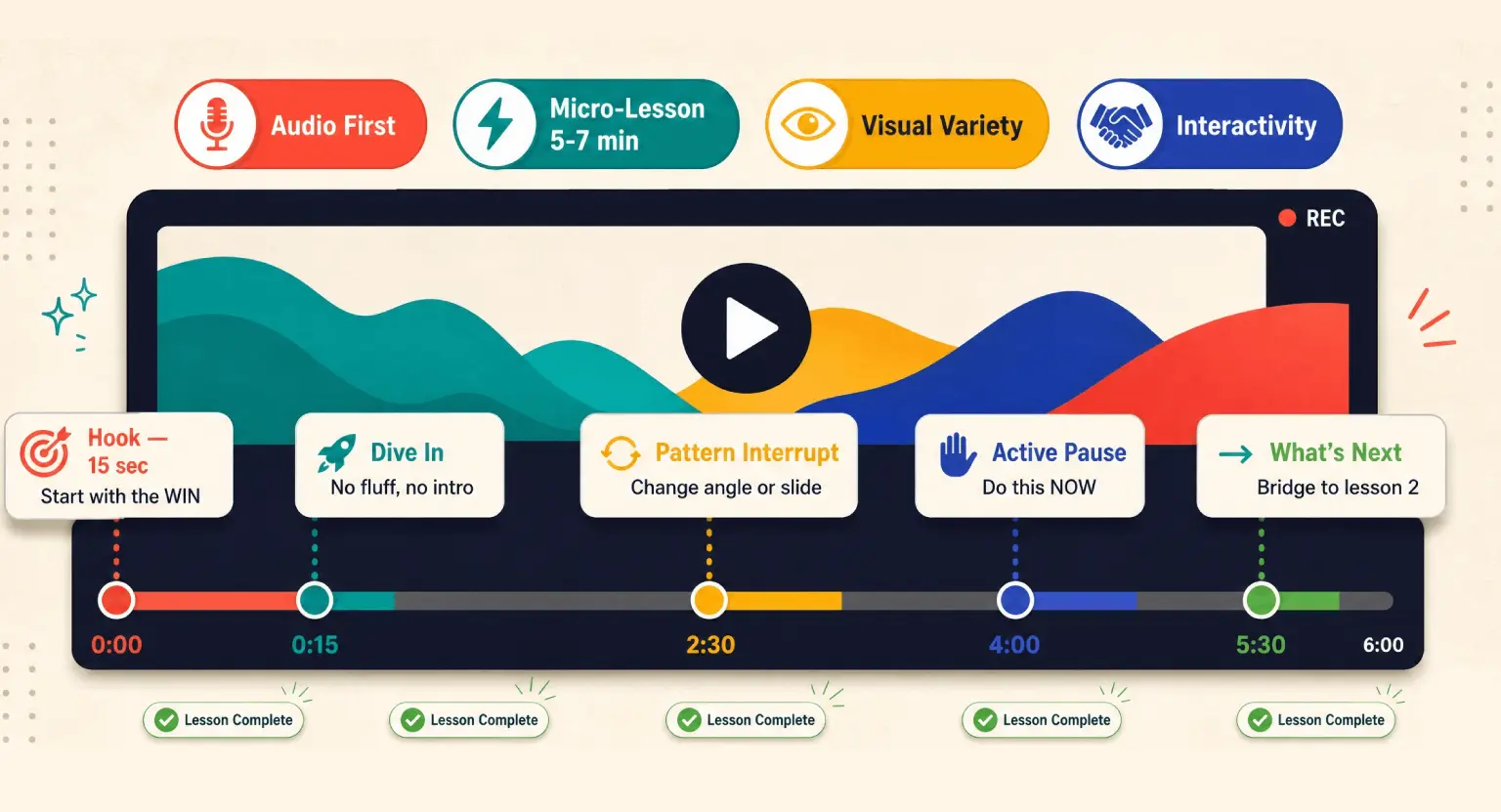
Actually, the sweet spot for a single lesson today is around 5 minutes. Anything longer than 10 minutes starts to feel like a chore. By keeping things short, you create "checkpoints" of progress.
Every time a student hits "complete" on a lesson, their brain gets a little hit of dopamine.
That's what keeps them coming back for more.
And honestly, it makes the recording process much easier for you too.
When you learn how to record an online course properly, you realize that shorter segments allow for fewer mistakes and easier editing later on.
So, how do you handle complex topics that take an hour to explain? You break them into conceptual steps.
Instead of "How to Build a Website (60 mins),"
you do "Step 1: Domain Setup (4 mins)," "Step 2: Hosting Connection (6 mins)," and so on.
It feels faster even if the total time is the same. It's all about the perceived effort. Students want to feel like they are constantly moving, not stuck in a digital waiting room.
The Relationship Between Length and Price
People often worry that if their course is only two hours long, they can't charge $500 for it. That logic is outdated. In fact, some of the most expensive consulting calls in the world last only 15 minutes.
Why? Because the person is paying for the shortcut, not the time. If your two-hour course saves someone $5,000 in mistakes, it is worth every penny.
Don't fall into the trap of adding "bonus" content just to pad the runtime.
Most of the time, that extra content just decreases the completion rate and leads to more refund requests because the student feels "behind."
But you do need to align your expectations with the market. If you are using an all-in-one platform to sell online courses, you want your pricing to reflect the professional nature of the delivery.
A high-ticket course usually needs a mix of video duration and interactive elements - like community access or live Q&A sessions.
Those "extras" add value without bloating the actual curriculum length. It keeps the core training lean while providing a "buffer" of support that justifies a higher price tag.
Here's a quick list of things that matter way more than the total minutes of video :
- The quality of your downloadable resources (workbooks, templates, checklists).
- How quickly a student can find a specific answer within your modules.
- The clarity of the audio - people will forgive bad video, but they won't suffer through bad sound.
- The "Searchability" of your content - can they skip to the part they actually need?
- The community or feedback loops you provide alongside the recorded material.
Is Your Course Too Long? (The Red Flags)
You might already have a course, or a massive outline, and you're worried it's a bit too chunky. How can you tell?
Look at your analytics.
If you see a massive drop-off at the 40% mark, your course is likely too long or has a "bottleneck" module that's too dense.
Maybe you're over-explaining the theory before getting to the fun stuff. In 2026, students want the "how" before the "why."
They want to see the engine run before you explain the physics of combustion.
So, go through your curriculum with a pair of shears. Every lesson should answer one specific question.
If a lesson answers three questions, split it into three lessons. If a lesson just "introduces" a concept without giving an action step, consider merging it or cutting it.
You want your course to feel like a sleek sports car, not a slow-moving freight train. This approach not only helps your students but also makes your brand look more professional and respectful of their time.
Visit our Homepage to see how we help creators streamline this entire process.
Long story short, your online course should be exactly as long as it needs to be to deliver on your promise - and not a single second longer. In 2026, the most successful creators are the ones who respect their audience's time.
By focusing on micro-modules, clear transformations, and outcome-based pricing, you'll build a course that people actually finish. And finished courses lead to better testimonials, fewer refunds, and a much more profitable business.
So, take another look at that outline and start trimming the fat.
Your students will thank you for it with their wallets and their attention.
Frequently Asked Questions
Does a longer course always rank better in SEO?
Not necessarily. While "lengthy" content can sometimes signal authority, user experience is the bigger ranking factor now.
If people land on your course page and leave immediately because it looks too daunting, your rankings will actually suffer over time. Focus on relevance and clarity instead of raw volume.
Should I include "Intro" and "Outro" videos for every module?
Actually, keep them very brief or skip them for internal modules.
A 30-second intro with a logo animation might look professional, but if a student is watching 20 videos, that's 10 minutes of their life wasted on your logo.
Just jump straight into the value to keep the energy high.
What if my topic genuinely requires 20 hours of instruction?
Then give it 20 hours! But consider selling it as a "Bundle" of four smaller 5-hour courses.
This allows students to buy in stages, prevents overwhelm, and gives you multiple "launch" opportunities.
It's much easier to sell a "Level 1" course than a "Mega-Mastery" course all at once.
How do I know if my course is "too short" for the price?
Check your testimonials. If people say things like "I wish there was more detail on X," then you're too short.
But if they say "It was straight to the point and I finished it in a weekend," you've hit the jackpot.
Most modern learners prefer "short and effective" over "long and confusing."



 How to Create a Course Refund Policy (Templates & Best Practices for 2026)
 How to Run a Beta Version of an Online Course (2026 Guide)
 How to Sell an Online Course With a Quiz Funnel (2026 Guide)
 How to Sell an Online Course Through a Sales Call (2026 Guide)