







How to Become an Infopreneur: 5 Steps to Turn Your Expertise into Income
Becoming an Infopreneur: Where Your Passion Meets a Real Need
Every day, people search for clear, structured answers to concrete problems. Yes, information is everywhere online - technically, you can learn almost anything for free.
But it's scattered. Sources contradict each other. Beginners get lost, waste time, and eventually give up.
That's exactly where infopreneurs - maybe you, soon - make their mark.
An infopreneur turns their knowledge into information products: online courses, ebooks, webinars, workshops, templates, paid newsletters, and more.
The mission: help a specific audience solve a specific problem, and monetize that expertise through digital formats - delivered via a website, an LMS platform, or social media.
Being an infopreneur means learning to talk clearly about what you know, structuring it so others can actually learn it, and building a sales process that delivers predictable results. Because the goal is to build something sustainable - to make a living from what you love.
Not sure where to start? Let's break it down.
Infopreneur vs. Entrepreneur: Same Drive, Different Product
Entrepreneurs can sell physical goods, services, or software. Infopreneurs sell packaged knowledge, they sell online courses, ebooks, masterclasses...
Their channels are primarily digital. Revenue can come from direct product sales, subscriptions, coaching, webinars, or affiliate partnerships.
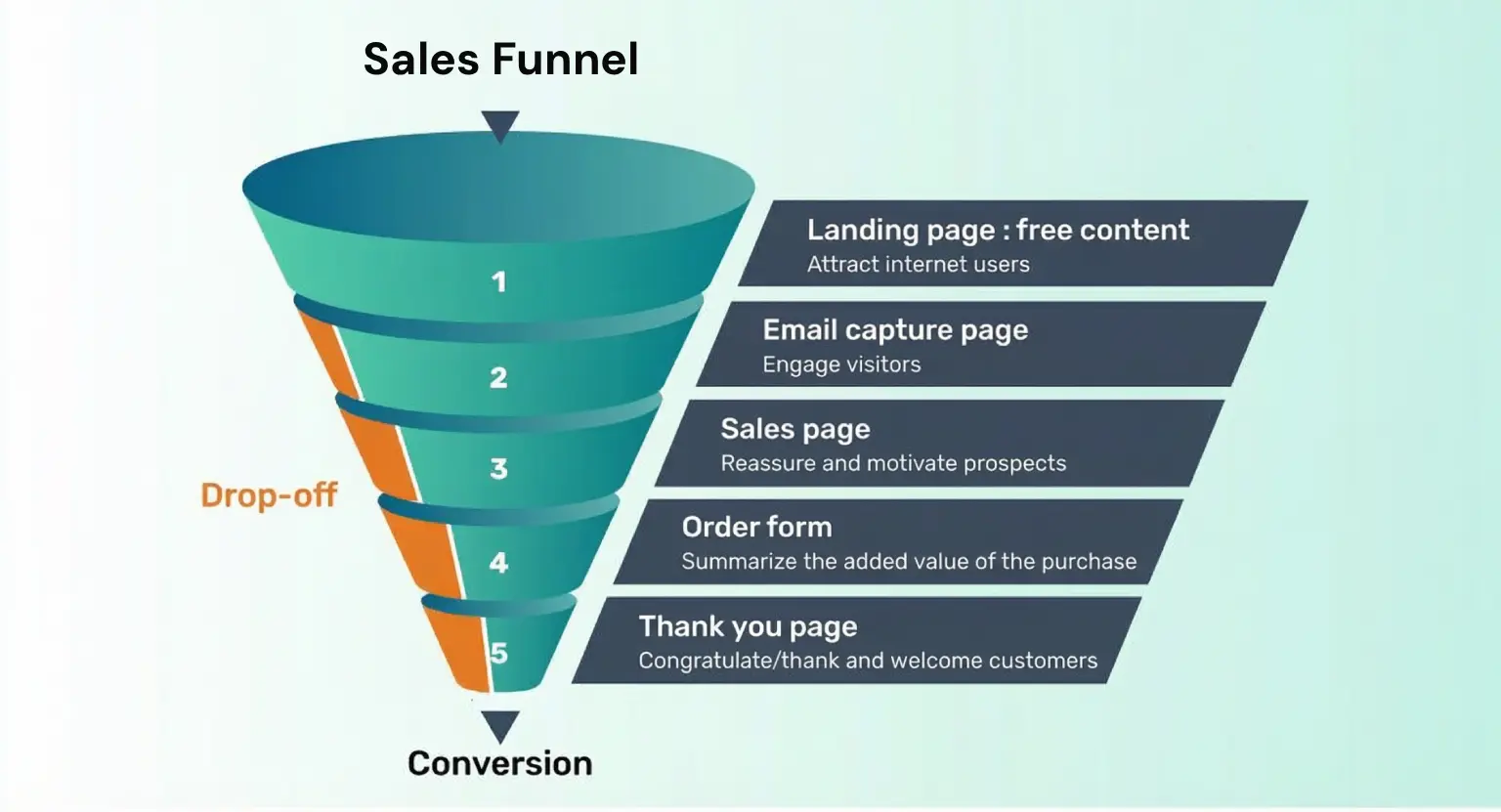
The engine behind it all: content marketing, email, and a straightforward sales funnel that guides people from first discovery to purchase decision.
What Does an Infopreneur Actually Do?
They create useful content (articles, videos, podcasts), design educational products (courses, ebooks, workshops), choose the right hosting platforms, promote their offer (SEO, email, social media), engage with their community, measure what's working, and optimize from there.
At the core of the job: making the promise crystal clear and the next step obvious.
How to Become an Infopreneur in 5 Steps
Step 1 - Validate Your Offer and Your Persona
Start with the foundation: who are you helping, and what change are you promising them?
Write your "before > after" in one clear sentence.
For example: "In 4 weeks, learn to speak for 10 minutes in front of an audience - without anxiety or blanking."
Keep it grounded: a measurable result, a realistic timeframe, a concrete benefit.
Then go talk to people. Run quick conversations with 5 to 10 people from your target audience - a DM, a phone call, a short form. What matters is the feedback, not the format.
Ask them:
-
What's your biggest obstacle right now?
-
What have you already tried?
-
What would you pay to solve it?
You're not looking for validation or compliments. You're looking for their exact words - the specific phrases you'll use on your page to speak the way your future customers think.
Practical tip: collect three pieces of evidence - a mini testimonial, a before/after metric, a screenshot. Even modest proof builds credibility fast.
If you're starting from scratch with no track record, offer a pilot program at a preferential price in exchange for detailed feedback. It's the fastest way to generate your first sales and sharpen your product at the same time.
Step 2 - Build Your Capture Page (and Offer a Quick Win)
Your capture page isn't a catalog. It's an invitation - a chance for someone to get a fast, concrete result, and for you to earn a contact genuinely interested in what you offer.
Offer a lead magnet that's directly connected to your main product: a guided exercise, a template, a checklist, a calculator, a 30-minute mini-workshop. What matters isn't the length - it's the time saved and the clarity delivered.
Keep the page tight:
-
a few lines explaining what they'll get and why it matters right now.
-
One short testimonial.
-
A simple form (first name + email).
-
A clear button.
And above all: check how it looks on mobile first. The majority of your visitors are coming from their phones.
Setup: with an all-in-one LMS like LearnyBox, you pick a landing page template, customize the copy, connect the form to your email list, and publish. No technical headaches - everything is built to work together.
Move fast, then iterate. Getting something live is the only way to start learning what actually converts.
Step 3 - Write a Sales Page That Supports the Decision
Your sales page is where you bring it all together: remind people of the transformation, show them exactly how you'll get them there (modules, duration, format, materials), provide evidence, answer the questions they're already asking, and make payment easy.
Write to your prospect the way you'd talk to someone you respect : explain the "how" without jargon, give them a real preview - one video clip, one page from the ebook, one template...
Offer a clear guarantee if it makes sense for your model, and close with a specific, direct CTA.
Setup: start from a sales page template, activate the Social Proof and FAQ blocks, and connect an order form with payment options (single payment or installments as needed).
Run a test purchase before you go live. Walk the full journey your future customers will take - Catch the friction before they do.
Step 4 - Build Your Email Sequence (Deliver, Help, Invite)
Email is still the most reliable conversion channel available. You don't need to write a novel - you need a clear rhythm and a clear purpose for each message.
A simple framework that consistently works:
-
Day 0 - Welcome + delivery: give them the promised access, explain what's coming, and invite a quick reply ("What's holding you back the most right now?").
-
Day 2 - Quick win: a short guided exercise that delivers a small, immediate result.
-
Day 4 - Story + method: a real customer story, a common mistake, and your straightforward approach to solving it.
-
Day 6 - Proof: a mini case study, a screenshot, a testimonial. Links to a detailed page.
-
Day 7-8 - Offer: present the course, summarize the value, spell out the guarantee and the next step.
Then follow up with relevant, well-timed messages: cart reminders, a mini-FAQ addressing the top objections, a spotlight on one specific benefit.
Stay human. Sign with your first name. Invite replies. You'll learn as much from those responses as you will from your metrics.
Setup: build the sequence inside your LMS's integrated email tool, route warm leads toward your paid offer, and keep each message focused on a single goal.
Step 5 - Track Your KPIs
You don't need a complex dashboard. Five numbers are enough to run a sharp campaign:
-
Capture rate = (subscribers ÷ capture page visitors) × 100.
>> If it's low: revisit the promise, shorten the form, add social proof or a testimonial.
-
Email open rate = (unique opens ÷ recipients) × 100.
>> If it's low: test the subject line and pre-header, adjust timing or send time.
-
Email CTR = (unique clicks ÷ recipients) × 100.
>> If it's low: sharpen your call to action and make the benefit of clicking right now more concrete.
-
Sales page conversion rate = (orders ÷ sales page visitors) × 100.
>> If it's low: check the offer-audience fit, add social proof, simplify the payment options or introduce installments.
-
Revenue per visitor = total revenue ÷ total visitors. Useful for calculating how much you can afford to spend on paid traffic.
-
Review your numbers once a week. Pick one thing to improve at a time - a CTA, a subject line, a type of proof, a FAQ answer. Test it, measure it, keep what works, and keep going.
Revenue Models: Find the One That Fits
Start with a core product - a focused course, a live workshop - and a natural add-on (a template pack, a Q&A session, a mini-coaching call).
-
A subscription model works well if you publish consistently (community, premium newsletter, monthly content drops).
-
Webinars are one of the most powerful conversion formats if you're comfortable in front of an audience - they build a real personal connection in a one-to-many setting.
-
Affiliate marketing can be a solid complement, but it will never replace the leverage of your own products.
What Successful Infopreneurs Have in Common
Thriving infopreneurs work in wildly different niches - productivity, tech, marketing, wellness, all kinds of coaching, and more.
But they share the same fundamentals: a specific promise, visible proof, and a simple process - capture, emails, sale.
They publish regularly, respond to messages, and improve their funnel by isolating one variable at a time. You can do exactly the same, at whatever pace works for you.
Ready to Launch Your Sales Funnel?
You now know how to become an infopreneur : align a genuine promise with a real need, deliver a quick win, show your method, build proof, and make the next step easy to take.
That's the beginning of a business - and a different kind of professional life.
Start simple, measure what happens, and improve from there.
One day, come back and tell us how it went ;) !
Ready to get started & share your knowledge with the world ?
Create your Learnybox Free Account now !
FAQ - How to Become an Infopreneur
What is infopreneurship?
The creation and sale of digital information products - online courses, ebooks, workshops, webinars, templates - to help a specific audience solve a specific problem.
Who can become an infopreneur?
Anyone with useful expertise and the willingness to share it in a clear, accessible way. You don't need to be the top expert in your field - you just need to be far enough ahead of the people you're helping.
Where do I start?
With your promise and your persona. Validate your before-and-after, create a lead magnet that bridges to your paid offer, then build a simple sales funnel - capture page, email sequence, sales page.
How long does it take to launch?
A first version can be live in 1-2 weeks if you stay focused: one capture page, five emails, one sales page. The goal isn't perfection - it's to get something real in front of real people and start learning.
Do I need a big budget?
Not to get started. An all-in-one LMS eliminates the need to stitch together multiple tools. Your main investment is time - to sharpen your promise and create your first valuable piece of content.
Ready to take the first step?
✨ Get Started for free with Learnybox - no credit card required ✨