








Podia Alternatives: Best Platforms to Sell Online Courses in 2026
Podia Alternatives : Best Platforms to Sell Online Courses in 2026
Key Takeaways
-
Podia is amazing for beginner creators but often limits growth once you require deep sales pipelines and localized processing.
-
For automated scaling, LearnyBox provides complete marketing funnels, native auto-webinars, and seamless checkout integrations.
-
Specialized tools like Thinkific or Teachable require complex external extensions to match actual all-in-one platform setups.
So, you are ready to find a better home for your digital academy, community, or online courses?
To be totally fair, Podia has done a spectacular job of keeping things incredibly simple for creators who love a minimal, clean interface…
But if you have been running your business for any real length of time, you likely already know that simplicity comes with major, hidden trade-offs.
The digital economy in 2026 demands highly personalized marketing paths, seamless checkout pipelines, and incredibly deep learner analytics. If your current tools cannot support those modern frameworks, you are actively leaving massive profits on the table.
When you start hitting those technical walls, it is usually a clear sign that your brand has outgrown its starter kit.
We want to make sure your upcoming business transition is as smooth and painless as possible, which is why we spent dozens of hours evaluating the real-world limits of Podia and comparing it to the absolute best alternatives available today.
Whether you need heavy marketing automation, high-converting checkout experiences, or custom enterprise structures, there is an ideal digital match waiting for your brand.
The Invisible Ceiling of Podia in 2026
Let's be completely real about where Podia starts to break down when your brand actually begins to scale.
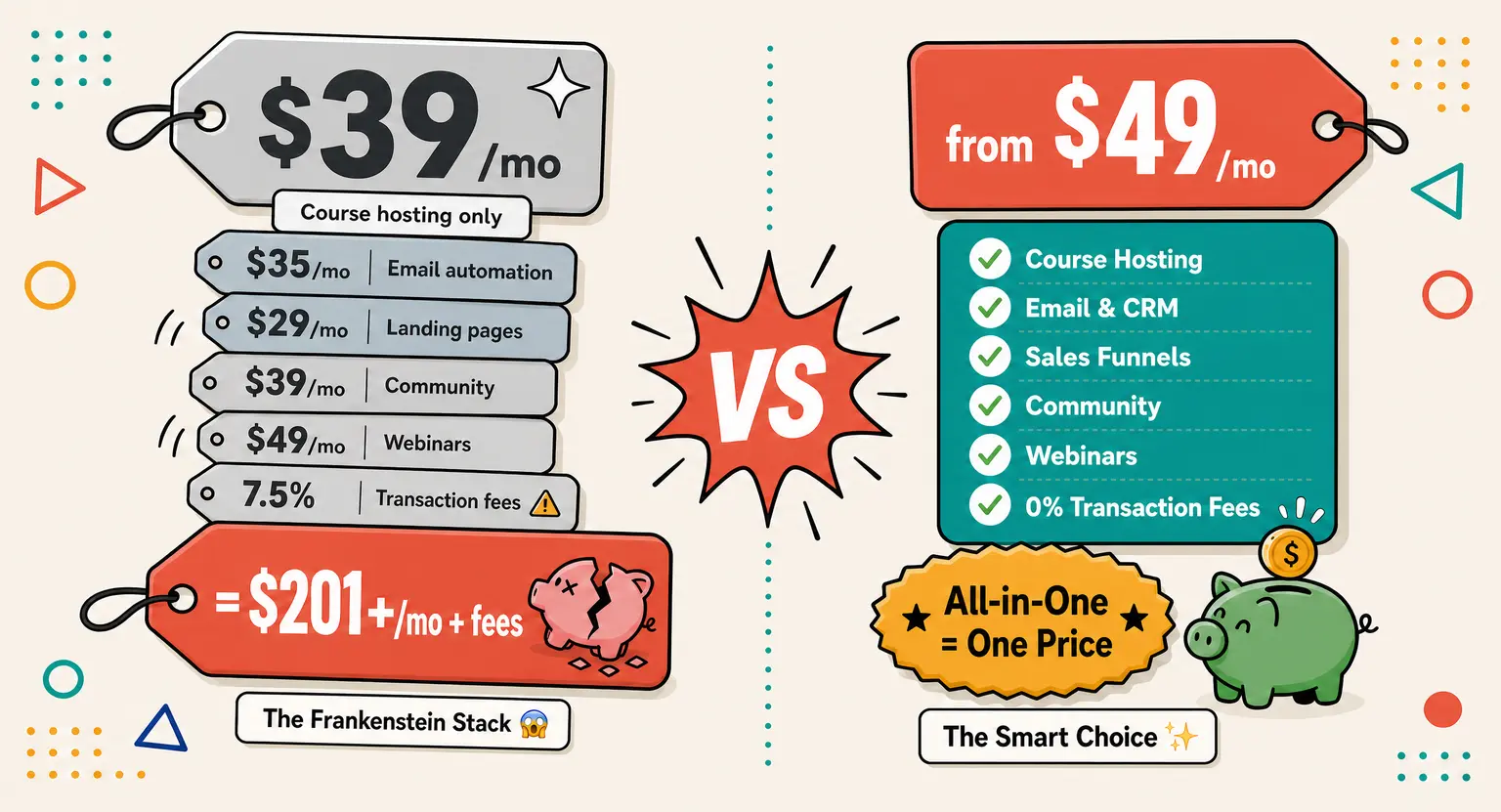
For starters, their entry-level plans still attach transaction fees, which can eat into your net profit margins shockingly fast once your monthly sales pass a thousand dollars.
That five percent fee seems harmless when you start, but it quickly transforms into a massive annual bill that could have easily paid for a complete premium software suite.
Beyond standard billing math, the platform lacks a genuine marketing engine.
You can build neat product pages, but building advanced, multi-step sales loops is next to impossible without pasting together external widgets.
Another major roadblock is the native email setup. While Podia offers broadcast emails and basic autoresponders, it fails to provide the deep, behavior-triggered segmentation that modern email marketing relies on to perform.
If a prospect drops off at your checkout page, or a student stops halfway through module one, you cannot easily configure a targeted sequence to pull them back in.
Also, if you want to run high-converting, automated evergreen webinars, the complete lack of native tools means you will have to pay for expensive third-party platforms.
If you want to see exactly how these technical limitations stack up, explore our deeper analysis on LearnyBox vs Podia to see where the real platform gaps exist.
LearnyBox – The Ultimate All-in-One Powerhouse
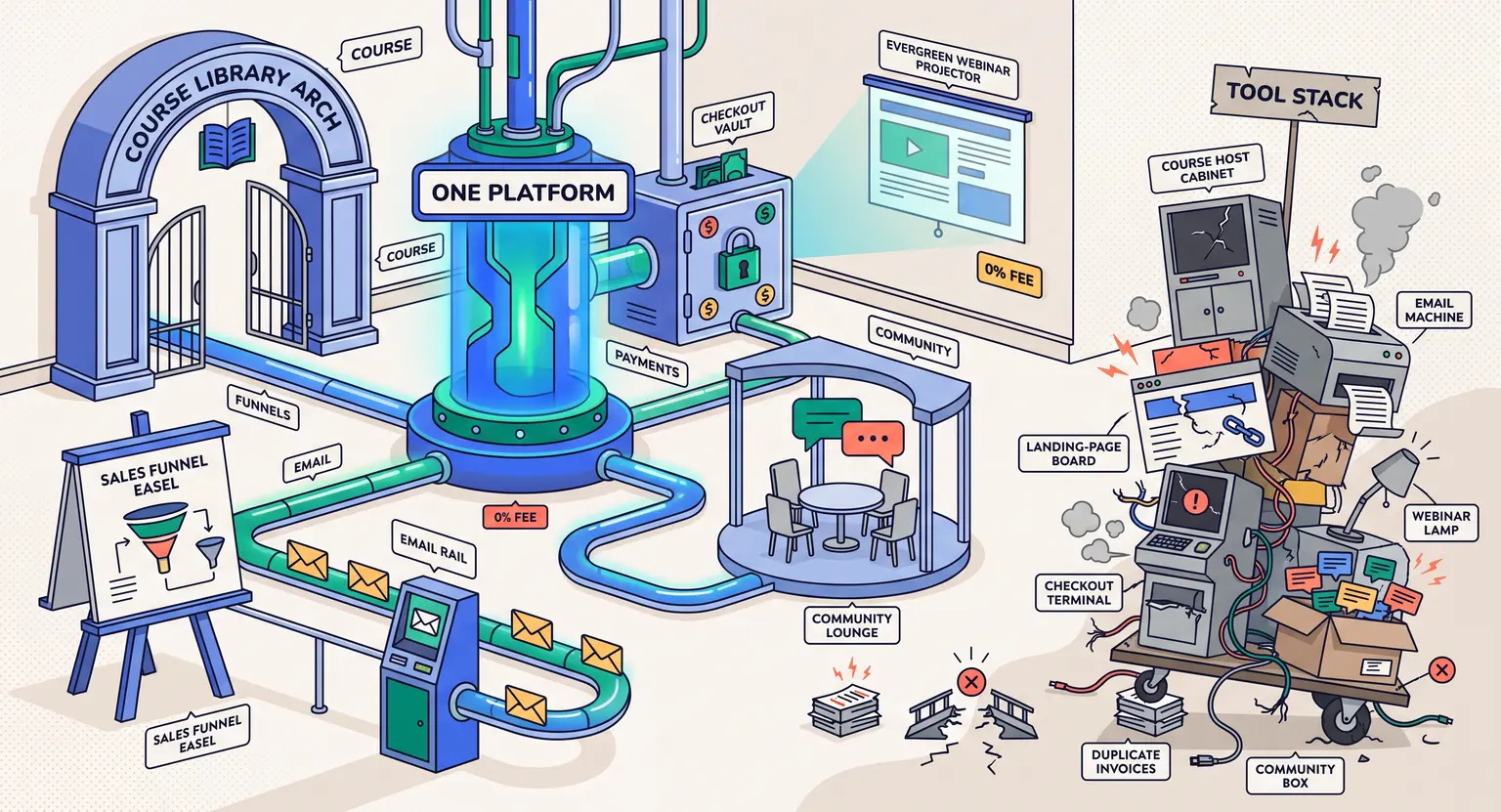
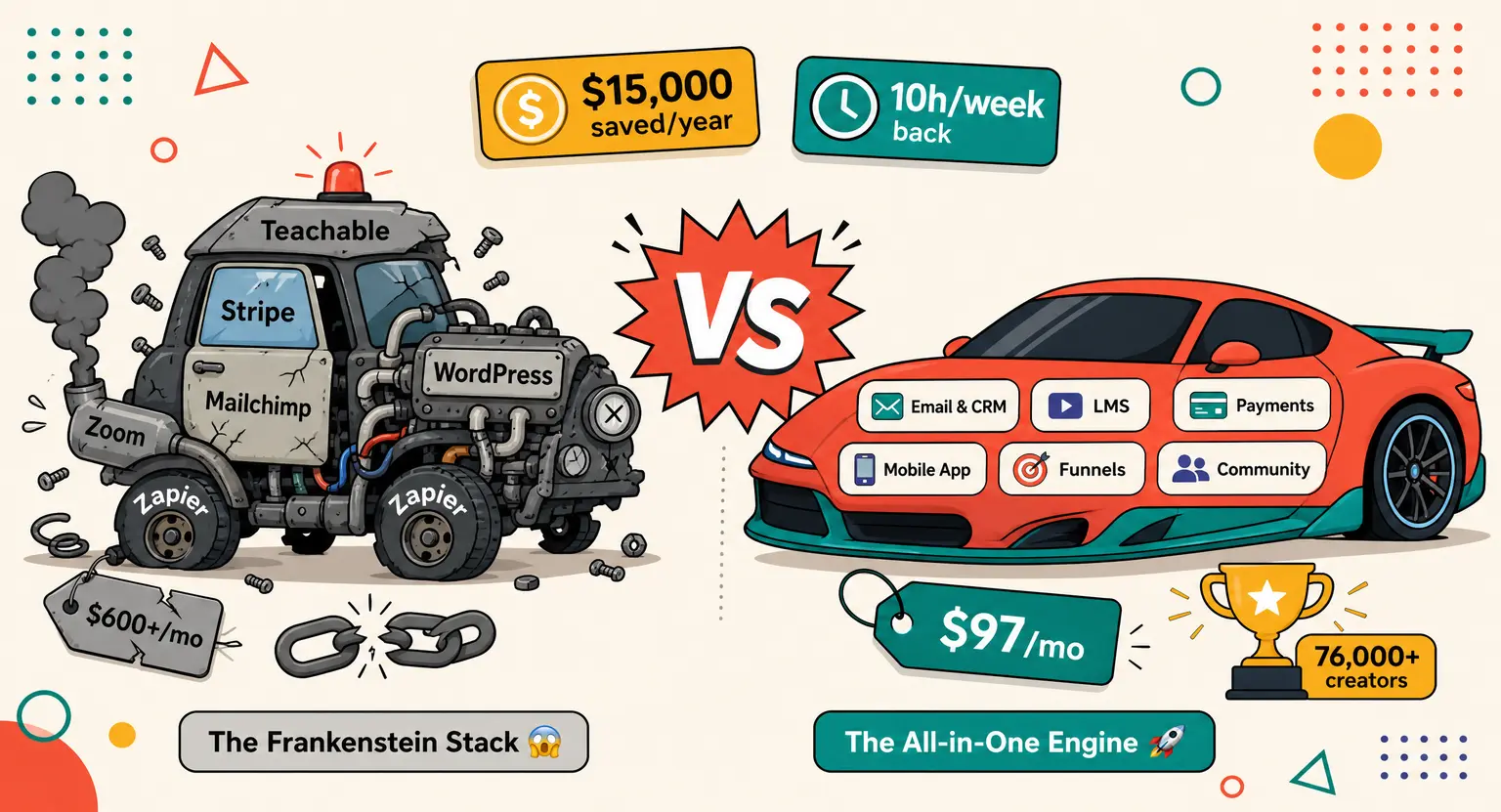
If you are tired of paying for five different software tools just to make your marketing talk to your learning portal, LearnyBox offers a huge, welcome relief.
It is engineered to act as an uncompromised, complete digital ecosystem where you can build beautiful courses, run live webinars, craft automated sales paths, and manage payments.
Think of it as a logical next step when you want to migrate your entire knowledge brand under a single system and truly own your learner relationships.
Instead of fighting with third-party software connections to link your landing pages to your promotional emails, you can launch custom marketing pipelines directly in the visual builder interface.
This means your lead capture, checkout bumps, downsells, and virtual academy are completely hardwired to work in harmony instantly.
Additionally, your automations are backed by an integrated email marketing platform that monitors student progress and updates your CRM automatically.
So, when an active learner gets stuck on a specific lesson, your platform can instantly trigger a supportive coaching message with zero manual intervention on your part.
If your primary goal is to grow your business into a scalable, highly optimized sales engine, deploying an all-in-one platform to sell online courses ensures you keep your complete focus on customer relations rather than debugging API setups.
Plus, with secure, native tools like LearnyPay, you do not have to stress over unpredictable, external account holds.
Kajabi – The Choice for High-Ticket Premium Brands
When you look at the landscape of high-ticket digital programs, Kajabi is almost always in the conversation.
It has carved out a massive presence as a premium choice for established creators who are comfortable paying a higher monthly cost in exchange for a streamlined, highly polished experience.
To be fair, Kajabi is fantastic if you want elegant pre-made templates and a strong focus on community, but it does require a serious investment that might be overkill for early-stage entrepreneurs.
But if you have the budget to support its premium pricing, it provides a very reliable space to host your elite memberships and digital coaching packages. It gives your audience a highly uniform experience, which is critical when you are selling packages worth thousands of dollars.
If the premium price tag feels a bit restrictive for your current stage of growth, or if you simply do not need all their complex legacy features, you can evaluate other options by exploring these top Kajabi alternatives to see what better fits your budget.
Thinkific & Teachable – The Legacy LMS Specialized Platforms
Now, if your business is purely focused on delivering structured, academic learning and you do not care about funnel builders, these classic choices might fit your style.
Thinkific has built a very strong reputation on its robust academic features, giving you excellent student assessment options, graded assignments, and advanced video tracking.
Similarly, Teachable remains a giant in the standard course hosting world with a very straightforward checkout process and intuitive drag-and-drop course curriculum building.
But there is a major catch that you need to watch out for. Neither of these platforms excels at marketing or high-converting sales sequences. If you choose either option, you will inevitably have to buy extra software for email marketing, sales page design, and landing page creation.
If you want to check how they fit against different business goals, look closely at our deep reviews of Thinkific alternatives and see if a dedicated course player is truly what your brand needs.
To expand your research even further, we also have an in-depth breakdown of other platforms that details how other systems handle student engagement and overall transaction fee structures.
These options are wonderful for traditional school models, but they can quickly lead to platform fatigue if you want to run complex promos or build interactive communities.
So, evaluate whether you actually want a pure learning player or a comprehensive marketing engine before making a final decision.
High-Value Comparison Matrix
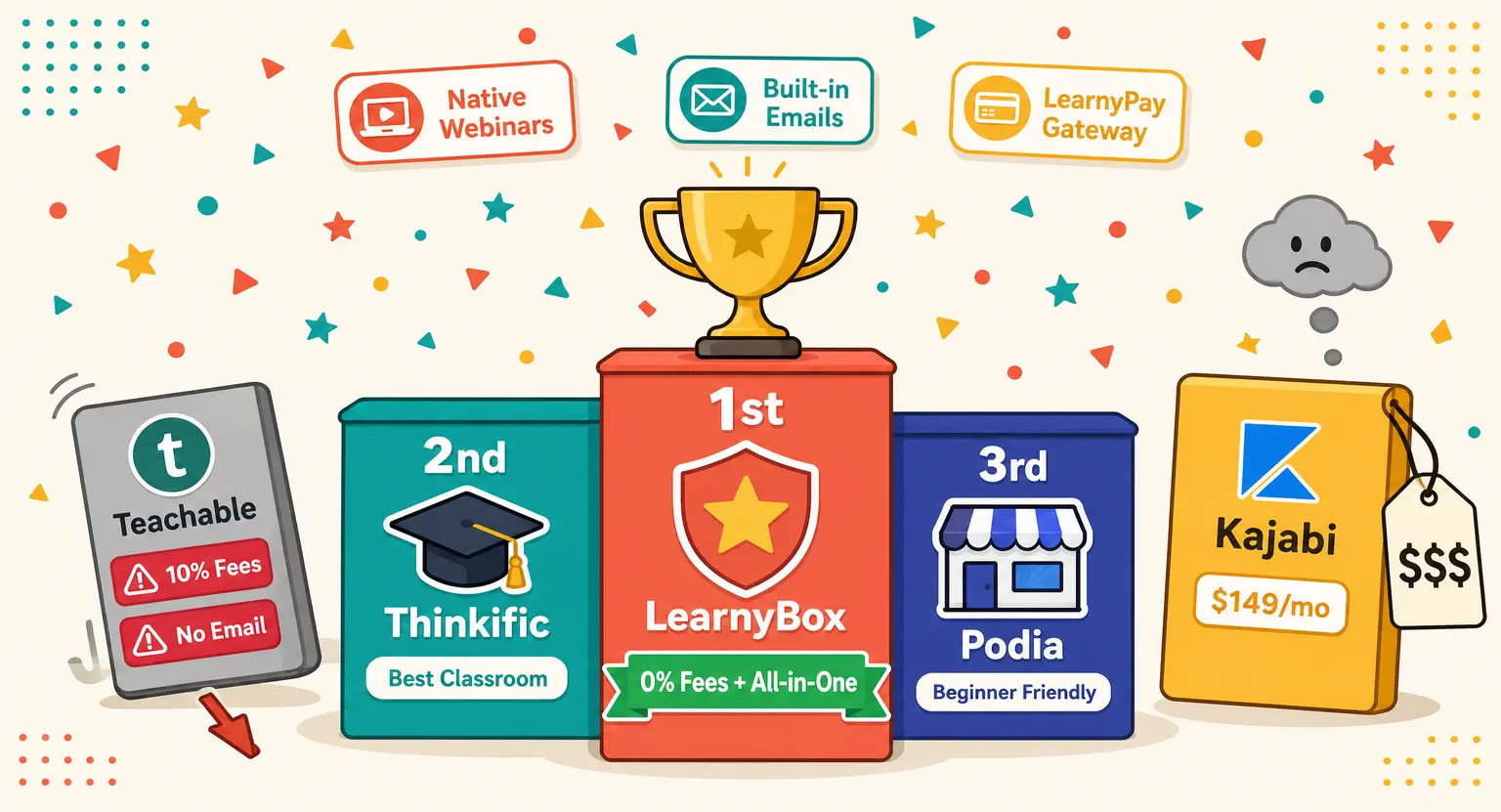
| Platform | Marketing & Funnels | Email & CRM Depth | Webinars | Starting price |
|---|---|---|---|---|
| Podia | No structured funnel structures; basic layout options. | Basic newsletter broadcasts and simple linear sequences. | Only links to third-party tools; no native hosting. | $39/mo (includes a 5% transaction fee limit). |
| LearnyBox | Comprehensive drag-and-drop sales funnels featuring native upsells. | Advanced behavior tracking, tagging, and automated loops. | Fully native live events and evergreen automated replays. | Free Tier / €39/mo (0% native platform commissions). |
| Kajabi | Strong pipelines, though template adjustments can feel rigid. | Decent list management with standardized tags. | Supports basic integrated lives but no true automated tools. | ~$149/mo (no platform fees). |
| Thinkific | Very limited checkout features; focuses purely on learning sites. | Basic transaction alerts only; requires third-party CRM. | No native solutions; requires active external integrations. | $49/mo (standard tiers). |
| Teachable | Simple course delivery; consider top Teachable alternatives now. | Simple student communications; highly limited segment filters. | Third-party only; no automated replay options. | $59/mo (plus additional fees on standard entry). |
How to Choose Your Perfect Match
So, how do you decide which way to turn? If you are a solo creator just testing out your very first digital guide, Podia might feel comfortable for your first month.
But if your goal is long-term, predictable growth, moving to an integrated engine will save you massive transition headaches down the road.
Organisms of training and medium-sized businesses will want to focus heavily on platforms that offer built-in compliance, automatic certification, and advanced user tracking.
Make sure you sit down with your notebook, map out your actual marketing dreams for the next two years, and choose the platform that lets you scale comfortably without charging hidden fees on your hard-earned sales.
Frequently Asked Questions
Why are transaction fees critical when choosing a Podia alternative?
A tiny 5% transaction fee on Podia's entry plan extracts a massive $500 monthly from a $10,000 revenue. Moving to a zero-fee alternative keeps your profit margins entirely intact for rapidly reinvesting in paid ads.
Can I migrate existing students and course content without losing data?
Premium platforms offer professional migration support to import your curriculum, resources, and pupil databases. LearnyBox handles this transition seamlessly to prevent any subscription disruption during your company's big platform transition.
What is the difference between an LMS and an all-in-one platform?
A traditional LMS system prioritizes structured learning metrics, quiz grading, and compliance records, completely neglecting marketing pathways. An all-in-one marketing system combines detailed course delivery natively with marketing sequences, CRM systems, and optimized sales checkouts.
Do these alternative systems support native evergreen webinars?
No, native evergreen webinar support is extremely rare.
While competitors like Kajabi and Teachable require external web tools to host ongoing workshops, comprehensive setups like LearnyBox offer native auto-webinars directly inside your core hosting account, thereby saving you thousands of dollars in extra software fees annually.








 How to Create a Course Refund Policy (Templates & Best Practices for 2026)
 How to Run a Beta Version of an Online Course (2026 Guide)
 How to Create a Cohort-Based Online Course (2026 Guide)
 How to Sell an Online Course With a Quiz Funnel (2026 Guide)
 How to Sell an Online Course Through a Sales Call (2026 Guide)