







Sales Funnel Stages Explained: Build Your 2026 Pipeline
Sales Funnel Stages Explained : Build Your 2026 Pipeline
Ever felt like you are throwing money at paid ads, social media posts, and blog content, only to watch visitors vanish?
It is a common frustration, especially today when human attention spans are shorter than ever...
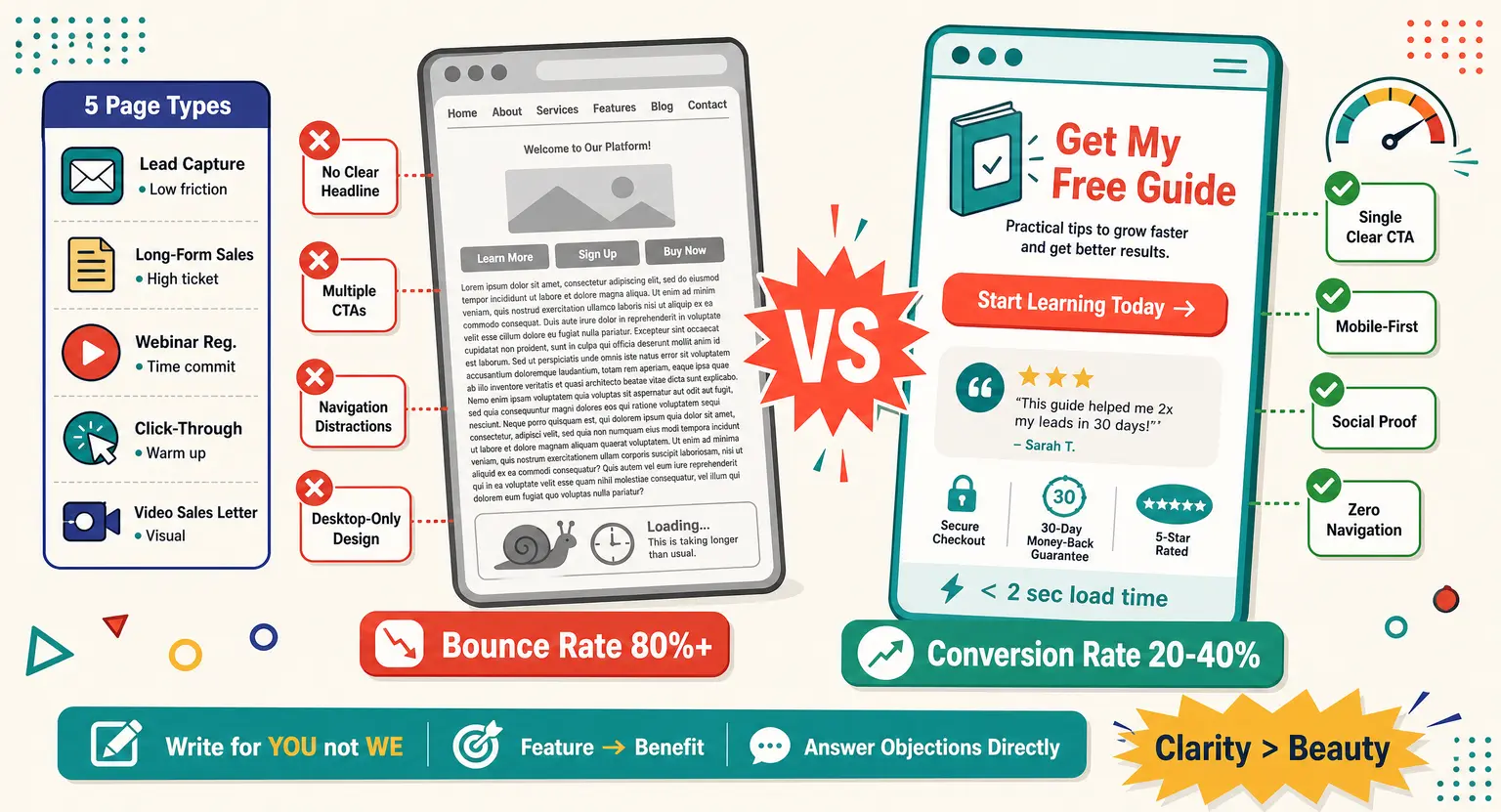
If you send cold traffic straight to a chaotic, crowded homepage with fifty options, you paralyze potential buyers. They get overwhelmed, freeze, and leave.
A structured path transforms this experience entirely. It acts like a polite digital concierge, holding a customer's hand from initial brand discovery to their actual checkout. But to get this working successfully, you must map out your sales funnel stages with precision.
Once we started mapping actual user behaviors instead of relying on dry theories or gut feelings, everything clicked - Our core conversion metrics climbed because we finally aligned our messaging with the prospect's real-time emotional state.
Let us break down how these stages function under the hood so you can stop losing sales tomorrow.
Key Takeaways
-
Simplification Wins : eliminating excess navigation links and extra options on landing pages keeps prospects focused on a single call to action.
-
Relevance is King : always match the specific promise made in your top-of-funnel ads directly to your landing page copy.
-
Automation Empowers : moving your leads seamlessly from their initial entry to the final sale is easier with automated sales funnels.
-
Continuous Improvement : boost your profit margins regularly through systematic, data-backed funnel conversion rate optimization.
The Psychology Behind Your Buyer's Journey
To build a high-converting machine, you must understand the psychological shift that happens as a stranger moves from knowing nothing to buying your product.
People do not buy on a whim, especially online. They follow a subconscious sequence of micro-decisions.
First, they must realize they have a pain point that needs solving.
Next, they look for options, weigh choices, and decide who to trust. If you pitch a high-ticket offer during their first interaction, you scare them away. It is like asking someone to marry you on the first date.
Instead, your commercial marketing needs to meet them exactly where they are at that moment.
That is why modern digital paths are structured into distinct phases. By treating each step as a separate relationship-building tool, you build momentum and establish trust block by block.
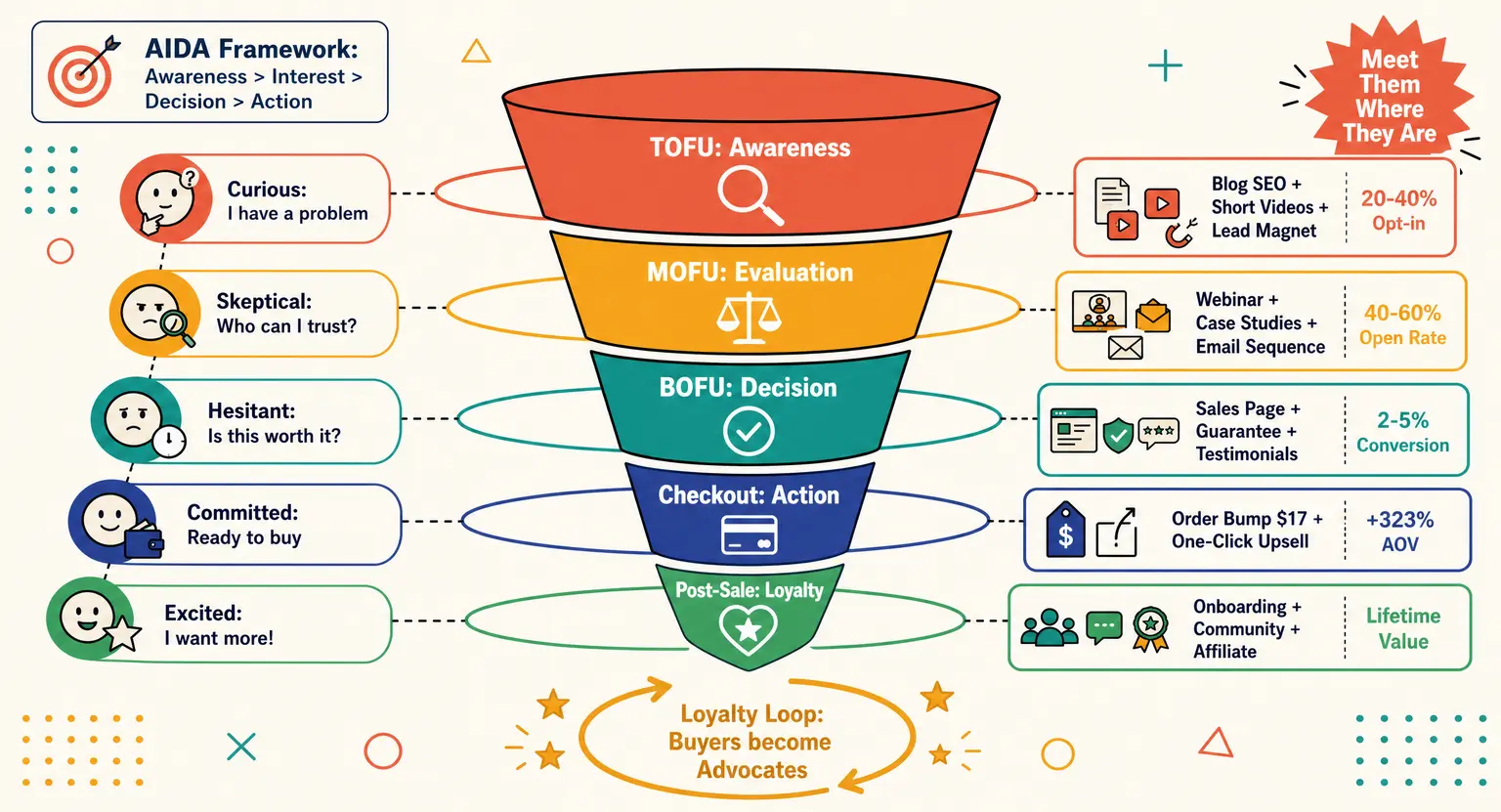
Stage 1 : TOFU (Top of the Funnel) – Broad Awareness
This is the widest part of your entire system. At the top of the funnel, your goal is simple : get on the radar of people who have never heard of you but are experiencing a problem you solve.
They are not looking to buy your specific brand yet,
They want answers to their immediate questions.
To attract this traffic, you must create educational, high-value content that addresses their core challenges. Think of blog posts, search engine optimization, short video clips, or social media campaigns that speak directly to their pain points.
-
Social Media Content : sharing quick, helpful tips on platforms where your audience hangs out is a great starting point.
-
Search Engine Optimization : writing helpful articles that answer specific search queries helps you attract organic visitors daily.
-
Paid Advertising : running highly targeted campaigns can fast-track your visibility and bypass organic waiting periods.
Once they arrive, capture their contact information. Use a free checklist or mini-course as a highly appealing lead magnet.
By offering immediate, practical value in exchange for a contact address, you change the dynamic. You are no longer a random brand on the internet; you are a helpful resource.
Getting this right is the foundational step of learning how to grow an email list from scratch.
Stage 2 : MOFU (Middle of the Funnel) – Evaluation and Trust
Now that you have gathered contact info, the relationship shifts. These people are no longer cold visitors; they are leads.
In the middle of the funnel, prospects start evaluating whether your solution is the absolute best fit for their situation.
They are doing research, comparing options, and figuring out if your offer justifies the investment.
Your job is to educate, build authority, and dismantle their objections one by one. This is where deeper, more immersive content formats work best.
-
Case Studies : real examples of how you helped past clients achieve their goals build instant social proof.
-
Video Demonstrations : showing your product or training in action builds familiarity and visual credibility.
-
Email Sequences : autoresponders that share useful tips and answer common questions keep your brand top-of-mind.
This is also a prime stage to implement a tripwire funnel explained in modern marketing. A tripwire is a very low-cost, high-value offer designed to convert a lead into an active paying customer quickly.
Another remarkably effective middle-of-funnel strategy is hosting live or automated webinars. A webinar allows you to present your expertise to an engaged audience for an hour, address their concerns live, and introduce your core solution naturally.
Through consistent value, you establish deep authority. You are teaching your prospects how to think about their problem, which naturally leads them to view your product as the ultimate answer.
Nurturing Leads with Email and Structured Content
Nurturing is the glue that holds your entire business together. If you stop communicating with your freshly captured leads, they will quickly forget who you are.
Regular, thoughtful email engagement is the only way to keep them moving down the path toward purchase.
But sending random broadcast emails is not enough - you need structured, automated campaigns that trigger based on how your users behave.
For instance, if a lead downloads a guide about fitness, they should receive a series of emails specifically about workouts, not nutrition.
This level of personalization is why mastering email marketing for course creators is so vital for anyone selling specialized knowledge - it is about sending the right message to the right person at the exact right time.
Using professional tools simplifies this process. An integrated system allows you to tag users, track clicks, and automate follow-ups without manual hands-on work.
When your marketing and delivery live under one roof, you eliminate tech headaches.
That is why choosing the best all-in-one course platform makes such a massive difference for growing brands - having everything seamlessly connected means you can focus entirely on creating great content and engaging your students rather than constantly fighting disconnected APIs.
Stage 3 : BOFU (Bottom of the Funnel) – The Buying Decision
At the bottom of the funnel, user hesitation narrows. Your prospects are highly educated about their problem, they know who you are, and they are actively deciding whether to make the purchase.
This is where you make your direct pitch.
Do not assume they are ready to buy without any extra nudging, they still have lingering doubts :
-
Will this really work for me?
-
What if I do not like it?
-
Is there a guarantee?
To tip the scale in your favor, your product pages, sales pages, and emails must address these final friction points head-on.
This is the stage where you want to emphasize specific offers, offer generous guarantees, and show active testimonials.
-
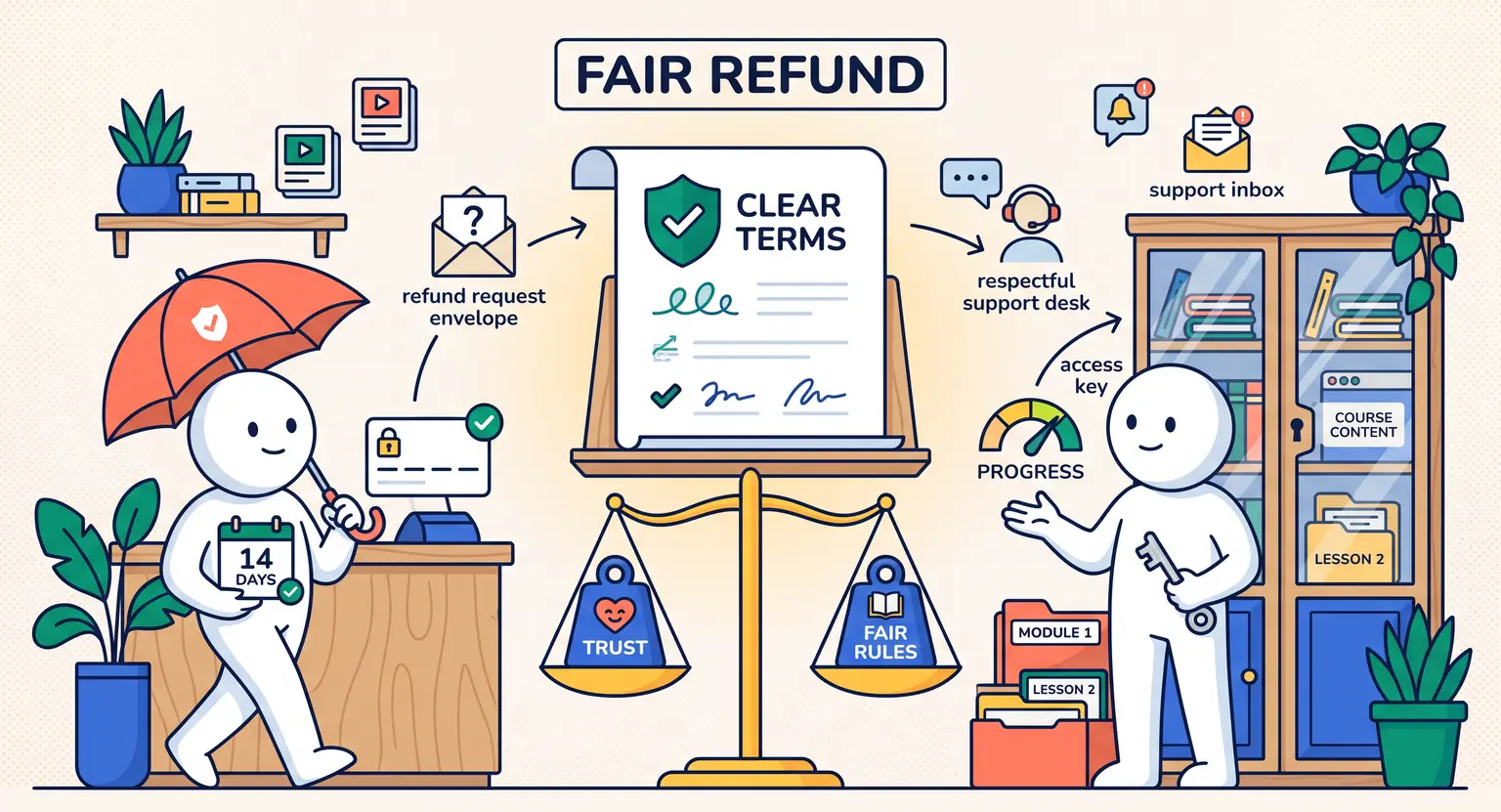
Risk Reversal : offering a 30-day money-back guarantee removes the fear of making a bad financial decision.
-
Social Proof : displaying prominent video reviews from real customers who achieved results builds immense reassurance.
-
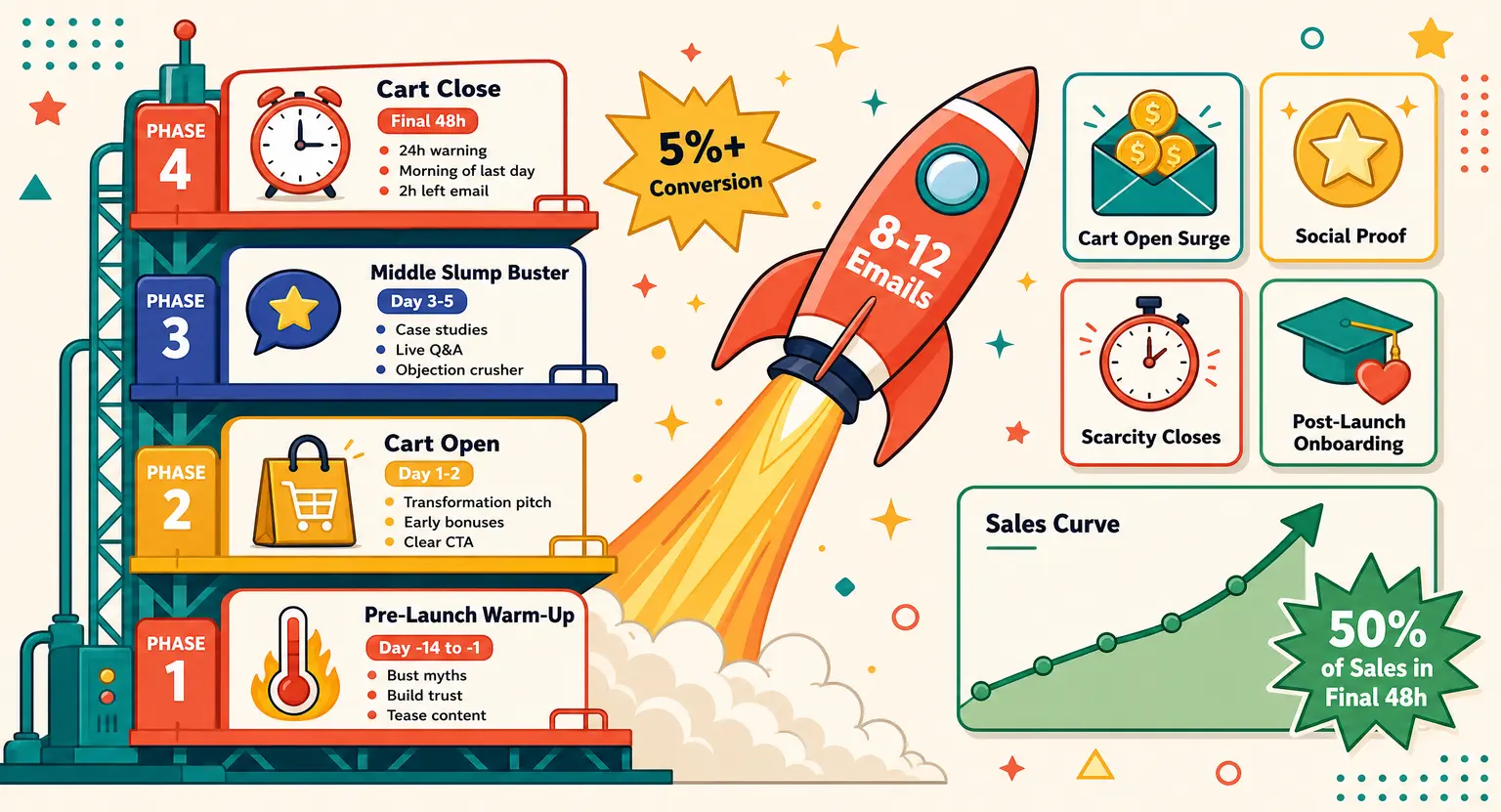
Urgency & Scarcity : creating a limited-time bonus or a closing enrollment window encourages action instead of procrastination.
Your pricing layout plays a crucial role at this stage. If your pricing is confusing or poorly justified, buyers will back out at the last second.
That is why implementing a clear, well-structured online course pricing strategy is so vital for creators - you must clearly explain the immense value of what they receive so the final cost feels like a complete steal.
Closing the Deal : Optimizing Checkout and Upgrades
The moment of transaction is where many business owners lose money without realizing it.
If your checkout page has too many fields, requires a complicated login, or feels unsafe, your buyer will abandon their cart.
You want the buying experience to be as smooth as silk.
One-click checkouts, secure badges, and clear credit card fields are absolute musts... But the conversion process does not end when they click buy.
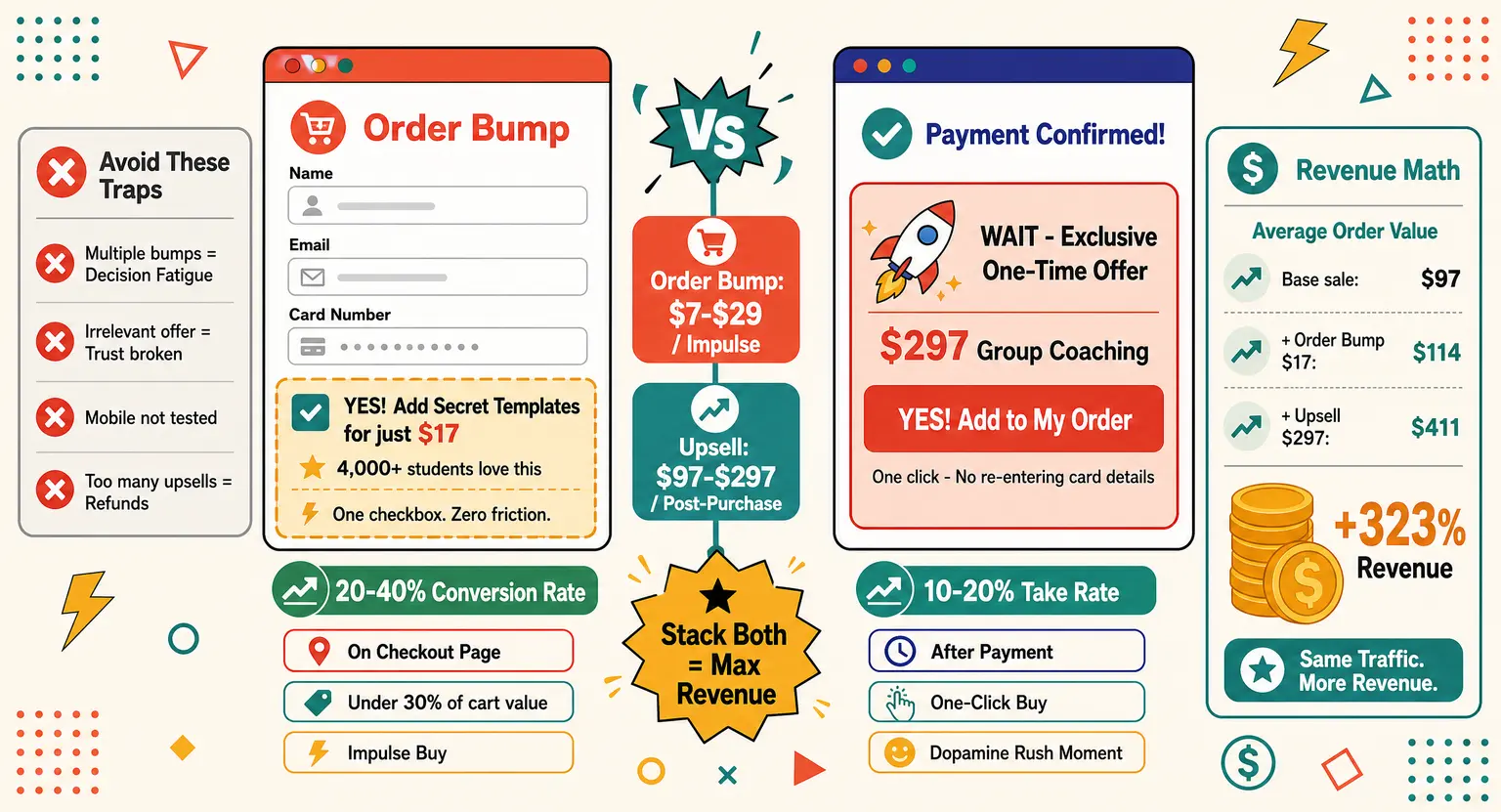
This is your prime opportunity to increase your average order value effortlessly. By introducing complementary offers right at the point of sale, you capitalize on the buyer's active purchasing momentum.
We highly recommend utilizing smart upsell and order bump strategies during this critical step.
An order bump offers a small, relevant add-on right on checkout, while an upsell presents a valuable premium upgrade immediately after payment.
-
The Order Bump : a handy $17 digital workbook added with a single checkbox right before completing checkout.
-
The Post-Purchase Upsell : a premium, advanced coaching session or mastermind group offered immediately after the main purchase.
By making these complementary offers highly relevant, you solve an additional pressing problem for your client while dramatically increasing your overall business revenue.
It is a true win-win scenario that requires zero extra web traffic.
Post-Purchase : Retaining Your Customers and Building Advocates
Many entrepreneurs make the mistake of thinking their job is done once the payment clears, but that is actually where the most profitable phase begins.
It costs far more to acquire a new customer than to retain an existing one.
Once someone buys, your sole primary goal is to over-deliver on your promises. Make sure they actively use your product, get incredible results, and feel completely supported throughout their entire learning journey.
For educational programs, design a smooth onboarding experience : send automated progress check-ins, celebrate micro-wins, and provide easy support access.
This direct path of turning buyers into raving fans is essential when you learn how to launch an online course that builds long-term authority. Happy customers will buy again and tell friends, driving free organic referrals.
Providing a world-class customer experience transforms buyers into active brand ambassadors - they happily do your marketing for you by writing positive reviews, sharing referral links, and validating your authority across the web.
Choosing the Right Business Foundations
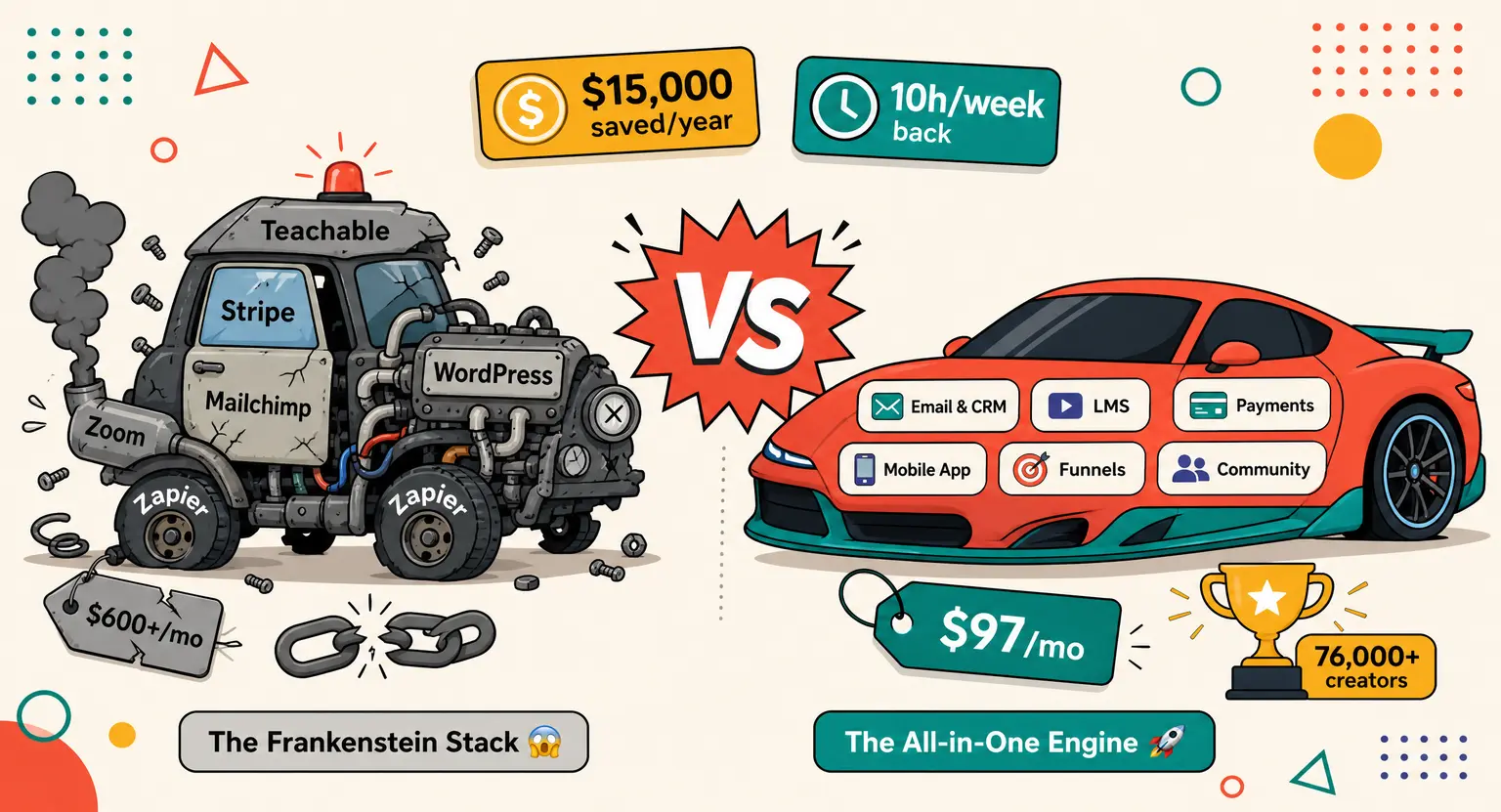
When you look at all these moving pieces, it is easy to feel overwhelmed. You need a landing page builder, email system, checkout manager, and host. Managing multiple software subscriptions is a recipe for tech headaches.
That is why successful modern creators host their entire systems on fully integrated ecosystems. Having your courses, sales pipelines, automated webinars, and emails under a single friendly roof saves you from expensive mistakes.
If you are truly ready to stop fighting with disconnected software, build your business on a solid infrastructure. Start your digital venture on LearnyBox today and watch how easily your visitors transition from curious browsers into lifetime loyal fans.
Side-by-Side Breakdown of the Core Funnel Phases
To simplify how these phases stack up, let us examine their primary objectives, emotional drivers, and ideal marketing collateral.
Having a clear reference map ensures you do not waste time creating the wrong content.
|
Funnel phase |
Lead mindset |
Main goal |
Best asset types |
Success metric |
|---|---|---|---|---|
|
Top of Funnel (TOFU) |
Curious |
Generate broad brand awareness and collect initial emails |
Blog articles, search optimization, short videos, infographics |
Lead capture rate |
|
Middle of Funnel (MOFU) |
Skeptical |
Build deep authority, educate on solutions, filter non-buyers |
Interactive webinars, case studies, automated sequence campaigns |
Email open rates |
|
Bottom of Funnel (BOFU) |
Hesitant |
Convert active leads into happy paying customers |
Demos, detailed sales pages, risk-free guarantee pledges |
Direct conversion rate |
|
Post-Sale Engagement |
Excited |
Deliver immense value and secure student success |
Onboarding emails, community platforms, progress alerts |
Product completion rate |
|
Brand Advocacy |
Loyal |
Turn satisfied buyers into brand ambassadors |
Affiliate program bonuses, community groups, upgrade offers |
Customer lifetime value |
Frequently Asked Questions About Sales Funnels
What are the four primary stages of a sales funnel?
The standard steps are Awareness, Interest, Decision, and Action, often called the AIDA framework.
Awareness attracts wide visibility, Interest sparks curiosity, Decision builds trust, and Action closes the purchase deal.
Can a beginner build a sales funnel without coding skills?
Absolutely. Modern all-in-one software tools provide ready-to-use layouts where you can build, launch, and automate landing pages, checkouts, and student portals without writing a single line of web code.
What is a good conversion rate for an online sales funnel?
A standard opt-in landing page converts around 20% to 30% of cold traffic.
For paid digital checkouts, a healthy sales rate sits between one and three percent, depending on your price point and audience warming.
Why are prospects dropping out of my sales funnel?
Most funnel drop-offs occur due to purchase friction, highly generic emails, or weak offers. Ensure your checkout page is fully simplified, remove excess page links, and send personalized automated emails based on user behavior.


 How to Create a Course Refund Policy (Templates & Best Practices for 2026)
 How to Run a Beta Version of an Online Course (2026 Guide)
 How to Create a Cohort-Based Online Course (2026 Guide)
 How to Sell an Online Course With a Quiz Funnel (2026 Guide)
 How to Sell an Online Course Through a Sales Call (2026 Guide)