







GDPR for Online Course Creators: The Complete Compliance Guide
Key Takeaways :
-
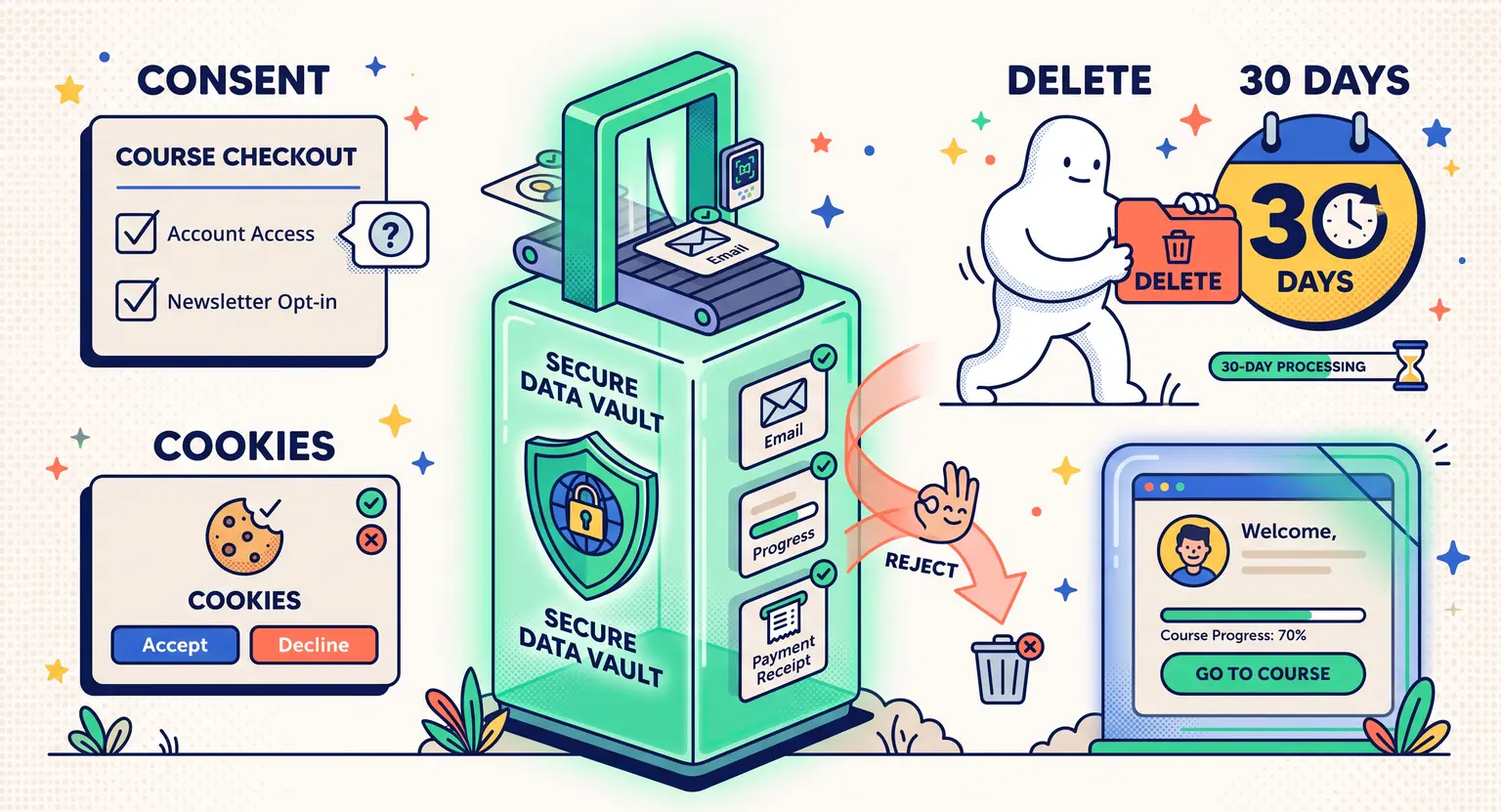
GDPR applies globally; if you sell to European students, you must comply regardless of your business location.
-
Setting up standard legal pages is completely non-negotiable for building legal protection and brand trust.
-
Active, un-ticked consent checkboxes are required for all marketing opt-ins at checkout.
-
You must fully respond to student data deletion requests within exactly thirty days.
Let's address the big, scary elephant in the virtual classroom. GDPR. Those four specific letters have sent shivers down the spines of digital entrepreneurs since 2018.
But here we are in 2026, and data privacy isn't some passing regulatory trend. It is a fundamental expectation of your online community. Students want to know that their data is tightly secured, not packaged and sold to the highest bidder.
So, what does this mean if you design and sell educational content? If you think you're exempt because you run your business from a sunny beach in Bali or a home office in Ohio, think again.
European regulations stretch far beyond its borders. If a single person in Paris, Berlin, or Dublin can purchase your program, you are officially on the hook.
Managing compliance does not have to feel like studying for a complex corporate law exam. Think of it as a quality seal for customer support. It is about treating your students' personal details with the same care you would want for your own private records.
Why Compliance Matters on a Global Scale
To build a thriving international coaching business, understanding how to sell online courses in Europe is critical.
The European market represents a massive segment of hungry learners, but they care deeply about digital privacy. They expect transparency at every step of their educational journey, meaning you must be prepared to handle their information securely.
If you ignore these concerns, you risk hefty fines. Even worse, you risk losing the trust of your community.
When students enter their credit card numbers into your checkout page, they are trusting you to guard their email addresses, learning progress, and personal details. Building a solid foundation of trust is the key to creating a highly sustainable business.
But how do you handle this without drowning in complex legal jargon? You start by structuring your platform to align with a few core concepts. It is actually simpler than you think when you break it down into manageable chunks.
The Core Pillars of GDPR for Course Platforms
Compliance rests on a few simple rules of thumb. Let's look at how they directly translate to your daily operations as an educator :
-
Data Minimization : Only collect the information you genuinely need. Do you really require a student's home address and phone number just to give them access to a slide deck? Probably not.
-
Active Consent : You cannot sneak students onto your promotional newsletter. Pre-ticked boxes are illegal. Consent must be a voluntary, specific, and positive action.
-
Total Transparency : Your community must know exactly who is processing their information, why, and where it is going.
This transparency starts with having clear documentation. Ensuring you have the right documents is crucial before you launch your marketing funnels. You need an updated privacy policy to establish trust early on.
Additionally, write straightforward terms of sale to clarify exactly how transactions and personal records are handled. This keeps your business safe and your clients fully informed.
Practical Student Data Mapping
Let's look at a quick comparison of standard data practices versus what compliance actually expects :
|
Data Point |
Standard Approach |
GDPR Compliant Approach |
|
Email Address |
Automatic subscription to all marketing lists upon purchase |
Separate checkboxes for account creation and newsletter opt-ins |
|
Browser Cookies |
Tracking everywhere without telling the user |
Clear banner allowing students to refuse optional tracking cookies |
|
IP Address and Billing |
Kept forever in an unencrypted database |
Safely stored with trusted gateways and cleared when no longer needed |
|
Learning Analytics |
Stored indefinitely even after account closure |
Anonymized or deleted when a student closes their enrollment profile |
Consent and Your Email Marketing
One of the biggest mistakes creators make is offering a free PDF and instantly adding everyone who downloads it to an automated email sequence. That is a direct compliance violation.
Proper email marketing for course creators requires absolute clarity. You cannot lock a free resource behind a forced newsletter subscription.
If you want to use a lead magnet while learning how to build an email list successfully, you must provide a clear, unambiguous choice. This simple adjustment ensures compliance and boosts your open rates by filtering out unengaged leads who just want a freebie.
Tell your audience they can download the worksheet, but give them a separate, unticked box to join your newsletter for ongoing tips.
The key here is simple : make the opt-in voluntary. People who actually want to hear from you are the ones who buy your premium programs anyway. By keeping your lists clean, your deliverability rates will climb, and you will save money on your email service provider bills.
Building a Compliant Student Journey
When you design an online course student onboarding experience compliantly, you should ensure their data is protected from day one.
This onboarding process naturally starts with selecting the right platform. If you use a modern best all in one course platform, many of these compliance requirements are already integrated.
For instance, your student portal should automatically offer options for users to view, modify, or export their personal data at any time.
Additionally, think about safeguarding your own assets. While you must protect student privacy, you must also focus on how to protect your intellectual property as a course creator from bad actors who try to steal your video lectures.
True compliance protects both sides. You safeguard their data; your platform safeguards your intellectual property. It is a mutually beneficial, long-term agreement that establishes a professional learning environment.
Frequently Asked Questions
Does GDPR apply to me if I live outside the European Union?
Yes. The rules protect EU citizens, not EU businesses.
If an individual located in Europe accesses your website, opts in to your lead magnet, or buys your coaching course, your operations must comply with these guidelines.
Your physical headquarters location does not excuse you from these standard worldwide consumer protections.
Can I offer a free gift in exchange for a newsletter subscription?
No, you cannot make subscription a mandatory condition for receiving a free download.
You can suggest the newsletter, but the user must be able to download the asset without being forced to join your primary marketing list.
Always use a clear, separate checkbox for commercial updates.
Do I need a cookie consent banner on my student platform?
Yes, if you use third-party analytics, Facebook tracking pixels, or non-essential cookies.
You must give students the choice to accept or reject these tracking elements.
Essential cookies needed to keep users logged into their student portals do not require prior consent, but they should be detailed in your documentation.
What happens if a student asks to have their account deleted?
You must honor this request within 30 days under the right to be forgotten. This means completely erasing their entire learning progress, private forum posts, and automated email records from your marketing platforms.
However, you are legally permitted to keep any financial transaction receipts to comply fully with national tax laws and necessary business accounting standards.



 How to Create a Course Refund Policy (Templates & Best Practices for 2026)
 How to Run a Beta Version of an Online Course (2026 Guide)
 How to Create a Cohort-Based Online Course (2026 Guide)
 How to Sell an Online Course With a Quiz Funnel (2026 Guide)
 How to Sell an Online Course Through a Sales Call (2026 Guide)