







Top Recurring Revenue Business Models in 2026: The Ultimate Guide
Recurring Revenue Business Models
Key Takeaways
Running a modern business online is hard when you are starting from zero every single month. Shifting to recurring income models turns transactions into ongoing partnerships. Key concepts to keep in mind :
-
Predictable cash flow : understanding your upcoming monthly revenue gives you the stability to invest back into your business safely.
-
Audience as a community : transitioning to interactive models helps you establish deeper, direct relationships with users. If you are struggling with a starting point, explore versatile membership site ideas to see what matches your niche.
-
Value-centric pricing : shift from flat fees to tiered models, matching exactly what consumers want.
-
Frictionless tooling : choosing cohesive software makes tracking recurring collections, managing sales, and delivering digital material completely seamless.
Think about the last software tool, fitness program, or coffee box you bought. Odds are, you did not just buy it once. You signed up monthly.
But why does this matter to you as a business owner or digital creator?
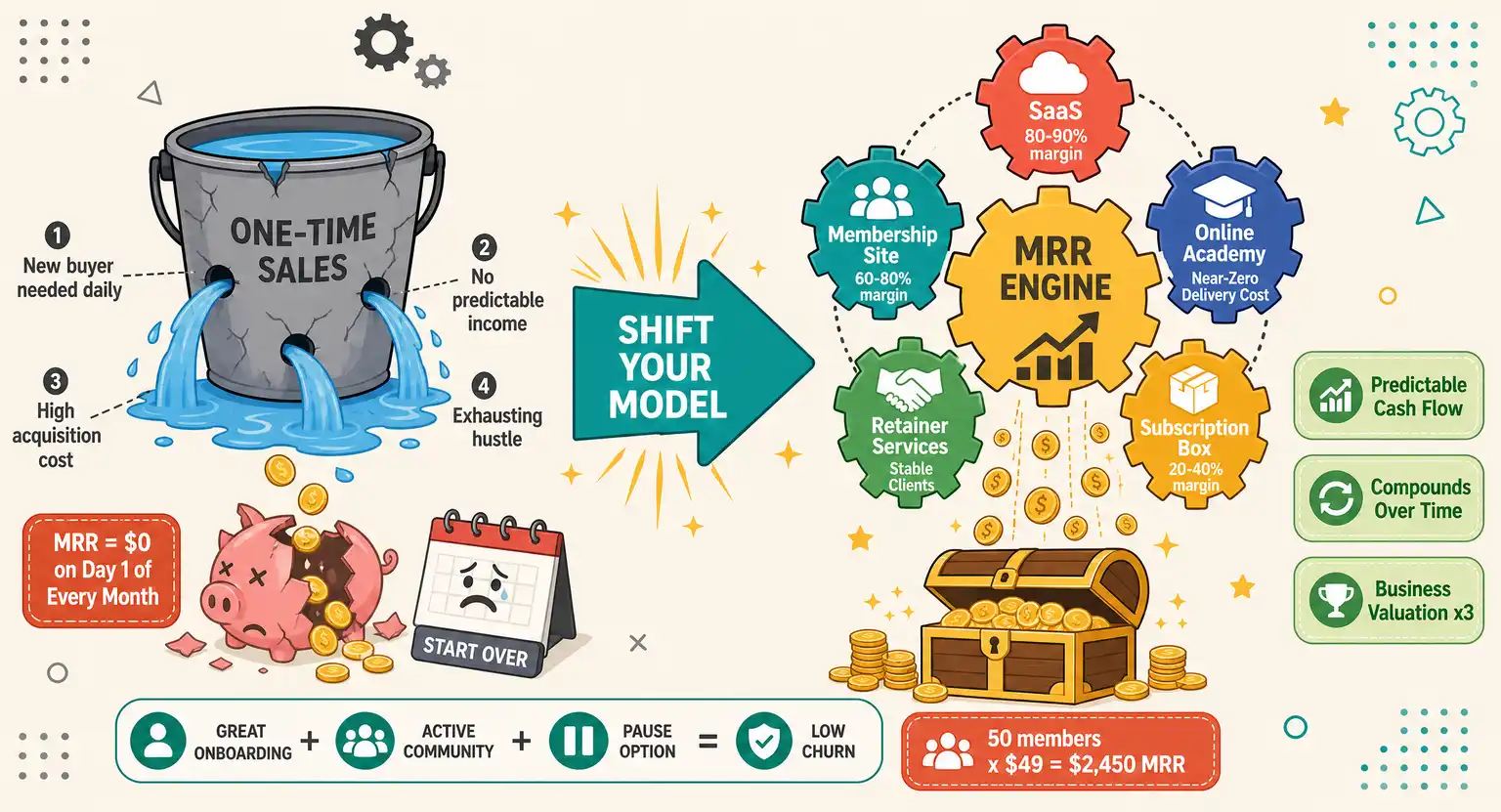
Because relying on one-time transactions is exhausting. Imagine being a creator who pitches to a new crowd daily. If you do not sell today, you do not get paid.
So, how do we fix this?
We change the paradigm. Instead of chasing an endless cycle of buyers, you build a structure where users pay at regular intervals - This shift stabilizes your income.
Today, consumers demand flexibility, genuine community, and personalization.
If you cannot offer control, people simply leave.
And yet, creating a durable setup is easy. When you align your expertise with a modern delivery mechanism, you build something that grows while you sleep.
Let's explore how these setups function and look at the most profitable formats.
Why Recurring Revenue is King (and How It Protects You)
For any startup or creator, unpredictable income is the primary threat to longevity. This is where recurring frameworks show their strength.
Let's break down why this is the smartest move you can make.
First, your financial planning becomes crystal clear. When you know your Monthly Recurring Revenue (MRR), you can make strategic decisions without sweating over next week's bills.
You know when you can afford to hire that extra virtual assistant, upgrade your recording gear, or expand your marketing budget.
Second, customer acquisition costs work in your favor over time. Getting a new customer to say yes is the most expensive part of marketing, but if that customer stays with you for six, twelve, or twenty-four months, the return on your initial marketing investment compounds.
You are no longer spending all your resources trying to win over brand new buyers. Instead, you are focusing on keeping the people you already have happy.
Third, your business value grows rapidly. If you ever decide to sell your brand, investors view recurring structures with immense favor.
Traditional businesses often trade at modest multiples, while brands with predictable revenue lines command immense premiums. This is because predictable cash flow represents safety, scalability, and long-term viability.
Five Key Recurring Models Driving Growth This Year
Not all recurring frameworks are built the same way. The perfect model for your brand depends on your unique skills, your audience's habits, and the type of value you deliver.
Let's explore the five most common and profitable systems.
1. Software as a Service (SaaS)
This is the modern benchmark of digital scalability. Customers pay a recurring fee to use cloud-based programs.
You build the software once, maintain it, and keep updating its capabilities.
While starting a software company historically required massive venture capital, today's founders leverage smart, modular development to launch high-margin tools designed for narrow niches.
2. Digital Content & Gated Communities
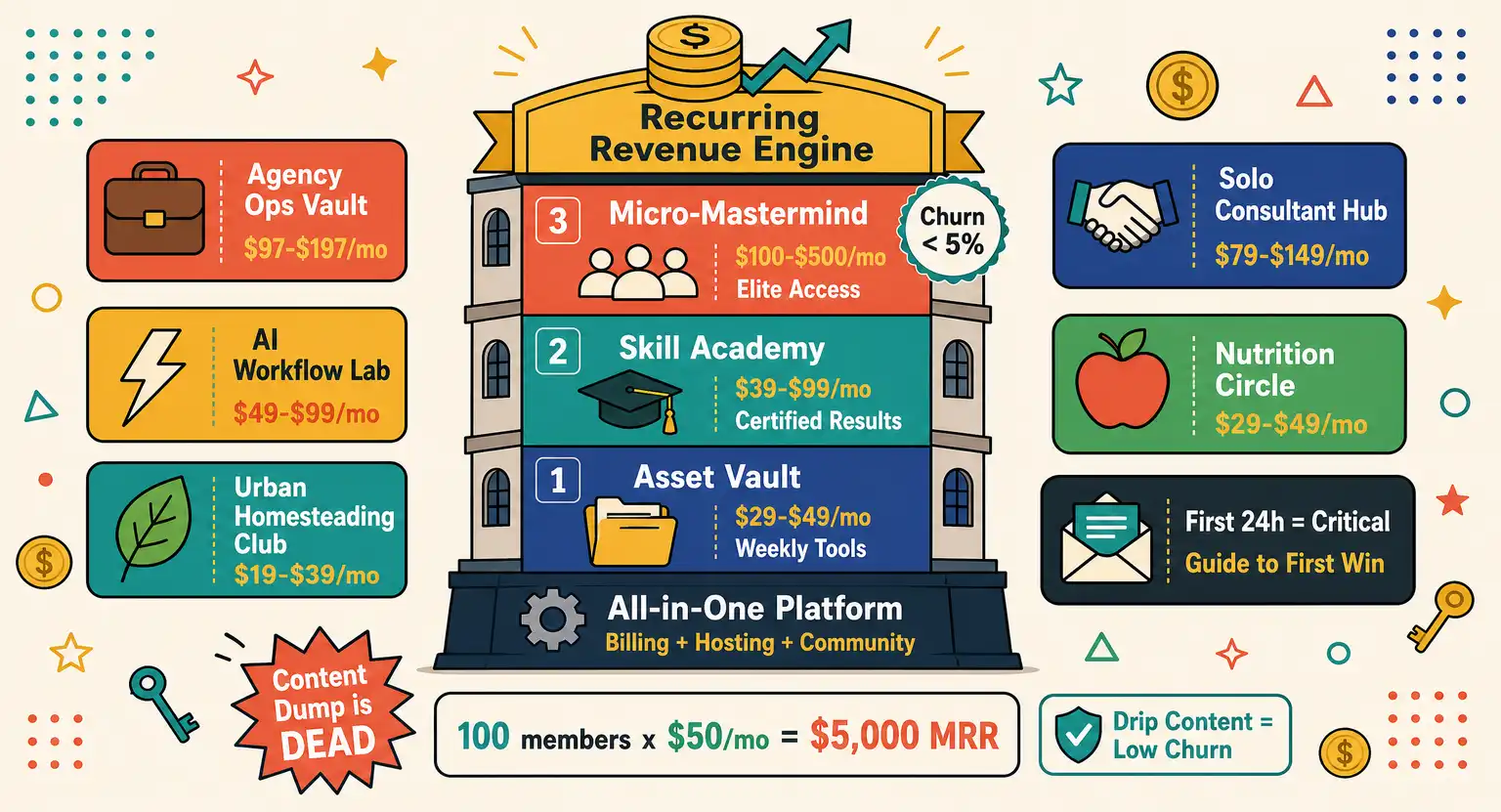
If you are an educator, consulting expert, or content creator, this is your goldmine. You package your knowledge into a central hub.
Users pay a monthly fee to access your library, receive live group coaching, and connect with peers.
The secret here is that you do not just provide download links. You show them how to build an online community where members support each other.
This shifts the weight of content creation off your shoulders because the primary value becomes the actual social network itself.
3. Physical Product Replenishment
From organic skincare to hand-roasted coffee, physical subscriptions make delivery easy. Brands analyze consuming habits to automate reorders, removing the friction of manual purchasing.
Today, the key to winning here is sustainability and customization. Refillable packaging and custom curation keep churn exceptionally low.
4. Professional Retainer Services
Are you a designer, copywriter, or ad specialist? Selling your time by the hour is a trap.
Instead, package your skills into monthly retainers. You guarantee a set amount of work or support each month, and they guarantee steady payment.
This shifts your clients from viewing you as an occasional project expense to treating you as an essential, integrated partner.
5. Structured E-Learning Academies
An alternative to one-off workshops is an ongoing academy where you can sell online courses on a subscription. Students join your hub to continuously refine their skills.
Rather than paying a large upfront fee, they pay a manageable monthly subscription to access updated resources, feedback channels, and certifications.
To do this well, you must understand your online course pricing strategy to ensure your monthly pricing matches the ongoing value you deliver.
If you are brainstorming themes, check out top online course ideas for 2026 to find lucrative inspiration.
Designing Your Pricing Strategy for Continuous Value
Determining how much to charge is both an art and a science.
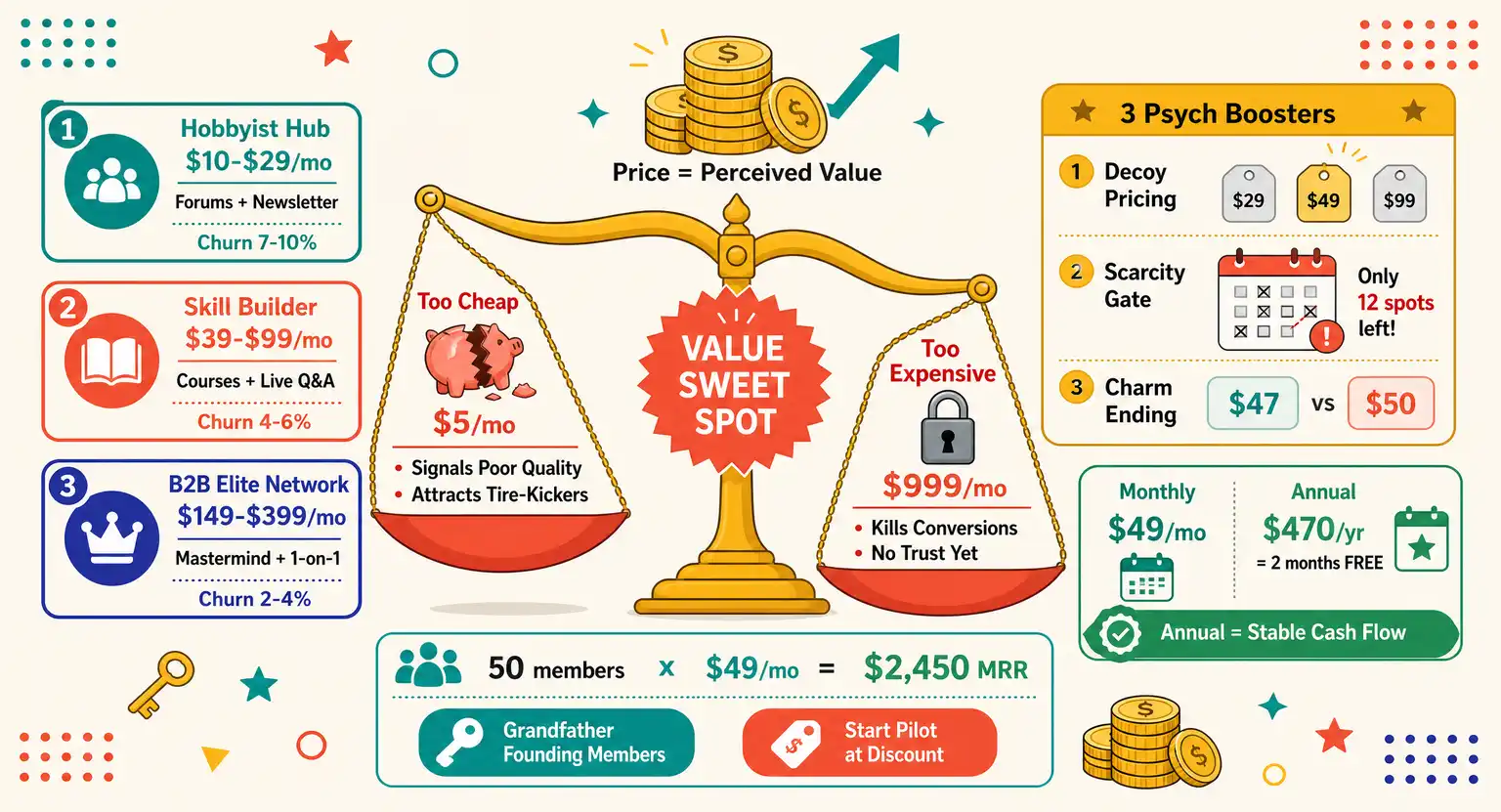
If you set your price too high, you construct a barrier to entry that scares off potential buyers.
If you set it too low, you underwrite your business's future and risk giving the impression that your product is low quality.
To thrive, you need a dynamic, tiered pricing matrix.
Start with a foundational, low-barrier tier. This offers a taste of your value and helps hesitant prospects get their foot in the door.
Then, build a primary middle tier. This is your sweet spot, containing the core of what you offer.
Lastly, establish an elite, high-value tier. This includes premium perks like direct consulting access, personalized audits, or exclusive mastermind sessions.
But do not forget flexibility. Forcing consumers into rigid annual plans without options is a fast way to lose them. Giving people the ability to pause their plan, downgrade during quiet periods, or opt for micro-subscriptions increases loyalty.
Before you lock in your numbers, look into membership site pricing to learn how successful brands structure their membership tiers for long-term customer health.
Aligning your numbers with actual customer usage ensures they stay subscribed because they feel the cost is completely fair.
Fending Off Churn : The Real Battle of the Subscription Model
Acquiring a subscriber is a victory, but keeping them is where the real revenue is earned. This is because high attrition rates - commonly called customer churn - can quietly drain your business.
Imagine pouring water into a bucket full of holes. If you do not patch the leaks, you must keep pouring faster and faster just to stay level.
So, how do we plug those leaks?
Start by focusing on your customer onboarding. The first seventy-two hours after someone subscribes are absolutely critical.
If they log in and feel confused, overwhelmed, or abandoned, they will check out mentally. Create short, friendly welcome emails, direct walk-through videos, or customized setup checklists.
Make sure they achieve a small victory within their first day.
But do not stop there. You must consistently deliver active engagement.
This does not mean creating massive volumes of new content. It means facilitating connection. Teach your members how to actively talk to one another, share wins, and ask questions.
Additionally, make your cancellation process friendly and transparent. No one likes being trapped.
Under modern consumer trends, hidden cancel buttons or long phone calls are turning buyers away entirely.
Instead, use a "pause before cancel" option. Data shows that a significant portion of users who pause their membership when they are busy will eventually reactivate when things calm down.
If you show empathy and flexibility, they will remember how you treated them and return with enthusiasm.
Comparing the Models : Which One Fits Your Business?
To make your decision-making process easier, let's evaluate these architectures side-by-side.
The table below outlines how these main recurring systems match up when it comes to setup effort, predictability, and margin potential.
| Model type | Initial launch effort | Churn profile | Profit margin potential | Primary challenge | Recommended delivery tool |
|---|---|---|---|---|---|
|
SaaS |
Extremely high (requires custom coding or heavy tech stack integration). |
Moderate (low once deeply integrated into daily workflows). |
Very high (typically 80-90% margins at scale). |
High upfront development cost and intense competition. |
Custom cloud architectures or specialized API stacks. |
|
Membership sites |
Medium (easy if you use the right best online course platforms to organize content). |
Low to medium (social connections keep people around long-term). |
High (60-80% margins with digital content delivery). |
Combating content fatigue and keeping community discussions active. |
Comprehensive, all-in-one membership management software. |
|
Subscription boxes |
High (requires warehouse setup, shipping partnerships, inventory tracking). |
High (customers easily cancel when tightening personal budgets). |
Low to medium (typically 20-40% due to materials and shipping). |
Managing shipping supply chains and rising shipping costs. |
Dedicated e-commerce platforms with subscription plugins. |
|
Retainer services |
Low (takes very little setup if you already have clients). |
Low to moderate (clients retain services as long as business results show). |
Medium (limited by your personal or team capacity to fulfill work). |
Scale limits unless you transition to an agency model. |
Simple invoicing systems with recurring billing. |
|
Online academies |
Medium (highly efficient if you know how to launch an online course efficiently). |
Medium (stabilizes when structured with clear, guided learning paths). |
Extremely high (distribution costs for digital courses are nearly zero). |
Maintaining student completion rates and course relevance. |
LearnyBox for courses, payments, and funnels. |
Overcoming Roadblocks : The Path to Integration
Transitioning your business or launching from scratch can feel daunting. Many creators worry about having enough content, choosing the wrong tools, or spending thousands on software integrations…
Let's make this simple.
You do not need fifty video tutorials or a massive library of ebooks to get started - You only need to solve one clear problem for your target audience.
First, validate your concept. Speak to your existing audience or find online communities where your target market gathers.
Ask them about their daily struggles and see if they would pay a small, repeating fee to have those struggles solved regularly.
Second, focus on your marketing assets. Setting up high-converting sales funnels is crucial to guide prospects from initial curiosity to committing to a monthly plan.
A good funnel handles the invitation, the checkout process, and the initial welcome phase automatically.
Third, build on a consolidated platform. Do not make the mistake of taping together four different software subscriptions - You will lose sleep trying to make your email provider talk to your membership portal.
Instead, seek out an all in one platform sell online courses to keep your content, emails, pages, and payments under a single roof - This keeps your running costs manageable and ensures your user data syncs perfectly.
Build Your Predictable Future Today
Looking ahead, the subscription landscape will continue to reward brands that put customer experience at the absolute center of their operations.
Treating your online audience as long-term business partners rather than one-off buyer targets is the ultimate growth hack - Whether you are developing custom niche software, teaching creative design talents, or delivering physical hand-crafted wellness goods, ongoing consistency is key.
Take the time to listen to user feedback, refine your materials, and invest in a highly reliable business platform.
The road to scalable, predictable business freedom is right in front of you now, so choose your favorite subscription model, launch, and start taking action today.
Frequently Asked Questions
What is the most profitable recurring revenue model?
Digital content hubs, coaching communities, and SaaS generally offer the highest profit margins because their delivery costs are near zero once setup is complete.
How do I reduce subscriber churn?
Focus intensely on user onboarding during their first few days, offer a flexible pause option, and run active re-engagement campaigns targeting inactive accounts.
Can a service business use recurring models?
Yes. Service providers can package their skills into repeating monthly retainer offers instead of working hourly, securing predictable income and better client continuity.
Do I need a massive marketing audience to launch?
No. You can run a highly profitable membership with as few as fifty dedicated members if you provide specialized, high-ticket recurring value designed specifically for their unique needs.



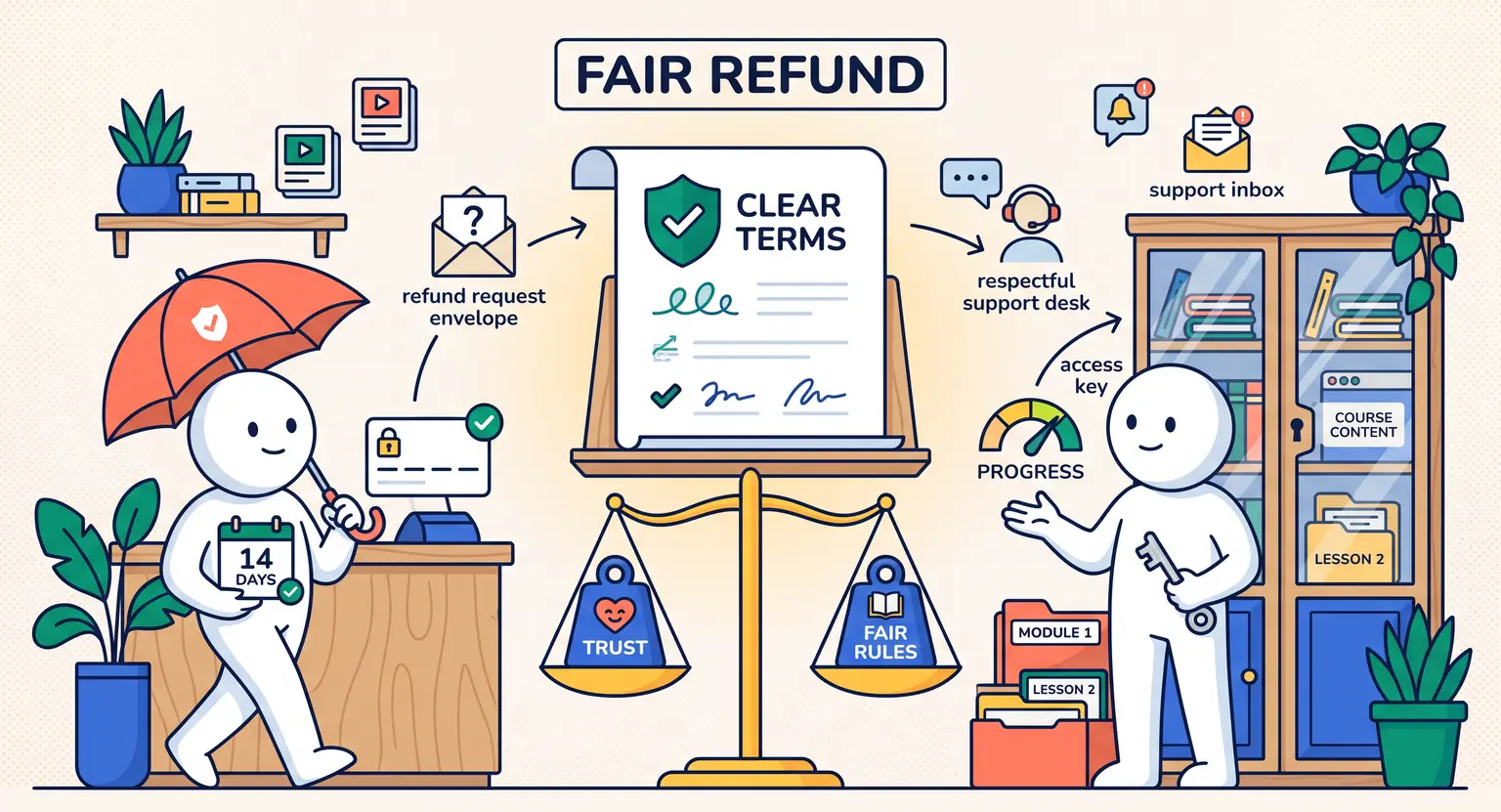 How to Create a Course Refund Policy (Templates & Best Practices for 2026)
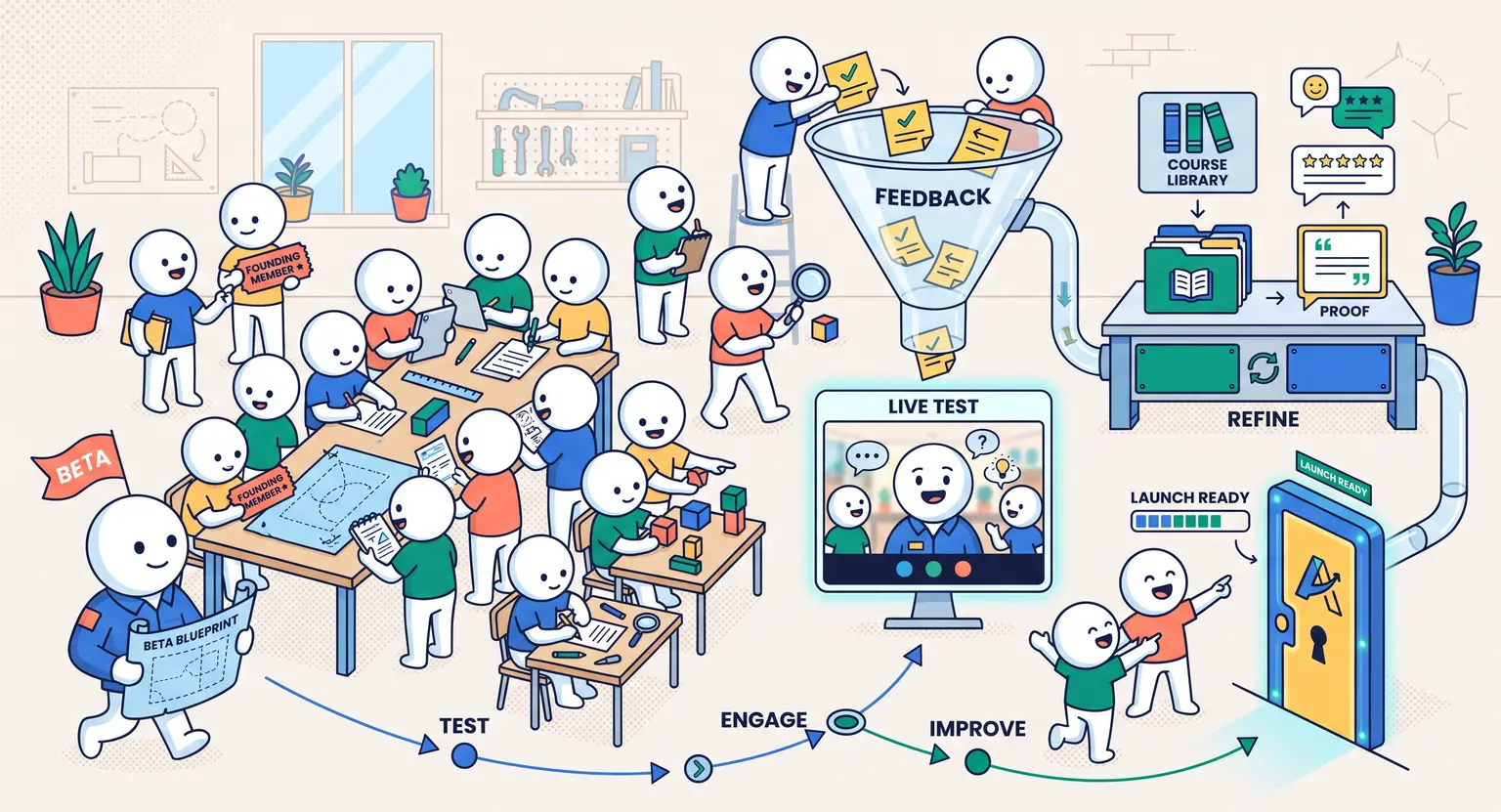 How to Run a Beta Version of an Online Course (2026 Guide)
 How to Create a Cohort-Based Online Course (2026 Guide)
 How to Sell an Online Course With a Quiz Funnel (2026 Guide)
 How to Sell an Online Course Through a Sales Call (2026 Guide)