








How to Structure an Online Course: The 2026 Blueprint for Student Success
How to Structure an Online Course : The 2026 Blueprint for Student Success
The Course Builder's Cheat Sheet
-
Transformation First : don't teach a topic; teach a result. Start with the "Big Promise" and work backward.
-
The 20% Rule : identify the 20% of information that gives 80% of the results to avoid student overwhelm.
-
Variety is Survival : mix video, PDF workbooks, and interactive quizzes to keep brains awake.
-
Iterative Strategy : always look for profitable online course ideas that solve a specific, high-pain problem before you build.
-
Micro-Learning : keep lessons under 10 minutes to respect the busy schedules of modern learners.
We've all been there. You sign up for a course, eager to learn a new skill, only to find a disorganized mountain of 45-minute videos and messy Google Docs.
By the third module, you're checked out.
In 2026, the "information dump" model is officially dead. If you want to build a sustainable business, your structure needs to be the silent bridge that carries your student to their goal.
It is the invisible force that keeps them engaged when the initial excitement of the purchase wears off.
But how do you actually build that bridge without getting lost in the weeds yourself? It starts with looking at your knowledge not as a library, but as a roadmap.
You are the GPS, and your student is the driver who just wants to get home.
Phase 1 : Defining the Transformation (The Outcome-First Method)
The biggest mistake creators make is starting with a list of things they want to talk about. Stop that - right now!
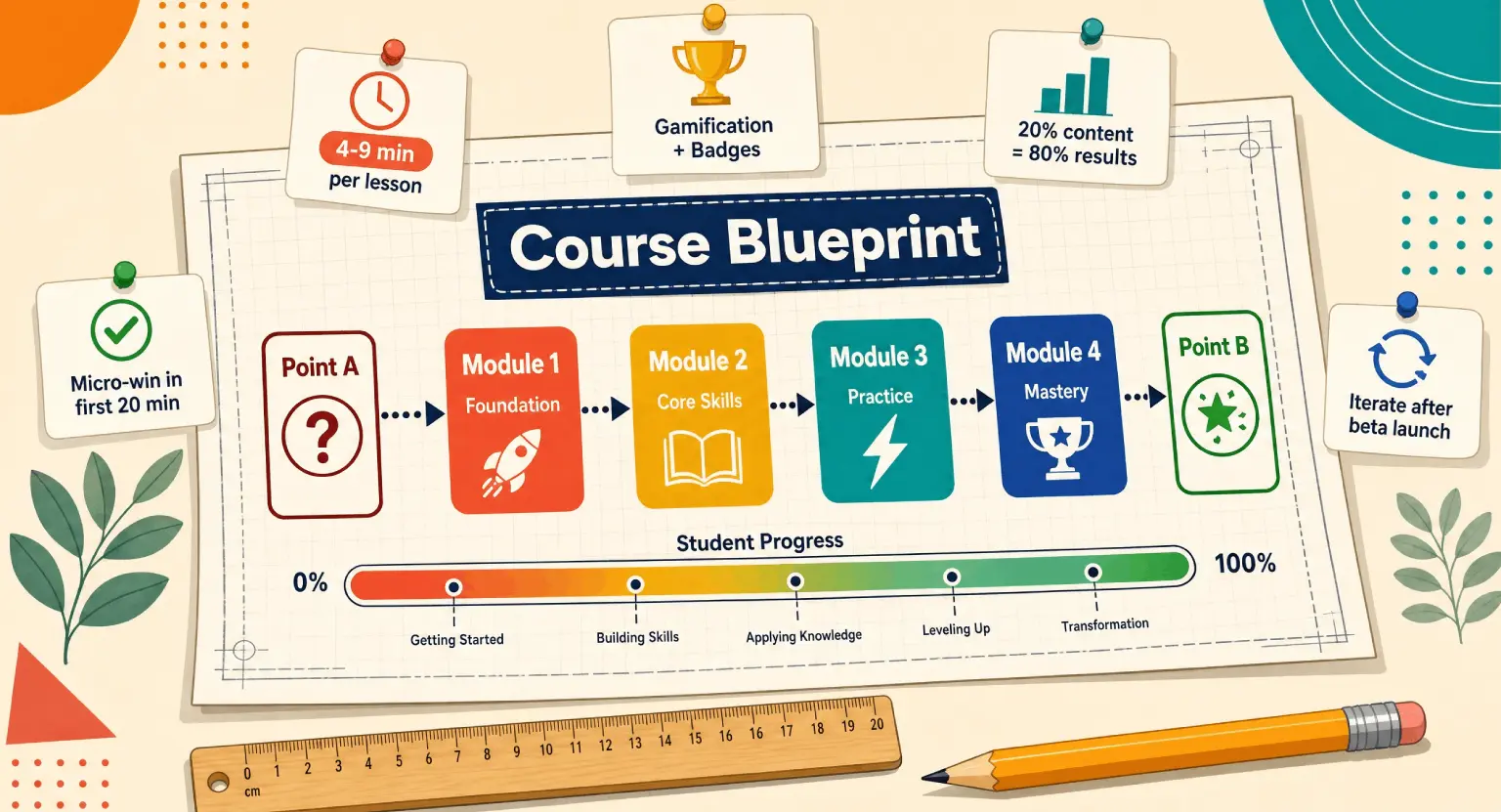
Instead, start by writing down the exact state your student is in before they meet you - let's call this Point A.
Then, write down exactly where they want to be after they finish your course - Point B.
Your structure is simply the shortest, most efficient path between those two dots. If a piece of information doesn't directly contribute to moving them along that line, it belongs in a "bonus" section or, better yet, in the trash.
We live in a world where AI can summarize a textbook in five seconds, so your value isn't the volume of data; it's the sequence of action.
So, how do you find those steps? Ask yourself : what is the very first win they need to feel? Maybe it's setting up their software, or maybe it's a mindset shift.
Whatever it is, put it right at the front. People need dopamine hits to keep going. If you can give them a "micro-win" in the first 20 minutes, they are five times more likely to finish the module.
Think about the friction points they will face. Your structure should preemptively solve those hurdles.
If you know they'll get stuck on a technical detail in Module 3, build a bridge there. This isn't just teaching; it's experience design.
You are curating their success by removing the obstacles before they even see them coming.
Phase 2 : Mapping the Journey into Modules and Lessons
Once you have the path, you need to break it down into digestible chunks. I like to think of Modules as "Milestones" and Lessons as "Steps." A module should represent a significant phase in the transformation.
For example, if you're teaching gardening, Module 1 is "Preparing the Soil," and Module 2 is "Choosing Your Seeds." Inside those modules, your lessons are the tactical actions.
But here is the secret sauce : every lesson must have a clear objective. If you can't finish the sentence "By the end of this lesson, the student will have [Action]," then the lesson is too vague.
You might find it helpful to use an online course outline template to keep your thoughts organized during this messy brainstorming phase.
But don't just stick to a linear path if the topic doesn't demand it. Some of the most successful courses in 2026 use a "choose your own adventure" style or a "matrix" structure where students can skip to the parts that matter most to them.
However, for most skill-based training, a logical flow is your best friend.
Keep your lessons short. The sweet spot nowadays is somewhere between 4 and 9 minutes. If a lesson is 20 minutes long, see if you can split it into two.
Our brains crave closure, and checking off two small lessons feels much better than struggling through one giant one.
It's all about momentum. You want your students to feel like they are flying through the content, not wading through mud.
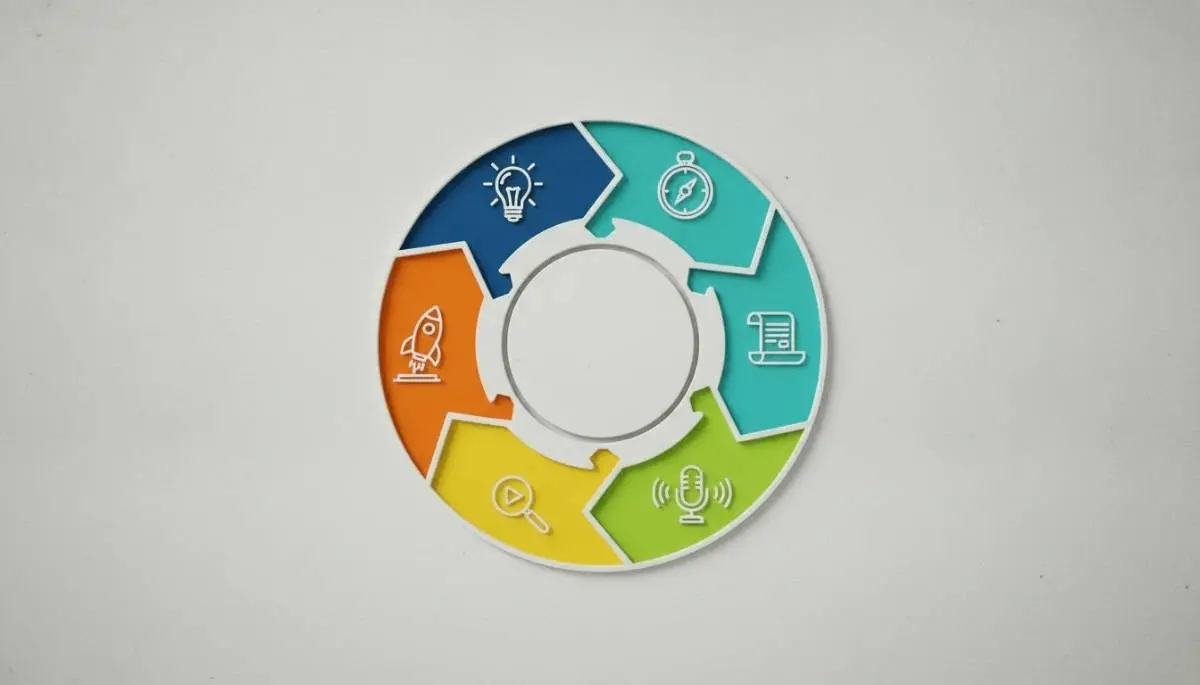
The Structural Architecture Comparison Table
To help you decide which framework fits your expertise best, here's a quick comparison of the three most popular course structures we're seeing work right now.
|
Structure type |
Best for... |
Key characteristic |
Student experience |
|---|---|---|---|
|
The Linear Sprint |
Hard skills (Coding, Math, Cooking) |
Step 1 must be completed before Step 2. |
Disciplined, clear progress, high certainty. |
|
The Resource Library |
Hobbyists or ongoing memberships |
Categorized by topic, not necessarily order. |
Flexible, "snackable" content, self-directed. |
|
The Hybrid Intensive |
High-ticket coaching or certifications |
Core modules + weekly live Q&A sessions. |
High accountability, community-driven, premium feel. |
|
The 30-Day Challenge |
Habit changes (Fitness, Writing) |
Daily micro-tasks delivered one at a time. |
Exciting, gamified, fast-paced results. |
|
The Case Study Path |
Advanced business or strategy |
Learning by deconstructing real-world examples. |
Analytical, immersive, deeply practical. |
Phase 3 : Designing the Micro-Structure of a Lesson
Don't just hit record and talk. Every single lesson should follow a mini-structure of its own. I like to use the "Hook, Meat, Action" framework.
First, the Hook : spend the first 30 seconds explaining why this specific lesson matters and what the student will be able to do by the end of it. This recaptures their attention.
Then comes the Meat : the actual teaching. Be concise. Use analogies. If you're showing something on screen, make sure it's high-contrast and easy to see.
Finally, the Action : never end a lesson without giving them something to do. It could be as simple as "Download this PDF" or "Post your answer in the community tab."
But there's more to it than just video.
In 2026, accessibility is a must-have. Your lesson structure should include a transcript for those who prefer reading, an audio-only version for commuters, and a summary of key points.
This "multi-modal" approach ensures that no matter how your student learns best, you are meeting them there.
And honestly, it makes your course feel much more professional and high-value.
When someone sees that you've provided a checklist, a worksheet, and a video for every single step, the perceived value of your course skyrockets.
It shows you've put in the work so they don't have to.
Phase 4 : Feedback Loops and Gamification
Structure isn't just about moving forward; it's also about looking back.
How do you know your students are actually getting it? This is where feedback loops come in. Every few lessons, insert a quiz or a self-assessment.
This isn't to grade them like a school teacher; it's to give them a sense of mastery.
When they pass a quiz, give them a badge or a congratulatory message.
Gamification might sound like a buzzword, but in the world of online learning, it's the difference between a 10% completion rate and an 80% completion rate.
We are all suckers for a progress bar that is filling up !
So, think about where you can add these "milestone markers." Maybe after Module 2, they get a "Certificate of Basics" or an invite to an exclusive channel in your community.
These structural elements turn a lonely learning experience into an engaging game.
But don't overdo it. If there's a popup every five seconds, it becomes annoying. The goal is to reward genuine progress, not to distract from the learning itself.
Use these loops to gather data too. If you see that 50% of your students are failing a specific quiz, you know that the structure of that module needs to be refined or the teaching needs to be clearer.
Your course is a living thing; use the structure to listen to what it's telling you.
Phase 5 : Choosing Your Delivery Tech
You can have the best curriculum in the world, but if the platform is clunky, the structure falls apart.
You need a system that supports your vision, whether that's drip-feeding content over six weeks or allowing students to binge it all at once. The "how" of delivery is just as important as the "what."
Look for a platform that handles the boring stuff - payments, emails, hosting - so you can focus on the pedagogy.
If you want to scale, you should look for an all-in-one platform to sell online courses that eliminates the "tech-stack headache" of connecting five different apps.
But keep it simple. Don't add features just because they exist. If your course doesn't need a forum, don't build one. If your students are busy professionals, maybe an app-based mobile experience is the most important structural choice you can make.
The technology should disappear into the background. Your students should only be thinking about the transformation you promised them, not which button they need to click to find the next video.
Consistency is key here. Every module should look and feel the same. This creates a "rhythm" for the learner.
Once they understand how to navigate the first module, the rest of the course becomes frictionless. That's the beauty of a well-planned structure.
Phase 6 : Iterating for Longevity
The final part of structuring your course is admitting that you won't get it 100% right the first time. The best course structures are iterative.
Launch a "Beta" version to a small group of people and watch where they get confused. Do they all ask the same question after Lesson 4? Then you need to add a Lesson 4.5. Do they all skip the long reading in Module 1? Then turn it into a short video.
In 2026, the most successful infopreneurs are the ones who treat their curriculum like software - always updating, always improving.
This not only makes your product better, but it also gives you a reason to reach out to your students and keep them engaged long after they bought the course.
And remember, your structure reflects your brand. A clean, logical, and easy-to-follow course tells your students that you are a clean, logical, and trustworthy expert. A chaotic course, even with great info, leaves them feeling frustrated.
Take the time to map it out on paper or a digital whiteboard before you record a single frame. It feels like extra work now, but it saves you hundreds of hours of re-shooting and customer support later.
You are building an asset, not just a video series. Treat it with the architectural respect it deserves, and the market will reward you for it.
Frequently Asked Questions
How many modules should an average course have?
While there's no "magic number," most successful courses in the $200-$1,000 range feature 5 to 7 modules. This is enough to feel substantial without being overwhelming.
If you have 15 modules, you're likely over-explaining and might need to trim the fat or split the content into an "Advanced" sequel.
Each module should represent a major milestone in the student's journey toward their final goal.
Should I release all content at once or drip-feed it?
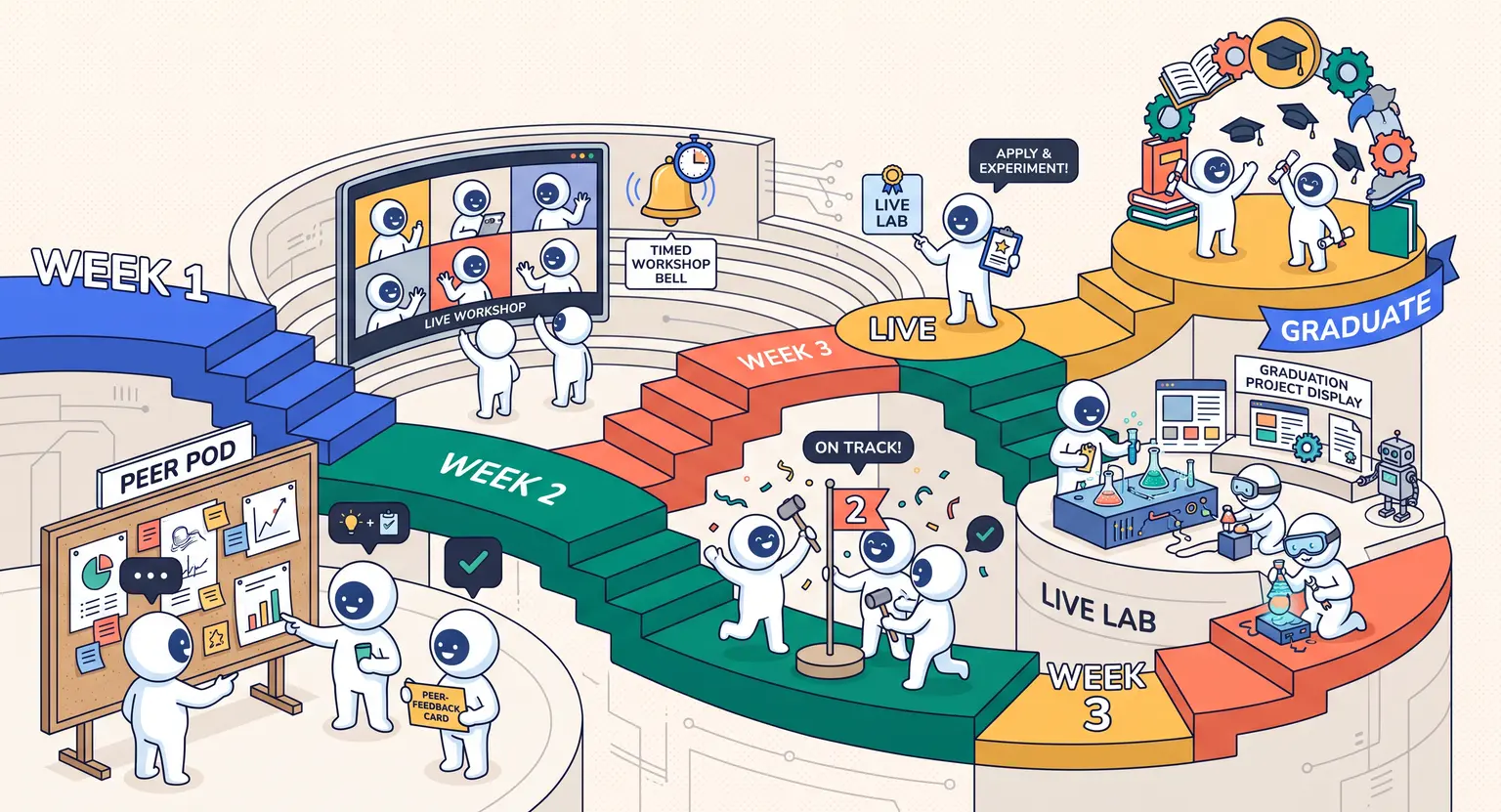
It depends on your goal. Drip-feeding (releasing content weekly) is fantastic for high-ticket coaching where you want to prevent students from feeling overwhelmed or jumping ahead. It keeps the "class" together.
However, for self-paced hobby courses, "binge-watching" is the norm. Most creators now offer both : a guided drip-feed for the live launch and immediate access for the evergreen version.
This flexibility caters to different learning styles.
What is the best way to handle homework and assignments?
Make them as practical and "low-friction" as possible. Instead of a long essay, ask for a photo of their progress or a one-sentence "lightbulb moment."
Use digital workbooks that are fillable on a computer. The goal of homework is to solidify the lesson, not to create a barrier to the next one. If the homework is too hard, they'll stop the course.
If it's too easy, they'll feel like it's fluff. Find that "Goldilocks" zone of challenge.
How do I keep students engaged in a structured course?
The secret is "Interactivity." Use tools like community leaderboards, live-streamed "office hours," or automated encouraging emails that trigger when they finish a module.
In 2026, people buy courses for the community as much as the content. If your structure includes a space for them to talk to you and each other, your success rates will skyrocket.
Engagement isn't an accident; it's a structural choice you make during the design phase.
Explore Further




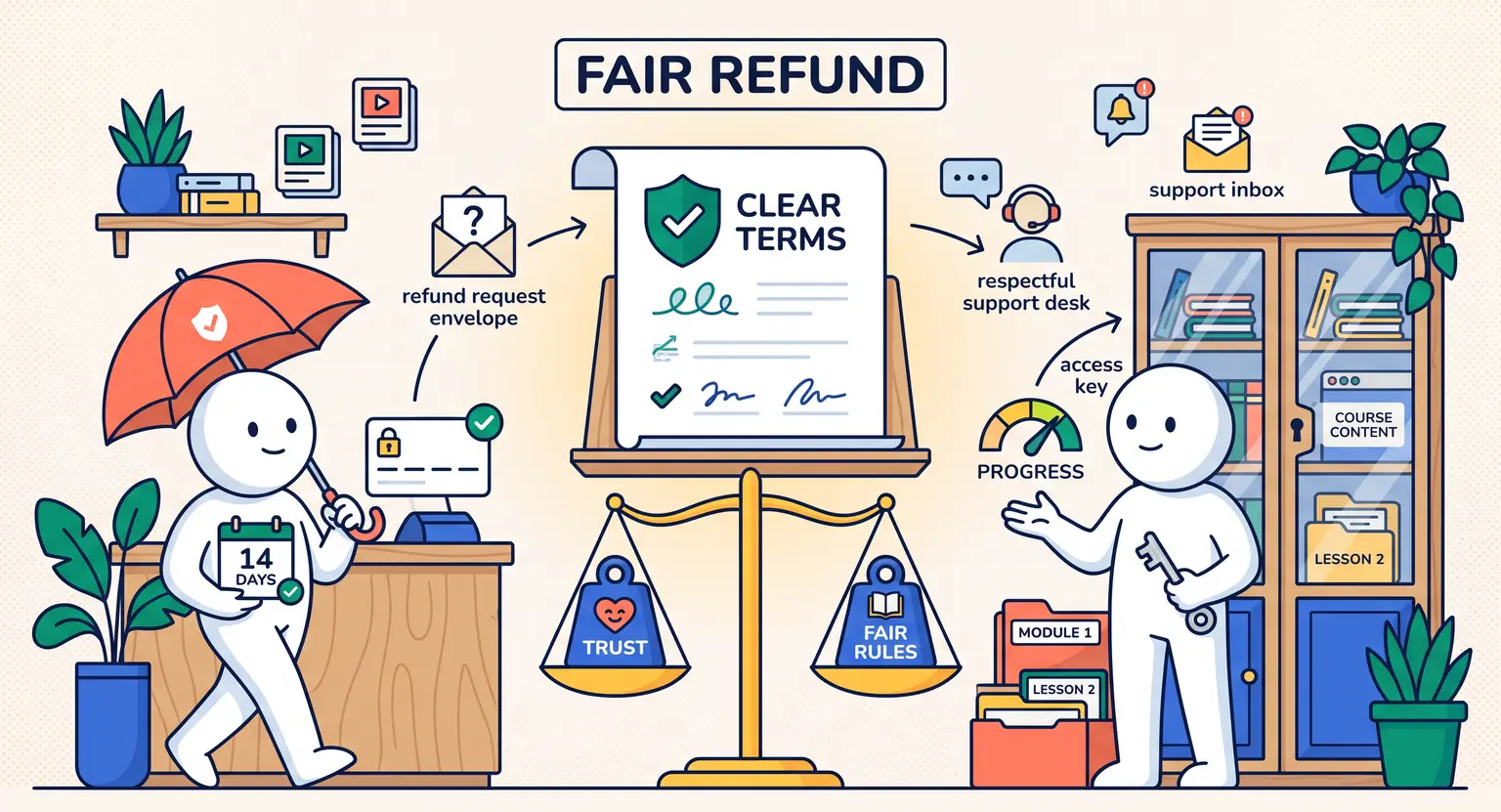 How to Create a Course Refund Policy (Templates & Best Practices for 2026)
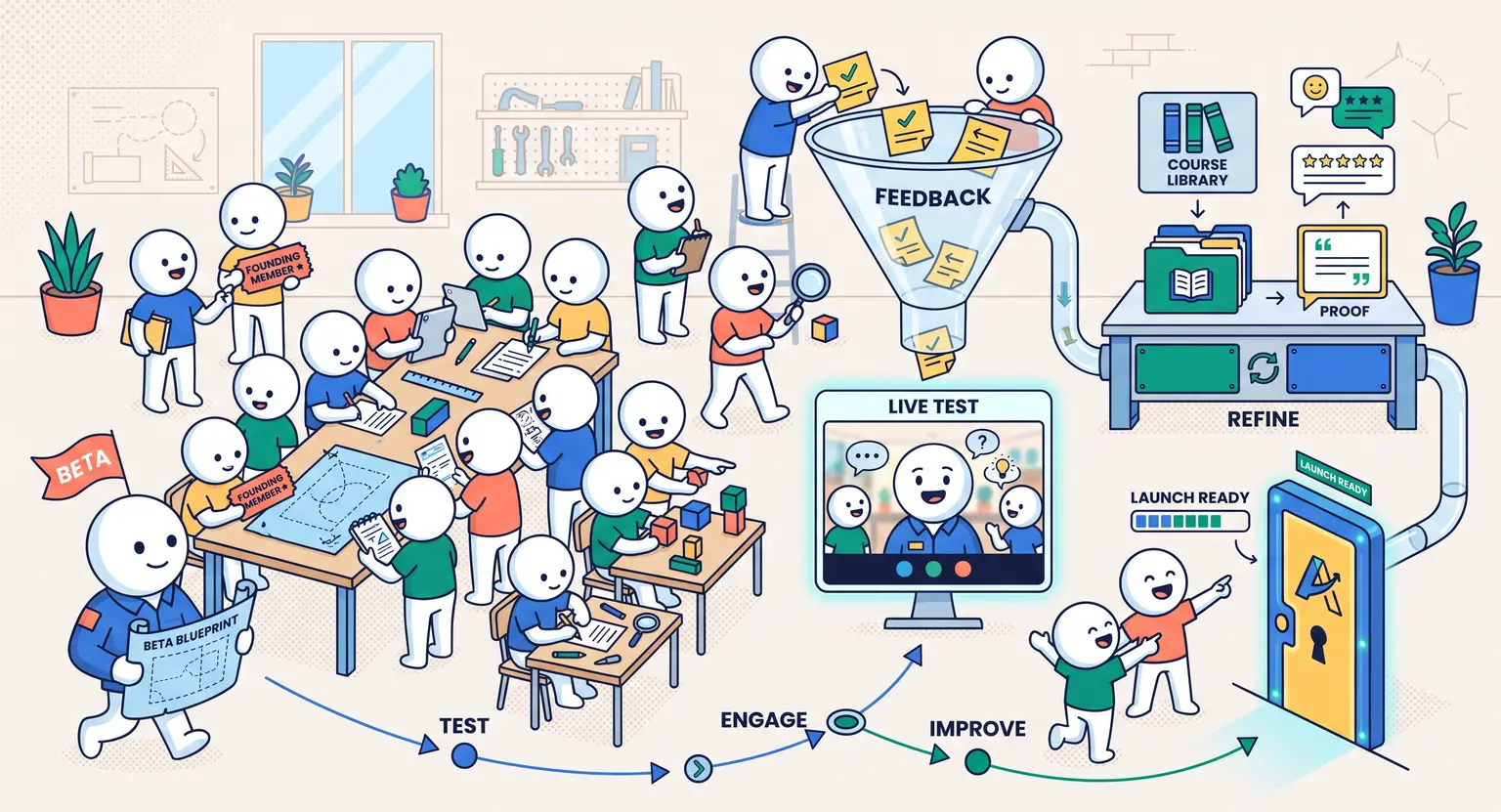 How to Run a Beta Version of an Online Course (2026 Guide)
 How to Sell an Online Course With a Quiz Funnel (2026 Guide)
 How to Sell an Online Course Through a Sales Call (2026 Guide)