







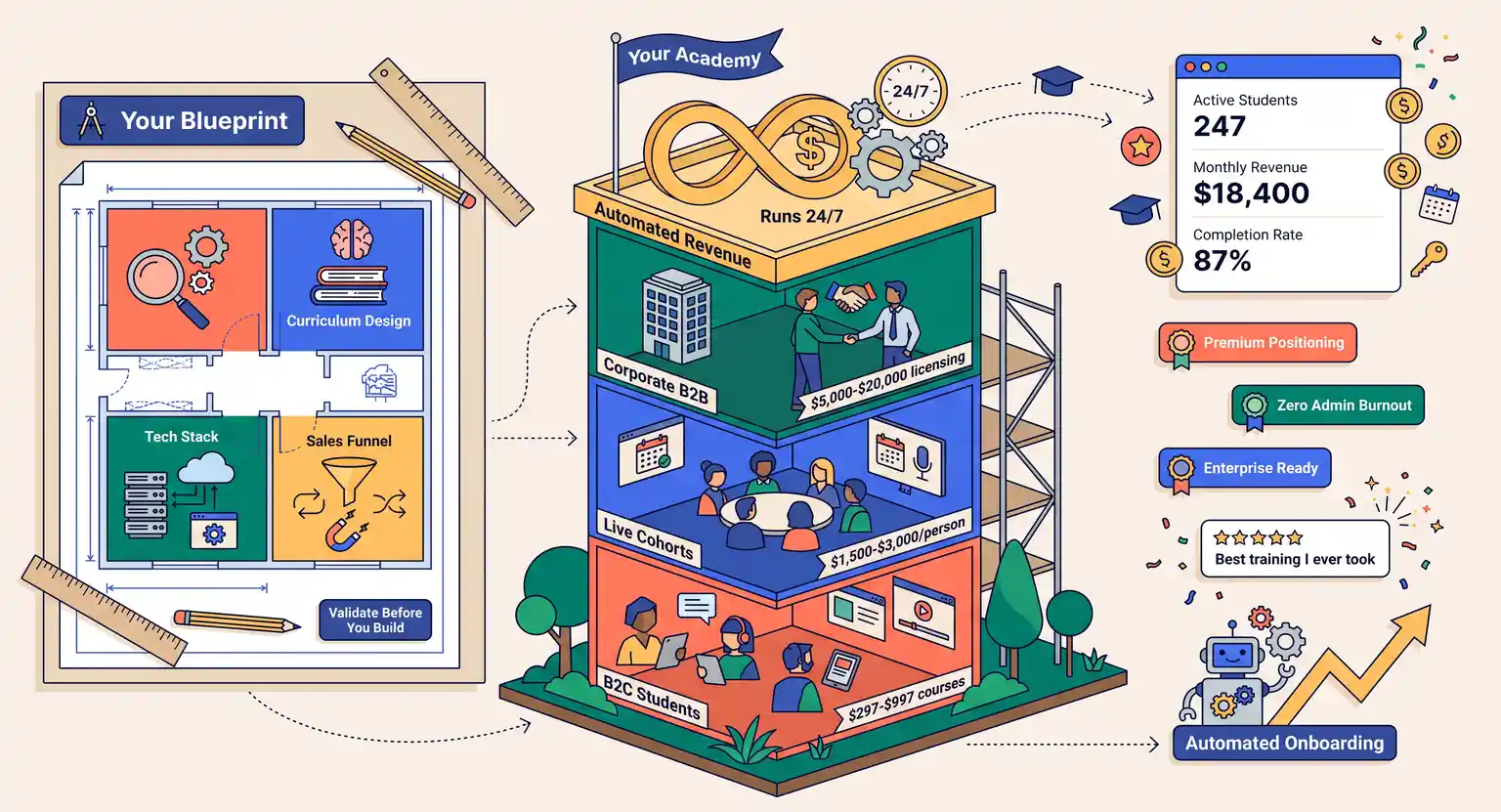
Start a Training Business in 2026: Definitive Step-by-Step Blueprint
How to Start a Training Business in 2026 : The Complete Step-by-Step Blueprint
Starting a training business in 2026 looks radically different than it did just a few years ago.
We have watched the internet fill to the brim with generic, sterile, machine-written workshops and low-quality digital courses…
Because of this, learners are facing severe information fatigue. They do not want more unstructured data; they want true transformation, guided accountability, and clean execution.
If you are planning to build an educational business this year, your path to success is about positioning yourself as a premium, human-centric mentor. But how do you convert your specialized talent into a highly scalable asset?
So, you must move beyond the old mindset of simply delivering information.
Instead, you need to think like an enterprise operation, offering seamless technical experiences, strong learning frameworks, and reliable support structures.
Whether you want to train corporate executives, help hobbyists master a craft, or build a specialized professional academy, this complete roadmap will guide you through the process of building, selling, and scaling a training company.
Let us look at what it takes to turn your expertise into a sustainable, highly profitable reality in today's modern marketplace.
And is it actually possible to do this without getting buried in administrative tasks?
Yes, absolutely - but it requires you to set up your business systems correctly from day one.
By planning your processes in advance, you can avoid the common errors that shut down most educational startups.
Key Takeaways
-
Niche Down : target specialized problems to stand out from generic courses.
-
Hybrid Delivery : combine pre-recorded modules with live cohorts to maximize completion rates.
-
Right Platform : streamline operations by using the best platform to sell online courses.
-
Automate : automate checkout and onboarding to create a frictionless client journey.
-
B2B Licensing : leverage corporate licensing agreements to secure high-ticket recurring income streams.
Starting a professional training program requires shifting from casual content delivery to systemic execution. Your absolute priority should be learner success.
To build a highly profitable business, you must focus on scalable technology, automated lead pathways, and high-impact educational design.
Step 1 : Identifying a High-Value Problem and Validating Your Niche
The biggest mistake training startups make is trying to teach everyone everything.
If your offer is "Digital Skills Training," you are competing with free YouTube channels and major universities.
But if your offer is "AI-Driven Workflow Design for Boutique Creative Agencies," you suddenly stand alone.
You need to target a group of people facing a specific problem that costs them time or money. Once you have a clear idea, talk directly to your target buyers - ask them about their daily struggles, their current tools, and what previous courses failed to solve.
Before recording a single video, look at proof of demand. This means checking if people will pay for your solution.
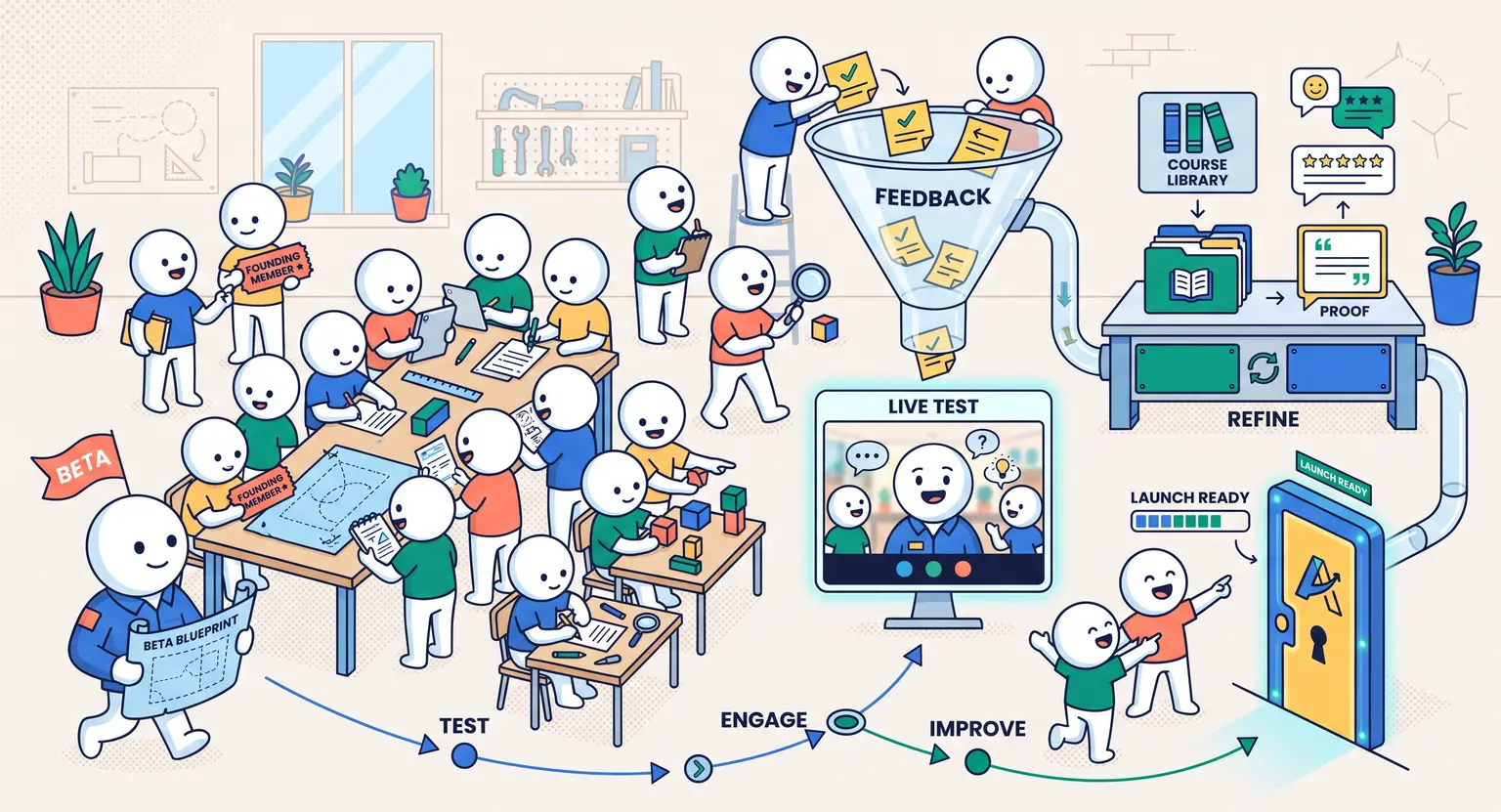
By pre-selling your curriculum or running a live focus group, you prove your market exists.
For a proven methodology on this, read our framework on how to validate an online course idea to secure your first cohort before building the assets.
But do not just copy competitors. Look for gaps in their curriculum.
Are they failing to offer hands-on practice?
Are their materials outdated?
Use these gaps to build your unique selling proposition.
So, how do you find this specific target audience? Start by writing down three skills you have mastered, then filter them by looking for professionals who already spend money trying to solve those issues.
When you find an audience that is actively seeking solutions, you have found a viable market.
Step 2 : Designing Your Transformational Signature Program
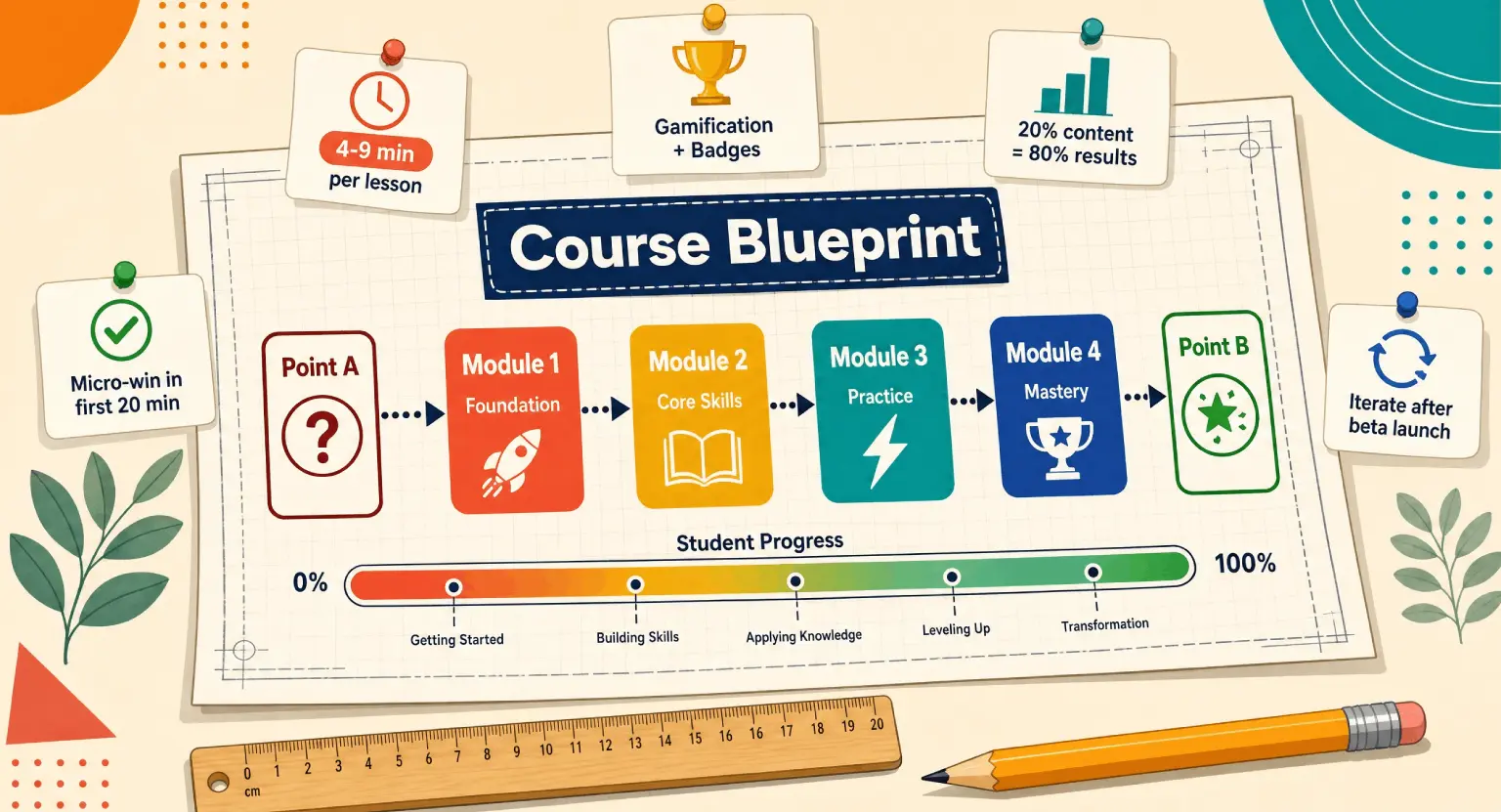
A great training business relies on a solid curriculum structure. In 2026, content is cheap, but progress is rare. So, your training must be built around milestone-based transformations.
Start by designing a primary curriculum. It helps to understand how to create a signature program that solves a main industry problem. This core asset acts as the foundation of your company.
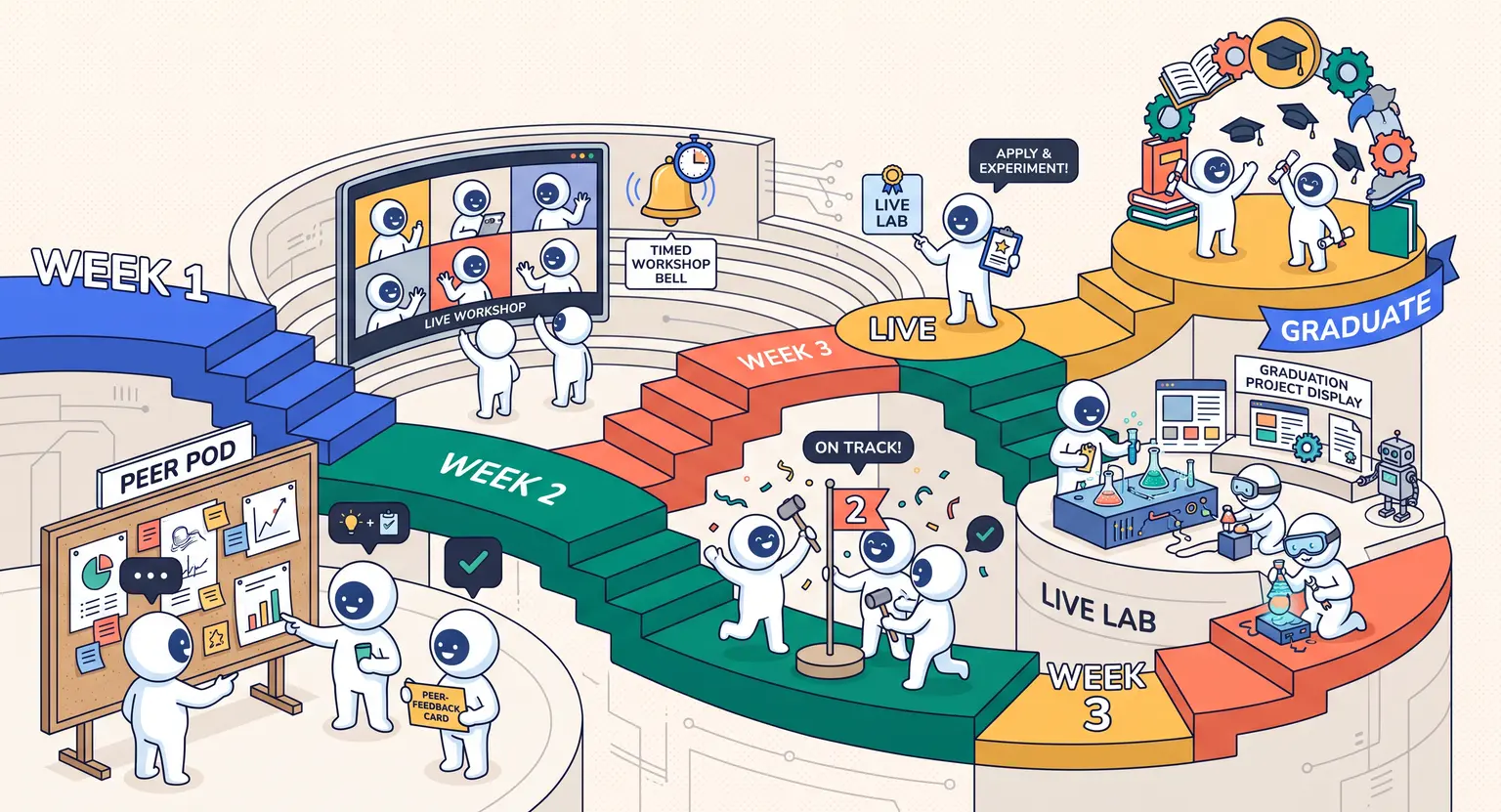
From there, combine self-paced learning with live interactive sessions. Purely pre-recorded video courses have low completion rates, but dynamic group sessions keep learners highly engaged.
If you want to scale but keep learning outcomes high, discovering how to run a group coaching program is the ideal solution. It blends community-driven feedback loops with scalable digital delivery.
Make sure each module includes a practical action step. Provide workbook exercises, interactive templates, and prompt reviews so students can immediately apply your insights. If they can apply the knowledge on day one, they will stay committed.
But do not let your students feel lonely. Implement built-in communication groups where they can chat, share successes, and ask questions. Community is the secret sauce that stops students from dropping out halfway through your course modules.
And remember that you can always adjust your syllabus. Your first round of students will show you exactly where they get stuck. Listen to their confusion, clarify your lessons, and refine your approach for the next group.
Step 3 : Selecting and Aligning Your Learning Technology Stack
Managing a training company with disconnected apps is a recipe for frustration. You do not want to manage a separate website builder, an external billing app, a newsletter system, and a learning forum. That approach leads to high costs and bad customer tracking.
Instead, simplify your tech stack. You need a setup that handles landing pages, payments, course hosting, student progress tracking, and communications. For an optimized solution, choose an all-in-one platform to sell online courses to keep your business clean.
If you are targeting corporate clients, you need more advanced features. Businesses want tracking data, security features, and compliance reporting. So, partnering with an established LMS training organization will help you meet those professional standards.
Make sure your platform includes these four features :
-
Quick checkout flows with localized payments.
-
Automatic student onboarding emails.
-
Integrated assessment quizzes.
-
Responsive mobile access for learning on the go.
Keeping your tech simple lets you focus on teaching, not troubleshooting software. But you must also think about student experience.
When a learner logs in, they should immediately see what step they need to complete next, without scrolling through an unorganized dashboard of old links.
And do not make the mistake of using twenty plugins to build your portal. When one plugin updates, it can break your entire registration flow.
Using one central platform ensures everything works smoothly, giving your students a clean learning space.
Step 4 : Engineering Your Sales Pipelines and Outreach Loops
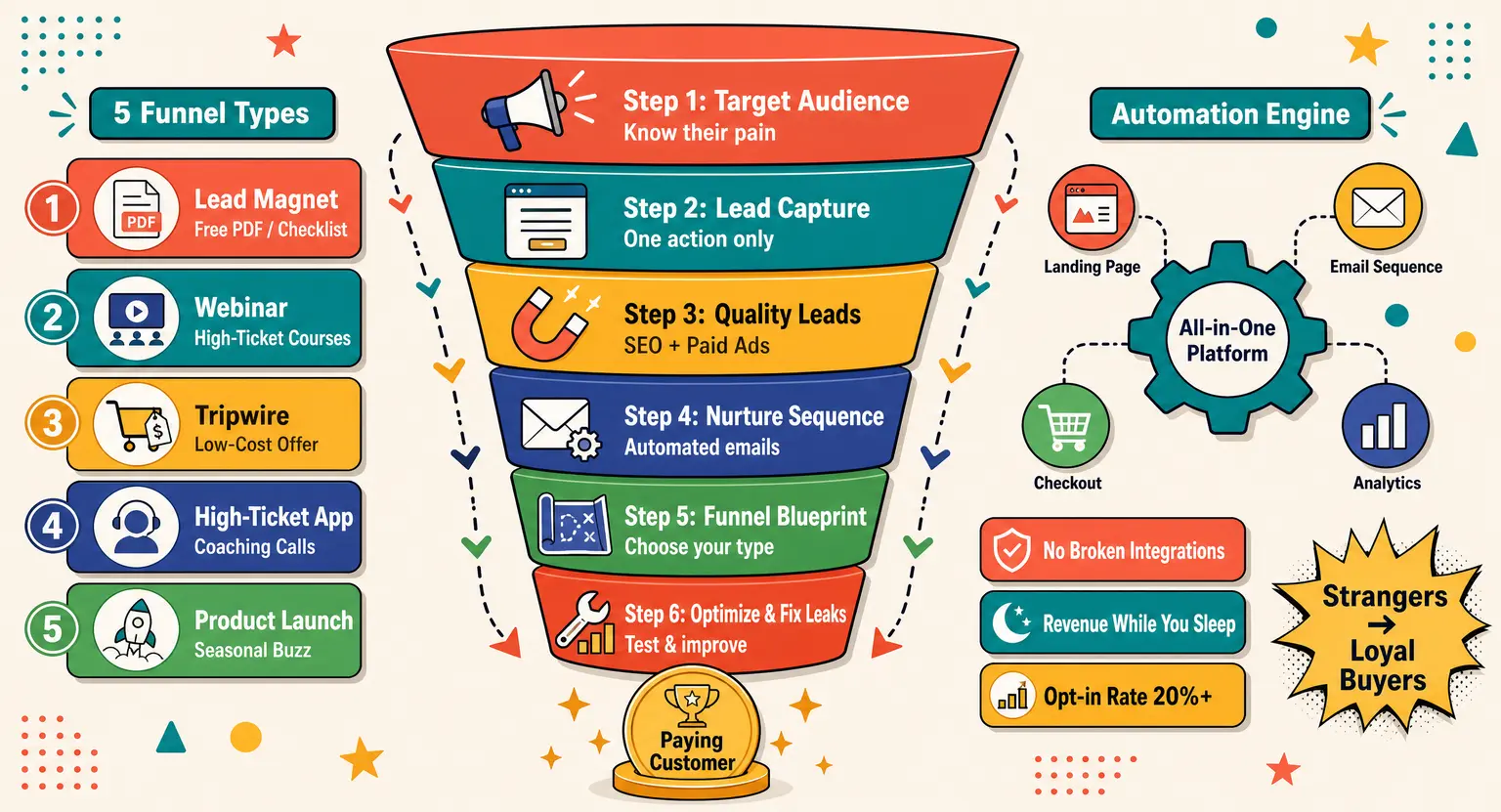
A great training program is useless if no one knows it exists. You need a reliable system that brings in leads and turns them into paying students.
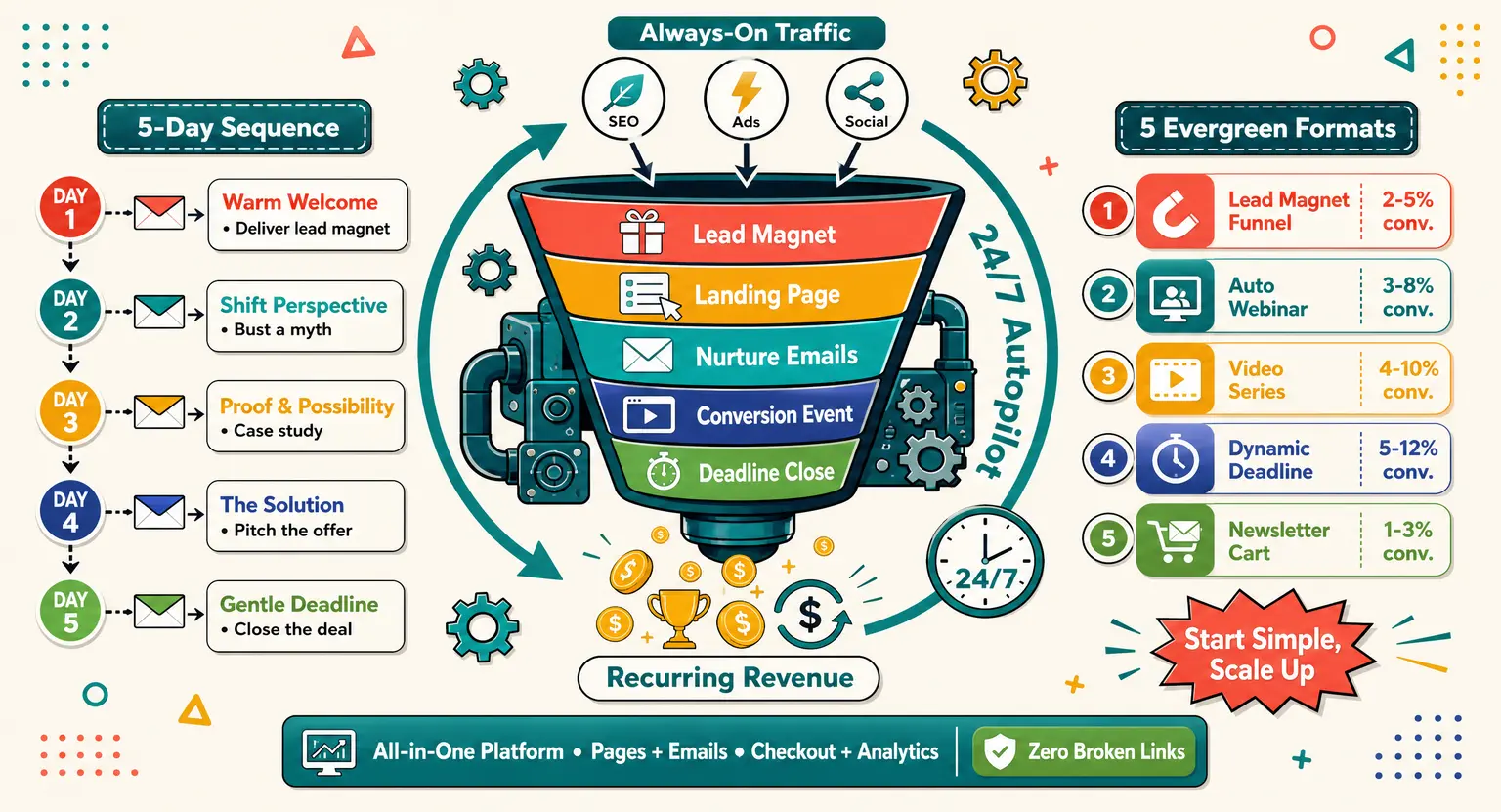
Start by mapping out structured pathways. Using high-converting sales funnels helps guide random web visitors into warm leads and buyers. For example, offer a free masterclass or checklist in exchange for an email address.
Once you have their contact details, establish an automated nurture sequence. By using a modern, user-friendly email marketing platform, you can send automated, helpful emails that build authority.
But do not just pitch. Send case studies, quick tips, and worksheets - when people see the depth of your free resources, they will trust your paid programs.
Complement this automated approach with live demonstrations. Host regular workshops or webinars to answer real-time questions. Showing your hands-on teaching style live is one of the fastest ways to close high-end corporate deals.
So, focus on building one reliable client acquisition channel before trying to run ads or post on five social media sites. When you have one pathway working smoothly, you will have a constant stream of new signups.
And remember that consistency is key. Sending one email a month will not build a deep relationship. Show up regularly in their inbox with real value, and you will become the first person they think of when they want to invest in professional training.
Step 5 : Setting Strategic Pricing and Planning for Long-term Scale
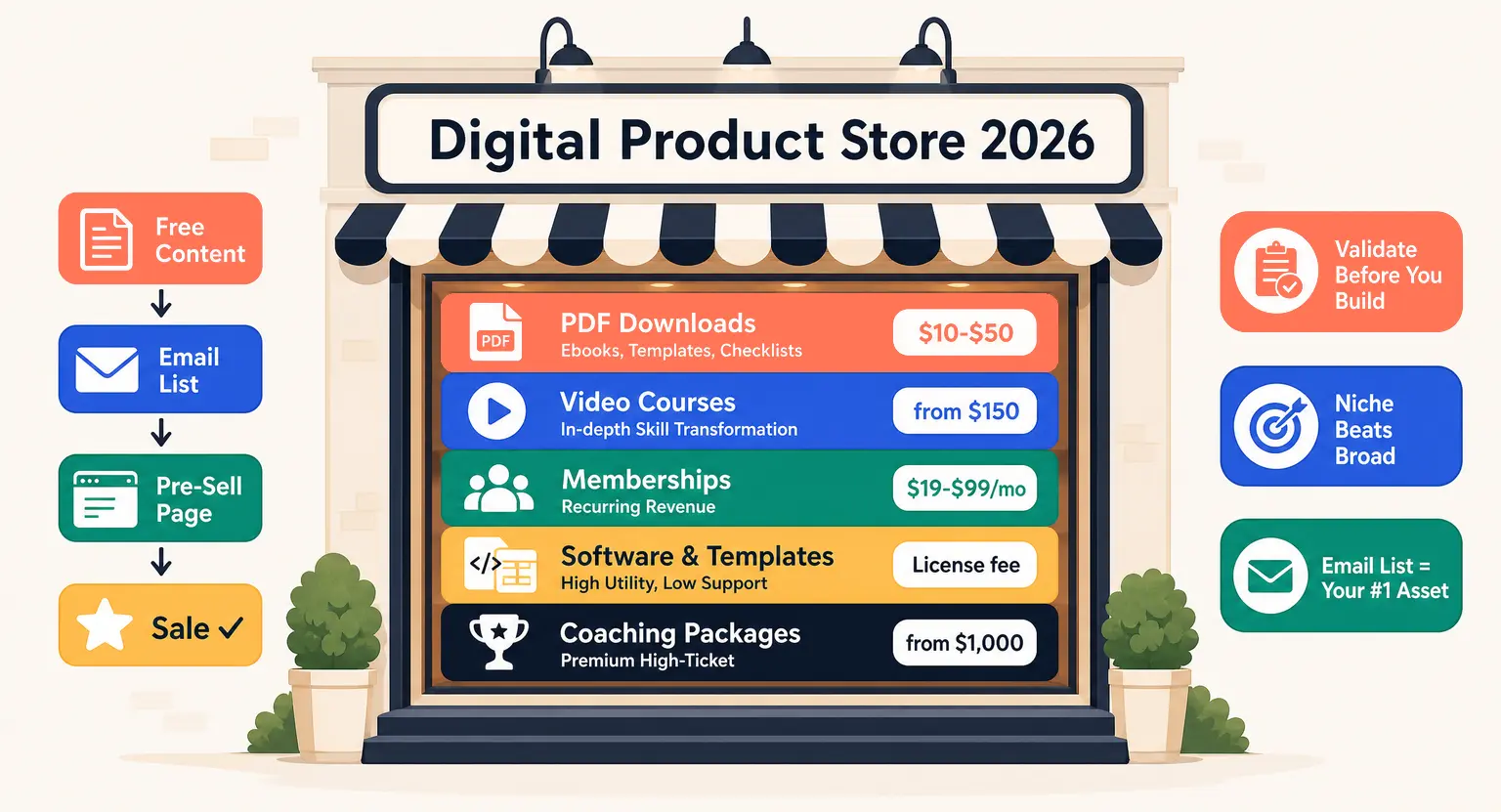
Setting your prices is a major business milestone. Avoid undercharging for your valuable material. Selling fifty-dollar courses forces you into a high-volume numbers game that requires massive advertising budgets.
Instead, focus on value-based models.
Think about the financial impact of your training. If your content helps a professional land a ten-thousand-dollar promotion, pricing your system at one thousand dollars is highly fair.
Explore this concept in our guide on online course pricing strategy to find the sweet spot for your market.
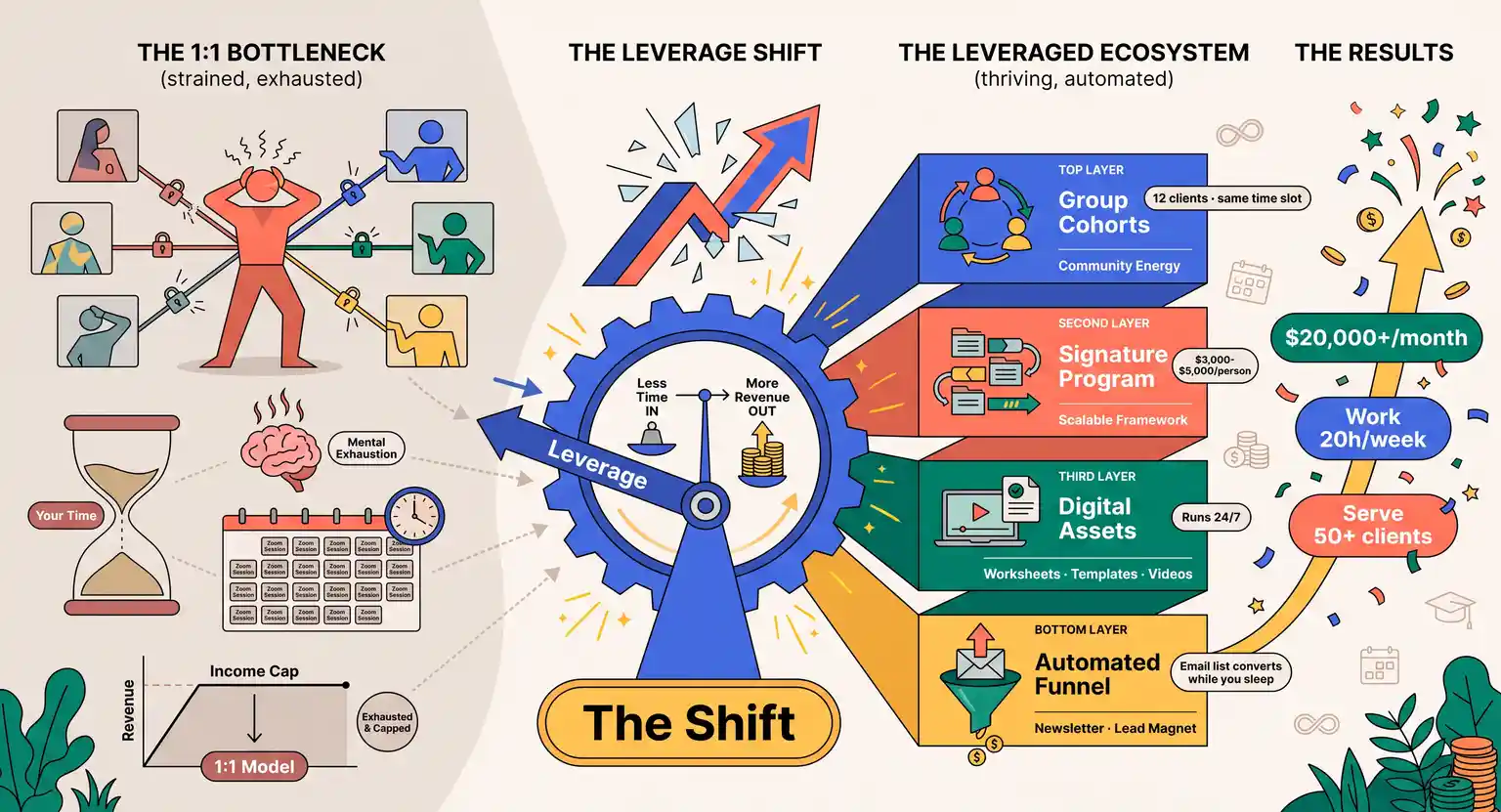
When you are ready to expand, look beyond trading hours for dollars. Once your main system is producing reliable results, look at premium leverage points.
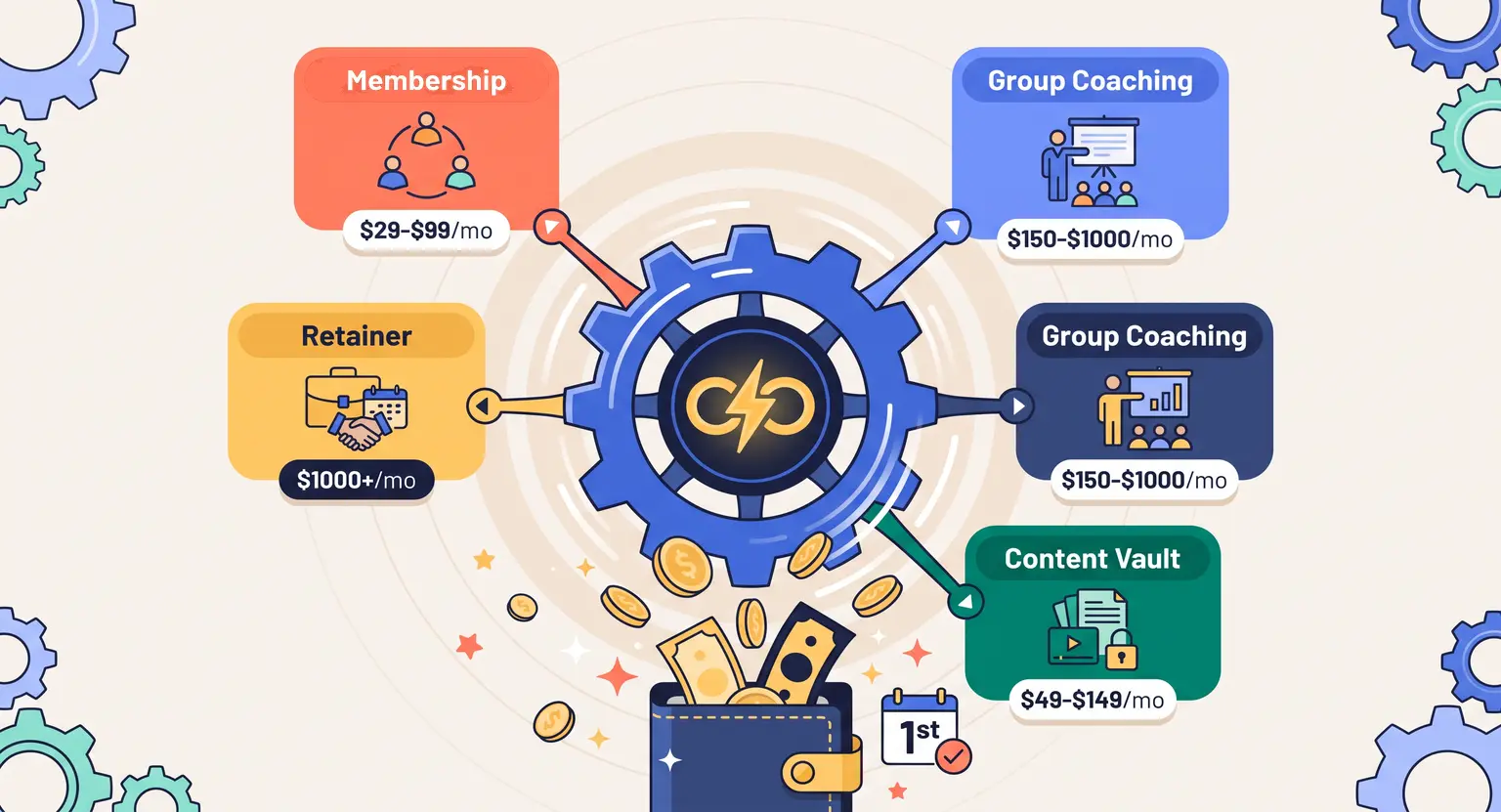
Learning how to scale a coaching business lets you hire facilitators, launch corporate subscription licenses, and build masterminds. Keep your personal contact hours reserved for high-value clients while using your digital curriculum to train the masses.
This dual structure keeps your cash flow strong while protecting you from burnout - but remember that scaling is not just about making more money. It is about creating systems that let your clients achieve deep breakthroughs with less direct intervention from you.
So, design your systems with your eventual exit or scale in mind. If every client support query must go through your email inbox, you do not have a business - you have a stressful job. Build a knowledge base and training documents for your future team early.
Comparing Training Business Models
| Training model | Best suited for | Primary benefit | Complexity level | Delivery style |
|---|---|---|---|---|
|
Hybrid Cohort |
Professional agencies and career switchers looking for structured guidance. |
Strong community support, high completion rates, and premium pricing models. |
Medium. Requires live scheduling and active cohort management. |
Pre-recorded modules combined with weekly live Q&A sessions. |
|
Enterprise Academy |
B2B clients seeking skills certification and compliance documentation. |
High-ticket annual contracts and stable recurring revenue streams. |
High. Demands security compliance and team reporting features. |
On-demand portals with manager dashboards and progress quizzes. |
|
Self-Paced Evergreen |
Mass retail buyers and busy hobbyists looking for flexible schedules. |
Excellent passive scale potential and low day-to-day admin work. |
Low. Setup once and automate onboarding sequences. |
Entirely recorded lesson libraries with downloadable materials. |
|
Premium Consulting |
Executives and high-net-worth individuals pursuing fast transformations. |
Extremely high profit margins and fast direct client feedback. |
Low. Minimal backend setup required for direct support. |
One-on-one session delivery backed by custom homework sheets. |
|
Monthly Membership |
Hobbyists and practitioners needing ongoing updates and support. |
Highly predictable recurring cash flow and community longevity. |
Medium. Requires continuous community moderation and planning. |
Monthly resource drops, group forums, and community events. |
Related Material to Help You Succeed :
Take a look at our ultimate guide to selecting the best platform to sell online courses. It breaks down the tools, pricing models, and direct features you need to host, manage, and scale your education company efficiently without technical headaches.
Start by picking your niche, validating your audience, and choosing a simple technical solution today. Your experience is extremely valuable. And with the right automated software framework, you can easily turn your daily knowledge into a lasting, profitable training business that serves students worldwide without burning you out.
Frequently Asked Questions
Do I need a qualification to start a training business?
No formal degrees are required. Clients pay for real-world results. Your professional portfolio, student success rates, and action steps are much more important than a piece of paper.
How much money do I need to launch?
You can launch with under two hundred dollars. You only need a quality microphone, a standard laptop webcam, and an integrated system to process registrations and host your curriculum.
How should I protect my training materials?
Use a secure learning system that prevents direct file downloads. While you cannot stop screen recording entirely, restricting access to authorized users keeps your content highly secure.
Is live training better than pre-recorded training?
A hybrid mix works best. Keep your core instructional lessons pre-recorded so users can go at their own speed, and host live sessions for active coaching and exercises.


 How to Create a Course Refund Policy (Templates & Best Practices for 2026)
 How to Sell an Online Course With a Quiz Funnel (2026 Guide)
 How to Sell an Online Course Through a Sales Call (2026 Guide)