







Best Platform to Sell Online Courses in 2026: Expert Review
Best Platform to Sell Online Courses in 2026 : Expert Review
Key Takeaways for 2026
-
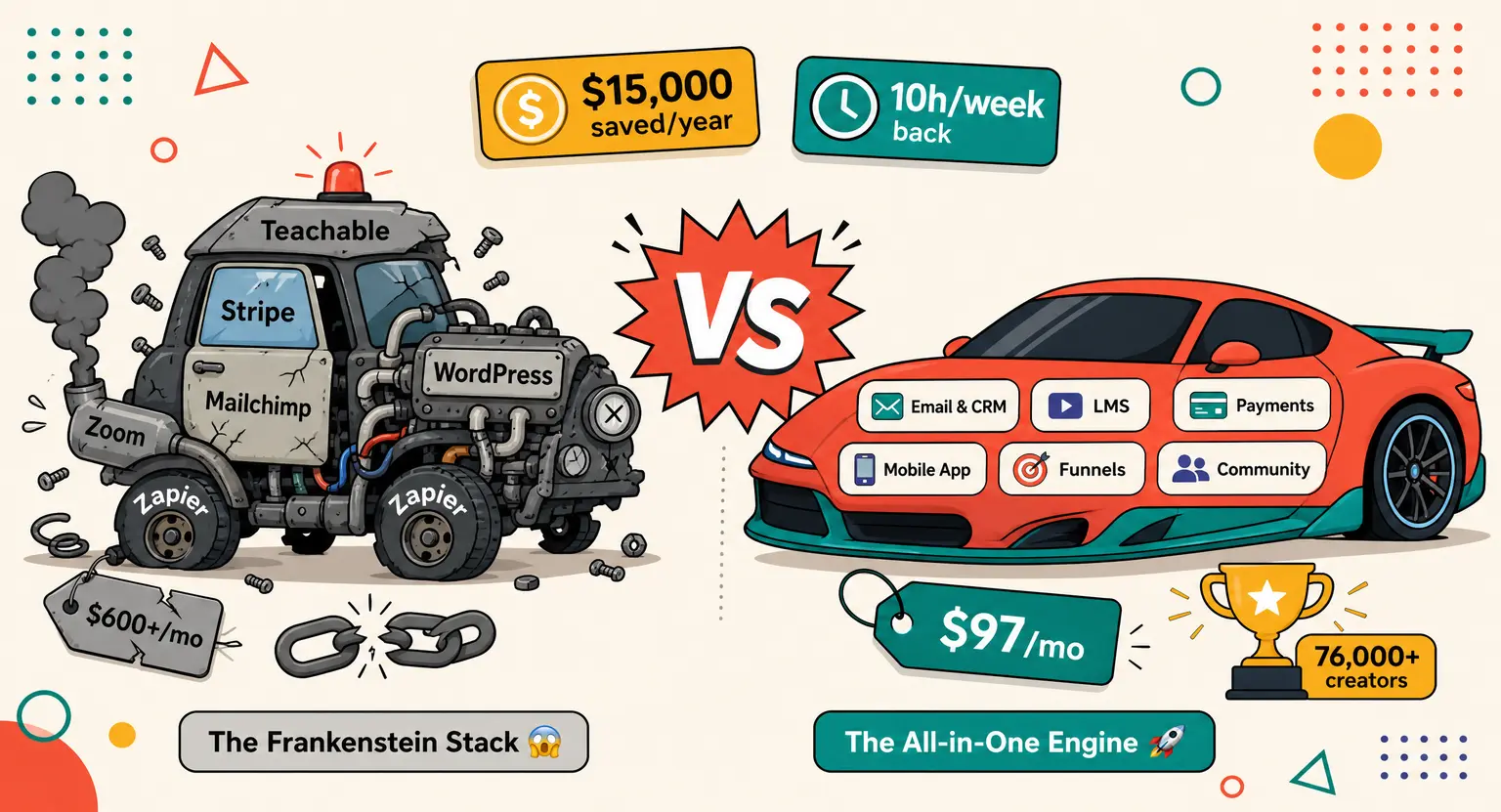
Unified Ecosystem : stop paying for 9 different tools; the best All-in-One Course Platform saves you $15,000+ annually.
-
Marketing Integration : selling is harder than hosting; choose a platform that prioritizes high-converting funnels and CRM behavior.
-
Regulatory Ease : for organizations, automated compliance and certifications are no longer optional - they are essential.
-
Scalability : start for free, but ensure your platform can handle unlimited students and enterprise-level traffic when you hit it big.
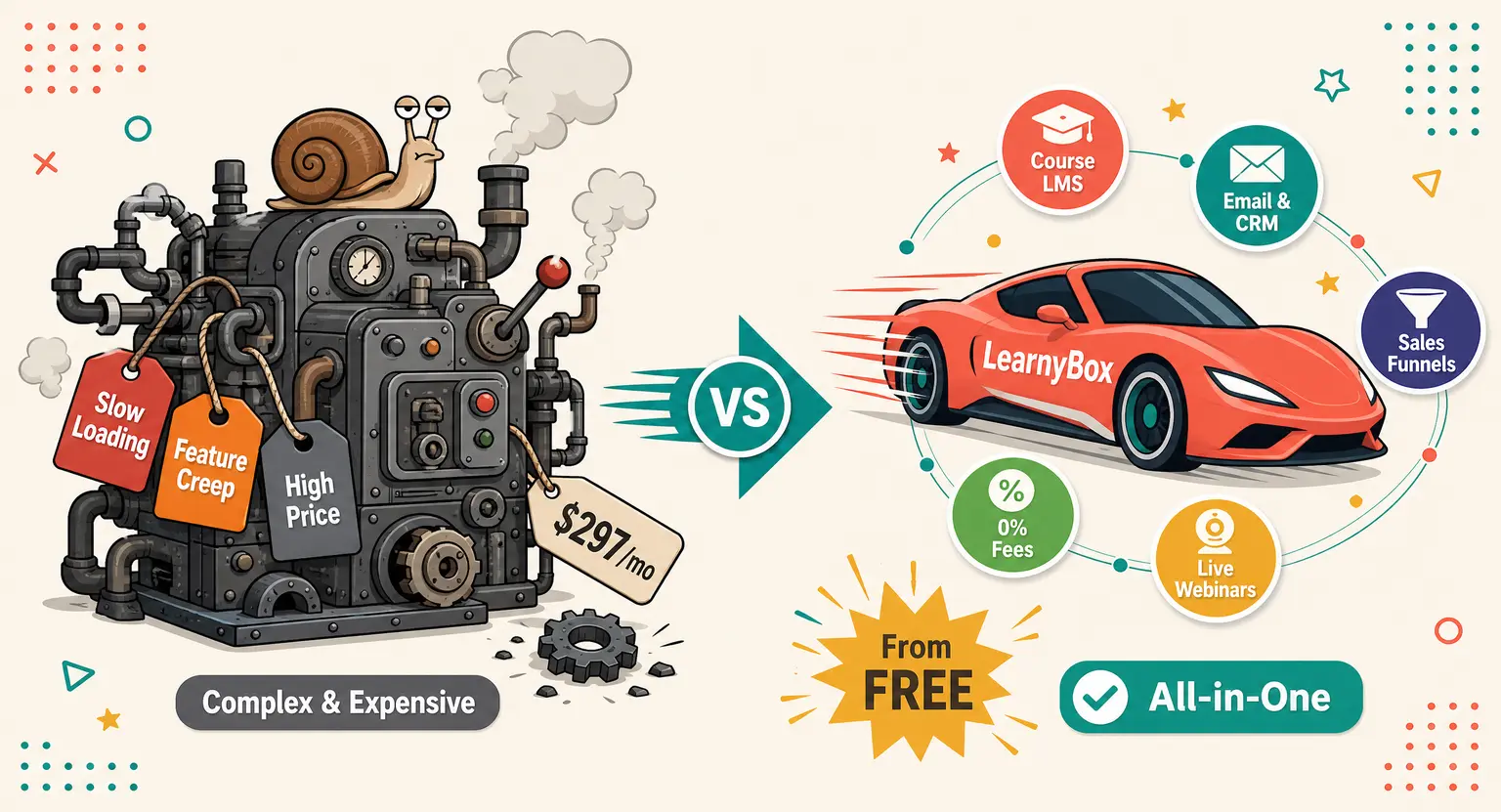
Let's be honest : the era of the "Frankenstein" tech stack is officially dead.
Back in the day, you could get away with duct-taping a WordPress site to a Mailchimp account, using Zapier to talk to a member area, and hoping your Stripe checkout didn't break overnight.
But it's 2026 now.
Your students expect a polished, seamless experience, and you don't have forty hours a week to spend debugging API connections.
If you want to scale, you need the best all-in-one course platform that actually treats your business like a single organism, not a collection of loosely related parts.
The problem is that most "online course platforms" are really just glorified video hosts. They give you a place to upload your files, but they leave the hard part - finding customers and making sales - entirely up to you.
And that's where most experts fail.
They create amazing content that nobody ever buys because their marketing tools are disconnected from their course delivery.
I've seen hundreds of creators lose their minds trying to figure out why a student who finished Module 1 didn't get the automated email for the Module 2 upsell.
It's almost always a data silo problem.
So, let's look at why centralizing your empire is the only move that makes sense this year.
The 2026 Shift : Why "All-in-One" is the Only Way Forward
In the current landscape, the distance between "lead" and "student" has to be as short as possible. But if your lead is in one CRM and your student is in a separate LMS, that distance feels like a canyon.
When you use a unified system like LearnyBox, every interaction is tracked in a single place.
If a prospect watches a webinar but doesn't buy, the system knows.
If a student stalls halfway through your coaching program, the system knows.
This allows for hyper-personalized marketing that actually converts without you lifting a finger. But it's not just about the marketing; it's about the sheer mental bandwidth you get back when you stop playing IT manager.
Think about the financial side of things for a second. Most experts are paying $150 for a funnel builder, $100 for email marketing, $200 for an LMS, $50 for a webinar tool, and $30 for a community app.
That's nearly $600 a month before you even spend a dime on ads! By switching to a comprehensive solution, you can get all of that for a fraction of the price.
But more importantly, you save time.
And in 2026, time is the only thing we aren't getting more of. You should be focused on how to film yourself for an online course that changes lives, not fixing a broken checkout page at 2 AM.
LearnyBox : A Deep Dive into the Modern Industry Gold Standard
When we talk about the heavy hitters in this space, LearnyBox stands out because it wasn't built by techies who thought "education is cool" - it was built by marketers who knew that education is a business.
With over 91,000 courses created and $800 million generated by its clients, the data speaks for itself.
It's more than just a place to put your videos. It's a full-stack engine designed to attract, convert, and retain.
For example, their Marketing Hub combines email marketing, sales funnels, and landing pages with a no-code editor that actually feels intuitive. You don't need to be a designer to make something that looks like it cost $10k to develop.
But the real magic happens in the LearnyAcademy section. This is where you build your community and deliver your wisdom. In 2026, students want more than a list of videos; they want engagement.
LearnyBox offers integrated community spaces, progress tracking, and even a mobile app so your students can learn while they're at the gym or commuting.
And for those of you worried about the technical side of taking money, the LearnyPay system simplifies everything.
It handles the invoices, the recurring subscriptions, and the tax compliance so you can actually sleep at night knowing your legal bases are covered.
But if you're still on the fence, you can always start with an LMS free account to test the waters yourself.
Comparison : Choosing the Right Level for Your Ambition
Not every course creator is at the same stage. A solopreneur launching their first yoga program has very different needs than a multinational corporation onboarding five thousand employees.
That's why the flexibility of the platform matters.
You need a system that grows with you, not one that forces you to migrate everything the moment you hit ten thousand subscribers.
Let's break down how the current options stack up for different types of users so you can see where you fit in the ecosystem.
| Feature / Category | Solopreneurs | Small Businesses | Enterprise / Training Orgs |
|---|---|---|---|
| Main Goal | Launch first course & validate niche. | Scaling sales through automation. | Compliance, API, & bulk onboarding. |
| Marketing Tools | Simple lead capture & emails. | Complex funnels & A/B testing. | CRM integration & white-label branding. |
| LMS Capabilities | Standard video modules & quizzes. | Gamification & communities. | Sequenced learning paths & Qualiopi. |
| Support Level | Standard help docs & chat. | Priority tech support. | Dedicated account manager & migration. |
| Best Plan | Launch ($49/mo) | Boost ($99/mo) | Scale or Custom Enterprise |
The Hidden Costs of "Cheap" Platforms
I constantly see people choosing a platform because it's "only $20 a month," but they don't look at the fine print.
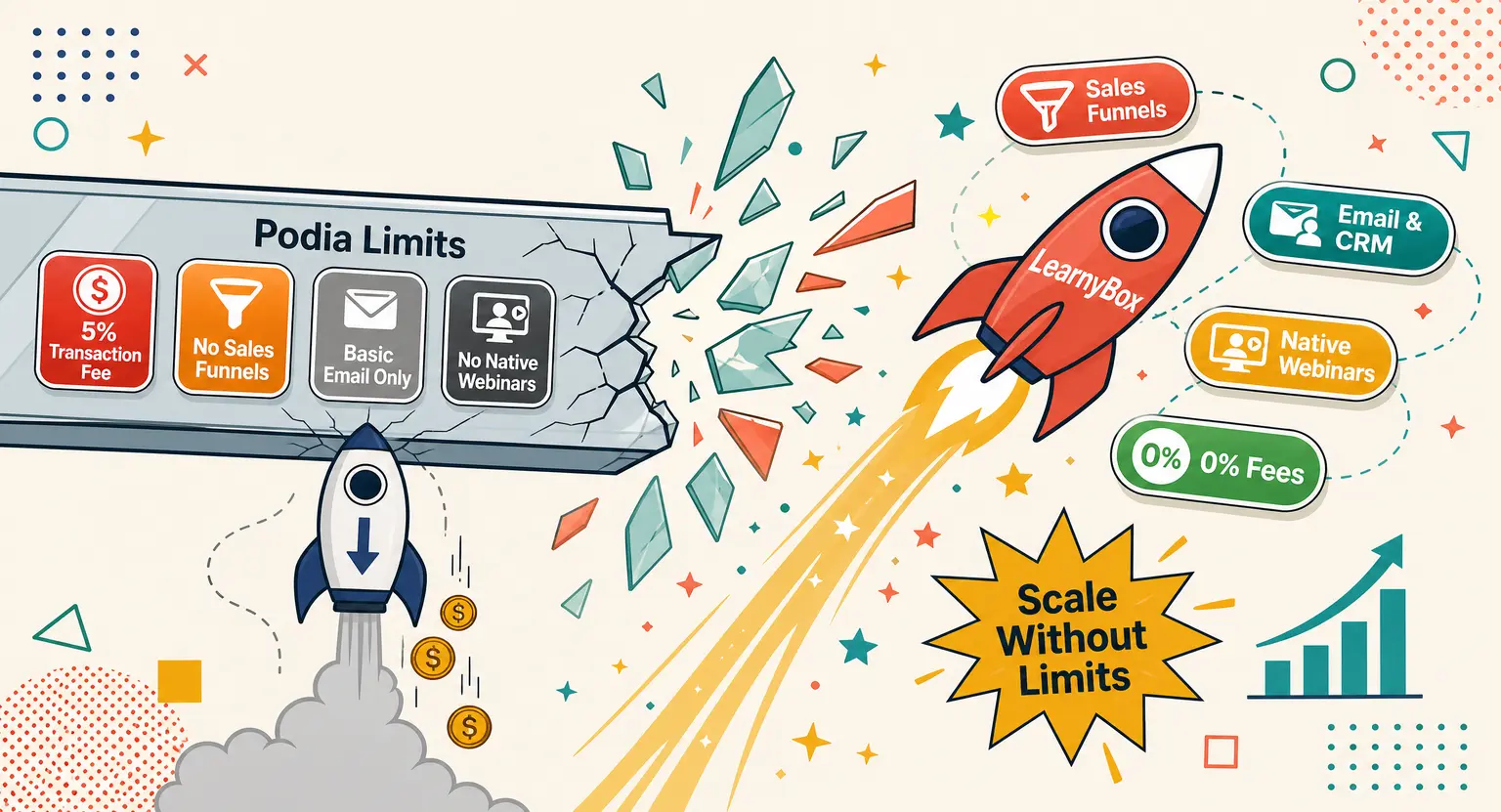
Does it charge a 5% transaction fee?
Does it limit you to 50 students?
Does it lack an email autoresponder, forcing you to buy another tool?
Suddenly, that $20 platform is costing you more than the $99 "expensive" one. But the biggest cost isn't even money - it's the lost revenue from a poor user experience.
If your checkout page takes four seconds to load or doesn't work on mobile, you are throwing money in the trash.
And yet, many people overlook these details when comparing online courses selling platform pricing. You have to look at the total cost of ownership, including your time.
And let's talk about the "Frankenstein" headache one more time. Every time one of your external tools updates its software, there is a chance the connection between your tools will break.
I've lived through those days.
You wake up to fifty angry emails from students who paid but didn't get access because a webhook failed.
But with a native system, that literally cannot happen. Everything is built on the same codebase, so everything stays in sync forever.
It's the difference between driving a car built by one manufacturer versus trying to drive a vehicle where the engine is from a Ford, the transmission is from a Toyota, and the steering wheel is from a bicycle.
So, make it easy on yourself.
Solving the Compliance Nightmare for Training Organizations
If you are a professional training organization, you have it much harder than the average influencer.
You have to deal with things like GDPR, Qualiopi certification, CPF or other compliance requirements. You need to prove that your students actually watched the videos and passed the tests.
Doing this manually is a full-time job for two people. But a robust LMS handles this by default. It generates attendance sheets, tracks exact time-on-page, and issues certificates of completion automatically.
This turns a regulatory nightmare into a "set it and forget it" workflow, which is exactly why major enterprises are moving their training to dedicated, compliant platforms.
But it's not just about the paperwork. Large organizations need to ensure their brand is protected. This is where white-labeling comes in.
You don't want your corporate clients seeing another company's logo everywhere they go. You want your own domain, your own colors, and your own voice.
The ability to completely mask the underlying tech is what separates the amateur tools from the professional ones. And honestly, it's about peace of mind.
Knowing that your data is secure and your platform is built for scale means you can focus on the pedagogical side - actually teaching your people - rather than worrying if the server will crash during a high-traffic launch.

Real Stories : From Chaos to $800M in Success
It's easy to talk about features, but it's the people that matter.
Take Laurence L., for instance. She's a trainer who used to struggle with five different tools. She finally moved everything - courses, conferences, payments, and affiliates - into one place.
For her, the value wasn't just the money saved; it was the simplicity of managing her entire business from a single dashboard.
Then you have someone like Christian B., an entrepreneur who calls the platform his "Swiss Army knife." Whether you're a beginner or an expert, having all your tools perfectly connected removes the friction that usually stops people from ever launching their first product.
But what about the big players? We've seen franchise networks improve their operational efficiency by over 40% just by centralizing their training.
Imagine being able to train thousands of franchisees with the same high-quality, up-to-date content without ever leaving your office. No more travel costs, no more inconsistent messaging. Just one source of truth that everyone can access 24/7.
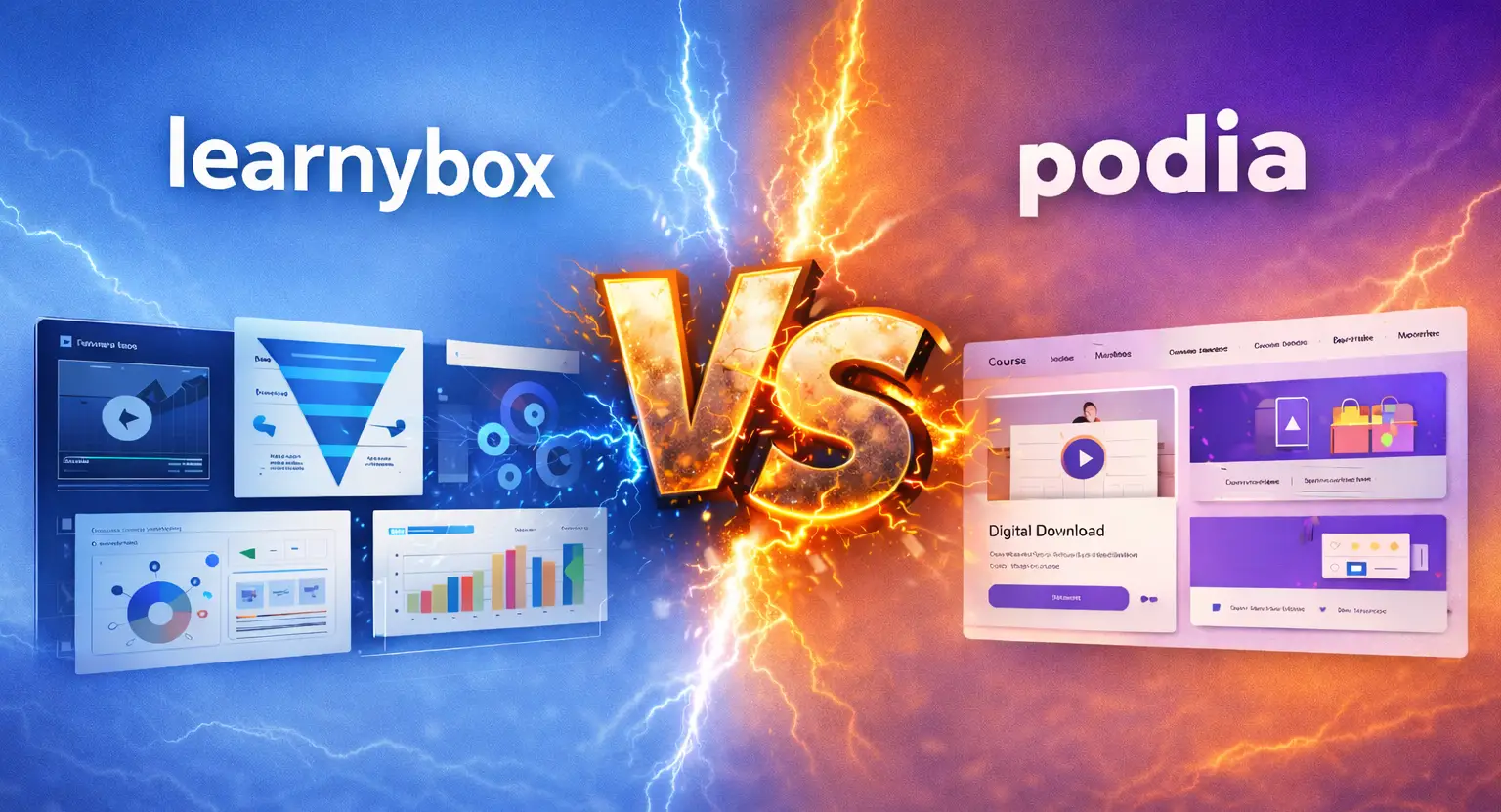
That is the power of a proper digital academy. When you compare LearnyBox vs Podia or other competitors, you have to ask : who is actually giving me the tools to build an empire, not just a hobby?
But the answer usually becomes clear the moment you try to build a complex funnel.
-
Integrated Webinars : run live sessions to build trust or automated replays to sell while you sleep.
-
Advanced CRM : segment your audience based on their exact behavior inside your courses.
-
Affiliate Management : let your happy students sell for you with a built-in referral system.
-
Zero Coding : drag-and-drop your way to a professional website and blog in minutes.
-
Native Payments : accept credit cards, PayPal, and even installment plans without extra plugins.
-
Mobile Learning : give your students a dedicated app experience that keeps them coming back.
-
A/B Testing : find out exactly which landing page converts better with built-in data.
The Verdict for 2026
So, where does that leave us? If you're serious about selling knowledge this year, you have to stop thinking about "software" and start thinking about "ecosystems."
The best platform is the one that stays out of your way and lets you do your best work.
For the vast majority of experts, teachers, and organizations, that means an all-in-one solution is the only logical choice. It's more affordable, it's more stable, and it's infinitely more scalable than the old way of doing things.
But don't take my word for it. The market has already shifted, and the creators who are thriving are the ones who embraced integration years ago.
The tech is ready. The students are waiting. All that's left is for you to put your expertise into a system that can actually handle it.
Whether you are launching a small coaching group or a massive corporate training program, the foundation you build today will determine how far you can go tomorrow. And honestly? It's a lot more fun to spend your time teaching than it is to spend your time fixing broken links.
So, pick a partner that actually has your back and get back to what you do best. Your future students will thank you for the better experience, and your bank account will thank you for the lower overhead. It's a win-win all around.
Frequently Asked Questions
Why is an all-in-one platform better than using multiple specialized tools?
Using an all-in-one platform eliminates the technical nightmare of trying to connect separate tools for email, landing pages, and course hosting.
In 2026, speed is everything, and having one unified system means your data flows seamlessly without API breaks or Zapier costs.
You save money, usually upwards of $1,000 monthly, while reducing the time spent managing tech instead of teaching your students.
But it's really the peace of mind that matters most, knowing that your sales funnels won't break just because an external plugin updated its code.
Can LearnyBox handle complex marketing automation and sales funnels?
Absolutely, LearnyBox was built with a marketing-first mindset compared to traditional LMS tools that just host videos.
The platform features a high-converting funnel builder, integrated CRM for segmentation, and automated email sequences that trigger based on user behavior inside your courses.
Whether you are running complex evergreen webinars or simple lead magnet pages, the system handles the entire sales architecture without needing external plugins. And since everything is native, you can track the exact ROI of every email you send directly from your dashboard.
Is it difficult to migrate my existing courses from another platform?
It is surprisingly straightforward because the team offers dedicated migration support to ensure you don't lose any data or progress.
Many platforms make it hard to leave, but LearnyBox provides tools and personal assistance to move your videos, student lists, and historical records over to their centralized dashboard.
This white-glove service is designed to minimize downtime so your business continues to generate revenue during the transition process.
But honestly, most users find that setting things up from scratch is also faster than they expected due to the intuitive drag-and-drop editors.
What specific features are available for certified training organizations?
Training organizations benefit from advanced compliance tools, such as automated attendance tracking, generated certificates, and regulatory-ready reporting.
The platform supports structured learning paths where modules are unlocked only after completion, ensuring pedagogical standards are met for certifications like Qualiopi.
You also get detailed analytics on learner progress and engagement, which is critical for maintaining high completion rates and fulfilling government or corporate training requirements.
Plus, the API access allows you to connect your training data to existing HR systems or external databases with ease.
Related Material & Resources
Looking to dive deeper into the world of online education? Check out these expert guides to help you master the art of selling your knowledge :




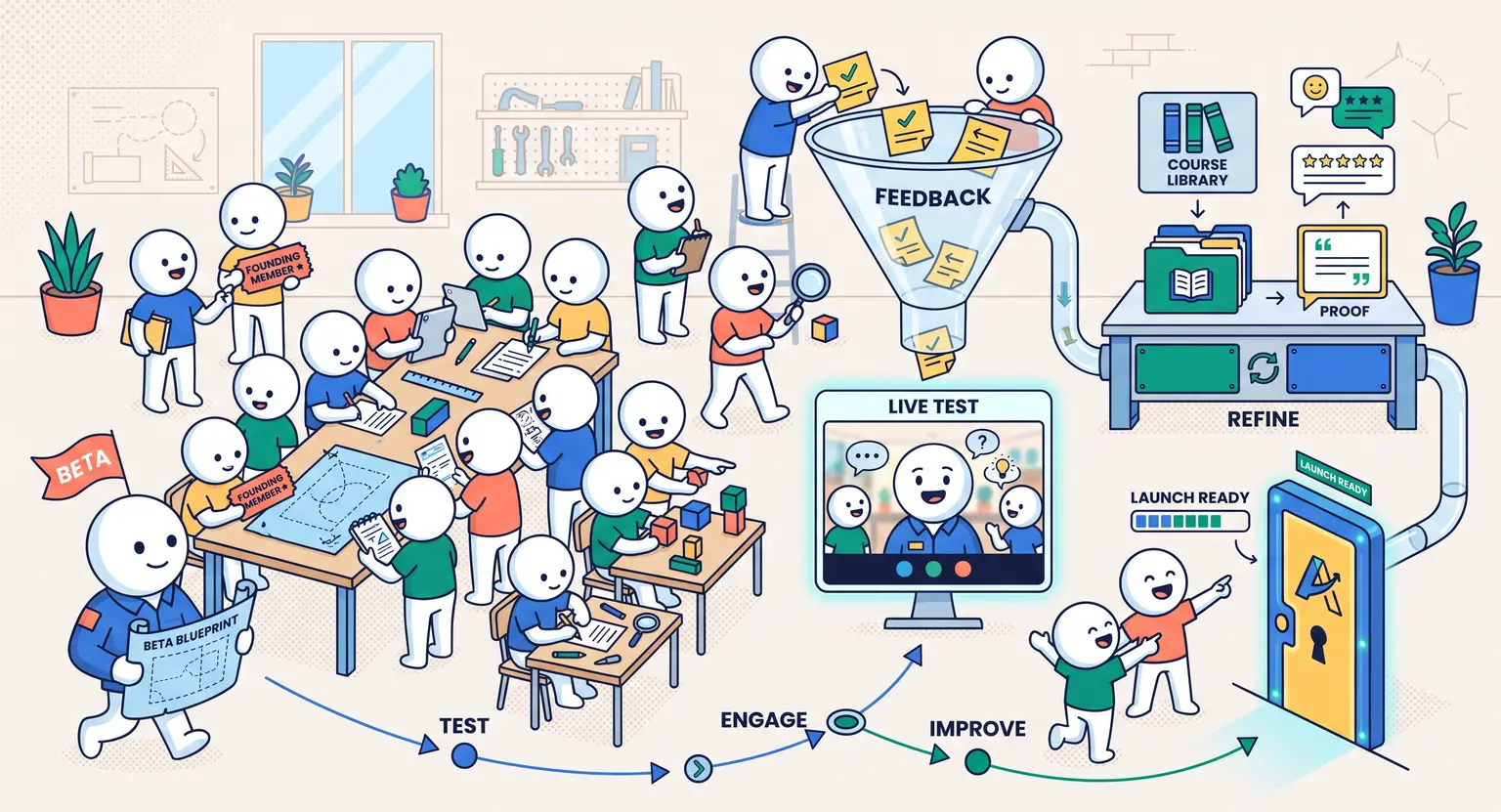 How to Run a Beta Version of an Online Course (2026 Guide)
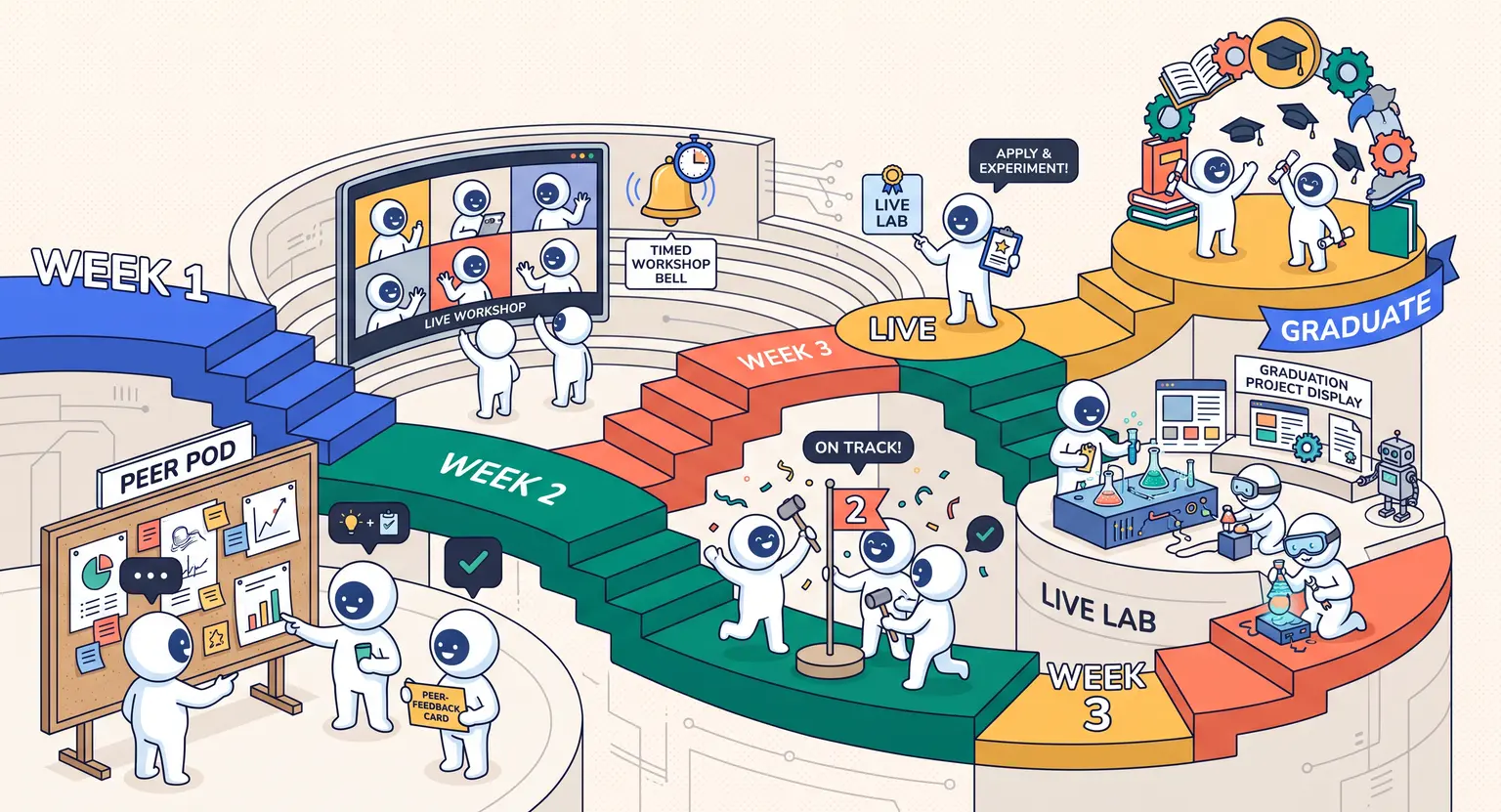 How to Create a Cohort-Based Online Course (2026 Guide)
 How to Sell an Online Course With a Quiz Funnel (2026 Guide)
 How to Sell an Online Course Through a Sales Call (2026 Guide)