







Free vs Paid Community: 2026 Strategic Creator Blueprint
Free vs Paid Community : The Ultimate 2026 Strategic Blueprint
Key Takeaways :
-
Free communities excel at driving massive organic reach, making them a fantastic engine for audience growth.
-
Paid communities foster unparalleled commitment, producing highly constructive, spam-free peer interactions.
-
For maximum success, leverage a subscription business model to create predictable recurring revenue.
-
A smart combination of both strategies is the ultimate way to nurture cold leads and retain membership members over the long haul.
Let's start with a truth that every digital creator in 2026 knows deep down inside : the internet is getting incredibly noisy.
Social feeds are overflowing, algorithms change on a whim, and people are absolutely exhausted by superficial interactions on public feeds…
What are they looking for instead?
Intimacy.
True connection.
Safe harbors where they can actually talk to real people who share their exact passions or career paths.
Because of this, digital communities have shifted from being a nice-to-have marketing tactic to the absolute core of any online business, but the moment you decide to build one, you run face-first into a massive strategic fork in the road.
Do you build a free community, or do you lock it behind a paywall and make it a premium experience?
This decision is not just about price. It dictates your daily schedule, your moderation style, your marketing funnel, and how your audience views your brand.
So, let's dig deep into both paths, dissect the actual psychology behind them, and explore the tactical playbook that top-tier creators are using to run highly profitable systems in 2026.
The Evolution of Digital Connection : Why the Debate Matters Now
A few years ago, you could spin up a basic Facebook Group, invite a thousand people from your page, drop a few links to your blog, and call it a day. That era is dead.
Today, public social networks are designed to keep users scrolling, not talking to each other. Ad pollution is high, organic reach is miserable, and your members' attention is constantly being pulled away by the next flashy video short.
This has driven a massive migration toward dedicated, private spaces, but you face a core trade-off here…
On one side, open-door settings make it incredibly easy for anyone to join, generating large-scale conversations quickly.
On the other side, gated networks demand a financial commitment, which naturally filters out casual onlookers in favor of hyper-engaged advocates.
We are seeing that the divide isn't merely financial. It is structural.
If you make it free, you face one set of challenges.
If you charge even a single dollar, the entire dynamic changes.
The expectations change, the vibe changes, and your workload shifts in ways you might not expect.
Let's break down each model one by one so you can make an educated choice.
The High-Volume Power of Free Communities : Organic Reach & Pipeline Building
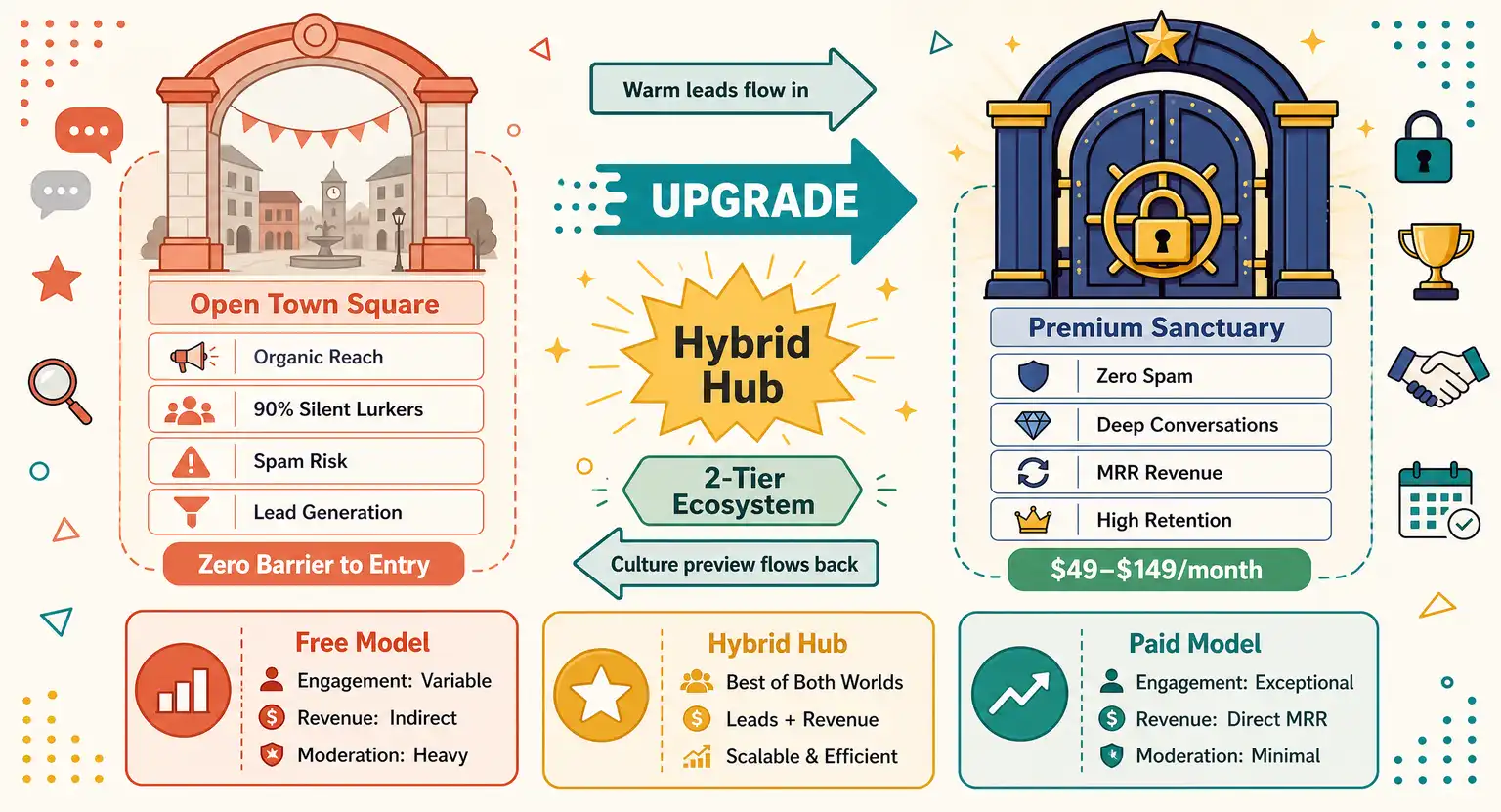
Think of a free community as the ultimate front porch for your brand. It represents an incredibly low-friction entry point for anyone who is remotely interested in your niche.
Because there is no credit card required to enter, the barrier to entry is completely gone. Anyone searching for your topics online can stumble in, join the conversation, and instantly feel like they belong to something bigger.
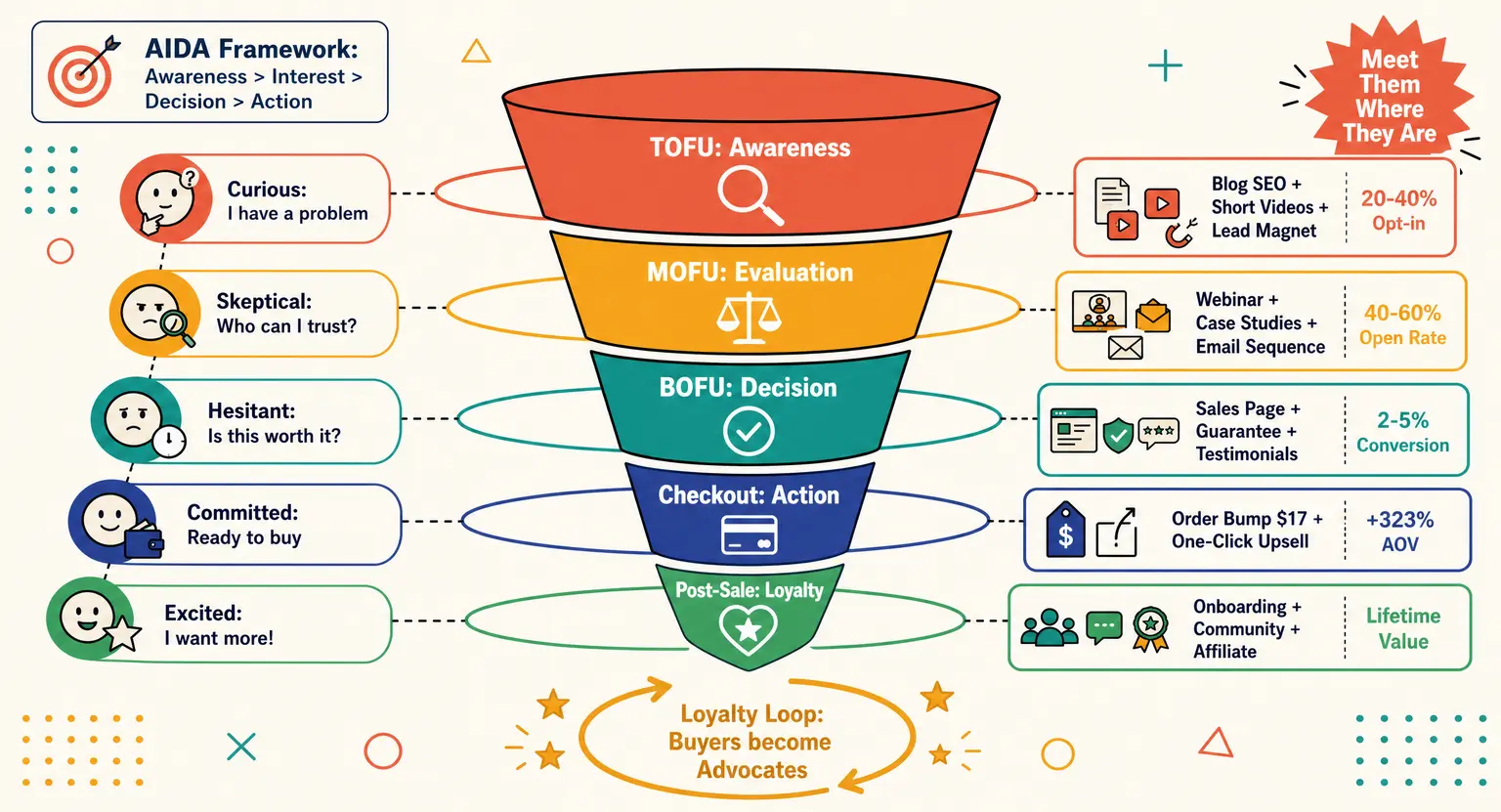
This makes free communities a goldmine for top-of-funnel lead generation. And when you pair a free hub with strategies on how to grow an email list, the traffic flywheel starts spinning almost effortlessly - You get to interact directly with your audience, understand their pain points in real time, and gain their trust before you ever ask them to spend money.
But let's be totally honest with each other : free groups are not all rainbows and easy engagement. They can quickly turn into digital wild-west territory if you aren't careful.
Let's look at the actual realities of managing an open-access forum :
-
The Silent Majority : in almost every free group, the "90-9-1" rule applies with brutal efficiency.
Roughly 90% of your members will be silent lurkers who never post, 9% will interact occasionally, and only 1% will actively start conversations. -
Spam and Self-Promotion : the second you open the doors for free, you attract people whose only goal is to drop their own links and leave.
Without strict moderation rules, your beautiful group can dissolve into a wall of low-quality advertising in a matter of weeks. -
Low Psychological Skin in the Game : because it cost them zero dollars to join, members have no financial incentive to stick around.
They might join on a Monday, completely forget about your group by Wednesday, and never log in again. -
Heavy Moderation Burden : keeping a free group clean, supportive, and active requires a massive amount of manual labor.
You either spend hours weeding out bots and bad actors every single day, or you have to pay moderators to do it for you, which turns your "free" asset into an expensive monthly overhead.
So, does this mean free groups are a waste of time?
Absolutely not.
If your primary goal is to reach the widest audience possible, build massive brand awareness, and create a warm pool of prospects for your future launches, an open community is hard to beat.
You just need to walk in with your eyes wide open about the administrative work required to keep it healthy.
The Paywalled Sanctuary : Elevating Value, Safety, and Commitment
Now, let's step inside the gated community.
The moment someone pays to enter a space, their psychological relationship with that space changes instantly. There is an old saying in the digital business world : "People who pay, pay attention." And in 2026, this truth is more powerful than ever.
In a paid community, spam drops to practically zero - Nobody is going to pay $50 a month just to drop a spam link and get banned five minutes later. The conversations become significantly deeper, more constructive, and highly vulnerable.
Members feel safer sharing their real numbers, their struggles, and their business secrets because they know everyone else in the room also had to pay to get in.
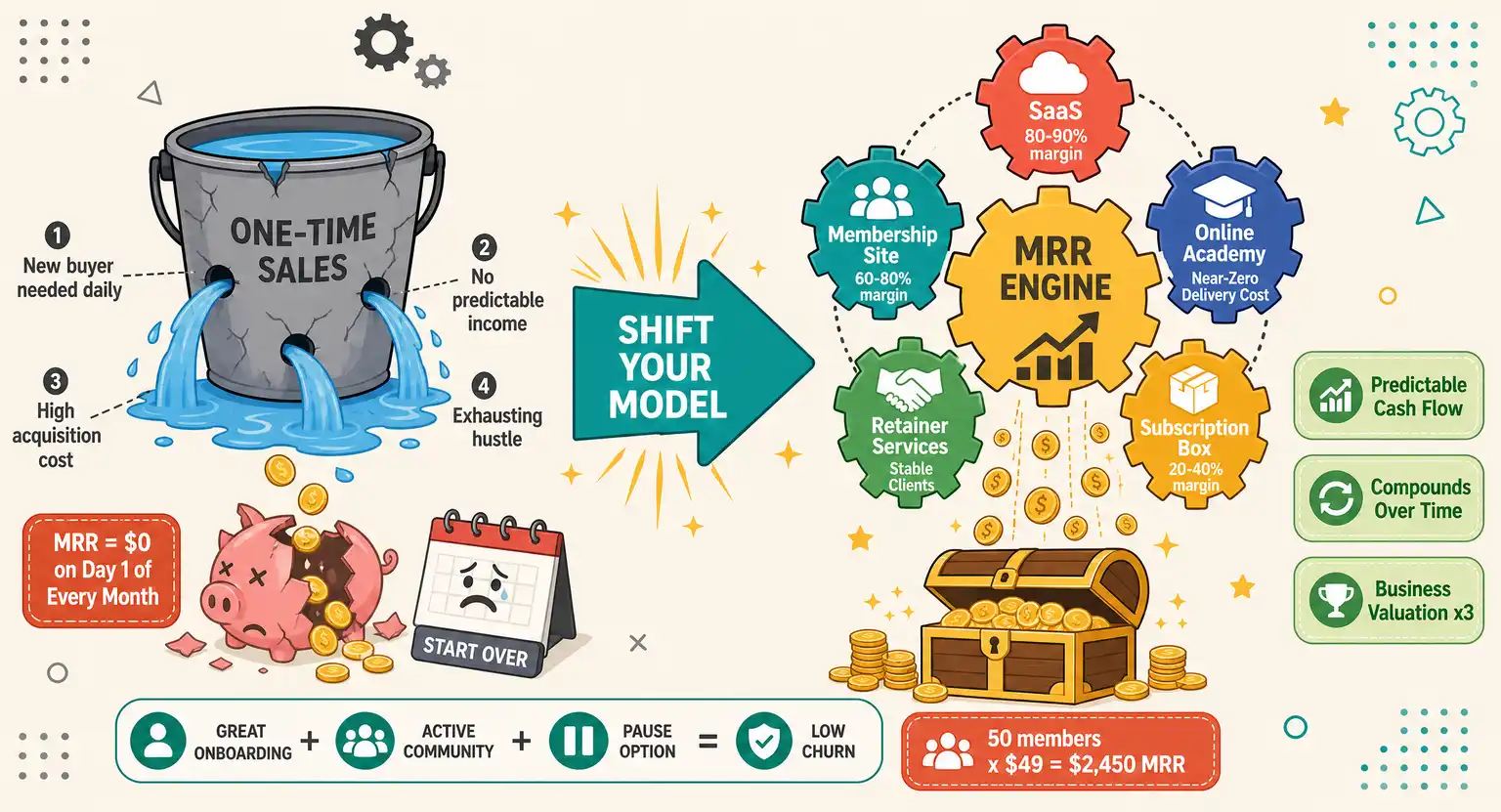
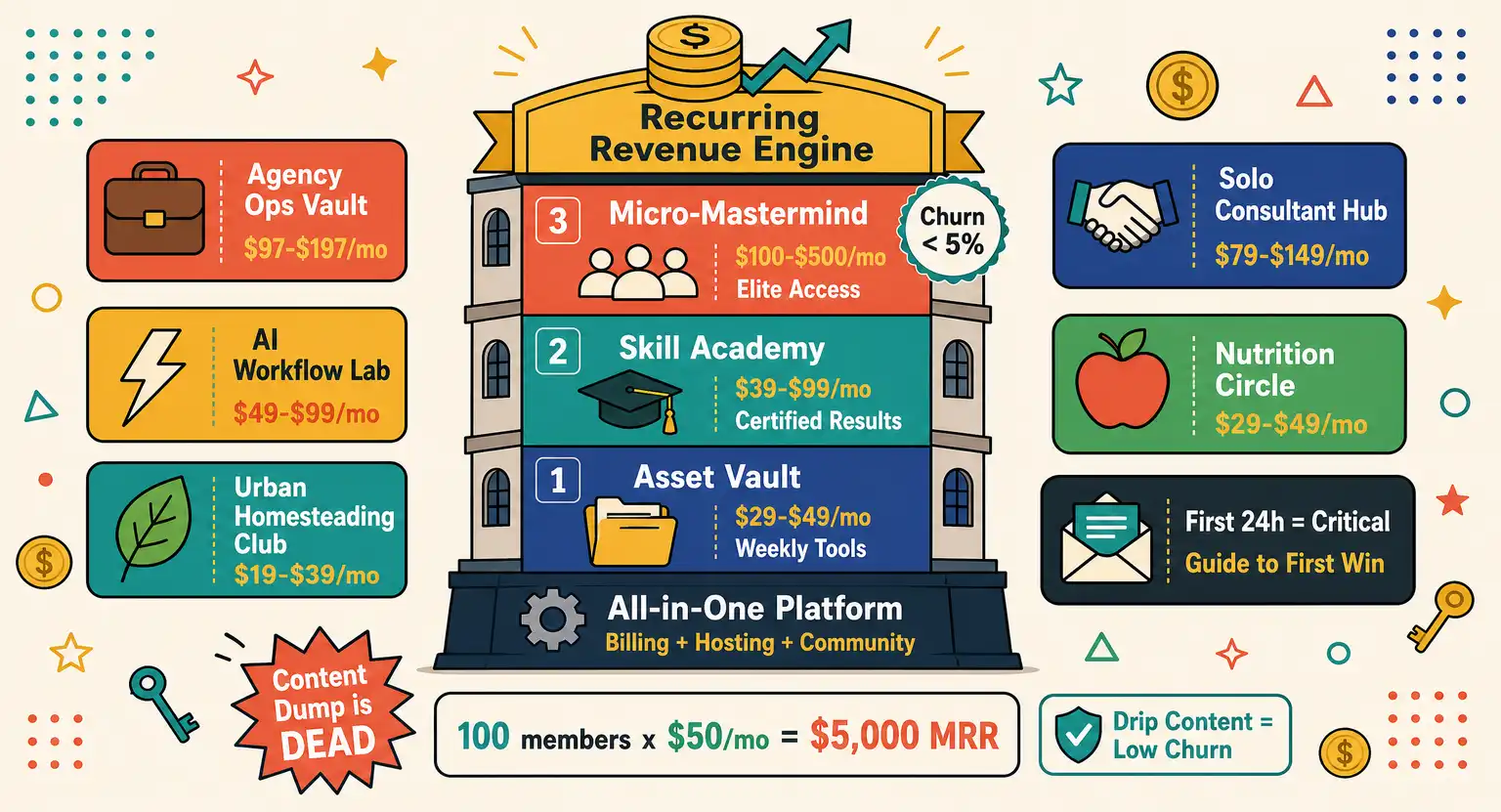
This shift aligns perfectly with a modern subscription business model, giving you predictable income. It allows you to build a highly sustainable business without needing to constantly find thousands of new customers every single month.
Instead, you focus on providing immense value to a few hundred dedicated members who are happy to fund your operations year after year.
But the premium road has its own set of hurdles that you must prepare for :
-
High Expectations : the second a transaction occurs, you are no longer just a cool creator; you are a service provider.
Members expect fast answers, polished materials, regular events, and direct access to your brain. If the value doesn't match the price, they will leave just as fast as they joined. -
Relentless Focus on Retention : in a paid community, churn is your greatest enemy. If you lose 10% of your members every month, you have to spend an enormous amount of energy just to keep your revenue flat.
You will also need to keep things fresh with plenty of creative content ideas for membership sites so members never get bored. -
Slower Initial Growth : you will not see thousands of people pouring in overnight.
Paid groups grow slowly, member by member. It takes patient, intentional marketing to convince someone to add another monthly line item to their credit card statement.
If you enjoy hosting deep, transformative discussions, mentoring people closely, and building a high-margin business with a smaller, highly dedicated user base, the paid path is arguably the most rewarding business model available today.
A Side-by-Side Comparison : Mechanics, Metrics, and Maintenance
To help you see how these two models stack up against each other across key business metrics, let's look at a detailed comparison table.
This breakdown illustrates exactly what you are signing up for under each setup :
| Metric | Free community model | Paid community model |
|---|---|---|
|
Acquisition cost & friction |
Extremely low. Zero barrier to entry means rapid member acquisition. |
Moderate to high. Requires solid marketing, webinars, or launches. |
|
User engagement quality |
Variable. Lots of casual scrolling, high rate of silent lurkers. |
Exceptionally high. Active peer-to-peer discussions and networking. |
|
Spam & moderation effort |
High. Requires daily keyword filtering, admin approval, and post checks. |
Extremely low. Paywall acts as a highly effective filter. |
|
Primary revenue strategy |
Indirect monetization. Selling courses, services, or premium upgrades. |
Direct monetization. Monthly or annual subscription recurring revenue (MRR). |
|
Content delivery needs |
Low. Organic news sharing, casual check-ins, and generic tips. |
Structured. Masterclasses, live coaching, resource templates, worksheets. |
|
Retention focus area |
Low priority. Churn doesn't directly hurt your immediate revenue numbers. |
Extreme priority. Requires continuous engagement checking to protect renewals. |
As you can see, each model demands a vastly different focus :
With free, you are managing a crowd,
With paid, you are hosting a dinner party.
Neither is inherently better than the other, but they require entirely different skills, tools, and mental frameworks to run successfully.
The Master Strategy for 2026 : The Hybrid Hub
But wait... what if you don't have to choose?
What if the absolute best community strategy for 2026 is actually a combination of both models?
Enter the Hybrid Community Hub.
This is where the magic happens. Instead of choosing between free and paid, smart creators are setting up a two-tiered ecosystem.
You build a free, open community to act as your brand's digital town square. This is where you post general news, run free challenges, and let people interact casually. It acts as a warm room of leads whenever you decide how to launch an online course or a brand new premium masterclass.
Then, right next door, you build your private premium sanctuary. This paid tier is where the real work happens.
When a member of your free group is ready to take things seriously, they "upgrade" to the paid tier to get direct access to you, specialized masterminds, deep-dive workbooks, and advanced tools.
This transition feels completely natural because they have already spent weeks or months experiencing your culture in the free space.
This hybrid model solves the two biggest problems in the creator economy : it gives you a constant stream of fresh, organic leads for free, and it provides a premium, high-ticket destination that generates dependable recurring income.
It is highly efficient, highly scalable, and places far less pressure on you to constantly run expensive ad campaigns.
Choosing the Right Infrastructure : Tools, Tech, and Engagement
No matter which model you choose, your strategy is only as good as the technology holding it together - If your members have to jump through ten different hoops just to log in, view a lesson, or leave a message, they will leave. In 2026, friction is a total dealbreaker.
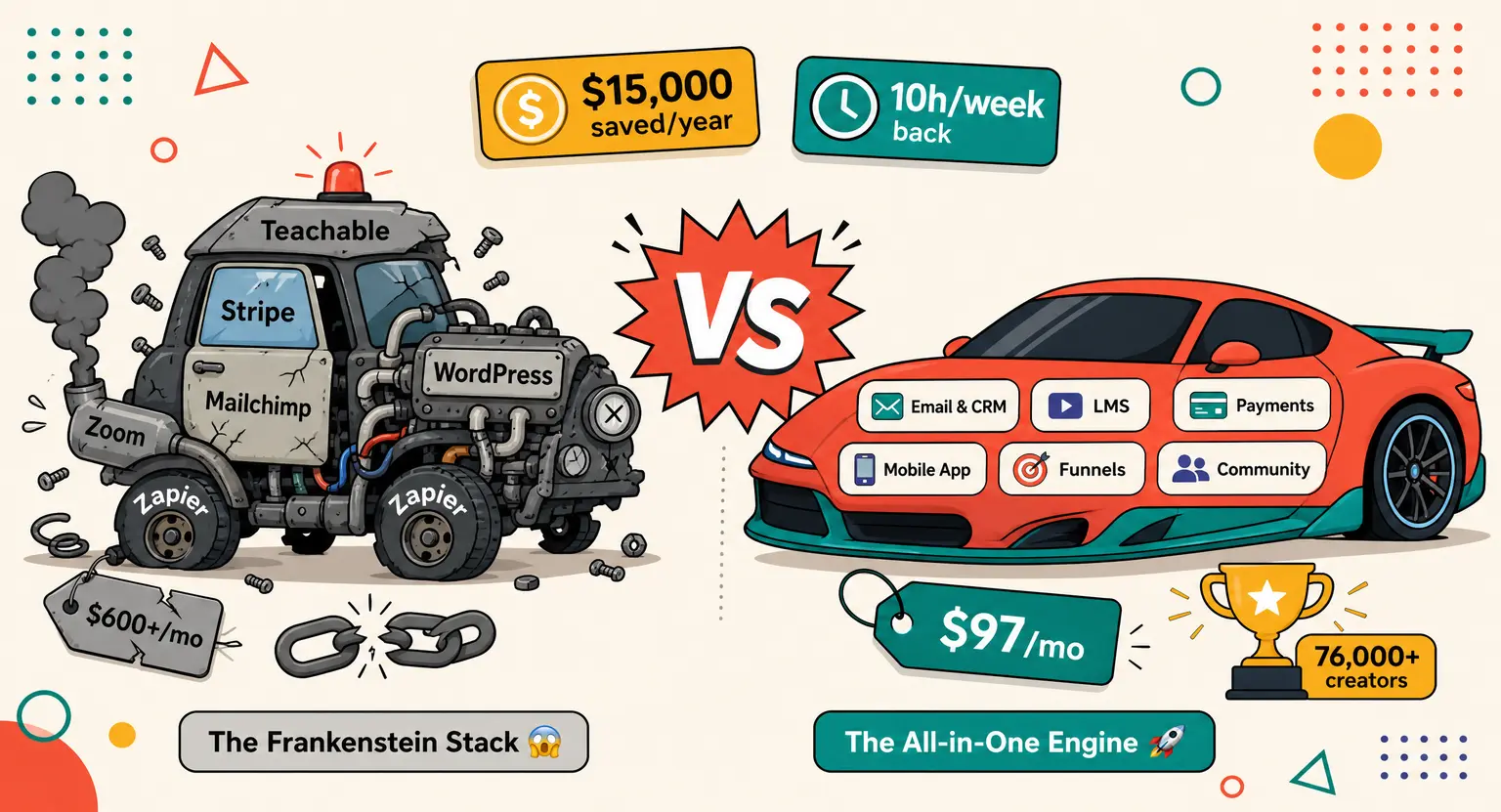
You need a platform that brings all these pieces under one unified roof. Traditional forum software is too clunky, and social media groups are far too distracting.
The winning play is to use an integrated setup where your landing pages, email marketing, payment processors, course modules, and community spaces can talk to each other without requiring complex third-party tools.
Using an all in one platform sell online courses allows you to run your free hub, manage your premium paid tiers, process student payments, and host your course content seamlessly in one digital ecosystem.
This not only saves you hundreds of dollars in subscription fees for scattered softwares, but it also creates an effortless, unified experience for your users.
Remember : community is not a static digital product. It is a living, breathing entity.
To keep either model alive, you must establish clear engagement habits :
-
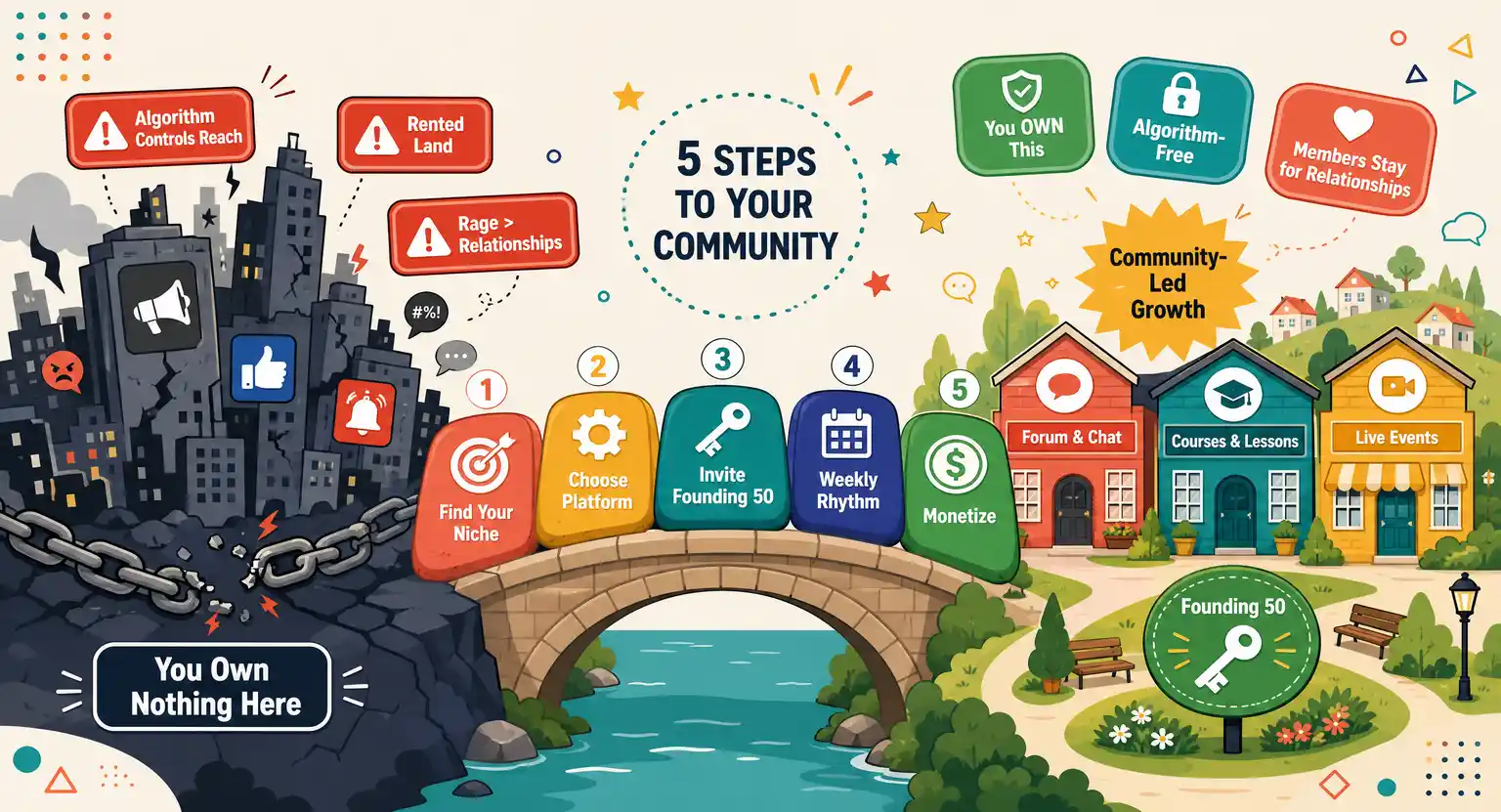
Welcome Rituals : introduce new members personally. Ask them what their biggest goal is and tag them in a quick welcome post to break the ice.
-
Vetted Weekly Events : set up a predictable weekly rhythm. Host a "Wins Wednesday" or a "Feedback Friday" to give members a clear reason to log in and participate.
-
Reward Your Super-Users : identify the 5% of members who are naturally helpful and active. Give them special shoutouts, custom roles, or exclusive swag to keep their passion alive.
-
Clear Guidelines : write down your group rules and enforce them with absolute consistency. A community with no boundaries quickly loses its character and its core value.
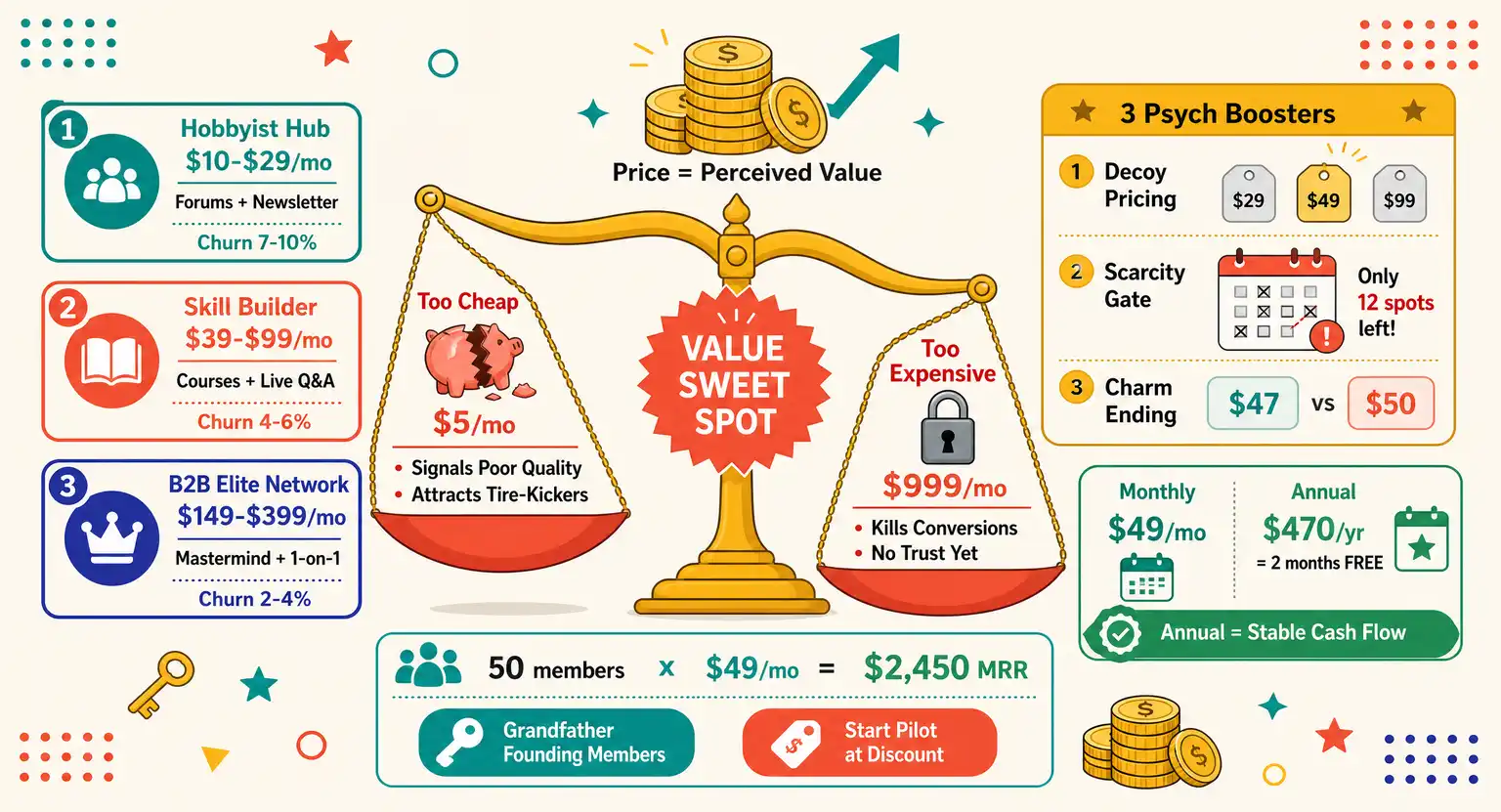
You must also align your community fees with your overall online course pricing strategy to avoid devaluing your work. If your main course costs $500, a $49-per-month community that includes access to those same lessons makes perfect sense and provides an attractive, high-value package.
The Final Verdict : Where Should You Start?
So, where do we go from here? If you are starting completely from scratch with no email list, no major social media presence, and a tight budget, begin with a free community.
Use it to find your feet, test your content, build up your confidence, and understand what your audience truly wants. It is the safest, most educational sandbox you can ask for.
But if you already have an audience, a proven product, and a clear understanding of your value, do not hesitate to build a paid community.
Place a paywall up, welcome your founding members, and build a high-vibe workspace where people can do real, transformational work together. The predictable revenue will give you the peace of mind to focus entirely on what you do best : helping your students succeed.
Related Material & Professional Resources :
Want to dig even deeper into building a highly profitable online education empire? Explore these proven, expert resources :
-
Take a look at the powerful community and course tools available on the LearnyBox home page.
-
Browse our handpicked list of the best all in one course platform options on the market.
-
Learn how to design interactive live events by reading our guide on how to organize a successful webinar.
-
Get inspired by real-world journeys and results in our customer success stories and testimonials.
Frequently Asked Questions
Is a free community better than a paid one for beginners?
Yes, for absolute beginners, a free community is typically better. It acts as a low-friction testing ground to understand your audience's core struggles, build initial trust, and assemble a solid email list before you introduce complex subscription billing.
How much should I charge for a paid community?
Pricing varies widely by industry, but in 2026, the sweet spot for professional B2B communities sits between $49 and $149 per month. For hobby or lifestyle niches, a range of $15 to $35 per month works best to maintain high volume without sacrificing member commitment.
Does a paid community require a lot of content?
Actually, no. Overloading members with content leads to overwhelm and high churn. Paid communities thrive on curated interactions, direct access to the founder, live coaching sessions, and a highly vetted peer-to-peer network rather than endless video archives.
What is the hybrid community model?
The hybrid model uses a free community on the front end to gather massive organic traffic and nurture leads, while hosting a highly exclusive, paid tier on the back end for personalized support, advanced materials, and close-knit networking.




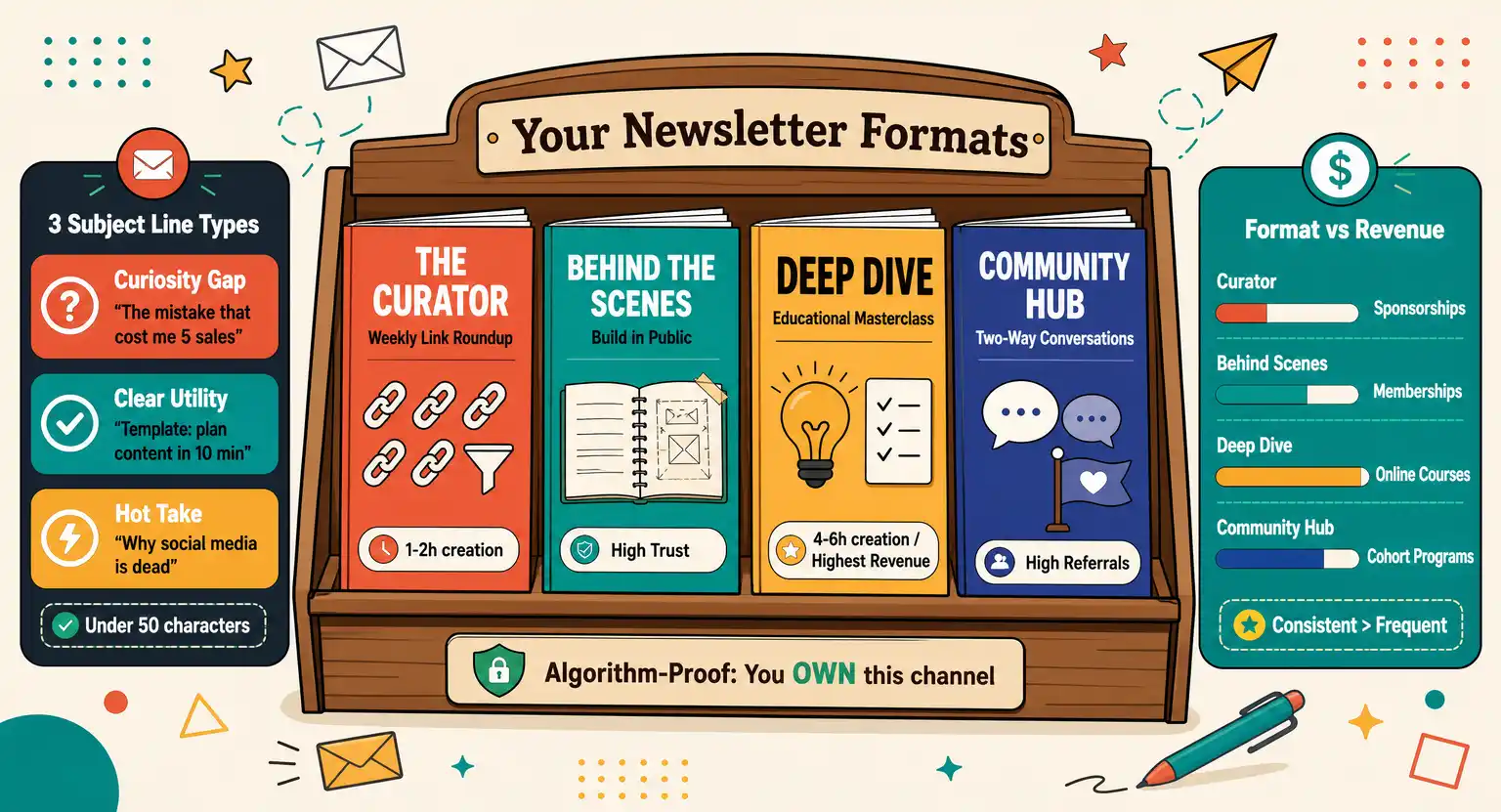
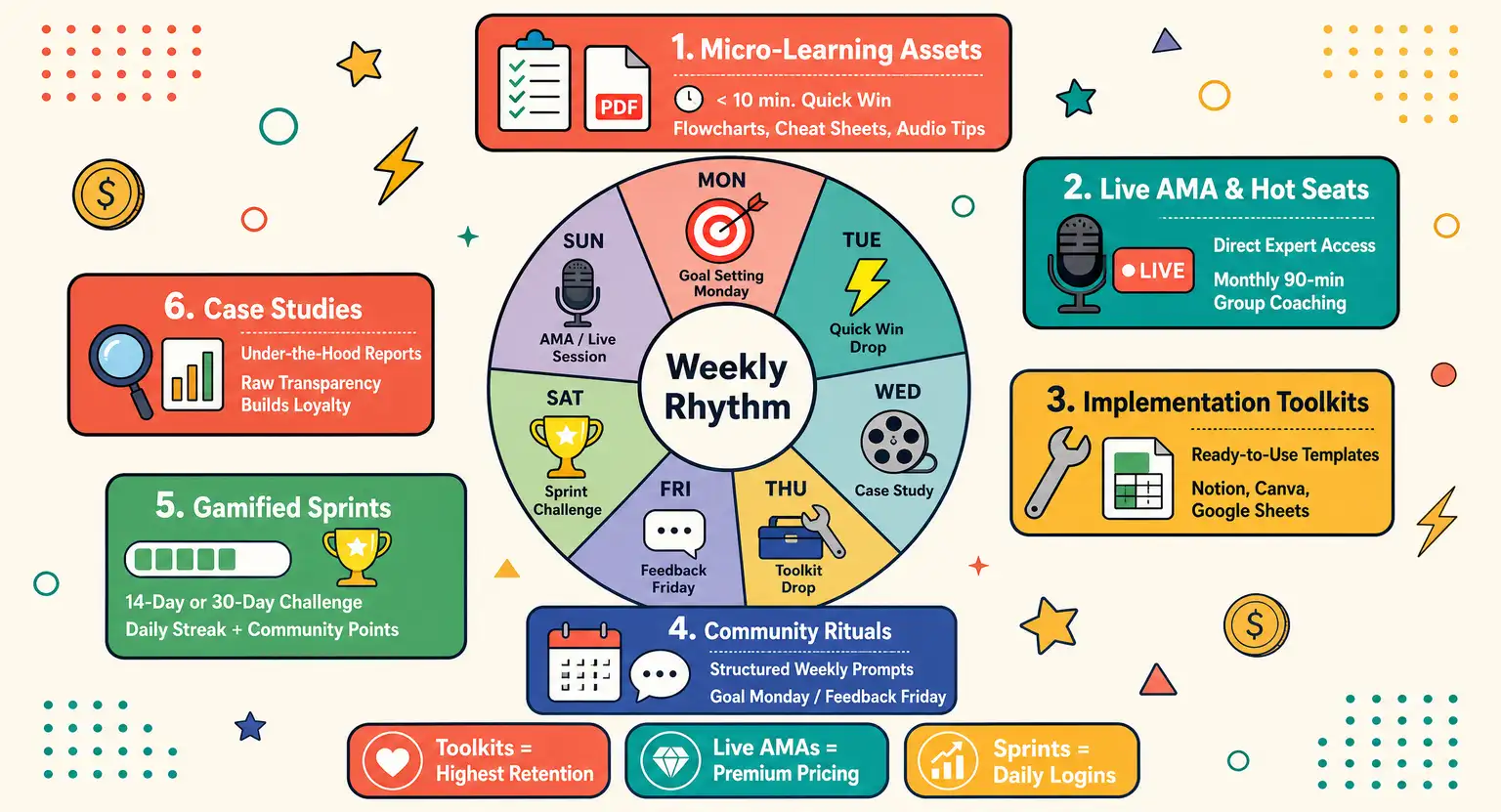 Content Ideas for Membership Sites: Keep Members Hooked in 2026
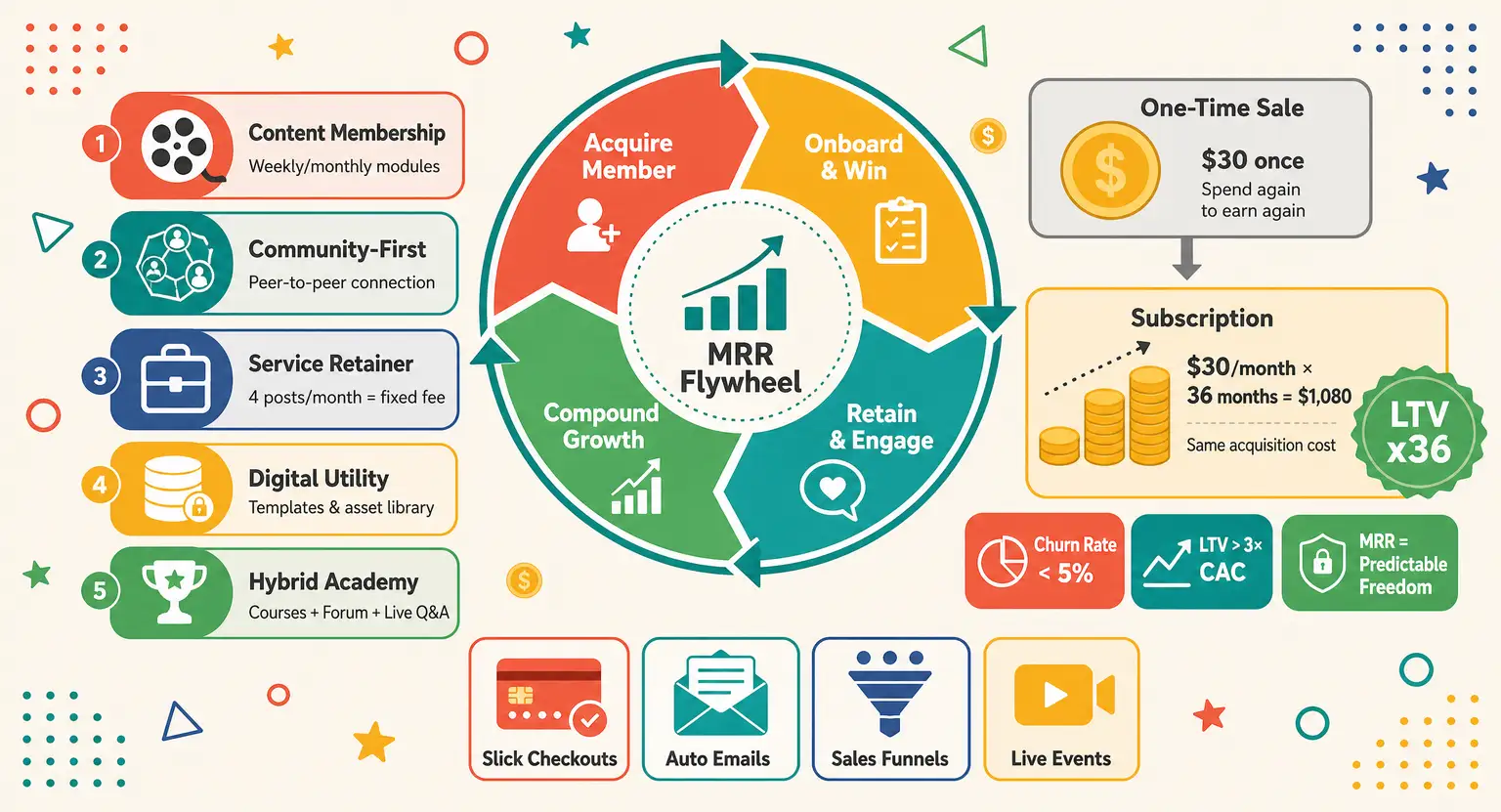 Subscription Business Model: Complete Guide for 2026
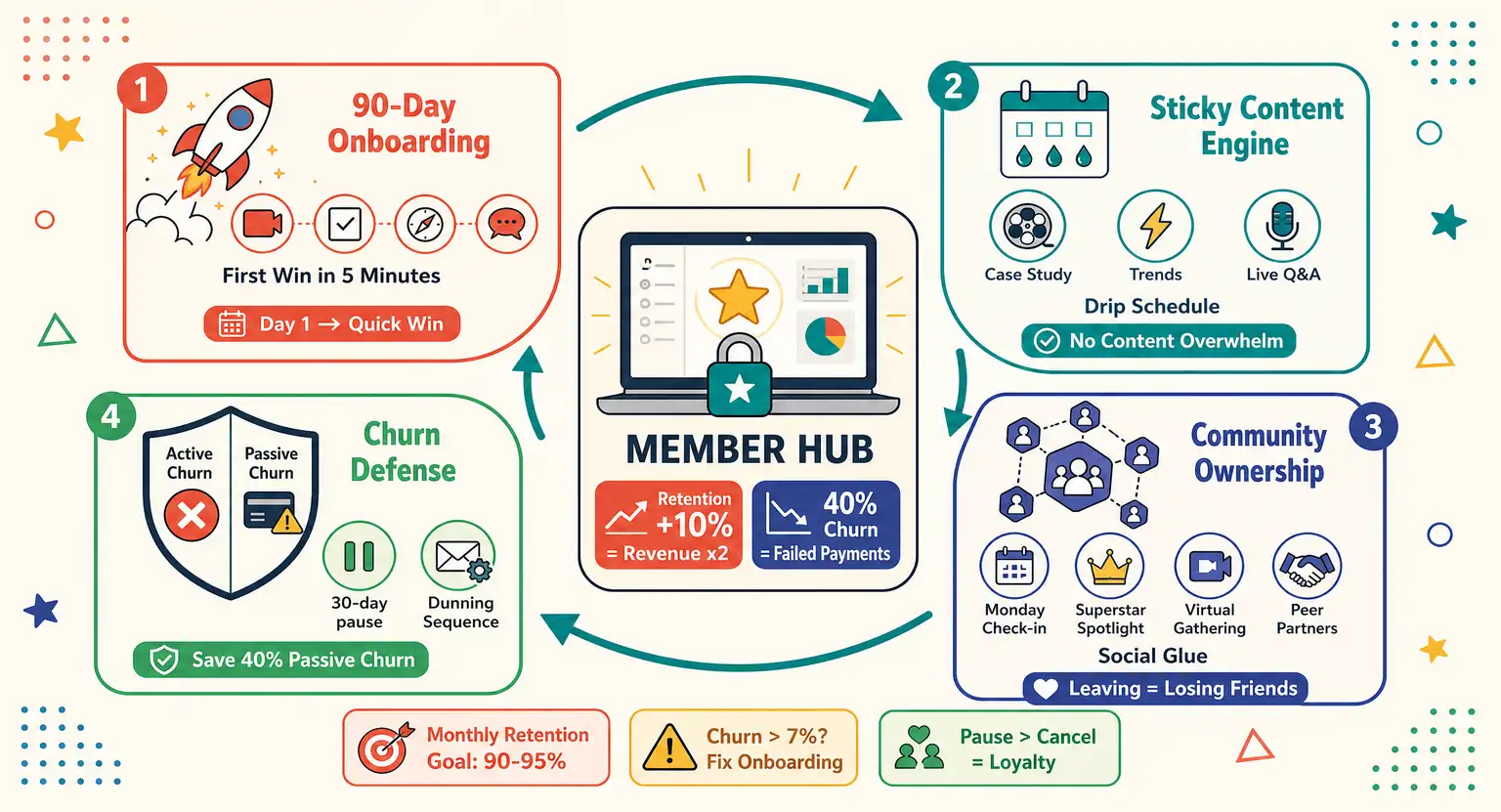 How to Retain Membership Members: Complete 2026 Retention Guide