








Affiliate Marketing ROI: How to Measure Program Profitability
Affiliate Marketing ROI : How to Measure the Profitability of Your Program
You've set up your affiliate program. Your products are selling, affiliates are sharing their links, and sales notifications are popping up… But are you actually making money?
Many business owners measure affiliate marketing success simply by looking at the total revenue generated, but revenue alone is a vanity metric. If your affiliate payouts, network fees, and resource hours outweigh your margins, you might actually be losing cash on every automated sale.
Calculating your true return on investment (ROI) is the only way to know if your affiliates are driving healthy, sustainable growth.
In today's landscape, tracking has become trickier than ever.
Let's look at how to strip away the noise, dig into the real numbers, and verify whether your affiliate channel is truly profitable.
Key Takeaways for Measuring Affiliate Profitability
-
True ROI incorporates all hidden expenses : avoid just subtracting commissions from revenue. Factor in software licenses, network fees, setup hours, and fraud losses.
-
Tracking methods matter : relying on legacy browser cookies fails. Use direct server tracking to maintain accurate data.
-
Focus on lifetime value : high click volume means nothing if referrals cancel quickly. Compare different acquisition methods, like exploring affiliate marketing vs influencer marketing, to see which channels yield the highest lifetime customer margins.
-
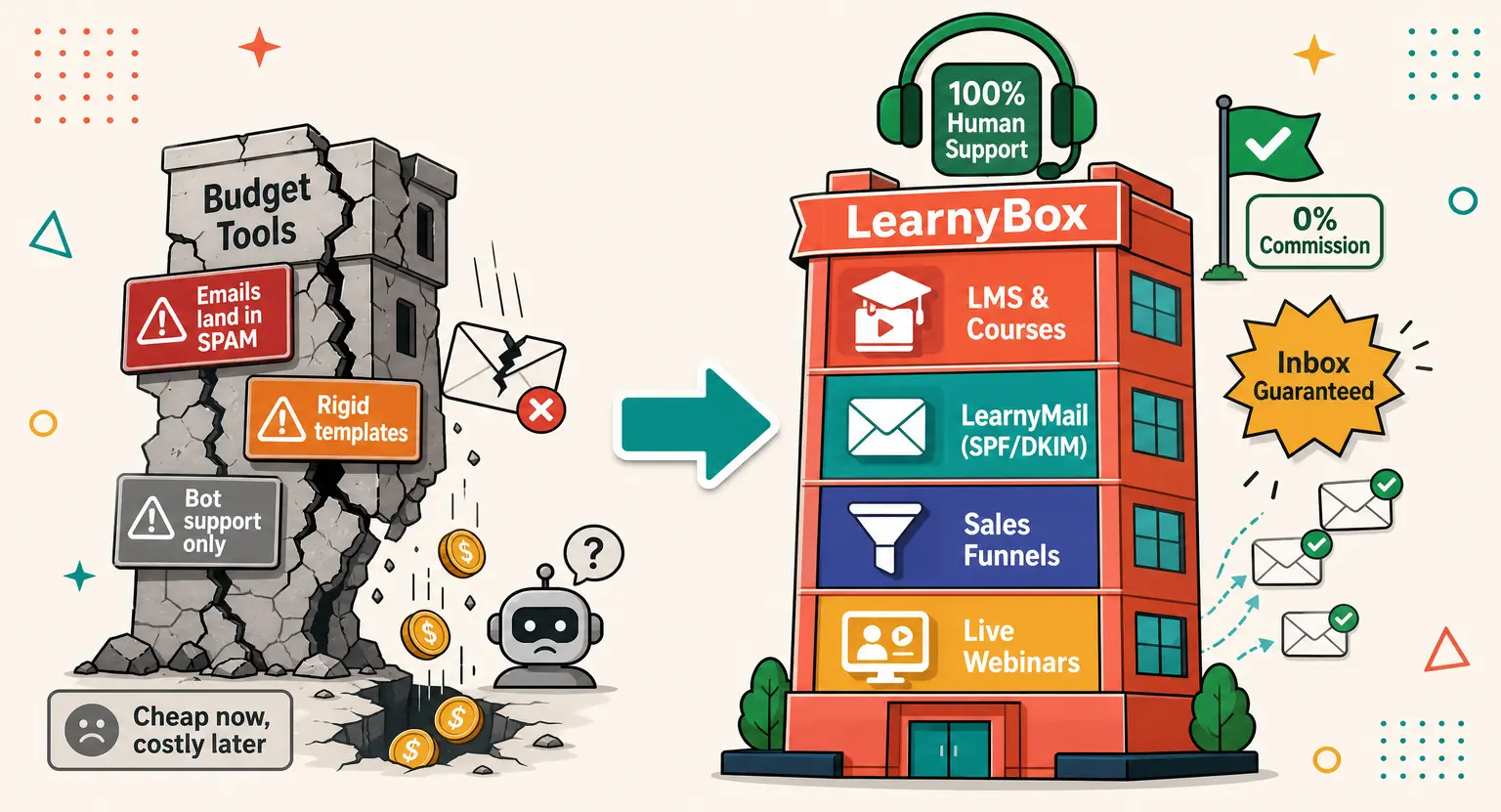
Eliminate dashboard clutter : running your ecosystem through a unified platform like LearnyBox lowers administrative overhead and prevents tracking gaps.
Why Traditional Affiliate Tracking Lies to You (and How to Fix It)
Relying on browser cookies to track affiliate sales is over. With strict privacy protocols blocking external tracking, basic pixels fail frequently. Instead, your database either misses attribution entirely or credits both search ads and affiliates for the same buyer.
And that is where your profit margins start to bleed.
So, how do we fix this?
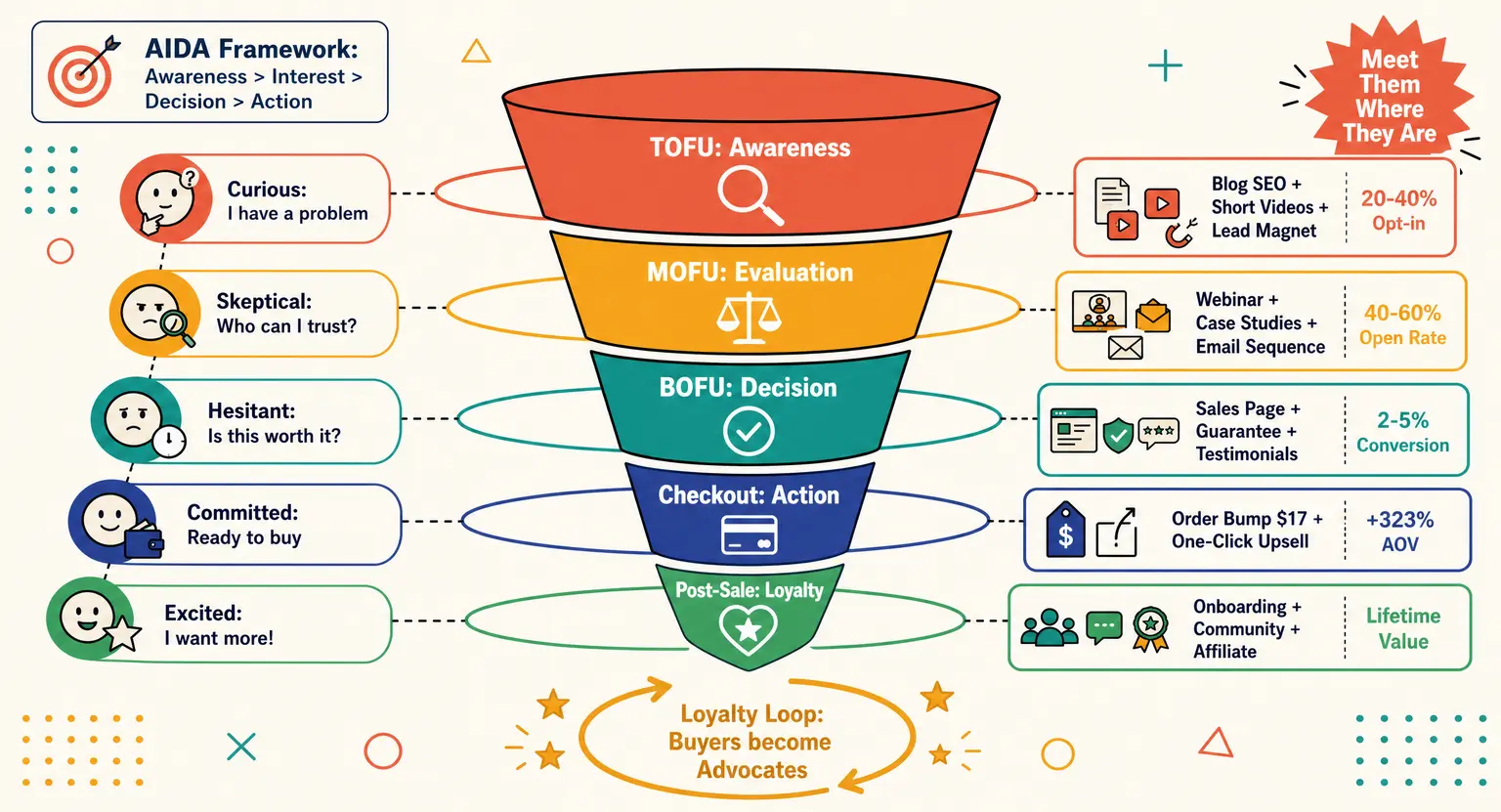
First, transition your program to first-party tracking or server-direct integrations. This ensures when a partner drives a prospect to your high-converting sales funnels, the tracking pixel triggers directly on your secure server. This bypasses browser blocks.
Second, reform your attribution model. Most businesses default to a last-click model, where whoever drove the final click gets paid, but this creates huge financial leaks.
A user might discover your brand through an educational video, join your ecosystem as you learn how to grow an engaged email list, receive a warm nurturing series, and then search for a coupon code right before checkout…
If a discount affiliate gets the full commission, you have overpaid. You are rewarding a partner for a sale you had already earned.
The Golden Formula : Calculating True Affiliate ROI
To measure your true profitability, we must look beyond raw pipeline revenue and analyze clean expenditure metrics. Normally, calculating ROI seems simple : net profit divided by overall investment. But applying this to affiliate networks requires counting every single cost.
Here is the exact, easy-to-use formula you should be using right now :
True ROI = (Affiliate Generated Revenue - Cost of Goods Sold - Total Affiliate Program Costs) / Total Affiliate Program Costs × 100
Let us break down what actually goes into your "Total Affiliate Program Costs" :
-
Commission payouts paid directly to your promoters.
-
Platform subscriptions or network transaction fees.
-
Internal management labor, including communication and creative assets.
-
Chargebacks, refund processing costs, and revenue lost to affiliate fraud prevention failures.
Many digital content creators skip these inputs because they assume digital products carry zero delivery fees. But hosting, card processing, digital platform fees, and customer support are not free.
Your online course pricing strategies must factor in these invisible micro-costs, or your affiliate payouts will quickly eat up your entire profit margin.
| Key metric | Calculation formula | Primary purpose | Ideal target |
|---|---|---|---|
|
True affiliate ROI |
Net profit divided by total costs. |
Determines overall campaign profitability. |
150 % to 300 % or higher. |
|
Customer acquisition cost |
Total expenditures divided by new customers. |
Measures purchase cost per individual user. |
Under 30 % of order value. |
|
Commission to revenue ratio |
Commissions paid divided by referral revenue. |
Evaluates if program commission rates are sustainable. |
10 % to 25 % of sale price. |
|
Incrementality rate |
Baseline organic purchases subtracted from total referrals. |
Confirms if affiliate sales are genuinely new. |
70 % or higher. |
Beyond the Click : Tracking Quality Over Quantity
High click volumes look brilliant on a dashboard. But if those clicks lead to a high bounce rate or customers who immediately demand refunds, your program is leaking cash.
This is where Customer Lifetime Value (LTV) becomes your guiding light. You must segment your customers based on the specific partner who referred them.
Are users referred by Partner A staying on your platform for months, while buyers from Partner B cancel before their trial finishes? If so, Partner A is far more valuable, even if they send fewer clicks.
To find these insights, check user progression maps. If you sell courses using an integrated email marketing platform, map where conversions occur. You might find that partners driving prospects into a free, high-value workshop convert better over a ninety-day window than those aiming directly for a high-friction buy page.
So, do not just optimize for immediate checkout returns. Look closely at the trailing value of each user cohort. A promoter who brings high volume but high refund rates is a net liability, not an asset.
Stopping Leakage : Tools, Setup, and Margin Protection
To keep your calculations clean, you must use tools that share data natively. When your affiliate software lives separately from your lead systems, checkout carts, and delivery software, your tracking breaks down.
This fragmentation causes attribution leakage, distorting your true returns. But there is a simpler, more profitable path ahead.
By running your business inside an all-in-one platform to sell online courses, you eliminate these data gaps. When your sales funnels, course areas, checkout sequences, and partner portals share one database, user paths remain crystal clear.
You can trace when an organic lead transitions to a paid subscriber, moves through your funnel, and triggers a partner payout. This unified approach keeps tracking clean and prevents you from overpaying on duplicate data.
Additionally, establish clear policies on affiliate compliance. Audit your traffic trends regularly to catch suspicious activity early. Protecting your baseline margins from internal leakage is the fastest way to immediately boost your bottom-line profitability.
Frequently Asked Questions
What is a good target ROI for an affiliate program?
A healthy affiliate program generally targets a return of three to one or higher (300 %). For every dollar spent on commissions, marketing, and integrations, you should ideally bring in three dollars of net revenue.
If you sell digital workshops or digital guidebooks, low delivery overhead allows your actual margins to expand, making higher targets very achievable with the right strategy.
How can I identify and exclude duplicate affiliate attributions?
Duplicate attributions occur when multiple channels claim credit for one purchase.
To prevent this, use first-party tracking systems and customized server events.
Ensure your platform relies on a strict "last click wins" hierarchy and explicitly lay out these tracking rules in your partner agreements so everyone understands how payouts are validated.
Is it better to build an in-house program or join an affiliate network?
Building an in-house setup is usually much more profitable because you avoid the recurring transaction-based fees charged by large networks.
While networks offer a wider promoter pool, they extract high commissions on every transaction.
Utilizing the best online course platforms that feature built-in partner networks lets you host everything under your own domain with zero middleman costs.
How does high customer churn affect my affiliate program profitability?
High churn can quickly destroy your campaign profitability, especially if you pay partners high upfront commissions for recurring subscriptions.
If referred customers cancel within their first month but you paid a commission based on projected annual value, you will lose a major amount of capital.
To protect your margins, establish payout delays that align with your product's refund parameters.




 How to Create a Course Refund Policy (Templates & Best Practices for 2026)
 How to Run a Beta Version of an Online Course (2026 Guide)
 How to Create a Cohort-Based Online Course (2026 Guide)
 How to Sell an Online Course With a Quiz Funnel (2026 Guide)
 How to Sell an Online Course Through a Sales Call (2026 Guide)