







What Is Knowledge Commerce? The Ultimate Guide for 2026
What is Knowledge Commerce
Quick Summary of Knowledge Commerce
-
Knowledge is the product : instead of shipping physical boxes, you package your skills into digital items like courses or ebooks.
-
Supercharged growth : it represents one of the fastest growing creator economy business models due to high profit margins.
-
Zero inventory : build your digital product once and sell it infinitely without running out of stock.
-
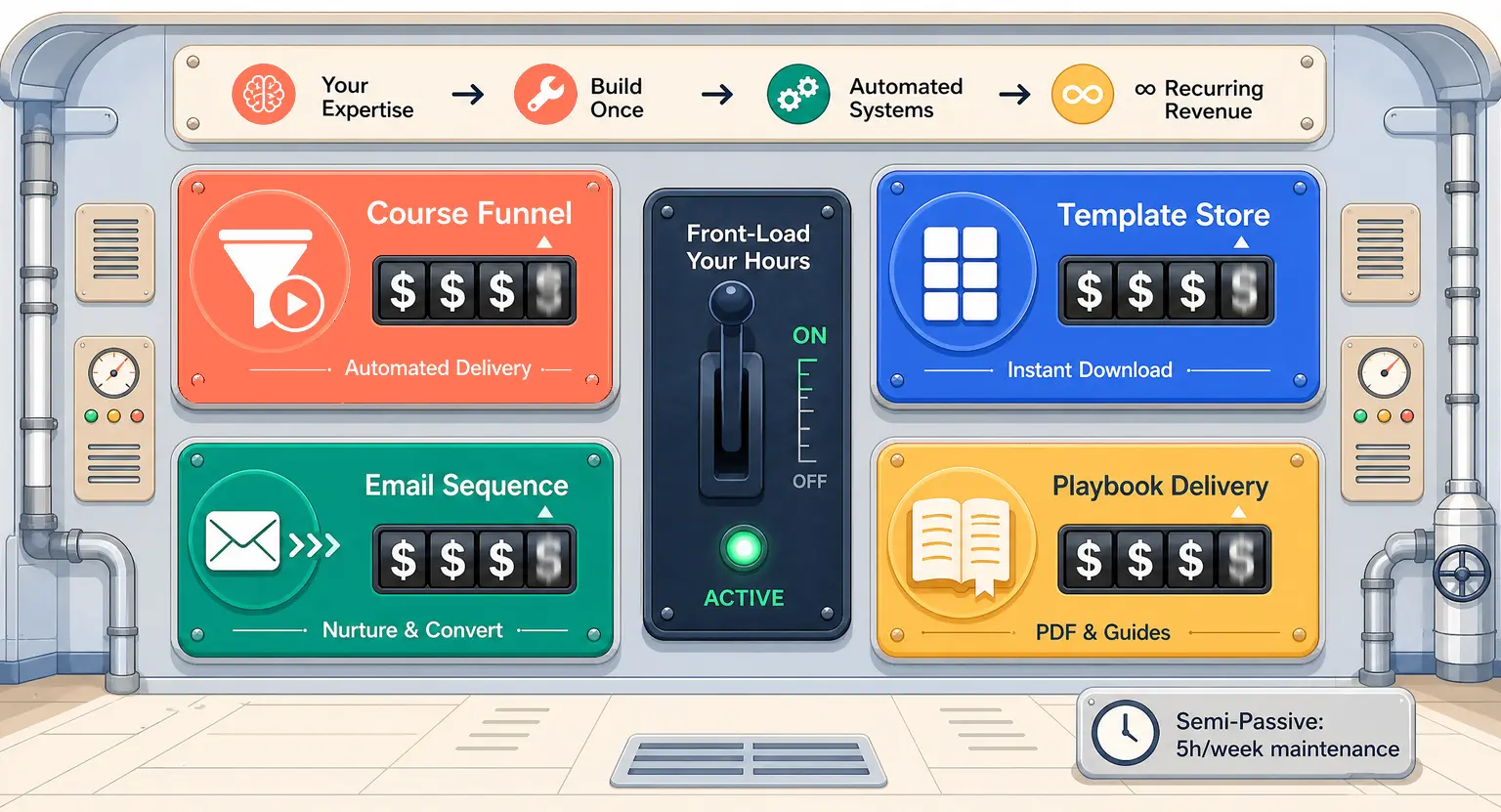
Automation rules : using a smart platform lets you handle delivery, marketing, and community management on autopilot.
Ever felt like you have a unique knack for solving a specific problem?
Maybe you design breathtaking websites, bake perfect sourdough bread, or understand the complex world of modern logistics… Once upon a time, you would have to rent a classroom or sell your hours one by one to monetize that talent.
But the rules have officially changed.
Today, we live in an era where your experience is literally currency. This movement has a name, and it is called knowledge commerce.
Sometimes labeled as digital education or information marketing, it is essentially the art of packaging your brainpower into digital products that help others master a new skill. And the best part? It scales beautifully.
If you are tired of trading time for dollars, this approach might be your ticket to real freedom. Let us break down how this works, why it is taking over the world, and how you can get your slice of the pie.
Demystifying Knowledge Commerce
At its core, knowledge commerce is simply the act of selling information, credentials, and educational experiences to a target audience online.
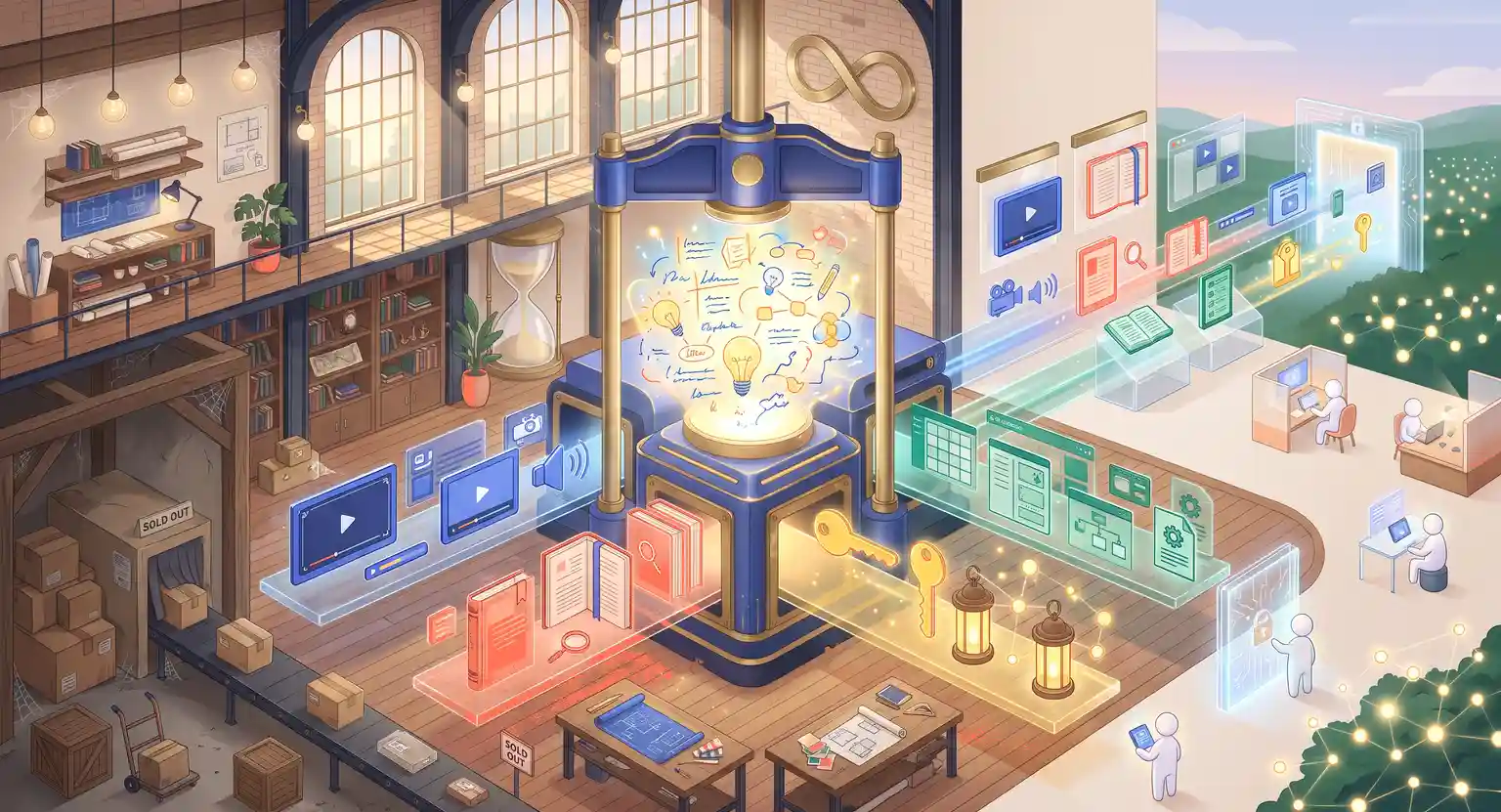
Think of it as traditional e-commerce, but instead of physical items sitting in a warehouse, your stock consists of PDFs, videos, audio tracks, and live online sessions.
But do not make the mistake of thinking this is just a fancy name for blogging. Bloggers usually make money from sponsorships, affiliate links, or banner ads.
In contrast, knowledge merchants own their products outright. You are the publisher, the manufacturer, and the distributor. When someone buys your digital guides, the profit stays in your pocket.
And people are actively looking for this. In our current digital landscape, the internet is flooded with unstructured noise.
Real, structured, and curated knowledge has become a premium asset. People do not want to spend sixty hours searching for free tutorials on YouTube when they can pay you for a clear, step-by-step roadmap that solves their issue in one afternoon.
Why Knowledge Commerce is Skyrocketing Right Now
Several major shifts have pushed this industry into overdrive over the past few years.
First, consumers are increasingly seeking out hyper-niche instruction. Traditional educational systems move painfully slow, and their curricula are often outdated before the ink even dries on the textbook.
If you want to master modern blockchain programming or learn the nuances of high-efficiency gardening, you do not go back to university - you buy a course from an operator actually working in that field.
Second, AI tools have lowered the entry barrier for creators. You can use AI marketing tools for creators to write emails, brainstorm content structure, and even script videos in seconds. This means you spend less time wrestling with technical setup and more time sharing your genuine insights.
And let us not forget the sheer economic appeal. With physical business models, you are constantly fighting rising supply chain costs, shipping delays, and thin margins. With knowledge products, your cost of goods sold is virtually zero.
Once you design your core material, whether ten people buy it or ten thousand, your production costs remain identical. It is pure scalability.
The Primary Vehicles of Knowledge Commerce
Knowledge commerce is not a one-size-fits-all game. Your style, audience preference, and subject matter determine the medium you use.
Many knowledge entrepreneurs build complete portfolios using multiple complementary assets.
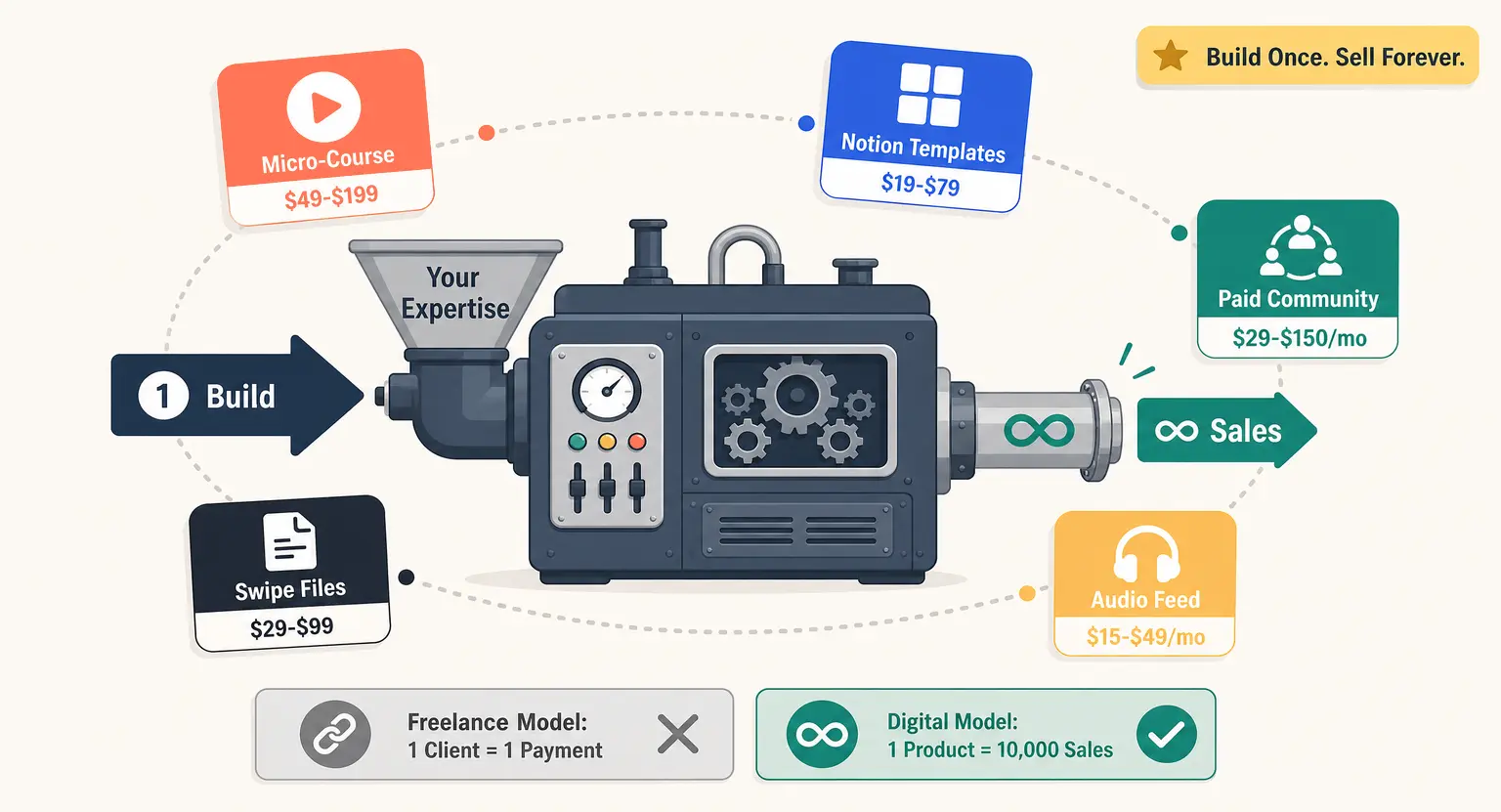
Let us look at the most common models :
-
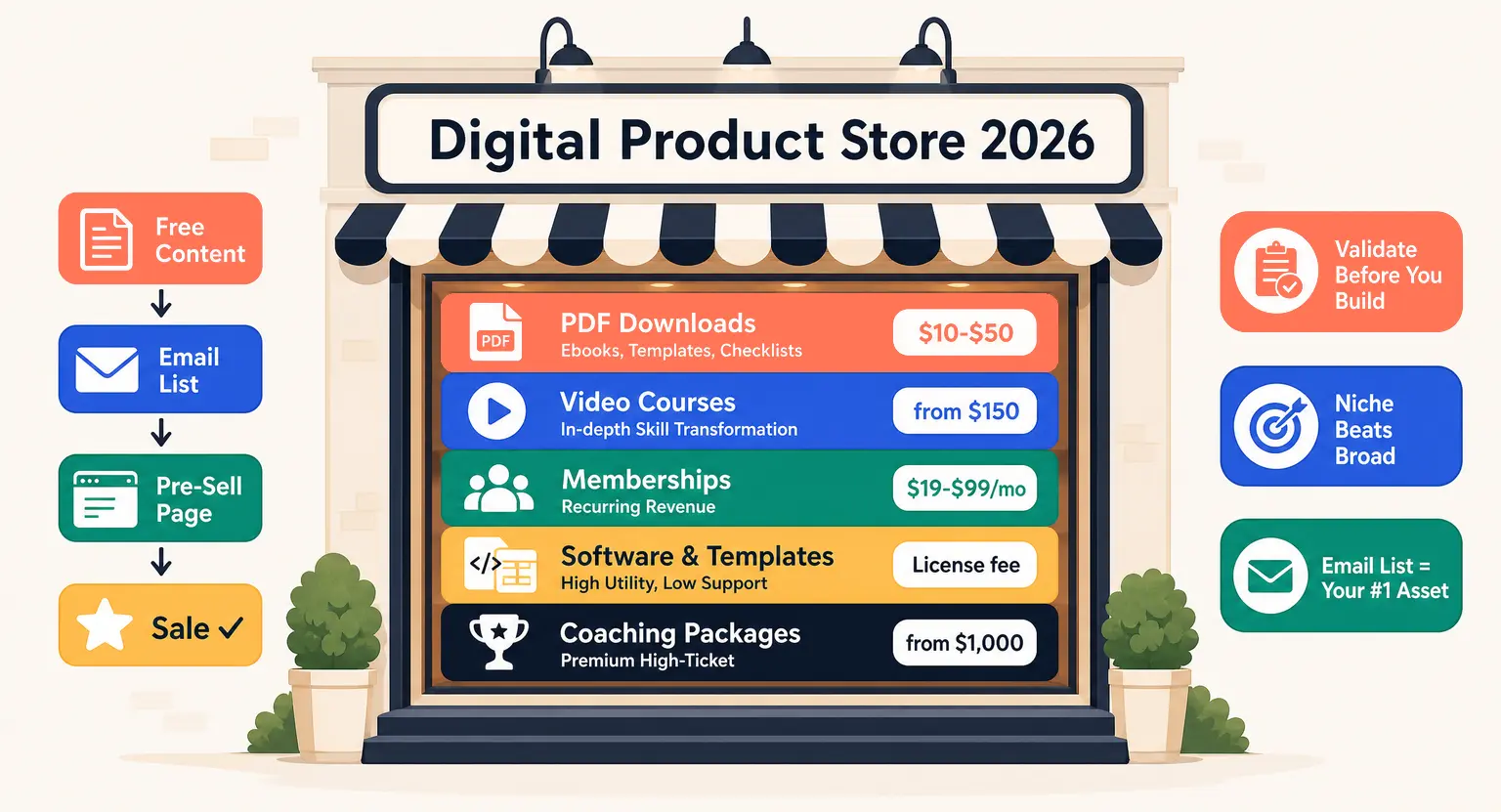
Digital courses : this is the backbone of the industry.
When you sell online courses, you are giving students a structured curriculum of video lectures, worksheets, and resources designed to take them from absolute beginner to competent practitioner.
-
Ebooks and guides : if you are more comfortable with the written word, learning how to sell ebooks online is a highly lucrative move.
These digital textbooks offer deep dives into highly targeted solutions without the production overhead of high-definition video production.
-
Ready-made resources and templates : sometimes, people do not want to learn the absolute theory of how to build something from scratch; they simply want a shortcut.
That is why selling templates online, such as budget spreadsheets, Notion workspace configurations, or design kits, has turned into a high-margin powerhouse.
-
Exclusive membership communities : rather than a single purchase, memberships provide ongoing access to workshops, forums, and freshly updated materials. It provides predictable monthly recurring revenue for your business.
Traditional E-Commerce vs. Knowledge Commerce
To help visualize why knowledge commerce is so compelling, let us compare it directly with old-school, product-based e-commerce.
Building a business around physical goods requires a completely different operational playbook than selling your expertise.
| Feature / asset | Traditional e-commerce | Knowledge commerce |
|---|---|---|
|
Inventory levels |
Requires physical warehousing, stock tracking, reordering, and upfront capital investment. |
Completely infinite stock; files sit securely on servers with zero physical footprint. |
|
Gross profit margins |
Typically runs around twenty to forty percent due to shipping, manufacturing, and distribution. |
Extremely high, typically seventy to ninety-five percent after platform and hosting costs. |
|
Delivery operations |
Relies on shipping services, customs checks, mail sorting, and handling physical packages. |
Instantaneous, automated delivery using secure cloud servers immediately after checkout. |
|
Iterative speed |
Updating a physical item requires expensive redesigns, molds, and testing of new batches. |
Lightning-fast updates; you can edit a slide, record a short clip, or load fresh files in real time. |
|
Customer returns |
Involves physical return mail, processing defective units, restocking fees, and waste. |
Simple refund processes that require zero physical returns, recycling, or stock losses. |
As you can see, the administrative load of knowledge commerce is highly attractive.
You spend almost zero time dealing with mail routes or package carriers. Instead, your main job is making sure that your learning material remains relevant, engaging, and highly accurate for your target market.
Actionable Steps to Build Your Knowledge Commerce Empire
You do not need an advanced engineering degree to dive into this industry, but you do need a systematic approach.
Many creators leap in headfirst without a plan, only to hear absolute silence when they offer their digital goods. Let us review the essential steps to execute a successful launch.
Your journey begins with research. Before recording any instructional video or writing a single lesson, you need to learn how to validate an online course idea.
Talk directly with potential students, study hot discussions on specialized forums, or look for common pain points in your professional field - if people are actively spending cash on books or coaching to solve a dilemma, you have validated demand.
Next up is development. Do not build an exhaustive seventy-hour program right away. Start with a lean, ultra-focused offering that solves one core problem exceptionally well.
This makes it easier to complete and lets you solicit real user feedback early on. During this process, establish your financial parameters using a smart online course pricing strategy.
Remember, you are selling an outcome, not just hours of instruction. Value your content accordingly.
Finally, focus on building your list.
You cannot sell if you have nobody to sell to.
Mastering email marketing for course creators will help you nurture relationships over time.
By providing free advice first, you prove your credibility and make it a breeze to build excitement when you teach your audience how to launch an online course later on.
Choosing the Right Infrastructure
Your content can be world-class, but if your systems are clunky, your customers will abandon you.
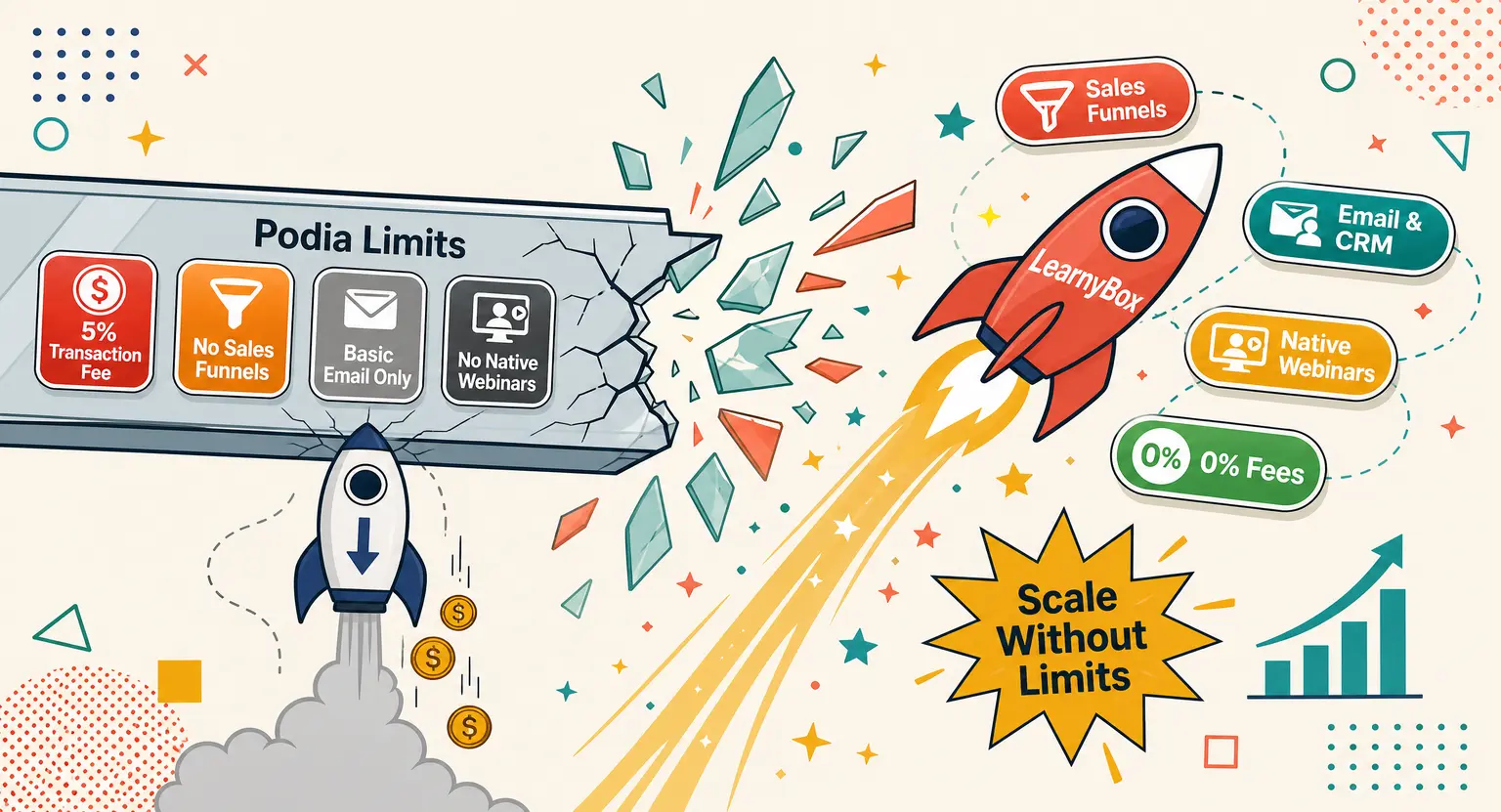
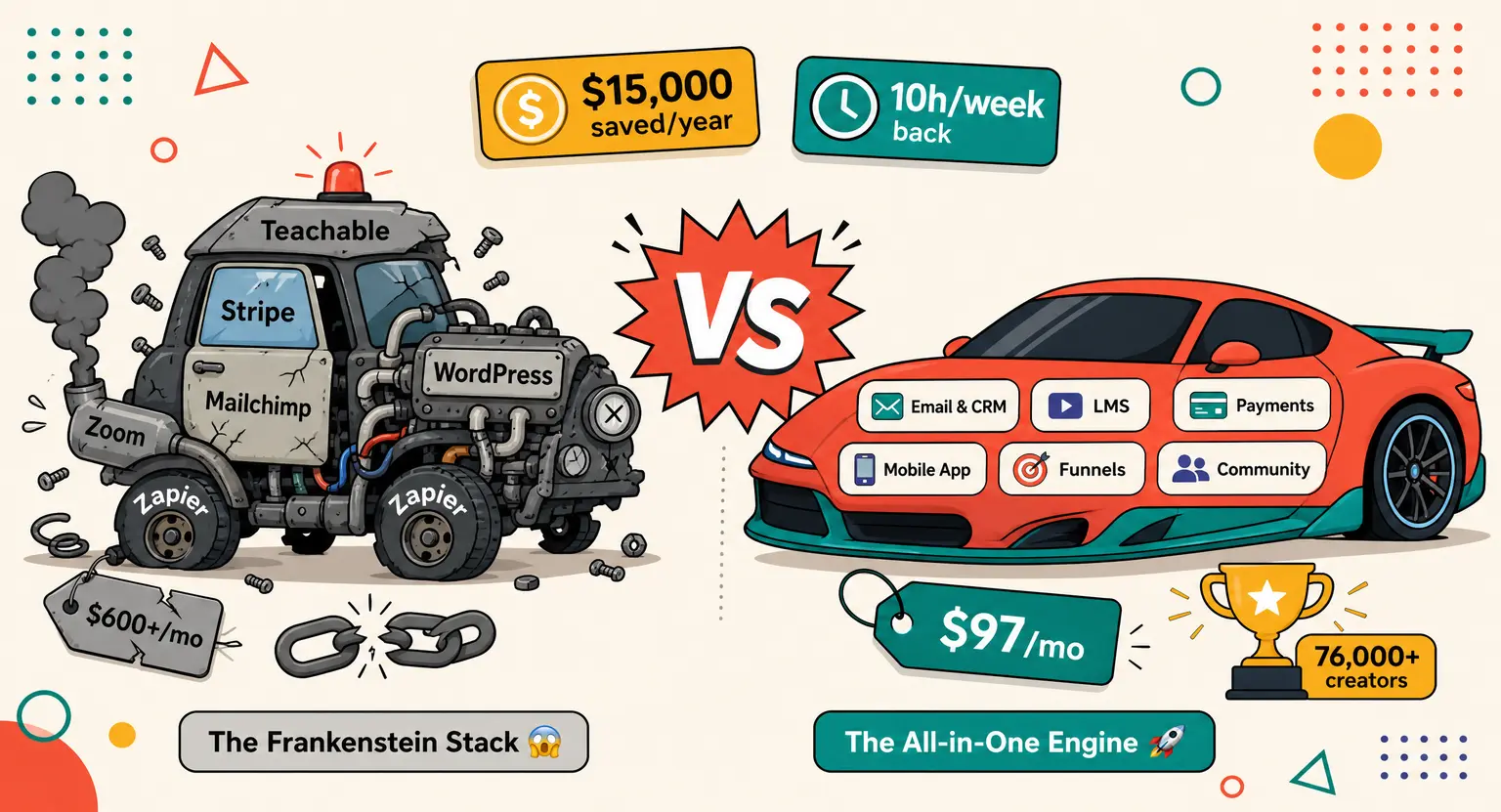
You need a setup that allows frictionless payments, keeps user accounts organized, and securely hosts your files. While you can duct-tape dozens of WordPress plugins and web services together, finding the best all-in-one course platform is usually the smartest path to scale.
Such ecosystems reduce technical headaches, letting you coordinate sales funnels, email sequences, and learning areas from a single dashboard. For example, comparing Learnybox vs Kajabi shows how centralized designs protect your margins from slipping away to third-party subscription stacks.
Choose an infrastructure that handles the heavy lifting so you can keep focusing on what you do best : teaching.
Explore Further Resources
-
Review the best ideas for courses in our top online course ideas list.
-
Visit the main LearnyBox platform to discover how to automate your entire business in minutes.
Frequently Asked Questions
Is knowledge commerce suitable for beginners?
Yes. You do not need to be a famous expert to start.
If you are just one step ahead of your audience or possess a practical knack for resolving simple struggles, you have got what it takes to build a valuable guide that people will happily pay for.
Do I need expensive camera gear to record courses?
Absolutely not. Most successful educators start with their smartphone, a simple lapel microphone, and natural window lighting.
Modern online audiences appreciate authentic, clear lessons far more than over-produced videos lacking practical value or direct, actionable solutions.
How do I safeguard my content from being stolen?
While piracy happens, modern hosted platforms protect your material.
Solutions like secure web streaming, PDF watermarking, and centralized, cloud-hosted login portals keep your exclusive downloads and courses safe behind reliable, automated purchase firewalls and restricted user screens effortlessly from day one.
What is the most profitable knowledge product?
Niche cohort courses and recurring membership sites yield the highest returns. Because they offer interactive access, community support, and continuous value, clients are highly willing to invest at higher price points routinely.
How long does it take to create a product?
It depends on your format. A simple PDF guide or Notion template can be fully developed in a single weekend. But a multi-module video course might take four weeks of dedicated filming and platform setup to deliver.



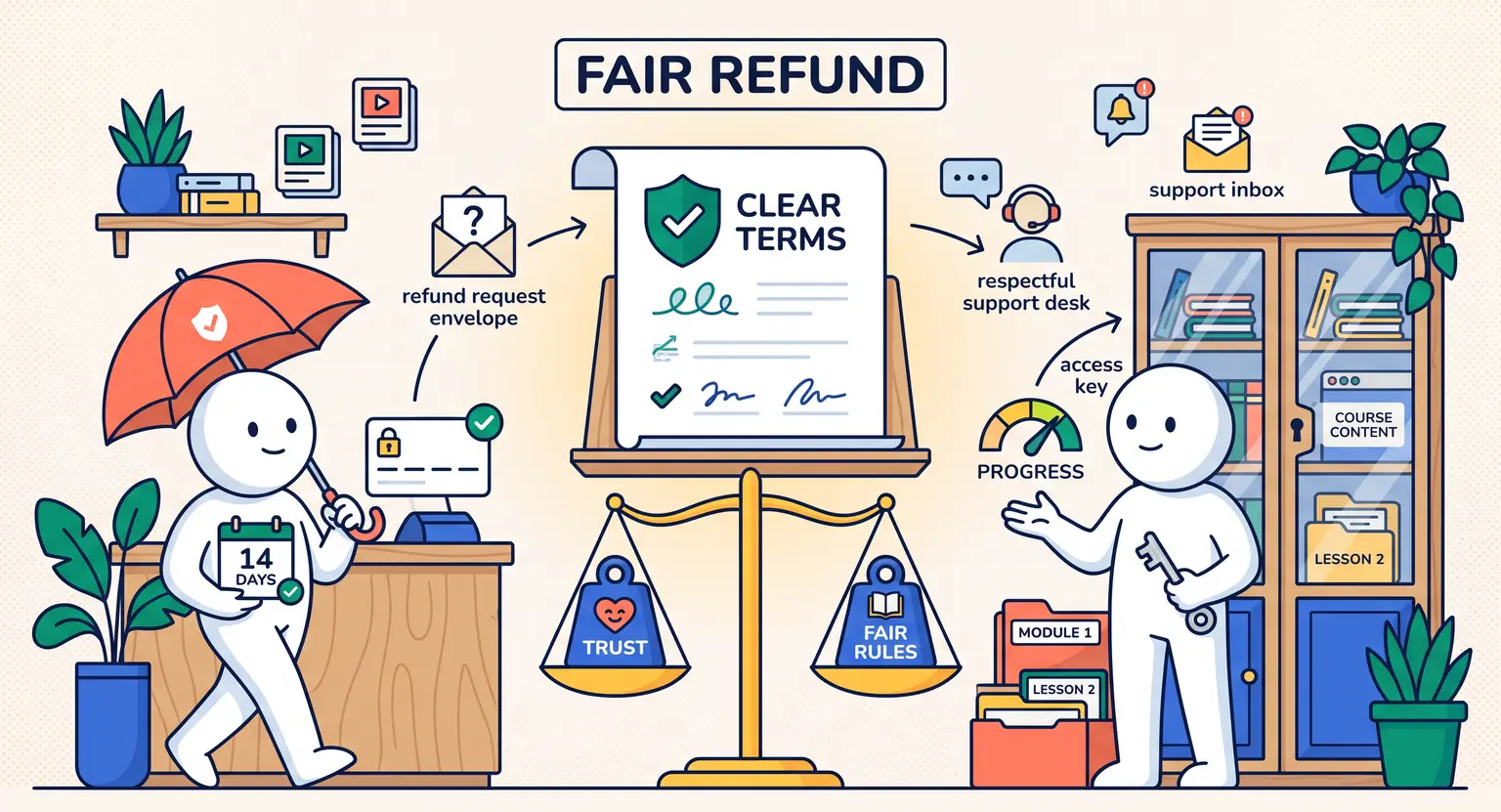 How to Create a Course Refund Policy (Templates & Best Practices for 2026)
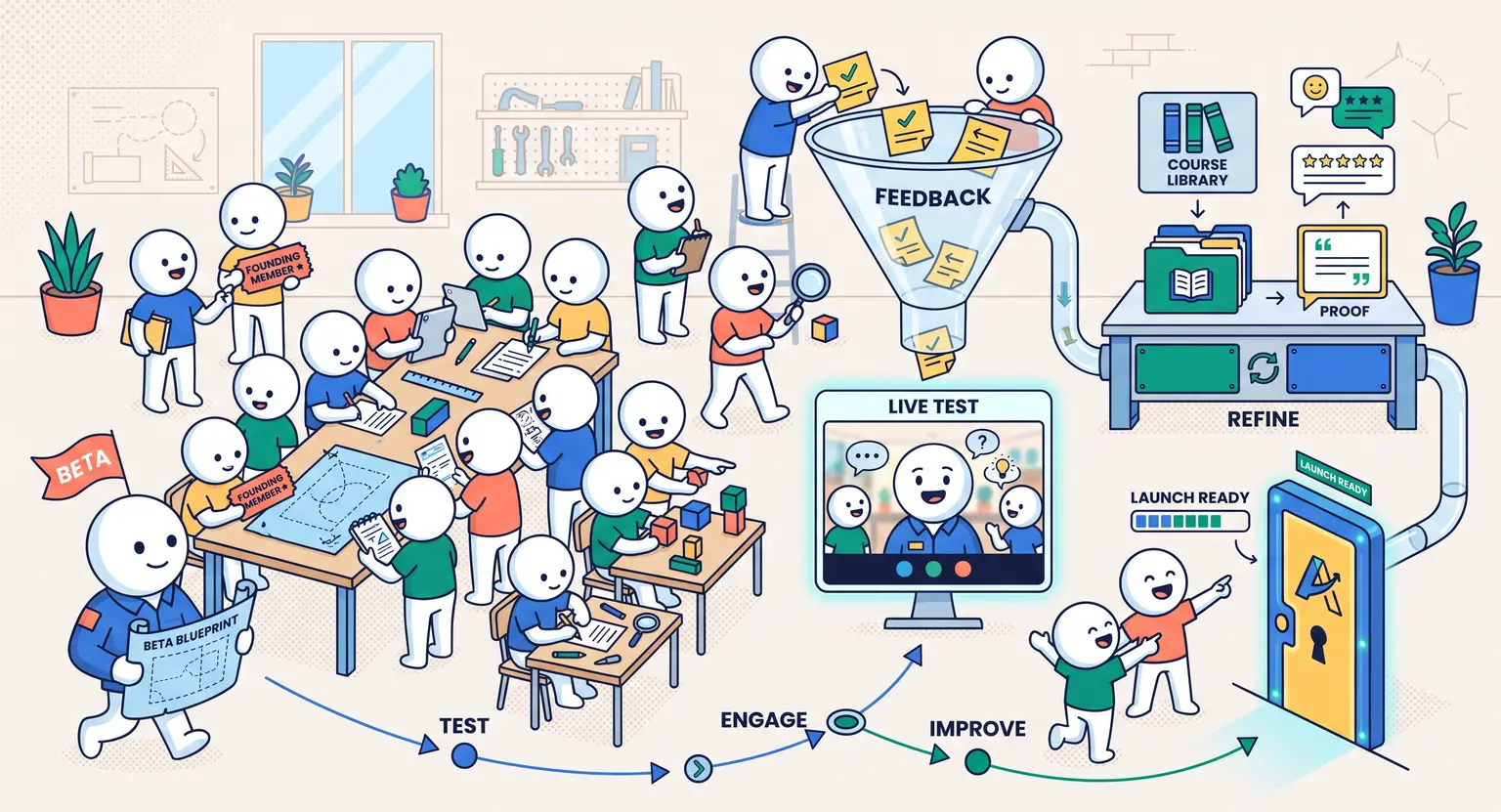 How to Run a Beta Version of an Online Course (2026 Guide)
 How to Create a Cohort-Based Online Course (2026 Guide)
 How to Sell an Online Course Through a Sales Call (2026 Guide)