







17 Profitable Online Course Ideas for 2026: Expert Niches That Sell
Profitable Online Course Ideas for 2026 : Expert Niches That Sell
Key Takeaways
-
Authentic human experience is the #1 selling point in a world full of AI noise.
-
Focus on "outcome-based" learning where students see a tangible ROI.
-
Hybrid niches (e.g., Tech + Mindfulness) are outperforming single-topic courses.
-
The technical barrier has vanished; success now depends on how you structure a course curriculum to ensure student completion.
Look, I'm going to be real with you. The world of online education has changed faster in the last two years than it did in the previous ten.
If you were planning on making a killing with a generic "How to be a Digital Nomad" course in 2026, you've already missed the boat. That market is buried.
Nowadays, people aren't just looking for information - they can get that from a 2-second chat with an AI bot for free.
They are looking for transformation, mentorship, and a structured path through the chaos. They want to know how a real human being solves real problems.
The secret to staying profitable in 2026 isn't about being the smartest person in the room. It's about being the most relevant. You need to find those painful, itchy problems that people are willing to pay to resolve.
Whether it's helping a mid-career professional master "AI Orchestration" or teaching a retiree how to build a self-sustaining vertical garden in a city apartment, the money is in the specifics.
When you decide to sell online courses, you aren't selling videos. You are selling a shortcut to a desired lifestyle or a solved headache.
1. The Rise of the "AI Humanizer" and Technical Orchestrators
We've reached a point where everyone uses AI, but almost nobody uses it well.
This creates a massive opening for courses that teach people how to manage these tools like a conductor leads an orchestra.
I'm seeing a huge surge in demand for "Advanced Prompt Engineering for Specialized Industries" like Legal or Medical fields.
It's not just about typing a question; it's about building complex workflows. If you know how to bridge the gap between human intuition and machine efficiency, you're sitting on a goldmine.
People don't want to learn AI theory; they want to know how to save 20 hours a week in their specific job as a project manager or a graphic designer.
And it's not just the tools themselves. There is a growing niche for "AI Ethics and Governance for Small Businesses." Small business owners are terrified of the legal ramifications of automated systems.
If you can teach them a framework to stay compliant and ethical while maximizing their tech stack, they will pay a premium for that peace of mind. This isn't a "soft" skill anymore. In 2026, this is survival.
You need to position your course as a shield against obsolescence. When you use a comprehensive course platform, you can easily host these technical workshops with live interaction, which is what these corporate clients crave.
2. Sustainable Living and Bio-Regional Self-Sufficiency
Energy prices and supply chain hiccups have made "homesteading" more than just a hobby - it's now a mainstream necessity.
But here's the kicker : people don't have 40 acres in the country. They have a balcony in Denver or a small backyard in London.
Courses that teach "Micropurification of Water Systems" or "Urban Permaculture Design" are seeing crazy conversion rates.
I know a creator who makes six figures just teaching folks how to maintain a solar battery array for a standard townhouse.
It's practical, it's urgent, and it's deeply satisfying for the student who wants a sense of control over their life.
What makes these ideas so profitable is the high perceived value. If your course saves a student $200 a month on their utility bill, the price of the course becomes an investment, not a cost.
You can even branch out into "Community Energy Cooperatives" - teaching people how to organize their neighbors to buy bulk green tech. This is where the human element is irreplaceable.
No AI can teach you how to handle a grumpy neighbor at a HOA meeting while trying to install solar panels (at least not yet!).
That's where your "expert" stories and case studies turn a boring lesson into a must-watch experience.

3. The "Deep Work" and Digital Detox Mentorship
In 2026, our brains are fried. We are constantly plugged in, and the result is a massive burnout crisis.
This has birthed a profitable niche for "Cognitive Durability Trainers." People are paying thousands for courses that teach them how to rebuild their focus.
This is far beyond basic meditation.
We're talking about "Neuro-ergonomics for Remote Workers" - how to set up your digital and physical environment to protect your brain's dopamine levels.
If you have a background in psychology, biology, or even high-level productivity coaching, this is your time to shine.
The most successful courses in this category use a "Challenge" model. You don't just give them 50 videos; you give them a 30-day "Focus Rebuild" and use automated webinars to keep the community engaged. You're acting as a digital rehab coach.
I've noticed that these students are incredibly loyal. Once you help them get their concentration back, they'll buy every other follow-up course you launch.
It's about building a brand around "The Slow Life" in a fast world. It is an ironic but highly profitable paradox : using technology to teach people how to disconnect from it.
4. Specialized Career Pivots for the "Silver Tsunami"
We see a lot of talk about Gen Z, but the real money in 2026 is with the Baby Boomers and Gen X-ers who aren't ready to retire. They have the capital, but they need to pivot.
They're looking for "The 10-Hour Consultant" courses - how to take 30 years of corporate experience and turn it into a high-fee, low-hour consulting business.
These students don't care about "hustle culture." They care about freedom and impact. If you can show them how to set up their own converting sales funnels without needing a degree in computer science, you've got a winner.
Think about niches like "Interim Management for Green Startups" or "Legacy Coaching for Non-Profit Founders." These are ultra-specific.
The narrower you go, the higher you can charge. I've seen experts charge $2,000 for a course that only has 100 potential students globally.
Why?
Because for those 100 people, the course is exactly what they need to secure their next $150k contract.
Don't be afraid of a small audience. In the world of high-ticket courses, depth beats breadth every single day.
You want to be the "only" person who teaches a specific thing, not just another "generalist."
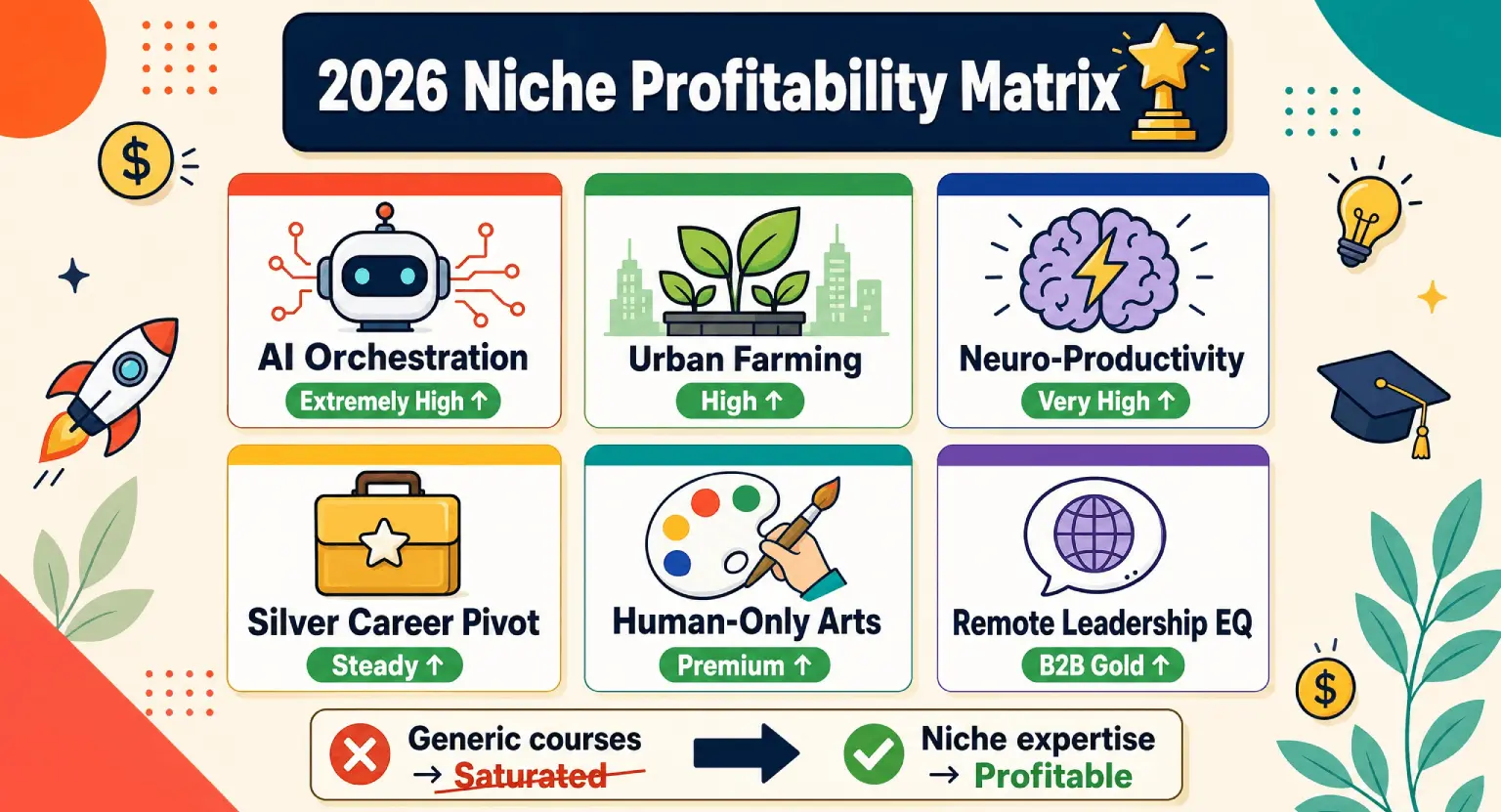
Comparison : 2026 Niche Profitability Matrix
|
Course niche category |
Market demand (2026) |
Primary upsell opportunity |
Difficulty to produce |
|---|---|---|---|
|
AI-Integrated Workflow Design |
Extremely High |
One-on-One Implementation |
Medium (Fast-evolving) |
|
Regenerative Urban Farming |
High |
Physical Tool Kits / Seeds |
Low (Visual heavy) |
|
Neuro-Productivity Coaching |
Very High |
Mastermind Communities |
High (Requires Research) |
|
Silver Career Consulting |
Steady / Growing |
Agency Services |
Medium (Experience-based) |
|
Privacy & Cybersecurity for Families |
Emerging |
Annual Security Audits |
Medium (Ongoing updates) |
5. The Creative Renaissance : Human-Only Arts
As AI starts to saturate the market with "average" music, art, and writing, the value of high-end, human-crafted technique is sky-rocketing.
We are seeing a massive "Back to Basics" movement. Courses on "Hand-Bound Bookbinding," "Traditional Oil Painting Techniques," or "Analog Synthesizer Repair" are becoming elite status symbols.
If you can teach something that a machine literally cannot do - something that requires the "ghost in the machine" or a steady human hand - you can command incredible prices.
People aren't just learning a hobby; they are looking for a way to feel human again.
The key to selling these creative courses is in the storytelling. You need to show the process, the mistakes, and the tactile nature of the work.
High-production value videos that emphasize the "ASMR" quality of your craft can go viral easily.
But don't just stop at the tutorial. Sell the "Artist's Mindset." Talk about why you choose a specific wood for a carving or why a certain chord progression evokes a specific emotion.
In 2026, the technical skill is the baseline; your philosophy is the product. That's why your students will choose you over a free YouTube tutorial.
6. Emotional Intelligence for the "Remote-Majority" Leader
Management used to be about walking around an office and seeing who was at their desk. Those days are gone.
Leading a global team spread across fifteen time zones requires a level of emotional intelligence (EQ) and "Asynchronous Communication" skill that most managers simply don't have.
If you can teach "Conflict Resolution in Slack" or "Building Culture Without an Office," you are solving a multi-million dollar problem for mid-market companies.
These are the profitable online course ideas that B2B companies buy in bulk for their entire leadership team.
This niche is particularly profitable because the sales cycle is professional. You aren't just selling to one person; you're selling to HR directors who have a budget to spend.
Make sure your course includes "Certificate of Completion" features and "Actionable Feedback Loops".
When a company sees that your training reduced their turnover rate by 15%, the ROI is undeniable. You're not just an educator; you're a strategic partner in their corporate growth.
This is how you move from being a "tutor" to being an "industry authority."
Quick Wisdom for Your Launch
I've seen too many people spend six months recording a course that nobody wants.
Don't be that person. Before you hit record, validate your idea.
Run a small beta test with 10 people. Charge them a small fee. If they won't pay $50 for a live version of your workshop, they definitely won't pay $500 for the recorded course.
Use their feedback to refine your curriculum.
In 2026, the "Build-In-Public" method is the only way to ensure you're hitting the mark. Plus, those beta students will become your first glowing testimonials.
Ready to Turn Your Idea Into a Business?
The barrier to entry is gone, but the barrier to success is all about the platform you choose. You need something that doesn't just host videos but actually helps you grow.
If you're looking to scale, consider exploring how a comprehensive course platform can automate your emails, manage your payments, and build your community all in one spot.
But hey, don't wait for the "perfect" moment. The best course creators I know started before they felt ready.
They posted a messy video, got some feedback, and improved as they went. In a year's time, you'll be glad you started today.
Go find that niche, talk to your future students, and start building. Your expertise is worth more than you think.
Frequently Asked Questions
Is the online course market too saturated in 2026?
The generic market is saturated, yes. If you're trying to sell "Basic Social Media Marketing," you'll struggle.
However, "Social Media Ethics for Medical Professionals" or "TikTok Strategy for Antique Restorers" is wide open.
The key is extreme niche-down. The more specific your audience, the less competition you have and the more you can charge.
People in 2026 are specifically searching for experts who understand their unique industry constraints.
How much should I charge for my first online course?
Gone are the days of the $27 eBook. In 2026, we see a "K-shaped" pricing model.
Either go with a low-cost subscription ($15-30/month) for a community or go high-ticket ($500-$3,000) for a transformative result.
If your course solves a financial problem or a health crisis, don't be afraid to charge at the higher end.
Low prices often signal low quality to sophisticated buyers. If you value your time and expertise, your price tag should reflect that.
Do I need expensive equipment to get started?
Honestly? No. Your smartphone probably has a better camera than professional gear did five years ago.
What matters more is your audio and your lighting. People will forgive a slightly grainy video, but they will click away immediately if the audio is echoing or muffled.
Invest $100 in a decent USB microphone and use natural sunlight.
As you grow, you can upgrade, but for your first launch, focus on the quality of your insights, not the frame rate of your video.
How do I prevent people from just using AI to get the information?
You offer what AI can't : accountability, community, and personal context.
AI can give a recipe; it can't tell you how it felt to fail the first ten times or help you troubleshoot when your specific oven is acting up. In 2026, students pay for the "Group Coaching" calls and the private Discord servers where they can talk to you and other humans.
Your "human-only" insights and your willingness to answer specific, messy questions are your competitive advantages.
Explore Further








 How to Retain Students after Purchase
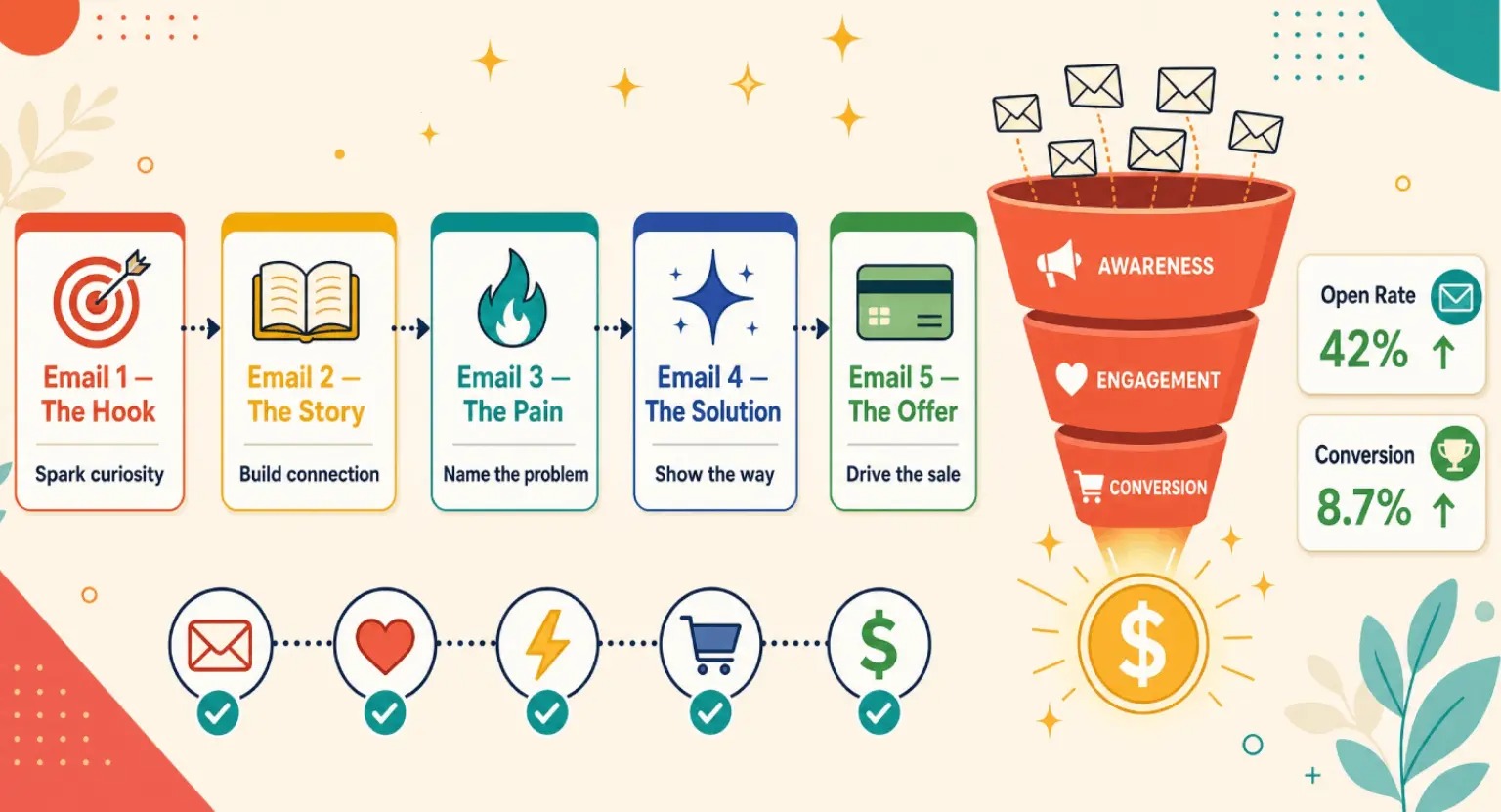 How to Build and Launch an Email Sequence
 Free Online Course Outline Template: Build Your 2026 Program Fast
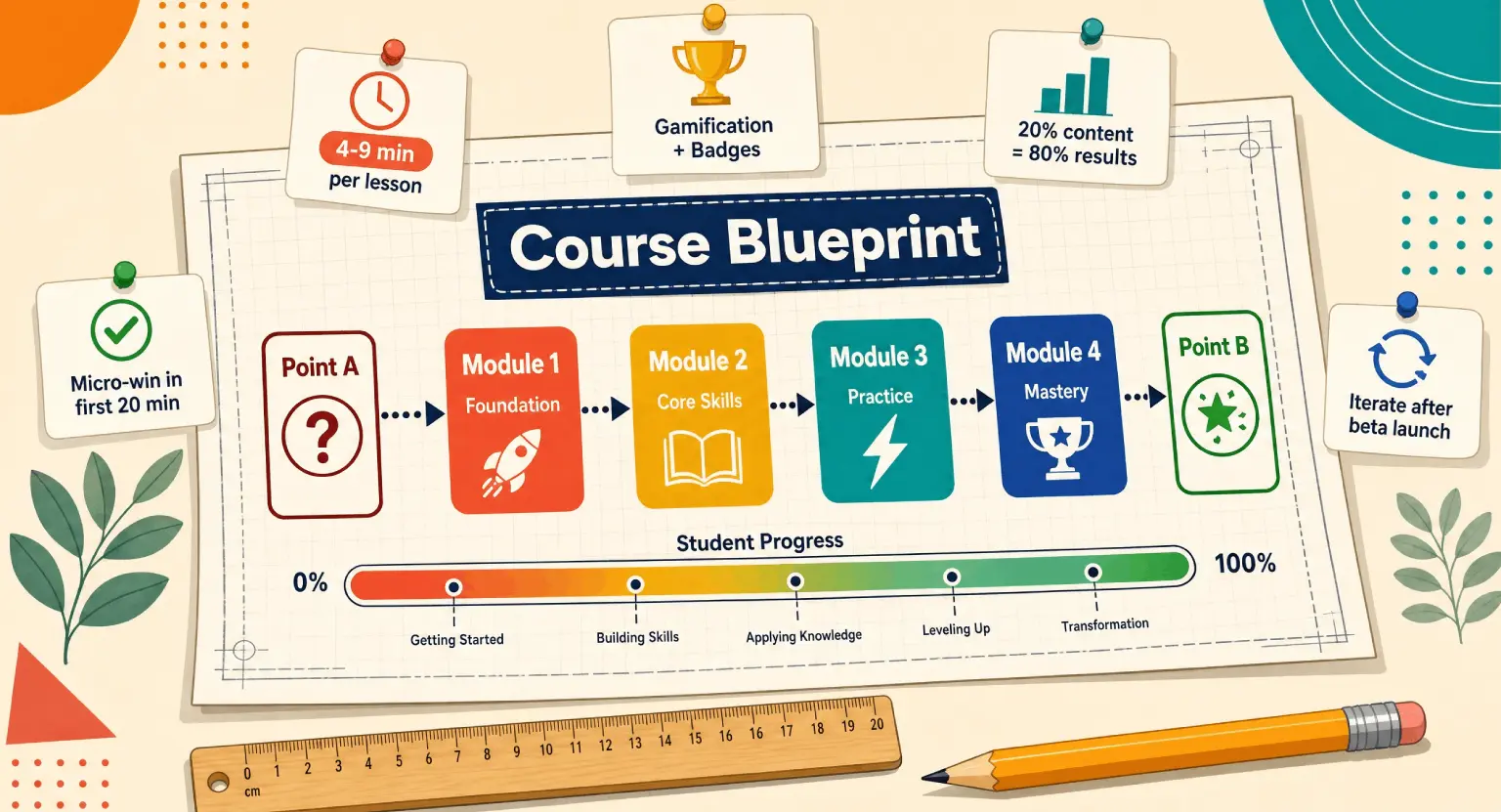 How to Structure an Online Course: The 2026 Blueprint for Student Success