







Facebook Ads for Course Creators (2026 Strategy Guide)
Facebook Ads for Course Creators
What You Will Learn Today
Before launching your next campaign, take a moment to understand how the landscape has shifted and where to focus your marketing energy :
-
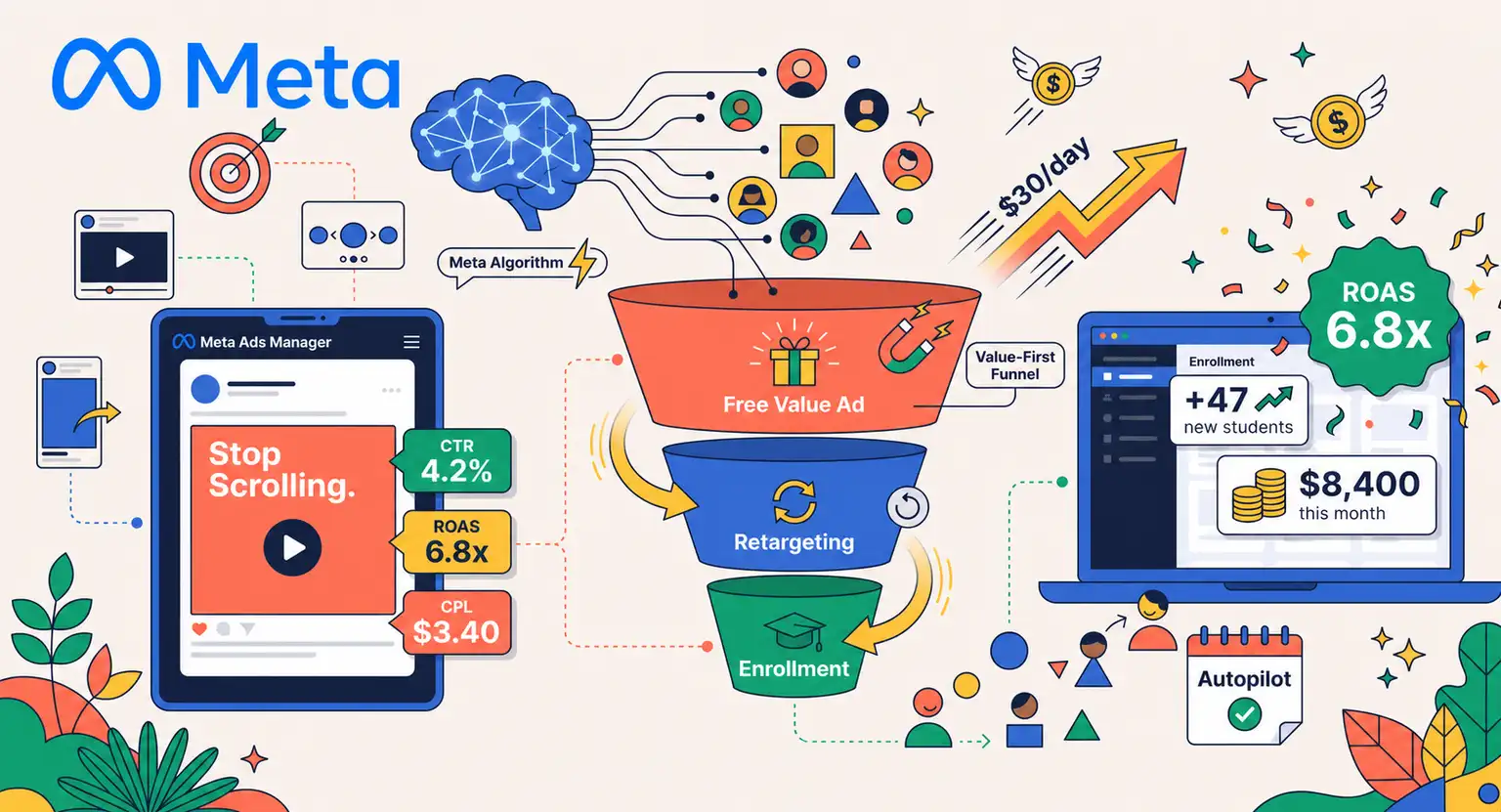
The Creative Shift : stop overthinking targeting parameters. Focus on visual and copy hooks to let Meta's algorithms locate your perfect students.
-
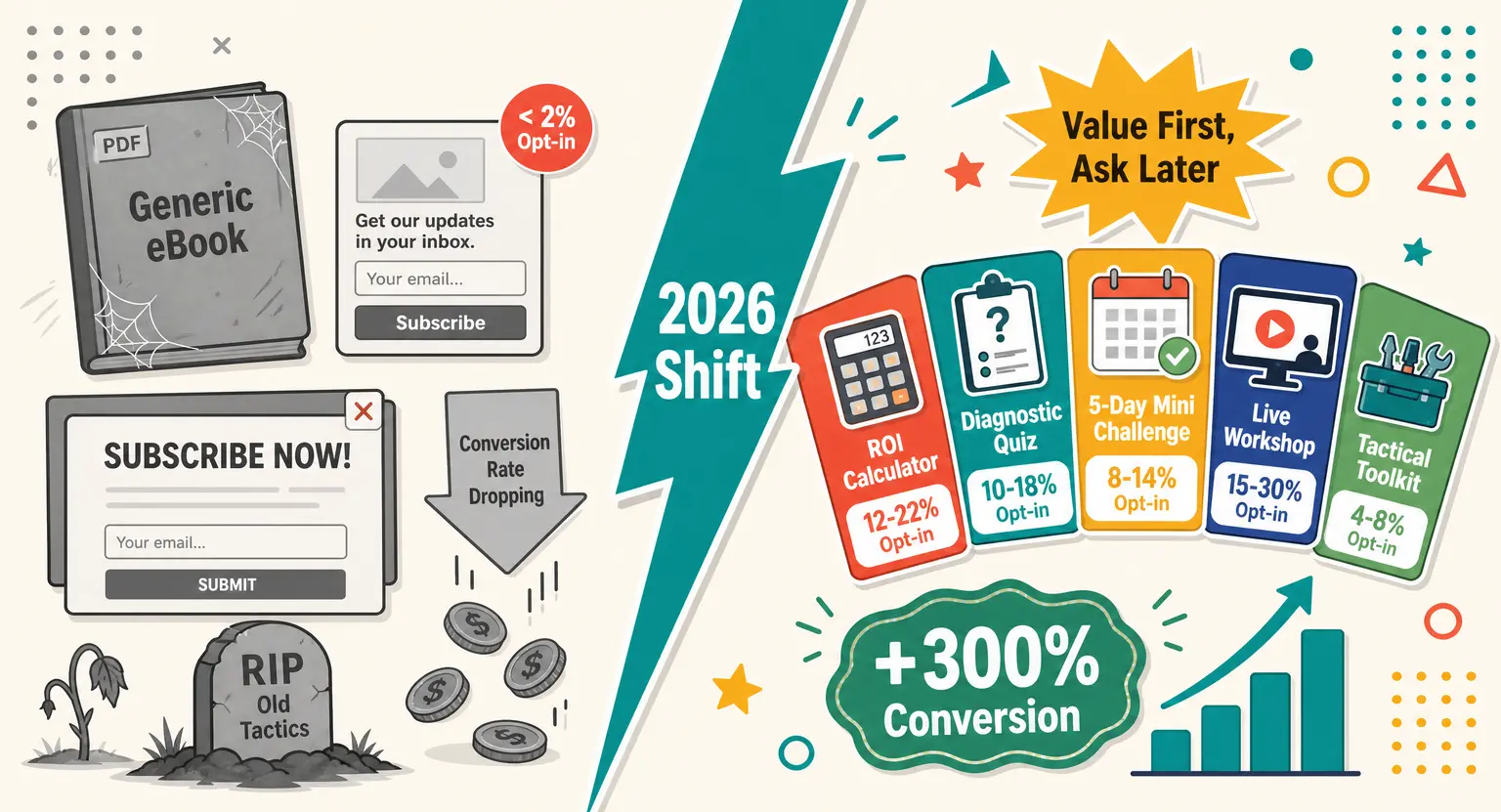
Value-First Funnels : promote educational resources and magnets rather than pushing direct, cold sales. To see how this works, read about paid ads for online courses to align your assets.
-
Simplified Structuring : consolidate your campaigns. Do not create hundreds of micro-audiences; trust broad targeting to scale.
-
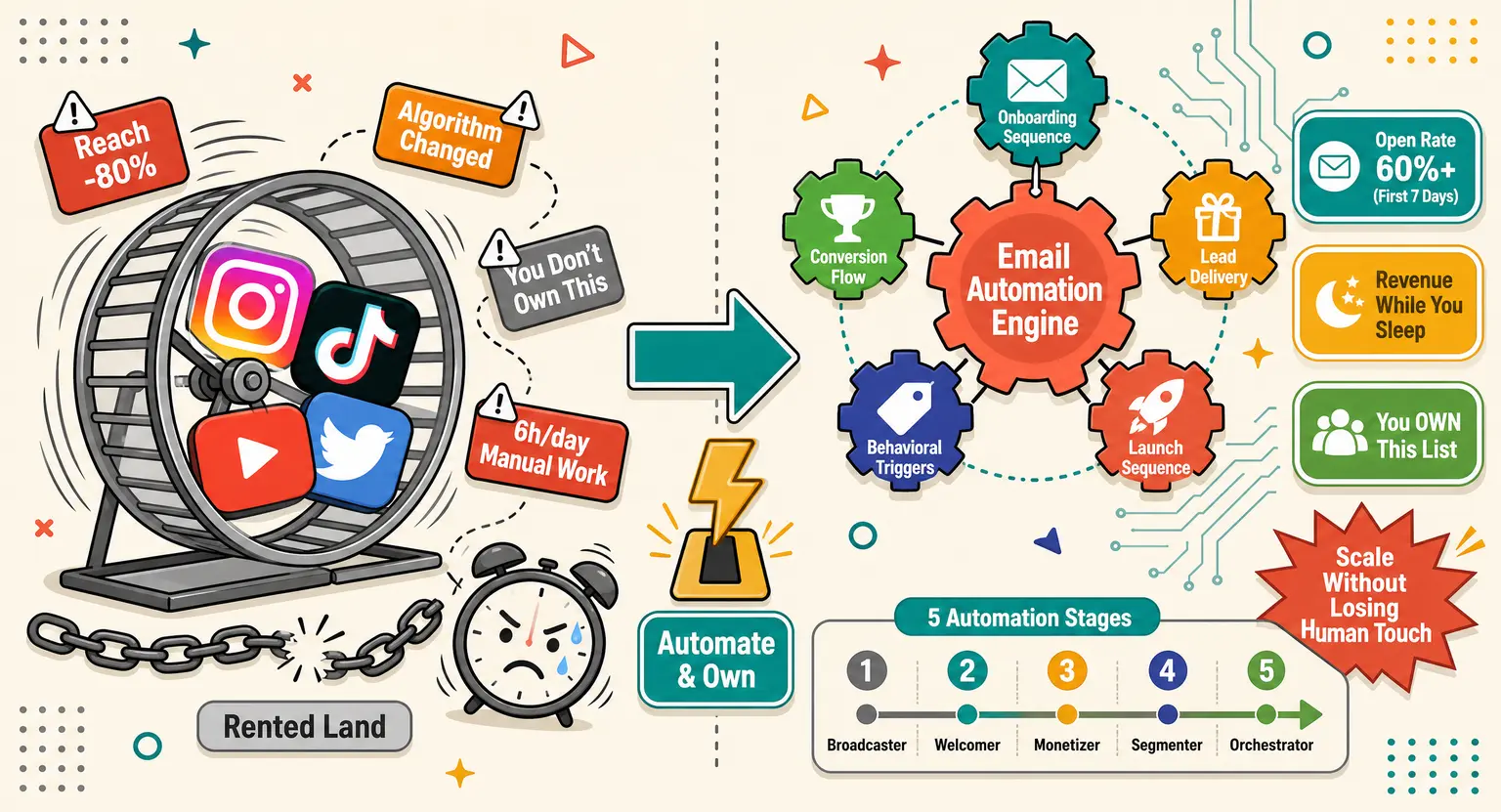
Immediate Nurturing : integrate backend automated systems to capture, nurture, and convert non-buyers over time.
Let's cut through the noise. If you are trying to sell an online course today using the exact same Facebook ad playbooks from three or four years ago, you are likely burning your advertising budget.
The era of manual hyper-targeting and complex audience exclusion lists is effectively over. Meta's algorithms have evolved into predictive, highly intelligent machine-learning engines that are vastly superior at finding your ideal course buyers than any human manually tweaking budget toggles inside the standard Ads Manager dashboard.
But how do successful education entrepreneurs build sustainable growth in this highly competitive climate?
They treat Facebook and Instagram ads as sustainable scale engines rather than get-rich-quick lotteries.
It is all about feeding the system high-performing creative variations, configuring clear conversion funnels, and building solid structures that capture interest.
Whether you are currently teaching graphic design, python programming, or yoga, this guide breaks down the field-tested strategies required to run highly profitable campaign funnels.
The Modern Meta Reality : Why Broad is the New Precise
Facebook is no longer just a digital billboard; it behaves like an intelligent, automated matchmaking system.
If you spend hours stacking interest groups, demographic filters, and educational levels together, you are actually restricting the machine's ability to find buyers. Meta works best when allowed to analyze user behavior in real-time across billions of daily users.
This reality moves the heavy lifting from tech-heavy campaign setup to creative direction. Your video script, your initial image hook, and your body copy serve as your ultimate targeting filters.
If your ad speaks directly to advanced painters struggling with color harmony, the algorithm notices exactly who stops scrolling, who watches past five seconds, and who clicks. Within hours, it starts hunting for thousands of other users with similar online behavior profiles.
But that does not mean you ignore preparation. Having a clear grasp of your demographic remains vital.
Learning how to build an audience organically helps you write highly targeted copy because you already understand their exact language, daily struggles, and educational desires.
When your ad copy accurately mirrors your audience's internal thoughts, the algorithm optimizes your delivery automatically.
Matching Your Offer to Your Ad Budget
Before spending your first advertising dollar, you must ensure your business model aligns with the cost of digital traffic.
Attempting to run direct conversion ads to a cold offer without a clear financial plan will almost always result in disappointment. The key factor is understanding your overall online course pricing strategy relative to customer acquisition costs.
Low-ticket training solutions (priced under $100) are tough to sell directly to cold audiences because your cost-per-purchase might exceed the initial price point.
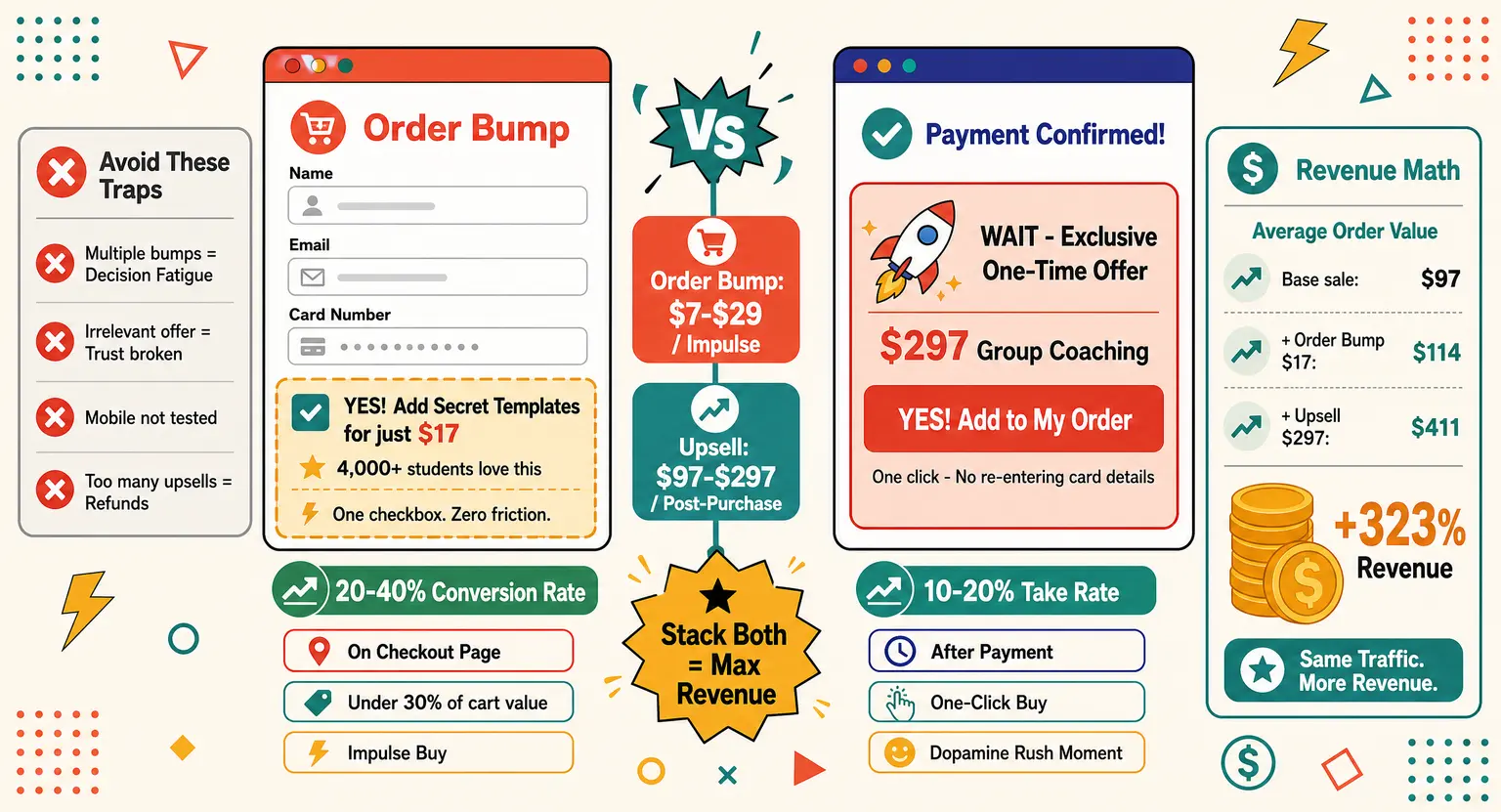
To make these systems profitable, you must introduce order bumps, upsells, and cross-sells on your optimized checkout pages to lift your average order value. High-ticket academies ($1,000 and above), conversely, demand a longer, high-touch funnel.
Do not expect someone to spend thousands of dollars after seeing a single short video. They need detailed touchpoints, such as automated masterclasses, personalized calls, or targeted case study sequences.
You also need absolute certainty that people actually want to buy what you are selling.
Always spend your valuable time discovering how to validate an online course idea via real-world, hands-on research - testing a validated offer yields a far higher financial return than guessing what might work with a high budget.
The Two Core Ad Funnel Frameworks That Scale Profitably
To consistently convert cold interest into registrations and enrollments, you need a clear funnel pathway. Two exact structures have proven highly effective for education creators looking to turn clicks into clients.
The first structure is the classic Free Lead Magnet to Immediate Tripwire Funnel. In this digital format, your Facebook campaign advertises an extremely useful, quick-to-consume free download, such as a PDF checklist, workbook, or templates file.
Once the interested reader submits their email, they immediately land on a "thank you" page containing a time-sensitive, highly discounted offer for a mini-course.
This tripwire purchase acts as a self-funding mechanism, effectively offsetting your daily ad spend and transforming cold browsers into active student buyers.
The second structure is the Automated Presentation Funnel, ideal for mid-range and high-ticket courses. Your ads drive registrations for a short workshop or video class.
This training walks prospects step-by-step through your unique teaching methodology, shows them what is possible, and invites them to apply or enroll in your main program.
If you are preparing for a launch window, having a detailed roadmap for how to launch an online course ensures your ad spend works in harmony with your presentation deadlines.
Comparing Meta Ad Formats for Digital Academies
Not all creatives are built to achieve the same business goals. Utilizing a diverse mix of formats allows you to capture attention across various user behaviors.
Let's look at how these common creative choices compare :
| Format type | Primary funnel location | Key operational benefit | Main creative constraint |
|---|---|---|---|
|
Vertical UGC video |
Cold prospecting (top). |
Generates deep organic feel and instant personal connection. |
Demands constant filming of real-world variations. |
|
Syllabus carousel |
Evaluation stage (middle). |
Shows structural value and different course modules step-by-step. |
Can feel overly technical if shown too early to cold leads. |
|
Long-form story copy |
Cold prospecting & retargeting. |
Connects emotional journeys and outlines personal achievements. |
Requires top-tier layout and highly engaging hook lines. |
|
Student case studies |
Decision stage (bottom). |
Destroys skepticism with verified student outcomes. |
Highly dependent on having successful, vocal graduates. |
|
Screencast walkthrough |
Evaluation stage (middle). |
Proves product reality by visually showing the dashboard. |
Can look dry if not edited with snappy pacing. |
Writing Compelling Creative Assets : Hook, Story, Call-to-Action
Since your ad copy performs the majority of the targeting work, you need a structured writing methodology. The classic Hook-Story-Offer architecture remains extremely effective when applied with an authentic, conversational tone.
Your hook resides in the initial three seconds of video or the first line of your visible ad text.
Avoid using vague, academic headings. Instead, call out the target's practical day-to-day reality. For example, instead of choosing "Master digital photography," opt for "If your indoor photos constantly turn out yellow and blurry, you are probably making this manual camera mistake."
Once you capture attention, use the story stage to bridge the emotional gap.
Shared experiences beat technical declarations every time. Talk about the personal struggle, the sudden realization, and the step-by-step structure you created to fix it.
This approach highlights your experience naturally. Building a recognizable personal branding for experts supports this process, as prospects ultimately connect with real human teachers, not faceless, corporate course factories.
Finally, close with a distinct, singular call-to-action. Do not ever tell people to follow your page, download your guide, and join your group all in the same ad. Give them one specific path : click the link, read the outline page, and sign up today.
Practical Campaign Structure inside Meta Ads Manager
To avoid spending hundreds of hours managing bids and tracking marketing budgets, build an ad account that runs cleanly without any daily human intervention. Complex setups only confuse the algorithm's learning engine.
Keep your setup organized around three essential pillars :
-
Broad Lead Acquisition : build a main prospecting campaign using a wide audience (geographic filters only, minimal interest additions). Trust Meta to find your buyers based on creative interactions.
-
Creative Testing Sandbox : use a separate, low-budget campaign to test new hooks, images, and videos. Only move winners to your main campaign.
-
Warm Retargeting : build a campaign targeting individuals who visited your sales pages or engaged with your social feeds but did not purchase. Remind them of course benefits.
Make sure your pixel tracking is flawless before spending money. Your tracking pixel needs to track email registrations, sales page views, checkout entries, and final payments without errors.
If your tracking remains inaccurate, the algorithm cannot learn who is actually buying your courses.
Managing and Scaling Your Advertising Budgets Safely
Avoid the temptation to dramatically double or triple your daily ad budget overnight. If you have an ad set performing nicely at twenty dollars a day, raising that budget to one hundred dollars instantly will shock Meta's delivery system and restart its learning phase, typically reducing performance.
The safest approach is to scale incrementally and carefully. Increase your daily budget by fifteen to twenty percent every three to four days.
This keeps your delivery completely stable while letting you analyze your metrics and costs. If you need to scale aggressively, consider running parallel campaigns with varied creatives, distributing the budget split across multiple hooks.
Remember that ad-driven traffic is only the top of the pyramid. If your follow-up sequence is weak, you will struggle to remain profitable as overall acquisition costs shift.
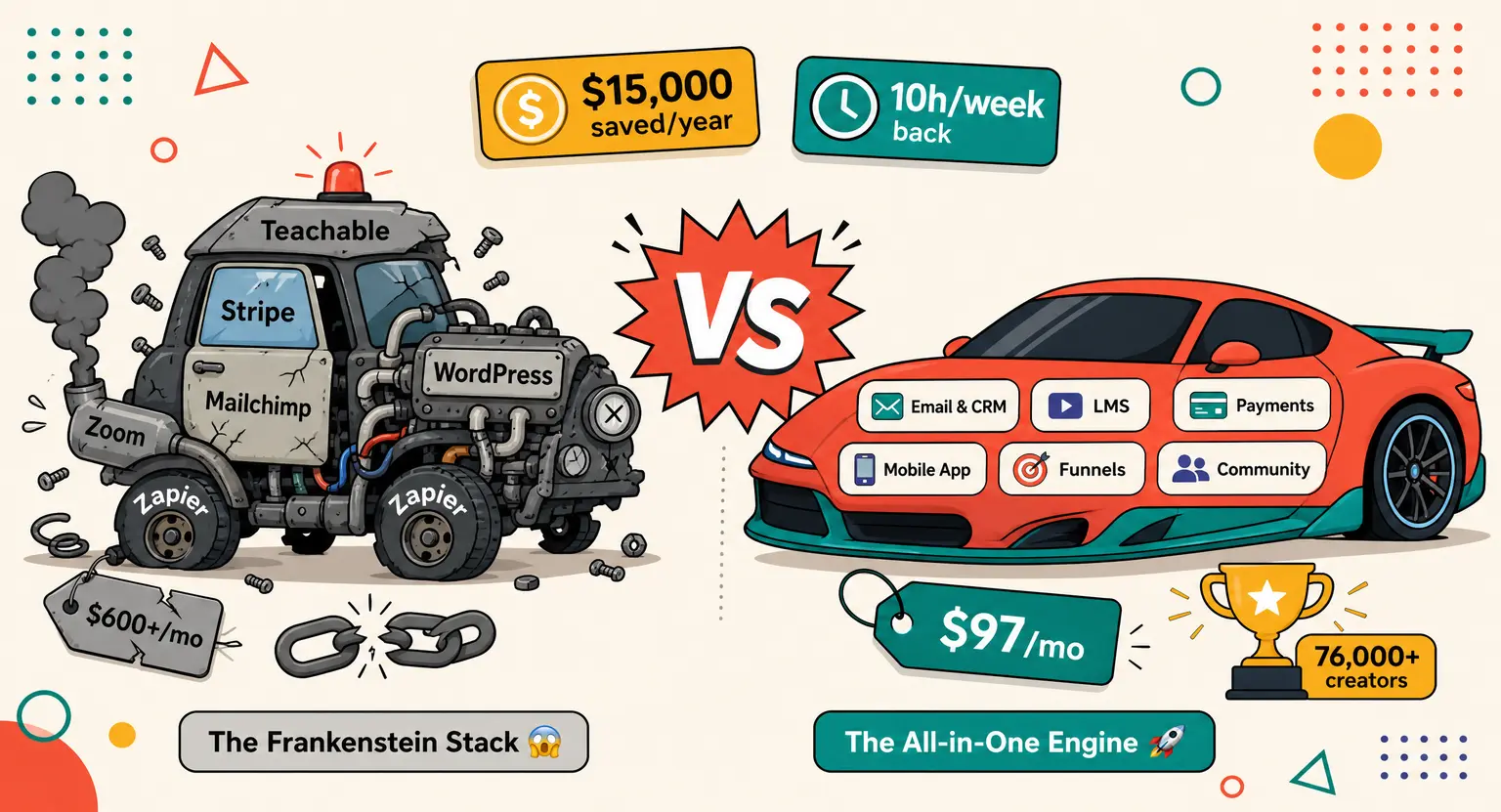
Utilizing a complete all-in-one platform to sell online courses ensures your pages, checkout processes, and email marketing work together seamlessly, maximizing the total value of every single visitor.
Using dedicated email marketing for course creators strategies allows you to systematically nurture leads who did not buy right away, helping you stay profitable over the long term.
Explore Further :
-
Discover modern tools and native features by visiting the primary LearnyBox homepage directly.
-
Refine your nurturing system with robust email marketing for course creators.
-
Examine our detailed guide on setting up profitable paid ads for online courses.
Frequently Asked Questions
What is a realistic starting budget for Facebook ads?
A solid starting point is ten to twenty dollars per day for initial testing. This provides sufficient capital to test creative variations without risking massive budgets. As you identify which hooks convert, you can safely scale your daily spending upward.
Should I send cold ad traffic directly to my course sales page?
Direct sales pages usually perform poorly with cold ad traffic unless your product is cheap (under fifty US dollars) or you have an incredibly popular brand.
For middle-to-high ticket tiers, always send cold traffic to a lead magnet or interactive workshop first to build initial trust.
How long does the Meta learning phase take?
The learning phase typically requires around fifty specific optimization events (such as leads or purchases) within a seven-day window.
Avoid editing your running ad sets during this timeline so the machine-learning system can stabilize its tracking and accuracy metrics.
Do I need highly produced videos to see success?
No, you do not. Authentic, raw video shot on a modern mobile device frequently outperforms sleek, studio-engineered ads.
Today's modern audiences tend to ignore polished corporate commercials and engage heavily with personal, conversational content that feels real.



 How to Create a Course Refund Policy (Templates & Best Practices for 2026)
 How to Run a Beta Version of an Online Course (2026 Guide)
 How to Create a Cohort-Based Online Course (2026 Guide)
 How to Sell an Online Course With a Quiz Funnel (2026 Guide)
 How to Sell an Online Course Through a Sales Call (2026 Guide)