






Payment Plans vs One-Time Payments for Online Courses
Payment Plans vs One-Time Payments for Online Courses
Quick Summary : The Golden Rules for 2026
-
Upfront security : one-time payments secure immediately realized revenue and bypass collection issues entirely.
-
Accessibility boost : installment options open your doors to price-sensitive buyers who otherwise pass on high-ticket training.
-
Convenience fee : always charge an additional 10% to 20% on multi-pay layouts to cover administrative friction and potential defaults.
-
Automated recovery : employ robust platform integrations that manage card retries and immediate student access suspension automatically.
So, you have poured your heart, soul, and countless late nights into building an exceptional training program. You are ready to launch, but a massive question mark blocks your path : how should people pay you?
Choosing the right transactional design is not just a secondary technical decision. It shapes your entire marketing trajectory, dictates your cash flow stability, and fundamentally determines who can actually buy your knowledge.
Today, the choice usually distills down to a simple battle : one-time upfront payments versus structured installment plans.
But here is the trick. This isn't a winner-take-all situation.
The way modern consumers spend online has shifted dramatically over the past few years. High inflation, changing credit appetites, and the democratization of self-education mean that rigid checkout setups will actively kill your sales.
Let us tear down the mechanics of both systems so you can design a pricing ecosystem that protects your margins while welcoming new learners with open arms.
The Psychology of One-Time Payments
There is a pristine beauty to the single, upfront payment. A customer clicks, processes their card, and the transaction is complete. You receive the funds immediately (minus processor fees), and they receive lifetime access.
For creators, this is the ultimate cash flow engine. When you are launching your program, getting a massive injection of capital on day one fuels your ad budgets, pays for your software stack, and rewards your hard work instantly.
And from a student's perspective, paying once delivers a highly satisfying psychological clean slate. They do not have to worry about monthly bills appearing on their credit card statements, nor do they feel the low-level anxiety of ongoing financial commitments.
It also creates a higher level of psychological buy-in. When someone invests a substantial lump sum upfront, they are significantly more committed to completing the curriculum.
But there is an obvious ceiling here. If your course costs $997 and you only offer a single payment option, you are instantly locked out of a massive chunk of your addressable market.
No matter how brilliant your sales pitch is, many qualified students simply do not have a thousand idle dollars sitting in their bank account.
Why Payment Plans are the Ultimate Conversion Booster
Enter the payment plan. By breaking down a high-ticket price tag into smaller, bite-sized installments - say, three monthly payments of $370 or six payments of $190 - you instantly make your offers accessible.
Suddenly, that intimidating $997 price point becomes an approachable monthly line item. This is crucial when you are trying to acquire new users and scale your marketing.
But how exactly does this affect your bottom line? In almost every high-ticket niche, adding an installment option spikes sales conversion metrics by 20% to 50%.
It lowers the friction at checkout, transforming a major financial decision into a small, calculated test of your material. It is particularly effective when you are targeting younger demographics or international audiences who rely heavily on flexible budgeting formats.
Think of it as micro-financing for education. By aligning your pricing layout with how people actually earn and spend their monthly salaries, you tap into a broader customer pool. But this accessibility comes with hidden operational costs that you must prepare for.
The Dark Side of Payment Plans (And How to Insulate Your Business)
Before you rush to add a "12 easy payments" option to your checkout flow, we need to talk about the operational friction. The reality of installments is that cards expire, accounts run out of funds, and some buyers lose interest and actively cancel their cards.
Managing failed transactions is one of the most frustrating aspects of running an online business. When a second or third payment fails, you have to spend valuable time and energy chasing down the customer.
This is why understanding how to handle failed payments for online courses is so critical if you want to protect your margins. Without a solid recovery process, your default rate can easily climb to 15% or even 20%, erasing the conversion gains you fought so hard to win.
Another looming operational headache is handling chargebacks. When students face financial strain, they occasionally try to bypass your refund policy by filing a chargeback through their bank. Having clear documentation and checking platforms that integrate with modern merchant tools can help you minimize these revenue drains.
To offset these risks, human experts use a golden rule : never offer a payment plan that adds up to the exact same price as the one-time payment. Always apply a 10% to 20% convenience premium.
For example, if your course is $1,000 upfront, your payment plan should be four installments of $295 ($1,180 total). This premium acts as a natural insurance policy against eventual defaults.
The Strategic Side-by-Side Comparison
Choosing which pricing lever to pull depends entirely on your business maturity, course value, and target audience. Let us look at how both approaches perform across crucial operational dimensions so you can make an informed choice.
| Metric / attribute | One-time payments | Payment plans (installments) |
|---|---|---|
|
Upfront cash flow |
Immediate, 100% realized on day one. Perfect for reinvesting in paid acquisition instantly. |
Delayed, spread out over several months. Requires working capital reserves to scale. |
|
Checkout conversion rates |
Lower conversion rates, particularly on premium training products priced over $500. |
Significantly higher conversion rates; lowers barrier to entry for budget-conscious students. |
|
Administrative maintenance |
Zero maintenance. Once paid, the system automatically runs without collection tracking. |
High maintenance. Requires dunning systems, automated emails, and card updater services. |
|
Student engagement & completion |
Higher completion rates due to deep psychological buy-in and upfront investment. |
Slightly lower completion rates; some students drop off if they default on payments. |
|
Chargeback & refund risk |
Concentrated risk at purchase, usually resolved easily via standard money-back windows. |
Extended risk profile. Chargeback opportunities arise with every sequential billing event. |
|
Total customer lifetime value |
Fixed value equal to the course price. No additional premium collected. |
Higher overall value per student because of the built-in 10% to 20% convenience premium. |
Designing the Ultimate Hybrid Pricing Structure
If you want to maximize profits, you should almost never choose one payment option to the exclusion of the other. Implementing a dual checkout layout gives you the best of both worlds.
But how do you effectively present these diverse options without overwhelming your visitors?
First, make your one-time payment option the default and most prominent choice on your sales page. Highlight the fact that they get a discount by paying upfront.
For instance, frame it as "Best Value : Save $180" next to the one-off price. This uses a behavioral psychology principle called anchoring, making the lump-sum payment feel like a deal.
Second, position your installment plan directly alongside it. Ensure the total complete price of the payment plan is clearly disclosed, but always emphasize the lower monthly commitment.
This hybrid setup is widely considered the gold standard for any online course pricing strategy in 2026. It ensures you capture high-intent buyers with cash on hand, while offering an elegant safety valve for students who need a bit of financial breathing room.
Managing the Technical Ecosystem Seamlessly
Let's be frank : you cannot manage payment plans manually. Tracking spreadsheet lines and sending manual emails when cards fail will eat your days alive and kill your team's spirit.
You need modern billing engines that handle card vaulting, automatic retries, and dunning sequences. When a card bounces, your platform should instantly freeze the student's dashboard access, swap out internal learning permissions, and fire off friendly reminders.
This technical orchestration is exactly why choosing the right tool is paramount. For creators looking to focus on teaching rather than building custom code bases, choosing the best platform to sell online courses becomes your absolute foundation.
If your system cannot link direct checkout funnels with automatic content gatekeepers, your operational work hours will skyrocket. Modern all-in-one platforms take care of this process behind the scenes.
They manage the secure database link between the student's subscription health and their real-time curriculum access, saving you dozens of admin tasks.
Actionable Retention Checklist for Payment Plans
To ensure your multi-pay system remains a profit engine rather than an administrative nightmare, implement these key protections immediately :
-
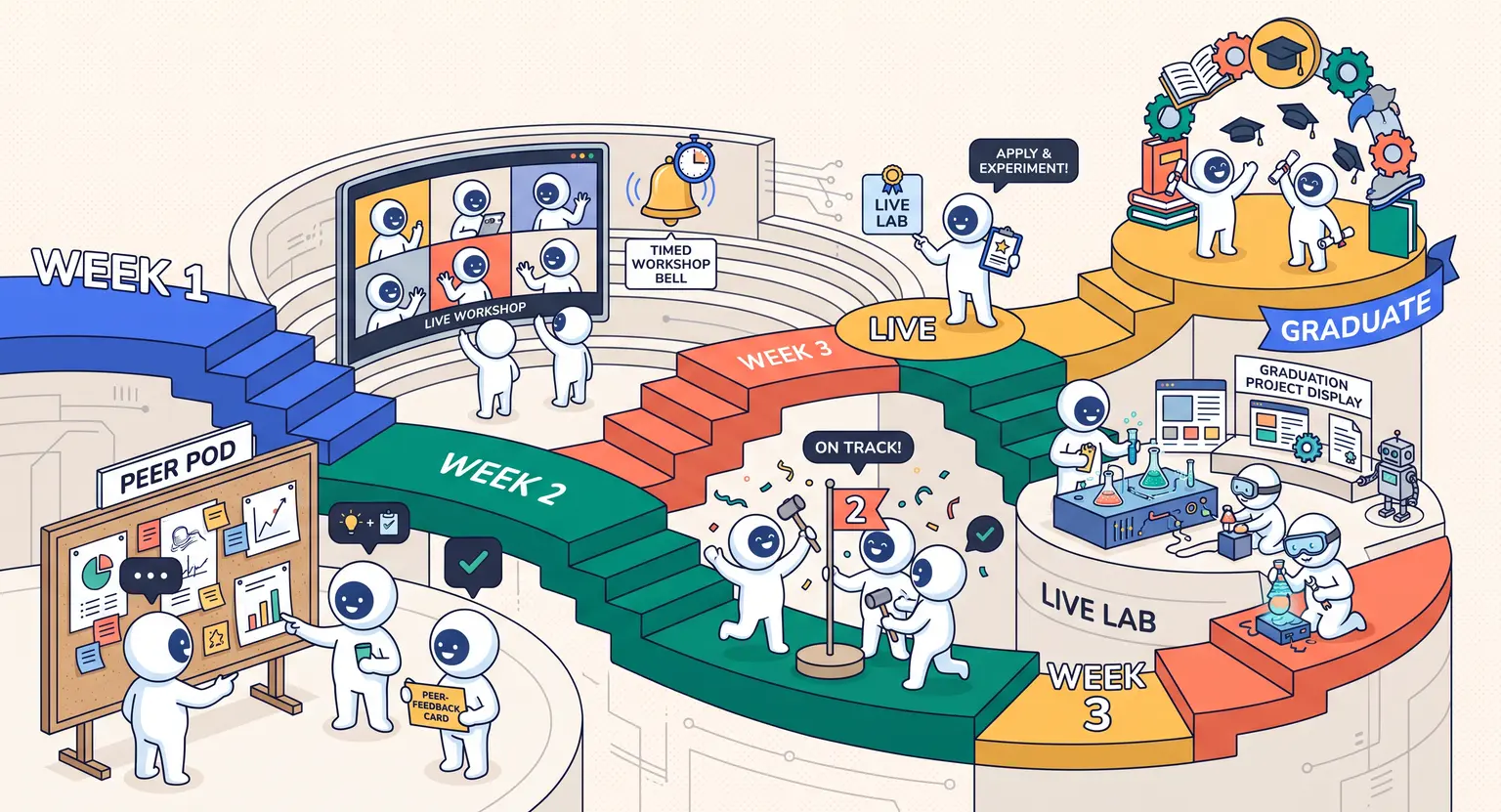
Enforce short windows : keep your billing intervals short. A 30-day billing cycle is standard, but try to avoid spreading plans past 4 or 5 months to minimize default possibilities.
-
Implement smart retries : configure your payment processor to retry failed cards on specific days (like the 1st, 15th, and 25th) when paychecks typically land.
-
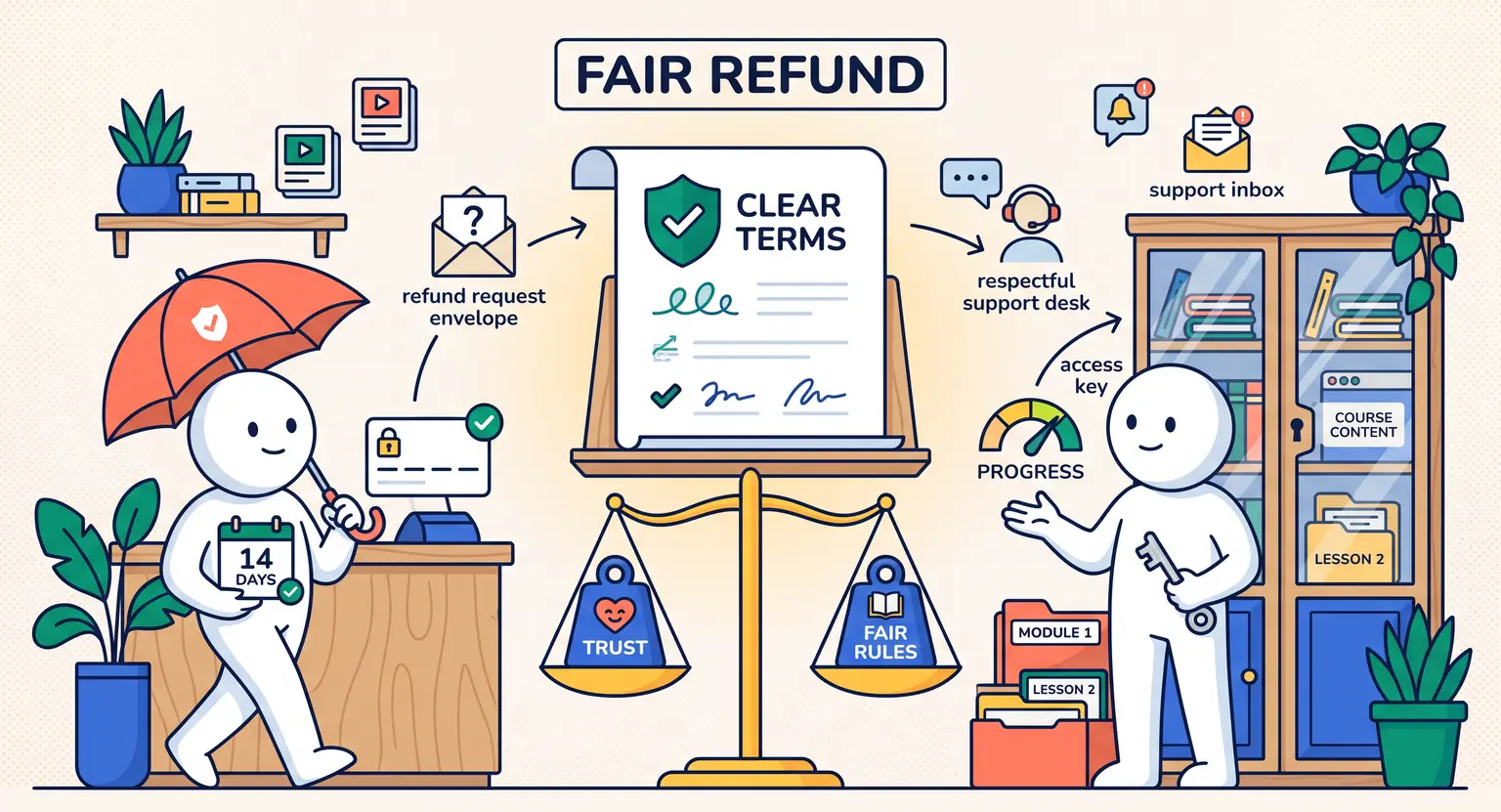
Chargeback proofing : require students to explicitly agree to your Terms of Sale during checkout. This documentation is your primary defense against sudden card disputes.
-
Automate onboarding : ensure that your onboarding emails start working immediately, keeping students excited and reducing buyers' remorse within the first crucial 14 days.
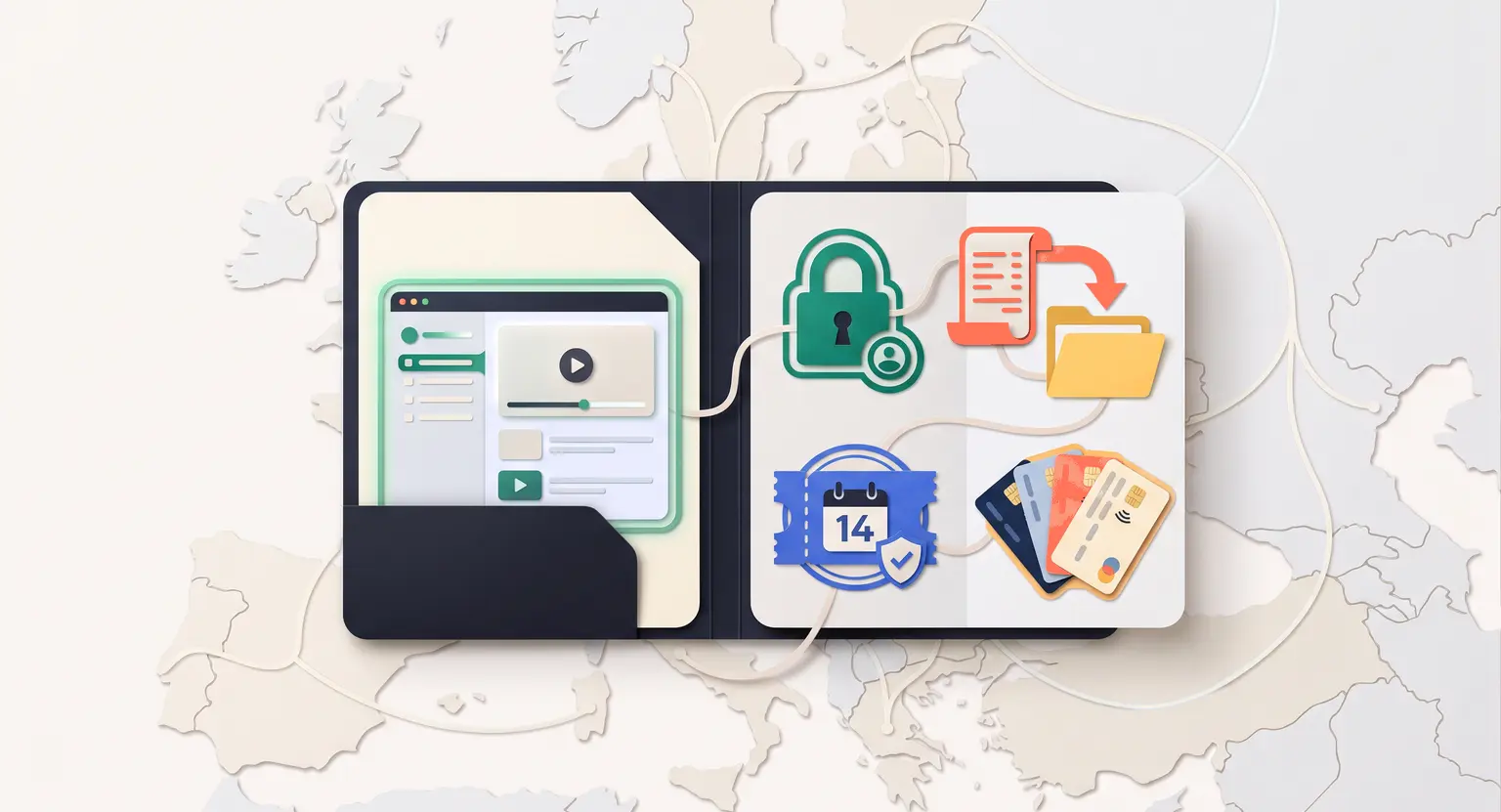
And if you are looking to secure your checkout experiences globally, using trusted merchant tools like Learnypay secure payments can help you safely process digital payments without getting flagged as suspicious by strict international credit systems.
Frequently Asked Questions
What is the ideal payment plan duration?
Keep payment plans to 3 or 4 months maximum. Longer plans significantly increase default rates as cards expire and enthusiasm wears thin.
How do I handle students who stop paying?
Automate your platform to instantly pause student dashboard access. You must master how to handle failed payments for online courses to run this automatically.
Should I charge interest on installment plans?
Always charge a premium on payment plans. Adding a convenience markup of 10% to 20% offsets the administrative friction and card default risk.
Do payment plans cause more refund requests?
No, they actually reduce refund rates by lowering upfront financial commitment, allowing students to test your material without major budget strain.