







How to Run a Beta Version of an Online Course (2026 Guide)
How to Run a Beta Version of an Online Course
Key Takeaways
-
A beta launch tests your core curriculum in real time before you spend weeks filming polished video lessons.
-
Keep your pilot group small (10 to 25 students) so you can offer high-touch guidance and collect deep qualitative feedback.
-
Deliver content through weekly live sessions or lightweight shared documents instead of over-engineered production setups.
-
Price your beta at a clear discount in exchange for active participation, homework submissions, and written reviews.
-
If you want to validate buyer demand before writing slides, explore how to pre-sell an online course effectively.
Every year, thousands of aspiring educators make the exact same heartbreaking mistake.
They lock themselves in a home office for four months, write twenty slide decks, spend thousands on high-end camera gear, edit fifty hours of video, and upload the whole package to an LMS.
Then they launch to the sound of absolute silence.
Or worse : people buy the course, but nobody finishes it.
Students drop off by Module 2 because the lessons solve problems they do not actually care about or skip fundamental steps they desperately needed help with.
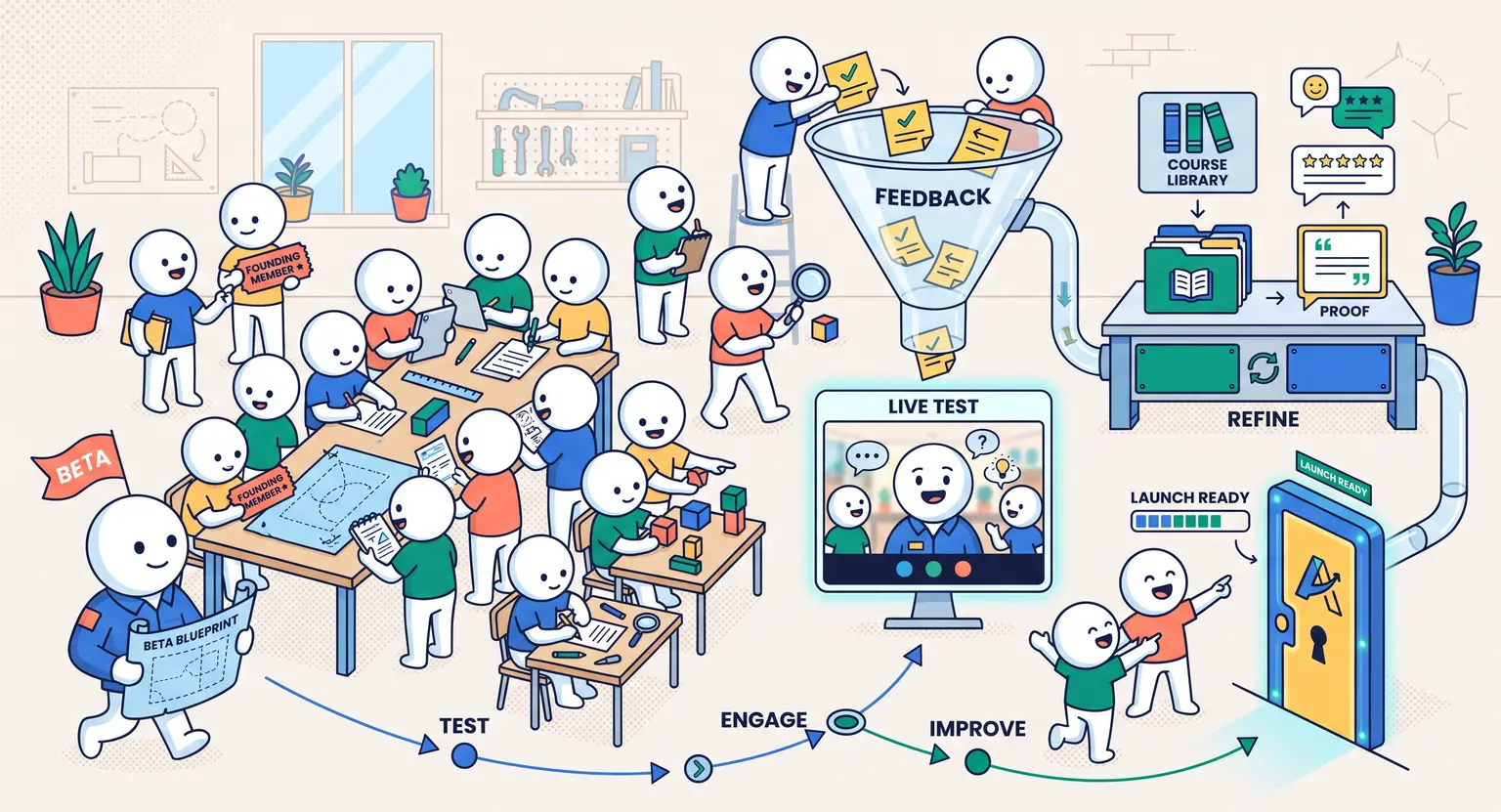
A beta run changes everything. Running a pilot version means you build the course with your students rather than in isolation.
You test the curriculum live, adjust exercises on the fly based on student confusion, and produce case studies that make your eventual evergreen launch practically sell itself.
If you already took time to validate an online course idea, a beta cohort represents the practical bridge between raw validation and a polished digital asset.
What Is a Beta Course (And Why Run One First?)
A beta course is a lightweight, pilot delivery of your learning program.
Instead of pre-recording polished videos in a vacuum, you teach the core concepts live to a small, hand-selected group of founding students at a discounted rate.
Think of it as the minimum viable product (MVP) of your educational business.
You provide your students with direct access to your knowledge, individualized attention, and high-touch support.
In return, they give you grace when tech hiccups happen, show up for live sessions, tell you what feels confusing, and supply the glowing testimonials you will need for your public rollout.
Here is what makes this approach unbeatable :
-
Instant feedback loops : when five people ask the exact same question during a live workshop, you immediately know where your explanations are falling short.
-
Rapid iteration : you can rewrite an assignment prompt in five minutes instead of having to re-record and re-edit a twenty-minute video lecture.
-
Zero wasted effort : you never spend months building lessons nobody wants to watch.
-
Cash flow before creation : your beta students fund your production budget upfront.
-
Built-in social proof : the transformation stories from your pilot group become the sales copy for your next launch.
The 4-Stage Roadmap for Running a Seamless Beta
Running a successful pilot does not require complicated software or massive advertising budgets. In fact, keeping things simple is your greatest competitive advantage.
Let us walk through the four essential phases.
Stage 1 : Define the Minimum Transformational Scope
The most common mistake first-time instructors make is trying to teach everything they know.
A beta course should not be an exhaustive encyclopedia; it should be an express train to a specific outcome.
Start by identifying your single core transformation.
What can someone realistically achieve within 3 to 6 weeks under your direct supervision?
Once you know that outcome, work backward to create 4 to 6 milestones. Each milestone becomes one weekly module or live session.
Cut out nice-to-know background theory. If a lesson does not directly help students complete the milestone for that week, save it for an advanced bonus or leave it out entirely.
Stage 2 : Recruit Your Founding Cohort
You do not need a list of ten thousand subscribers to fill a beta test. You only need 10 to 20 committed participants who trust you and match your ideal student profile.
Where do you find these founding members?
Look in your existing ecosystem :
-
Your warm email list : send a personal, non-flashy plain-text email explaining that you are building a new coaching workshop and looking for 15 founding testers.
-
Social media DMs : reach out to people who regularly interact with your posts or ask for advice in your niche.
-
Professional communities : post in Slack groups, Discord servers, or forums where your target audience hangs out (make sure you follow community self-promotion rules).
-
Past clients or 1-on-1 coaching students : these people already know the quality of your work and often jump at the chance to access a structured program.
Be radically transparent about what this experience is.
Tell them upfront : "The videos are not pre-recorded. The slides might have typos. We are going to meet live every Thursday, and I will personally help you implement every single step in exchange for your honest feedback."
Stage 3 : Deliver the Experience Live
Do not spend weeks setting up complex automation sequences or multi-tier membership gates.
Keep the delivery stack ridiculously simple :
-
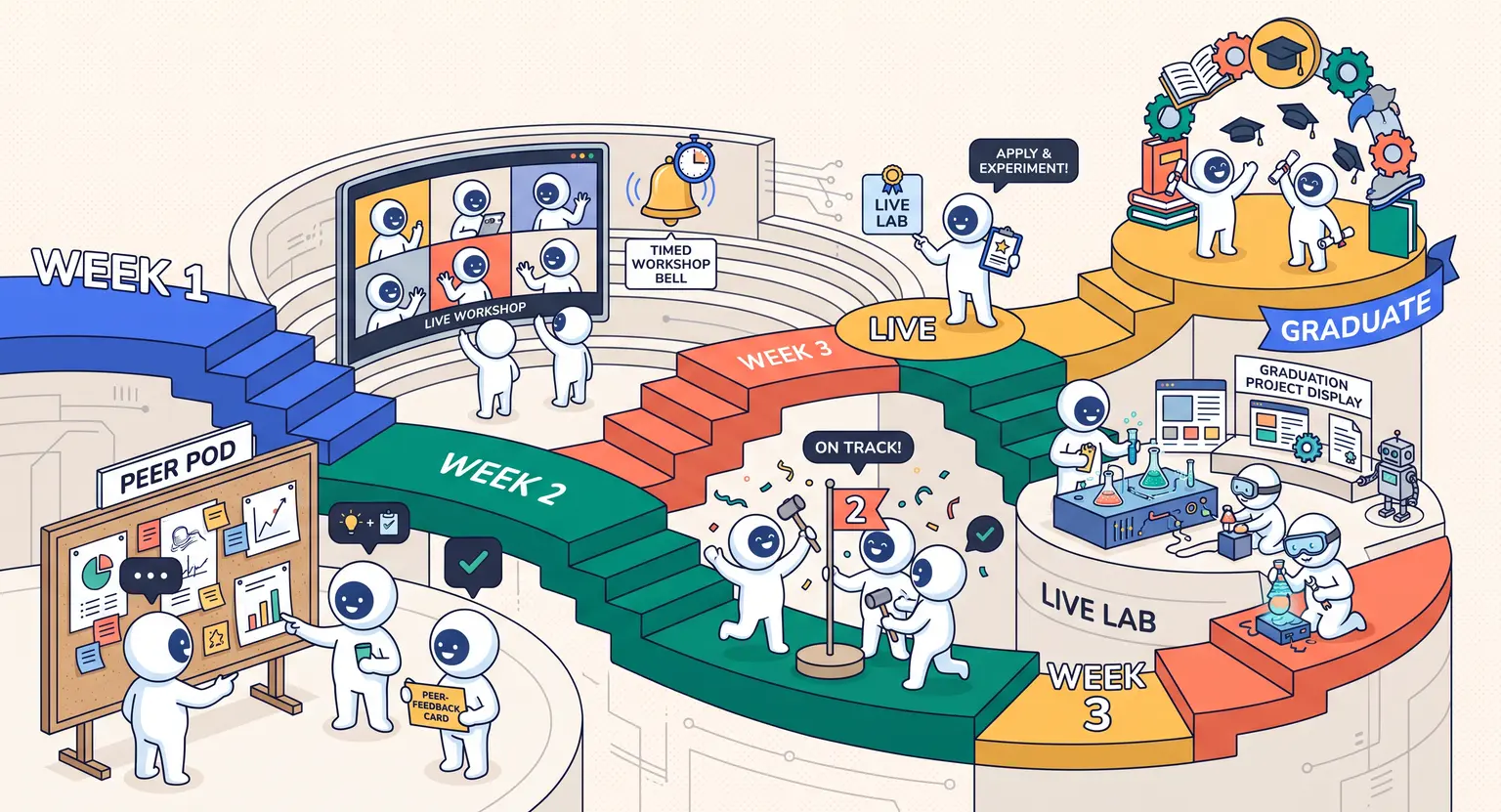
A video call platform for hosting weekly 60-to-90-minute workshop calls.
-
A shared community space (like a private community channel or LMS discussion board) for daily asynchronous questions and wins.
-
A simple shared cloud folder or single course portal for uploading slide PDFs, worksheets, and call replays.
Each week, spend 30 to 45 minutes teaching the new framework live, followed by 30 to 45 minutes of live Q&A, teardowns, or hot seats.
Treat these calls like laboratory sessions where you observe exactly where students get stuck.
Stage 4 : Capture Feedback and Harvest Case Studies
Feedback collection should happen continuously throughout the beta, not just as an afterthought on the final day.
When students wait until the end to share their thoughts, they forget the specific roadblocks they hit during week one or two.
Use lightweight touchpoints :
-
The end-of-call check-in : ask in chat : "What was the single most valuable takeaway from today?" and "What still feels fuzzy?"
-
Mid-point pulse survey : a 3-question form asking about pacing, workload, and clarity.
-
Final exit interview : a 15-minute 1-on-1 Zoom chat or structured video testimonial collection where students share their before-and-after results.
Comparing Beta Formats : Live Cohort vs. Async Prototype
Depending on your topic and schedule, you can choose how hands-on you want your beta test to be.
Here is how the two primary models compare :
| Feature / parameter | Live interactive pilot | Pre-recorded async beta |
|---|---|---|
|
Delivery style |
Weekly live calls + open Q&A hot seats. Ideal for a cohort-based online course format. |
Rough audio/video recordings uploaded weekly, paired with discussion forum tasks. |
|
Creator effort |
High touch during delivery, low prep work before starting. |
Moderate prep work upfront, lower weekly time commitment. |
|
Curriculum structure |
Dynamic and evolving based on live student questions. Follow a solid online course structure blueprint. |
Fixed module outlines with feedback gathered via comments. |
|
Student completion rates |
Very high (70% to 90%) due to social accountability. |
Moderate (40% to 60%) without live mandatory meetups. |
Turning Beta Learnings into an Evergreen Asset
Once your final beta session wraps up, you will hold something far more valuable than raw theory : proof that your curriculum creates real-world outcomes.
Now you can transition your pilot into a polished, permanent product with total confidence.
Review the questions your beta students asked most frequently. Those questions reveal exactly what needs extra visual diagrams, downloadable templates, or step-by-step walkthroughs in your final production.
When you sit down to film your final videos, you will not have to guess what tone to use, what examples resonate, or which objections might pop up.
You will have already answered those questions live with real human beings.
That clarity is the secret weapon behind every top-selling course on the internet.
Explore Further Resources
-
Step-by-step guide on how to launch an online course to the public.
-
Download our comprehensive course creation checklist before recording your final modules.
-
Discover the best tools to host and sell online courses with minimal technical overhead.
Frequently Asked Questions
How much should I charge for a beta course?
Most creators find success charging 40% to 60% of their intended full retail price.
Charging something filters for committed students who will actually show up and provide valuable feedback, while the discount rewards them for participating in a work in progress.
You can review our detailed online course pricing strategy guide to align your numbers with your market.
How many students do I need for a successful beta test?
Between 10 and 25 students is the sweet spot. Fewer than 10 makes live discussions quiet and limits varied feedback.
More than 25 turns support into a chaotic full-time job before your curriculum is even finalized.
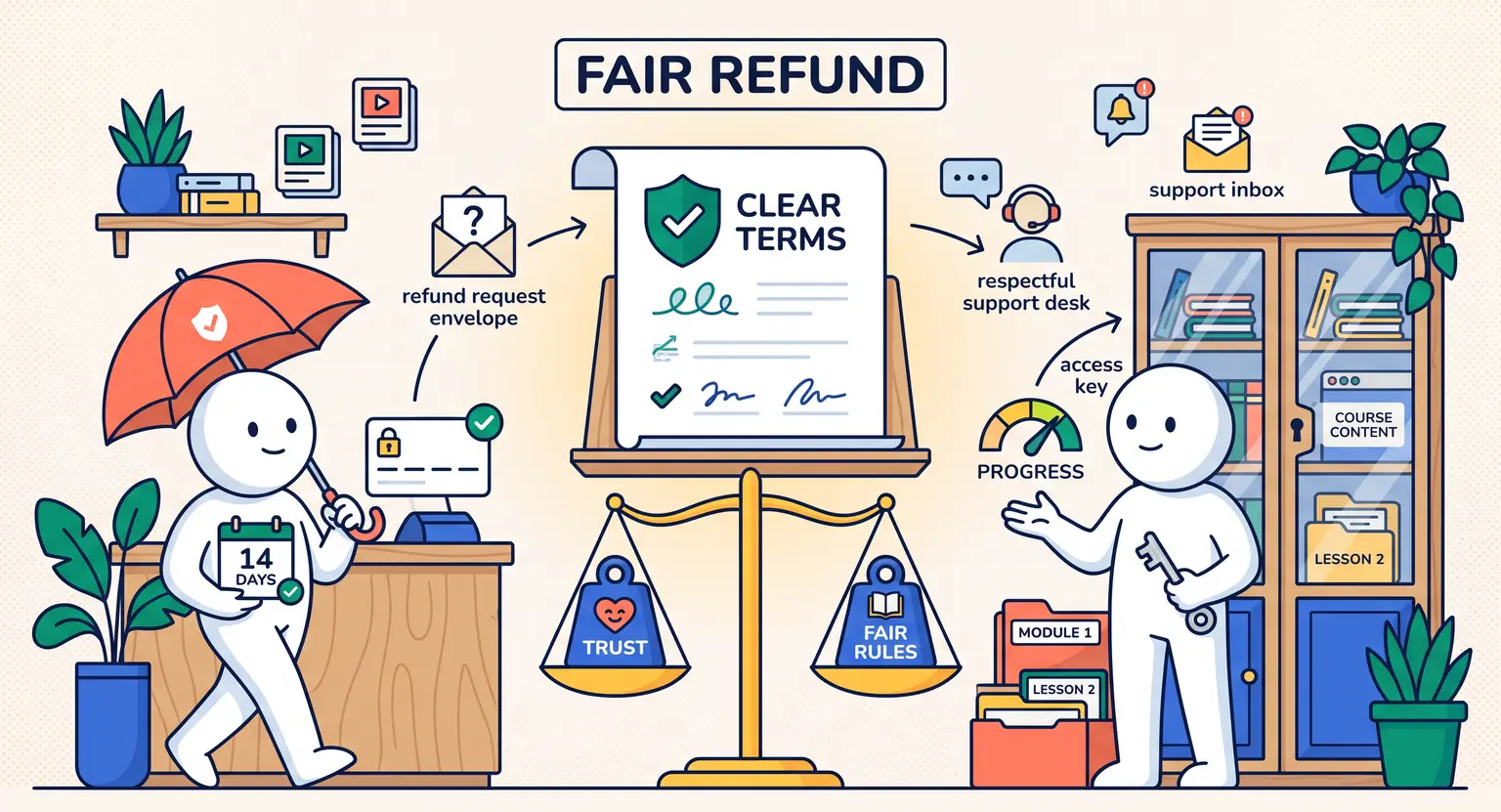
What should my refund policy look like for a beta launch?
Offer a straightforward, conditional satisfaction guarantee based on active participation, such as attending live calls or submitting assignments.
Learn how to draft clear terms by checking our guide on how to create a course refund policy.





 How to Create a Course Refund Policy (Templates & Best Practices for 2026)
 How to Create a Cohort-Based Online Course (2026 Guide)
 How to Sell an Online Course With a Quiz Funnel (2026 Guide)
 How to Sell an Online Course Through a Sales Call (2026 Guide)