







What Legal Pages Does an Online Course Website Need? (2026 Guide)
Key Takeaways :
-
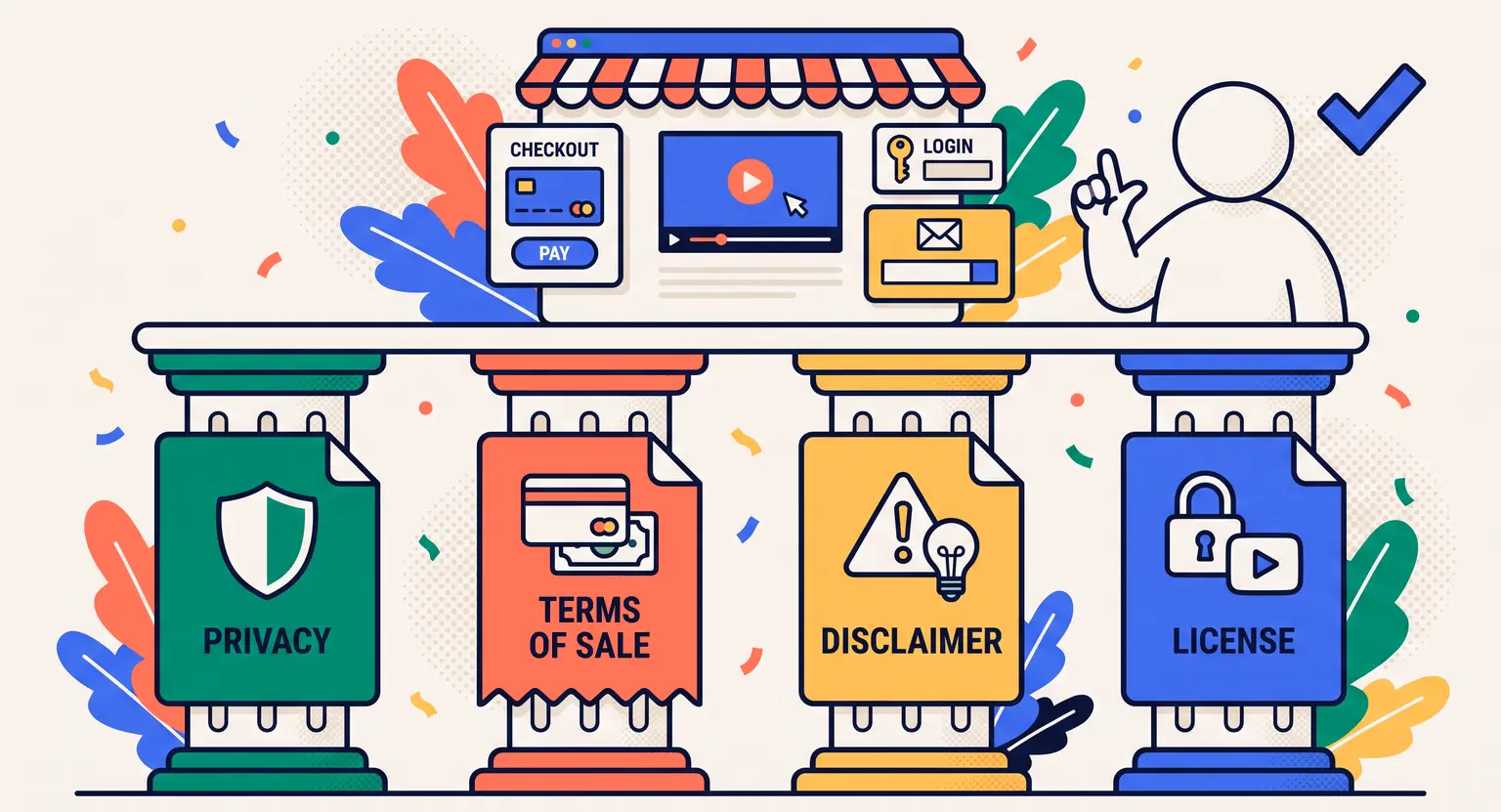
Privacy Policy : Mandatory for GDPR, CCPA, and payment gateways. You must disclose how you collect, protect, and use student data.
-
Terms of Sale : Protects your revenue. Clearly defines refund policies, chargeback terms, and payment plans.
-
Disclaimers : Limits legal liability. Clarifies that results are not guaranteed and your educational content is not professional advice.
-
Intellectual Property : Establishes single-user licenses. Outlaws password sharing and piracy of your creative work.
Imagine spending months writing lessons, setting up professional studio lighting, and refining your slides. You hit launch, and the sales start rolling in. It feels incredible.
But what happens if a student disputes a payment, demands a refund three months later, or threatens to sue because your business advice did not make them rich? Suddenly, that amazing feeling vanishes... But you can avoid this dread entirely.
Selling knowledge is rewarding. But running an online business means protecting your hard work. Too many creators leave their websites completely exposed, opening themselves up to immense professional risks.
Setting up legal pages is not just about playing by the rules. It builds real authority, establishes clear limits, and keeps you safe.
Let's explore the essential legal pages your online course website needs.
The Non-Negotiable Privacy Policy
You cannot skip this page. A privacy policy is a globally mandated absolute. Payment processors, ad platforms, and email systems will outright reject your account without one.
If you collect emails, monitor website metrics, or handle financial transactions, you are actively gathering sensitive human data and must safeguard it.
Privacy regulations are tighter than ever. You must explain how you store data, who sees it, and how users can delete it. If you sell globally, you must pay close attention to several prominent regulations that govern consumer rights.
First, you must understand GDPR for online course creators. This law protects European Union residents, regardless of where your corporate office is.
If you plan to teach students how to sell online courses in Europe, your disclosures must be completely clear and detailed.
Additionally, regulations like California's CCPA require easy to read opt out language. Keep your writing clear, avoid using confusing legal jargon, and keep it accessible.
Terms of Sale and Terms of Use
Many folks mistake website Terms of Use for a client facing sales agreement. Terms of Use cover casual browsers looking at your public blog.
But once a customer enters their credit card details, you need a detailed terms of sale to govern that commercial interaction and ensure both sides are fully aligned.
This text acts as your main legal shield. It explains how buyers access your learning platform and what consequences they face if they break community guidelines. It should clearly outline payment plans, subscription cycles, payment failure procedures, and refund timelines.
Do you offer an absolute fourteen day warranty, or are all your registrations final? Documenting this protects your payments from stressful credit card chargebacks.
And, international sales require you to master tax compliance, such as VAT on online courses - What creators need to know. You should specify which state or country's courts resolve any future legal disagreements. Setting this up keeps you in full control of your business's legal destiny.
Disclaimers : Managing Expectations
If you teach business, fitness, coaching, or investing, you need a prominent disclaimer. Disclaimers do not mean your system is subpar.
They protect you from buyers who fail to put in real effort, or who mistake your school's teaching for certified medical, financial, or professional counsel that dictates major life decisions.
State clearly that your lessons are strictly educational. If you feature student testimonials or revenue screenshots, clarify that these outcomes are exceptional and do not guarantee future performance.
A clear disclaimer prevents buyers from blaming your training course if they make poor investment choices or fail to achieve identical results. It separates casual coaching from customized consulting services.
Intellectual Property : Safeguarding Material
Your courses, PDFs, checklists, and videos are proprietary. Unscrupulous users might purchase your coaching package solely to copy your concepts or distribute your exclusive content to third party forums.
Your legal documents must explicitly establish that students receive a restricted, non transferable, single user license to consume your materials, preventing any unauthorized adaptation.
Preventing theft requires clear, binding legal rules. You must learn how to protect your intellectual property as a course creator to secure what you create.
Your rules should list severe consequences for sharing student credentials, such as immediate account suspension without refund or legal notification.
Combining these provisions helps you prevent students from sharing paid course access. Knowing the basics of online course copyright - Who owns the content? allows you to submit DMCA notices if a buyer illegally republishes your digital academy materials, offering you complete peace of mind.
Legal Pitfalls to Avoid
In the rush to share your knowledge, it is easy to cut corners. Here are some critical mistakes to avoid when creating online courses regarding legal setups :
-
Copy pasting other websites : Copying pages is copyright violation and leaves you exposed if their business model differs.
-
Hiding refund policies : If refund rules are difficult to locate, buyers will initiate chargebacks with banks directly.
-
Ignoring affiliate disclosures : You must state clearly if you earn a cut when recommending tools to satisfy regulators.
-
Underestimating tax liabilities : Neglecting regional tax calculations across different countries can lead to hefty penalties.
Streamlining Compliance with Platforms
Operating multiple legal documents, checkout screens, and privacy scripts is challenging. This is why automated systems are popular. Finding the best all in one course platform lets you manage everything comfortably under one dashboard.
Choosing an established player like LearnyBox simplifies setup. The software allows you to incorporate affirmative checkout consents effortlessly.
This means buyers must check a box to accept your conditions before executing payments, keeping your intellectual property safe while you build.
Essential Pages Comparison Table
|
Legal Document |
Primary Function |
Key Target Areas |
Mandatory For |
|
Privacy Document |
Discloses how customer details are analyzed, used, and secured. |
Tracking scripts, cookies, user deletion procedures, email databases. |
Every website owner in operation. |
|
Terms of Sale |
Outlines transaction agreements, access rights, and payment methods. |
Billing frequency, refund rules, system bans, chargeback protocols. |
Any site charging currency. |
|
Disclaimers |
Manages client expectations and removes general personal liability. |
Earnings results, physical health warnings, professional distinctions. |
Coaches, financial and niche instructors. |
|
Cookie Notice |
Provides insights into current browsing cookies and scripts. |
Consent banners, cookie categories, specific list of tracking systems. |
Sites employing marketing pixels. |
Protect Your Educational Empire Today
Drafting legal text is rarely the highlight of creative course production. Yet, skipping it is a recipe for operational risk. By dedicating a few hours to building your privacy terms, disclaimers, and clear terms of purchase, you build a sturdy foundation for scaling in 2026.
This security keeps your focus on producing incredible content, teaching enthusiastic students, and developing your infopreneur authority.
Frequently Asked Questions
Do I need a certified lawyer to draft my policies?
Not necessarily, though consult an attorney for personalized guidance.
You can use reliable pre-made templates or reputable platform-integrated automated tools to generate solid drafts that secure your operation efficiently without huge legal fees.
How are Terms of Service and Terms of Sale different?
Terms of Service act as rules for browsing your public site.
Terms of Sale exist specifically as the transactional agreement governing payments, refund windows, plan schedules, and actual access permissions to paid training materials.
Do EU privacy rules affect course businesses based in America?
Yes, absolutely. GDPR regulates the location of the citizen browsing your site, not the location of your business.
If a single person in Europe checks your sales page, you must respect these guidelines.
Where should I display these links on my site?
Place clear, clickable links inside your global website footer, ensuring they remain visible across every page.
You should also place direct checkboxes on checkout templates, forcing buyers to actively click and accept your terms before they can make a purchase. This simple checkbox acts as a binding digital contract that courtrooms recognize if a student disputes charges.
Additionally, link to your privacy document whenever you embed newsletter opt-in forms on landing pages, giving subscribers total visibility into how you handle their data.
Transparent placement builds immense trust with your audience while satisfying strict international compliance officers.





 How to Design an Online Course Student Onboarding Experience
 How to Automate Online Course Administration (2026 Guide)
 How to Connect an Online Course Platform to Other Business Tools (2026 Guide)
 SCORM vs xAPI: What's the Difference for Online Courses? (2026 Guide)
 What Is SCORM and Do Course Creators Need It? (2026 Guide)