






Online Course Marketplace vs Your Own Website: 2026 Comparison
Online Course Marketplace vs Your Own Website
Key Takeaways
-
Marketplaces offer instant reach but strip away your brand, customer data, and profits through heavy fees.
-
Hosting on your website gives you absolute control, direct customer relationships, and flexible pricing structures.
-
The right decision depends on your existing audience size, technical comfort, and long-term business goals.
-
For true business ownership, leveraging the best online course platforms represents the ultimate growth path.
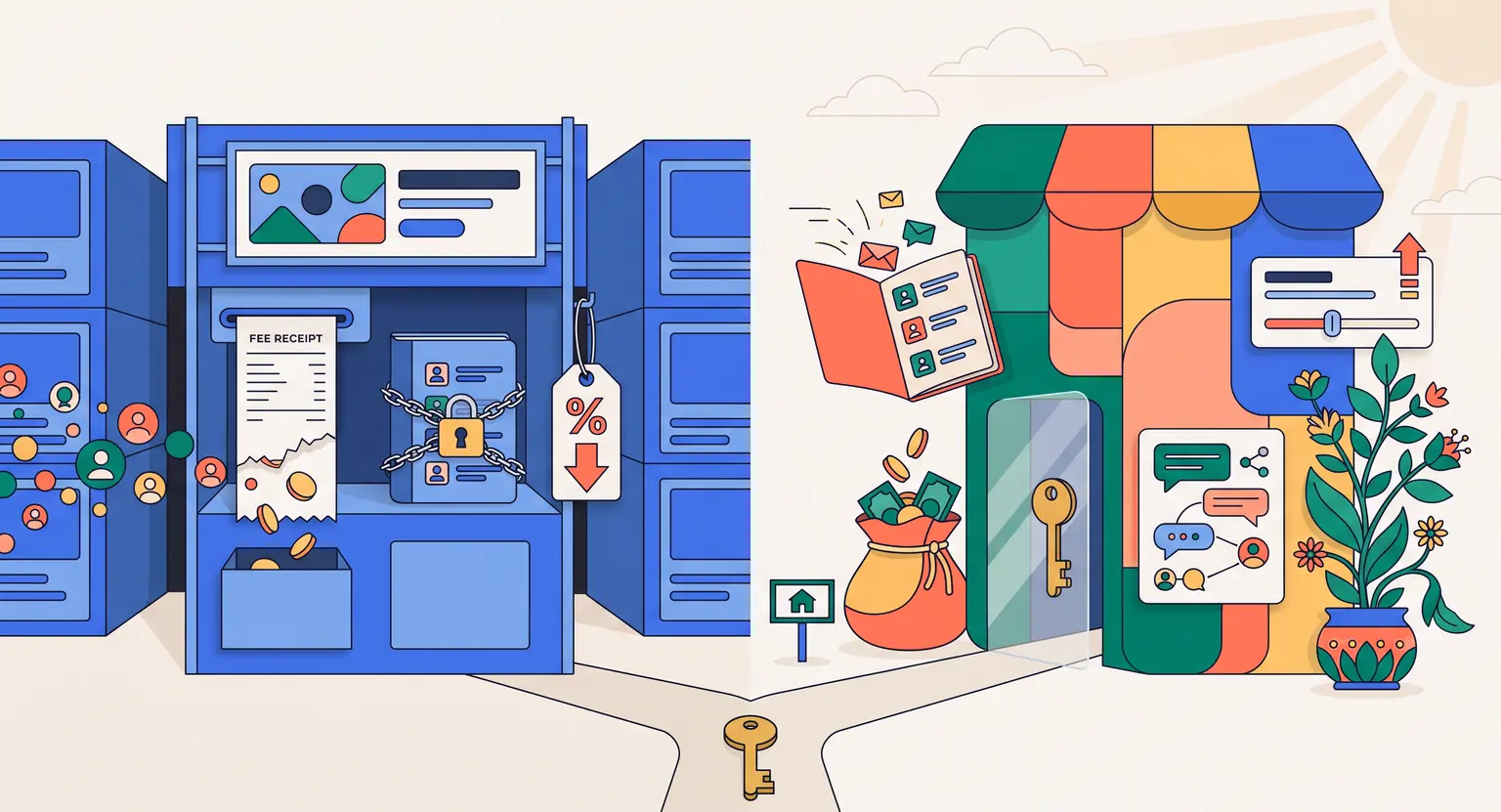
So, you have got a brilliant, highly profitable course idea ready to share with the active online world. But right at the starting line, you face a massive fork in the road. Do you list your program on a giant course marketplace, or do you build your own digital home?
It is the classic trade-off between convenience and control. On one hand, marketplaces promise a ready-made buffet of eager students. On the other hand, owning your website gives you the keys to your entire digital empire.
Both paths can lead to success, but they serve entirely different business models. Let us break down the nuts and bolts of both options so you can choose the path that makes sense for your business in 2026.
The Allure of Marketplaces : The Quick Start
Let us start with the marketplaces. Platforms like Udemy or Skillshare are the shopping malls of the internet. They are bustling, packed with people, and incredibly easy to set up. You simply upload your video files, type out some descriptions, and boom, you are live.
The biggest draw here is the built-in audience. If you have no marketing experience and are still figuring out how to get your first 100 students, a marketplace can feel like a safety net. They handle the hosting, processing payments, and basic search optimization.
But this convenience comes at a very steep price.
When you sell on a marketplace, you do not actually own your business.
You do not get your students' email addresses.
You cannot follow up with them to sell a high-ticket coaching program.
Worse, you are locked into their strict pricing rules, and they can take up to fifty percent of your revenue.
You are essentially a tenant renting space in someone else's playground.
The Power of Owning Your Website : The Wealth-Builder Route
Now, look at the alternative. Building your own course website is like buying your own plot of land. It might take slightly more effort to clear the ground, but everything you build on it belongs to you.
When you host your lessons on your own site, you get total creative and financial freedom. You can set up a custom domain, customize the user experience to match your brand, and keep almost every dollar from your sales.
Most importantly, you own the student data. You can run highly tailored email marketing for course creators to cultivate deep, long-term relationships with your audience.
And you are not bound by marketplace price caps. You can easily test an aggressive, high-value online course pricing strategy that charges premium rates without worrying about competitors listing a ten-dollar copycat course right next to yours.
Yes, you have to build your own traffic. But in 2026, modern marketing tools make building an organic audience highly achievable for anyone willing to put in the work.
Head-to-Head Comparison
To make this massive choice clearer, let us compare the two approaches side by side today. Each has distinct traits that will shape your daily operations and long-term revenue.
| Feature | Online course marketplace | Your own website |
|---|---|---|
|
Student data ownership |
None. The marketplace keeps all email addresses. |
100% control. You own your email subscriber list. |
|
Pricing freedom |
Highly limited. Forced discounts and pricing caps. |
Absolute. Sell at any price, plan, or subscription. |
|
Revenue share |
Platforms take up to 50% or more per sale. |
You keep 100% of profit minus small processor fees. |
|
Brand control |
None. Your course looks identical to your competitors. |
Complete custom design, logo, colors, and layout. |
If you are looking to build a highly sustainable, long-term brand, finding the best platform to sell online courses on your own terms is critical. The right software handles the heavy lifting of hosting and payments while leaving you in the driver's seat.
Which Path Fits Your Current Situation?
The choice is rarely black and white. Your decision should align with your current assets, skills, and timeline.
Go with a marketplace if :
-
You want to test a small, simple topic without investing money upfront.
-
You really do not want to manage any marketing or customer support.
-
You view course creation as a casual side hobby rather than a real business.
But choose your own website if :
-
You want to build an enterprise, authority brand, or full-scale online school.
-
You plan on scaling your business using paid ads, joint ventures, or funnels.
-
You are ready to sit down and plan how to launch an online course with a dedicated marketing strategy.
-
You want to maximize your profit-per-student ratio.
Deciding to handle your own distribution is undeniably a bigger leap. But look at any successful modern educator or expert - almost none of them are selling their flagship courses on low-cost marketplaces. They know that your business can only grow as large as the foundation you build it on.
Choosing your own website gives you the freedom to introduce memberships, host dynamic forums, and offer personalized tier packages.
Setting this up today requires absolutely zero complex technical background because modern platforms take care of everything behind the scenes.
Frequently Asked Questions
Can I move my courses from a marketplace to my own website later?
Yes, you can absolutely migrate your courses later. However, since marketplaces do not share student email addresses, you cannot easily migrate your existing students.
You will have to start building your audience from scratch on your new platform, which is why starting on your own site from day one is highly recommended.
Do I need advanced technical skills to run my own course website?
Not at all. Gone are the days of hiring expensive web developers to write code.
Modern software tools allow you to drag and drop your video files, templates, and text directly into visually stunning hubs. If you can write a basic email, you can launch your own course website without breaking a sweat.
Which option is more cost-effective for a complete beginner?
While marketplaces have no upfront hosting fees, they cost you far more in the long run through heavy revenue sharing.
Your own website requires a modest monthly subscription, but you keep all your profits. If you plan to sell more than a few courses, owning your website is easily the more profitable option.
How do I attract students to my own course website?
Attracting students requires active marketing. You can publish helpful content to rank in search engines, partner with other creators in your niche, run targeted ads, or build an email list.
Building your own traffic takes energy, but it creates a highly valuable business asset that nobody can ever take away from you.




 How to Create a Course Refund Policy (Templates & Best Practices for 2026)
 How to Run a Beta Version of an Online Course (2026 Guide)
 How to Create a Cohort-Based Online Course (2026 Guide)
 How to Sell an Online Course With a Quiz Funnel (2026 Guide)
 How to Sell an Online Course Through a Sales Call (2026 Guide)