







How to Sell Online Courses Internationally: Global Strategy
How to Sell Online Courses Internationally
Quick Strategy Guide
-
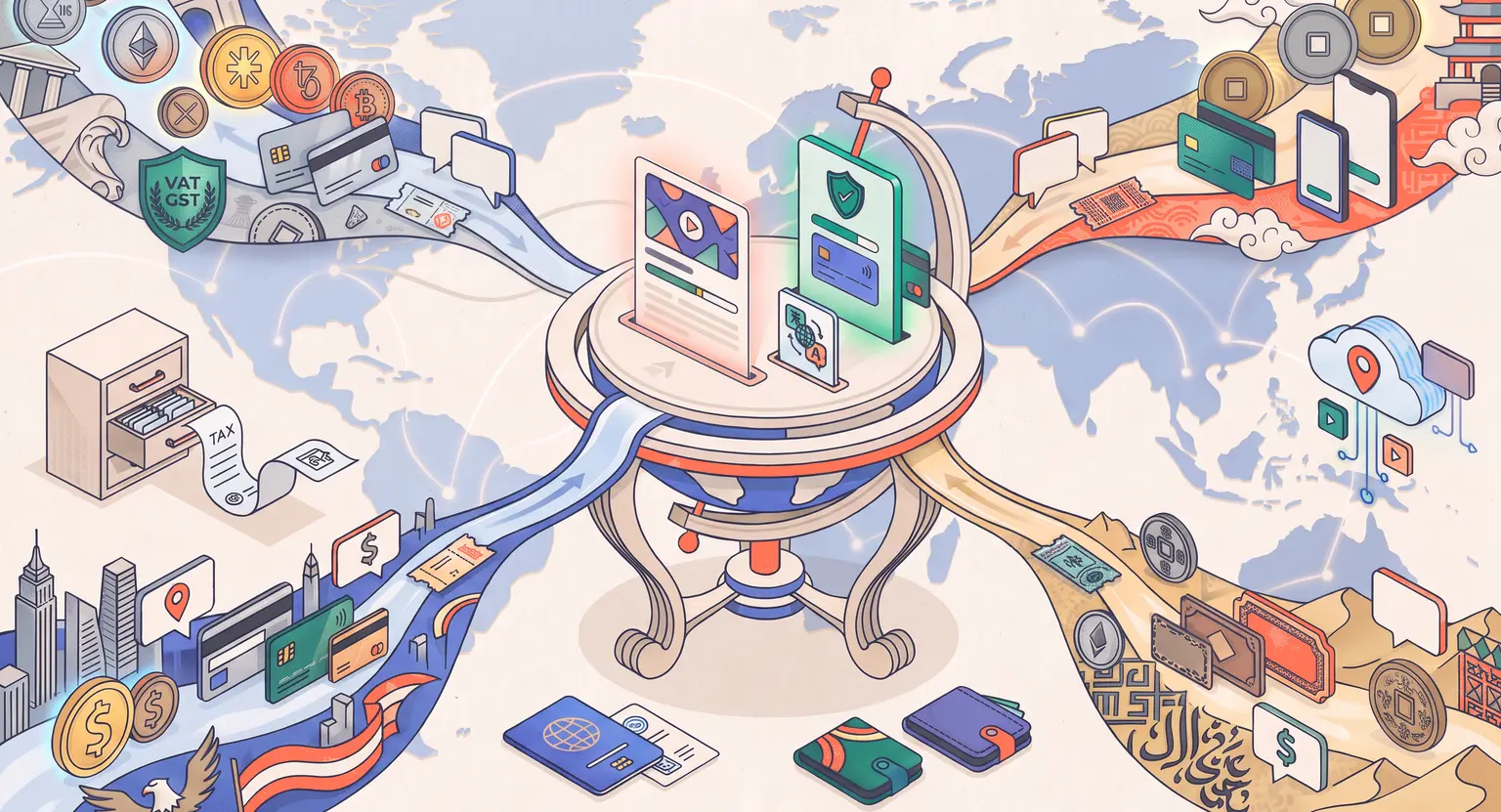
Localizing checkout pages matters far more than translating every single video lesson into five languages.
-
Accepting diverse regional payment tools is the secret to high international sales. Set this up easily with our guide explaining how to accept multiple currencies for online courses.
-
Automated tax logic protects your education brand from tricky European VAT and Canadian GST.
Let's be honest. Setting up an online business is exciting, but confining yourself to your local market misses a massive opportunity… Today, the global demand for digital education is skyrocketing. Hungry students from Seoul to Stuttgart are searching for your precise expertise.
But capturing an international audience isn't as simple as writing a course and hoping for the best. Selling across borders introduces unique hurdles like handling foreign currencies, complying with international tax systems, and modifying your marketing.
Do not let these technical details scare you off. Adapting your setup for global delivery is remarkably easy with the right approach. Let's build a seamless, borderless classroom that grows your business consistently.
Why Borderless Learning is Your Ultimate Growth Hack
Why stick to your own country when the world is fully connected? Pitching your courses globally is a wonderful diversification strategy.
If your home economy takes a temporary dip, having dedicated learners in different time zones keeps your monthly revenue consistent, safe, and predictable.
Going global also allows you to find underserved niches. You might discover your training has a massive target market in countries you never planned to reach. Best of all, international buyers bring unique perspectives that enrich your private student communities.
All it takes is a willingness to look past your local boundaries and share your expertise with people who are eager to learn from your point of view. Teaching globally is also incredibly rewarding.
1. Cracking the Currency and Local Payment Puzzle
Imagine finding an incredible course, reaching checkout, and realizing your preferred payment method is unavailable. You would leave instantly. Your foreign leads will do the exact same.
In North America, people rely heavily on credit cards. But European learners often rely on SEPA wire transfers or local apps, and Latin American students utilize options like Boleto. Offering only card payments is leaving lots of money behind.
Customize your pricing to fit different markets. Developing a dynamic online course pricing strategy ensures your program stays affordable across regions.
Be ready for transaction issues too. You must build a workflow on how to handle failed payments for online courses to prevent automated system errors from ruining a successful sale, keeping your international checkout path smooth.
Giving your students multiple local checkout pathways will easily double your international conversions overnight.
2. Localization : Speaking More Than Just the Language
Some educators assume going international requires translating entire training paths. This is a massive task that can block your momentum. Keep it simple.
Translation is pricey, but small tweaks deliver big results :
-
Try adding subtitles to your core lessons first. This is highly cost effective.
-
Translate sales funnels and checkout pages rather than your whole back catalog.
-
Use broad cultural metaphors so your teaching applies universally.
-
Avoid heavy regional jargon that might confuse learners abroad.
This lean testing strategy lets you identify where real demand resides before investing heavily in expensive translations or complete video recordings.
Once you have solid proof of concept, you can slowly expand your localization efforts step by step.
3. Taming the Global Tax Monster : VAT, GST, and Beyond
Let's speak plainly about international taxes. Trying to handle this manually will cause massive headaches. For example, if you sell to European citizens, you must gather European Union VAT depending on where your buyer sits, not where you operate.
Similar rules apply to Australian tax laws and Canadian GST. Attempting to manage this bookkeeping alone is a mistake.
Use an ecosystem that manages this automatically. Safe checkouts recognize customer locations instantly, levy the accurate local tax rate, and generate compliant invoices with zero manual effort.
This keeps your online business fully compliant, safe, and stress free. Never let compliance worries stop your dreams of establishing a global education brand.
4. Picking a Platform Built for Global Ambitions
To build a borderless digital classroom, your software must support international features naturally. Selecting from the best online course platforms represents the foundation of your global growth.
When looking at an online course marketplace vs your own website, building on your specialized storefront ensures greater control, zero structural limits, and complete data ownership.
Choose a solid SaaS ecosystem with localization tools, multi-language pages, and reliable servers that load quickly anywhere on earth, ensuring a perfect user experience.
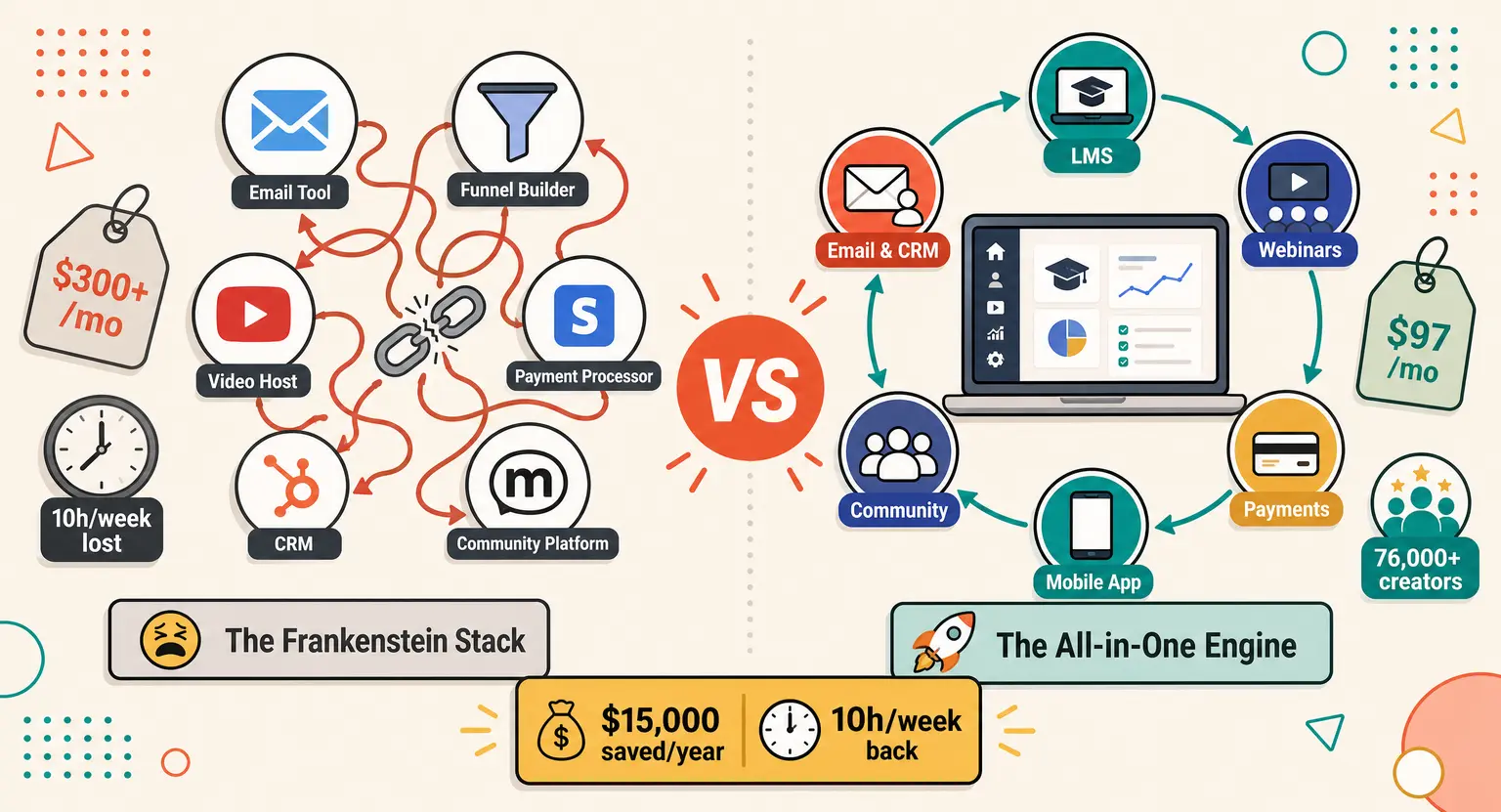
A unified dashboard saves you from jumping between disjointed tools when administering cross-border students.
| Global feature | Why it matters | Best practice for 2026 |
|---|---|---|
|
Multi-currency checkout |
Reduces cart abandonment by showing familiar pricing. |
Let students pay in their native currency automatically. |
|
Alternative payments |
Captures users who do not use traditional credit cards. |
Offer digital wallets like Apple Pay and regional methods. |
|
Automated VAT |
Keeps your education business completely legal and tax compliant. |
Use systems that calculate taxes based on location. |
|
Global content delivery |
Ensures your video lessons load quickly across the world. |
Host videos on platforms with a global content delivery network. |
5. Marketing Across Borders Without Burning Your Budget
Once everything is configured, you need targeted marketing. Focus your efforts on one or two high-value international regions. If you are preparing to reach them, discover how to launch an online course using a globally minded, strategic framework that works across borders.
Building valuable partnerships can also amplify your reach. Running an affiliate network helps regional influencers promote your training safely. Leveraging affiliate marketing for course creators lets you enter countries with zero financial risk because you pay only for direct results.
Additionally, establish automated relationship building sequences. Using email marketing for course creators enables you to warmly educate global leads, proving your expertise before presenting any paid offers. This workflow saves you manual effort.
Scaling internationally requires a patient approach, but the long-term payoff is absolutely massive for your educational company.
Frequently Asked Questions
What is the easiest way to handle VAT when selling courses to EU students?
The absolute easiest approach is using an all-in-one payment gateway that calculates EU VAT during checkout based on the location of the student - this removes the stress of tracking, reporting, and filling out complex regional tax documents across separate European nations.
Should I translate my entire course or just add subtitles?
Start with subtitles first. Translating video files and resources immediately can deplete your marketing budget quickly. Subtitles allow you to test interest and confirm international demand before making any major investments in voiceover recordings.
How do I handle customer support across different time zones?
Set clear answer windows on your support pages. You can also construct a detailed help center in your dashboard so international students can locate help and resolve minor issues independently at any time.


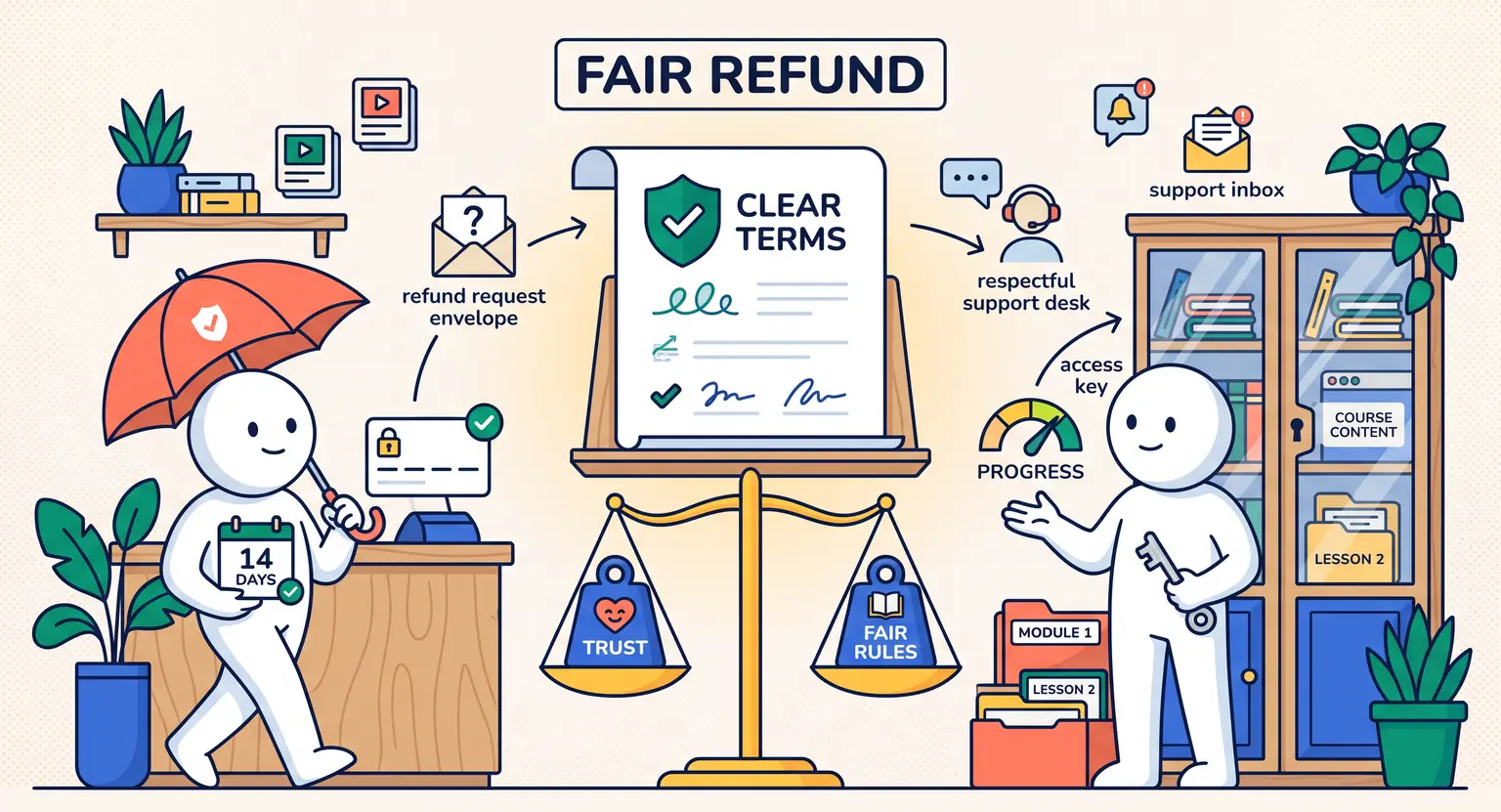 How to Create a Course Refund Policy (Templates & Best Practices for 2026)
 How to Run a Beta Version of an Online Course (2026 Guide)
 How to Create a Cohort-Based Online Course (2026 Guide)
 How to Sell an Online Course With a Quiz Funnel (2026 Guide)
 How to Sell an Online Course Through a Sales Call (2026 Guide)