








 French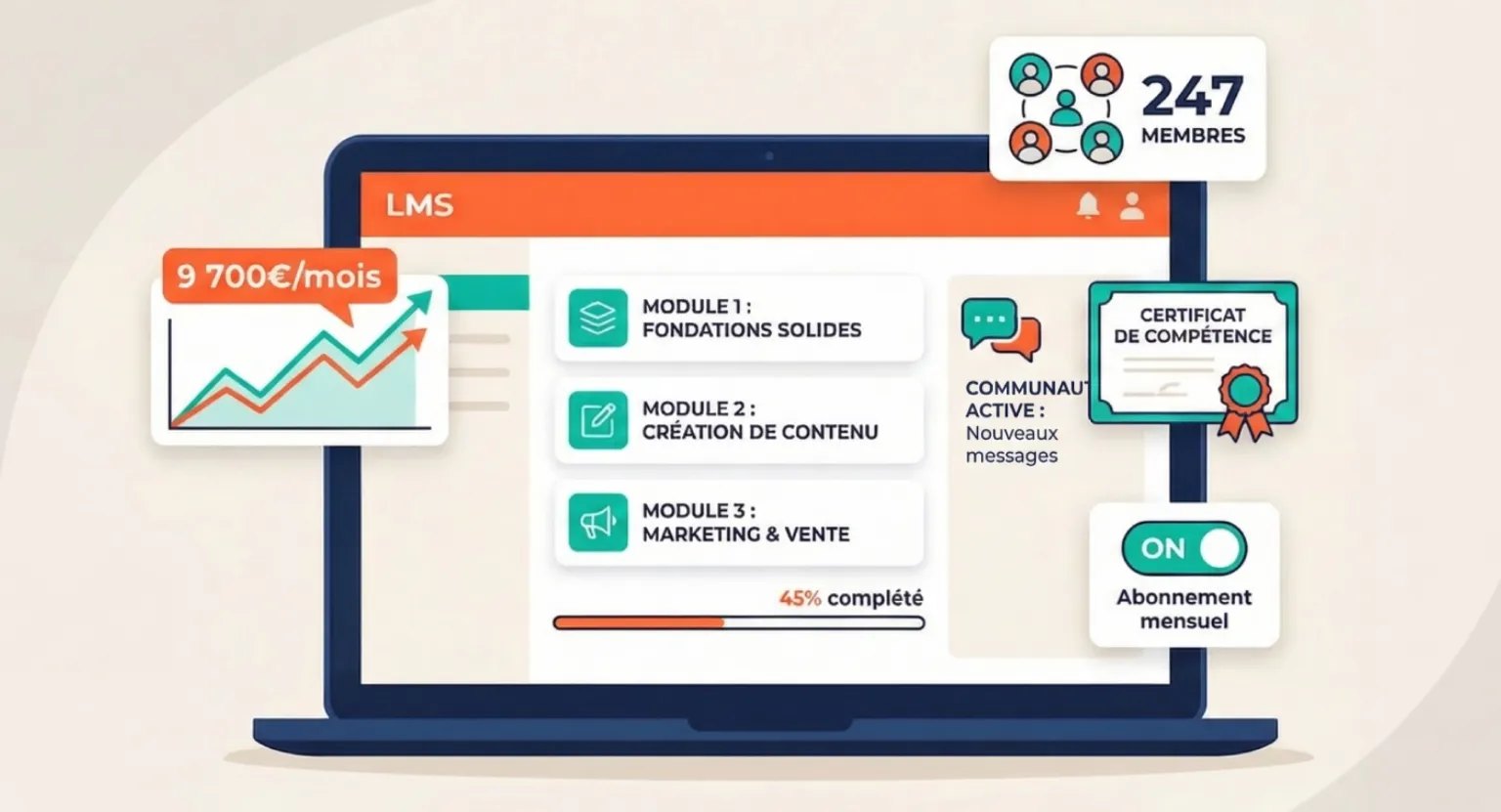
How to Create an Online Academy - Complete 2026 Guide
Create an Online Academy: The full Step-by-Step Guide
There's a fundamental difference between creating an online course and creating an online academy :
A course is a product. An academy is an ecosystem.
A world built around your expertise - with multiple learning paths, a community, a strong brand identity, and revenue that doesn't depend on any single course.
This is why some instructors plateau at €2,000 a month for years, while others break €10,000 monthly in under a year with the same level of expertise.
Not more skills, not more hours - just a different structure.
The global online education market hit $486 billion in 2025. And yet, the vast majority of independent trainers - coaches, consultants, infopreneurs - are leaving most of that money on the table by sticking to the "one course, one price, one sale" model.
Here are the 8 steps to create an online academy that generates recurring revenue, builds lasting learner loyalty, and positions you as the go-to expert in your niche.
No technical background or large budget required - just your expertise, a solid method, and the right tools.
Step 1 - What is an Online Academy?
Course vs. academy : the distinction that changes everything
An online course is a standalone educational program with a start and a finish. The learner enrolls, works through the modules, earns their certificate, and moves on.
The relationship ends there.
An online academy is something else entirely : a structured space that brings together multiple courses or learning paths around a central theme, an active community of learners, supplementary resources (templates, tools, webinar replays...), and often a subscription or recurring access model.
Learners don't "finish" an academy - they grow within it.
Concretely : if you're a personal development coach, your online course might be "Managing Stress in 21 Days."
An online academy would be "The Well-Being Academy" - with a beginner track, an advanced track, monthly masterclasses, a private community, and downloadable resources.
The online academy creates significantly higher perceived value, justifies higher prices, and builds the kind of loyalty that a standalone course simply can't.
The 3 online academy models that work in 2026
There's no single blueprint. In 2026, three models dominate the B2C market :
-
The catalog model : several independent courses grouped under a single brand.
Learners either purchase courses individually or unlock the full collection via a subscription.
Simple to build, effective for broad niches.
-
The progressive learning path model : courses are organized by level (beginner, intermediate, expert), and learners advance in a structured sequence.
Best suited for coaches and trainers guiding a deep transformation over several months.
-
The community + content model : the online academy is as much about the community as the content library.
Members pay a monthly subscription for access to both the courses and the community, live sessions, and Q&As.
The most profitable model long-term - and the most demanding to run.
Step 2 - Choose your Online Academy niche carefully
The trap of niches that are too broad - or too narrow
This is where most people go wrong. Either they pick a niche that's too broad ("personal development," "digital marketing," "nutrition") and end up competing against players with multi-million-euro marketing budgets - or they go too narrow and struggle to find enough learners.
The right niche sits at the intersection of three things :
-
what you genuinely master,
-
what your audience is actively looking for,
-
and what people are willing to pay for.
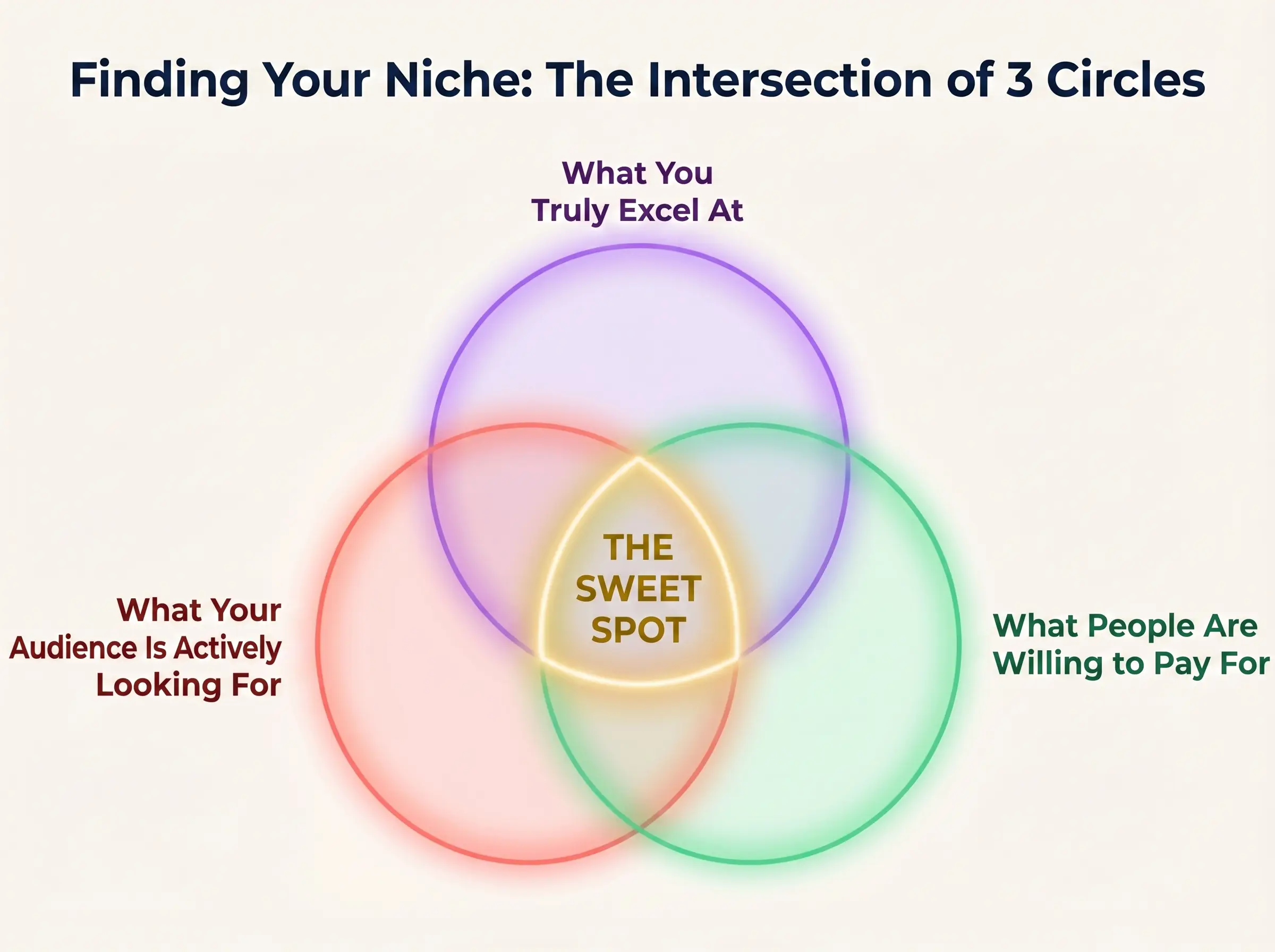
Most trainers stop at the first circle. They build an online academy around what they know how to do - without checking whether their audience is actually searching for that solution, or whether they'd pay for it.
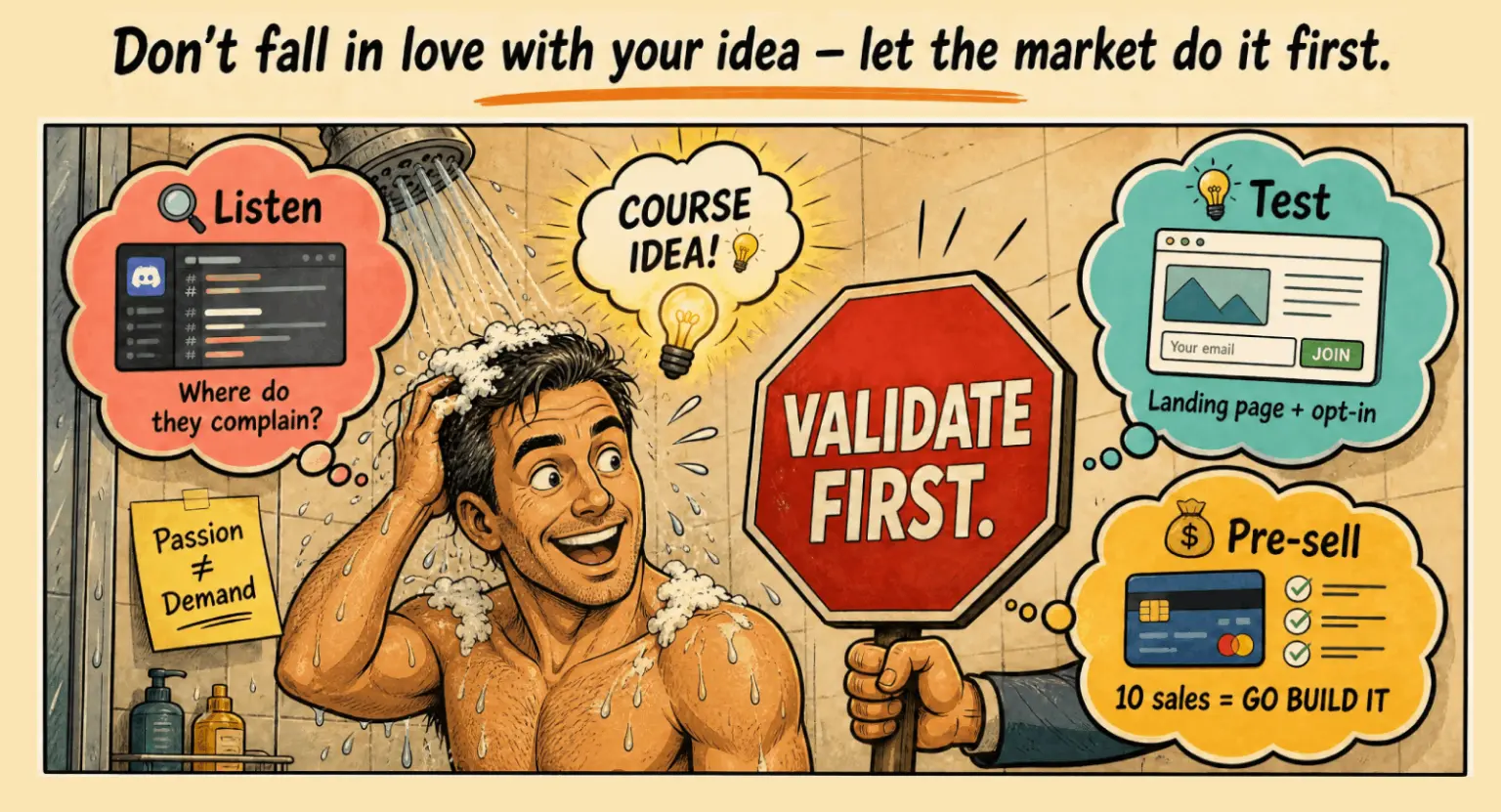
Validating your Online Academy niche : the 3-question method
Before building anything, answer these three questions with objective data - not gut instinct.
-
Question 1 : Are people searching for this online?
Run your topic through Google Trends, YouTube, and Facebook groups in your niche. If you find dozens of recurring questions on the subject, that's a strong signal.
-
Question 2 : Do similar courses already exist and sell well?
Search on Udemy, Teachable, or Google directly. If you find competitors with positive reviews and solid prices, that's great news - it proves demand exists.
A total absence of competition usually means a lack of buyers, not a hidden opportunity.
-
Question 3 : Is your audience willing to pay?
The most reliable test : run a free webinar on your topic and make a paid offer at the end.
If nobody buys, the problem isn't your academy - it's your positioning or your audience fit.
Step 3 - Structure your Online Academy Offer : from content to ecosystem
Building the architecture of your online academy
A well-structured online academy is like a well-designed city : distinct neighborhoods (your courses), main streets (your modules), and shared spaces (your community, your resources).
Before writing a single line of content, map this structure - it's the foundation of good instructional design.
Start by defining your core transformation - the central promise of your online academy :
"By the end of this program, you will be able to [specific, measurable outcome]."
This promise needs to be specific enough to be credible and ambitious enough to justify the price.
Then break that transformation down into 3 to 5 courses or levels. Each track should carry its own promise, its own modules, and its own certificate or completion badge.
That structured breakdown is what turns an online course into an online academy.
The 3-tier content rule
In a thriving online academy, content is organized across three tiers of value :
-
Foundation content : the core courses, available to all members.
This is the heart of your academy - what people sign up for in the first place.
-
Premium content : masterclasses, live sessions, monthly Q&As, advanced case studies.
Available to higher-tier members or sold separately. This is what drives long-term retention.
-
Community content : member interactions, group challenges, peer feedback. This content is co-created by your community.
It's the hardest to generate - and the most valuable, because it's impossible to replicate.
Step 4 - Create the Educational Content for your Online Academy
Video isn't mandatory - but it's worth it
You may have heard that building an online academy requires a professional recording studio, three-point lighting, and a video editor...
It doesn't.
This misconception holds back thousands of capable instructors every year.
The reality : a recent smartphone, decent natural light (or a €30 ring light), and a €20 clip-on mic are enough to produce content that reads as professional to your audience.
What matters is the clarity of your delivery and the value of what you're teaching - not your camera's specs.
That said, video remains the most engaging format for online learning : learners retain 95% of a message delivered on video, compared to 10% of text read.
If you can produce video, do it.
The SCRAP method for structuring each module
Every module in your online academy should follow the SCRAP framework - a simple structure that delivers both pedagogical clarity and learner engagement :
-
Situation : set the context.
Where is the learner before this module? What problem will they solve?
-
Complication : name the difficulty.
Why is this problem hard to solve without your help?
-
Resolution : deliver the content.
Explain, demonstrate, and illustrate with concrete examples.
-
Action : give them something to do.
The learner must act, not just watch.
-
Progress : show them where they stand.
What level have they reached? What comes next?
This structure (5 to 15 minutes per module on average) sustains engagement, improves retention, and creates the sense of forward momentum that keeps learners coming back.
How much content do you need before launch?
You don't need 50 hours of content before opening your online academy. You need a pedagogical MVP : the minimum amount of content required to deliver your core promise.
In practice : 5 to 8 modules of 10 to 20 minutes each is a solid foundation.
Launch with that, gather feedback from your first learners, and let their actual needs guide what you build next - not your assumptions.
The most successful online academies aren't the ones with the most content at launch - they're the ones with the most relevant content, which they continuously refine and expand.
Step 5 - Set your Online Academy Pricing (and resist the urge to undercharge)
Why independent instructors consistently undervalue their work
This is the most uncomfortable step - and the most important one.
Most independent trainers set their prices by scanning competitors, cutting them in half "to stay competitive," and hoping volume makes up for thin margins.
That's a significant strategic mistake.
A low price doesn't signal value - it signals doubt.
A learner who sees an online academy priced at €29 per month wonders what's wrong with it.
A learner who sees one priced at €197 per month wonders what they'll get for that. The second question is far more likely to lead to a sale.
The core principle : your price should reflect the value of the transformation you're promising, not the time it took you to create the content.
If your online academy helps someone go from €0 to €3,000 in monthly freelance income, €500 is a bargain.
The 3 pricing models for an online academy
-
One-time payment : the learner pays once for lifetime access. Easy to sell, but generates no recurring revenue.
Works well for self-paced courses and niches where an ongoing relationship is less natural. -
Monthly subscription : the learner pays each month for access to the content and the community.
Generates predictable recurring revenue and builds long-term loyalty.
The most scalable model - and the most demanding, since you need to give members a reason to renew every month. -
The hybrid model : lifetime access to the core content, plus a premium subscription for masterclasses, live sessions, and the advanced community.
This is the model that maximizes both upfront and recurring revenue - and one that LearnyBox supports natively.
Step 6 - Choose the best Platform to create your Online Academy
What your platform must be able to do
Choosing a platform is often framed as a technical decision. It's actually a strategic one.
Your platform determines your learners' experience, your ability to automate, and your room to grow.
Non-negotiable criteria in 2026 :
-
Conditional access management : unlocking modules based on the learner's progress, subscription tier, or a specific date.
Without this, you can't deliver a real academy experience. -
Integrated payments : process payments, manage subscriptions, offer installment plans, and generate invoices automatically - all without manual handling.
-
Email automation : welcome sequences, progress nudges, re-engagement campaigns for inactive users, and upsell offers.
This is what turns a training platform into a retention engine.
-
Built-in community : a space for learners to connect without sending them to an external Facebook group.
An integrated community creates a seamless experience and significantly improves retention.
LearnyBox : the most comprehensive all-in-one solution for French-speaking instructors
There's no shortage of platforms for building an online academy - Teachable, Thinkific, Kajabi, Podia, Systeme.io. Each has its strengths and trade-offs.
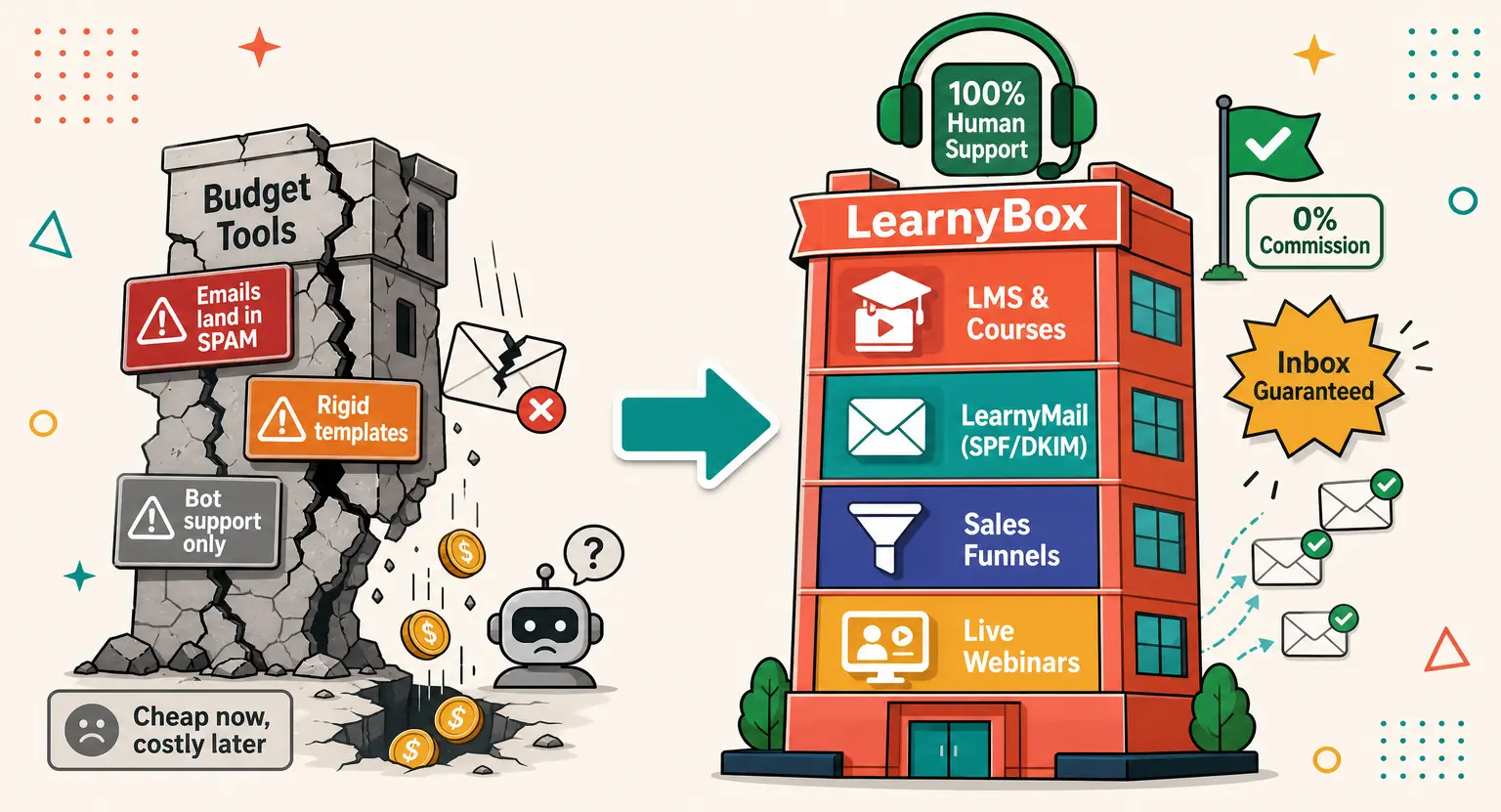
But for a French-speaking instructor who wants to launch without managing a stack of disconnected tools, LearnyBox is the most complete and cost-effective option on the market.
It natively brings together everything you need : course creation, subscription management, sales funnels, automated emails, webinars, the community, a mobile app, and more.
No need to connect Teachable + Mailchimp + Zapier + Stripe + Discord.
Everything is in one place, already connected, and ready to use.
For an instructor launching their Online Academy, that centralization isn't just convenient - it's economical : a LearnyBox subscription easily replaces 4 to 6 separate tools that, priced individually, would cost 3 to 5 times more.
Step 7 - Launch your Online Academy and Attract your first Learners
The orchestrated launch vs. the quiet launch
There are two ways to bring an online academy to market :
The quiet launch :
You put the academy live, share the link on social media, and wait. Typical outcome : a handful of sign-ups from friends and family, and a lot of disappointment.
The orchestrated launch :
You build momentum around the opening of your academy - a pre-launch waitlist, a free launch webinar, a time-limited founder's pricing offer, testimonials from beta users, a sequenced email campaign.
The difference?
An orchestrated launch creates urgency, scarcity, and social proof - the three most powerful psychological levers in education marketing.
How to get your first 100 learners
Here's the reality nobody tells you : your first 100 learners won't come from paid ads. They'll come from your network, your free content, and your ability to build trust before you ever make an offer.
The approach that works in 2026 : create genuinely useful free content on the platforms where your audience already spends time (YouTube, Instagram, LinkedIn, TikTok, podcasts) for 3 to 6 months before launch.
Not to sell - to demonstrate your expertise and build an audience that already trusts you by the time you make an offer.
Then invite that audience to join a waitlist for your online academy, offer discounted "founder" access to the first 50 or 100 people who register, launch with those early members, collect their testimonials, and use those testimonials to sell to the next wave.
That's the virtuous cycle of any online academy built to last.
The 5 acquisition channels that work for an online academy
-
YouTube : the most powerful channel for online education.
Videos surface in Google search results, generate organic traffic for years, and build deep trust with an audience. Investment : time. Return : compounding.
-
Instagram and TikTok : ideal for B2C niches (wellness, personal development, cooking, fitness, creativity).
Short-form content (Reels, TikToks) allows you to reach a large audience quickly.
-
LinkedIn : essential if your online academy targets professionals (marketing, business, HR, management).
Organic engagement remains significantly higher than on most other platforms.
-
Podcasts : the most underrated channel.
A podcast positions its host as an authority and attracts high-quality sign-ups - listeners who have already spent dozens of hours with you before they ever open their wallet.
-
SEO : over time, a well-optimized blog is the most cost-effective lead-generation machine available. A well-ranked article can drive enrollments for five years with no additional spend.
Step 8 - Grow your Online Academy : Retention, Upselling, & Automation
Retention before acquisition
Here's a math problem most instructors ignore : it costs 5 to 7 times more to acquire a new learner than to keep an existing one.
And yet, the vast majority of marketing energy goes into acquisition.
A sustainable online academy keeps its learners. And retention doesn't happen by accident - it's built deliberately :
-
Visible progress : learners need to clearly see where they are in their journey, what they've already achieved, and what's coming next.
Progress bars, completion badges, and level certificates matter more than most people think.
-
Regular live sessions : a monthly masterclass, a weekly Q&A, a quarterly community challenge.
These recurring events become fixtures that members don't want to miss - and a strong reason to keep their subscription.
-
Content updates : an online academy is a living product. It evolves with your expertise and your audience's needs.
Letting members know about new resources reinforces the sense of value they're getting.
3 ways to grow revenue without growing your member count
-
Upselling : offer your existing members a higher-tier package - personalized coaching, an intensive program, or VIP access to exclusive resources.
Your current members are your best audience for a premium offer. They already trust you. -
Affiliate marketing : let satisfied members recommend your online academy in exchange for a commission.
A well-structured affiliate program can generate 20 to 30% of your enrollments with no additional marketing spend. -
Cohort-based programs : alongside your always-open academy, run time-limited programs with a small group and enhanced personal support.
These sell at a premium, deliver better outcomes, and produce stronger testimonials.
Creating an online academy means choosing to become a knowledge entrepreneur rather than a trainer. It means building an asset instead of selling your time.
These 8 steps are the foundation of an educational business that can support you for years.
Some steps take time - building an audience, creating content. Others can be done in days - choosing a platform, structuring your offer.
What matters is starting. Don't wait for the perfect content. Don't wait for 10,000 followers. Don't wait for the "right moment" - because that moment doesn't exist.
The first online academy you launch won't be perfect. It will be real. And that's infinitely more valuable.
Create your Online Academy with LearnyBox
✨ Get started for free ✨
FAQ - Create an Online Academy
How much does it cost to create an online academy?
The cost varies considerably depending on the tools you choose. With an all-in-one platform like LearnyBox, you can launch your online academy for under €100 per month - covering hosting, payments, automated emails, and the community. Additional equipment costs (mic, lighting, branding) can stay under €200 total for a professional-looking launch.
Do you need a large audience before launching an online academy?
No. Many online academies have launched with fewer than 500 social media followers.
An audience of 300 highly engaged people consistently outconverts an audience of 10,000 disengaged ones.
Focus on the quality of your relationship with your community, not the size of your following.
What is the difference between an online academy and an LMS?
An LMS (Learning Management System) is a technical tool for hosting and delivering training content.
An online academy is a business concept - a brand, an offer, a community.
You use an LMS or a platform like LearnyBox to build your academy, but the academy itself is far more than the technology that powers it.
How long does it take to create an online academy?
For a minimum viable product, expect 4 to 8 weeks of focused work - covering niche definition, creating 5 to 8 content modules, platform setup, and launch preparation.
The most successful academies aren't the ones that took the longest to build. They're the ones that shipped quickly, gathered real feedback, and iterated from there.
Can you make a living from an online academy?
Yes - and many instructors do. As a rough benchmark : 100 members at €97 per month = €9,700 in monthly recurring revenue. 200 members at €47 per month = €9,400. These figures are achievable in most niches with 12 to 18 months of consistent, focused work.
Can you create an online academy without technical skills?
Absolutely. Platforms like LearnyBox were built for educators, not developers. Setting up a full online academy - courses, payments, emails, community - is done through intuitive visual interfaces. No code required, at any step.



 How to Create a Course Refund Policy (Templates & Best Practices for 2026)
 How to Run a Beta Version of an Online Course (2026 Guide)
 How to Create a Cohort-Based Online Course (2026 Guide)
 How to Sell an Online Course With a Quiz Funnel (2026 Guide)
 How to Sell an Online Course Through a Sales Call (2026 Guide)