







How to Offer Continuing Education Credits With an Online Course (2026)
How to Offer Continuing Education Credits With an Online Course
Key Takeaways
-
Continuing education credits transform discretionary learning into non-negotiable professional maintenance.
-
Accrediting organizations demand verified learning outcomes, qualified instructors, and transparent assessment standards.
-
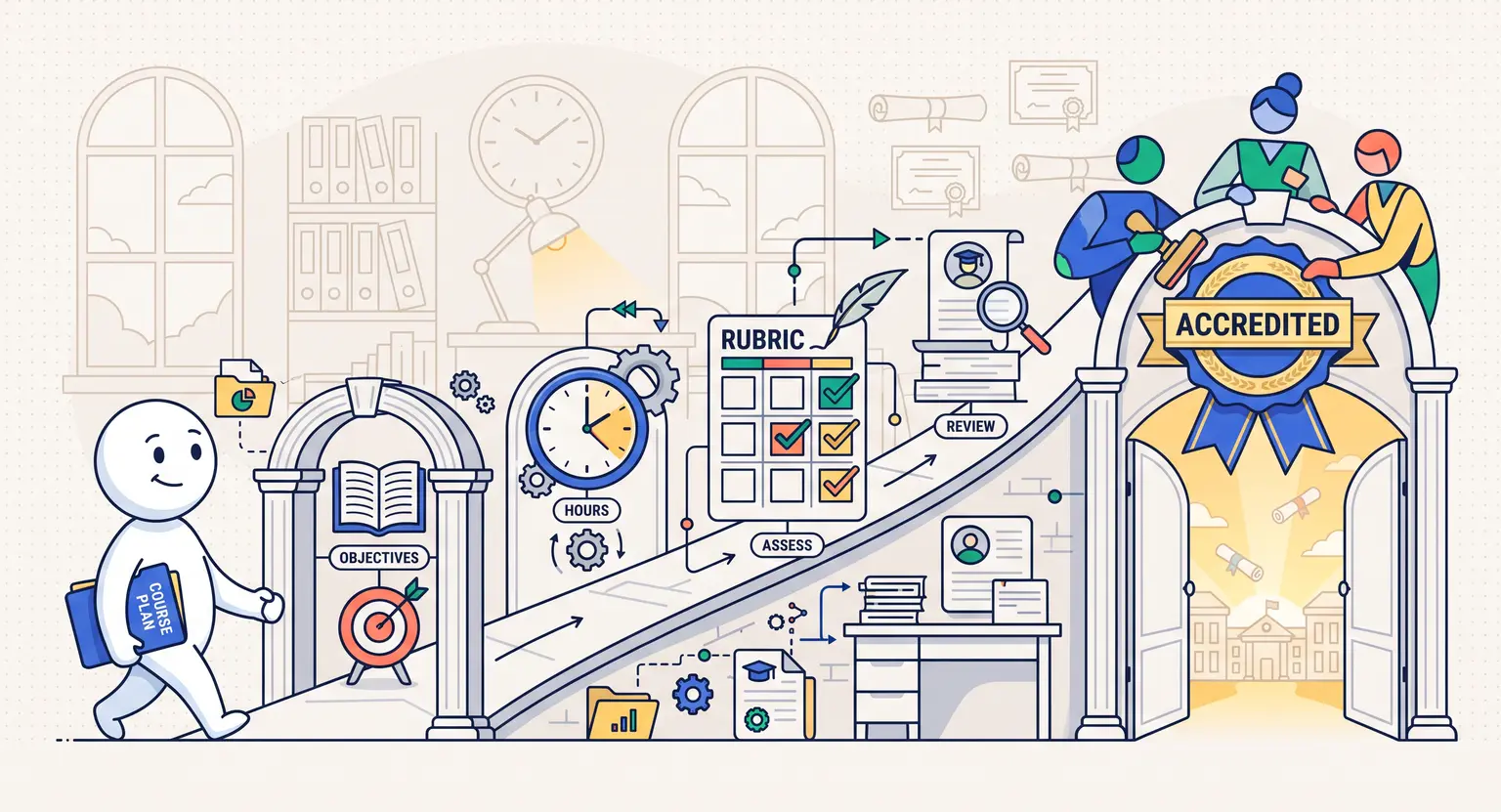
To explore full institutional recognition pathways, review our complete roadmap on how to get an online course accredited.
-
Your software must log active participation, prevent video skipping, and maintain auditable records for several years.
Selling a standard digital course can sometimes feel like an uphill battle. You have to convince prospective buyers that your material is worth their spare time and hard-earned money.
When you offer official Continuing Education Units (CEUs), that dynamic flips completely. Licensed professionals - like accountants, therapists, nurses, engineers, project managers, and lawyers - do not buy continuing education purely for fun.
They buy it because their state boards and regulatory bodies mandate a specific number of verified hours every single year to keep their licenses active.
When your program satisfies those mandatory legal requirements, your course shifts from a "nice-to-have" hobby purchase into a tax-deductible, employer-funded career necessity.
Setting this up requires following a strict playbook. Regulatory boards care deeply about compliance, verifiable learner identity, rigorous assessment, and record-keeping integrity.
1. Decide Which Continuing Education Currency You Are Supplying
Not all professional credits are created equal. Before touching a single slide or recording video modules, you need to know exactly which credentialing bodies govern your target audience.
Different industries use their own terminology, standards, and governing authorities :
-
IACET CEUs : the International Accreditors for Continuing Education and Training provide a universally recognized benchmark across multiple corporate and technical fields.
-
CPE Credits : Certified Public Accountants require Continuing Professional Education credits governed by NASBA (National Association of State Boards of Accountancy).
-
PDUs : Project Management Professionals report Professional Development Units directly to the Project Management Institute (PMI).
-
CME and CNE : healthcare workers require Continuing Medical Education or Continuing Nursing Education approved by medical boards or the ANCC.
-
CLE : attorneys must earn Continuing Legal Education credits, which are strictly regulated on a state-by-state basis.
If you teach leadership to project managers, chasing NASBA accounting approval makes no sense. Choose the exact licensing board your ideal student reports to, download their provider guidelines, and build your curriculum to match their explicit criteria.
2. Choose Your Route : Direct Board Approval vs. Institutional Co-Sponsorship
Securing the right to issue credits usually happens through one of two primary pathways.
The first path is direct application as an approved provider. You submit your business entity, syllabus, instructional methodology, and instructor bios directly to the governing organization.
This gives you total independence and higher profit margins, though it involves upfront application fees and a review cycle of two to four months.
The second path is co-sponsorship. If you want to bypass a lengthy bureaucratic onboarding period, you can partner with an existing accredited institution, community college, or established training organization.
Under a co-sponsorship arrangement, they review your syllabus to verify that it meets their existing accreditation umbrella, and they issue the official completion certificates in exchange for an administrative fee or revenue split.
Choosing an integrated infrastructure like LearnyBox gives you the student management, quiz logic, and certificate automation tools you need regardless of which regulatory path you pursue.
3. Align Instructional Design With Contact Hour Formulas
Accrediting boards rarely let you guess how many credits your course is worth. They rely on strict contact hour formulas.
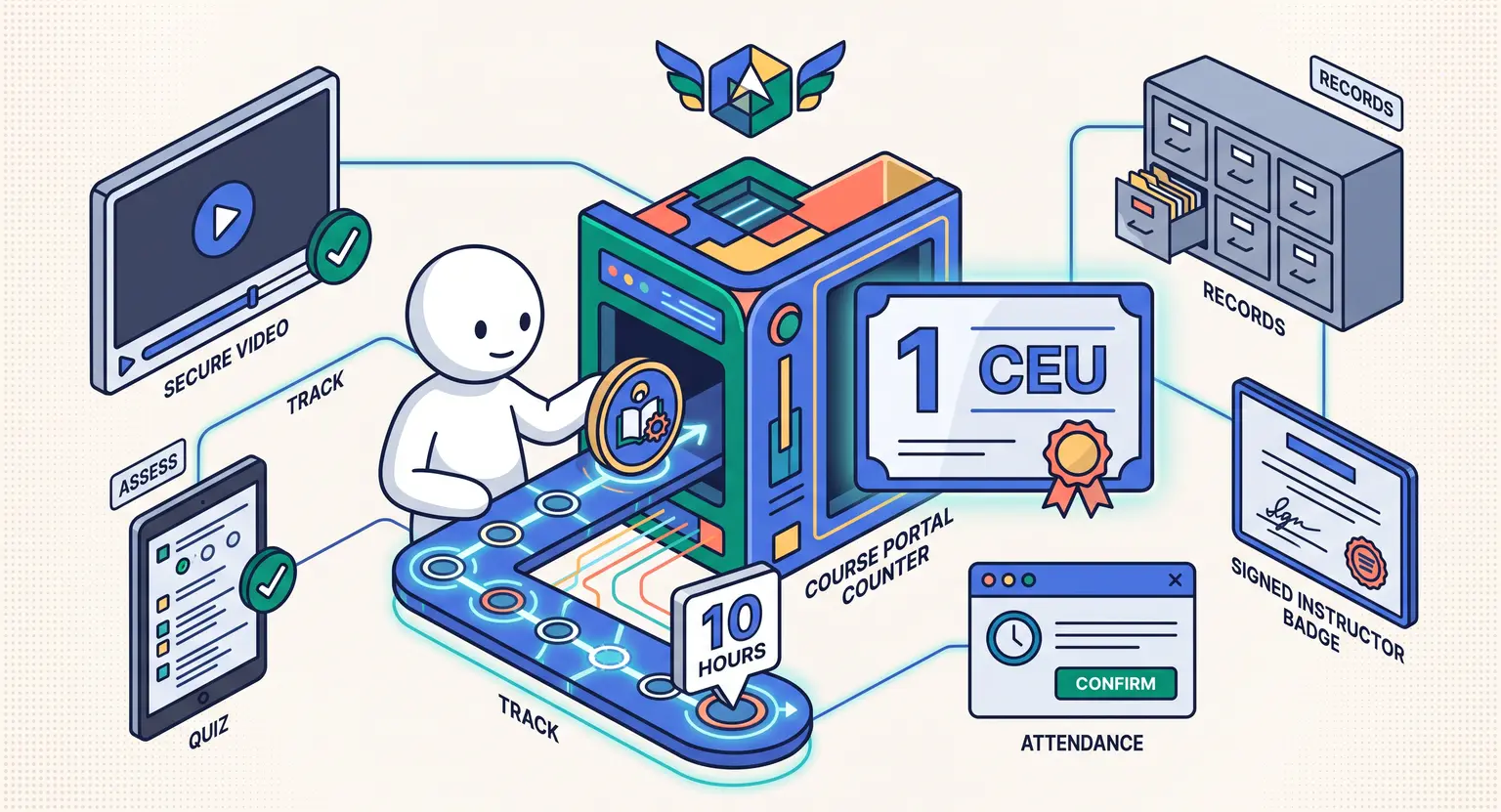
Under the universal IACET standard, 1 CEU equals exactly 10 contact hours of learner engagement. If your training consists of 5 contact hours, it yields 0.5 CEUs. For credentials calculated on a single-hour basis (such as CPE, PDU, or CLE), 50 to 60 minutes of active instruction typically equals 1 credit hour.
What actually counts toward a contact hour? Boards generally accept :
-
Asynchronous video instruction that requires active playback.
-
Required synchronous webinars or virtual classroom discussions.
-
Interactive simulation exercises and structured lab scenarios.
-
Mandatory knowledge checks, post-tests, and evaluation surveys.
Boards do not allow you to count optional reading material, break times, marketing introductions, or unmonitored homework assignments toward contact hours.
4. Credential Comparison : Key Continuing Education Frameworks
To help you structure your course architecture, here is how the most common continuing education frameworks compare in terms of calculation, administration, and regulatory expectations.
| Credential type | Calculation formula | Primary governing bodies | Core compliance mandate |
|---|---|---|---|
|
IACET CEU |
10 contact hours = 1.0 CEU. |
IACET Standard Framework. |
Documented instructional design process and clear learning rubrics. |
|
NASBA CPE |
50 minutes = 1.0 CPE credit. |
National Registry of CPE Sponsors. |
Interactive review questions every 15 minutes and verified passing scores. |
|
PMI PDU |
1 hour = 1.0 PDU credit. |
Project Management Institute. |
Alignment with the PMI Talent Triangle (Ways of Working, Power Skills, Business Acumen). |
|
State board CLE / CNE |
50-60 minutes = 1.0 hour. |
Individual state licensing boards. |
Subject matter relevance, attendance verification, and timed anti-skipping controls. |
5. Configure Your LMS for Auditable Compliance
Accrediting agencies do not accept promises; they demand digital proof. If a student claims 10 hours of credit, your system must produce audit logs demonstrating that the user completed every instructional element.
To keep your CEU status safe during an annual board audit, you need to enforce specific technical controls inside your course platform.
First, enforce sequential video progression. Turn off the ability to scrub ahead or fast-forward through lessons. The platform should only mark a module complete when the video has played in full.
Second, embed periodic attendance prompts. For self-paced on-demand courses, placing multiple-choice checkpoint questions throughout the lesson confirms that the user is still seated in front of the screen and actively participating.
Third, implement rigorous post-course assessments. Most boards require a comprehensive final examination with a minimum passing threshold (typically 70% or 80%). Give learners a limited number of retake attempts, and draw questions from randomized question banks to prevent answer sharing.
Finally, gather mandatory course evaluation feedback. Almost all accreditors require students to complete an anonymous satisfaction survey covering course clarity, instructor competence, and learning objective fulfillment before their certificate unlocks.
6. Generate Compliant Certificates and Maintain Long-Term Archives
Once a student passes the final exam and completes the feedback survey, your platform should immediately generate an accredited certificate of completion.
Regulatory agencies require specific data points on every single credential document :
-
The participant's full legal name.
-
The approved provider organization name and official logo.
-
Your unique Provider ID number granted by the accrediting board.
-
The exact course title, date of completion, and total credit hours awarded.
-
A unique, verifiable certificate identification code or verification URL.
-
The signature of the lead instructor or continuing education director.
Do not forget about long-term data retention : most state licensing boards require approved providers to maintain complete attendee records, completion timestamps, and exam scores for a minimum of 5 to 7 years.
Make sure your database backups are secure and easily searchable in case an auditor requests past records.
Explore Course Delivery Models
-
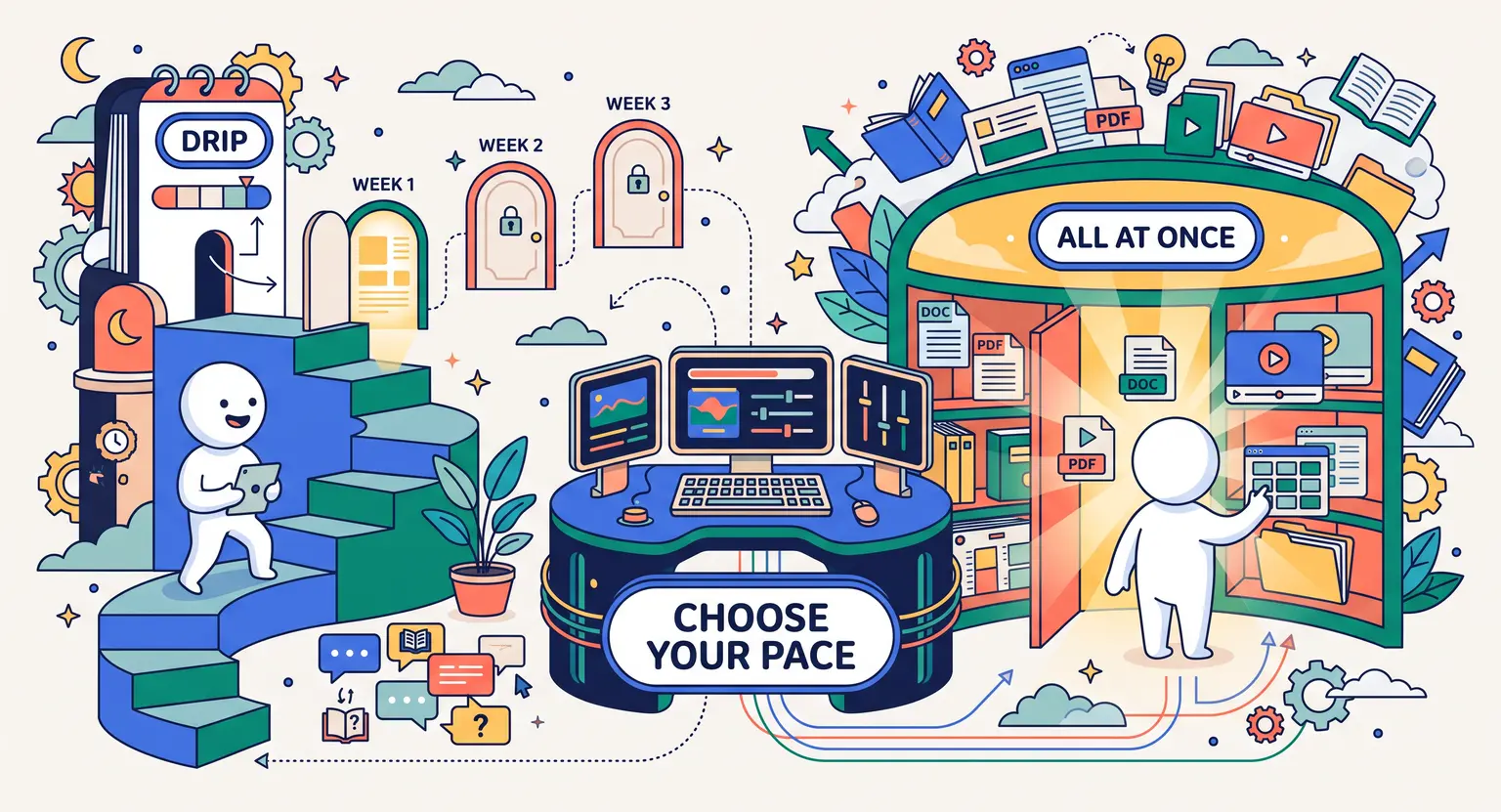
Weighing release schedules? Check out our breakdown on drip courses vs all-at-once courses to pick the right pace for compliance.
-
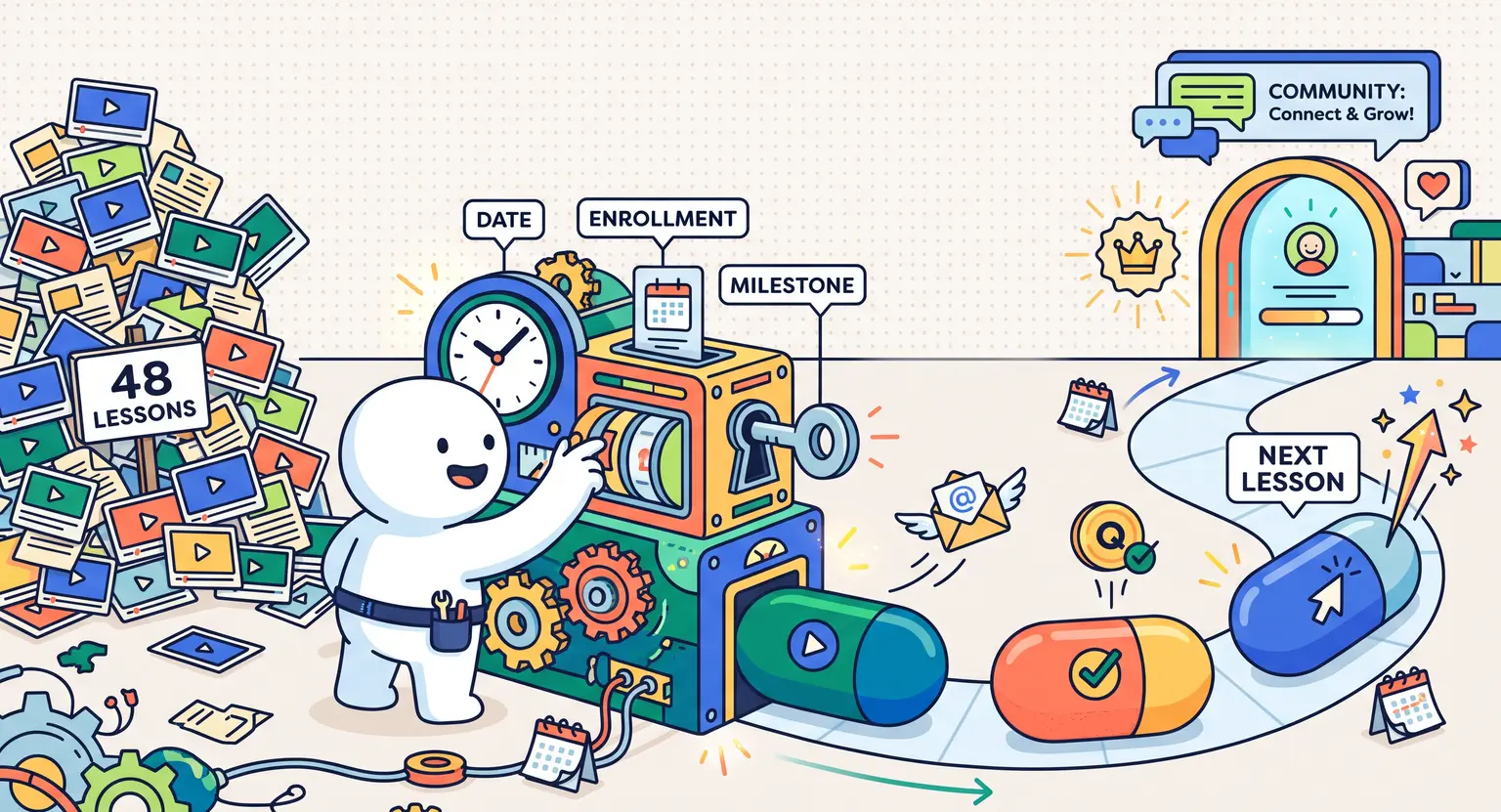
Ready to set up automated lesson pacing? Read our detailed guide on how to create a drip course.
Frequently Asked Questions
How long does it take to become an approved CEU provider?
The approval timeline typically ranges from 60 to 120 days depending on the credentialing body.
Highly regulated sectors like state nursing or legal boards may take slightly longer because they review your instructional materials, speaker credentials, and assessment rubrics in detail.
Can an individual course creator offer CEUs without an institutional partnership?
Yes. Individual creators can apply directly to specific professional associations, state licensing boards, or global standard organizations like IACET.
Alternatively, you can co-sponsor your curriculum with an already accredited university or professional association.
How do learning platforms track mandatory seat time for asynchronous courses?
Modern learning management platforms track active video playback time, interaction checkpoints, reading timers, and quiz engagement.
They also implement inactivity timeouts to ensure students genuinely spend the required minutes with the material.
What is the standard ratio between course hours and CEU credits?
The standard metric established by IACET calculates 1 CEU as equal to 10 contact hours of learner engagement.
Many professions break this down into individual professional development hours (PDHs) or continuous professional education (CPE) credits where one hour equals one credit.







 How to Create a Drip Course: Step-by-Step Guide (2026)
 Drip Courses vs All-at-Once Courses: Which Delivery Model Wins?
 How to Get an Online Course Accredited (Step-by-Step 2026 Guide)
 How to Create Verifiable Credentials for an Online Course (2026)