







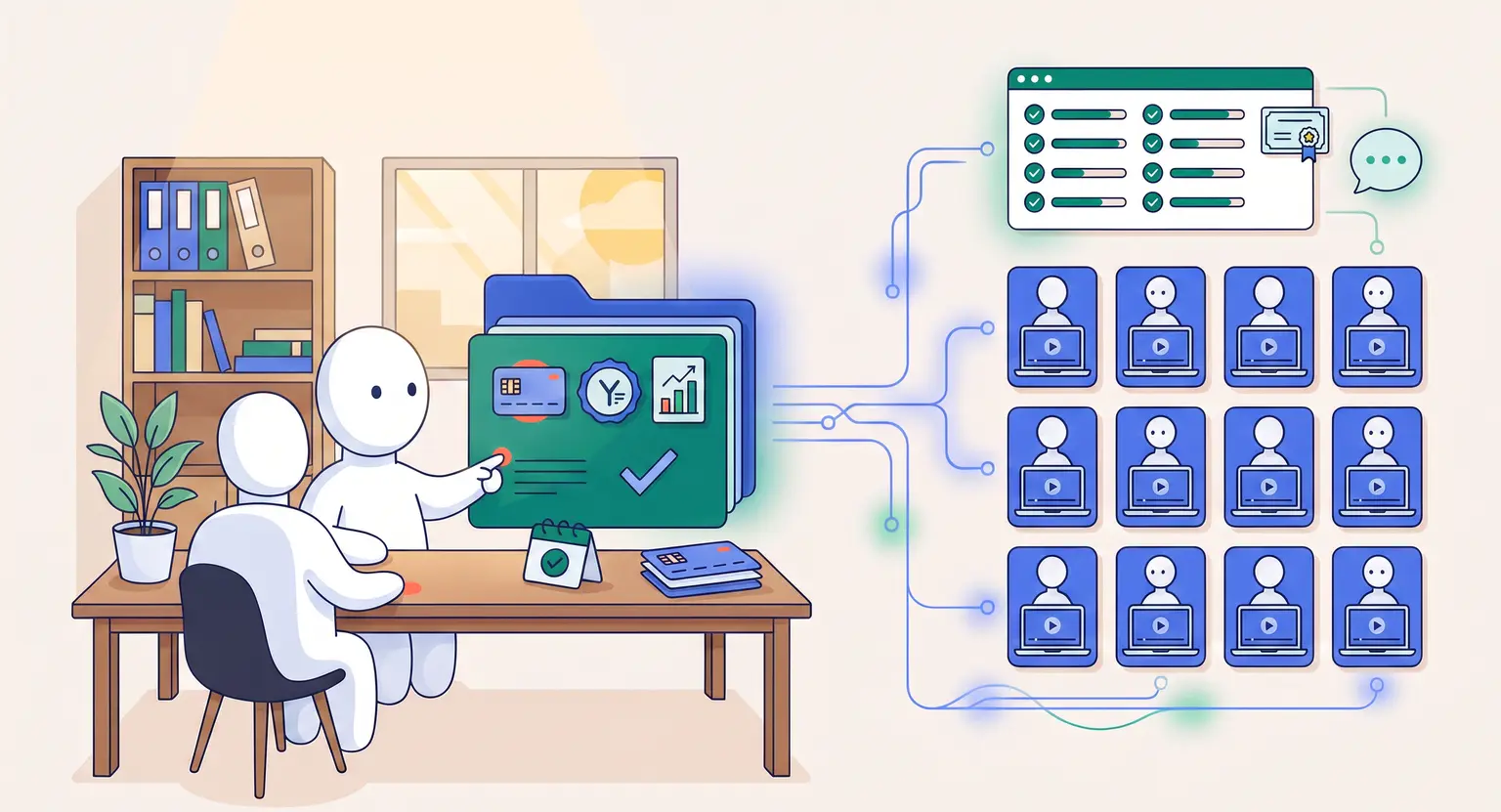
How to Sell Online Courses to Businesses (2026 Guide)
How to Sell Online Courses to Businesses
There are two ways to sell online courses. You can chase individuals on social media, running ads and hoping consumers remember your checkout link at the perfect moment of decision… Or you can walk into a boardroom, pitch once, and close a deal worth 50,000 dollars from a single company.
Selling directly to businesses, also known as B2B e-learning, is one of the fastest, most leveraged ways to grow your training business in 2026. Instead of converting one student at a time, you convert an entire team at once.
But selling to organizations works completely differently from selling to individual learners. The decision-making process is more complex, the buying cycle is longer, and the proposal needs to meet stricter business criteria.
Let us break down exactly how to position your online training programs to appeal to corporate buyers and close these high-value deals.
Key Takeaways
-
Shift to ROI language : businesses buy outcomes, not content. Focus your pitch on measurable outcomes like productivity gains or compliance milestones.
-
Target the right decision-makers : navigate your outreach toward HR managers, learning and development heads, and department directors rather than front-line workers.
-
Build an LMS that scales : businesses need seat management, progress tracking, and completion certification. Choose an LMS that supports these features natively.
-
Package for enterprise : create multi-seat license options, volume discounts, and branded training portals that show companies you are serious.
-
Pair with a compelling offer : combine your B2B pitch with a broader understanding of how to create an irresistible course offer.
Why Corporate Buyers Think Completely Differently
The first thing you must internalize is that corporate buyers are not motivated by inspiration. They do not care about your personal story or your passion for teaching. They have a bottom line to protect and a team to develop.
Every purchasing decision they make goes through a filter of two core questions :
First, "Will this training solve a measurable business problem?"
Second, "Can I justify this spending to my manager or finance department?"
To crack the corporate market, you need to speak their language. Translate your curriculum from "things you will learn" to "results your team will produce." If your course teaches email writing, do not pitch it as a communication skill upgrade. Pitch it as a system that reduces inbound customer complaints by 30% through clearer support responses.
This shift in framing changes everything. Suddenly, you are not selling education, you are selling ROI.
Identifying and Reaching the Right Corporate Buyers
In a business environment, you rarely deal with the actual end-learner when making the sale. Your conversations happen with decision-makers who control training budgets.
These include Chief Learning Officers, HR directors, department managers, or operations leads depending on the industry.
LinkedIn is your most powerful prospecting tool in this space. Build a thoughtful outreach sequence where you first warm up the contact with value, share relevant content, comment meaningfully on their posts, and then send a concise, benefit-driven pitch after a week or two of engagement.
You can also reach corporate buyers through industry conferences, professional associations, and partner referrals from within their own supplier networks.
The biggest mistake creators make here is pitching too soon. In B2B, trust must be established before any buying conversation begins. Be patient, add genuine value first, and the right doors will open naturally.
Structuring Top-Tier Corporate Offers
To close high-value business contracts, your offer needs to feel enterprise-grade. This means moving beyond a simple single-seat purchase link and creating a structured program package that speaks the corporate language.
Multi-seat licensing. Offer tiered pricing based on team size. A 10-seat license, a 50-seat license, and an unlimited license option all feel professional and remove friction by allowing companies to scale without renegotiating every time.
Branded training portals. Many organizations need training that reflects their company identity. Offer white-labeling options where your content lives inside a portal that carries their logo, colors, and company name. This is a premium add-on that significantly increases your contract value.
Progress reporting and certification. HR departments need documentation. Build reporting dashboards that show completion rates, quiz scores, and certification status for every employee. This feature alone can turn a $500 sale into a $5,000 contract because it satisfies compliance requirements.
Comparing B2C vs B2B Online Course Sales
Before you commit to pivoting your business model, let us look at how B2B and B2C online course sales differ across every major dimension.
| Dimension | B2C (individual learners) | B2B (business clients) | Strategic implication |
|---|---|---|---|
|
Decision speed |
Fast; often impulse-driven based on emotional desire. |
Slow; involves procurement, legal, and finance approvals. |
B2B requires longer nurture sequences and follow-up patience. |
|
Average deal size |
$50 to $5,000 per individual buyer transaction. |
$2,000 to $500,000 per corporate contract. |
B2B dramatically improves revenue per customer. |
|
Buying motivation |
Personal transformation, curiosity, or passion-driven growth. |
Team KPI improvement, compliance, and measurable skill gaps. |
B2B pitches require ROI calculators and data, not storytelling. |
|
Retention model |
Continuous marketing investment to re-attract individual buyers. |
Annual renewal contracts with predictable recurring income. |
B2B builds highly stable, compounding revenue streams. |
How to Pitch, Present, and Close
Once you have identified a promising corporate prospect, you need a crisp, compelling presentation that speaks directly to their business priorities.
Do not start by describing your course features. Begin by referencing the specific business challenge they face. Show that you understand their context before you pitch anything. Only once they feel understood should you introduce how your training addresses the issue.
Structure your business pitch presentation as follows :
-
Problem recognition : name the exact measurable problem costing their company time or money right now.
-
Evidence of understanding : share industry data or brief case study examples that validate the scale of this problem in their sector.
-
Tailored solution : present your course specifically as the structured answer to that exact problem, using their language and terminology throughout.
-
Clear investment structure : present your licensing options, onboarding support, and renewal terms in a clean one-page summary sheet.
After the initial pitch, follow up within 24 hours with a written summary of what was discussed. Corporate buyers appreciate professionalism and responsiveness above almost everything else.
Choosing the Right Platform for Corporate Delivery
Your course delivery infrastructure has to be robust enough to handle corporate requirements. Individual consumer platforms designed for solo creators often collapse under enterprise needs.
When evaluating your LMS options, look for seat management capabilities, custom domain support, automated progress reports, and secure group enrollment features. You also want reliable uptime guarantees and responsive technical support, because an enterprise client will not tolerate downtime during a company-wide onboarding launch.
Platforms like LearnyBox are built specifically to support course creators who need this kind of professional infrastructure without the technical complexity of enterprise-only tools.
Building a recurring B2B income stream changes the economics of your entire business. Rather than chasing individual sales month after month, you create contracts that renew automatically and grow as your client's team expands.
If you want to explore the financial model behind this shift, our guide on how to transition from one-time course sales to recurring revenue walks through exactly how to structure your pricing and delivery for long-term stability.
Frequently Asked Questions
Do I need a separate course version to sell to businesses?
Not necessarily. The core content can remain the same, but you need to reframe how you present and package it. Create a corporate-specific landing page, a proposal template, and a multi-seat licensing structure. Small adjustments to positioning can make the same course feel purpose-built for enterprise buyers.
How do I price my courses for corporate clients?
Think in terms of team size and license duration. A typical pricing model might charge per seat per year, with volume discounts for larger teams. Calculate your pricing based on the measurable business value delivered, not just the amount of content in your curriculum.
What industries are most willing to buy B2B training programs?
Industries with high compliance requirements, rapid skill turnover, or strong professional development cultures are the most receptive. This includes finance, healthcare, technology, legal, manufacturing, and retail chains. These sectors already budget heavily for training and are accustomed to purchasing external learning programs.
How long does it typically take to close a corporate sale?
Expect anywhere from two weeks for a small team license to six months or more for large enterprise contracts involving procurement and legal review. Build a consistent follow-up cadence and never drop a promising lead just because they have gone quiet for a few weeks.




 How to Create an Irresistible Online Course Offer (2026)
 Competitor Research for Online Courses: Spot Gaps & Succeed
 How to Identify the Biggest Problems Your Online Course Should Solve