







How to Transition From Course Sales to Recurring Revenue
How to Transition from One-Time Course Sales to Recurring Revenue
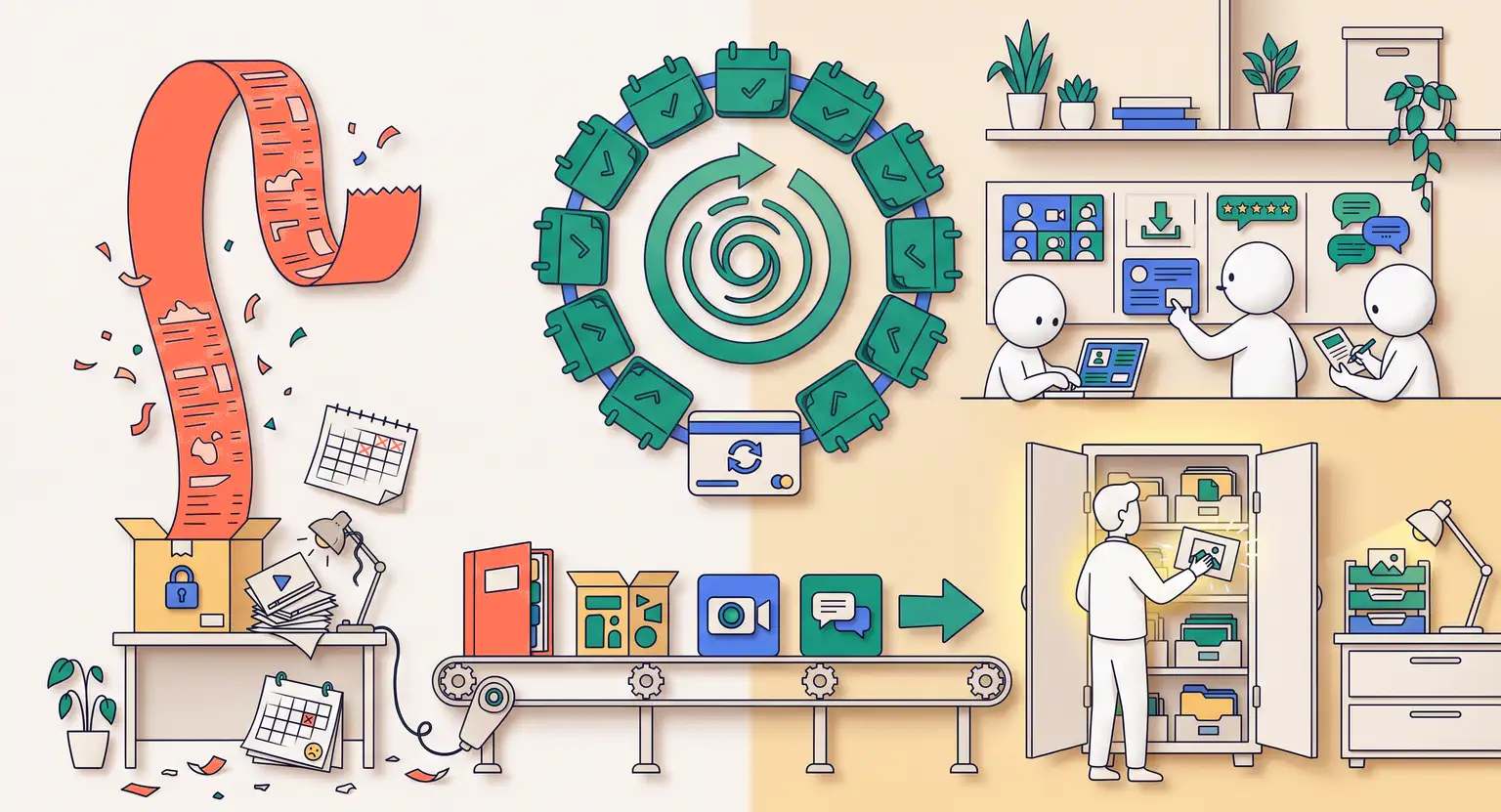
You spend weeks launching your online course, hit your sales goal for the month, and then… the next month starts, and you have to do it all over again.
Sound familiar? This is the relentless pressure of one-time launch cycles. You are constantly starting from zero, spending heavily on ads and promotions, only to reset when the cart closes.
The alternative is building a business where revenue shows up predictably, month after month, without you having to launch something new every time.
That is the power of recurring revenue models. And in 2026, the infrastructure to build one is more accessible than it has ever been.
This guide walks you through how to make that transition without abandoning what already works in your existing business.
Key Takeaways
-
Recurring revenue stabilizes income : monthly and annual subscriptions replace the pressure of constant relaunching.
-
You do not need to start over : your existing course content can anchor a membership with added value layered on top.
-
Retention beats acquisition : keeping one subscriber costs a fraction of finding a new buyer each cycle.
-
Platform infrastructure matters : you need a system that handles billing, access, and community in one place, not five separate tools. Learn how to create a membership site to explore the right setup.
Why Recurring Revenue Changes the Economics of Your Business
One-time course sales are not bad. They are just volatile. A successful launch can be followed immediately by a slow month with no sales, leaving you chasing new audiences and burning through ad budgets constantly.
Recurring revenue models shift this dynamic entirely. When 200 members each pay you $49 per month, you start every month with $9,800 already booked before you do anything. That baseline gives you breathing room to invest, plan, and create without financial anxiety.
The compounding effect is equally powerful. As you add new members each month while retaining existing ones, your total revenue grows even if your acquisition rate stays flat. This is the financial model behind the world's most successful software companies, and it translates directly to online education.
Beyond the numbers, recurring models also change your relationship with students. Instead of a one-off transaction, you build an ongoing community. That community becomes your most powerful marketing asset, as satisfied members refer others and reduce your customer acquisition cost over time.
Four Recurring Models You Can Build from Your Existing Courses
Most creators assume they need to rebuild everything from scratch to offer a subscription. They do not. The most effective recurring models are extensions of what you already have, with added value layered on top.
The first model is a content library subscription. Your existing courses become the foundation. Subscribers pay monthly for ongoing access, and you grow the library over time by adding new modules, bonus content, or updated lessons. The value proposition is continuous learning rather than a single finished course.
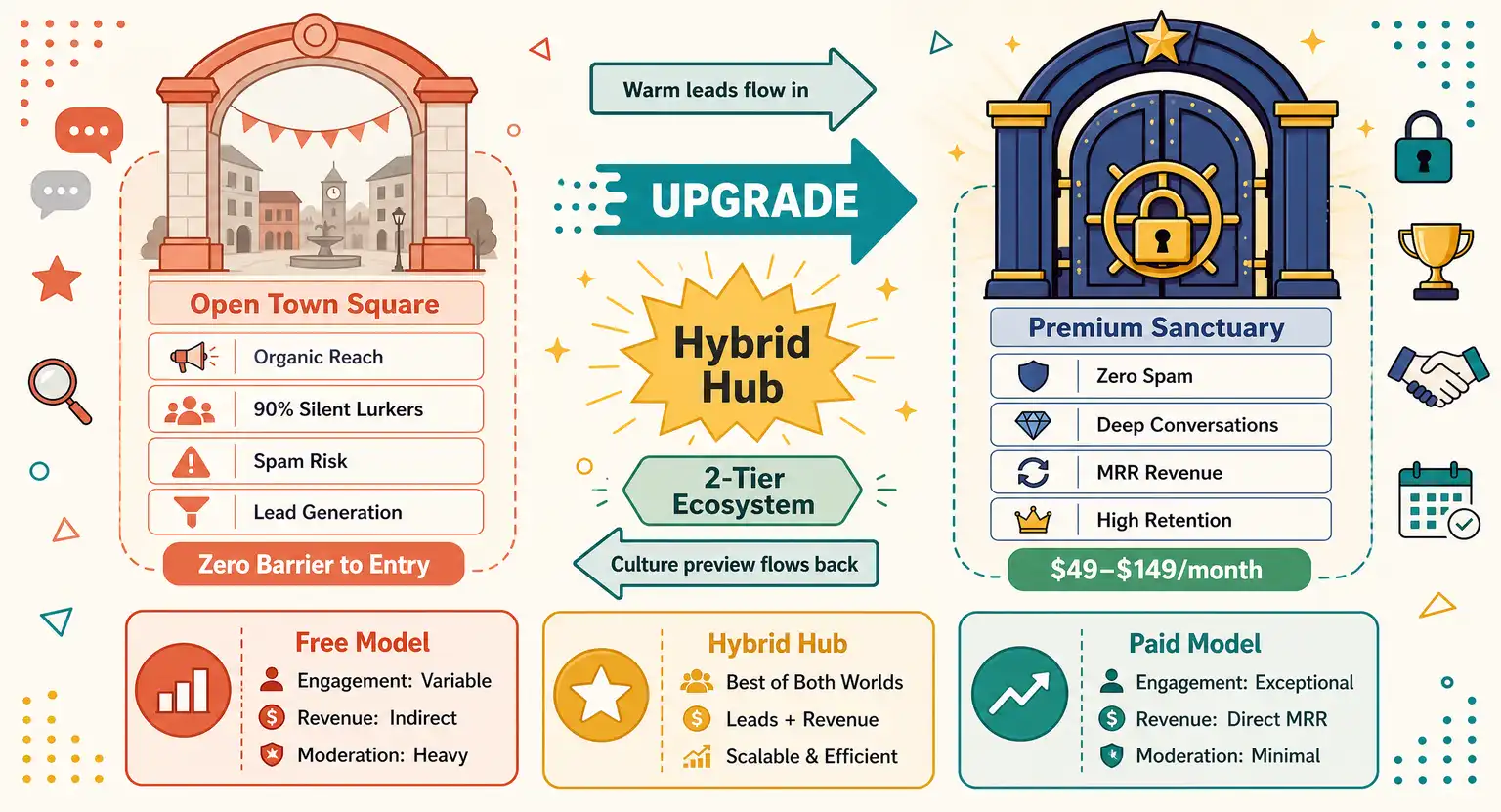
The second is a community plus content hybrid. Here, subscribers pay for a combination of your course library and an active private community. Monthly live sessions, weekly prompts, and peer accountability make this model sticky. Members stay because the community is where they get ongoing results, not just because of the videos.
The third is a coaching or mastermind subscription. This targets your highest-value students who want direct access to you. Monthly group coaching calls, personal feedback, and exclusive strategy sessions justify a premium price point. Revenue per subscriber is higher, though the model requires more of your time.
The fourth is a software or tool subscription. If your expertise includes proprietary templates, trackers, or calculators, packaging these as a subscription delivers ongoing utility. Subscribers pay because they actively use the tool, not just because they want to watch lessons.
Comparing Recurring Models by Revenue Potential and Effort
| Model type | Typical price point | Operational effort | Primary retention driver |
|---|---|---|---|
|
Content library subscription |
$19 to $49 per month. |
Low to medium; add content regularly. |
Ongoing access to growing course library. |
|
Community plus content hybrid |
$49 to $149 per month. |
Medium; requires active community management. |
Peer relationships and live session access. |
|
Coaching or mastermind subscription |
$200 to $1,000 per month. |
High; direct time investment per session. |
Personal access to the instructor and results. |
How to Run the Transition Without Disrupting Your Current Business
The biggest mistake creators make is trying to switch models overnight, abandoning their launch strategy before the recurring model has built momentum. The smarter path is a parallel build.
Continue running your one-time course offers while you build the recurring infrastructure alongside them. Your one-time buyers become the natural first subscribers for your membership, as they are already invested in your content and trust your teaching.
Build your community before you launch the subscription formally. Run a free or low-cost beta cohort, gather feedback, refine the experience, and then open enrollment with social proof already in place. This approach dramatically improves your initial retention rates.
Price for commitment from the start. Many creators underprice their memberships out of fear, which attracts low-commitment subscribers who cancel at the first sign of friction. A higher price point filters for students who genuinely intend to implement what they learn.
Execution Essentials : What You Need to Make This Work
Running a recurring membership requires infrastructure that handles the operational complexity so you can focus on content and community. Here is what your technical stack needs to support :
-
Recurring billing : automated monthly or annual charge cycles with failed payment recovery and easy cancellation processes.
-
Gated content access : subscribers should access only what their tier includes, with seamless unlocking when they upgrade.
-
Community infrastructure : a place for members to interact, post questions, and build relationships outside of lesson videos.
-
Progress tracking : dashboards showing completion rates and engagement metrics help you identify at-risk members before they cancel.
All of this needs to live in one integrated environment to avoid the operational friction of connecting separate tools. An all-in-one platform like LearnyBox handles billing, access control, content delivery, and community in a single dashboard designed specifically for course creators scaling into memberships.
The Retention Strategy That Keeps Members Paying
Acquiring a subscriber is only the beginning. The real work in a membership business is keeping them engaged long enough to see results.
Members cancel when they feel they are not making progress or when the community goes quiet. Both are preventable. Build a monthly rhythm with predictable content drops, live events, and community prompts so members always have a reason to log in.
Monitor engagement data actively. When a member has not logged in for two weeks, trigger an automated check-in message before they silently cancel. Early intervention saves far more subscribers than win-back campaigns after they have already left.
Celebrate milestones publicly. When a member completes a module or achieves a result, recognize it in the community. These moments reinforce the value of staying subscribed and motivate others who are further behind.
Explore Further
-
Explore options for structuring your recurring business : membership site pricing and how to position different tiers.
-
Learn to keep subscribers engaged month after month : how to retain membership members.
-
Build the community that makes your membership sticky : how to build an online community.
Frequently Asked Questions
Do I need a large audience before launching a membership?
No. Many successful memberships have launched with fewer than 100 founding members. A small, highly engaged audience is more valuable than a large passive one. Focus on depth of relationship rather than breadth of reach when you start.
How do I handle members who want to cancel?
Make cancellation easy, but build a pause option into your system. Many members want to cancel because life got busy, not because they lost faith in your content. A one-month pause can retain a subscriber who would otherwise leave permanently.
What is the right price for a course membership?
Price to the value delivered, not the cost of your content. A membership that helps freelancers land one extra client per month is worth far more than the monthly fee you might intuitively charge. Research comparable memberships in your niche and price in the upper third of the range to attract committed buyers.





 How to Sell Online Courses to Businesses (2026 Guide)
 How to Create an Irresistible Online Course Offer (2026)
 Competitor Research for Online Courses: Spot Gaps & Succeed
 How to Identify the Biggest Problems Your Online Course Should Solve