







TikTok for Course Creators: The Complete 2026 Strategy Guide
TikTok for Course Creators
Key Takeaways :
-
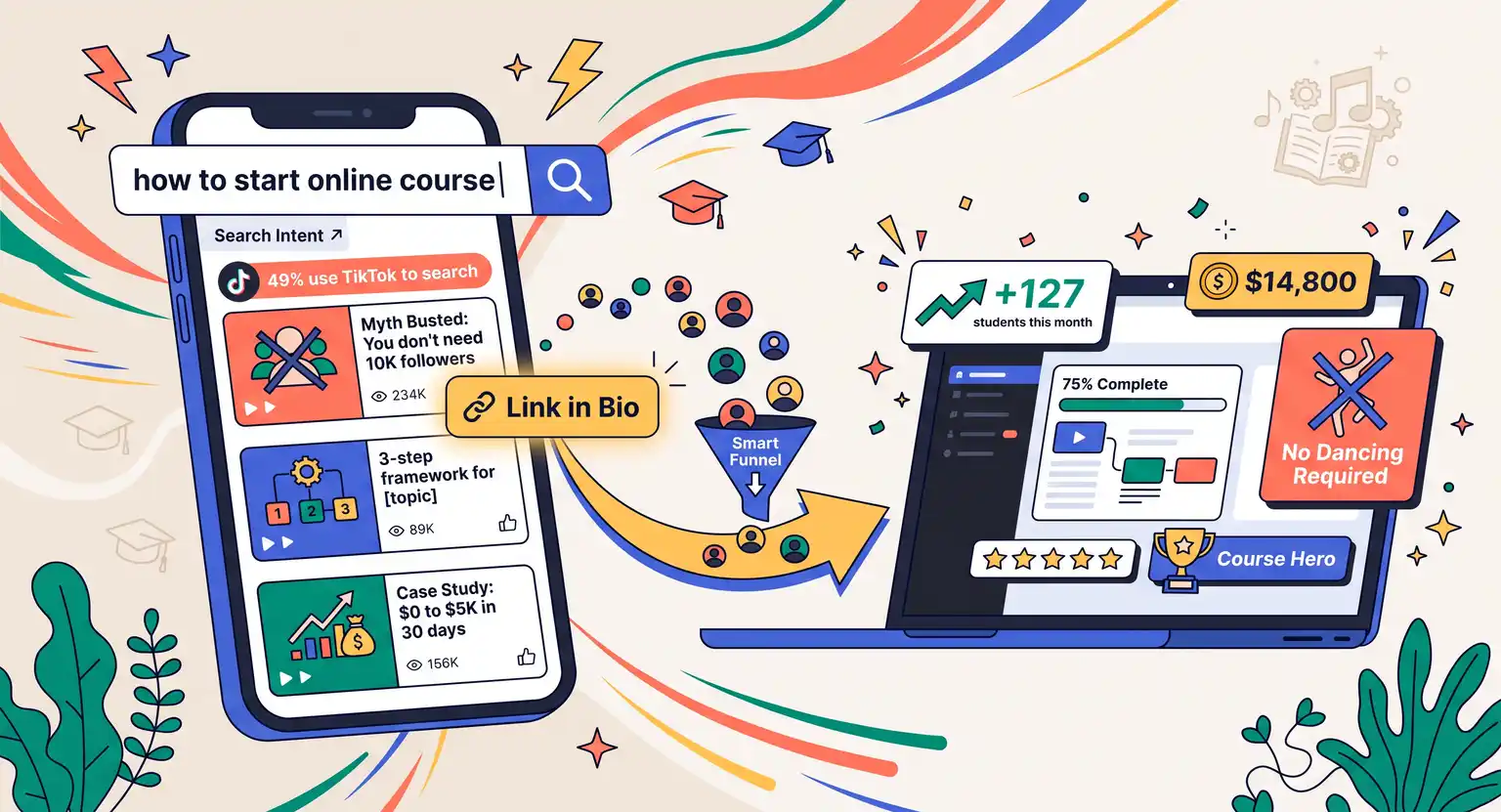
Search Intent Shift : TikTok is now a primary search engine. 49% of US consumers use TikTok to search for direct information.
-
Micro-Learning First : bite-sized lessons, myth-busting, and case studies form the foundation of authoritative channels.
-
Conversion Ecosystem : never sell directly on the timeline; use a smart "link in bio" hook that directs attention into automated high-ticket funnels.
-
Host with Confidence : successful creators build on an all-in-one platform to sell online courses to host and protect their content, giving students a premium learning experience.
If your first reaction to the word "TikTok" is a mental image of teenagers doing elaborate lip-sync dances in their bedrooms, it's time to hit the reset button.
The digital landscape has shifted dramatically, and by 2026, TikTok has matured into one of the most powerful engines for knowledge distribution on the planet.
Millions of adults are opening the app daily, not to look for choreography, but to find answers to complex questions, master new skills, and find mentors.
But as a course creator, you might be wondering if short-form video is actually worth your precious time. After all, your expertise is deep, and fitting decades of knowledge into a sixty-second soundbite feels nearly impossible.
The reality is that you don't need to pack your entire curriculum into a single TikTok.
Instead, your goal is to spark curiosity, build rapid credibility, and gently guide casual scrollers into your ecosystem.
So, how do you tap into this massive, high-intent audience without losing your mind or your professional dignity? Instead of staring at a blinking cursor or trying to force complex, academic paragraphs onto a platform built for fast consumption, you must learn the specific rules of the platform's interest graph.
Let's talk about how to play the TikTok game as a sophisticated educator.
The Great Discovery Migration : TikTok as Your Modern Search Engine
We are currently living through a major transition in consumer behavior. According to 2026 Adobe research, half of US consumers use TikTok to find information.
For Gen Z, that number skyrockets to a massive 65%.
People are no longer turning to static search results containing walls of text when they want to learn a skill or understand a difficult concept… They want a real human being to look them in the eye and explain it in real-time.
This shift presents a golden doorway for educators. Compared to traditional channels like figuring out how to use Instagram to sell courses, TikTok's search ecosystem is highly dynamic and democratic.
On other platforms, you are heavily dependent on your existing follower count to get organic reach.
On TikTok, the interest graph rules supreme. This means if you create a video that directly answers a specific, highly searched query, the platform will actively serve it to interested users, even if you are posting from a brand-new account with zero followers.
But what if you prefer long-form video production? Looking at YouTube for course creators, it demands high development overhead.
TikTok acts as a lighter, faster testing ground. You can pitch ten different concepts in short, highly engaging videos over two weeks, see which one triggers the highest engagement, and then expand that winning concept into a full, paid digital product.
Decoding the 2026 TikTok Algorithm for Education
To get the algorithm to work for you, you have to understand what it actually values.
It is not seeking perfection. In fact, highly polished, over-produced corporate videos often perform poorly because they look like clinical advertisements… TikTok users crave authentic, unscripted human interactions - they want to learn from a supportive friend, not a dry lecture hall professor.
The holy trinity of TikTok success is "Hook, Body, and Call to Action."
Within the first three seconds of your video, you must state exactly what the viewer will gain by staying - otherwise, a quick swipe sends them away.
But once you have captured their interest, you must deliver immediate, actionable value in the body. If you promise to show a secret formula, show it. Avoid long introductions or corporate fluff.
But how do you translate these short bursts of educational storytelling into longer-term trust? It all comes down to learning how to create engaging course content that keeps students hooked once they actually purchase your product.
By showing snippets of your actual curriculum, showing how you structure your lessons, or breaking down your frameworks on screen, you prove that your teaching style is highly interactive. When users rewatch your video, TikTok realizes your content is valuable.
5 High-Converting Content Formats for Educators
You don't need to reinvent the wheel every single time you open your camera. The most successful education channels rely on a small rotating set of templates that are proven to hold attention. Here are five structures you can start filming today.
-
The Micro-Lesson : pick one highly specific question your ideal student always struggles with. Give them one clear, practical action step inside forty-five seconds. Do not explain the whole theory - just give them the immediate quick-win.
-
The Myth-Buster : start with a heavy hook like "The advice you've been given about X is completely wrong, and here is why." People love having their assumptions challenged. This positions you instantly as a cutting-edge authority who sees things differently.
-
The Over-the-Shoulder Audit : show your screen or work area. Record yourself fixing a common mistake in real time. Seeing you diagnose a problem on the fly is highly satisfying and proves your practical competency far better than a resume ever could.
-
The Raw Case Study : share the exact numbers, timelines, or steps of a project you or your student completed. Walk through the failures and the messy middle. This build-up makes your expertise feel incredibly grounded and achievable.
-
The Comment Reply : video-replying to questions left on your previous posts is a superpower. It shows your community that you actively read their comments and care about helping them. These videos often outperform highly planned content because they are inherently responsive and deeply human.
By rotating through these simple formats, you maintain a steady, highly consistent publishing cadence without feeling drained of creative ideas.
The Bridge : Moving Followers Off TikTok and Into Your Funnels
Views, likes, and followers are great for the ego, but they do not pay your mortgage - if you build your entire business inside TikTok, you are essentially building a house on rented land.
An algorithm shift could instantly sever your connection. That is why your ultimate objective should always be to guide scrollers into your owned ecosystem.
The most effective way to accomplish this is to focus on how to build an email list from day one. You can announce a highly valuable freebie in your video - a downloadable workbook, a quick checklist, or a free mini-course - and direct people to the link in your bio.
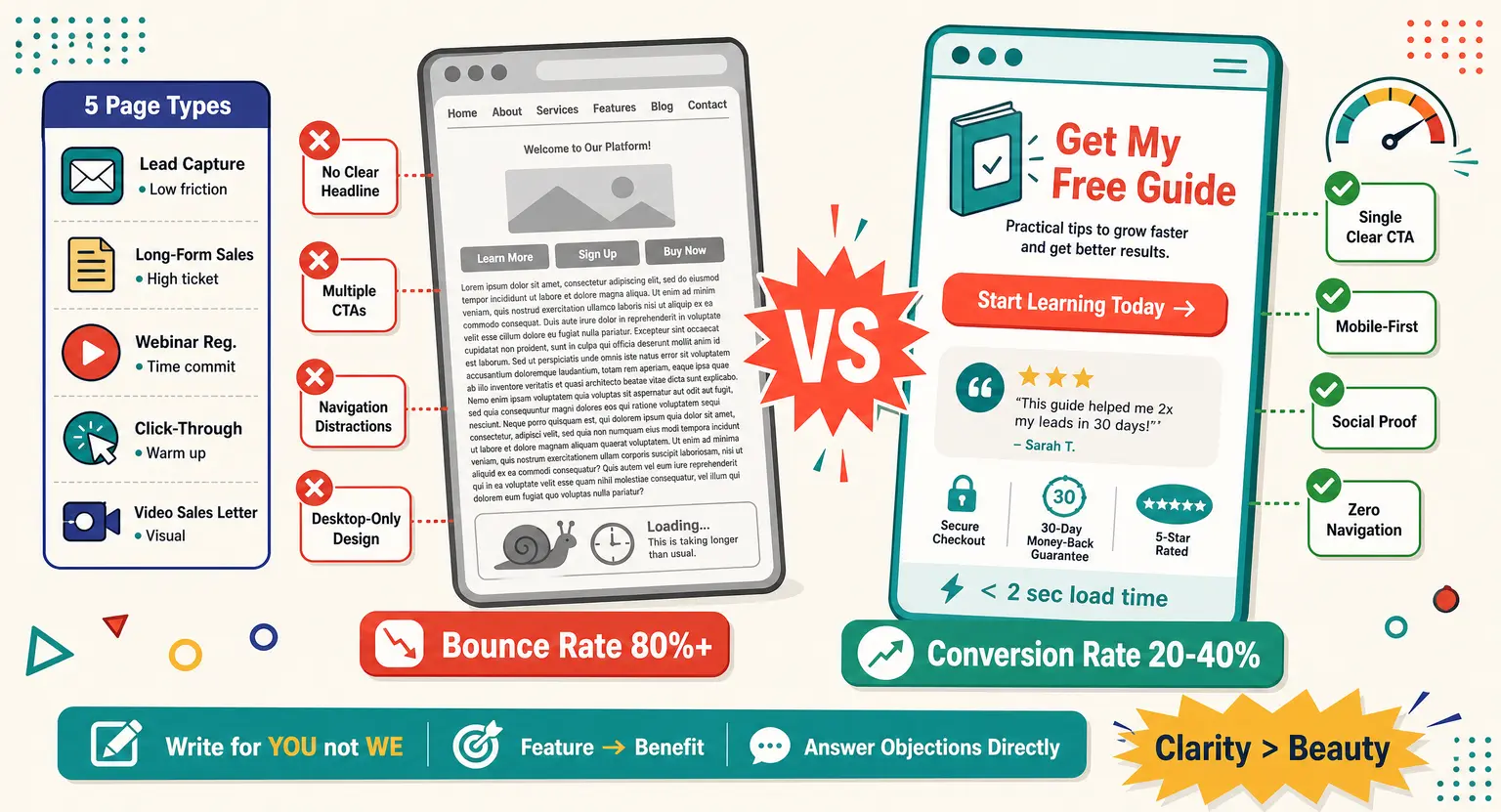
Because TikTok scrollers have remarkably short attention spans, make sure your registration page is lightning fast, highly mobile-friendly, and requires minimal fields to sign up.
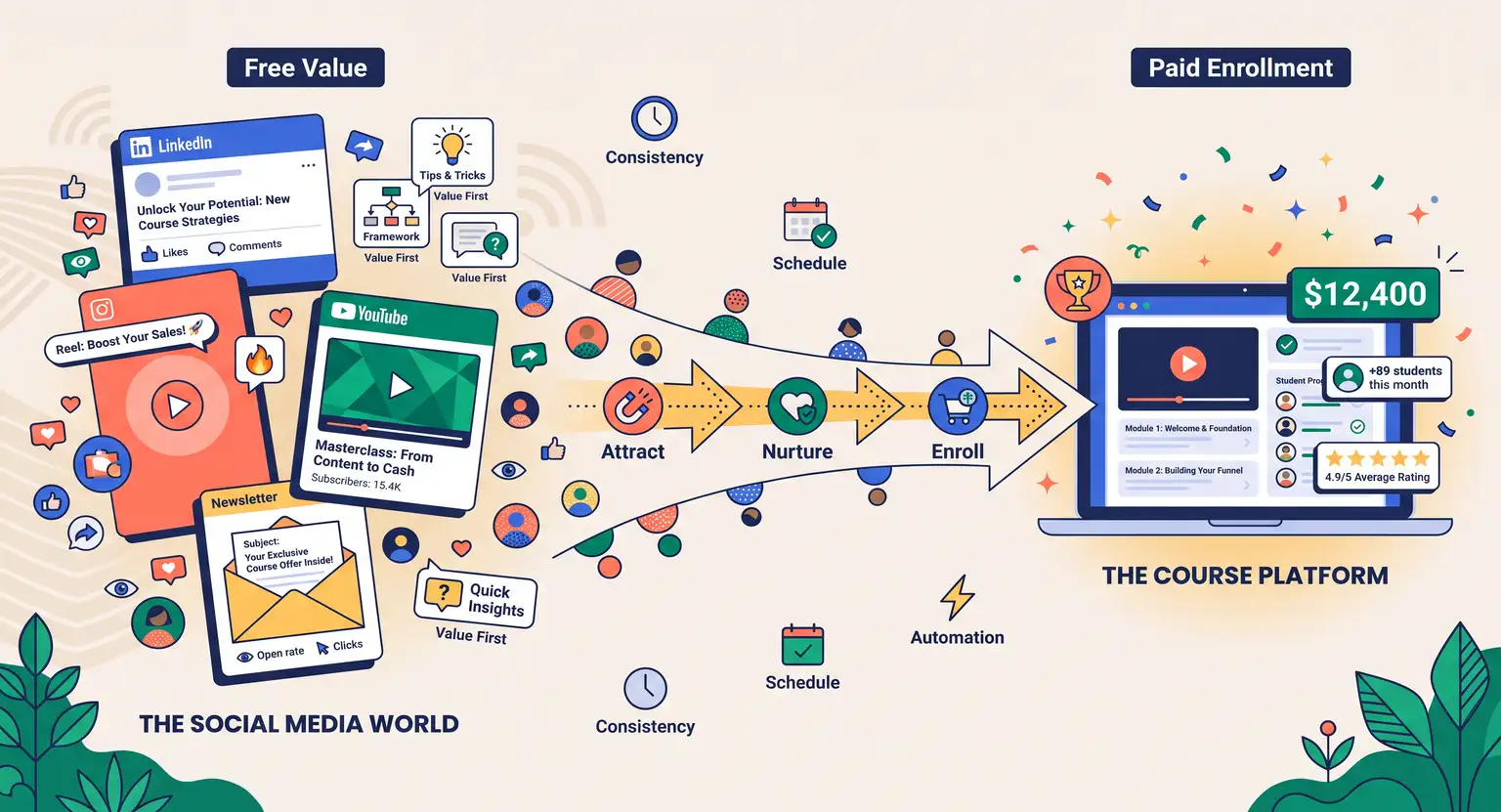
Once they join your list, you can employ automated sales funnels to nurture those fresh leads over several days.
These systems allow you to share deeper lessons, bust secondary objections, and eventually introduce your paid flagship courses.
This separation of duty is incredibly elegant : TikTok handles the mass-scale discovery and raw attention, while your email sequences handle the personalized nurturing and automated sales.
Hardware and Software : Keep Production Low-Friction
The physical setup you choose should make it easy to start filming within 30 seconds of having an idea.
Many teachers stall before they even publish their first video because they think they need to purchase thousands of dollars of professional camera gear... This is a massive mistake.
In fact, shooting on a basic mobile phone often looks more authentic to the TikTok community than high-end cinematic cameras.
But while the camera on your smartphone is certainly good enough, bad audio is the absolute kiss of death for an educational channel.
When people cannot hear you clearly, they will swipe away in a fraction of a second.
Investing in a simple lavalier microphone that plugs directly into your phone will instantly set your content apart. Keeping a checklist of the best equipment for recording online courses nearby helps you maintain this audio quality.
And don't worry about Hollywood production values - when you finally sit down to plan how to record online course material, your phone camera is often more than enough to capture high-authority, authentic lessons.
Use natural light by sitting directly in front of a window, utilize auto-generated captions with clear fonts, and use basic editing software like CapCut to cut out any long pauses or stumbles.
Keep your energy high, keep the pacing incredibly tight, and let your personality shine.
Launching Your Channel : Your First 30 Days
Starting a new channel can feel daunting, but consistency over time is the secret key to unlocking algorithmic favor.
Do not worry about getting millions of views right away - focus instead on mastering your rhythm and learning how your target audience reacts to your teachings.
The real test is not how many views you get on day one, but how well you understand the small community of people who leave comments and ask questions.
Once you have built your introductory audience, figuring out how to launch an online course becomes a systematic process rather than a stressful guessing game.
You can literally ask your followers what they want to learn next, create a basic curriculum framework based on their direct feedback, and collect pre-sales before you even record a single slide. This ensures built-in demand.
Organic Platform Comparison for Knowledge Creators
Our comparison matrix details how different key organic channels stack up for educational marketing.
| Platform metric | TikTok organic reach | Instagram organic reach | YouTube long-form |
|---|---|---|---|
|
Growth discovery speed |
Incredibly fast. Videos can go viral with zero followers based on search match. |
Slow. Demands strong initial follower base and continuous manual DM engagement. |
Moderate. Heavy focus on search history, metadata, and high-quality thumbnail CTR. |
|
Audience connection depth |
Casual. Scrollers watch multiple short clips but require funnels to build deep trust. |
Moderate. Strong personal connection via daily interactive Stories and close DMs. |
High. Watch time is long, which naturally builds strong educational authority. |
|
Production complexity |
Low. Phone filming and simple on-the-go edits are highly encouraged. |
Moderate. Demands clean, aesthetically pleasing grids and highly polished styling. |
High. Requires editing software, strong setups, and structured scripting. |
|
Course hosting fit |
Perfect when connected to the best platform to sell online courses for quick conversions. |
Good, but often requires third-party direct message automation to deliver links. |
Excellent for introducing complex digital products or offering trial lessons. |
|
Best pricing level |
Great for impulse low-ticket courses or getting students into high-ticket systems. |
Moderate. Fits mid-range consulting offers and standard membership academies. |
Superb for high-priced academies using detailed online course pricing strategy setups. |
Explore Further :
-
Discover how to build high-converting automated sequences with our core guide on email marketing for course creators.
-
Deepen your teaching impact by understanding how to design lessons via how to create engaging course content.
-
Equip your workspace properly by consulting the curated checklist of the best equipment for recording online courses.
TikTok Marketing FAQ for Course Creators
Can I sell high-ticket online courses on TikTok?
Yes, but you should never sell a high-ticket course directly within a thirty-second video.
Instead, use your short-form videos to build immediate curiosity and invite viewers to download a free tool, masterclass, or guide.
Once they enter your marketing system, you can use automated lead nurturing sequences to present your comprehensive high-ticket programs in detail.
Do I have to dance or show my face to grow?
Absolutely not. Many of the most profitable educational channels are completely faceless.
You can share your screen while explaining a concept, build beautiful text-on-screen aesthetic guides accompanied by a high-quality voiceover, or show over-the-shoulder digital mockups of your processes.
The algorithm cares about watch time and clarity, not your dance moves.
How often should I publish videos on TikTok?
When starting out, aiming for 3 to 5 videos per week is a healthy baseline to test different topics and build initial momentum.
The algorithm rewards active posters, but consistency and relevance are far more critical than raw volume.
Focus on publishing clear, helpful answers to common audience questions rather than burning yourself out producing multiple low-value videos per day.
Is TikTok SEO really replacing Google Search?
For a massive segment of searchers, yes. Recent data shows that 49% of modern US consumers use TikTok search to find reviews, tutorials, and quick how-to guides.
To optimize your videos for search, use clear target keywords in your video script, on-screen text, post caption, and video hashtags so the platform understands exactly who your video is meant for.




 How to Create a Course Refund Policy (Templates & Best Practices for 2026)
 How to Run a Beta Version of an Online Course (2026 Guide)
 How to Create a Cohort-Based Online Course (2026 Guide)
 How to Sell an Online Course With a Quiz Funnel (2026 Guide)