







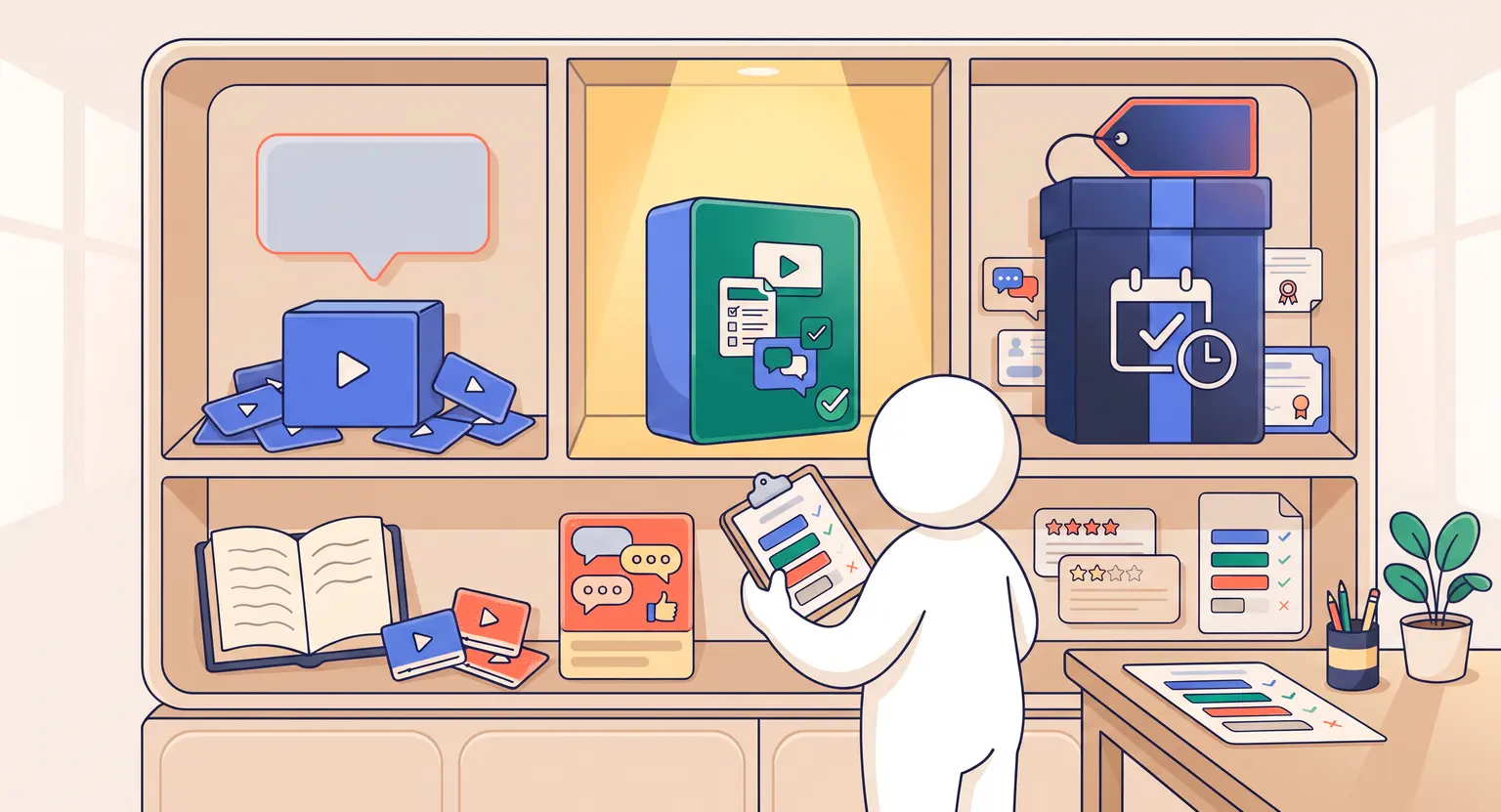
Competitor Research for Online Courses: Spot Gaps & Succeed
How to Research Competitors Before Selling an Online Course
You have a brilliant idea for an online course. You are excited, ready to outline your first modules… But wait. Before you spend weeks creating content, you need to look around.
Who else is already teaching this?
What are they charging?
More importantly, what are they missing?
Competitor research isn't about copycatting. In fact, copying your rivals is the fastest way to get lost in the noise…
It is about finding the market gaps they are ignoring, so you can claim them. If you want to build something that actually sells, you have to dissect the landscape first.
In this guide, we will walk through a step-by-step framework to analyze other courses in your niche. You will learn to turn competitive intelligence into a strategic roadmap that makes your offer impossible to refuse.
Key Takeaways
-
Find unmet needs : competitor research is about finding unmet needs, not replicating existing courses.
-
Look beyond direct rivals : consider alternative resources like books, YouTube channels, and free online forums.
-
Build a matrix : map your competitors on a multi-layered matrix comparing pricing, depth, support level, and target audience.
-
Mine negative reviews : focus heavily on negative reviews of existing programs to discover what frustrated students are actually searching for.
-
Tie research to real pain : always connect your findings to spotting the actual struggles your audience faces.
Redefining Your Competitive Landscape
When most creators think of competitors, they think of other creators selling similar courses. But your true competition is anything that keeps your potential student from achieving their desired transformation.
It is not just about alternative online classes; it is about every alternative action they can take.
Think about it. A student struggling with marketing could buy your system. Or they could watch hundreds of fragmented YouTube videos. Maybe they will read a book, hire an agency, or simply do nothing and continue struggling with their current low sales.
To build a complete picture, categorize your competitors into three distinct buckets.
First are direct competitors teaching exactly what you teach to the same audience.
Second are indirect competitors offering books, events, or tools that solve the same problem differently.
Finally, free alternatives include massive public communities, subreddits, blog posts, and free databases.
Before you start mapping, ensure you understand what you are actually aiming to solve. A great starting point is our guide on identifying the biggest problems your course should solve - once you have that clarity, you can categorize your competitors more accurately.
Ethical Spying : How to Map the Market
Now that you know what you are actually looking for, it is time to gather intelligence. You do not need expensive tracking tools or complex enterprise software - you just need curiosity, a structured browser session, and a spreadsheet.
Start by searching Google, Udemy, Coursera, and social media platforms using key phrases your target audience uses. Look for top-performing creators and note down their course structures, curriculum highlights, and sales page copy.
What specific angles do they emphasize?
Are they selling raw information, or are they promising a fast lifestyle transformation?
Next, dive into the reviews. This is where the gold is buried.
Go to Amazon, Udemy, Trustpilot, or even the comment sections of their YouTube channels.
Pay close attention to the three-star and two-star reviews. Five-star reviews are often filled with generic praise, while one-star reviews are frequently irrational rants.
The middle-tier reviews are where you find balanced, honest critiques.
Look for recurring phrases like "great information but no support," "too theoretical," or "the exercises were too confusing." These complaints are your secret weapon. They show you exactly where your rivals are dropping the ball.
If you can address those specific pain points in your own materials, you instantly make your course more appealing than theirs.
If possible, take your research a step further by directly interviewing your future learners. Ask them about other solutions they have already tried in the past and what they disliked about those resources.
Their raw feedback will save you months of costly trial and error.
Designing the Competitive Gap Matrix
To keep your research actionable, you need a way to visualize the data. A simple comparison matrix allows you to spot patterns that would otherwise stay hidden - it helps you identify where the market is crowded and where it is completely wide open.
When you build your spreadsheet, focus on a few key parameters. You want to track the price point of each competitor, the primary format they use, the level of direct access they offer, and their unique selling proposition.
Let us look at what a typical matrix might reveal in a standard niche like digital marketing or professional training.
| Competitor category | Typical price point | Primary format | Main student pain point |
|---|---|---|---|
|
Massive online courses |
$15 to $200. |
Self-paced video modules and generic quizzes. |
Zero personal feedback, outdated materials, high abandonment rates. |
|
Mid-tier masterclasses |
$300 to $999. |
Pre-recorded lessons and community forums. |
No direct access to instructors, overwhelming amount of raw content. |
|
High-touch cohorts |
$1,500 to $5,000. |
Live Zoom sessions and group coaching. |
High time commitment required, very expensive for entry-level buyers. |
Looking at this matrix, you can easily see the gaps. If the cheap courses have no support and the expensive cohorts are too costly, a mid-priced course that offers light support or group accountability fills a huge market void.
You do not need to invent an entirely new topic; you just have to solve the format and support problem.
But understanding the competitive gap is only half the battle. You also have to package your findings into a message that resonates with your prospective clients.
For a step-by-step breakdown of how to build a message that stands out, look at our manual on building a truly compelling offer. This will ensure you translate your competitive analysis into real-world sales.
Transitioning from Research to Revenue
Once you have mapped out the matrix, you need to decide on your final business model.
Are you going to sell a standard, one-off program, or are you looking to build stable, ongoing passive income? This decision will dictate how you frame your pricing compared to the rest of the market.
If your competitors are all offering expensive, one-time fees, you might choose to disrupt them by offering a highly affordable recurring model.
This approach can lower the barrier to entry and quickly build a loyal following. You can read more about making this change in our direct analysis on shifting toward passive recurring income streams.
Alternatively, you might discover that individual retail consumers are not your ideal target audience.
If your topic teaches highly specialized professional skills, businesses might be willing to pay much higher prices to train their teams. In that scenario, your focus shifts away from consumer platforms.
You will want to learn the ins and outs of selling high-ticket programs directly to companies.
Launching with Confidence Using LearnyBox
Now comes the great execution phase. You have successfully done the research, spotted the key gaps, and chosen your unique monetization model.
The only thing left is finding a highly stable, completely scalable platform to host, market, and sell your new program.
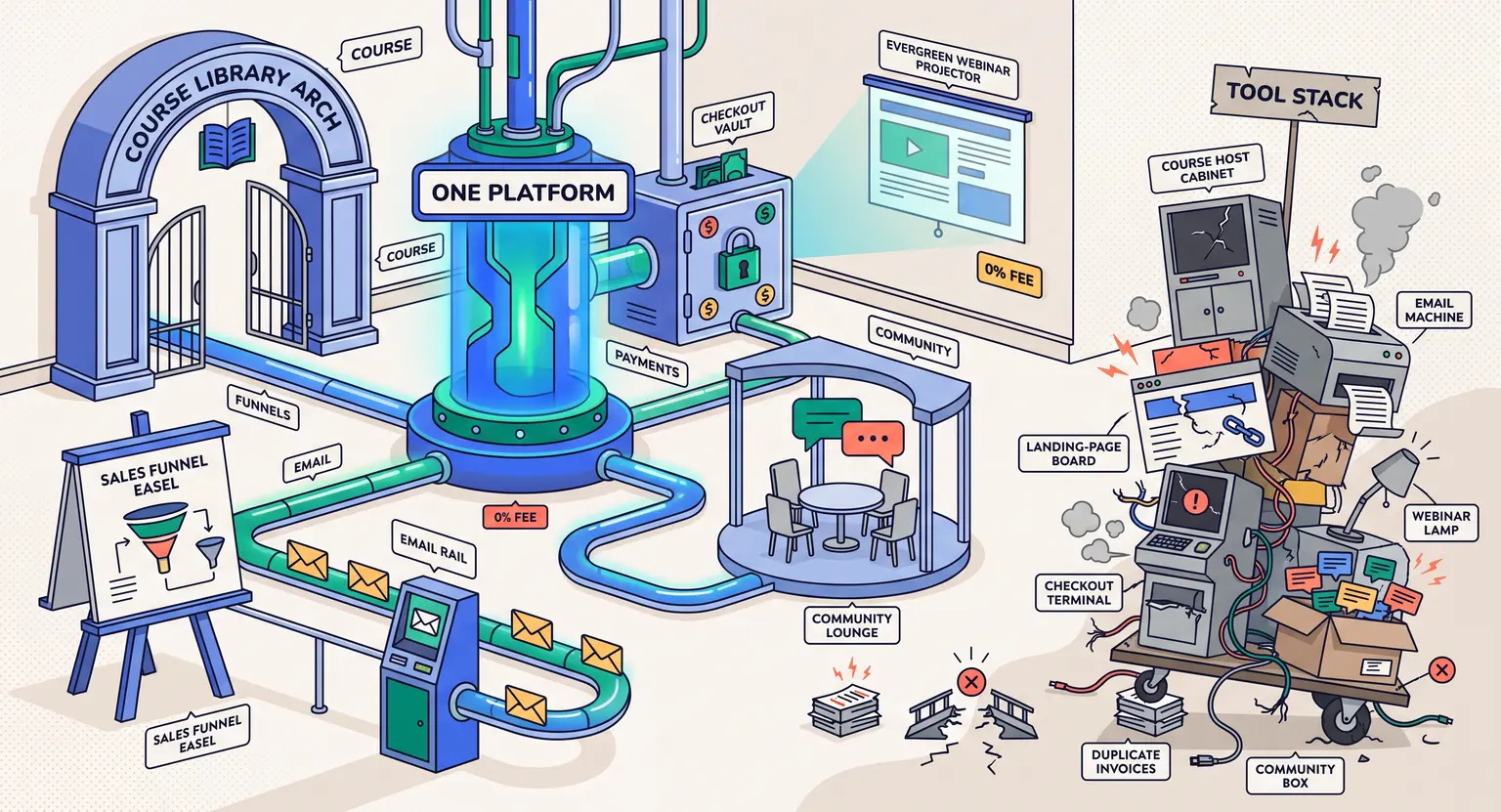
Using the unified LearnyBox platform allows you to bring your curriculum to life without any technical headaches. You get full access to customizable sales funnels, high-converting checkout pages, student forums, and email marketing automation.
This means you can focus entirely on delivering a transformational experience for your students while your technology runs smoothly in the background.
Frequently Asked Questions
How can I find what competitors are charging without buying their courses?
You can analyze their public sales funnels, review order forms, look for promotional webinars, or join their free communities. Many creators publish tier options on checkout pages, which you can locate via a simple Google search or by joining their email lists.
Is it ethical to buy a competitor's course to research it?
Yes, buying competitive products is a standard business practice called competitive purchasing. It allows you to analyze their user experience, formatting, and community structure safely. Just remember, you must never copy or redistribute their intellectual property or content.
How do I stand out if my target niche is already incredibly crowded?
You stand out by narrowing your focus to a specific sub-segment, introducing a unique format like cohort live sessions, or bundling high-touch support. Finding a specific problem your rivals ignore is key.
How often should I conduct competitive analysis for my course business?
Conduct deep competitive analysis before your launch and a lighter review twice a year. This keeps you informed about market shifts, new feature releases, and evolving consumer complaints without letting you get distracted from your actual execution.







 How to Create a Course Refund Policy (Templates & Best Practices for 2026)
 How to Run a Beta Version of an Online Course (2026 Guide)
 How to Create a Cohort-Based Online Course (2026 Guide)
 How to Sell an Online Course With a Quiz Funnel (2026 Guide)
 How to Sell an Online Course Through a Sales Call (2026 Guide)