







YouTube for Course Creators: The 2026 Organic Funnel Blueprint
YouTube for Course Creators
You have put in the sweat equity to build an incredible online course, but there is a persistent challenge that every digital educator faces. You need consistent students - not just casual web surfers, but engaged learners who want your solutions so badly they will happily open their wallets.
While paid ads can drain your marketing budget in days, waiting around for organic search algorithms can feel like pleading into an empty room… But there is a high-yield channel that many digital educators overlook or misunderstand : YouTube.
YouTube is not merely a vault of funny clips or trendy music videos. By 2026, it is the single most powerful organic matchmaking platform for academic and practical expertise online.
If you are currently feeling stuck relying solely on temporary social networks, moving your focus to YouTube for course creators is the strategic pivot your educational brand needs.
This transition is not about chasing digital fame; it is about establishing automated authority that delivers paying students day after day.
So, let us set aside the generic theories and look at the real-world strategy - this guide serves as your comprehensive textbook to transform random video clicks into a highly profitable student registration pipeline, starting right now.
Key Takeaways for YouTube Success
-
Quality Matches Scale : the modern system targets specific student needs. You do not need massive follower counts to drive conversions.
-
Ditch Clinical Scripts : audiences crave real human quirks. They are leaving standard automated lessons for genuine personal connection.
-
Validate Early : always research search demand and learn how to validate an online course idea before spending time recording.
-
Bridge the Gap : never sell directly. Use educational videos to build interest and discover how to build an email list that nurtures leads automatically.
-
Establish Your Virtual Academy : when you are ready to offer your curriculum, migrate your audience to a high-converting classroom by securing an LMS free account today.
The 2026 Shift : Why Audience Matching Rules Over Subscriber Counts
For years, standard marketing advice stated that subscriber growth was the core metric of channel health - creators prioritized subscriber milestones above all else.
But in 2026, those dynamics have changed - the platform's algorithm now emphasizes matching individual viewers with exact educational solutions, regardless of whether they have subscribed.
What does this mean for digital educators trying to find their footing? You can completely skip the pressure of building massive audiences. A targeted channel with under a thousand followers can produce an excellent full-time income due to the accuracy of modern audience matchmaking.
But there is an important detail. If your educational videos feel overly clinical or read like generic, synthetic scripts, viewers will bounce away quickly - the platform prioritizes viewer satisfaction above all else.
To succeed, focus on delivering immediate answers to highly specific queries. By teaching real, actionable concepts, your small channel can easily outrank massive competitor brands in search results.
And this is where the platform leaves competitors behind.
While you can utilize platforms like TikTok for course creators to capture brief spikes of excitement, those fast views rarely result in actual sales of long-form, premium programs.
This platform, however, functions as an evergreen library where your content continues to generate high-value leads for years.
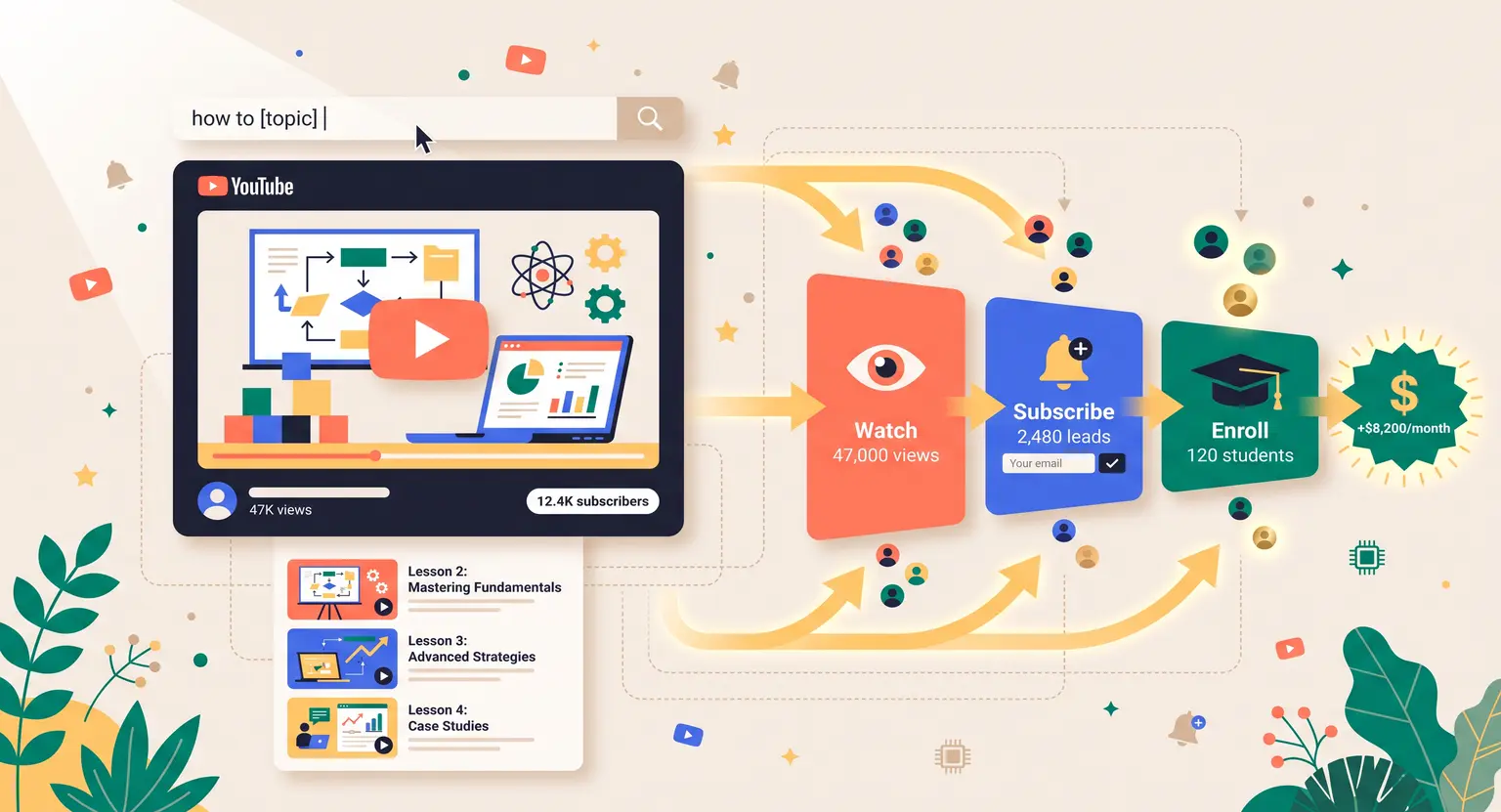
Building Your Unshakable YouTube-to-Course Funnel
Your channel is not your business; it is simply the welcoming front porch.
The ultimate, most common pitfall for most enthusiastic digital educators is failing to build a dependable pathway that transitions curious, casual watchers off social platforms onto their own secure, private student portal.
How do you construct this educational bridge? Start with a strategic lead magnet funnel.
Every tutorial must contain a simple call to action, offering a valuable free resource in exchange for their email address.
This systematic approach is critical to your long-term success. Knowing how to launch an online course successfully relies on having a warm, pre-qualified database of people who already trust your voice - without an email list, you are renting your students from an algorithm, leaving your income vulnerable to sudden changes in platform policies.
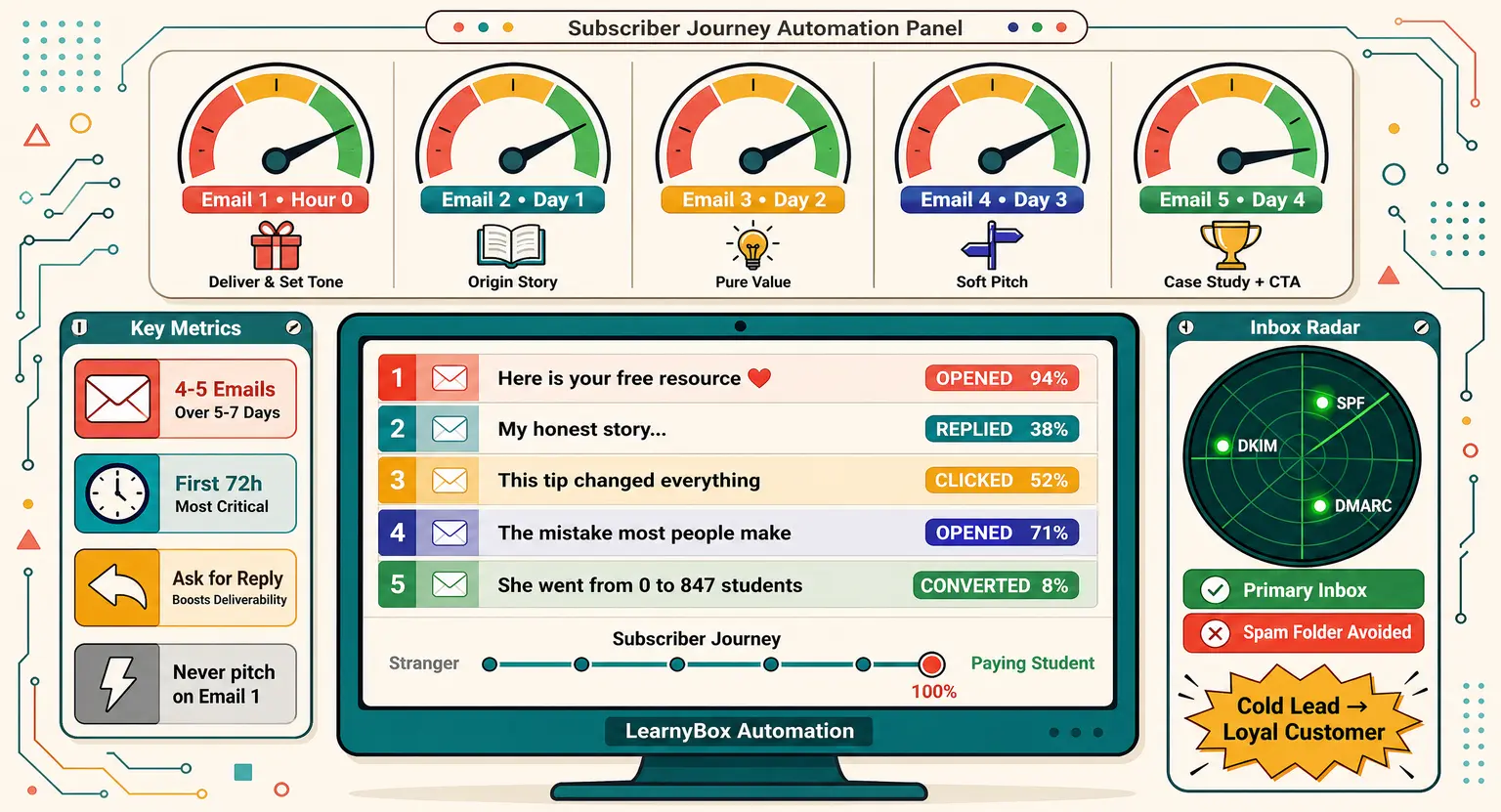
Once a viewer registers to download your workbook or starter files, your automated follow-up system takes over the educational relationship.
This is where you establish deeper trust, handle common objections, and present your paid program - by the time they receive your sales offer, enrolling in your academy feels like the logical next step.
Essential Content DNA : Turning Curious Searchers Into Dedicated Students
To sell paid training, you must prove you can deliver results first. Your free tutorials cannot just be promotional pitches; they must offer actual, independent value that leaves viewers wanting more.
But how do you decide what to share for free and what to keep behind your paywall? Think of your channel as the place where you explain the why and the what, while your paid curriculum teaches the structured how-to in a sequential, step-by-step framework.
For example, a free video might explain what mistakes to avoid when coding, while your paid course provides the direct code feedback, exercises, and community support.
To keep your viewers highly engaged throughout your lessons, you must learn how to create engaging course content and apply those same structures to your marketing videos - keep your delivery dynamic and use clear visual markers. Here are four video blueprints that consistently perform well for educators :
-
The Quick-Win Challenge : solving a single problem under ten minutes.
-
The Case Study Breakdown : outlining a past student's transformation.
-
The Industry Myth-Buster : positioning you as a trusted guide.
-
The Mistakes-to-Avoid Format : highlighting costly traps.
As you carefully design these educational resources, always remember that clear organization is absolutely vital.
When you work diligently to understand how to structure online course paths, you are essentially creating a highly logical, step-by-step map for prospective student progress.
Carry that same neat visual structure over to your public channel by using distinct, clear video timestamps, numbered lesson lists, and very concise summaries.
Choosing the Right Gear Without Getting Sucked Into the Production Trap
Let us tackle the common production trap. It is easy to assume you cannot film your first video until you buy an expensive camera, professional lighting, and high-end microphones. This thinking is a trap.
In reality, modern audiences actively favor honest authenticity over slick, commercial perfection.
Your current smartphone and an affordable lapel microphone are actually more than enough to start attracting eager students - what matters far more than high camera resolution is the absolute clarity of your voice and the organization of your teaching.
If you are learning how to record online course lessons for your premium digital academy, the identical basic camera setups apply directly to your free promotional marketing videos.
Find a quiet room containing thick carpet or large rugs to prevent echoing, sit facing a bright, open window to utilize free natural light, and use a clear, affordable microphone.
Before spending thousands of your hard-earned dollars on expensive equipment, review our helpful guide to the best equipment for recording online courses to keep your initial hardware setup beautifully simple, highly practical, and genuinely efficient.
Platform Showdown : Choosing the Right Channel for Student Acquisition
To build a sustainable educational business, you must invest your creative energy where it will deliver the highest long-term return - every platform caters to very distinct human behaviors and offers different shelf lives for your content.
To help you compare your options, here is a detailed breakdown of the major channels you might use to find new students :
| Platform | User intent | Content lifespan | Production effort | Conversion strategy |
|---|---|---|---|---|
|
YouTube long-form |
High. Searching for depth and thorough explanations. |
Months to years. Compounding search presence. |
Medium to high. Requires structure and simple editing. |
Extremely high. Connects viewers to resources. |
|
YouTube Shorts |
Casual discovery during micro-breaks. |
Hours to days. Sporadic residual traffic. |
Low to medium. Focuses on quick, vertical formats. |
Medium. Directs quick attention to deep content. |
|
TikTok |
Passive entertainment and rapid trend consumption. |
Very brief. Usually vanishes within 48 hours. |
Medium. Highly reliant on daily posting frequencies. |
Fast but shallow. Relies on instant decision items. |
|
|
Social interaction, visual style, and brand updates. |
Short. Lasts roughly 72 hours in the main feed. |
High. Demands aesthetic layouts and stories. |
Excellent for messaging. Check out how to use Instagram to sell courses directly. |
As we compare these resources, it becomes clear that different platforms fulfill distinct organic marketing roles.
While other platforms excel at fast social interactions, YouTube remains the leading organic marketplace for serious course creators because of its longevity and search engine structure.
From Search Bar to Cash Flow : YouTube SEO and Monetization Channels
How do you ensure your dream students actually find your tutorials?
You must optimize your content for search discovery.
Because YouTube is owned by Google, your highly optimized videos will rank not only on the video platform itself, but directly on main Google results pages as well. This double exposure makes search engine optimization incredibly valuable.
Start your regular production process by diligently researching the exact search queries your target students typically type when struggling with your niche topic.
Use search auto-complete suggestions, industry-relevant forums, and direct competitor channels to build your primary target keyword list.
Once you have successfully identified these critical key phrases, place them naturally inside your video title, description, and key metadata tags - do not overdo it with keyword stuffing; always write for human readers first.
Today's smart engines easily analyze the voice transcripts of your video, so make absolutely sure to mention your primary subject and solutions aloud during your introductory minutes.
But all of this highly valuable organic traffic is meaningless if you do not have a smooth, professional base camp to welcome incoming traffic.
Avoid sending people to disjointed homepages - you want to host your lessons on an all-in-one platform to sell online courses elegantly, so that incoming leads can buy and start learning in seconds.
Overcoming Camera Shyness and the Consistency Illusion
It is completely normal to feel a sudden wave of self-consciousness when staring at that cold black camera lens. Many brilliant experts delay starting their channels for years because they dislike how they appear or sound on video.
But remember this comforting truth : your prospective students do not care about your minor speaking slip-ups, your home background, or your clothing - they are searching for clear answers to their real-world problems.
Record your educational tutorial as if you are speaking directly to a single, friendly student sitting comfortably across from you.
And please do not get crushed by the consistency illusion. You might hear legacy advice claiming you must publish three long-form videos every single week to please the engine.
This is a direct route to burnout. Focus instead on deep, thorough value.
In 2026, publishing one truly comprehensive, helpful video every two weeks will out-convert a high volume of poorly planned content.
Explore Further
Ready to scale your training business with organic video systems? Check out our complete tactical playbooks :
-
Step up your digital publishing game by reading about how to launch an online course successfully.
-
Understand the clear procedural steps on how to structure online course pathways for rapid student progress.
-
Equip your studio correctly by picking out the best equipment for recording online courses with our straightforward gear compilation.
Frequently Asked Questions About YouTube for Course Creators
Do I need a huge audience to generate course sales?
Absolutely not. Because the modern matching system connects your targeted tutorials directly with highly interested prospects, even very tiny new channels can generate substantial revenue.
If your video matches their educational needs perfectly, they will happily download your resources and sign up for your programs, completely regardless of your follower counts.
How should I price the courses I market through video?
Since your video viewers have already spent significant time learning from you, they are highly warmed up.
This makes them ideal candidates for premium training programs. We suggest structuring a smart online course pricing strategy that contains a standard package alongside a premium coaching offer to capture maximum value.
Should I upload my real course lessons directly to my public channel?
No. Keep your public tutorials focused on intermediate wins, conceptual solutions, and theoretical explanations.
Your premium curriculum represents the highly organized, step-by-step pathway that saves students precious time.
Free content explains the what and why, while your paid academy handles the systematic how-to.
How can I convert casual viewers into actual registered students?
The single most reliable conversion strategy is utilizing targeted giveaways.
Introduce a highly actionable checklist, printable workbook, or resource templates during your public video lesson, and direct viewers to a dedicated registration page to secure their free copy.
This transition shifts them smoothly into your structured email sequence where you can naturally present your premium training courses.
Ready to Build Your Evergreen Educational Asset?
Building your expert reputation on a searchable educational video marketplace is definitely not an overnight task, but the long-term compounding benefits are truly unbeatable.
Unlike temporary networks where your hard work disappears after a day, every single tutorial you record for your library remains an active, 24/7 organic student-magnet that works while you sleep.
But do not make the mistake of waiting for some perfect future moment. The educators who succeed are the ones who start filming today with whatever tools they have, refine their approach over time, and focus entirely on creating real value.
Your future students are out there searching for your answers right now.


 How to Create a Course Refund Policy (Templates & Best Practices for 2026)
 How to Run a Beta Version of an Online Course (2026 Guide)
 How to Create a Cohort-Based Online Course (2026 Guide)
 How to Sell an Online Course With a Quiz Funnel (2026 Guide)
 How to Sell an Online Course Through a Sales Call (2026 Guide)