






AI for Course Email Sequences: 2026 Copywriting Blueprint
AI for Course Email Sequences
Imagine waking up to see forty new students registered for your signature course. No stressful live webinars, just a steady, automated hum of daily digital sales.
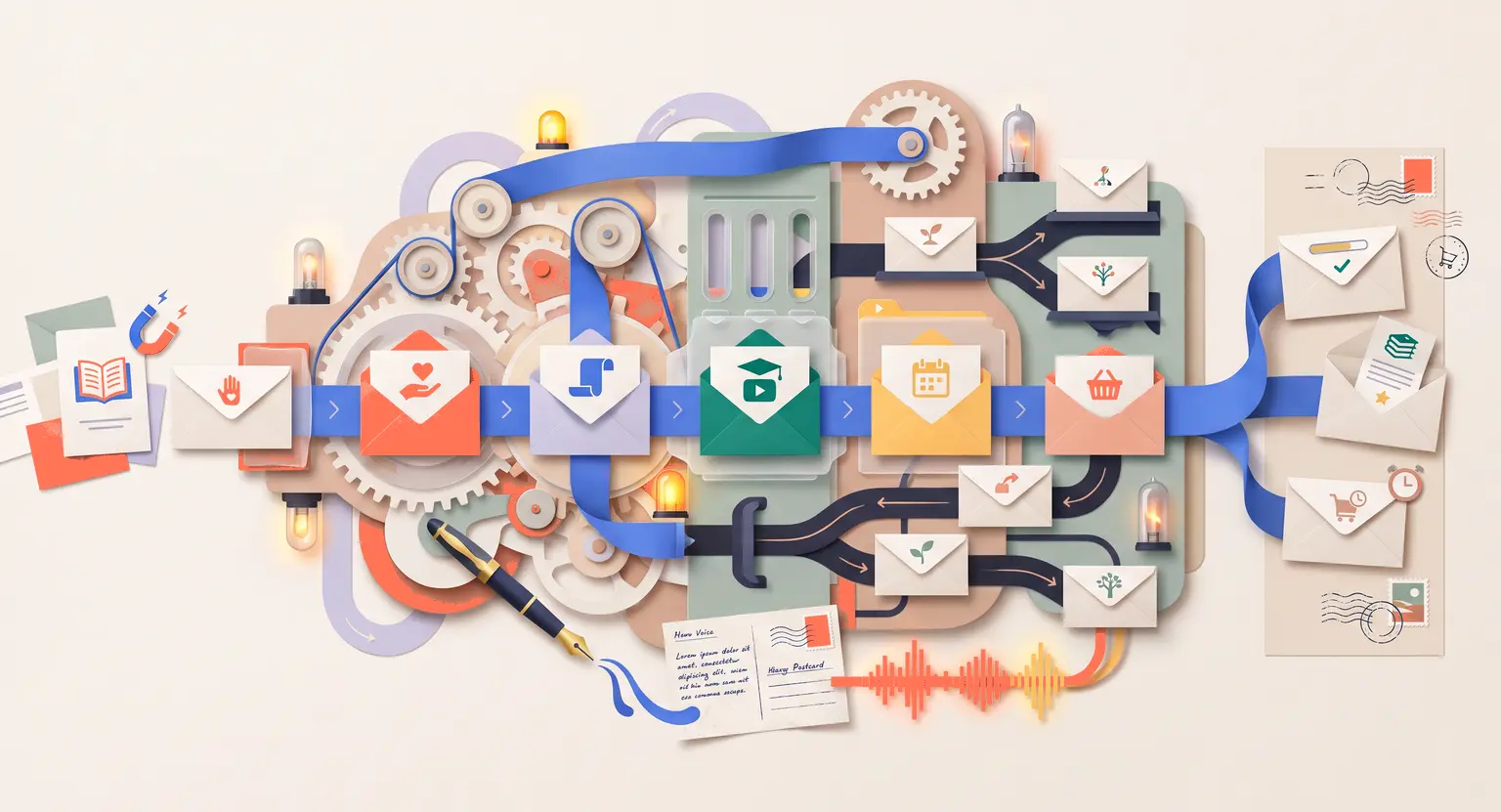
It sounds like the classic infopreneur dream… But behind every successful course, there is an invisible engine : the email sequence - it is the bridge between a stranger who casually downloads your PDF and a dedicated paying student.
But let's be completely honest with ourselves here. Writing dozens of emails feels incredibly daunting and exhausting.
You stare at a blinking cursor for hours, wondering if your subject line is too pushy or if your welcome copy sounds like a generic robot.
Fortunately, the year is 2026, and the game has completely changed. Artificial intelligence is no longer just a gimmick for writing mediocre outlines - today, AI can act as your personal copywriter, strategist, and customer research department rolled into one.
But how do you use this superpower without losing your unique voice? Let's take a look at how to leverage modern AI tools to build high-converting email sequences that build real trust and drive sales.
Key Takeaways for Fast Implementation
-
Strategic alignment : AI tools thrive when given deep context, so always feed them your specific buyer persona, pain points, and course curriculum before asking for copy.
-
Launch mechanics : successful sequences mix relationship-building with clear sales deadlines; study our guide to crafting an email sequence for a course launch to align your timeline.
-
Hybrid writing : never copy-paste raw AI outputs directly; use AI as a structural partner while infusing your own quirky anecdotes and personal tone.
-
Holistic mastery : for long-term growth, master email marketing for course creators to build sustained momentum across your entire funnel.
The Evolution of AI Copywriting in 2026
We have officially moved past the frustrating era of generic, plastic-sounding AI drafts. Remember when every AI email started with "I hope this email finds you well"? It was painful.
In 2026, natural language engines are deeply contextual, highly empathetic, and capable of matching your specific psychological style.
First, it completely saves creators weeks of sheer mental exhaustion. Drafting a complete high-value nurture sequence used to take days of staring at completely blank templates. Now, you can build a beautifully customized sequence in a couple of hours.
Second, modern AI simplifies multivariate testing for list growth. You can easily generate three distinct versions of a subject line : curiosity-driven, benefit-focused, and urgent. This boosts your open rates and improves your primary inbox delivery.
Mapping Your Course Email Funnel
To get real results, you cannot just send random emails when the mood strikes. You need structured pipelines that carry people from curiosity to commitment. Let's break down the essential sequences.
The Nurture and Welcome Flow
First impressions are absolutely everything. When someone joins your email list, they are testing the waters.
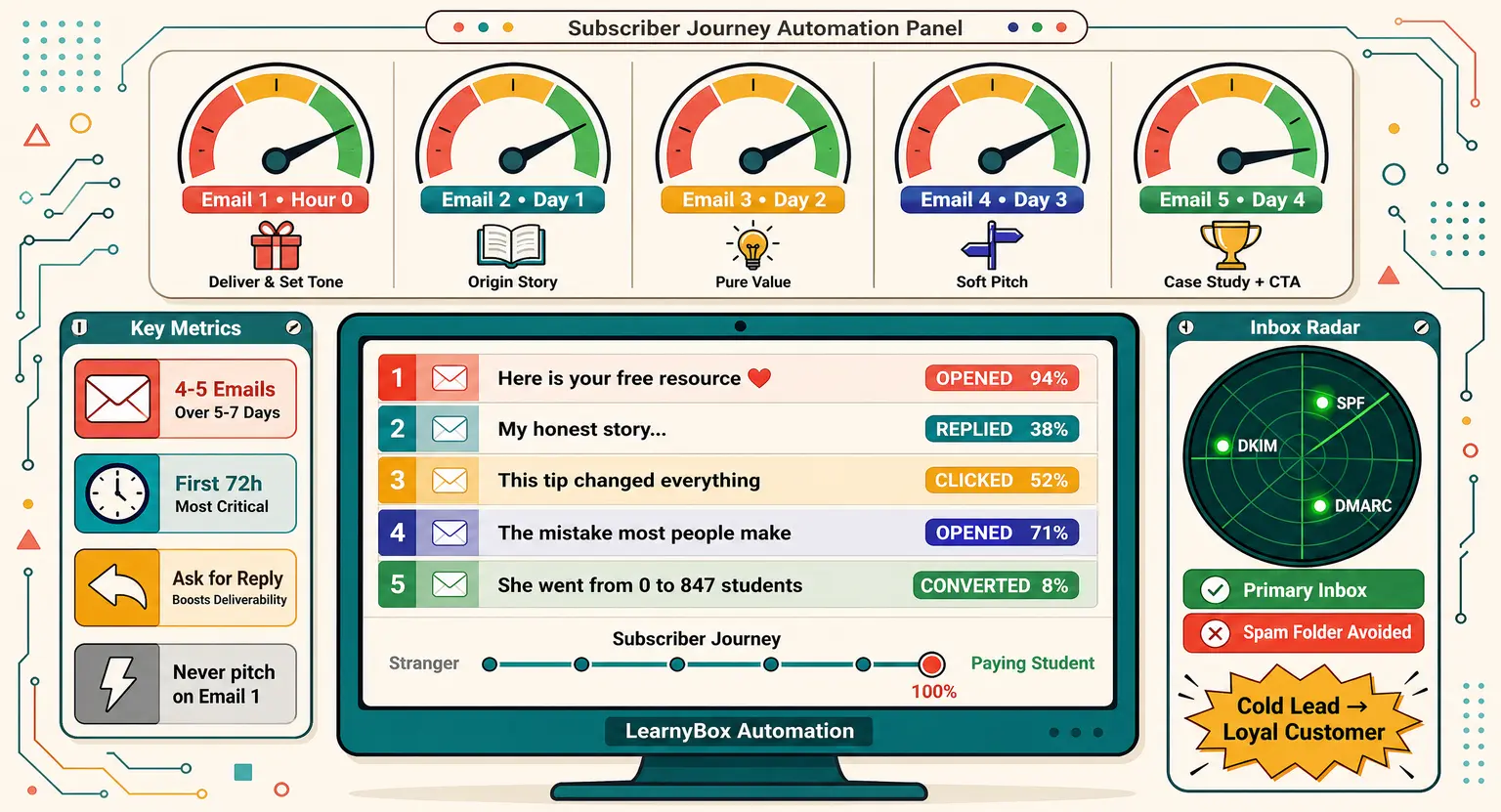
A solid welcome email sequence shouldn't try to sell your course right away. Instead, it should validate their decision to subscribe, deliver the promised lead magnet, and set expectations for what's coming next.
AI is excellent at structuring this build-up. You can prompt the model to generate a three-part storytelling sequence. By the time they receive your sales offer, they already know and trust you deeply.
The Launch Sequence
This is where the magic happens. A launch sequence is a highly calculated series of emails designed to build anticipation, address objections, and create a sense of urgency. The classic structure involves :
-
The hype email : announcing that something big is coming soon.
-
The open cart : revealing the course is finally officially open for enrollment.
-
The value boost : sharing direct proof that your methods actually work.
-
The objection buster : directly addressing common customer doubts like pricing and time limits.
-
The final countdown : reminding them that registration doors are closing extremely soon.
Using AI, you can generate all five of these emails in parallel, ensuring a consistent narrative arc.
The Abandoned Checkout and Re-engagement Sequences
Some prospects will add your course to their cart, and walk away. Life gets in the way.
This is where email automation for creators comes to the rescue. By setting up an automated trigger, AI can write this checkout recovery sequence, recovering lost revenue automatically.
Custom Prompts That Avoid the Robotic Trap
If you feed an AI engine a weak prompt like "write a sales email for my course," you will get a cheesy, hyper-salesy result that belongs in a spam folder. Garbage in, garbage out. To get authentic, human-sounding copy, you need to provide rich, layered constraints.
Let's look at a framework to get the best out of your AI assistant. You should always structure your prompts using the Context - Role - Task - Constraint model.
First, define the role. Tell the AI : "You are an experienced conversion copywriter who writes in a warm, direct, and conversational tone. Avoid flowery corporate jargon or over-the-top excitement."
Next, give deep, realistic context. Explain exactly who your digital course is created for and paste in real-world customer feedback to help the AI understand your audience's true emotional state before writing.
Then, define the task. Instead of asking for a whole sequence, ask for one email at a time, such as a 150-word draft focusing on time scarcity.
Finally, set strict constraints. Tell the model : "Keep sentences short and of varying lengths. Do not use words like 'revolutionize,' 'harness,' or 'delve.' End with a single, clear call to action." This approach keeps the copy clean, readable, and remarkably human.
Hyper-Personalization and Dynamic Triggers
The days of sending the exact same broadcast to every single person on your list are long gone.
Today, personalization goes way beyond swapping in a first-name tag. Successful course creators use behavioral data to segment their audiences, and AI makes this process incredibly simple to manage.
Imagine a subscriber who clicks on a link about advanced strategies, while another clicks on a beginner-friendly tip. A smart system categorizes these behaviors and triggers different email branches - AI can dynamically rewrite sections of your main sequence to match the subscriber's progress, skill level, or industry.
But how do you handle this without losing your mind in a web of complex workflows? By using platforms that combine these features under one roof, you keep things beautifully simple.
When your host engine handles both your student databases and your campaigns, AI can instantly map the behavioral cues of your audience and serve them hyper-relevant emails at the exact moment they are most likely to buy.
Structuring Content Across the Funnel
Now we want to organize our tactics so that you have a visual layout of which campaign type matches which psychological goal.
Below is a structured blueprint designed to save you from mapping out sequences manually on a whiteboard.
| Campaign type | Core psychological focus | Best AI prompt context tip | Human customization needed | Funnel placement |
|---|---|---|---|---|
|
Welcome & nurture |
Empathy, trust, and validation of their choice. |
Provide details of your origin story and core philosophy. |
Add actual personal mistakes or early struggles you went through. |
Triggered immediately upon lead magnet sign-up. |
|
Hype & anticipation |
Curiosity and identifying the future opportunity. |
Frame the core problem as solvable with a new forthcoming method. |
Inject exact vocabulary used by your beta testers. |
Sent 7-10 days before opening doors. |
|
Sales page bridge |
Direct connection to benefits and student outcomes. |
Feed it your AI for course sales pages copy to extract major benefits. |
Highlight unique guarantees and pricing options. |
Sent throughout open cart period to warm leads. |
|
Objection busting |
Logical reframing of time, price, and self-doubt barriers. |
Paste anonymized student objections from your landing page optimization work. |
Write realistic FAQ-style answers in your voice. |
Sent 48 hours before cart close. |
|
Urgency & close |
Fear of missing out, immediate loss of opportunity. |
Instruct model to keep sentences punchy to convey momentum. |
Specify the exact date and timezone for closing. |
Sent on the final day, multiple emails allowed. |
|
Re-engagement |
Reviving cold subscriber interest through value. |
Input list of latest trends to generate fresh content ideas. |
Filter which tools like the best email marketing for online courses to showcase. |
Triggered after 60 days of inactivity. |
Crucial Mistakes to Avoid with AI Copywriting
While AI can speed up your creative workflow ten times over, leaning on it too heavily is a recipe for absolute disaster. The single biggest trap is losing your genuine personality. Your audience subscribes to you, not a synthetic language model that copies everyone else.
So, how do you prevent your emails from sounding robotic? Always read your drafts aloud before hitting schedule. If a sentence feels awkward to say, change it.
Inject your own personal stories, raw mistakes, and unique vocabulary. AI doesn't know what it felt like when you failed your first launch, but your readers will resonate deeply when you share that human moment.
Another mistake is failing to verify claims. AI can occasionally hallucinate specific statistics or references. If you cite a case study or a scientific concept, spend those extra two minutes on a search engine to verify the details.
Trust is extremely hard to build, but it can vanish in a single sent email.
Frequently Asked Questions
How can I make AI emails sound exactly like my personal writing style?
The best way to train AI on your style is to paste three to five successful emails you wrote entirely by yourself into the prompt.
Instruct the engine : "Analyze the tone, sentence lengths, humor, punctuation choices, and conversational quirks of these samples. Write all future drafts mimicking this exact fingerprint. Avoid corporate speak, formal transitions, or hyper-excited marketing exclamation marks."
Can I write my entire email sequence using a single AI prompt?
Absolutely not. Doing so will ultimately result in repetitive phrasing, diluted messages, and massive structural chaos. Instead, use a structured step-by-step approach.
Start by asking the AI to outline the overall campaign strategy. Once you approve the sequence outline, ask it to draft Email One. Edit it thoroughly, then move directly to Email Two.
This modular method guarantees each email maintains its own focus and remains engaging.
How do email sequences tie into my overall sales funnel strategy?
Your emails are the relational connective tissue of your sales process.
When you build a landing page and drive traffic to a lead magnet, your sequence must deliver the training and build the value proposition.
To understand how these components work together to turn cold traffic into paying students, study our guide on how to build a sales funnel effectively.
Is it safe to let AI fully automate my student emails?
Automation is excellent for delivering onboarding campaigns or managing standard checkout recoveries.
But you must keep a close eye on customer relationships. For complex questions or individual concerns, nothing replaces a real human.
To balance automation with high-touch care, explore our strategies on implementing AI-driven customer support for students seamlessly.


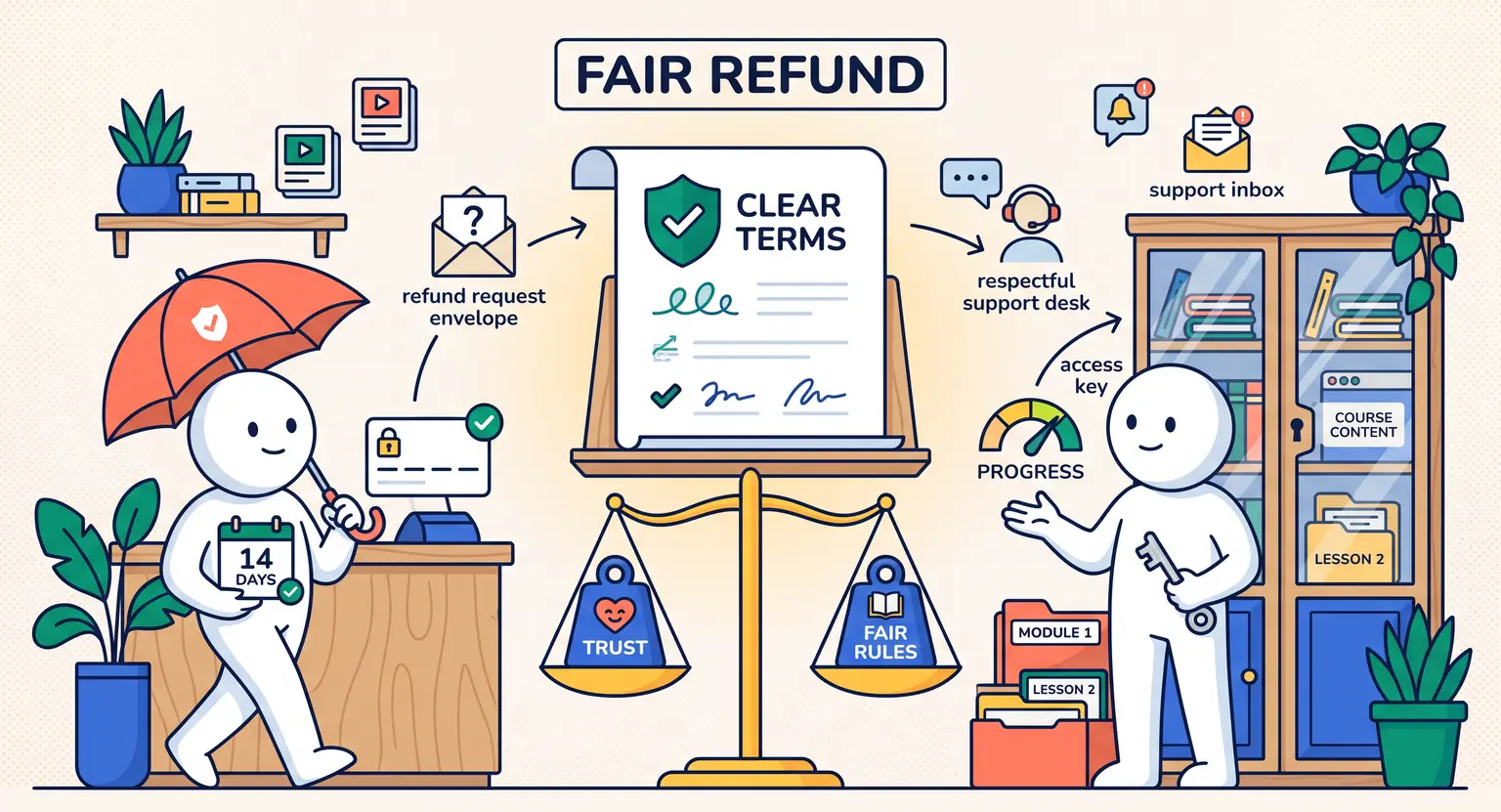 How to Create a Course Refund Policy (Templates & Best Practices for 2026)
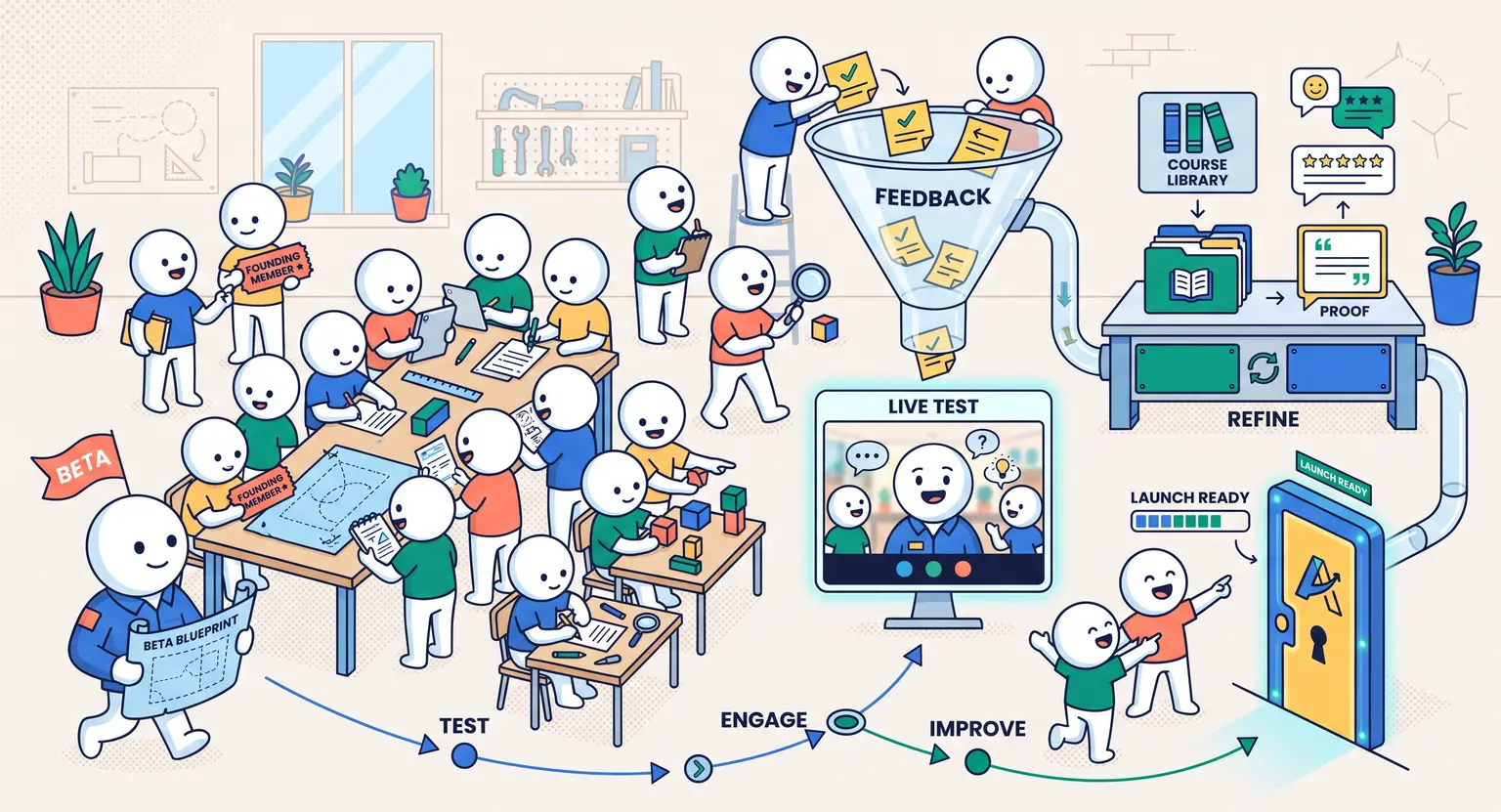 How to Run a Beta Version of an Online Course (2026 Guide)
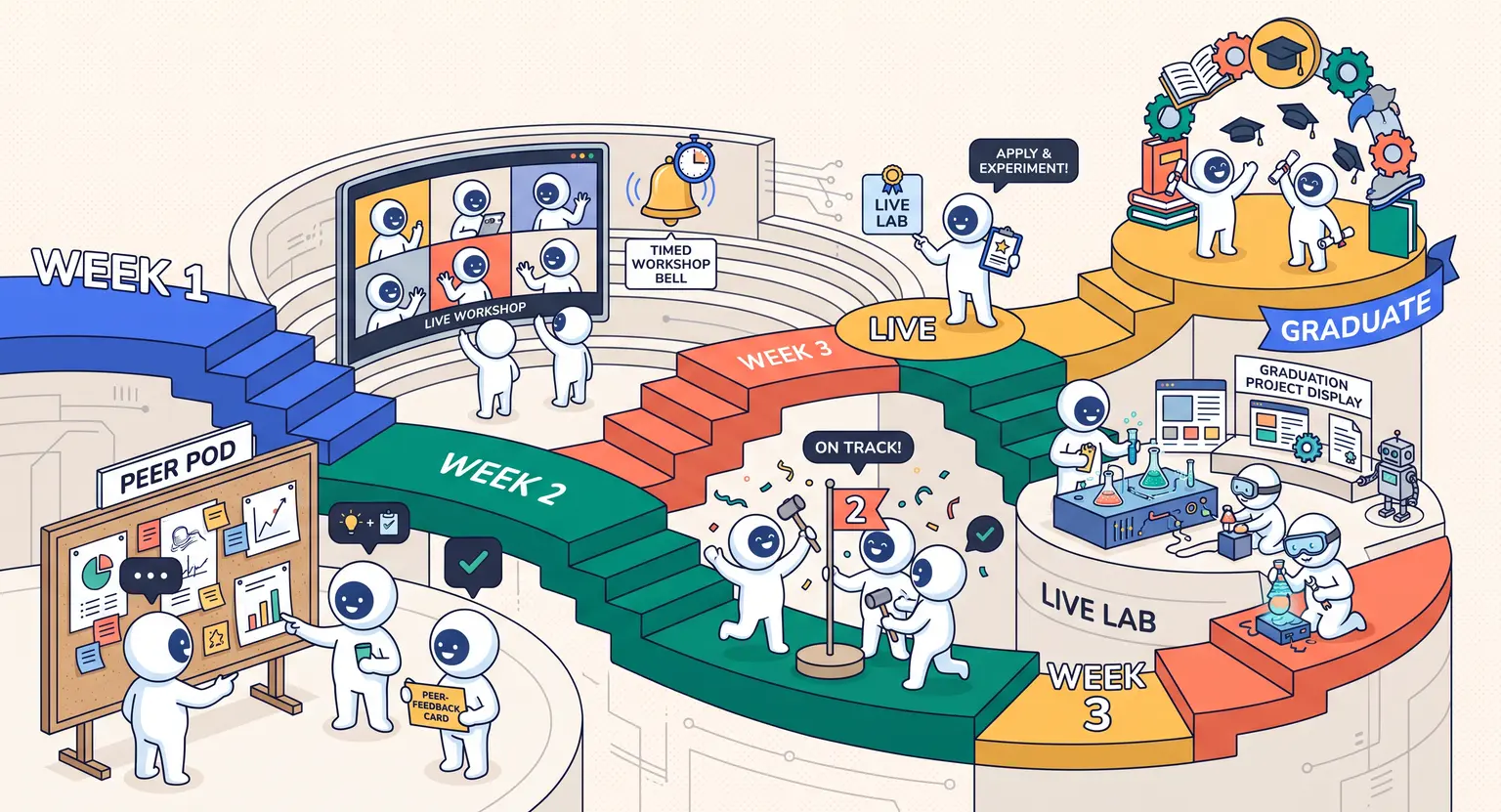 How to Create a Cohort-Based Online Course (2026 Guide)
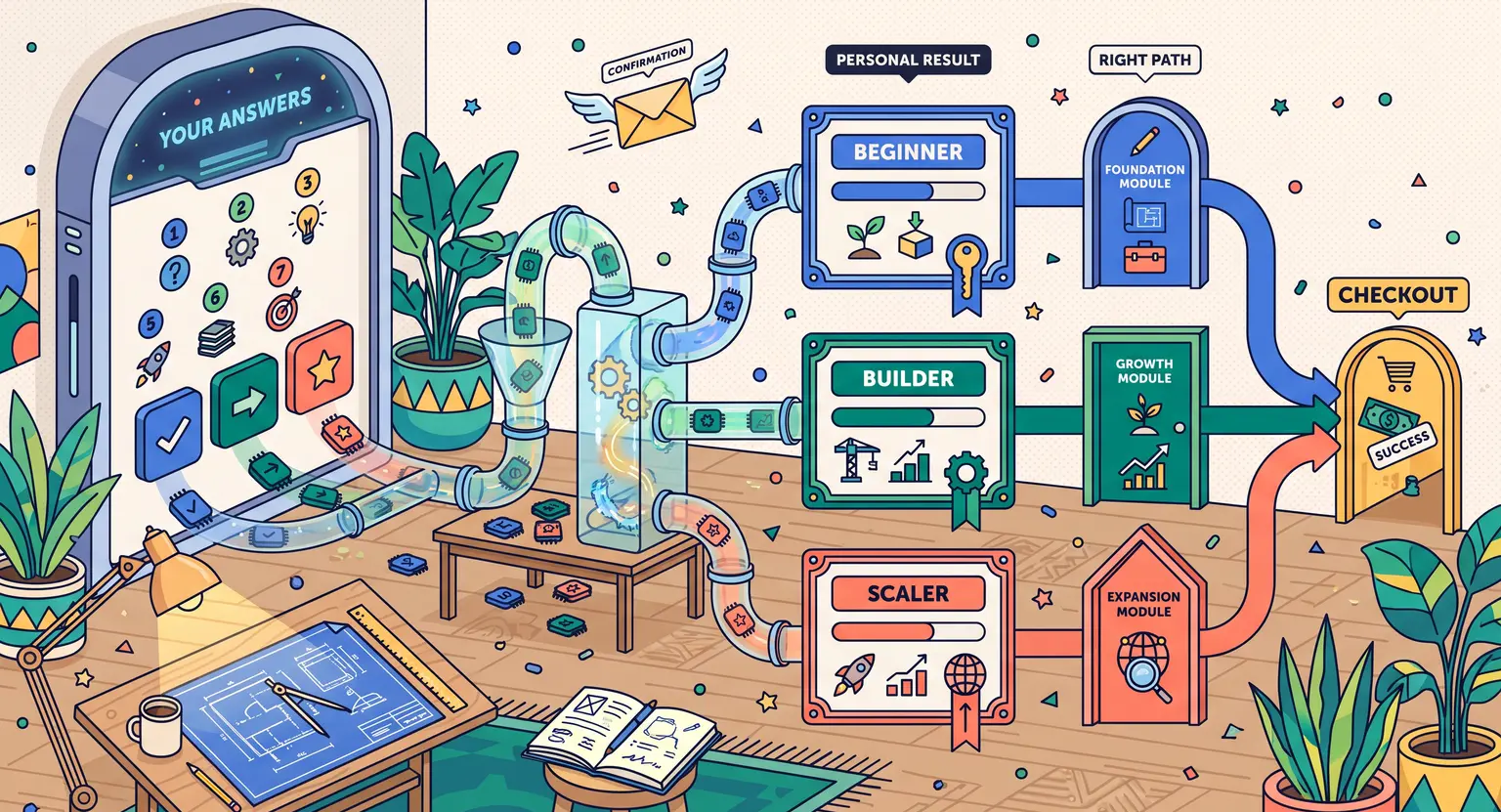 How to Sell an Online Course With a Quiz Funnel (2026 Guide)
 How to Sell an Online Course Through a Sales Call (2026 Guide)