








How to Build an Online Course Business for Acquisition (2026 Guide)
How to Build an Online Course Business for Acquisition
Selling an online education company for a life-changing payout sounds like the ultimate creator milestone. Yet hundreds of creators discover too late that their thriving, seven-figure academy is practically unsellable.
Why does this happen? Because most founders build high-income freelance gigs disguised as businesses.
If revenue collapses the moment you stop recording videos, running live webinars, or posting daily stories, buyers will walk away or offer brutal earn-out terms.
To attract private equity investors, holding companies, and strategic competitors in 2026, you must intentionally engineer your digital education venture for transferability from day one.
Key Takeaways for an Acquisition-Ready Academy
-
Decouple the creator : buyers purchase business systems, not personal reputations. Introduce guest instructors or brand-led curriculum early.
-
Predictable income streams : shift volatile one-off launches into recurring revenue business models to fetch higher valuation multiples.
-
Turnkey tech architecture : consolidate your stack using an all-in-one platform so new owners avoid messy third-party integrations.
-
Documented operations : build standard operating procedures (SOPs) for content production, customer support, and sales outreach.
1. Decouple Your Face and Name from the Product
The single greatest obstacle to selling an education company is key-person dependency. If the company is called "JaneDoeCoaching.com" and every lesson features Jane talking to a webcam, an acquirer takes on catastrophic risk when Jane exits.
Start rebranding your assets under an institutional umbrella. Instead of marketing your individual authority, market a proprietary learning framework, an industry certification, or an outcome-driven methodology.
When students enroll because they trust the system rather than the person, the underlying intellectual property becomes infinitely more valuable.
You can also diversify teaching talent across your catalog. Adopting a structured instructor revenue-sharing model allows you to bring in recognized industry practitioners.
This scales your course library quickly while proving to potential buyers that the business model runs smoothly without your personal face on camera.
2. Build Automated, Multichannel Acquisition Engines
Acquirers look for clean, repeatable customer acquisition engines that do not rely on sporadic live-launch cycles.
While a massive launch week creates impressive cash spikes, buyers dread the revenue valleys that follow.
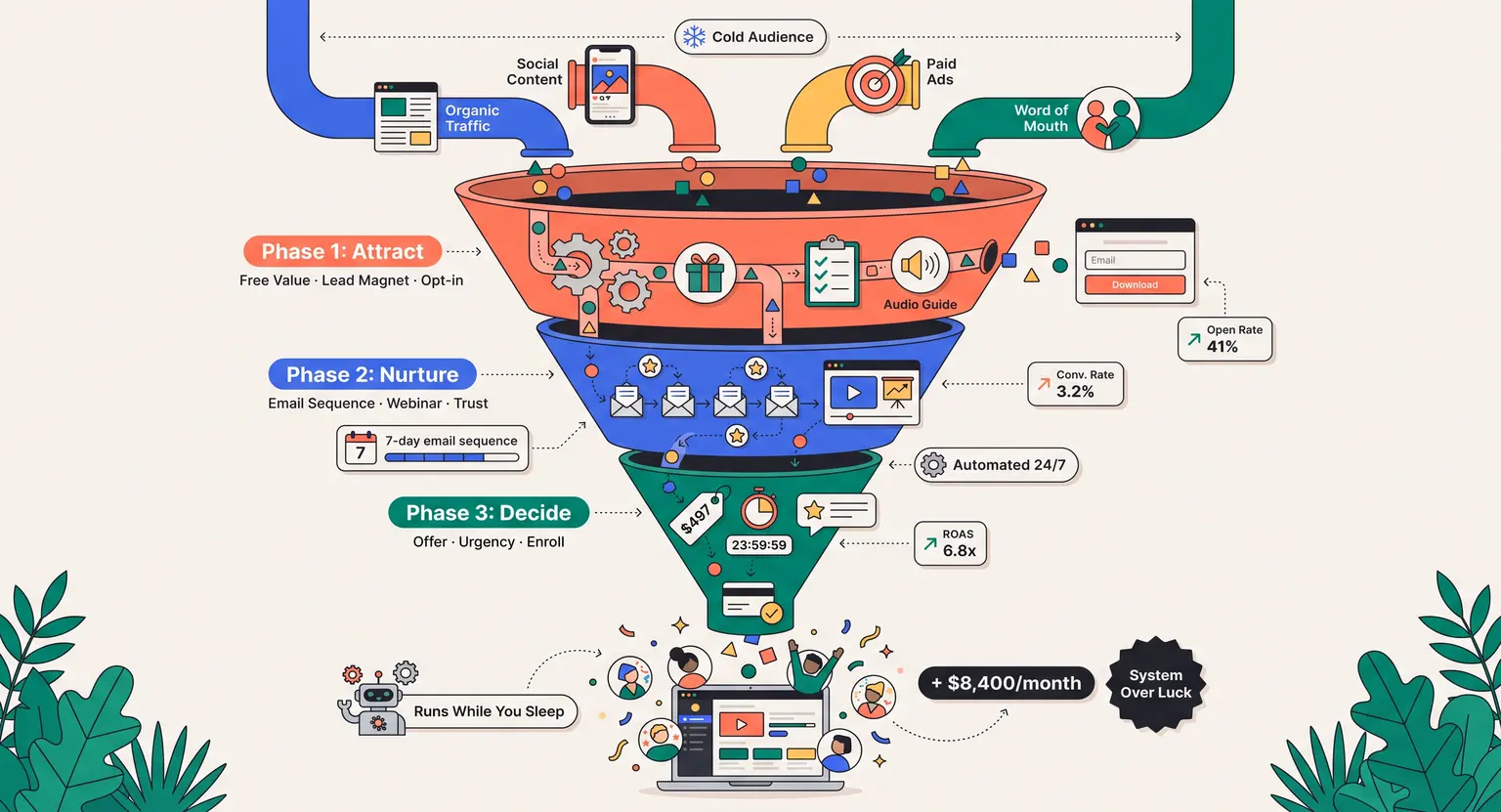
Transform your sales machinery into predictable evergreen systems. Combine organic search traffic, strategic partner referrals, and direct response paid advertising into automated funnels.
When an acquirer inspects your balance sheet, they want to see consistent daily enrollments fueled by structured marketing channels.
Smart founders pair robust paid acquisition with sophisticated backend sequences.
Implementing tailored email automation for creators ensures every subscriber receives personalized nurturing, segment-specific upsells, and deadline triggers without manual intervention.
| Business attribute | Solo creator setup (Low multiple : 1.5x - 2.5x) | Acquisition-ready asset (High multiple : 4x - 6x+) |
|---|---|---|
|
Brand identity |
Tied to individual founder persona. |
Institutional brand with proprietary methodology. |
|
Revenue structure |
Lumpy live launches; single transaction payouts. |
Predictable recurring subscriptions via a one-to-many business model. |
|
Traffic generation |
Founder social accounts and organic hype. |
Diversified SEO, affiliates, and an evergreen sales funnel. |
|
Platform operations |
Founder handles daily support, coaching, and fixes. |
Documented SOPs run by reliable virtual team. |
3. Lock In Recurring Revenue and Community Retention
Subscription models consistently trade at dramatic valuation premiums over one-and-done course sales. Why? Because predictable cash flow substantially de-risks the transaction for the incoming buyer.
If your current offerings rely strictly on isolated transactions, consider packaging them into a continuous membership, mastermind, or ongoing resource portal.
Add active community discussion, monthly office hours with guest specialists, and updated template libraries to keep members engaged long after completing core video modules.
Keep a watchful eye on your subscriber health. A buyer will dig deep into monthly churn, refund requests, and user activity.
High engagement proves the asset delivers genuine educational value that will endure under new leadership.
4. Streamline Your Tech Stack and Financial Records
Messy architecture kills deals faster than flat revenue. If your course business runs across six disconnected SaaS tools held together by fragile third-party automations, a buyer's technical team will raise red flags immediately during due diligence.
Consolidate your landing pages, email broadcasts, video hosting, and payment gateways into an integrated infrastructure.
This makes transferring administrative access seamless and eliminates costly software bloat.
Ensure your operational foundation is rock solid :
-
Maintain clean, accrual-based profit and loss statements separating personal expenses from corporate costs.
-
Secure written assignment of intellectual property for all graphics, scripts, and video materials produced by contractors.
-
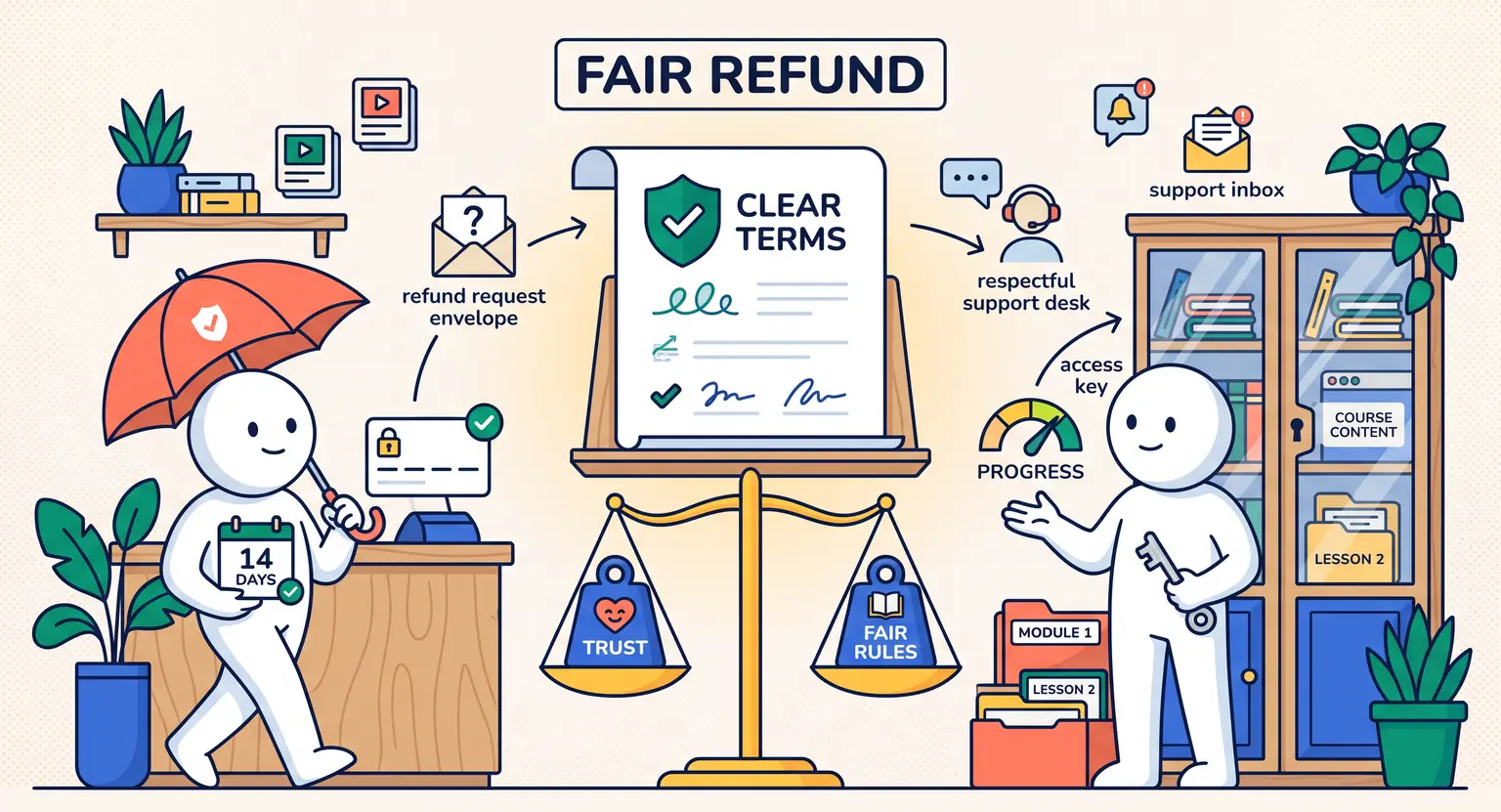
Establish clear refund and privacy policies that comply with international data regulations.
-
Organize thorough SOPs for onboarding new students, handling chargebacks, and updating curriculum.
Strategic Resources for Course Entrepreneurs
-
Master retention dynamics to maintain valuation with our guide on how to retain membership members.
-
Scale partner distribution efficiently by mastering an attractive affiliate commission structure.
-
De-risk future product launches by learning how to build a launch waitlist.
-
Optimize profit margins using data-backed online course pricing strategy frameworks.
-
Deploy integrated software to sell online courses without technical complexity.
Frequently Asked Questions
What valuation multiple can I expect for an online course business?
In 2026, content-only businesses reliant on a single creator trade around 2x to 3.5x Seller's Discretionary Earnings (SDE).
However, diversified academies featuring recurring memberships and multi-instructor models routinely secure 4x to 6x+ EBITDA from aggregators and strategic buyers.
Can I sell a course business built entirely around my personal brand?
Yes, but you will face steep valuation discounts, lengthy earn-outs, and significant transition friction. Buyers want assets that operate independently.
Transitioning your platform into an institutional brand before listing is the best way to preserve enterprise value.
How long does it take to prepare an online academy for sale?
Plan on an intentional 12 to 24 month runway.
This timeline gives you adequate room to clean your financials, standardize operating procedures, automate marketing funnels, and test team-led customer support.
What operational metrics matter most during buyer due diligence?
Acquirers scrutinize churn rate, customer acquisition cost (CAC), lifetime value (LTV), student completion rates, and the proportion of traffic generated from organic search versus paid ad spend.








 How to Create a Course Refund Policy (Templates & Best Practices for 2026)
 How to Run a Beta Version of an Online Course (2026 Guide)
 How to Create a Cohort-Based Online Course (2026 Guide)
 How to Sell an Online Course With a Quiz Funnel (2026 Guide)
 How to Sell an Online Course Through a Sales Call (2026 Guide)