








How to Create an Instructor Revenue-Sharing Model (2026)
How to Create an Instructor Revenue-Sharing Model
Running a solo course business is great until you hit an inevitable ceiling - you only have so much time, and your personal expertise only stretches so far.
Bringing outside experts into your academy transforms your brand into a destination, but paying upfront salaries or high production advances can drain your bank account before a single student enrolls.
That is where a well-engineered revenue-sharing system changes everything. When you align incentives, instructors become active partners who want the academy to win, but if your payout terms are vague, you will run into messy accounting arguments, attribution disputes, and resentment.
Let's walk through how to build a rock-solid, profitable instructor revenue-sharing model that attracts top talent and protects your bottom line.
Key Takeaways for Academy Founders
-
Always split net revenue, never gross revenue, after processing costs, taxes, and refund reserves.
-
Use attribution-based tiers : reward instructors who bring their own traffic with 70% to 80%, while paying 30% to 50% for platform-generated sales.
-
Run your ecosystem through an all-in-one platform to sell online courses to automate partner tracking and member access.
-
Implement a 30-day payout delay to accommodate refund cycles and chargebacks seamlessly.
The Financial Foundation : Gross vs. Net Revenue
The single biggest mistake academy owners make is agreeing to a split based on top-line sales.
If a student buys a course for $500 and you promised an instructor 50%, sending them $250 out of hand means you lose money on transaction fees, VAT, affiliate commissions, and advertising overhead.
You must define net receipts with absolute clarity inside your contract. Here is the formula healthy platforms use :
-
Gross Revenue (sale price paid by customer)
-
Minus payment processing gateway fees (Stripe/PayPal 2.9% + $0.30)
-
Minus direct sales taxes or VAT remitted
-
Minus third-party affiliate commissions paid on that specific sale
-
Minus direct paid ad acquisition cost (if explicitly agreed upon)
-
Equals distributable net revenue
Once you establish that distributable pool, apply your contract percentage. This ensures your academy never subsidizes external payment fees out of its operational margin.
Four Proven Revenue-Sharing Frameworks
Different business models call for different partnership structures. Your split depends heavily on who does the heavy lifting for marketing, video production, and ongoing community support.
1. The Traffic-Source Attribution Model (Recommended)
This is the most balanced framework for growing academies. It rewards creators for self-promotion while fairly compensating the platform for organic distribution.
If an instructor directs their own social media followers or newsletter subscribers to the course via their private link, they receive a generous split (typically 70% to 80%).
But if a student finds the course through your platform search, internal email broadcasts, or retargeting ads, the platform keeps the lion's share (typically 60% to 70%), leaving the instructor with 30% to 40%.
Setting your baseline rates requires knowing your online course pricing strategy so both sides understand their projected earnings per transaction.
2. The Production-Tiered Split
Who builds the curriculum, edits the video, writes the student workbooks, and uploads everything?
If your team handles complete script editing, filming, studio rental, post-production, and course staging, you are acting as a digital publisher. In that scenario, a 20% to 35% instructor royalty is standard.
If the instructor delivers finished, ready-to-publish assets and only requires your hosting and audience, the split moves closer to a 50/50 baseline.
3. The Subscription Engagement Pool
If you run an all-access membership academy where students pay a monthly or annual fee, you cannot split individual course sales directly. Instead, create a creator royalty pool (e.g., allocating 30% of total subscription receipts every month).
Distribute that pool among instructors based on verified watch time, lesson completions, or quiz submissions.
If Instructor A generated 25% of total platform watch minutes in March, they receive 25% of that month's creator pool.
4. The Fixed-Term Joint Venture
For high-ticket flagship programs co-developed between two industry figures, founders often use a 50/50 joint venture model with a sunset clause.
Both parties co-teach, split ad budgets down the middle, and share profits equally for an agreed window of 12 to 24 months before renegotiating terms.
Comparing Split Structures
Here is a breakdown of how the primary compensation models compare in practice :
| Model | Typical creator split | Best used for | Tracking complexity |
|---|---|---|---|
|
Attribution-based |
70%-80% (Self) / 30%-40% (Platform) |
Growing multi-author academies. |
Moderate (requires tracking tags). |
|
Full-service publisher |
20% - 35% net. |
High-production masterclasses. |
Low (flat royalty payout). |
|
Membership pool |
Pro-rata share of 25%-35% pool. |
Subscription platforms using recurring revenue business models. |
High (requires LMS analytics). |
|
Affiliate co-marketing |
Standard affiliate commission structure (40%-50%). |
Standalone mini-courses. |
Low (automated affiliate link). |
Essential Clauses in an Instructor Revenue Agreement
Handshake deals ruin friendships and torpedo businesses. You need a simple, unambiguous written contract before recording begins.
Make sure your agreement covers these core operational terms :
-
Intellectual property & licensing : clarify whether the instructor retains raw copyright while granting your platform an exclusive or non-exclusive worldwide distribution license.
-
Exclusivity windows : if you invest heavy marketing capital into their course, require a 6-to-12-month non-compete clause preventing them from publishing the identical curriculum on competing marketplaces.
-
Course maintenance obligations : who answers student questions in the community? How often must the instructor update outdated modules? Tie royalty longevity to active curriculum upkeep.
-
Payout schedules & holdbacks : institute a standard 30-day payout buffer. If a customer buys on January 5th and your money-back guarantee lasts 30 days, settle the instructor payout during the first week of March.
-
Termination & sunset royalties : if either party wants to part ways, specify how existing students retain access and how residual payouts taper off.
Automating Payouts and Preventing Revenue Leaks
Trying to manage revenue splits manually on spreadsheets becomes a nightmare once you have more than three instructors. Human calculation mistakes will inevitably lead to mistrust.
Use an LMS and merchant ecosystem that handles automated sub-account splits or generates itemized monthly earning statements.
Keep your accounting transparent by giving instructors access to a dashboard displaying their real-time enrollments, gross sales, platform deductions, and pending payouts.
When partners can see their numbers clearly without having to email you for updates, they trust your platform and focus on creating better educational experiences.
Explore Further Insights
-
Discover the best practices to sell online courses efficiently at scale.
-
Explore how to build scalable assets with a one-to-many business model.
-
Study monetization avenues in our guide on how to make money with online courses.
-
Plan long-term exit value with our guide on how to build an online course business for acquisition.
Frequently Asked Questions
Should I pay instructors based on gross revenue or net revenue?
Always calculate splits on net revenue.
Subtract payment processing charges via LearnyPay secure payments or third-party gateways, direct platform transaction fees, applicable sales taxes, and a small refund reserve before applying your agreed percentage split.
Calculating on gross revenue eats into your academy margins very quickly.
What is the industry average revenue split for guest instructors?
The standard split ranges between 30% to 50% for instructors when the platform brings the student.
When an instructor brings their own audience via their custom tracking link, splits usually jump to 70% or 80% in favor of the creator.
How do you handle student refunds in a revenue-share agreement?
Hold payouts on a 30-day rolling delay matching your return policy window.
If a student requests a refund during that time, deduct the refunded amount from the instructor's ledger prior to monthly settlement.
Can I switch instructors from a flat fee to a revenue share later?
Yes, but you must rewrite the intellectual property and licensing clauses.
Offer grandfathered royalties or tiered bonuses so the instructor feels rewarded for helping update and maintain the curriculum over time.






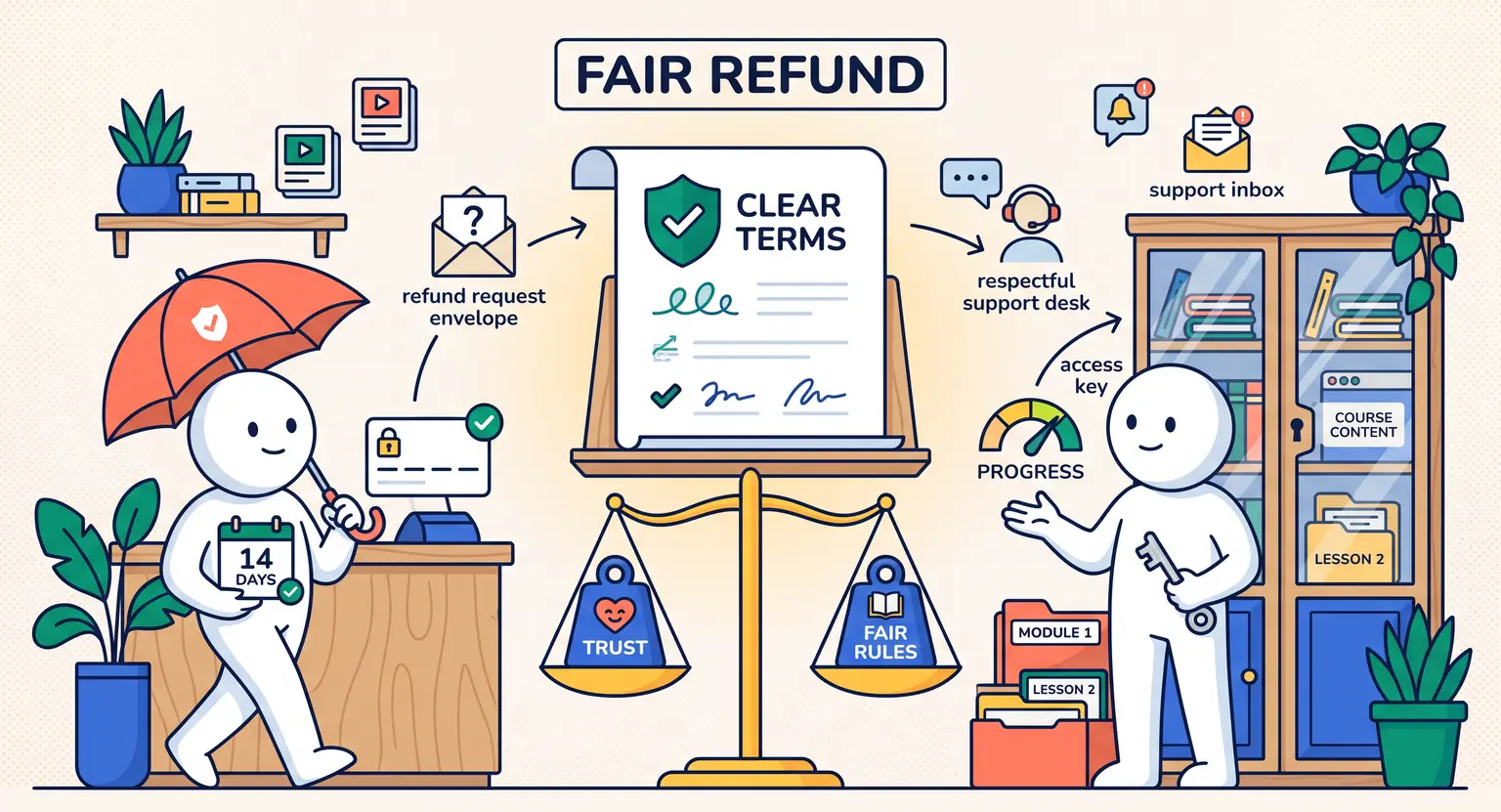 How to Create a Course Refund Policy (Templates & Best Practices for 2026)
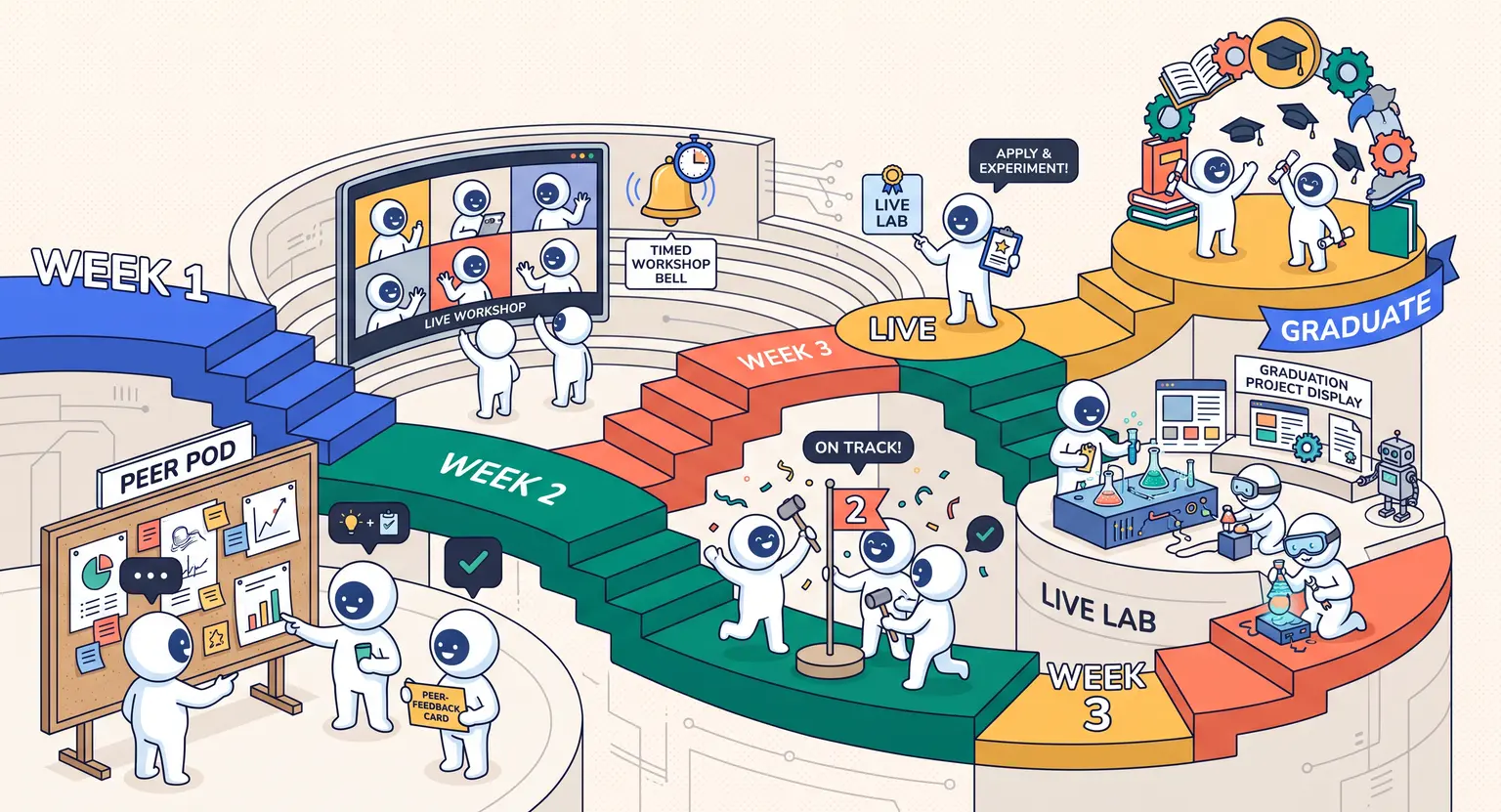 How to Create a Cohort-Based Online Course (2026 Guide)
 How to Sell an Online Course With a Quiz Funnel (2026 Guide)
 How to Sell an Online Course Through a Sales Call (2026 Guide)