







How to Handle Chargebacks for Online Courses (2026 Guide)
How to Handle Chargebacks for Online Courses
Quick Wins : Defeating Course Chargebacks
-
Act quickly : you only have a tiny window to submit your evidence to the payment processor.
-
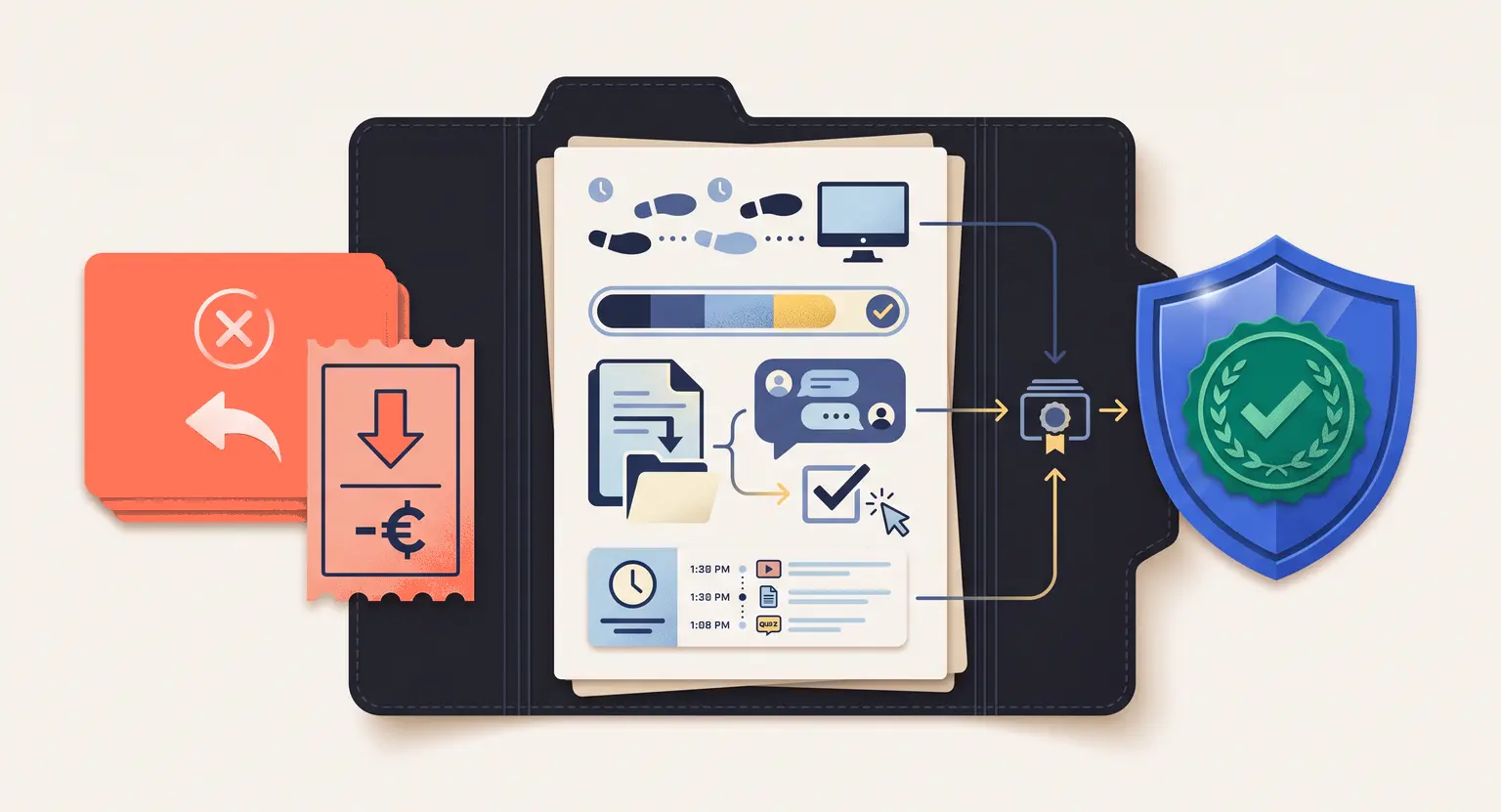
Solid documentation : keep student login logs, course progress metrics, and community posts as bulletproof proof.
-
Clear policies : having a visible terms of sale and a clear privacy policy stops friendly fraud in its tracks.
-
Payment security : use highly secure specialized checkouts like Learnypay secure payments to block fraudulent card details before they get through.
Imagine waking up, grabbing your morning coffee, and opening your dashboard only to see… a negative balance.
You did not get a refund request. Instead, a student went straight to their bank and declared that your online masterclass was a fraudulent transaction. This is the dreaded course creator chargeback.
It is frustrating, it is expensive, and unfortunately, it is becoming more common as digital education expands.
But do not panic. While banks often side with buyers, you are not helpless. As a course creator, you have digital footprints that prove your students accessed and enjoyed your course.
We are going to break down exactly how you can fight back against these disputes, protect your hard-earned course revenue, and stop digital pirates from taking advantage of your hard work.
By choosing the right tech stack, you can render your checkout system virtually immune to malicious disputes.
What Exactly is a Chargeback (and Why Do Course Creators Get Them)?
A chargeback happens when a customer bypasses you completely and asks their credit card issuer to reverse a transaction. The bank immediately pulls the money from your account, charges you a steep fee (usually between $15 and $100), and places the burden of proof squarely on your shoulders.
It is a system originally built to protect consumers from fraudulent physical merchants, but today it is often weaponized against creators.
Why does this happen so often to digital products? Unlike a physical book or a pair of shoes, there is no physical package delivered to a doorstep. This makes premium digital coaching packages and virtual education courses prime targets for credit card disputes.
Students might buy a course on a whim, regret the purchase because they did not have time to finish it, and decide that claiming "unauthorized transaction" is easier than asking for a refund.
This pattern of behavior is a classic issue in modern infopreneurship… Some students simply do not respect intellectual property the same way they respect physical items.
They assume that because your product is digital, there is no real cost to you when they force a refund through their bank network.
Also, if you run a complex billing setup, payment disputes can arise over recurring fees. If you offer payment plans versus one-time payments, some students forget they signed up for ongoing monthly draft cycles. When the card hits again, they panic and call their bank.
Knowing how to prepare for these situations is absolutely essential, especially when you are scaling up your digital academy and raising your prices.
Friendly Fraud Versus Real Disputes in the Digital Learning World
Not all chargebacks are malicious. Sometimes, a customer genuinely does not recognize the name on their credit card statement because your business name differs from your public brand. This is why keeping your billing descriptor clear and recognizable is vital.
However, a massive portion of online course chargebacks fall into a category known as "friendly fraud."
Friendly fraud occurs when a customer gets exactly what they paid for but files a claim anyway. They might claim they never received the login details, that the content was not as described, or that their child bought the course without permission.
In reality, they simply wanted a free ride. Perhaps they binged your entire curriculum over a weekend, downloaded your worksheets, and then hit the dispute button to get their money back.
As digital courses grow in popularity, certain consumers have learned to exploit bank policies to consume masterclasses completely for free. This is why you must protect your assets with tracking software that notes client activity, lessons viewed, and course materials downloaded.
This is different from a failed payment, which happens because of card expiration or lack of funds. If you want to know more about handling passive payment drops, read our guide on handling failed payments for online courses.
Chargebacks, on the other hand, require active defense and direct strategy to protect your business.
Comparing Payment Disruptions
Understanding what you are up against is the first step. Here is a quick breakdown of how chargebacks compare to other payment issues.
| Issue type | Initiator | Financial penalty | Impact on business |
|---|---|---|---|
|
Refund |
Student requests it from you. |
None - you lose the sale. |
Low. Keeps the customer relationship intact. |
|
Failed payment |
Payment gateway and bank network. |
None - unpaid invoice. |
Medium. Disrupts your cash flow until recovered. |
|
Chargeback |
The student's bank. |
High - card network penalty fee. |
Severe. Can hurt your processing account terms if too high. |
The Step-by-Step Defense Guide for Representment
When a dispute arrives, you have to decide whether to fight it. If a customer is clearly acting in bad faith, you should present your evidence. This process is called representment. Here is a clear strategy to handle it without losing your mind.
First, you must carefully collect your undeniable proof. You must show the bank that the student logged in and digested your lessons.
This is why choosing a robust system is critical. If you are still exploring options, picking the best platform to sell online courses ensures you have direct access to detailed student metrics. Gather the following documentation :
-
IP addresses and exact timestamps of when they logged in.
-
Course completion status showing how many video modules they watched.
-
Any messages or assignments they submitted inside your community forum.
-
PDF download logs of your supplemental worksheets.
Next, write a highly professional, very brief, and factual cover letter. Keep your emotions out of it. Banks do not care that you spent six months filming your videos. They only care about cold, hard facts.
Clearly explain that the student agreed to your policies during checkout and utilized the digital assets.
Once you lay out the server access logs alongside your signed checkout agreements, the bank has very little room to argue. Their goal is to close the file as quickly as possible. Presenting an organized PDF packet increases your win rate significantly.
If you sell globally, you might find that fighting international claims requires even cleaner record keeping. Creators who sell online courses internationally must remember that international card issuers have slightly different dispute guidelines, but having a clean paper trail works wonders across all jurisdictions.
Preventative Strategies to Protect Your Business
Winning a chargeback is great, but avoiding them entirely is the real goal. The highest converting strategy to keep dispute rates low is to streamline your customer service channels.
If a student is unhappy, make it incredibly easy for them to get a refund from you directly. A quick refund costs you the sale, but it saves you the chargeback fee and protects your reputation with Visa and Mastercard.
Also, write an incredibly clear billing descriptor. Make sure the name on their credit card bill matches your website name or domain. If you run multiple projects, consider creating a designated billing descriptor for your coaching offer.
This is very important if you decided to learn how to start an online coaching business alongside your digital courses.
Finally, charge appropriately. Designing an elite online course pricing strategy can actually weed out bad-fit buyers who are highly likely to dispute their transactions later.
Here are some highly effective preventative methods :
-
Send immediate payment confirmation emails with clear and easy login details.
-
Require checking a mandatory box agreeing to your refund policy before they click pay.
-
Always notify students three days before recurring subscription renewals.
-
Offer quick response live chat options right inside your student dashboard.
Frequently Asked Questions
Can I sue a student for a chargeback?
While you theoretically can take a customer to small claims court for a chargeback breach of contract, the legal costs almost never make sense. Instead, focus on using automated disputing tools, clean host server logs, and robust customer refund policies to settle the issue before it ever gets messy.
Does a high chargeback rate hurt my merchant account?
Yes, keeping your chargeback rate below 1% is crucial. If your dispute rate rises above this threshold, payment processors will label you high risk, freeze your funds, charge higher transaction fees, or completely shut down your account.
What if a customer bought my course in a different currency?
Cardholders can initiate a dispute regardless of currency. When you accept multiple currencies, the process remains the same, but you must ensure your checkout currency conversion calculations are transparently displayed to avoid confusion.
Is there a time limit to fight chargebacks?
Yes, you typically have between 7 and 21 days from the date the dispute is launched to submit your representment evidence. Missing this critical deadline means losing the dispute automatically, which is why checking your email notifications daily is incredibly vital for financial safety.









 How to Run a Beta Version of an Online Course (2026 Guide)
 How to Create a Cohort-Based Online Course (2026 Guide)
 How to Sell an Online Course With a Quiz Funnel (2026 Guide)
 How to Sell an Online Course Through a Sales Call (2026 Guide)