






How to Handle Copyright Infringement of Your Online Course (2026 Guide)
You spent months recording lessons, drafting comprehensive workbooks, and perfecting your syllabus. Then, one quiet evening, you do a quick search and find your entire course listed on a shady forum or a competitor's site.
It feels like someone broke into your home. The anger is real, and so is the financial hit. But getting mad does not remove the stolen content. Getting structured does. Resolving copyright theft online is not as impossible as it looks...
You do not always need an expensive lawyer to start fighting back.
Let us walk through how to handle this mess step by step and keep your livelihood safe.
We know how much heart, time, and soul goes into building a successful educational business. When foreign pirate communities treat your hard earned files as free candy, it directly threatens your financial path - But you have tools, laws, and simple methods to reclaim your digital space safely.
Quick Action Guide
-
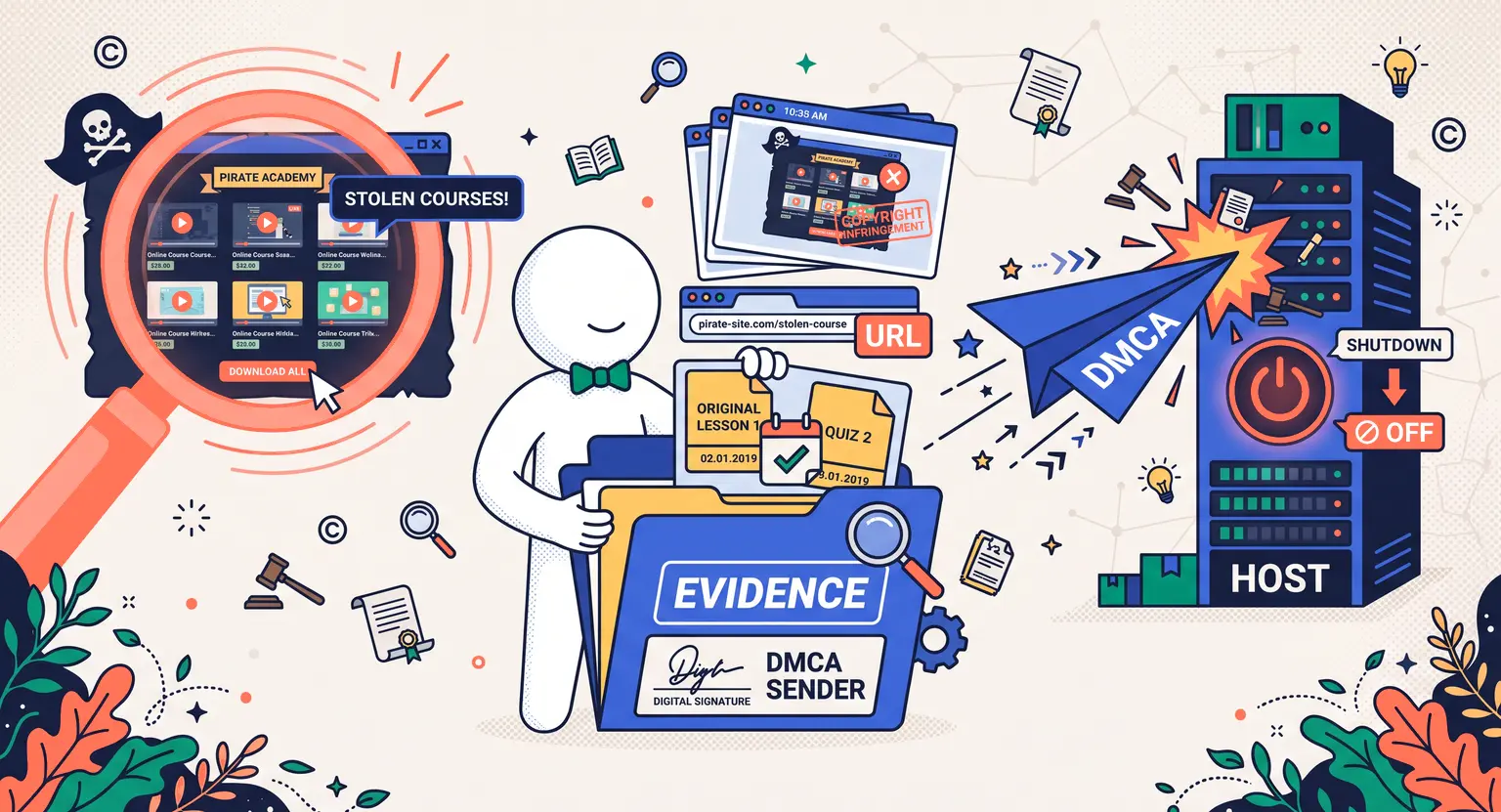
Document Evidence : Capture high quality screenshots of the offending web pages, copy raw URLs, and grab pricing copies right away.
-
Send Warning Email : Frequently, a polite, firm notice directly to the offender resolves the issue without legal drama.
-
Draft DMCA Infraction : If the thief ignores your warning, look up their backend hosting provider and file a formal takedown request immediately.
-
Secure Assets Proactively : Prevent future copyright damage by hosting your content inside protected and encrypted digital student environments.
Stop the Bleeding : Find the Theft Early
You can't fight what you can't see. Most course creators only spot piracy when loyal students flag it, but you should not rely on luck. Active tracking saves valuable time.
Think of it as your digital tripwire. When someone crosses that threshold, you are notified instantly instead of discovering the financial damage many months down the road.
It is vital to confirm who actually owns the course content before you make any public accusation. Having highly organized, dated proof of your creation is your absolute foundation.
-
Automated Tracking Alerts : Set up search notifications for your course name, signature catchphrases, or brand slogans.
-
Reverse Image Lookups : Regularly run your promotional graphics, cover artwork, and lecture slides through engine scans to catch copycats.
-
Copyscape Screenings : Paste chunks of your unique written curriculum or sales pages to detect uncredited copying.
-
Check Shared Channels : Scan known discount forums, Telegram channels, and grey market digital marketplaces where bad actors operate.
-
Listen to Your Community : Keep an anonymous reporting form on your active student portal so your community can whistleblow.
Friendly Warning vs. DMCA Takedown
Once you spot a clear violation, you have to choose your entry strategy.
Sometimes, another creator honestly did not realize they crossed the line of acceptable use. Other times, you are dealing with a professional syndicate.
Let's compare your options to see which route fits your current situation :
|
Strategy |
Ideal Scenario |
Core Advantage |
Main Disadvantage |
|
Cease and Desist |
Competitors mimicking curriculum style or accidental over use of course slides |
Fast resolution, keeps things friendly, low cost |
Easily ignored by dedicated pirates |
|
DMCA Takedown Notice |
Unauthorized course uploads, warez portals, stubborn copycats |
Exceptionally high success rate, bypasses the thief entirely |
Requires finding the host of the site |
|
Legal Escalation |
Commercial scale theft or systematic resale generating high revenues |
Secures real damages, sets a permanent legal precedent |
Extremely expensive, highly time consuming |
So, how do you decide? If a competitor borrows your structure, a sharp email might suffice. For blatant piracy, go straight to the hosting provider.
Check how to protect your broader intellectual property to build a solid defense beforehand. This keeps your business safe while you coordinate your launch steps.
Issuing a Formidable DMCA Takedown Notice
If the gentle path is completely useless, the DMCA is your strongest legal shield. You do not send this directly to the thief. Instead, you send it to their hosting company. Web hosts are legally required to remove copyrighted content quickly to maintain their own liability protections.
To find the actual web host, plug the offender's URL into a lookup directory like WhoIs. Once identified, locate their abuse or DMCA contact address.
Your formal notice must contain specific details :
-
Provide your contact details first
-
State where your original work is hosted
-
Link the exact infringing copies
-
State your good faith belief that the usage is unauthorized
-
Swear under penalty of perjury that your information is completely accurate and add your physical or digital signature
Keeping your records organized always makes this legal process seamless. Ensure your student hub has the required legal documentation for your site to prove ownership standards clearly to any hosting company or legal entity that reviews your complaints.
Bulletproofing Your Hard Work for the Future
Preventative safety measures are always better than damage control. You might not stop every pirate, but you can make your business an extremely tough target.
When security is tight, lazy thieves move on to easier victims.
-
Choose Premium Hosting : Cheap platforms make downloading raw source videos extremely easy. Always use tools that block screen recording, disable right clicks, and encrypt video paths.
-
Apply Dynamically Patched Watermarks : Place clear, visible watermarks over your lectures, showcasing student registration codes or email addresses to deter sharing.
-
Introduce Live Pillars : Recorded media can be copied. Live group calls, interactive community spaces, and personal feedback cannot be duplicated.
-
Draft Solid Terms : Make active students agree to clear, legally binding terms of use before they access page one.
-
Drip Feed Materials : Release your lectures over weeks rather than dropping everything at once, preventing bulk extraction on day one.
Running your school on all in one platforms to host and sell courses removes much of this weight. Secure setups paired with preventing piracy on your school will stop theft.
Frequently Asked Questions
What if the thief is located outside my country?
Even if an infringer lives overseas, their hosting company, payment gateway, or domain registrar is usually bound by international copyright treaties.
You can still file DMCA requests directly with their hosting provider. If you find they are using major, reliable payment systems like Stripe or PayPal, report the unauthorized resale immediately to freeze their merchant accounts and funds.
Does sharing student credentials count as copyright infringement?
Yes. Sharing login details violates your digital license terms and is legally classified as piracy.
You can actively fight this bad behavior by preventing login sharing among students using advanced security measures like multi device blockades and automated IP tracking on your platform.
Should I hire a lawyer to write a cease and desist letter?
Not right away. You can easily write and deliver a solid, highly formal cease and desist letter yourself using reliable templates found online.
However, if the theft continues to hurt your business profits and standard takedown attempts fail, consulting an expert professional intellectual property attorney in your area is a smart investment.







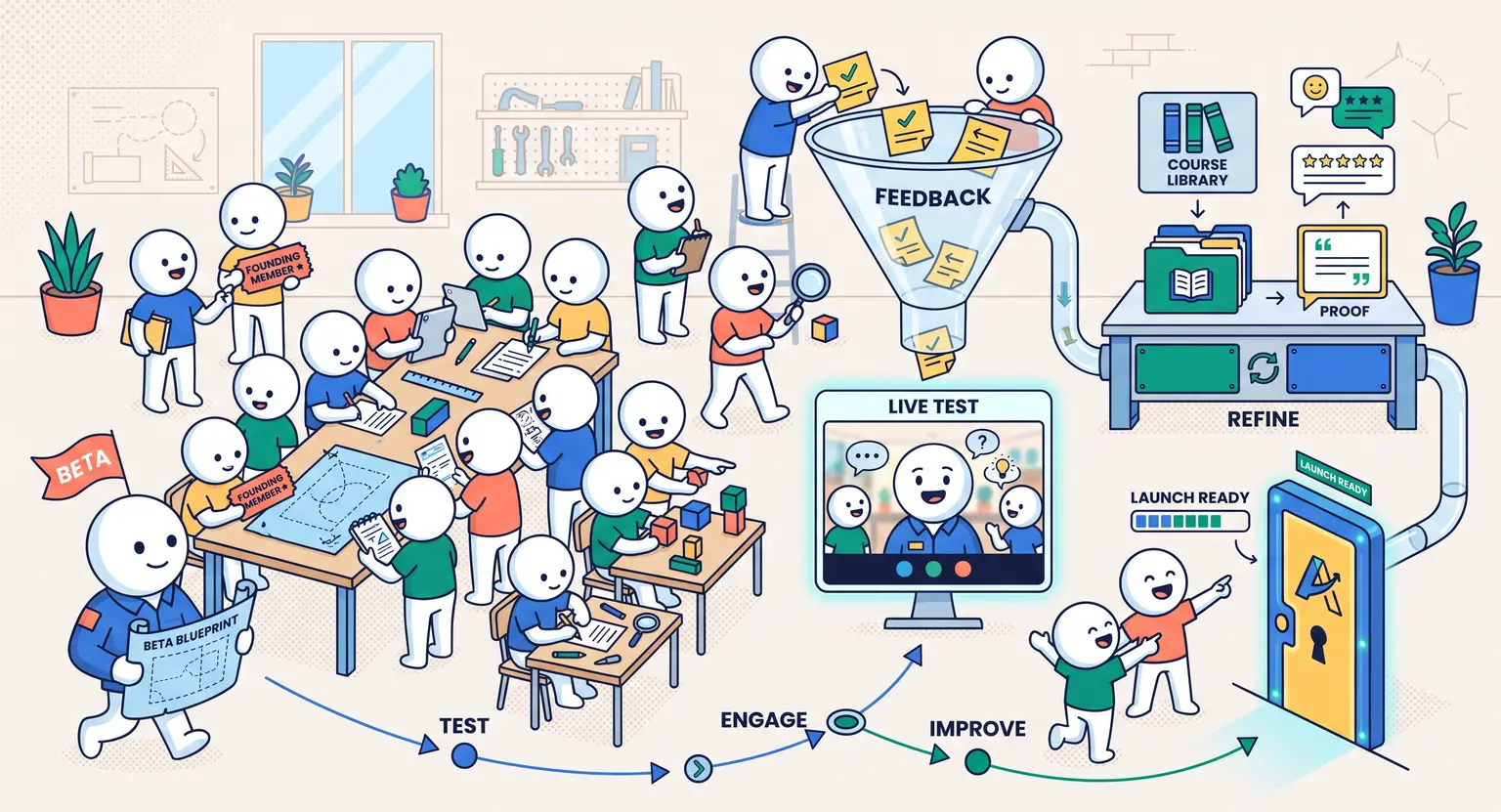 How to Run a Beta Version of an Online Course (2026 Guide)
 How to Create a Cohort-Based Online Course (2026 Guide)
 How to Sell an Online Course With a Quiz Funnel (2026 Guide)
 How to Sell an Online Course Through a Sales Call (2026 Guide)