







How to Use Gamification in an Online Course (2026 Guide)
How to Use Gamification in an Online Course
Key Takeaways for Course Creators
-
Gamification taps into human psychology by combining intrinsic curiosity with extrinsic milestone rewards.
-
Focus on small, quick wins during the first 48 hours to build strong study momentum.
-
Explore how to use digital badges to motivate students at meaningful transformation checkpoints.
-
Tie every game mechanic directly to actual skill acquisition rather than vanity point collection.
-
Prioritize clean implementation that complements your strategy for creating engaging course content.
Let's be honest about the elephant in the room : most people who buy online courses never finish them. Industry studies show average completion rates hovering between 5% and 15%.
That is painful to hear when you have poured weeks of effort, expertise, and heart into building a curriculum.
Students start with great intentions. They buy the program on a Sunday evening, watch the introductory module with excitement, and then life gets in the way. By Wednesday, your course tab sits buried beneath twenty other open browser windows.
So how do you pull learners back into the experience without sending annoying reminder emails every twelve hours? You make the learning experience intrinsically satisfying, dynamic, and fun. That is where intentional gamification changes everything.
Gamification is not about turning your serious business or coding program into a flashy arcade game.
Instead, it is the deliberate application of game design elements - like clear progress loops, meaningful challenges, friendly stakes, and milestone celebrations - to non-game environments.
When executed properly, it transforms lonely self-paced study into an engaging personal quest.
The Psychology of Gamified Learning : Why Our Brains Crave Progress
Why do millions of adults spend their free time completing daily streaks on language apps or leveling up digital avatars? The answer comes down to behavioral neuroscience and self-determination theory.
When an online student accomplishes a defined task and receives instantaneous feedback, the brain releases a small surge of dopamine.
This chemical response reinforces the behavior, creating a positive neurological feedback loop. You want your learners to think : "That felt great, let me finish just one more lesson."
Game mechanics support three fundamental human needs :
-
Autonomy : learners feel in control of their journey, choosing specific paths or elective projects.
-
Competence : clear skill progression shows visible proof that their abilities are expanding.
-
Relatedness : shared challenges, social leaderboards, and peer interactions make education collaborative rather than isolating.
When you align these psychological drivers with well-crafted curriculum milestones, studying stops feeling like a chore and starts feeling like an earned progression.
5 High-Impact Gamification Mechanics You Can Add Today
You do not need an engineering degree or a gaming studio budget to gamify your course. You simply need to implement the right mechanics at the right stages of your student's learning lifecycle.
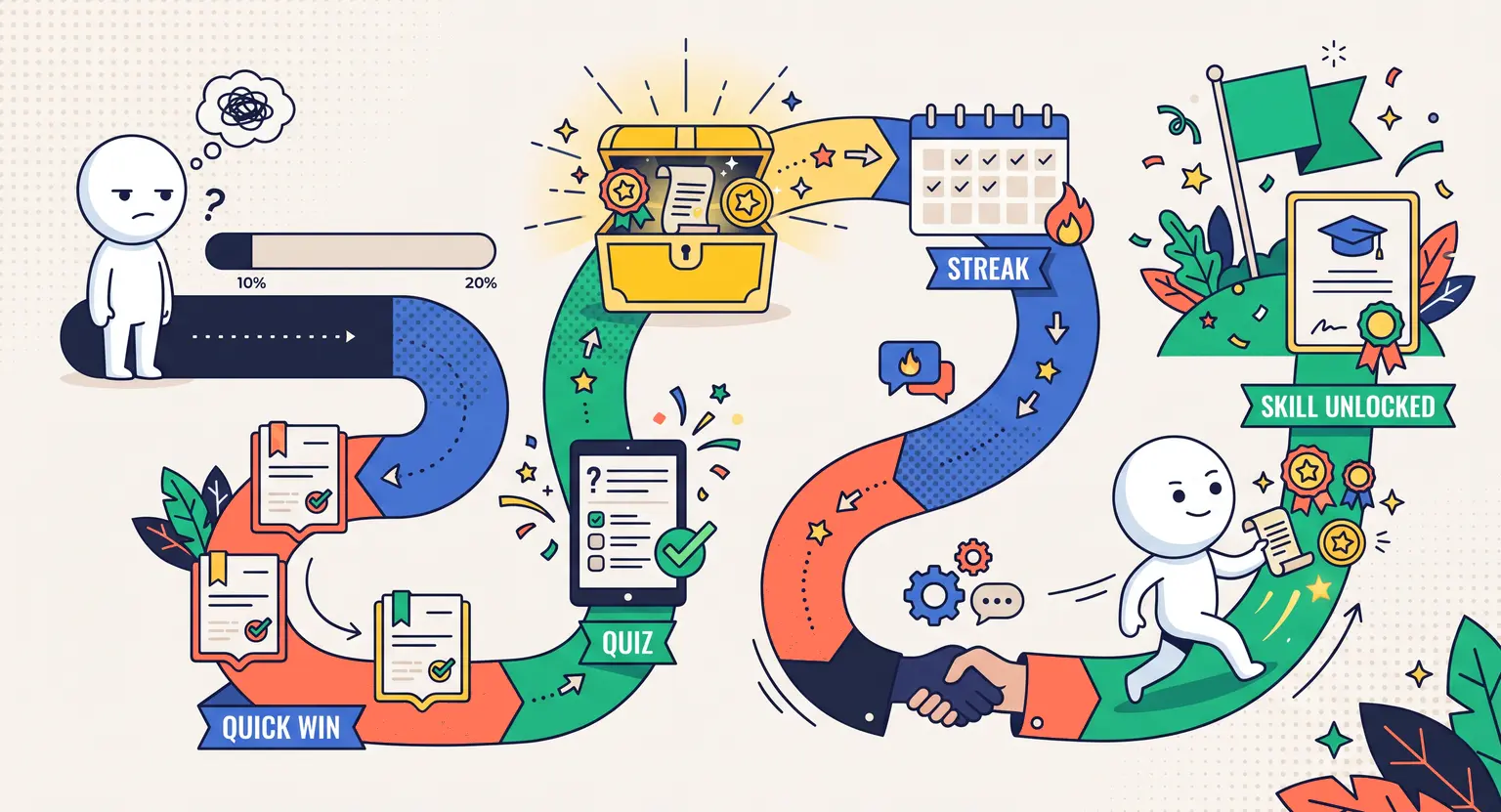
1. Micro-Milestones and Dynamic Progress Trackers
Nothing kills motivation faster than staring at a giant progress bar stuck on 3% after two hours of intensive reading. Traditional course modules feel like endless marathons because milestones are spaced too far apart.
Break your curriculum into micro-steps. Instead of asking students to finish a two-hour lecture, break that material into four distinct bite-sized videos accompanied by quick action tasks. Seeing a visual progress bar jump forward every ten minutes builds powerful momentum.
Visual trackers provide continuous proof of effort. When learners visually see their progress moving across a dashboard, the psychological principle of loss aversion kicks in : they become far less likely to abandon a journey they have already advanced.
2. Tiered Badges Tied to Real-World Outcomes
Digital badges often get a bad reputation because some creators hand them out for trivial actions like logging in on a Tuesday. Meaningless rewards quickly lead to apathy.
To make badges valuable, tie them directly to real-world capability milestones. Award the "Copywriting Apprentice" badge only after the student writes their first published sales letter. Award the "Data Analyst Pro" badge when they successfully debug a real database script.
When badges signify real competence, students feel genuine pride in earning them - and they will eagerly share those credentials on LinkedIn, providing organic word-of-mouth marketing for your brand.
3. Interactive Quizzes with Instant Branching Feedback
Ditch the dry, multiple-choice tests that feel like standardized exams. Instead, integrate interactive problem-solving scenarios where choices carry immediate, practical consequences.
Elevate your assessment design by adopting smart methods for interactive quiz design that challenge learners through situational judgment rather than rote memorization.
For instance, present a realistic client dilemma and ask the student to select the best strategic response. Based on their answer, reveal the immediate simulated outcome.
Instant feedback turns assessment from a stressful gatekeeping exercise into an exploratory learning sandbox.
4. Unlockable Bonus Quests and Secret Content
Video games master the art of the hidden reward. When players go above and beyond, they uncover easter eggs, bonus levels, and special gear. You can easily replicate this dynamic inside your course architecture.
Include optional "side quests" for ambitious learners. For example, if a student completes all module exercises within their first week, unlock a private masterclass video, an exclusive swipe file, or a downloadable automation template.
This rewards proactive participation and keeps overachievers deeply invested without overwhelming beginner students who need more time.
5. Habit-Forming Daily and Weekly Streaks
Consistency is the single biggest determinant of student success. Incorporating a streak counter encourages students to log in and take action daily, even if it is just for five minutes.
Streaks build reliable learning habits by reducing friction. A learner who commits to a 10-day streak is significantly more likely to complete the entire course than someone who attempts to binge eight hours of video on a single Saturday.
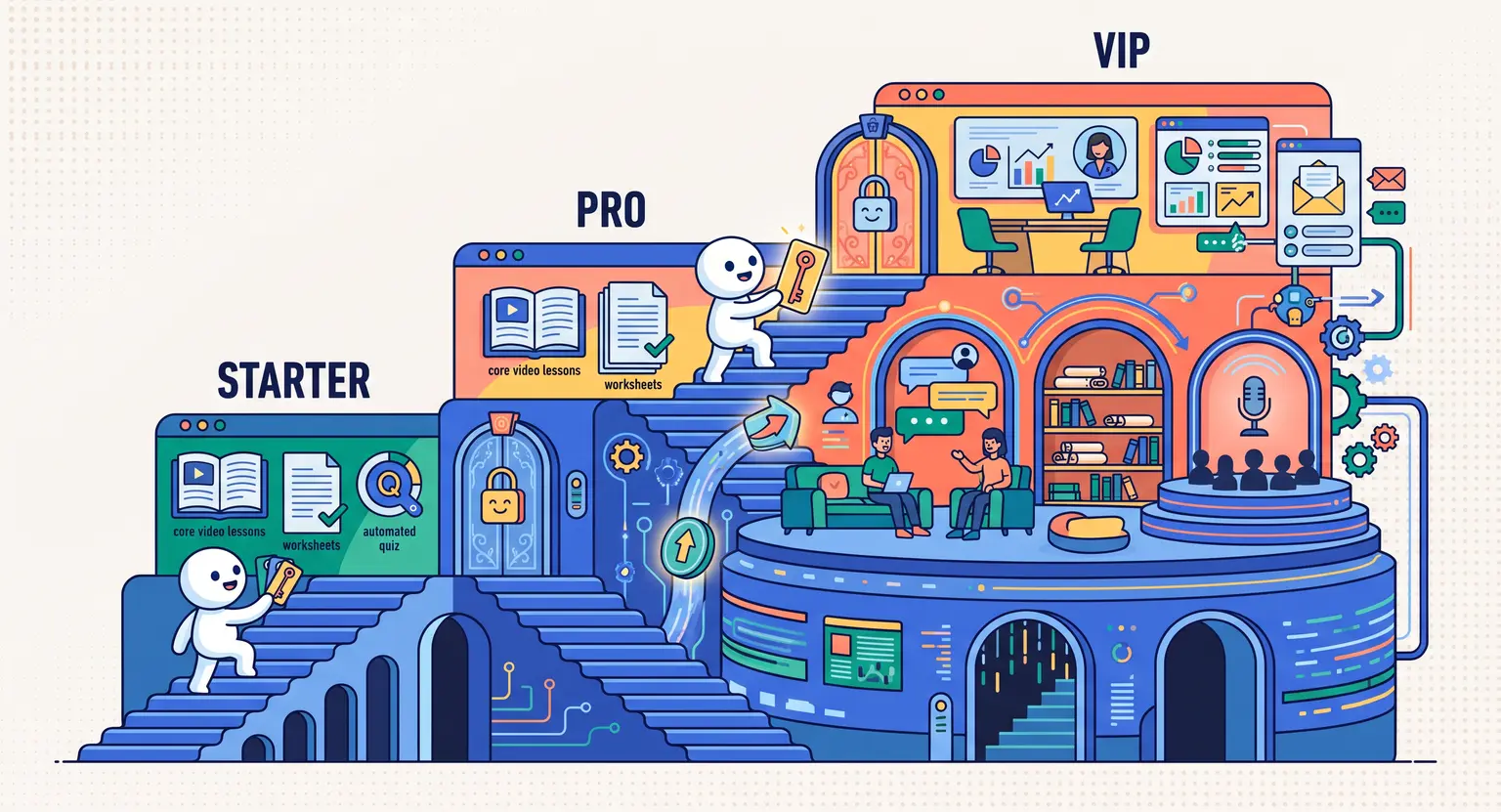
Gamification Strategy Comparison : Choosing the Right Level for Your Course
Not every course requires the same depth of game mechanics. Matching your gamification strategy to your course format, audience demographics, and subject matter is vital for success.
| Gamification tier | Key elements included | Best suited for | Implementation complexity | Expected completion lift |
|---|---|---|---|---|
|
Foundational gamification |
Micro-progress bars, completion checkmarks, welcome celebration modals. |
Short weekend workshops, simple masterclasses, introductory video programs. |
Very low (turnkey platform features). |
+15% to +25% |
|
Progressive badging & streaks |
Skill-verified badges, daily login streaks, unlockable bonus modules. |
Multi-week self-paced courses, technical skill training, certification tracks. |
Moderate (automated triggers). |
+30% to +45% |
|
Adaptive branching journeys |
Role-playing challenges, dynamic skill trees, branching learning paths based on student diagnostics. |
Comprehensive academies, high-ticket professional programs, corporate development. |
Moderate to high. |
+40% to +60% |
|
Community quests & cohort leagues |
Collaborative team missions, peer reviews, group milestone unlocks. |
Cohort-based bootcamps, membership masterminds, group coaching communities. |
High (requires active facilitation). |
+50% to +75% |
|
Fully personalized ecosystems |
AI-driven adaptive difficulty, tailored questlines, personalized learning systems with dynamic pacing. |
Enterprise training hubs, large-scale educational SaaS platforms. |
Advanced (custom integration). |
+60% to +85% |
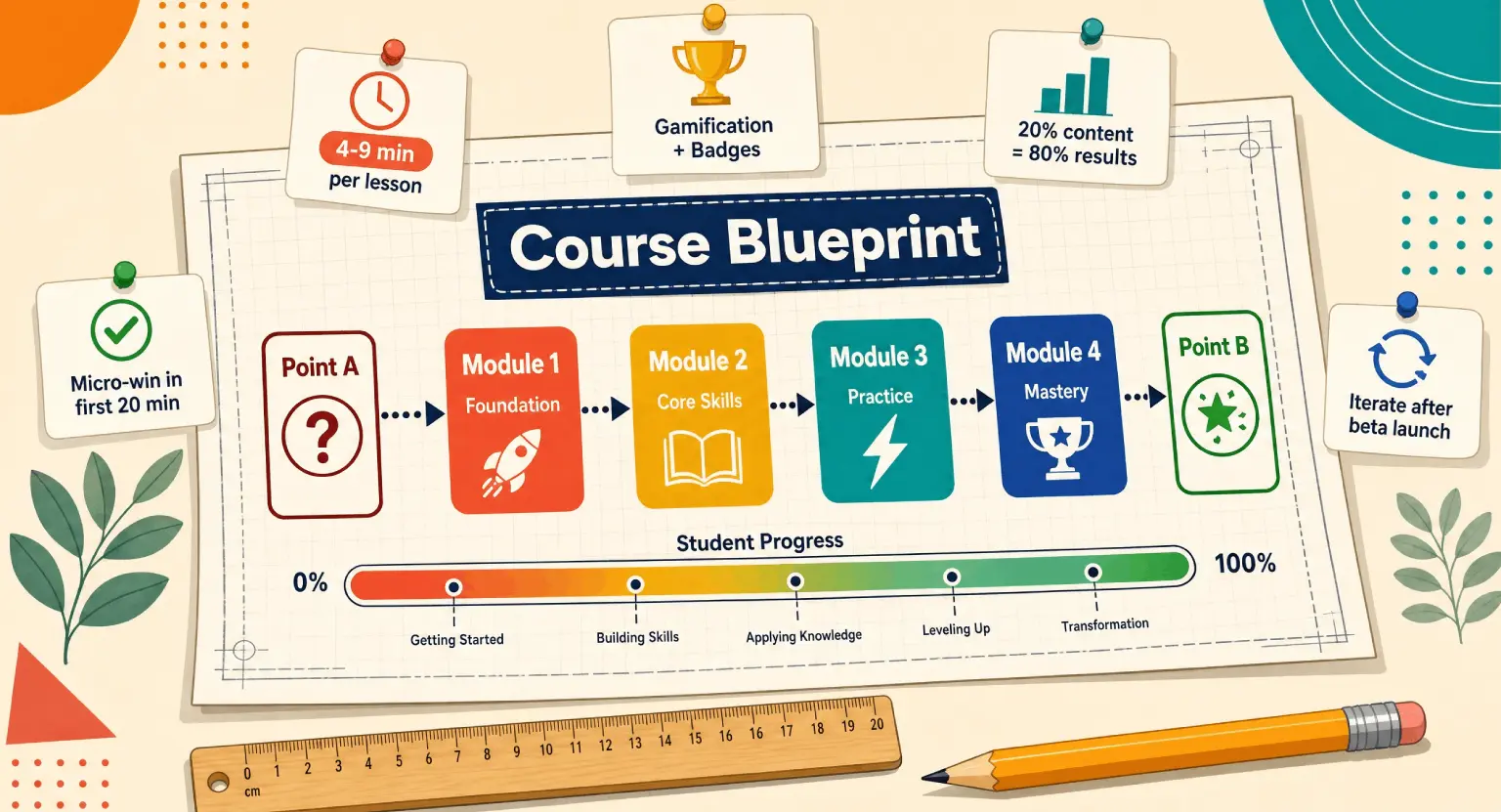
Step-by-Step Blueprint to Gamify Your Course Curriculum
Ready to put these ideas into practice? Follow this clear four-step implementation process to overhaul your student experience without complicating your backend setup.
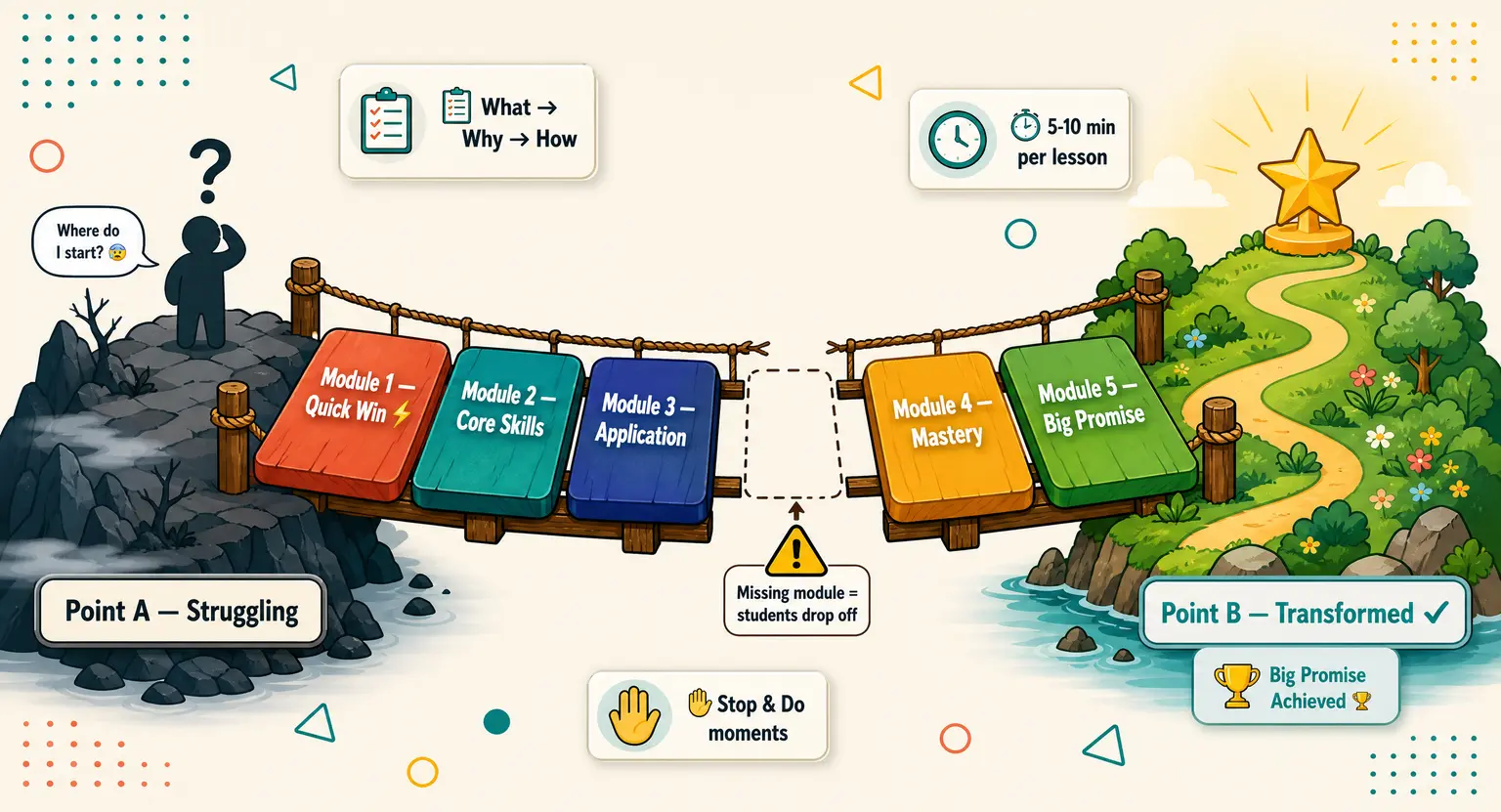
Step 1 : Map the "Hero's Transformation Arc"
Do not present your course as a syllabus of lectures. Frame it as a progressive journey with clear transformation chapters. Where is the student starting from (Point A), and what master identity will they embody when they finish (Point B)?
Give each module a quest-driven title. Instead of naming Module 1 "Introduction to HTML Basics," name it "Mission 1 : Deploying Your Very First Live Webpage." Framing lessons around tangible actions gives every task immediate purpose.
Step 2 : Design Fast Onboarding Wins
The first 48 hours after purchase determine whether a student stays engaged or fades away. Build a frictionless introductory quest that takes less than fifteen minutes to complete.
This quick win could be as simple as introducing themselves in the community forum, setting their primary goal, or downloading their course workbook. Celebrate this immediate action with a congratulatory milestone alert. Momentum starts on day one.
Step 3 : Introduce Social Accountability and Recognition
Learning in isolation is tough. When students see real peers actively progressing, solving exercises, and sharing breakthroughs, healthy social proof keeps everyone accountable.
Create a community feed where achievements are automatically celebrated. When a member passes a capstone quiz or finishes a major project, broadcast a brief shoutout to the group. Encouragement from fellow learners is often far more motivating than an automated email from an instructor.
Step 4 : Use Positive Constraints
Unlimited access can ironically lead to chronic procrastination. When students know they have lifetime access with zero deadlines, they frequently postpone studying indefinitely.
Introduce gentle structural pacing. You can run seasonal sprint challenges or release weekly group quests. Offering time-sensitive rewards - like a bonus Q&A review for everyone who submits their draft project by Friday - creates positive urgency without generating unnecessary anxiety.
3 Gamification Mistakes You Must Avoid
Gamification is powerful, but when misapplied, it can feel gimmicky or even demotivating. Here are the three most common mistakes creators make :
-
Over-indexing on cutthroat leaderboards : aggressive global rankings can motivate the top 5% of hyper-competitive learners while thoroughly discouraging everyone else.
Focus on personal bests, cooperative team missions, or tier-based achievements rather than cutthroat scoreboards. -
Superficial point inflation : if students can earn thousands of points just by clicking through video tabs without watching them, your game economy loses all credibility.
Always tie rewards to verified comprehension and practical task execution. -
Overcomplicating the system : if learners need a ten-page manual just to understand how your points, badges, and tokens function, you have added friction rather than removing it. Keep your game rules dead simple and intuitive.
Explore Further Resources
-
Master curriculum architecture with our guide to structuring an online course blueprint.
-
Improve lesson delivery using tested video lesson best practices.
-
Keep learners connected through dedicated strategies for building an online student community.
-
Scale your digital academy smoothly on an all-in-one course creation platform.
-
Review every step of your launch process with our practical course creation checklist.
Frequently Asked Questions
Does gamification work for serious, professional topics?
Yes, absolutely. Gamification is not about playing video games; it is about structuring progress, providing instant feedback, and acknowledging milestones.
When you run a professional platform to sell online courses, corporate training, medical certifications, and technical coding bootcamps frequently use scenario challenges and progress tracking with massive success.
What is the easiest gamification element to add first?
Visual progress bars combined with micro-milestones are the fastest and most effective starting point.
Giving students an immediate sense of momentum right after enrollment drastically cuts early drop-offs.
Can gamification backfire and distract students?
It can if the mechanics are divorced from learning outcomes. If students chase arbitrary points without mastering concepts, retention drops.
If you want to retain members over time, game mechanics should reward actual mastery, critical thinking, and consistent practice rather than mindless clicking.
Do I need custom coding to gamify my online program?
Not at all. Modern course platforms come with built-in achievement triggers, badging systems, unlockable modules, and automated celebration sequences out of the box.



 How to Create a Course Refund Policy (Templates & Best Practices for 2026)
 How to Run a Beta Version of an Online Course (2026 Guide)
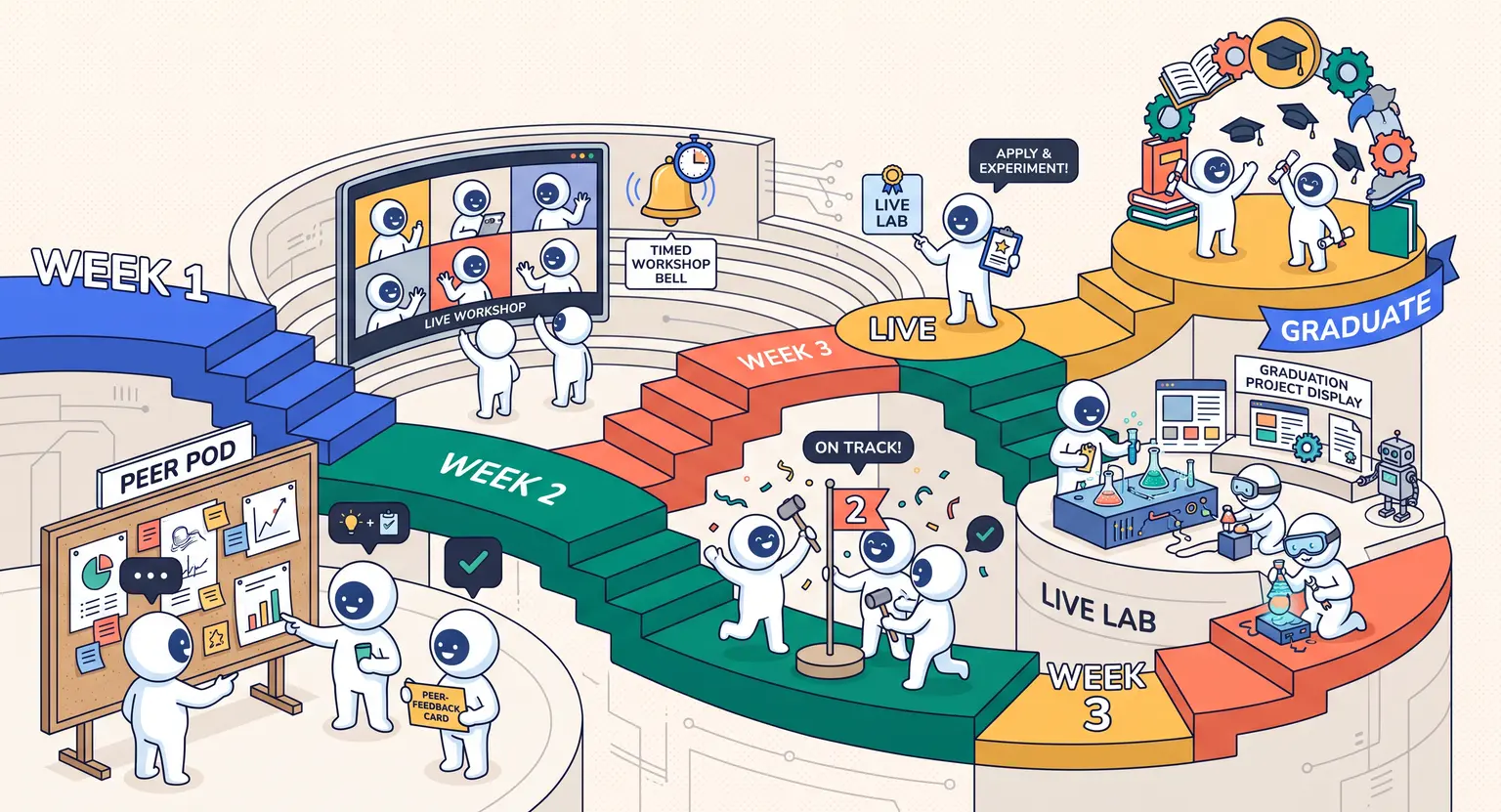 How to Create a Cohort-Based Online Course (2026 Guide)
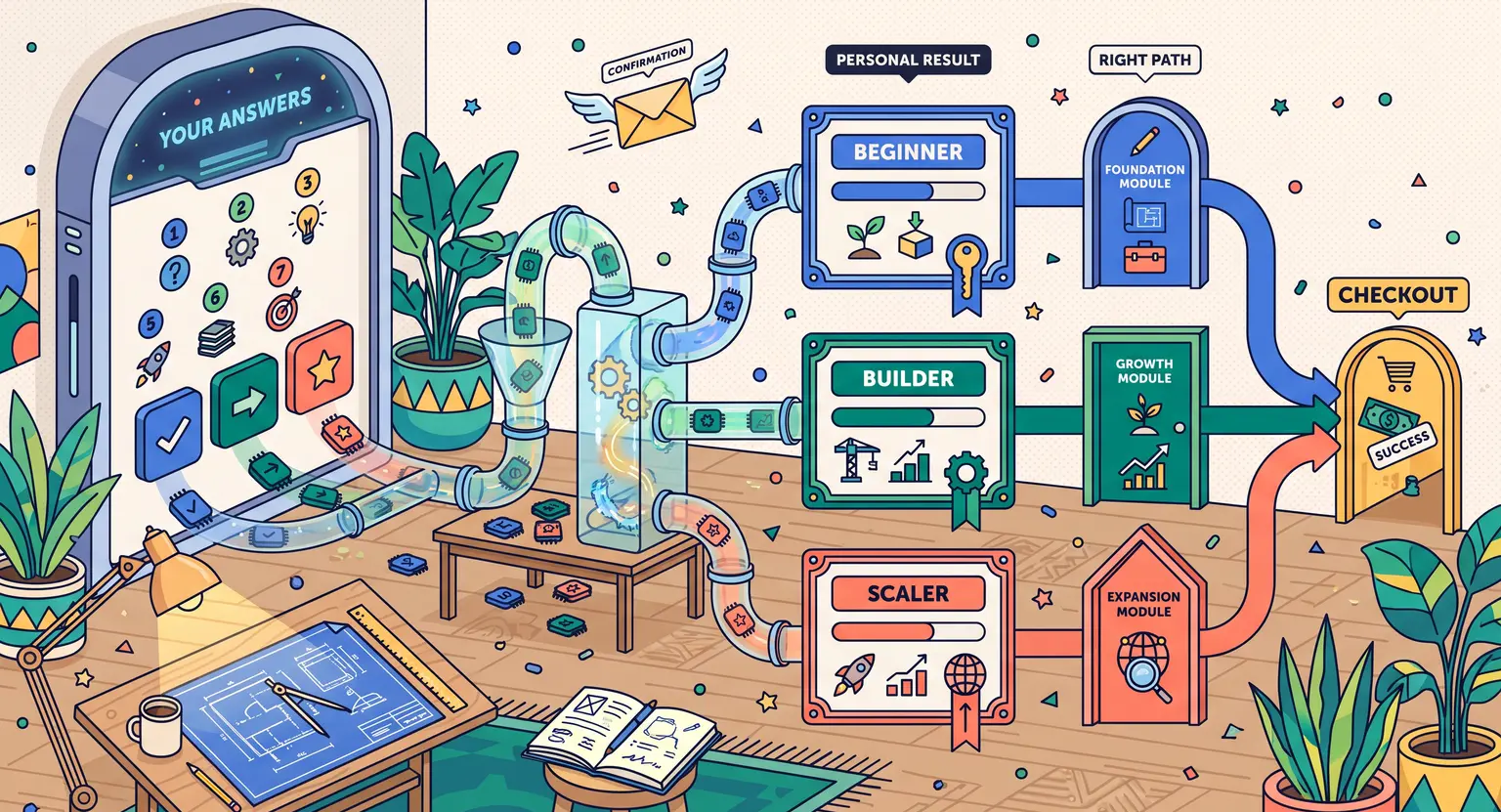 How to Sell an Online Course With a Quiz Funnel (2026 Guide)
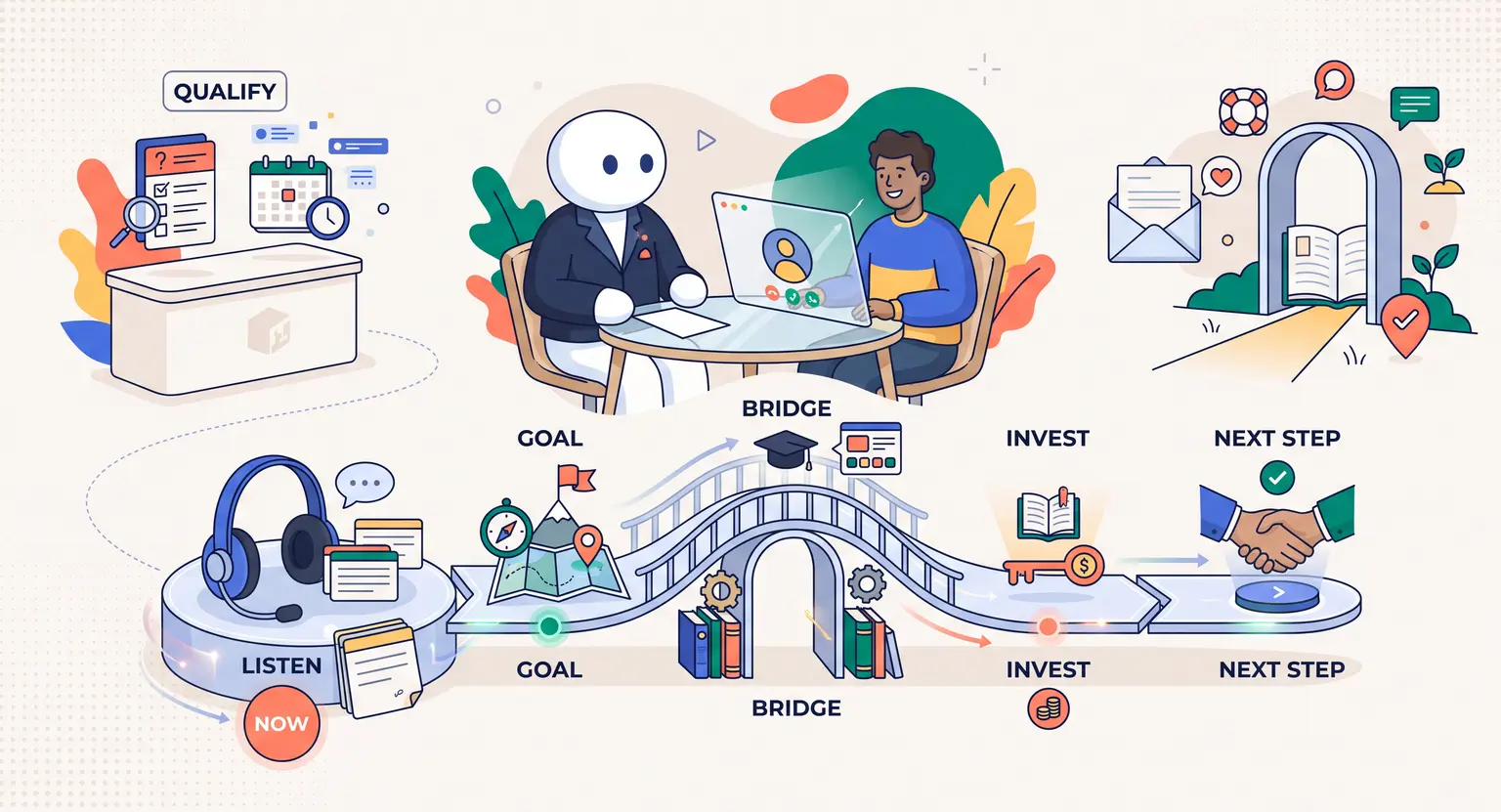 How to Sell an Online Course Through a Sales Call (2026 Guide)