







How to Use Badges to Motivate Online Course Students
How to Use Badges to Motivate Online Course Students
Key Takeaways
-
Digital badges trigger intrinsic and extrinsic motivation by turning invisible progress into visible achievements.
-
Award an early "Quick Start" badge within the first 30 minutes to build immediate learning momentum.
-
Pair badge rewards with an actionable gamification strategy to maximize learner retention.
-
Ensure badges reflect verifiable competencies rather than meaningless participation metrics.
Online learning has a notorious drop-off problem. We have all seen the statistics : most students purchase a course with genuine excitement, watch the first three videos, and then quietly disappear into the digital void.
Life gets busy, attention spans fracture, and without accountability, course progress halts.
So how do the most successful educators keep students logging in week after week? They tap into visual milestone systems. Specifically, they use thoughtfully designed digital badges to transform a lonely learning experience into an engaging progression system.
Badges are not just childish stickers or superficial gamification gimmicks. When configured properly, they serve as psychological checkpoints, status symbols, and verifiable proof of competence. Let's walk through how to build a badge framework that turns passive video watchers into active, motivated graduates.
The Psychology Behind Digital Badges : Why Pixels Drive Action
Why does a small digital icon motivate a grown adult to study late on a Tuesday evening? The answer lies in self-determination theory and behavioral economics.
Human beings crave three fundamental psychological needs : autonomy, competence, and relatedness. Badges directly satisfy the need for competence. When a student finishes a challenging module and receives a badge, their brain registers a clear signal : "I am getting better at this."
There is also the powerful "Endowed Progress Effect." Behavioral researchers discovered that people are significantly more likely to complete a goal if they feel they have already made a start. Awarding a badge for completing the onboarding module taps directly into this phenomenon.
And let's not overlook the dopamine response. Breaking a massive 10-week syllabus into micro-achievements creates frequent reward loops. Instead of waiting months for a final diploma, students enjoy predictable bursts of positive reinforcement every few days.
5 Core Types of Course Badges That Keep Learners Hooked
A balanced badge system does not rely on a single type of reward. To engage diverse personalities, you need a healthy mix of milestone, skill, and behavioral badges.
1. Onboarding & Early Momentum Badges
The first 48 hours dictate whether a student will finish your program. Create a simple "First Step" badge awarded when someone introduces themselves in the forum and completes Lesson 1.
This frictionless early win breaks initial hesitation and establishes immediate forward momentum.
2. Module Completion & Milestone Badges
These are the backbone of your curriculum. Every time a learner finishes a core section, grant a distinct milestone badge.
Name these badges creatively around industry themes rather than dry labels like "Module 3 Complete."
3. Skill Mastery & Challenge Badges
Reserve these for students who demonstrate high-level execution.
For example, award a "Master Strategist" badge to learners who score 100% on a complex practical quiz or submit an exemplary capstone assignment.
4. Community & Collaboration Badges
Learning is social. If you want an active peer ecosystem, reward community contribution.
Give badges to members who leave insightful feedback on peer projects, answer questions in discussion boards, or attend live coaching calls.
5. Secret & Easter Egg Badges
Unannounced badges introduce delight and curiosity. Award a "Night Owl" badge to someone studying past midnight, or a "Deep Thinker" badge to students who download all supplementary worksheets.
The unexpected recognition builds genuine fondness for your academy.
Designing Your Badge Ecosystem : Rarity, Rules, and Visuals
If everyone gets every badge without effort, the badges lose all perceived value. Scarcity and clear criteria are what make achievements desirable.
Aligning your rewards with carefully mapped student learning paths ensures each badge feels relevant to the learner's individual goals.
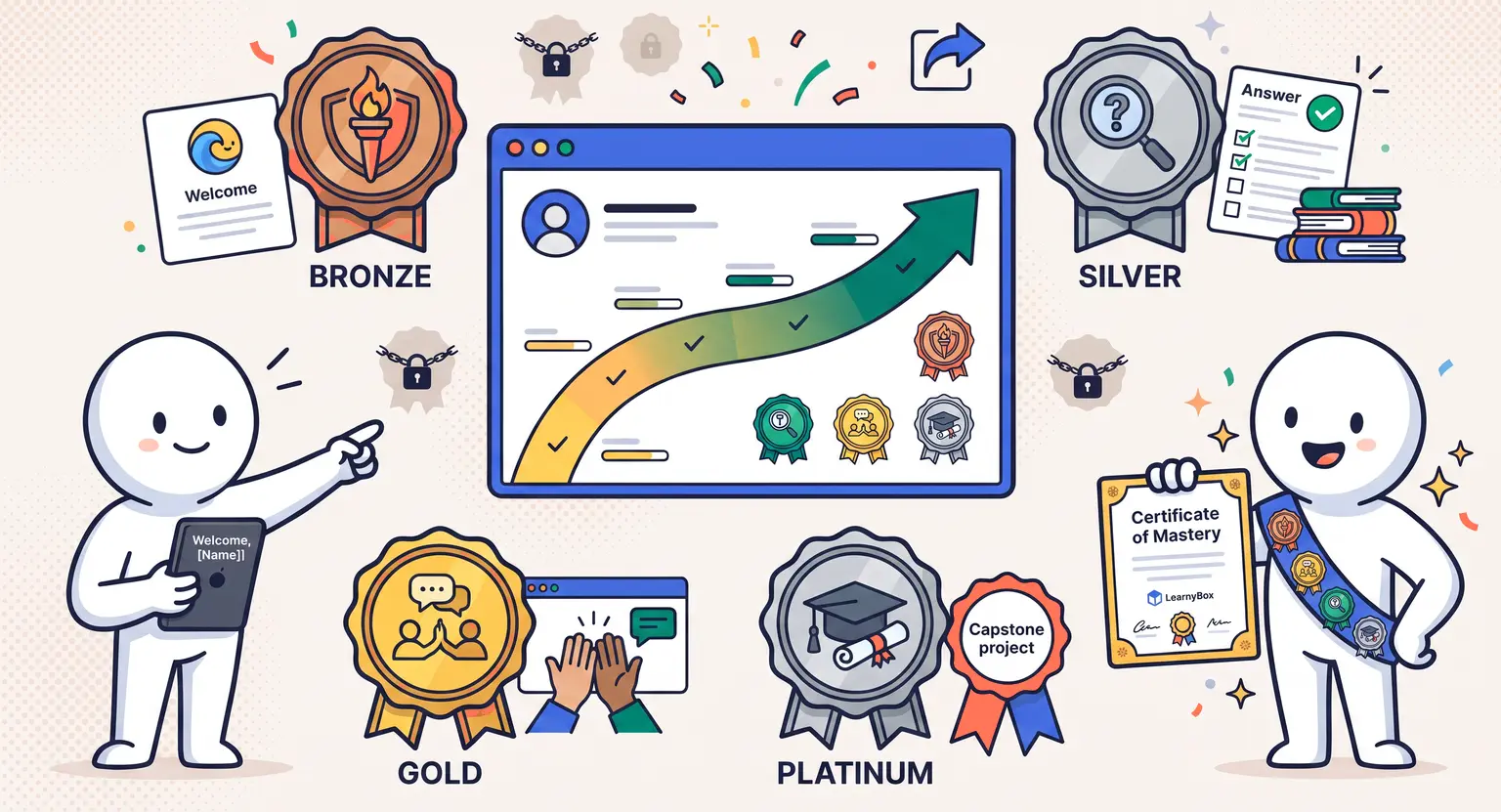
Establish a tiered hierarchy across your badge visual designs :
-
Bronze tier (common) : standard module completions and basic onboarding tasks.
-
Silver tier (uncommon) : high quiz scores, consistent attendance, and thorough project submissions.
-
Gold tier (rare) : perfect assessment scores, peer mentoring, or winning weekly course challenges.
-
Platinum tier (legendary) : full course completion with capstone validation and verified portfolio output.
Make sure the visual aesthetic matches your brand. You do not need an illustration agency; modern design software allows you to produce sharp, cohesive vector emblems with consistent color palettes, borders, and typography.
Always pair each badge with clear metadata. When a student clicks an earned badge on their profile, they should see the badge title, issue date, criteria required, and the specific skill demonstrated.
Badge Implementation Matrix for Course Creators
Here is a battle-tested blueprint you can adapt for your own curriculum structure :
| Badge tier | Example badge name | Trigger action | Psychological purpose |
|---|---|---|---|
|
Bronze |
Trailblazer |
Complete profile & watch welcome orientation video. |
Overcomes initial inertia via endowed progress. |
|
Bronze |
Foundation Builder |
Complete Module 1 and submit initial reflection. |
Reinforces foundational commitment and rhythm. |
|
Silver |
Quiz Master |
Score 90%+ on mid-term comprehension checks. |
Rewards thorough study habits and active recall. |
|
Silver |
Community Catalyst |
Post 5 thoughtful replies helping peers in discussions. |
Fosters peer connection and group accountability. |
|
Gold |
Field Practitioner |
Submit practical case study or capstone assignment. |
Validates applied real-world capability. |
|
Platinum |
Certified Specialist |
Complete 100% of course lessons, quizzes, and project. |
Ultimate status symbol and high-value credential. |
Technical Execution : Setting Up Automated Badges
You cannot manually track hundreds of students and email them PNG files. Automation is essential. Setting up your badge logic inside your LMS takes only an afternoon if your course structure is clear.
When picking software to host and sell online courses, look for platforms with native gamification rules. You want triggers that fire automatically based on user events :
-
Lesson completions : instant trigger upon marking a lesson done.
-
Quiz thresholds : automatic release when achieving a designated score on assessments.
-
Community actions : triggers based on forum replies or comments.
-
Multi-condition criteria : unlocking a master badge only after three prerequisite badges are earned.
Ensure that unlocked badges appear prominently inside the student's dashboard. A locked badge gallery with greyed-out silhouettes creates healthy anticipation. Students can see exactly what achievements remain locked and what steps are required to earn them.
Social Sharing : Turning Badges Into Virality and Motivation
A badge earned in total isolation has moderate motivational power. A badge that can be celebrated publicly has 10x the impact. Social recognition supercharges student pride.
Build frictionless sharing mechanisms directly into the badge award popup. When a student unlocks a milestone, present them with one-click sharing buttons for LinkedIn, X, and Facebook.
Provide a pre-filled copy highlighting their achievement : "Just earned the Data Modeling Specialist badge in [Course Name]!"
This creates a self-reinforcing flywheel. Current students get public validation, while their professional network sees real-time evidence of your course's value. That word-of-mouth visibility often drives your next wave of student enrollments.
3 Common Badge Mistakes That Kill Student Engagement
While badges are powerful, sloppy implementation will backfire. Avoid these common traps when designing your system :
-
The "participation trophy" trap : if you give a badge every time a student clicks a button, the rewards feel hollow. Badges must represent genuine effort or milestone mastery.
-
Incoherent visual language : using mismatched graphic styles, clashing colors, or low-resolution images makes your platform look amateur. Maintain a clean, unified visual standard across every badge tier.
-
Zero practical utility : badges should carry tangible perks inside your ecosystem. For instance, earning a Gold badge might unlock bonus masterclasses, exclusive Q&A office hours, or private networking groups.
Explore Further Resources
-
Read our complete guide to creating engaging course content that keeps students focused.
-
Discover practical techniques to build an active online student community around your curriculum.
-
Explore how to construct interactive evaluations with our guide on building course quizzes and assessments.
-
Ready to automate your course gamification? Claim your free LMS creator account on LearnyBox today.
Frequently Asked Questions
How many badges should I include in an online course?
For a standard 4 to 8 module course, aim for 6 to 12 total badges.
This gives learners an early win within their first hour, intermediate milestone rewards, and a couple of skill or participation badges without diluting their perceived worth.
Do adult professional learners really care about digital badges?
Yes, absolutely.
Adult learners value badges when they represent verified competencies, credential milestones, or shareable achievements they can post to LinkedIn or showcase in professional portfolios.
What is the difference between a badge and a course certificate?
A certificate confirms the completion of an entire program or formal curriculum.
A badge represents granular milestones, micro-skills, behavioral habits, or community contributions earned along the way.
Can offering too many badges hurt student motivation?
Yes. Handing out badges for trivial actions like logging in devalues the entire system.
Badges must feel earned through tangible effort, intellectual curiosity, or genuine skill mastery.



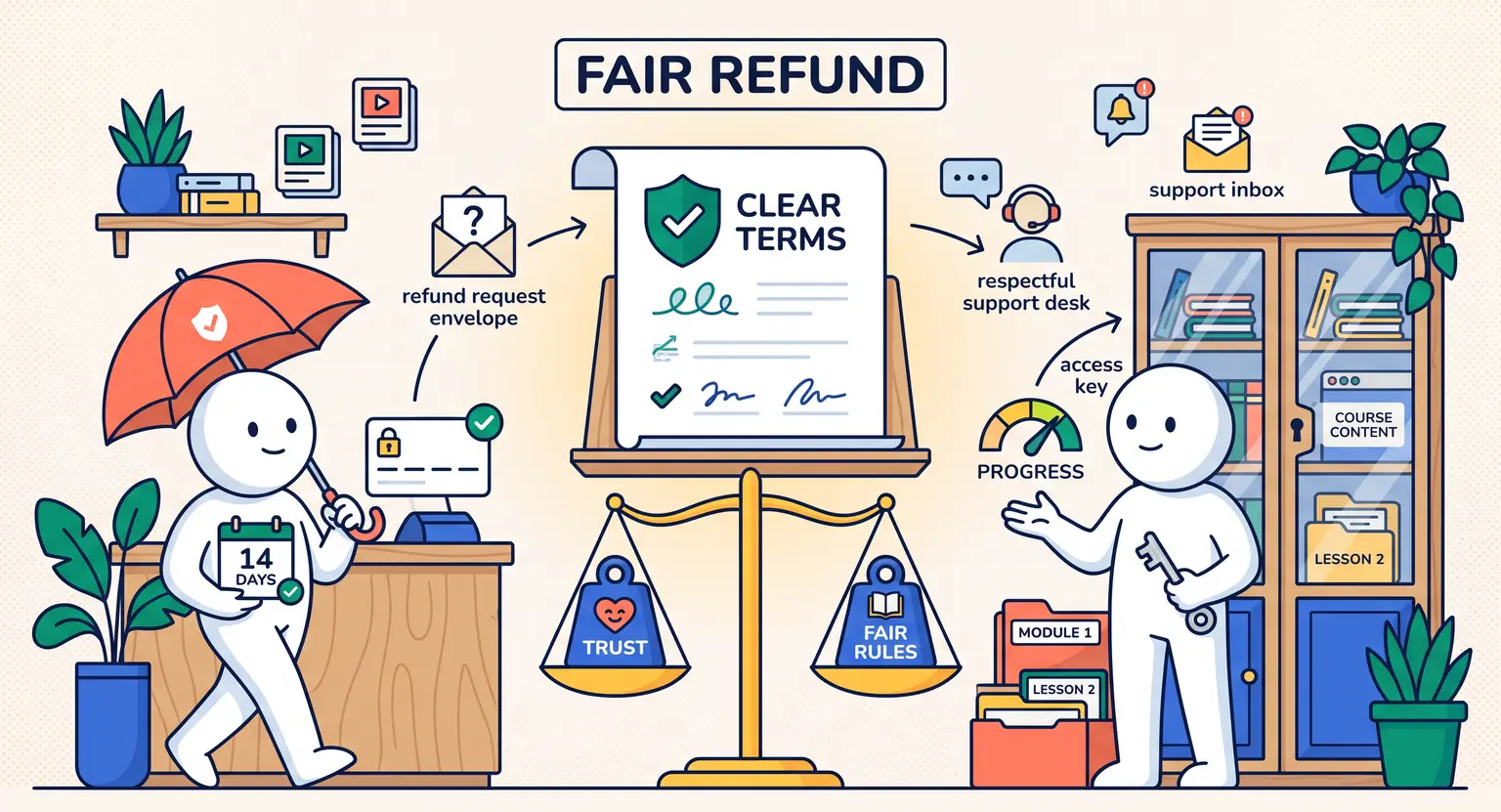 How to Create a Course Refund Policy (Templates & Best Practices for 2026)
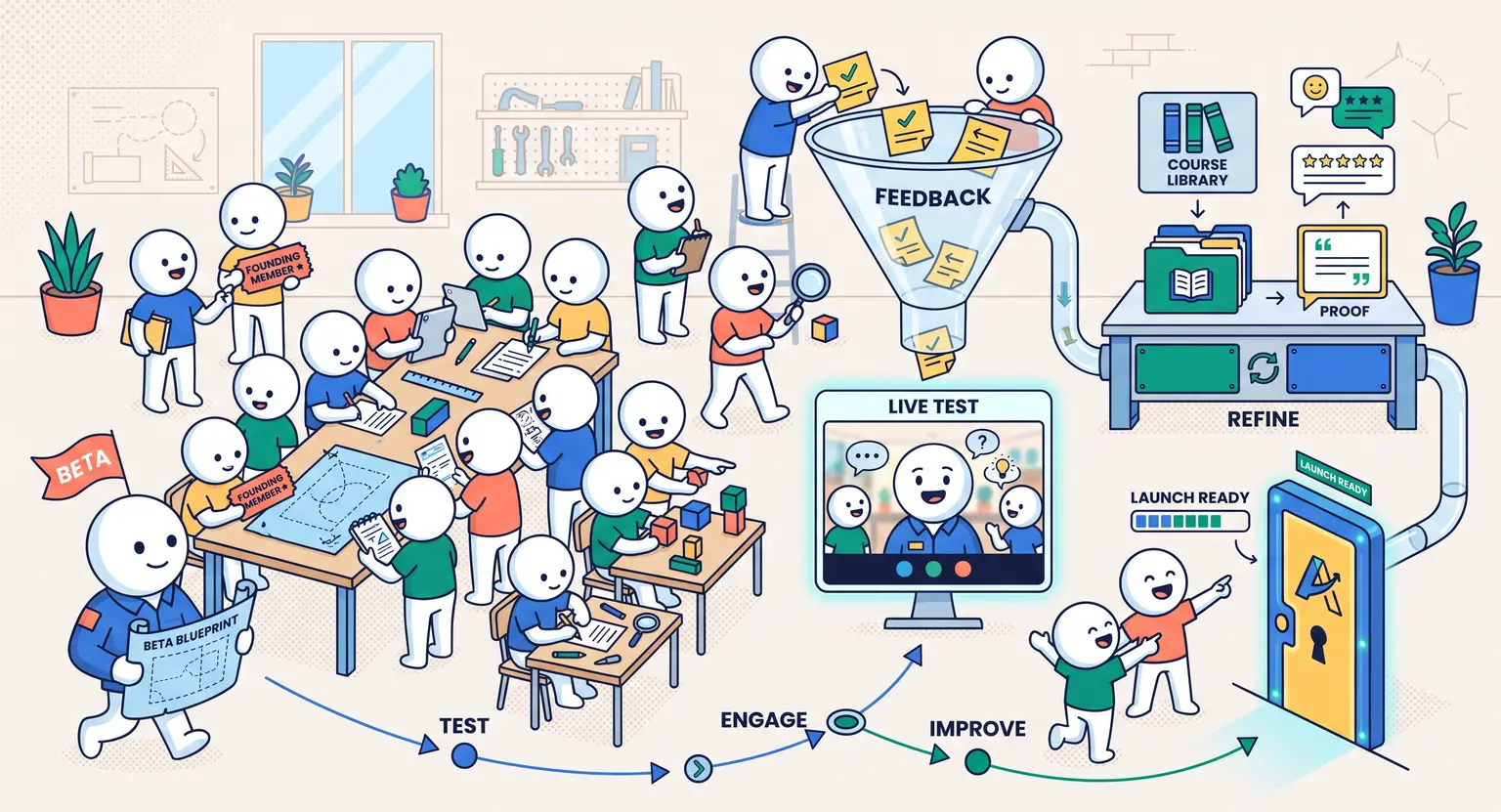 How to Run a Beta Version of an Online Course (2026 Guide)
 How to Create a Cohort-Based Online Course (2026 Guide)
 How to Sell an Online Course With a Quiz Funnel (2026 Guide)
 How to Sell an Online Course Through a Sales Call (2026 Guide)