








Affiliate Marketing vs Influencer Marketing: 2026 Strategy Guide
Affiliate Marketing vs Influencer Marketing
We have all been there. You are staring at your marketing budget, trying to figure out where every single dollar will work the hardest.
Should you recruit an army of partners to push trackable links?
Or should you pay a creator with a loyal following to endorse your brand?
It is the classic face-off : affiliate marketing versus influencer marketing.
Back in the day, these two strategies lived in different boxes. Affiliates were seen as discount-hunters. Influencers were paid flat rates for one post. Yet in 2026, the lines have blurred.
The audience is too smart for cheap tricks - so, how do you decide which path makes sense?
Let's break down the mechanics, the money, and the raw reality of both models.
Key Takeaways
-
Affiliate marketing relies on direct conversions with a pay-on-sale model, minimizing upfront budget risk.
-
Influencer marketing drives creative storytelling and deep brand trust, but requires flat upfront fees.
-
Top brands merge both into hybrid programs to scale their creator economy business models.
-
Measuring financial outcome is easy when monitoring affiliate marketing ROI and program profitability.
1. The Core Differences : Unpacking the Mechanics
At its core, the difference comes down to the relationship and the payment trigger. Affiliate marketing is pure transactional math.
You agree to pay a third party, the affiliate, a specific commission whenever their promotional efforts lead directly to a purchase or a verified lead.
No transaction means no payout. It is low-risk, highly structured, and driven entirely by direct response tactics.
Influencer marketing, on the other hand, is a relationship play. You work with online creators who have spent years building specialized, highly engaged communities. You pay them for direct access to that audience, for their creative voice, and for the deep trust they hold.
This payment is typically upfront, regardless of how many actual sales roll in from their campaign.
Many modern digital entrepreneurs struggle to find the right balance here.
If you are building an online business, understanding what is knowledge commerce helps clarify how trust converts into sales. Influencers build that essential initial trust, while affiliates squeeze every ounce of value from the bottom of your sales funnel.
2. Affiliate Marketing : The Pay-for-Performance Machine
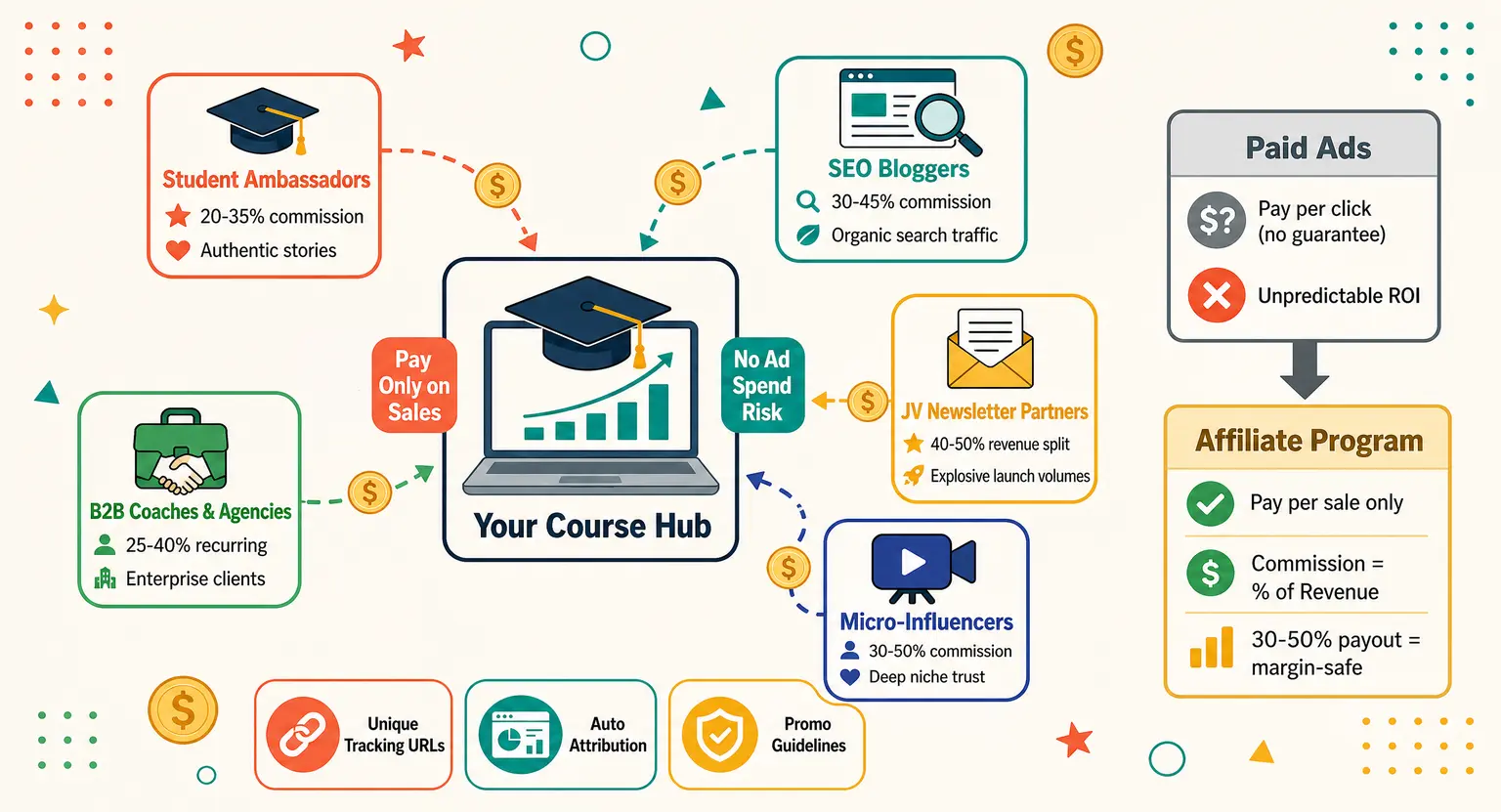
Affiliate marketing is the ultimate safety net for lean budgets. If you want to scale up without bleeding cash, it is an incredible tool.
You recruit partners, hand them unique tracking links, and let them go to work. They write long-form reviews, build detailed comparison tables, or share resources in niche forums.
They bear all the marketing costs and creative legwork. You only pay when a customer enters credit card details on your checkout page.
But this model has its dark corners… Because affiliates only get paid for conversions, some might resort to aggressive tactics.
Brand safety can become a headache when third parties start writing wild claims just to secure a click. Plus, protecting your brand requires staying on top of affiliate fraud prevention.
If you manage it properly, though, the scalability is immense. It is especially powerful for businesses selling digital products, like courses or templates.
You can set highly profitable commission rates because your backend margins are incredibly high.
3. Influencer Marketing : The Trust and Brand-Building Engine
Now let's flip the coin. Influencer marketing works because humans buy from other humans they like, admire, or trust.
When a respected creator shares their raw, unfiltered experience with your tool, their audience listens. They are not looking at a boring banner ad; they are getting a genuine recommendation from a digital friend.
This creates an emotional resonance that a simple text link can never replicate.
But influencer marketing requires cold, hard cash upfront. You pay for the creative production, the reach, and the association with their established brand…. If the campaign flops and no one buys, you are still out of pocket.
That upfront risk can be terrifying for small operations with tight cash flow.
And yet, the brand lift is real. An influencer campaign can introduce your product to millions of ideal buyers overnight. It generates beautiful, high-quality content that you can repurpose for your own advertising campaigns.
For anyone trying to learn how to launch an online course, partner content from a respected voice can establish the immediate authority needed to sell high-ticket programs.
4. Side-by-Side Comparison Matrix
Let's put these two marketing powerhouses side by side to see how they measure up across crucial business metrics.
| Feature / metric | Affiliate marketing | Influencer marketing |
|---|---|---|
|
Payment structure |
Performance-based. You pay a percentage commission or flat fee only after a successful conversion. |
Upfront fee. You pay flat rates per post, video, or campaign, regardless of final sales performance. |
|
Primary goal |
Direct conversions, leads, immediate sales, and measurable transactional revenue. |
Brand awareness, audience trust, product education, and long-term community engagement. |
|
Direct attribution & tracking |
Highly accurate. Uses custom affiliate tracking links, cookies, and dedicated tracking software. |
Complex. Often relies on soft metrics, brand lift, promo codes, or custom landing page visits. |
|
Upfront risk |
Incredibly low. Little to no upfront investment is required to launch or maintain the network. |
High. Upfront costs can be steep, particularly when negotiating with top-tier creators. |
|
Creative control |
Low. Affiliates write their own reviews and structure promotions in their own voice to drive conversions. |
Moderate to high. Brands usually provide strict briefs, brand guidelines, and review content before it goes live. |
|
Scale strategy |
Scales horizontally by recruiting hundreds or thousands of niche micro-partners over time. |
Scales vertically by partnering with specific, highly targeted key figures in your vertical. |
5. The Direct ROI Battle : Numbers & Risks
Let's talk numbers because every business lives or dies by its budget efficiency.
Affiliate marketing is famous for showing a clean, predictable return on investment. If you pay a twenty percent commission, you know exactly what your margin is.
There is zero mystery. But the volume of sales can sometimes stall if your partners do not have active, repeating promotional cycles.
Influencer campaigns operate differently. You might pay two thousand dollars for a YouTube video integration.
If that video gets fifty thousand views and converts one hundred buyers of your digital course, your acquisition cost is fantastic.
If it gets two thousand views and converts zero, your ROI is flat.
But influencer marketing has a long tail… A high-quality YouTube review or blog feature can drive organic search traffic for years to come.
To capture that traffic and convert those leads over time, you need a powerful infrastructure behind the scenes. Building a direct connection is key.
Knowing how to build an email list from that traffic turns one-off campaign views into permanent relationships. Adding automated sequencers through an email marketing for course creators setup lets you pitch those prospects repeatedly without paying additional sponsorships.
6. The Modern Hybrid Model
So, why pick one when you can merge them into a high-powered hybrid system? This is exactly how top brands are winning in 2026.
Rather than paying flat-rate sponsorships repeatedly or relying entirely on cold, faceless affiliates, smart companies create influencer-affiliate programs.
Here is how you do it.
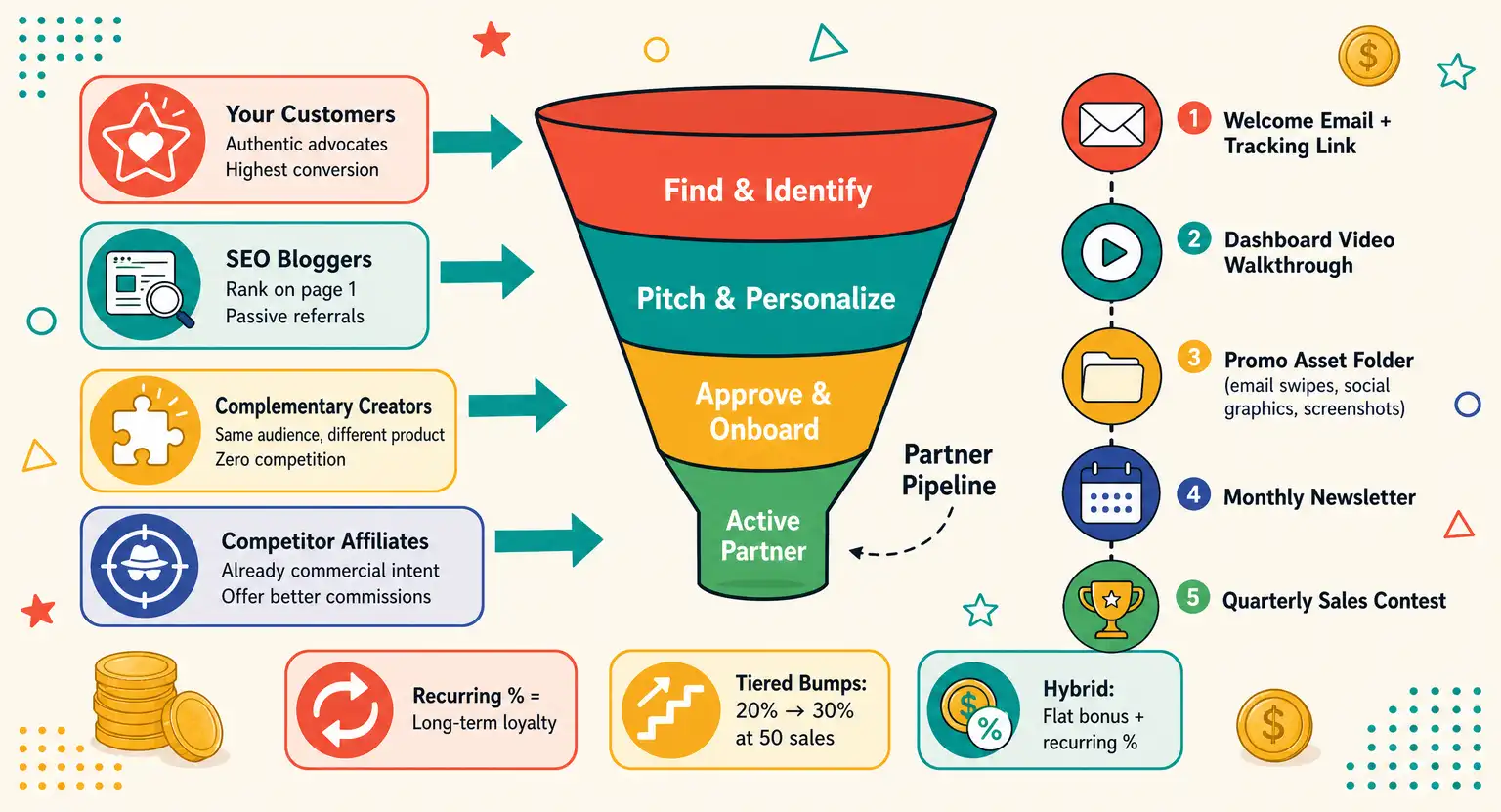
First, find mid-tier creators who genuinely love what you do. Instead of offering a massive, risky upfront payment, offer a hybrid compensation deal.
Pay a smaller, comfortable flat fee to cover their production time and creative resources. Then, sweeten the deal with a generous, recurring affiliate commission on every sale they bring in.
This gives them a steady passive revenue stream while ensuring they are personally motivated to keep promoting your brand over the long term.
Second, equip these partners with excellent digital resources. If you are launching a product or service, direct them to use LearnyBox to run live webinars or showcase your user dashboard.
Third, design your conversion funnels carefully. When partners send traffic, send them to dedicated conversion landing pages to ensure your tracking is spotless. If you want to sell online courses, a streamlined, secure sales funnel is vital to capture and convert this traffic.
7. How to Choose Which Strategy Fits Your Brand First
If your budget is tight and you need immediate returns, start with affiliate marketing. It is a slow build to recruit partners, but it is incredibly safe. You can focus on optimizing your profit margins and securing product delivery.
If you are attempting to break into a brand-new niche or raise awareness for a unique concept, go with influencer marketing. The trust transfusion from a respected creator is worth the financial risk.
Remember, whatever you sell needs to sit on a robust system. If you are exploring top online course ideas for 2026, choosing the best platform to sell online courses ensures that when your affiliates or influencers send traffic, your visitors experience a world-class checkout.
Frequently Asked Questions
Which option is more cost-effective for a business starting with a small budget?
Affiliate marketing is much more budget-friendly.
Because you pay commissions strictly on closed sales, your initial investment is almost zero.
Influencer campaigns typically demand upfront cash payments, which can challenge a new brand's cash flow.
Can you combine affiliate and influencer marketing?
Absolutely. Most successful brands now run hybrid setups.
They provide influencers a modest upfront fee to cover creative labor, combined with recurring affiliate commissions on all sales.
This aligns long-term performance incentives perfectly.
How do you prevent fraud in affiliate campaigns?
You prevent fraud by using secure tracking links, verifying partner sources, and enforcing clear rules.
Regularly auditing traffic anomalies helps keep your conversions and program metrics clean.
What is the biggest downside of influencer marketing?
The biggest downside is the lack of guaranteed sales.
You might spend thousands of dollars on a campaign that earns excellent engagement but fails to yield any direct conversions.


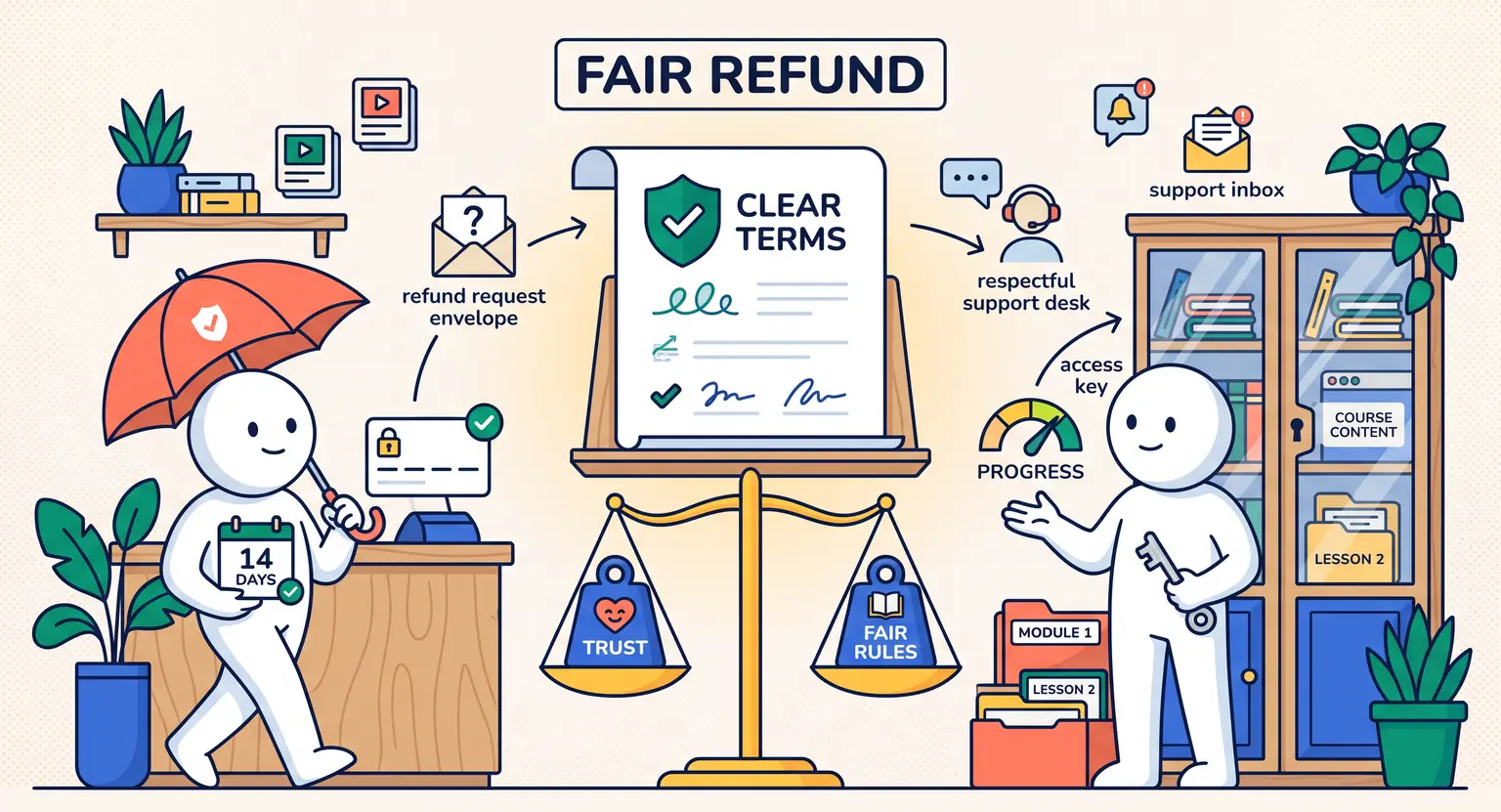 How to Create a Course Refund Policy (Templates & Best Practices for 2026)
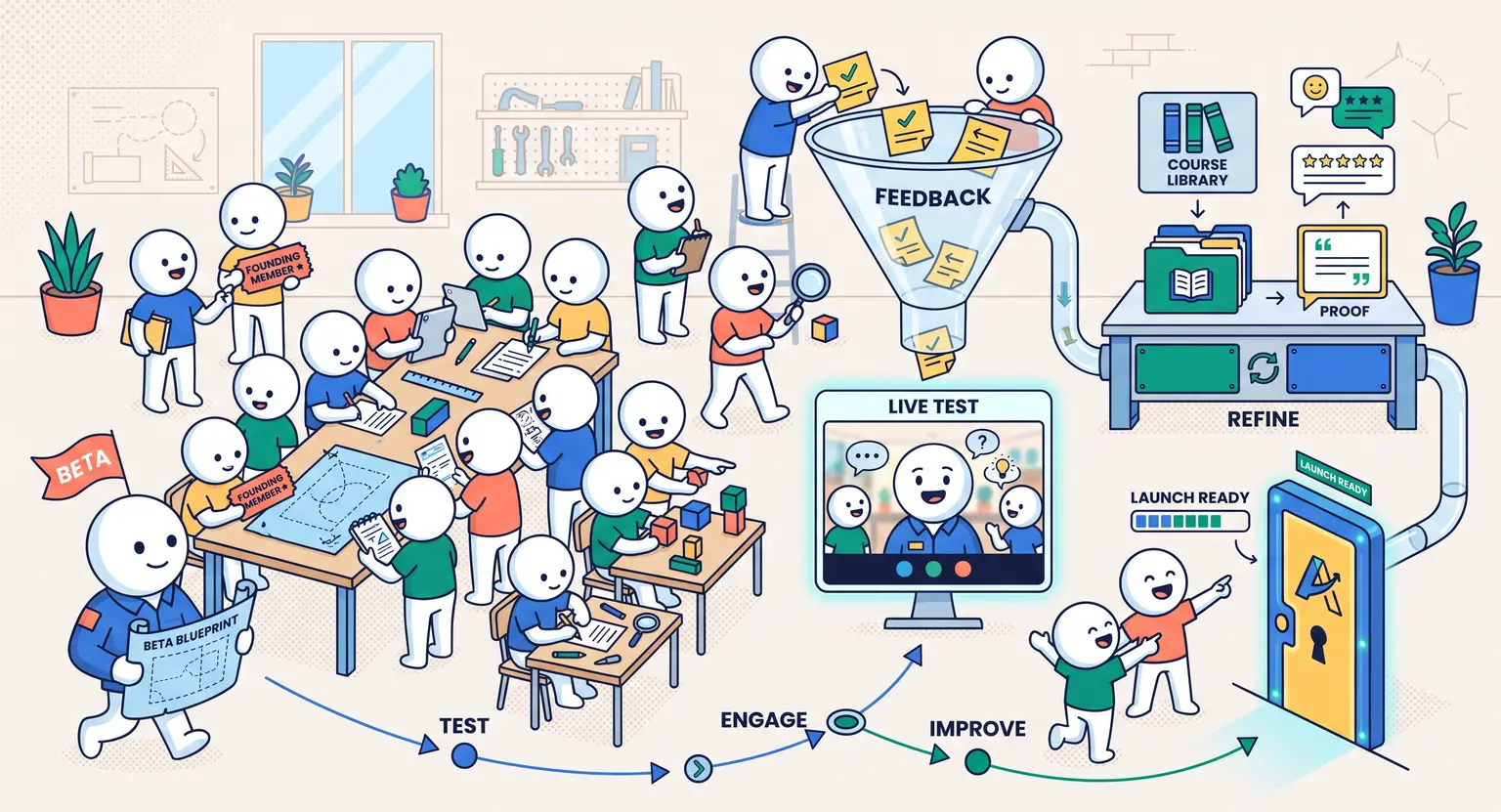 How to Run a Beta Version of an Online Course (2026 Guide)
 How to Create a Cohort-Based Online Course (2026 Guide)
 How to Sell an Online Course With a Quiz Funnel (2026 Guide)
 How to Sell an Online Course Through a Sales Call (2026 Guide)