







Credentials & Professional Education: The Complete 2026 Guide
Credentials & Professional Education
Key Takeaways for 2026
-
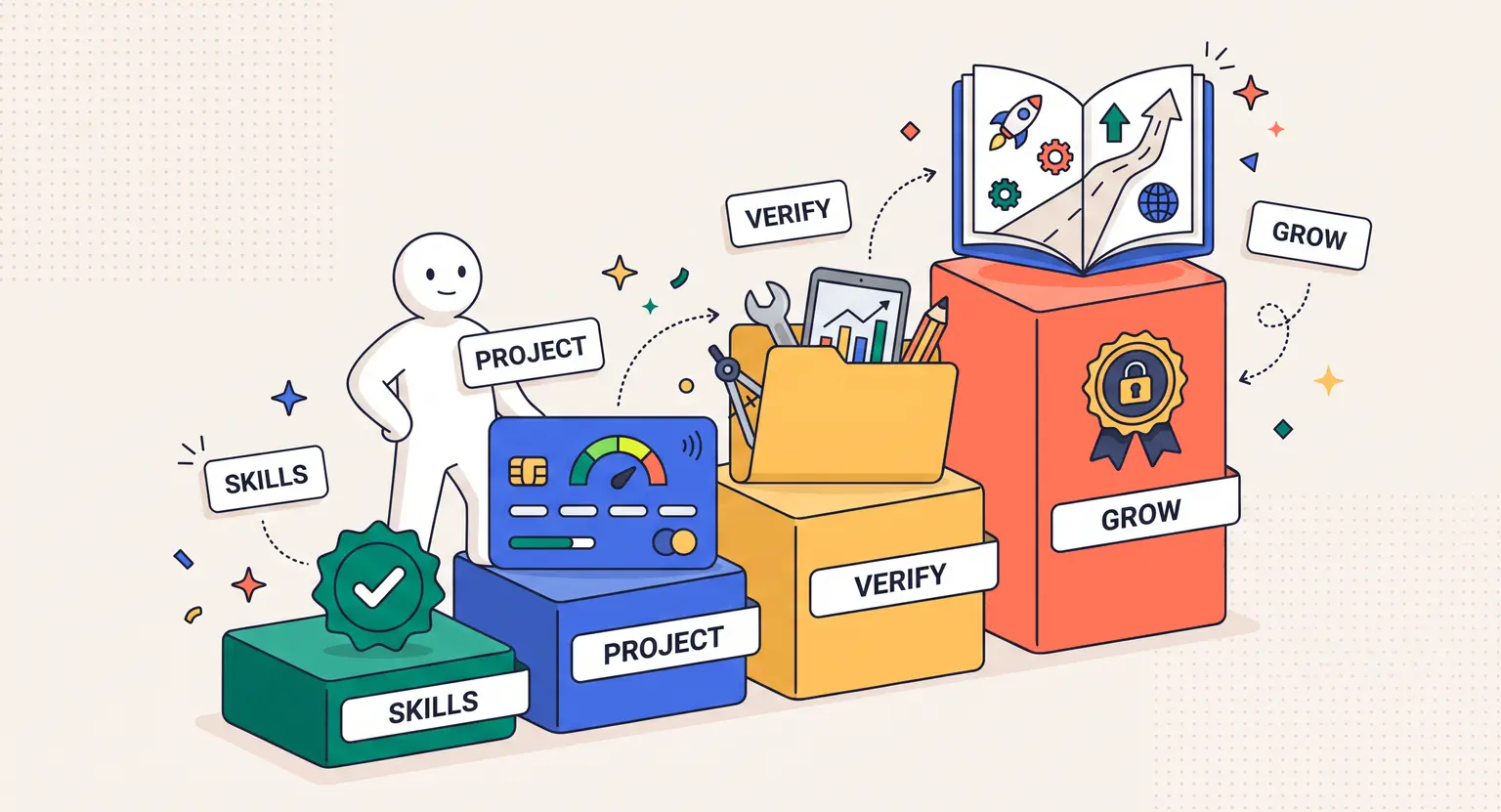
Degrees are no longer the exclusive currency of competence; skill-specific credentials now dictate modern hiring pipelines.
-
Cryptographic verification and transparent assessment rubrics distinguish real professional credentials from basic participation papers.
-
Continuous professional education relies on modular micro-credentials stacked into career portfolios over time.
-
Course creators and enterprise teams can dramatically increase course completion rates by offering verifiable digital recognition.
-
Explore how online course certificates vs digital credentials differ in market value and technical architecture.
The conversation around career readiness changed forever when skills started expiring faster than standard degree curricula could keep up. Just a decade ago, hanging a four-year diploma on your office wall guaranteed professional relevance for years. That reality is history.
Today, professionals face rapid technological shifts, automated workflow integrations, and fast-moving industry standards. Waiting four years to learn an evolving discipline simply leaves people behind. Because of this shift, professional education has pivoted toward flexible, targeted, and continuous credentialing models.
Learners want verifiable proof that they can perform specific tasks right now. Meanwhile, employers want reliable data signals rather than vague claims on a paper resume.
Let us look closely at how credentials and professional education operate in this new landscape, and what you need to know whether you are learning or teaching.
The Structural Shift in Professional Education
Professional education used to be something you tackled during rare weekend seminars or mandatory corporate compliance days. You sat in a hotel conference room, drank lukewarm coffee, and collected a printed certificate of attendance at 5:00 PM.
Nobody checked if you understood the material. Nobody asked you to build a working prototype. You were present, and presence was enough.
That passive model has collapsed under its own weight. In modern organizations, continuous learning is embedded directly into everyday operations.
Companies now run sophisticated internal academies powered by dedicated tools like an enterprise LMS elearning platform to upskill their teams without halting day-to-day productivity.
This structural change brings three distinct learning dynamics to the surface :
-
Just-in-time skill acquisition : learners complete targeted modules right before taking on a new project or role transition.
-
Modular curriculum paths : massive, monolithic courses are broken into bite-sized units that fit into busy workweeks.
-
Demonstrated competence over seat time : progress is measured by practical output, code repositories, design portfolios, and rigorous scenario evaluations rather than hours logged.
When professional education shifts from passive consumption to active demonstration, the nature of the credential itself must evolve alongside it.
Unpacking Modern Credentials : Badges, Micro-Degrees, and Verifiable Records
The term "credential" gets thrown around casually online. But not every digital file or PDF download carries the same weight in the eyes of a recruiter or client.
Understanding the distinctions between different credential types helps creators design better programs and helps students choose the right learning investments. Let us break down the common forms of recognition you see across modern professional education programs.
1. Digital Badges and Open Badges
A digital badge is far more than a decorative graphic on a LinkedIn profile. When built on modern standards like Open Badges 3.0, the graphic contains embedded, tamper-proof metadata.
Anyone who clicks the badge can see who issued it, the criteria required to earn it, the date of issue, and direct evidence of the student's work.
2. Micro-Credentials and Nano-Degrees
Micro-credentials represent mastery of a focused, narrow competency. Instead of taking a broad degree in software engineering, a developer might earn a micro-credential specifically in asynchronous data pipelines or cloud infrastructure security.
These modular units can stand alone or be stacked together into larger recognized qualifications.
3. Professional Licensure and Continuing Education Units (CEUs)
Regulated fields like accounting, law, medicine, and engineering require ongoing, certified education hours to maintain active licenses.
Modern professional education platforms increasingly integrate automated CEU tracking to simplify compliance reporting for licensed practitioners.
4. Competency-Based Portfolio Credentials
Rather than grading multiple-choice quizzes, portfolio-based credentials validate real-world artifacts. The learner submits live projects, client case studies, or operational frameworks.
Human evaluators or specialized assessment rubrics score the submission against established industry benchmarks.
Comparing Credential Frameworks
To help you see how these credential formats fit together, the comparison table below outlines the core characteristics, technical standards, and primary use cases across the industry.
| Credential type | Verification method | Assessment rigor | Primary audience | Typical stackability |
|---|---|---|---|---|
|
Certificate of completion |
Basic PDF URL or static link. |
Low (often seat-time or lesson completion). |
Hobbyists, introductory learners. |
Standalone only. |
|
Digital Open Badge |
JSON-LD metadata, Open Badges standard. |
Medium to high (graded rubrics, project checks). |
Mid-career professionals, remote workers. |
High (stacks into skill pathways). |
|
Industry micro-credential |
W3C Verifiable Credentials, API verification. |
High (capstone projects, proctored exams). |
Career switchers, specialized practitioners. |
Very high (counts toward certifications). |
|
Regulated CEU accreditation |
Authorized board registry checks. |
Standardized by governing board guidelines. |
Licensed specialists (medical, legal, financial). |
Moderate (annual renewal quotas). |
|
Academic-corporate hybrid |
Co-signed cryptographic records. |
Exhaustive (joint peer review & field trials). |
Executive leadership, enterprise specialists. |
Direct university credit transfer. |
Why Employers Prioritize Verifiable Competencies Over Pedigree
Hiring managers have grown skeptical of traditional resumes. Anyone can list bullet points describing tools they supposedly understand. But when a candidate shares an interactive credential containing direct proof of work, the recruitment process speeds up dramatically.
Consider what happens during a modern technical screening. An applicant presents a verifiable badge in conversational AI systems design.
The hiring manager clicks the verification link and immediately views :
-
The exact date the student solved the testing challenge.
-
The live repository containing the student's evaluated application architecture.
-
The independent assessment score evaluated against real-world test cases.
-
The digital signature of the issuing organization.
This level of visibility cuts through hiring guesswork. It removes the need for lengthy preliminary technical tests and lets candidates prove their real capability on day one.
How Course Creators Can Build Meaningful Professional Credentials
If you run an educational business, coaching practice, or corporate training organization, adding high-caliber credentials transforms your product. It changes your course from an informational video playlist into a serious career milestone.
Building credentials that learners respect requires more than just designing a colorful canvas template. You need an intentional framework that builds credibility from the ground up. Here are the practical steps every creator should follow :
Step 1 : Define Precise Behavioral Learning Objectives
Avoid vague promises like "learn digital marketing."
Instead, narrow the scope down to measurable, actionable skills : "build and optimize multi-stage customer acquisition funnels producing sub-two-dollar leads."
When your learning outcome is concrete, creating fair assessments becomes straightforward.
Step 2 : Implement Real Assessment Gates
Never grant credentials based solely on video watch percentages. Require students to complete meaningful evaluations.
That might mean passing rigorous quizzes, submitting portfolio files for manual review, or participating in live scenario tests.
Step 3 : Establish Clear Verification Mechanisms
Ensure that every certificate you issue lives on a permanent, unique web URL.
When a graduate posts their credential on professional networks, prospective clients and employers must be able to verify its authenticity with zero friction.
Step 4 : Build Strategic Industry Alignment
Reach out to industry associations, software vendors, and respected leaders in your niche. Seek endorsements or co-branding partnerships.
When recognized industry brands endorse your curriculum, your credential instantly gains market authority.
Overcoming Credential Fatigue : What Separates Real Value from Noise
Because creating basic PDFs is cheap and easy, the internet is flooded with low-quality certificates. Learners are experiencing credential fatigue. They know that a certificate given away to everyone is worth nothing to anyone.
To stand out, your professional education programs must embrace healthy friction. Friction means students must think, struggle, build, and improve to earn their recognition.
When students work hard for a credential, they wear it as a genuine badge of honor. They share it proudly with their peers, discuss it during salary reviews, and recommend your training platform to their colleagues.
High standards protect your brand's reputation. The moment a graduate fails on the job after carrying your certification, your credential loses authority. Protect your standard at all costs.
The Future of Stackable Career Learning
The days of front-loading all education into the first quarter of life are gone. Professional education is now an ongoing, lifelong journey.
Professionals in 2026 collect micro-credentials across multiple domains, combining technical knowledge, leadership capabilities, and specialized domain expertise into unique career profiles.
A modern project manager might hold credentials in agile scrum, data analytics visualization, and conflict mediation, all earned from different specialized academies over three years.
This modular, stackable ecosystem rewards both ambitious learners and forward-thinking educators. By building clear credentialing paths, you give students a continuous progression ladder that keeps them engaged with your ecosystem year after year.
Explore Further & Related Resources
-
Step-by-step guide : how to create verifiable credentials for an online course.
-
Regulatory breakdown : online course accreditation vs certification differences.
-
Assessment design : how to create quizzes for online courses to test real student competence.
-
Monetization insights : discover how to monetize your knowledge with premium training models.
-
Packaging frameworks : learn how to package your expertise into modular, high-impact academies.
-
Build your ecosystem : explore the all-in-one platform to sell online courses solution for creators.
-
Learn more about our mission on the LearnyBox official portal.
Frequently Asked Questions
What makes a digital credential genuinely valuable to employers in 2026?
Employers value digital credentials that feature automated verification, transparent skill metadata, and direct alignment with recognized industry competency frameworks.
A credential carries weight when hiring managers can click a link to inspect the exact project rubrics and assessment criteria the candidate completed.
How do micro-credentials differ from standard completion certificates?
Standard completion certificates merely prove that a student consumed video lessons or stayed enrolled until the end.
Micro-credentials, by contrast, require validated skill demonstration, practical projects, or rigorous testing verified through cryptographic or standardized badge protocols.
Can independent course creators issue recognized professional credentials?
Yes, independent educators can issue respected credentials by adopting Open Badges standards, partnering with industry trade groups, and publishing clear assessment benchmarks that prove student competency.
What technologies are used to verify modern professional certificates?
Modern platforms use Open Badges 3.0, W3C Verifiable Credentials, decentralized identifiers, and metadata-rich JSON records to make certificates tamper-proof and instantly checkable with a single click.



 How to Create a Course Refund Policy (Templates & Best Practices for 2026)
 How to Run a Beta Version of an Online Course (2026 Guide)
 How to Create a Cohort-Based Online Course (2026 Guide)
 How to Sell an Online Course With a Quiz Funnel (2026 Guide)
 How to Sell an Online Course Through a Sales Call (2026 Guide)