







Ultimate Coaching Business Models to Scale Your Practice in 2026
Coaching Business Models : Structuring Your Practice for Real Business Scale
Key Takeaways for Designing Your Direct Coaching Practice
-
Starting your coaching journey requires a clear path. Before figuring out how to become an expert coach, you need to understand that the architecture of your offer determines your daily quality of life.
-
Relying entirely on hourly rates is a direct path to exhaustion, which is why smart educators use an all-in-one platform to sell online courses and live programs without losing their sanity.
-
Choosing the right personal business model depends on your specific experience, pricing goals, and target audience size - transitioning toward hybrid packages lets you support more people in less time.
-
A great model supports your lifestyle, rather than taking it completely over.
Why Our Traditional Coaching Business Model Breaks Down
Let's be completely honest. Most people get into coaching because they love helping others transform their lives. They want freedom, impact, and the ability to work from anywhere in the world.
But fast forward a few months, and many find themselves stuck in a frantic loop, running from one Zoom meeting to another, constantly looking at a calendar packed with sessions.
It feels less like a dream business and more like a stressful job with a demanding boss : yourself.
The issue isn't your passion or your skill. The issue is your business model.
In 2026, the coaching space is more sophisticated than ever. Clients are no longer just looking for someone to ask them open-ended questions; they want real results, structured systems, and engaging communities.
If you are still running your business on the outdated model of charging fifty dollars an hour, you are leaving money on the table and burning yourself out.
So how do you fix this? You change the structure.
Whether you are a seasoned veteran looking to reclaim your schedule or a beginner mapping out your very first offer, finding the right framework is everything.
Let's break down the ultimate coaching business models that are working right now.
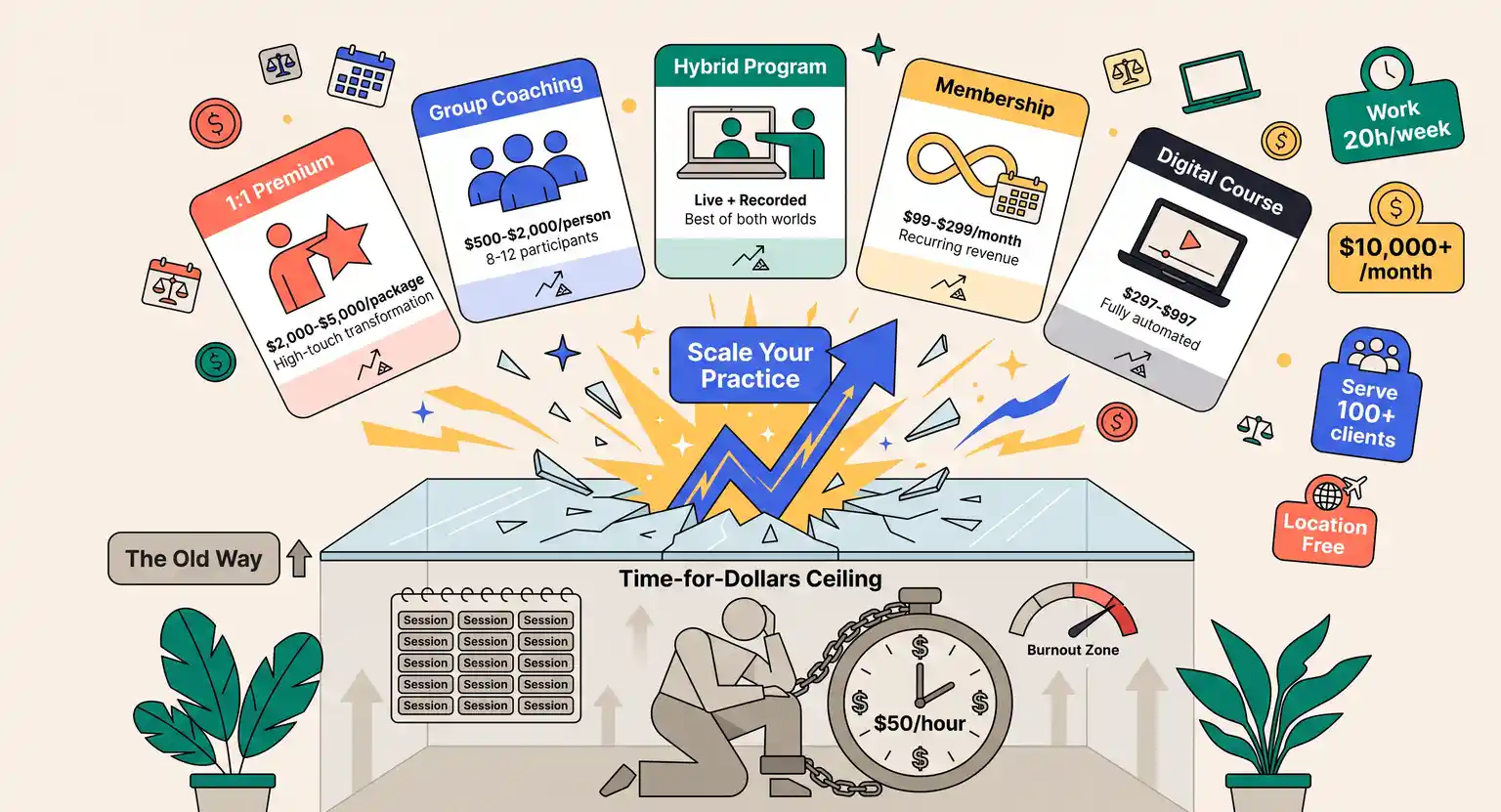
This Terrible Trap of Trading Time for Dollars
When you first start out, charging an hourly rate feels incredibly natural. A client gives you money, and you give them an hour of your life. It is simple, clean, and has almost no barriers to entry.
But this setup has a hard ceiling.
You only have a limited number of hours in a day, and unless you are charging thousands of dollars per hour, your revenue is strictly capped - if you get sick, take a vacation, or just want an afternoon off, your income stops instantly.
And let's not overlook the energetic cost.
Holding deep space for clients is exhausting work. If you try to run thirty private sessions a week, your energy levels will crash, and the quality of your coaching will suffer - your clients deserve you at your best, not your most depleted.
Moving past this trap doesn't mean you have to stop helping people on an intimate level. It simply means you must package your brilliance differently.
Model One : The Traditional Classic 1-on-1 Premium Private Practice
Make no mistake : 1-on-1 coaching is definitely not dead. In fact, in our digital-heavy world, highly personalized, intimate private coaching has become a true luxury service.
The trick here is to stop selling single sessions and start selling outcomes.
Instead of offering one-off hours, package your services into three-month or six-month transformations - this shift changes the entire dynamic. It allows you to charge premium prices because the client is committing to a journey, not just buying sixty minutes of your afternoon.
When setting up these premium offers, you must master how to price coaching services in a way that reflects the complete value of the transformation. Think about the resources, voxer support, and customized roadmaps you provide outside of your live calls.
-
Pros : easy to launch, deep client transformation, high profit margins per user.
-
Cons : extremely difficult to scale, high energetic demand.
-
Best for : beginners establishing their framework, or elite coaches working with high-value clients.
Model Two : Group Coaching (The Sweet Spot of Leverage)
If you want to scale up your business without sacrificing that personal, high-touch connection, group coaching is your absolute golden ticket. This setup is incredibly elegant : you teach a small group of clients simultaneously.
Instead of teaching the exact same fundamental concepts ten times to ten different people, you teach them once to all ten together.
The magic of this model lies in the group dynamic. Clients quickly realize they are not alone in their struggles. They learn from each other's questions, share resources, and form deep bonds that carry them through the program.
But how do you keep the pipeline full for this model? You need a solid strategy on how to get coaching clients consistently, whether that is through targeted content, word of mouth, or strategic organic events.
Group programs work best when you can regularly bring in a fresh cohort of eager students.
-
Pros : excellent leverage of your time, community-driven accountability, lower entry cost for clients.
-
Cons : requires strong group facilitation skills, heavier marketing lifting to launch.
-
Best for : coaches with a proven 1-on-1 methodology who want to multiply their impact.
Model Three : The Hybrid Course and Coaching Flywheel
What happens when you combine digital education with high-level coaching? You get the ultimate business machine for 2026 : the hybrid coaching model.
In this framework, your core frameworks are delivered via pre-recorded lessons, worksheets, and online modules.
Your clients watch the curriculum on their own time, absorbing the theory at their own pace. Then, they come to your weekly group coaching calls to get their specific questions answered, receive customized feedback, and work through roadblocks.
This framework completely removes the burden of repetitive teaching from your plate. You focus your live energy strictly on troubleshooting and strategy, while your platform handles the heavy lifting of content delivery.
-
Pros : massively scalable, highly structured, excellent student retention rates.
-
Cons : requires upfront work to create the digital content, and a reliable platform to host it.
-
Best for : coaches who want to serve hundreds of clients simultaneously without working weekends.
Model Four : Premium High-Ticket Masterminds
For coaches who have built a strong reputation and want to work with high-achievers, the mastermind model is unmatched. This is where you bring together a highly curated circle of peers to solve complex problems together.
Typically, masterminds run for a full year and feature deep-dive group calls, private check-ins, and sometimes physical retreats.
The price point is exceptionally premium, often starting at ten thousand dollars and scaling way up from there. Because the price tag is so significant, you only need a handful of members to build a highly lucrative, multi-six-figure business.
The power of a mastermind is not just your coaching; it is the collective intelligence of the room you have assembled.
-
Pros : incredible revenue potential, long-term client relationships, very low workload.
-
Cons : requires a highly authoritative brand, strong networking skills, and a proven track record.
-
Best for : industry experts and established coaches with deep networks.
Model Five : The Membership Community and Continuity Model
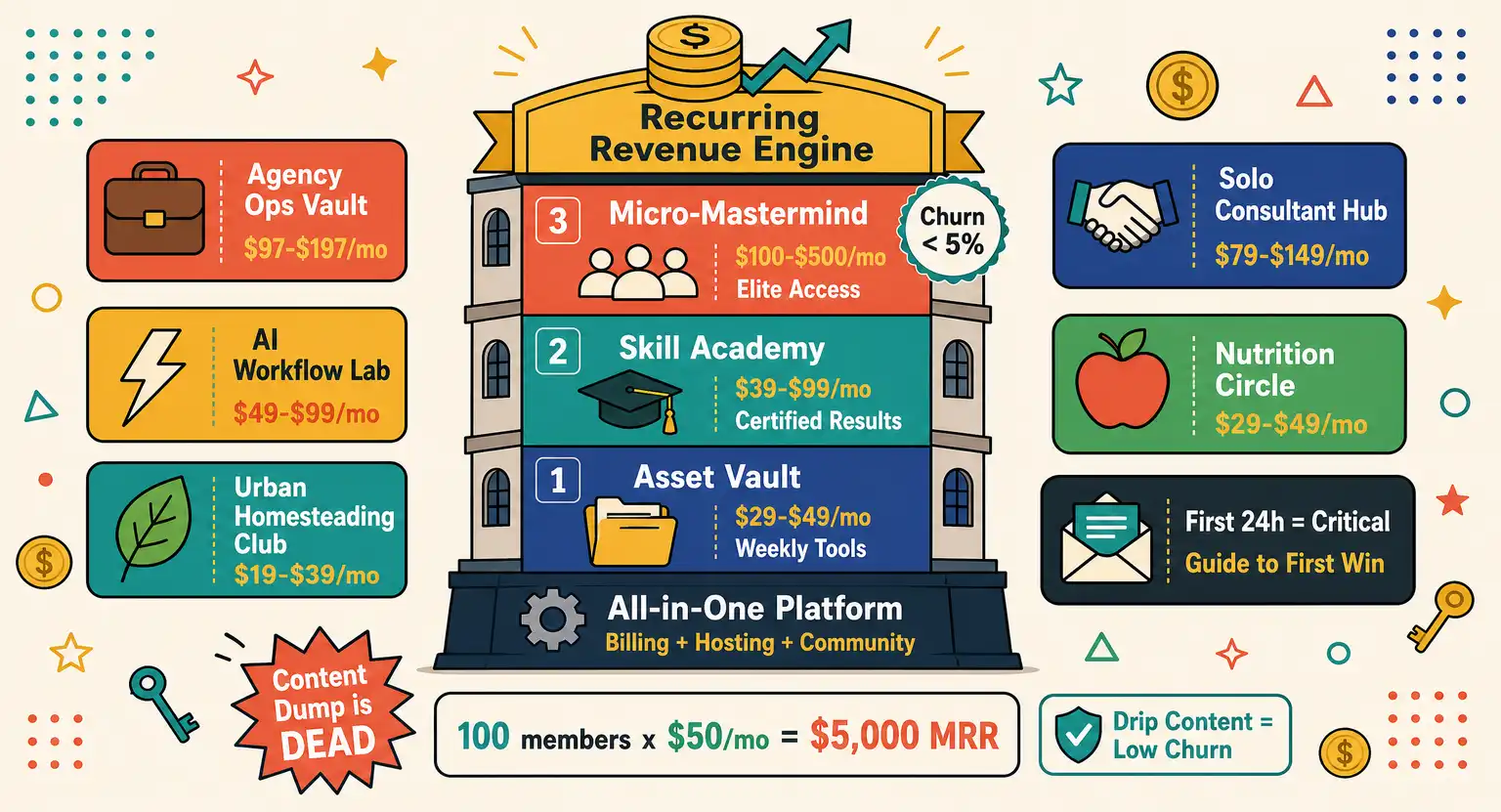
If you want highly predictable monthly recurring revenue, building a membership community is a brilliant option. Instead of chasing high-ticket deals, you build a steady stream of members who pay a lower monthly fee.
To make this model work, you provide a mix of fresh monthly content, a supportive community forum, and a monthly group Q&A session.
It is a fantastic way to nurture people who love your work but might not be ready to invest in premium programs yet. This creates a highly stable foundation of regular income that takes the stress out of your business planning.
The secret to membership survival is focus. Keep the content light, highly actionable, and focus entirely on building a welcoming community of like-minded people.
-
Pros : high stability, predictable monthly cash flow, creates an active warm audience.
-
Cons : can suffer from membership churn, requires steady traffic to maintain growth.
-
Best for : creators with a growing audience who want to offer a low-risk entry point.
Side-by-Side Comparison of Coaching Frameworks
| Model | Pricing strategy | Time committed | Scalability | Best fit |
|---|---|---|---|---|
|
One-on-One Premium |
High packages from fifteen hundred dollars up. |
Very high direct client contact hours required. |
Low with a strict limit on capacity. |
New coaches testing offers or elite guides. |
|
Group Coaching |
Mid-tier packages from five hundred dollars up. |
Moderate with three live hours weekly. |
Medium supporting twenty to fifty clients. |
Established professionals seeking a leveraged format. |
|
Hybrid Program |
High mid-tier packages from one thousand up. |
Low with two weekly group calls. |
High supporting hundreds of active students. |
Experienced trainers with proven structural frameworks. |
|
High-Ticket Mastermind |
Premium packages from ten thousand dollars up. |
Low with monthly calls and retreats. |
Low focusing on curated deep relationships. |
Market leaders with strong built networks. |
|
Membership Community |
Low monthly fee under one hundred. |
Low keeping daily direct contact minimal. |
Infinite capacity supporting massive student bases. |
Active content creators with large audiences. |
How to Choose Your Coaching Path
Selecting the right framework is not a permanent decision, but it does define your immediate operational path. Most successful business owners do not jump straight into a high-ticket mastermind. Instead, they climb a natural ascension ladder.
You start with the private package to find your voice, master your client's needs, and refine your methodology.
Once you notice you are repeating the exact same feedback and advice, you take those common elements and turn them into a structured curriculum.
But how do you know you are ready to make this shift?
Look closely at your calendar. If you are booked solid and turning away new prospects, you have a clear supply-and-demand problem. This is the ultimate signal that it is time to build a more leveraged model.
The goal is to move from being an operator who does all the heavy manual lifting to becoming a strategic guide who lets systems and digital tools support the learner's journey.
The Structured Master Coaching Transition Blueprint
How do you move from your current state to your future state without breaking your current revenue? You do it in clean, structured phases. Do not suddenly close down your private practice overnight. That is a recipe for cash flow anxiety.
Start by packaging your core knowledge. Map out the standard journey a client takes with you. Use this map to outline a simple training program. While still serving your current 1-on-1 clients, begin to build out this program behind the scenes.
Next, test your group format with a small cohort. This validates your delivery system and gives you immediate feedback without major financial risk.
Once the group is running smoothly, leverage smart automated platforms to hand off admin work, freeing up your daily energy to focus on high-impact coaching and business expansion.
Explore Our Recommended Strategic Resources :
-
Our comprehensive roadmap on how to launch an online course this quarter.
-
A curated set of top program ideas for this year that are highly profitable.
-
The robust all-in-one suite of tools on the LearnyBox platform to organize your entire coaching infrastructure.
Frequently Asked Questions About Coaching Business Models
Which coaching business model is best for a complete beginner?
For beginners, the traditional 1-on-1 private coaching model is best. It requires zero upfront setup cost, helps you intimately understand your client's true needs, and fully validates your core method.
Can I transition from 1-on-1 to group coaching without losing current clients?
Yes. Keep your current 1-on-1 clients on their active contracts until they finish, then happily offer them a premium hybrid option or a group program spot.
Do I need a large audience to launch a hybrid coaching business?
No. You can easily launch successfully with under five hundred email subscribers by focusing heavily on precise positioning, targeted messaging, and direct warm outreach strategies.
What software is recommended to organize scaling models?
The robust, fully integrated platform features on LearnyBox make hosting, managing, delivering, and scaling any group, community, or hybrid coaching program option highly seamless and easy.
How many hours a week should I spend coaching in a leveraged model?
In a leveraged group environment, expect to spend roughly four to eight hours weekly on live coaching, reserving the rest for marketing and planning tasks.



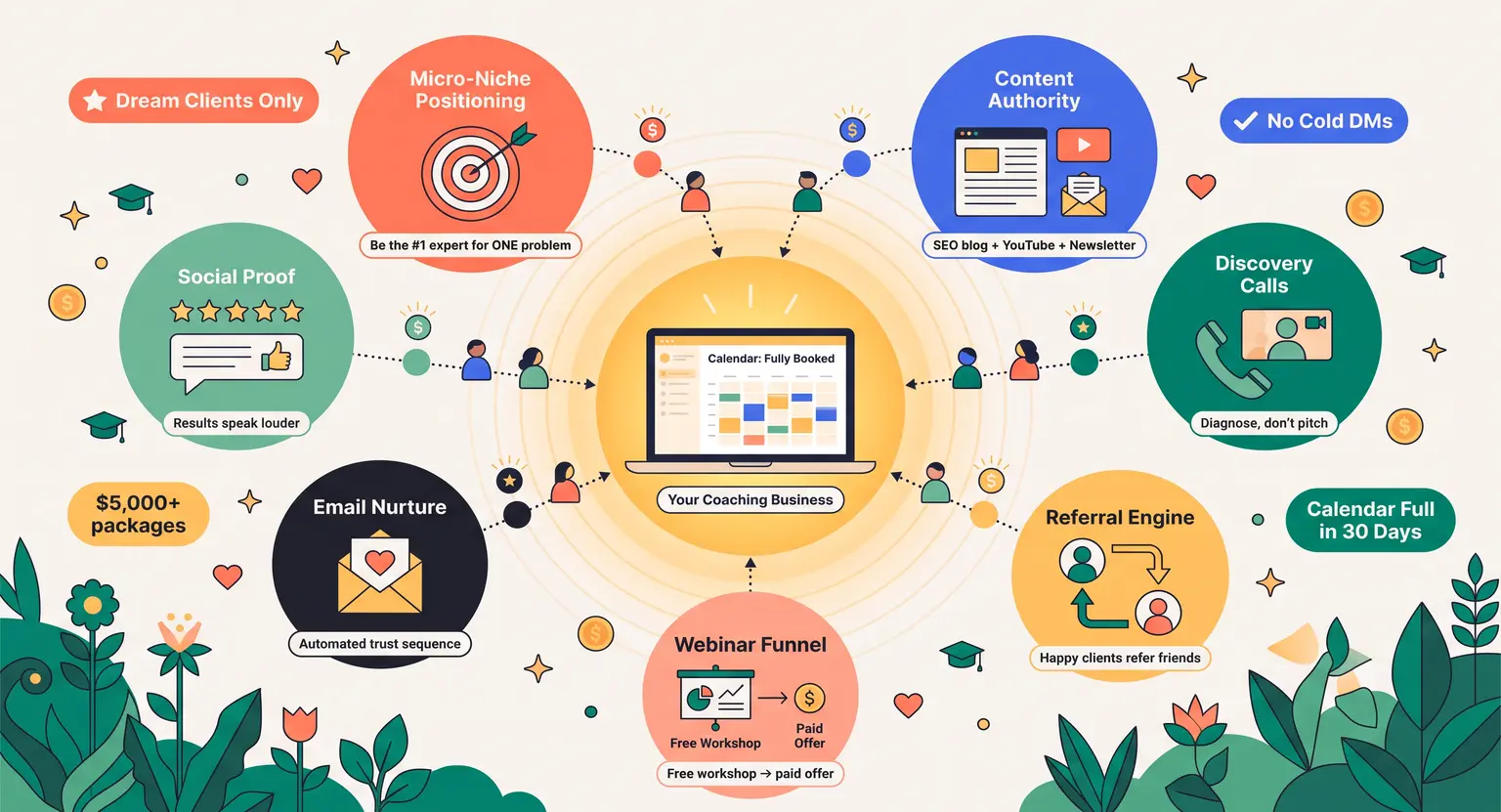 How to Get Coaching Clients in 2026: The Ultimate Guide
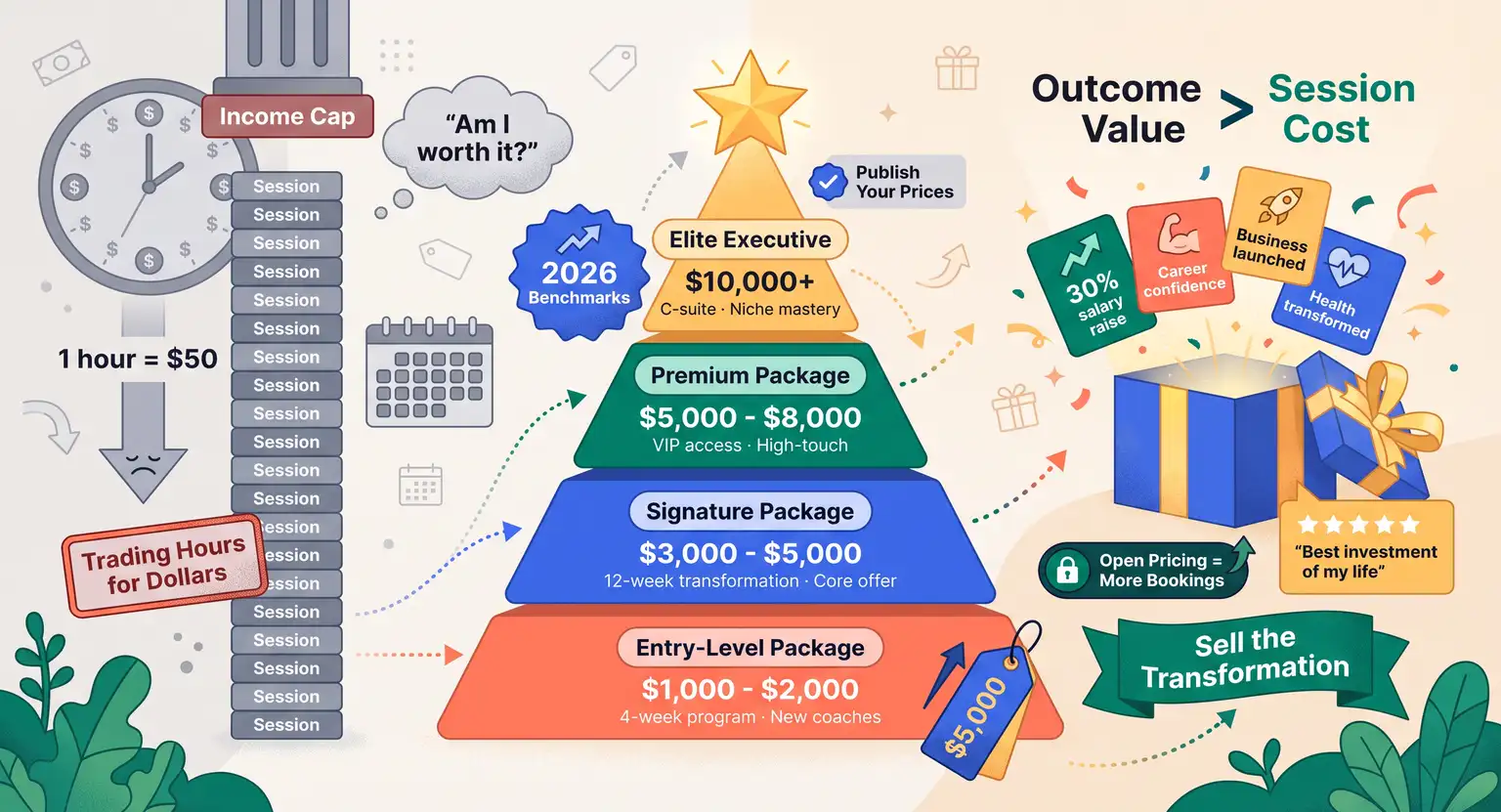 How to Price Coaching Services: The 2026 Strategic Blueprint
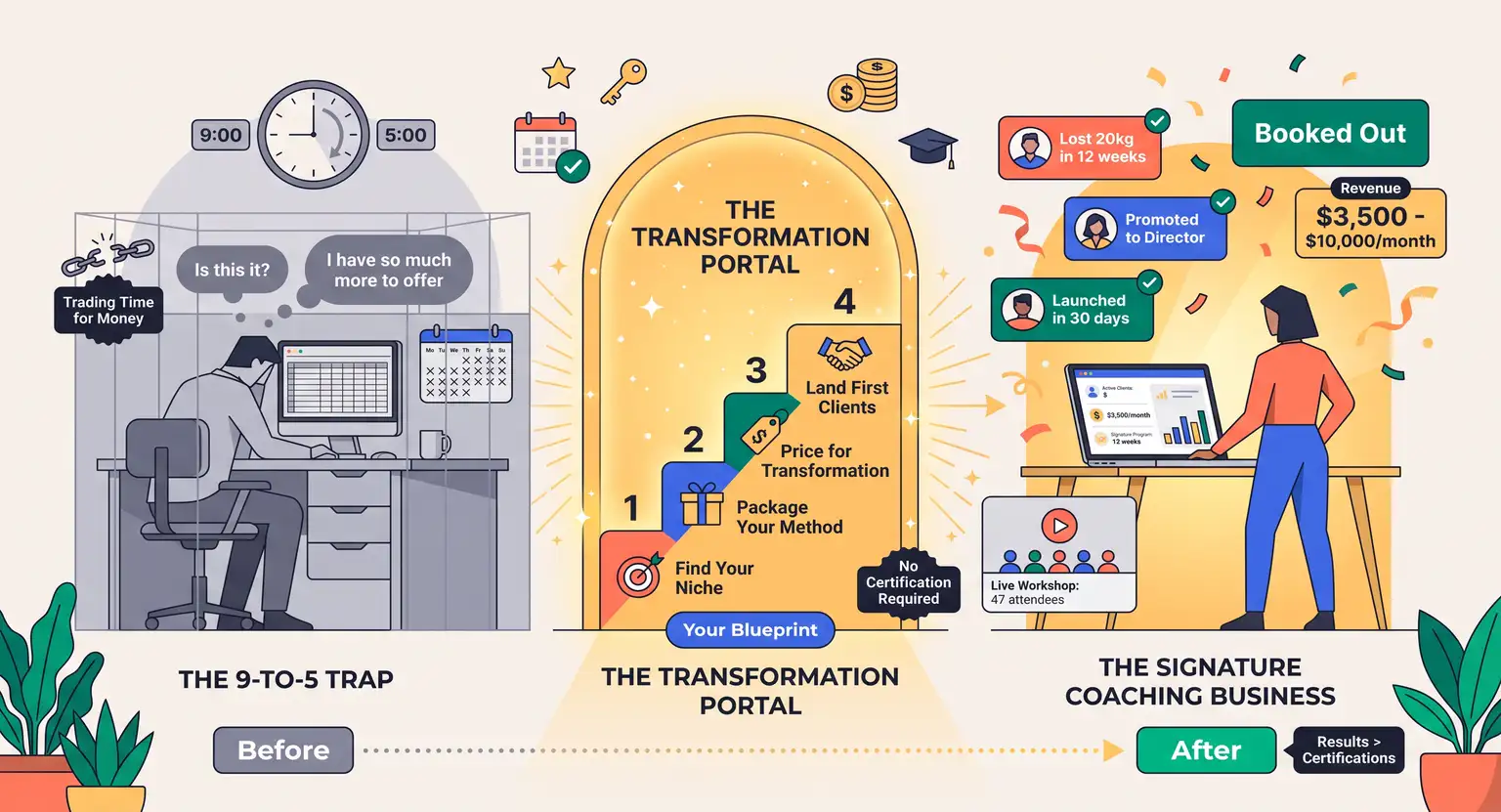 How to Become a Coach: The Definitive 2026 Practical Guide
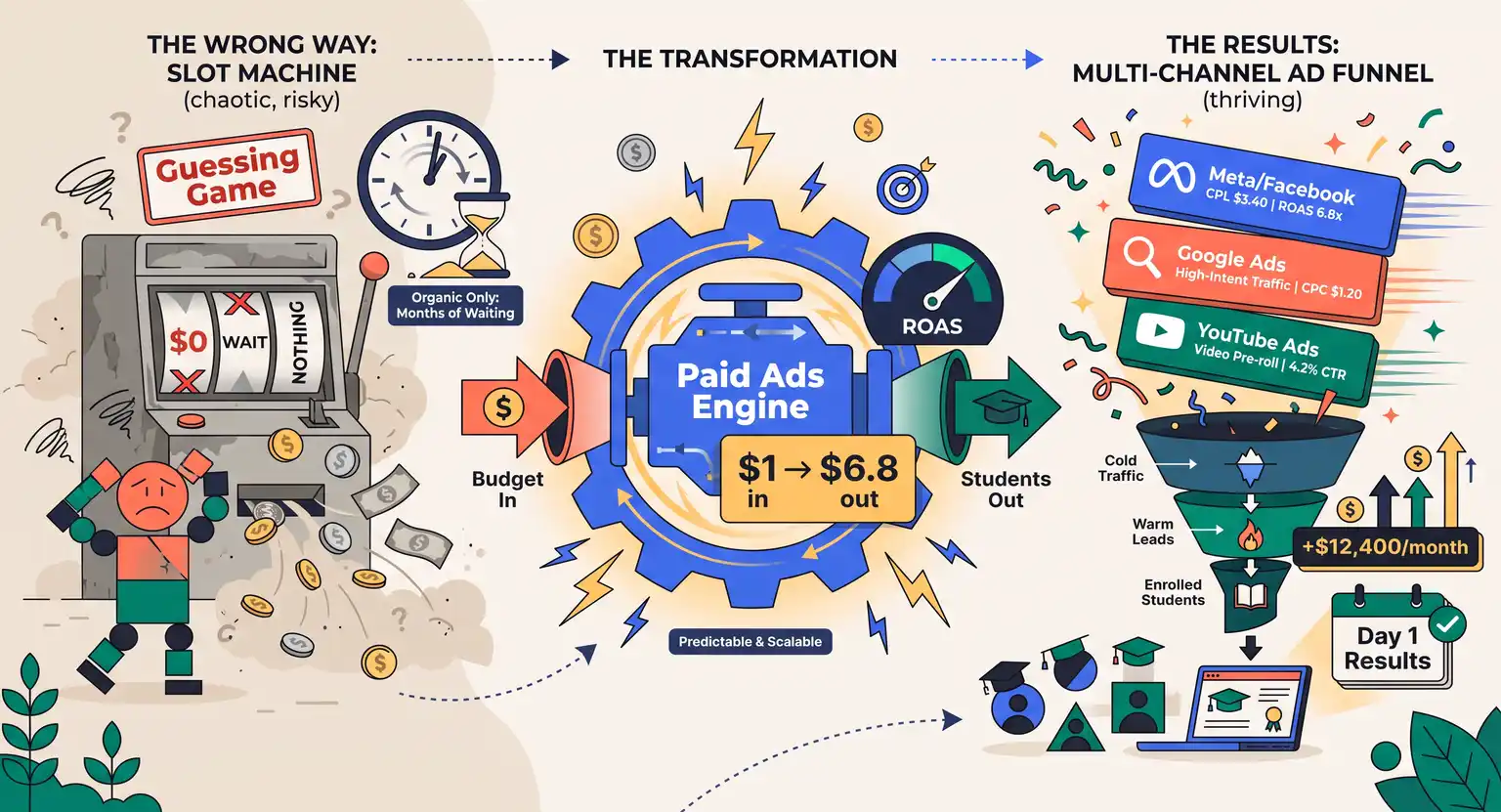 Paid Ads for Online Courses: The Exact 2026 Blueprint to Scale Your Sales