






High-Converting Email Sequence for a Course Launch (2026 Blueprint)
High-Converting Email Sequence for a Course Launch - 2026 Blueprint
You've spent weeks, maybe months, filming training videos, structuring complex modules, and perfecting your curriculum.
Now comes the hard part : getting actual, paying students through the virtual door. It's incredibly frustrating to build something beautiful and hear absolute silence on launch day.
But if you think a single, sporadic broadcast email is going to fill your cohort, you are set up for a cold wake-up call.
The secret to a highly profitable launch is a strategically designed, conversational email sequence. It's what builds tension, answers objections, and turns curious lurkers into eager buyers.
In this guide, we are looking at the exact framework you need to craft an email sequence for a course launch that converts like crazy.
We break down the psychology of each message, the timing of your campaigns, and the exact steps you need to take to ensure your list feels excited - rather than exhausted - by your sales pitch.
Key Takeaways
-
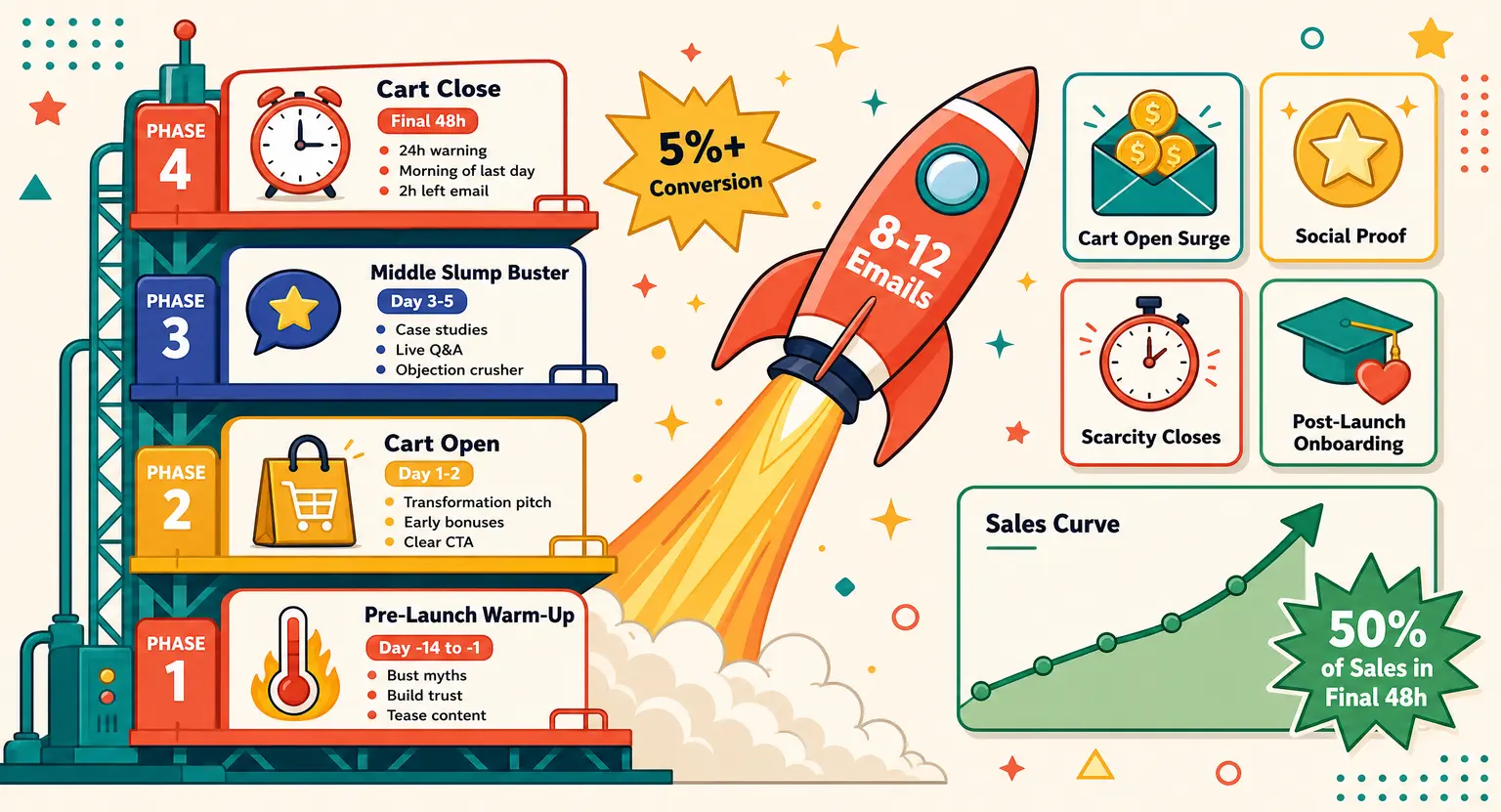
Warming up your subscriber list is completely non-negotiable; start sending high-value emails at least 14 days before your cart open event.
-
You should utilize a reliable, native integrated email marketing platform to track student interactions and deliver behavioral emails automatically.
-
Do not pitch modules and lessons; instead, focus entirely on the emotional and professional transformation your students will experience.
-
The mid-launch period is when most sales slump, so use this specific time to share successful case studies and demolish common pricing objections.
-
Real scarcity drives massive conversions, meaning you should use honest, automated countdowns during the final 24 hours of your cart closing.
The Psychology of the Launch : Selling the Destination, Not the Plane
Let's be completely honest for a second. Nobody wakes up in the middle of the night desperately wishing they could buy a ten-module online course with fifty video lessons.
What they actually want is to solve a nagging pain point, acquire a new high-paying skill, or completely shift their career trajectory.
So, your primary job during a course launch is not to sell pdf worksheets or video files; it is to sell a highly desirable destination.
When you start building your email sequence, you are taking people on an emotional journey from being completely unaware to completely convinced.
This requires an initial foundation of trust which you can easily establish by creating an attractive lead magnet that solves their immediate struggle. If your subscribers already trust your free, actionable advice, they are ten times more likely to invest in your premium system.
This is why you cannot just drop a sudden email saying 'hey, my program is open, here is the link!' and expect a flood of orders - people need to feel understood before they feel motivated to make a purchase decision.
They need to see that you deeply understand their late-night anxieties, their past failed attempts, and their long-term goals.
By focusing your early messages on empathy, shared struggles, and new paradigms, you build an invisible bond of authority.
This emotional alignment makes the eventual pitch feel like a supportive invitation rather than an aggressive, cold pitch. You are welcoming them into a better version of themselves, and that transition starts with psychology.
Phase 1 : The Invisible Warm-Up (Pre-launch Phase)
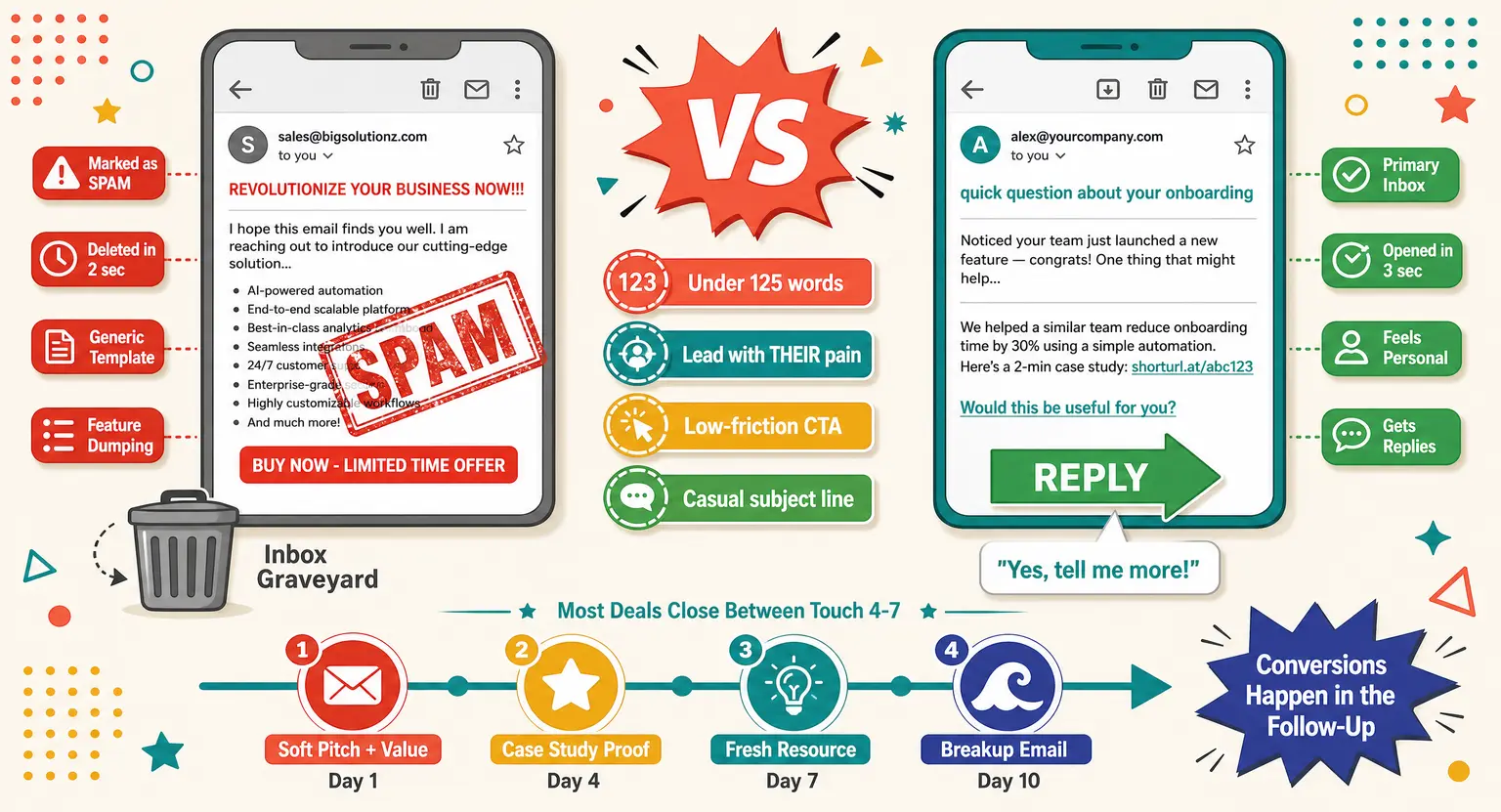
This is where most first-time digital creators completely miss the mark. They hide away in a dark room working on their curriculum, and then out of nowhere, they dump three intensive sales emails on their unsuspecting subscriber list.
That is the fastest way to get hit with a painful wave of spam complaints, high unsubscribes, and zero sales. Instead, you need a pre-launch sequence that gently warms up your audience at least two weeks before your cart officially opens.
Start by introducing the core themes of your upcoming program, asking conversational questions, and encouraging your readers to reply to you directly.
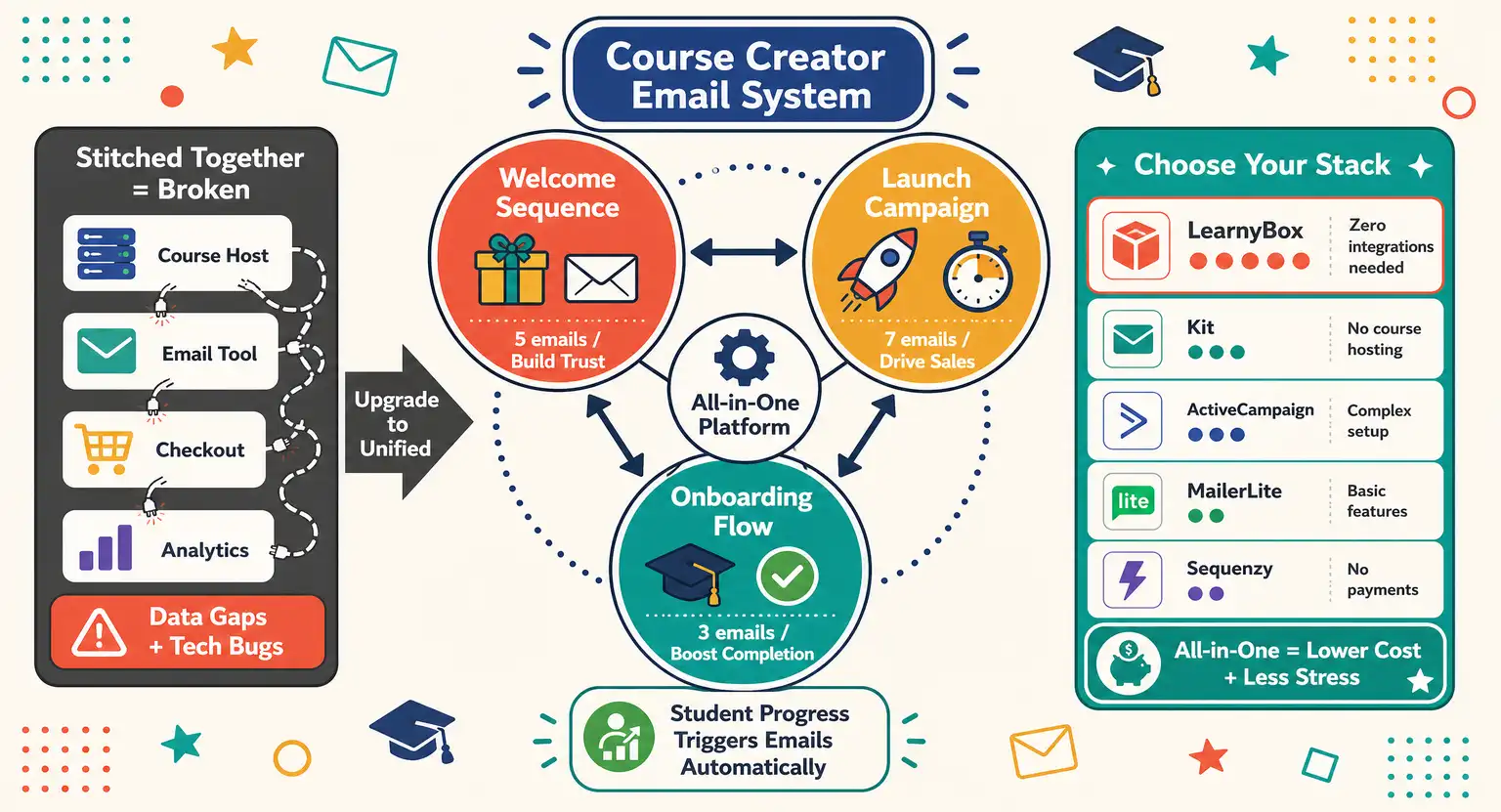
You can even send a well-structured welcome email sequence to new list members to quickly establish your teaching authority and set clear expectations.
During this initial pre-heating phase, you want to identify the common industry myths and bust them wide open.
Tell your subscribers why their previous attempts to solve this specific problem failed, and explain that it was simply a missing strategy, not a personal flaw.
You are shifting their perspective and preparing their minds for the unique methodology you teach in your course. This makes them feel validated and immensely curious about what you have coming next.
Behind the scenes, you want to streamline this with modern email automation for creators so that you aren't manually scheduling every broadcast at the last minute.
The goal here is simple : by the day you mention that your course is finally opening, they should be practically begging you for the checkout link.
Phase 2 : The Climax (The Cart Open Announcement)
The big day arrives, and it's time to pull back the curtain. Many creators get completely paralyzed by fear when writing this first sales email, but you don't need to overcomplicate the copy.
Your cart open email needs to be exceptionally clear, highly energetic, and focused entirely on the transformation.
Do not write a boring, dry syllabus of your lessons; instead, tell them exactly who this course is for, what major problem it solves, and how their life will look after they complete it. You should focus on crafting a persuasive sales email that highlights the immediate benefits and details the special bonuses available for early action-takers.
Make sure your call-to-action button is clean, bold, and easy to find, linking directly to your high-converting sales landing page.
But remember, a single email is never enough because people are busy, distracted, and inherently skeptical of online offers.
You need to follow up the next day with an email that breaks down the structural design of the program and answers technical questions. Let them see what's under the hood so they feel completely safe making the financial investment.
You should also emphasize any money-back guarantees or risk-free trial periods to lower the psychological barrier to entry. This build-up of excitement coupled with a clear, risk-free proposition is what drives that initial, massive surge of sales on your official launch day.
It is about creating pure commercial momentum right out of the gate.
Phase 3 : Overcoming the Middle-Slump (The Retention Bridge)
Every single course launch has what we call 'the dead zone.' This is the middle period of your launch - typically days three through five - where the initial excitement has faded, but the closing deadline is still several days away.
Sales will naturally slow down to a trickle, and if you aren't prepared, you might start spiraling into a panic. But do not make the mistake of sending frantic, repetitive 'buy my course' emails.
Instead, use this crucial downtime to build trust and eliminate lingering psychological objections.
Share real customer testimonials, deep case studies, or success stories of people who have used your systems to achieve real results.
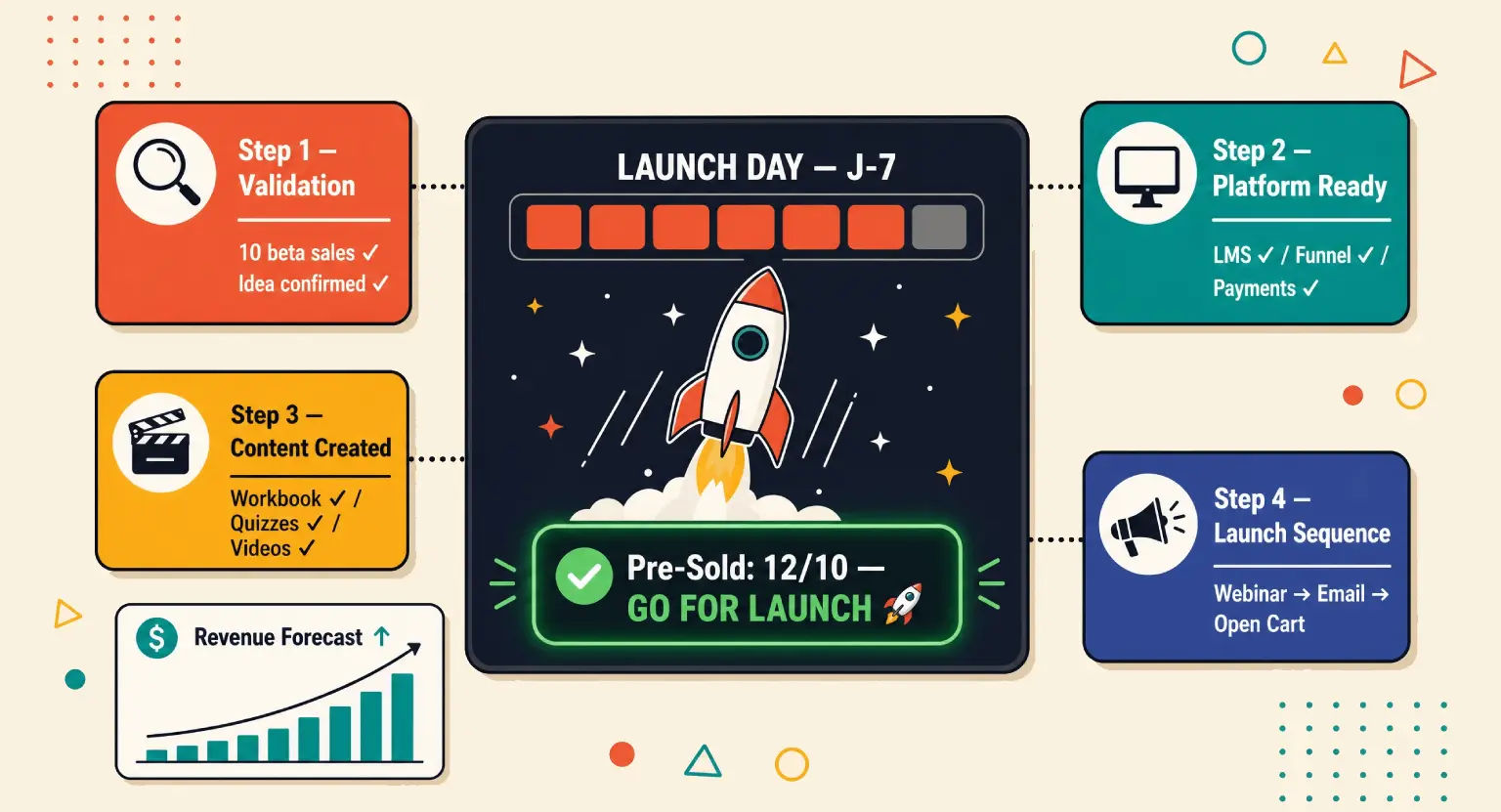
If you don't have course students yet, share your personal journey or the results you secured for your early beta-testers or one-on-one consulting clients.
This provides massive social proof, which is the single most powerful tool you have to bypass skepticism.
You can also host a live Q&A session or an educational webinar to answer complex questions face-to-face. Running all of these moving parts can feel like juggling flaming torches, which is why having everything inside the all-in-one LearnyBox platform is an absolute game-changer.
When your emails, your sales funnels, your payment gateways, and your member areas talk to each other seamlessly, you don't have to worry about broken tech integrations.
You can focus entirely on showing up for your audience, answering their comments, and proving that your course is the real deal.
Phase 4 : The Final Push (Cart Close Strategy)
Now we enter the final 48 hours, and this is where up to fifty percent of your course sales will actually happen. Human beings are chronic procrastinators, and they will wait until the absolute last minute to make a final decision.
This is why you need to build healthy, honest scarcity into your final email sequence.
Send a strategic email 24 hours before closing, one on the morning of the last day, and a final 'two hours left' warning. In these emails, focus on what they stand to lose if they decide to walk away right now.
Are you closing enrollment completely for the next six months?
Is the special launch discount expiring?
Are the valuable bonuses disappearing forever?
Whatever your leverage is, make sure it is completely real, because fake scarcity will instantly destroy your reputation.
Emphasize that staying in their current painful situation is a choice, and invite them to make a different choice today.
Provide them with tools built specifically to sell online courses so they can complete their checkout in under thirty seconds.
Keep these final emails relatively short, highly personal, and extremely urgent.
When the countdown timer hits zero, make sure you actually close the page or change the pricing.
This level of professional integrity builds massive respect and sets you up for even bigger launches in the future.
Post-Launch Strategy : The Underappreciated Onboarding Sequence
Once the cart closes and the dust settled, your work as an online educator is far from over.
In fact, the way you treat your new students in the first 72 hours dictates your refund rates and your lifetime customer satisfaction.
Do not just send a generic automated billing invoice and disappear into the shadows. You need a dedicated post-launch onboarding sequence that welcomes them warmly and gets them excited to start the modules immediately.
Walk them through how to navigate the course platform, where to find their exclusive bonuses, and how to join the student support community.
You want to combat buyer's remorse immediately, which is an incredibly common feeling after high-ticket purchases.
Explain exactly what their first step should be so they don't feel overwhelmed or lost in the material. By reinforcing their buying decision with supportive, high-energy emails, you turn new customers into raving brand advocates.
These are the very students who will eventually write your next batch of testimonials for your next launch. Treat them like gold, show them you care about their progress, and watch your brand equity grow exponentially year after year.
The Course Launch Email Sequence Framework
| Launch phase | Core objective | Key message |
|---|---|---|
| Pre-Launch (Day -7 to -3) | Nurture interest and crush myths | Shift perspective on industry traps |
| Cart Open (Day 1) | Drive immediate initial conversions | Detail transformation and action bonuses |
| Objection Buster (Day 3) | Eliminate financial skepticism | Explain money-back guarantee terms |
| Social Proof (Day 5) | Build deep community credibility | Share stories of student transformations |
| Cart Close (Day 7) | Enforce logical time scarcity | Remind they lose valuable bonuses |
Frequently Asked Questions About Launch Sequences
How many emails should I send during a standard launch?
We suggest sending eight to twelve emails over a ten day period. This range allows you to build anticipation, address major objections, and leverage scarcity without spamming your active email list.
It ensures high visibility since subscribers are often busy and miss single announcements.
Should I offer a payment plan in my course launch sequence?
Yes, absolutely. A payment plan lowers the financial barrier, allowing budgets of all sizes to purchase.
Introduce this option clearly during the middle slump to convert highly hesitant buyers. It typically increases conversions by up to thirty percent without devaluing your core offer.
It is perfect.
What should I do with subscribers who simply do not buy?
Simply keep them on your main newsletter list and continue providing high-value content.
Some people aren't ready to buy yet but may become highly motivated students during your next cycle.
Treat them with respect. They represent sales opportunities if nurtured correctly. Relationship building pays.
When is the absolute best time to send my close emails?
Send your final cart close reminders on the last day. We suggest sending one email in the morning, another six hours before closing, and a final warning two hours before the link expires.
This multiple email approach captures procrastinating buyers. Never skip these critical final reminders.
Can I completely automate this whole sequence?
Yes, automation is highly recommended. Utilizing a platform like LearnyBox ensures that your sequence runs seamlessly in the background while you focus on answering questions and supporting your new students.
This peace of mind allows you to concentrate on delivering top-tier educational materials instead of managing tedious tasks.
What is the average conversion rate for these standard launch sequences?
Most standard course launches see a conversion rate between one and three percent of their total email list. If you have done an excellent job of warming up list members beforehand, you can easily experience conversion rates of five percent or significantly higher.
Highly engaged audiences buy quicker, refer friends, and actively help you build thriving online student communities.


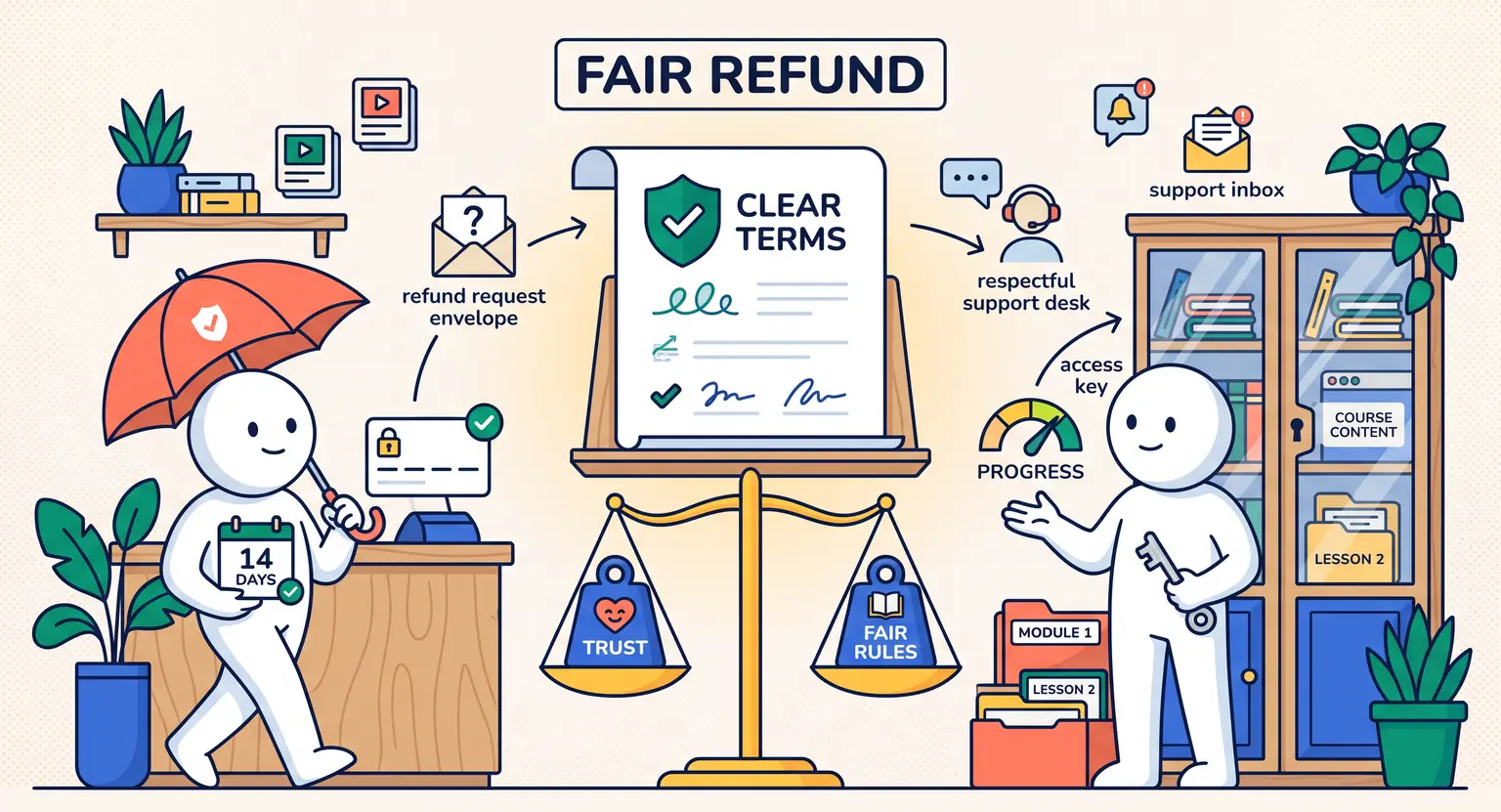 How to Create a Course Refund Policy (Templates & Best Practices for 2026)
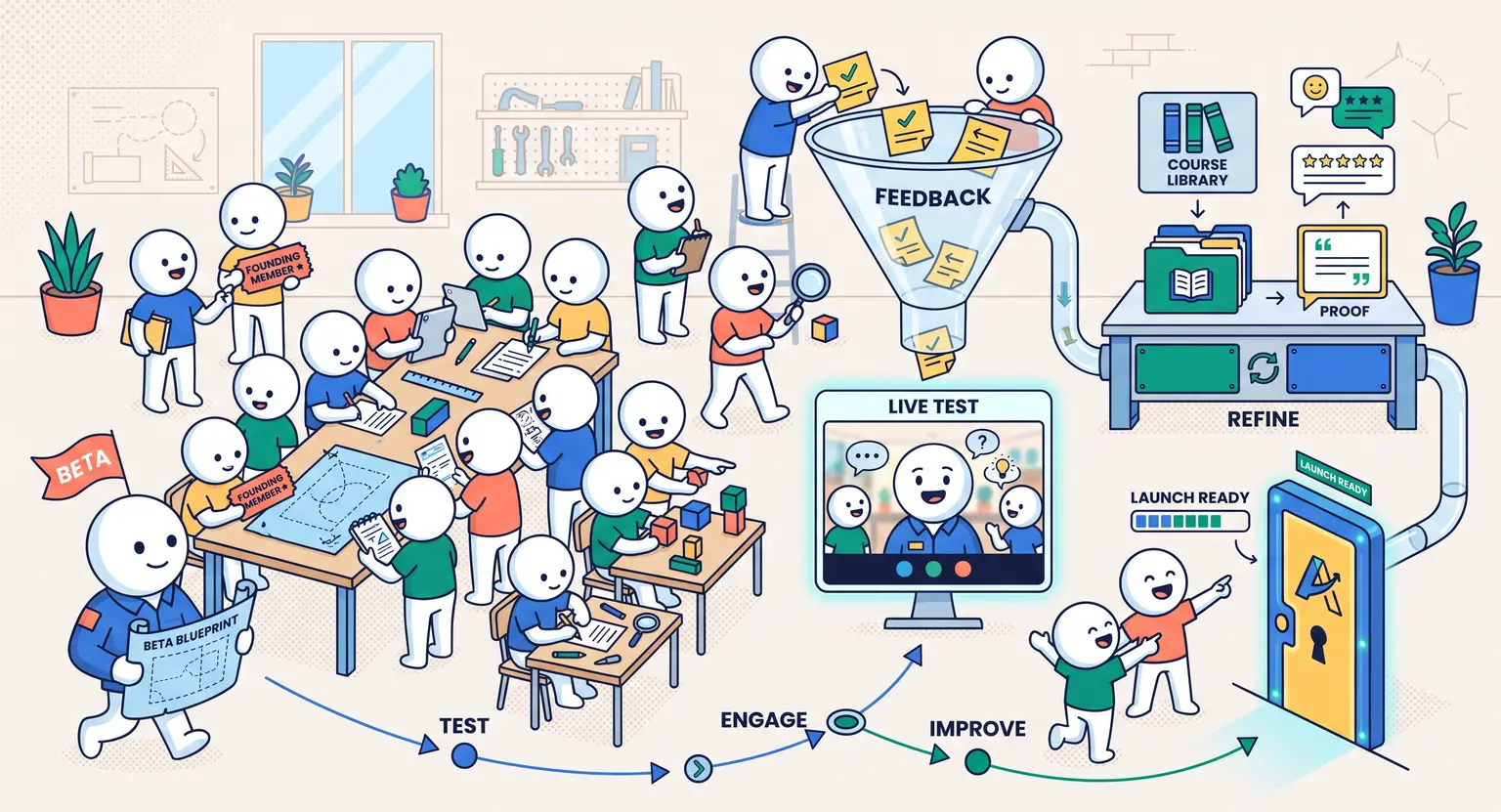 How to Run a Beta Version of an Online Course (2026 Guide)
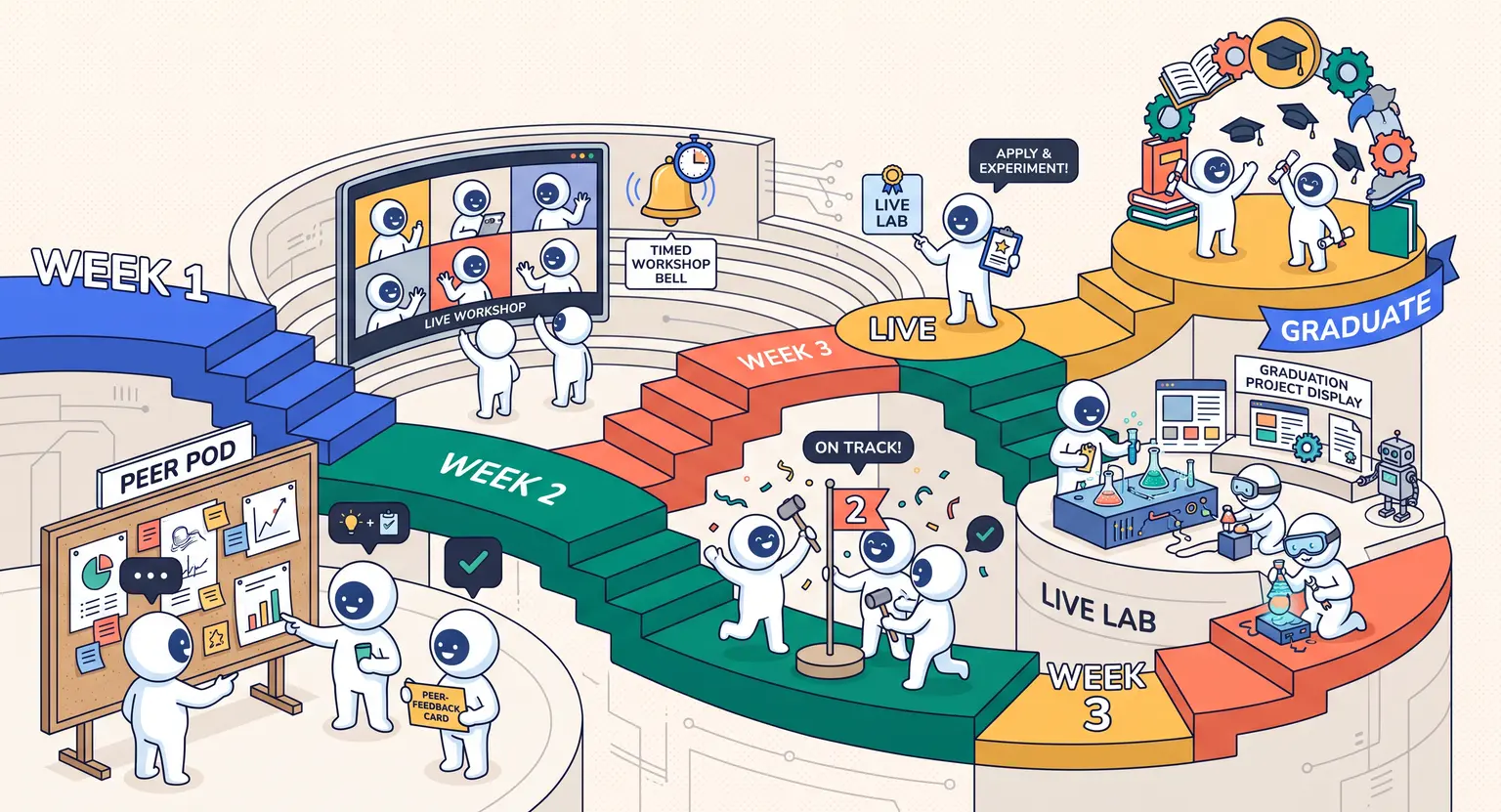 How to Create a Cohort-Based Online Course (2026 Guide)
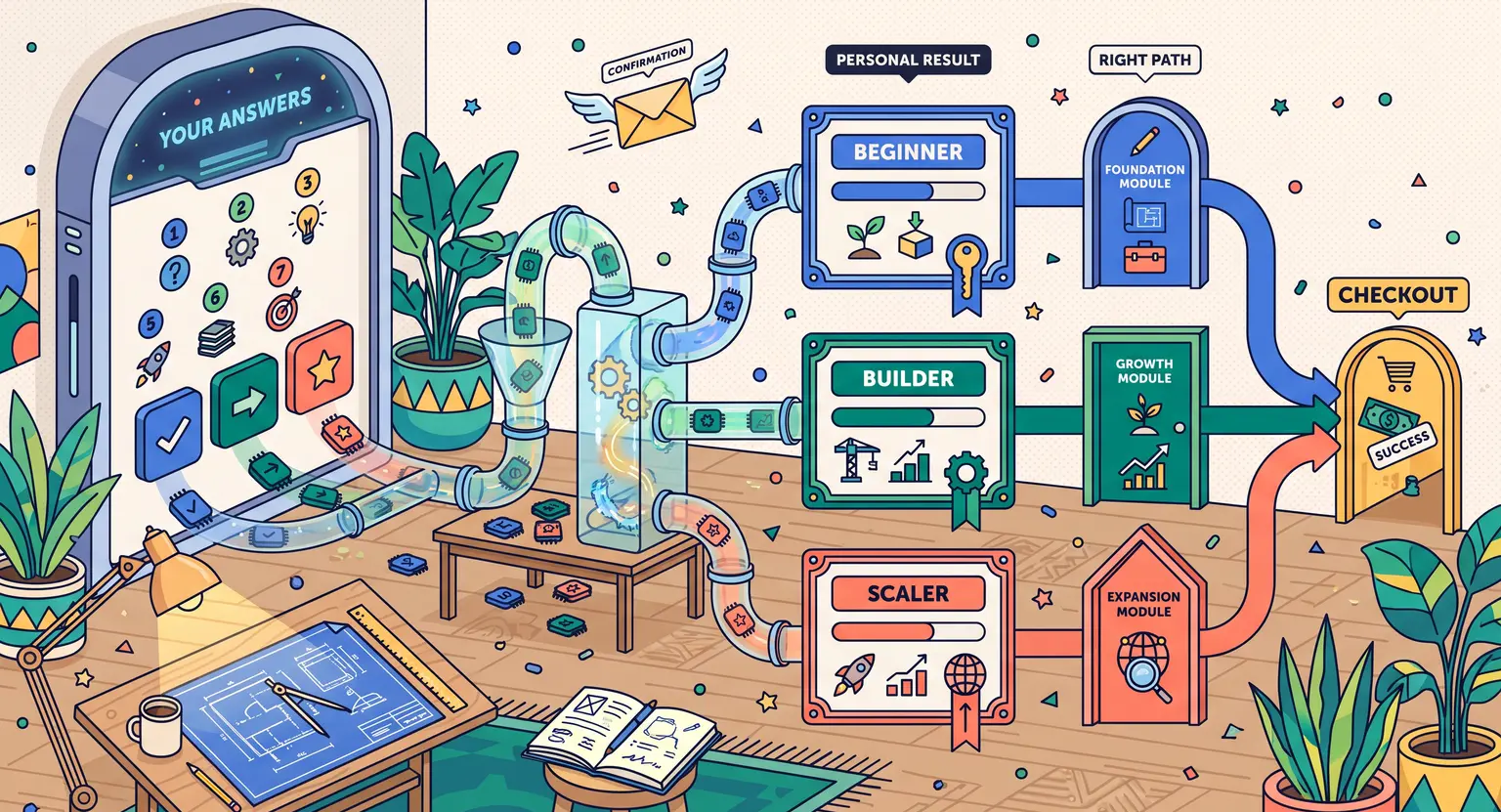 How to Sell an Online Course With a Quiz Funnel (2026 Guide)
 How to Sell an Online Course Through a Sales Call (2026 Guide)