








 French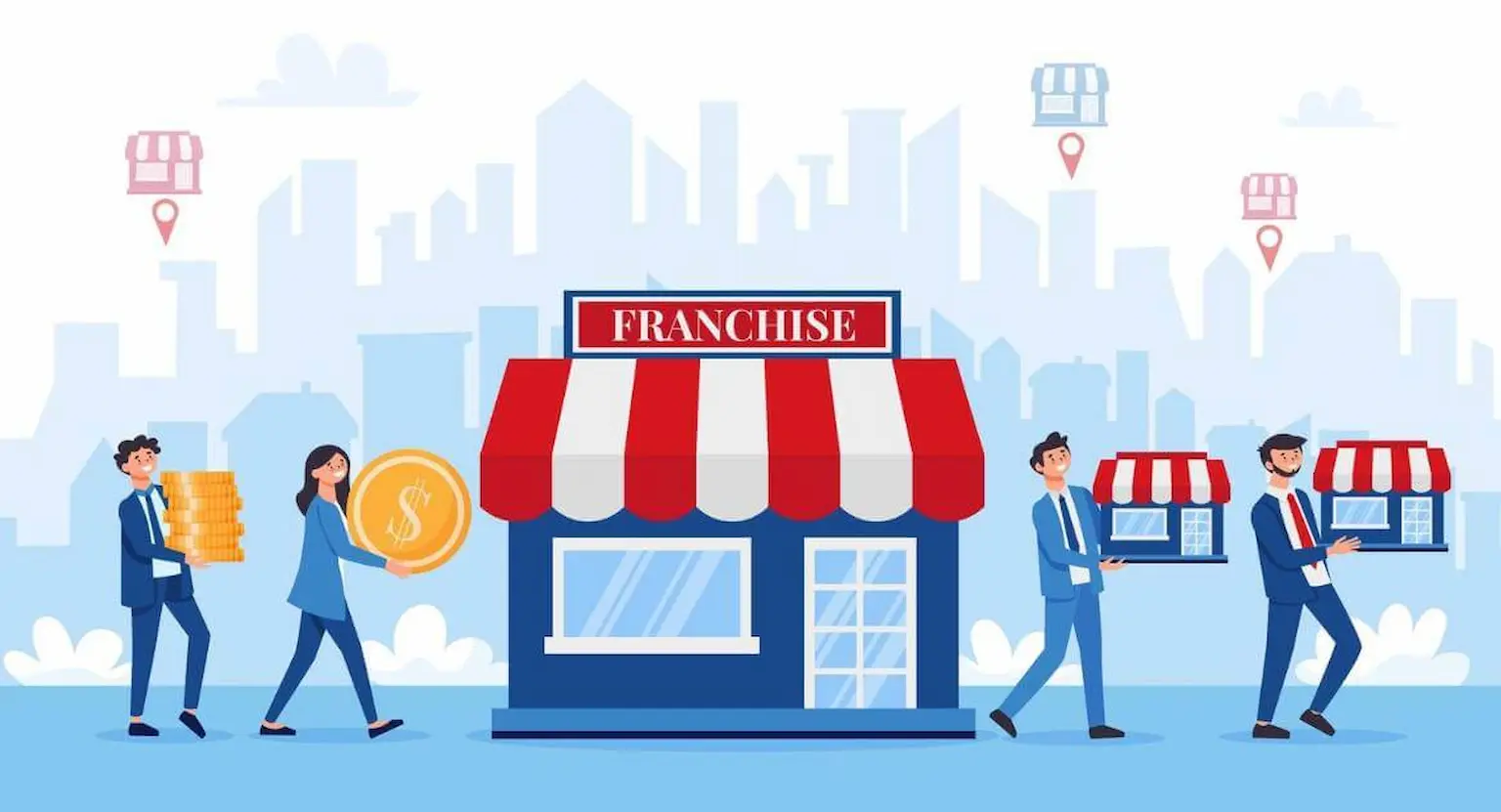
LMS for Franchise Networks: 6 Lessons from Keep Cool
Franchise Network Training: Turning Learning into a Strategic Business Lever
Digital learning - or elearning - has become mainstream : by early 2026, 87% of organizations had integrated it into their training programs.
Franchise networks are among the businesses for which online training is genuinely transformative.
Done well, it's the most effective way to maintain consistent service standards and a uniform customer experience across an entire network, while strengthening the employer brand and keeping training costs in check.
Case study : network training at Keep Cool
Keep Cool, a French fitness franchise, faced a challenge that many growing networks will recognize : 270 clubs across the country, 300 employees to coordinate, 500,000 members expecting quality service - and a network that keeps expanding into overseas territories and Belgium.
For Keep Cool, a gym network founded in 2007, the question was no longer whether to structure franchisee training, but how to do it at scale without it becoming unmanageable.
Because running remote training through e-learning is one thing - but training effectively while staying close to the teams, maintaining a hands-on culture, and preserving brand consistency across hundreds of locations is an entirely different challenge.
Carla Montoya, Training Manager at Keep Cool, explains how they built their online training school by strategically leveraging digital learning - a project that blends HR ambition, instructional design, and operational pragmatism.
The Starting Point: An Industry Upended by the Pandemic
The fitness industry took a serious hit from Covid. Gyms closed for months. Members discovered home workouts, online courses, and coaching apps.
When the doors reopened, expectations had shifted.
At Keep Cool, the crisis prompted the right questions. How do you turn exercise into something that genuinely supports people in their daily lives, rather than just a membership they use three times in January before it gathers dust?
The answer was a fundamental shift in the value proposition.
Fitness was no longer limited to 45 minutes on a treadmill - it became a complete ecosystem: physical and mental well-being, nutritional guidance, mindset, community.
Keep Cool's ambition was to be part of its members' daily lives, not just present within the gym walls.
Carla captures this vision clearly : "The challenge isn't just to be present in the gym for workouts, but to be part of every aspect of people's daily lives - within a permanent ecosystem of well-being and mindset."
Translating that ambition into operational reality has a direct HR implication : to deliver a genuinely distinctive and consistent member experience across the country, you need teams that are fully bought in.
-
Fitness coaches who don't just monitor equipment, but act as real mentors,
-
Club managers capable of building a real local community,
-
Leaders who can embed company culture,
-
Franchisees aligned with the network's vision.
Everyone has to be pulling in the same direction. And that doesn't happen by accident - it has to be built. Through training.
Building an Online Academy for Franchisee : Professionalizing What Already Existed
Before the online training school was created, Keep Cool was already running internal training.
Like many growing companies, they had content, best practices, and informal knowledge-sharing in circulation - but it all lacked structure, consistency, and rigor.
The idea of building a real training school wasn't about optics - it was about taking what already existed and making it professional.
Moving from ad hoc to structured. From inconsistent to reproducible and scalable.
As Carla puts it : "The training school allowed us to organize all of this and bring genuine quality to the training we were already doing."
The Online Academy : Three Clear Objectives
Standardizing franchisee practices across the entire territory
With 270 clubs, you can't afford 270 different ways of doing things. A member moving from a Keep Cool in Paris to one in Marseille should find the same standards, the same service quality, and the same training methods.
Building real career paths
Not just initial onboarding followed by "good luck" - but a structured development journey that takes someone from their first day as a coach all the way to leadership roles.
Carla explains : "At Keep Cool, we strongly prioritize internal promotion. Someone joins us as a coach, and we give them a clear path forward : coach, club manager, area manager, or even a role at headquarters."
The benefits compound : it builds employee loyalty by giving people visibility into where they're headed, it develops talent from within rather than relying on external hires, and above all, it creates a strong culture - driven by people who have grown alongside the company.
Strengthening the employer brand
In an industry where turnover can be high and competition for talent is fierce, training becomes a genuine differentiator. "We know that training is also a key factor in attracting people," confirms Carla.
It has become a core part of the employer promise : when you join Keep Cool, you're not just taking a job - you're coming to build your skills and your career.
The data backs this up. According to Edflex's 2025 Professional Training Barometer :
-
98% of employees consider skill development a top priority
-
86% receive training through their employer
-
65% identify continuing education as the most effective route to developing their skills
Training is shifting from a compliance requirement to a strategic lever - a tool for retention, a pillar of employability, and a reliable driver of service quality.
A Course Catalog That Evolves with Real-World Needs
An Online Academy is only as good as what it teaches. At Keep Cool, the catalog is organized around three main categories.
Sports training
The natural foundation for a fitness network - covering all training built around Keep Cool's proprietary concepts :
-
Boxing (group boxing classes)
-
Biking (group cycling)
-
Training Experience (functional training)
These class formats define the network's identity, so training on these proprietary concepts is non-negotiable.
A coach joining Keep Cool may hold a recognized qualification, but that doesn't mean they know the specific choreography, intensity structure, timing, or the energy that makes a Keep Cool class what it is. That has to be taught.
Cross-functional training
Skills that apply across all roles :
-
Sales (techniques, member retention, objection handling)
-
Management (for club managers and area managers)
-
Marketing (how to promote your club locally and engage the community on social media)
Internal tools training
The mobile apps staff use every day, club management software, administrative processes. It may sound basic, but properly training teams on their tools prevents a significant amount of frustration and wasted time.
Carla is clear on one point : "This is our current catalog. The goal is obviously to expand it over time and offer our teams a broader range of options."
That statement carries two important implications.
First, the catalog isn't fixed - it has to evolve with field feedback, new concepts, and emerging needs.
Second, Keep Cool works with franchisees who each have their own local challenges, so the catalog needs to be flexible enough to accommodate that diversity.
The philosophy isn't to launch a massive catalog from day one and leave it untouched. It's to build iteratively, adding courses as real needs are identified.
Almost a product mindset - which turns out to work very well for training.
Why Digital Learning Was Non-Negotiable
In-person training remains fundamental at Keep Cool. There's no substitute for being in the same room, practicing together, asking questions in real time.
As Carla puts it : "We do a lot of in-person training, because we're convinced it's incredibly important for genuine engagement with our teams."
But with 270 clubs spread across France, its overseas territories, and Belgium, running 100% in-person training quickly becomes a logistical and financial nightmare.
-
How do you bring all the coaches from a region together without shutting down club operations?
-
How do you maintain training frequency without blowing the travel budget?
Digital learning offers concrete solutions to both problems.
First, it expands the teaching toolkit. Some content translates perfectly to the digital format : theory, administrative processes, onboarding to a new tool.
Other content genuinely requires in-person instruction : a boxing routine, a role-play for handling a difficult member conversation, a leadership exercise.
The key is to use each format where it adds the most value - not to force everything into one mold.
Second, digital learning makes short, focused, accessible formats possible.
There's no need to block out half a day to review 10 key process points. A 15-minute module accessible from a smartphone often does the job just as well - and gets completed.
This is what Carla calls "refresher modules" : "We use digital learning heavily for refreshers - short, quick, targeted modules so that employees can get up to speed fast and revisit the key takeaways from in-person training they've already done."
This idea is central to Keep Cool's pedagogical approach. A two-day in-person training session, without any follow-up reinforcement, loses most of its effectiveness - people forget, new habits don't stick.
Digital modules make it possible to refresh that knowledge at regular intervals, without requiring a major investment of time or budget.
Third, digital learning supports employee autonomy. Everyone can learn at their own pace, revisit content as many times as needed, and choose the time that works for them. A coach with irregular hours doesn't have to wait for the next scheduled session to learn something new.
At Keep Cool, the publication cadence is intentional : "We aim to release a new training course roughly every two to three months to keep the platform active and stay closely connected with our employees and managers."
The balance matters. Publish too infrequently and the platform becomes a ghost town no one returns to.
Publish too often and teams are overwhelmed before they've absorbed what's there.
Every 2 to 3 months hits the sweet spot : frequent enough to maintain engagement, spaced enough to ensure quality.
As Carla sums it up : "It's important to keep talking about training, digital learning, and why it matters - to vary the formats and make learning genuinely attractive and engaging for people."
Choosing the LMS: People Before Technology
When Keep Cool launched its training school, they had to choose an LMS - the platform that hosts and delivers online courses.
The market is crowded with vendors promising the world : AI, gamification, advanced analytics, endless integrations...
Keep Cool's criteria were deliberately pragmatic. No need for the latest trend - they needed something that actually worked, and that non-technical people could use without a learning curve.
1. Easy to use
Carla and her team don't have six months to master a complex system. They need to be able to create courses quickly and update them easily, without needing a developer every time something changes.
2. Learner-friendly for everyone
A coach finishing their day at 9 PM after back-to-back sessions doesn't want to spend 20 minutes figuring out where to click. User experience determines whether a platform gets used or gets abandoned.
3. Built to grow
Needs evolve. The catalog grows. New features become necessary.
An LMS that performs well today but hits a ceiling in 18 months is a major problem - not a minor inconvenience.
4. A team that actually listens
And this may be the most important criterion of all. Carla is direct about it : "They listened to our goals."
Many companies choose their LMS based on a polished demo and then find themselves on their own.
At Keep Cool, the decision came after "extended conversations - both personal and operational."
Not a product presentation : real discussions about needs, constraints, and how the tool would actually fit into daily operations.
In an operational environment where teams are out in the field rather than at a desk, responsive support isn't a nice-to-have.
A bug that blocks training access for 48 hours affects dozens of people. A question left unanswered for a week pushes a project off schedule.
This LMS decision wasn't an IT choice - it was an HR and operational one, made by the people who would actually use the tool every day.
The relationship with the vendor's team mattered as much as the technology, because beyond the product, you're building a long-term partnership.
The Merger with Neoness: When Pooling Resources Makes Perfect Sense
One year after implementing the LMS at Keep Cool, the group announced a partnership with Neoness, a Paris-based gym chain.
As with any significant business transaction, it immediately raised practical questions :
- how do you align processes?
- How do you manage cultural differences?
- How do you consolidate tools without creating new complexity?
For training, the question was simple : do you run two parallel systems, or unify everything?
The Keep Cool team was already satisfied with their LMS. It worked, it met their needs, and they had built a relationship of trust with the vendor. The decision was straightforward. As Carla explains : "It made complete sense for Neoness to join us on the platform and contribute quality content for our employees."
The shared approach brought concrete benefits :
1. Centralizing training programs
Instead of two parallel programs with potential duplication and inconsistency, a single shared repository. Content common to both networks is built once. Brand-specific requirements coexist on the same platform without interference.
2. Raising the quality bar
By pooling resources, more can be invested in content quality. Rather than two teams each producing adequate training, a larger, consolidated team produces genuinely excellent content.
3. A consistent experience for employees across both networks
For someone moving between Keep Cool and Neoness, finding the same platform, the same standards, and the same level of rigor is immediately reassuring.
This merger also highlights a broader point : choosing the right LMS isn't just about what you need today.
It's about whether the platform can support the company's growth and adapt to strategic change. A tool that facilitates transitions rather than complicating them is a real long-term asset.
LMS + TMS Integration: User Experience Above All
Running a training school generates a significant administrative workload : registrations, invitations, attendance tracking, certificates, compliance with legal requirements, financial management.
A genuine headache that can consume an enormous amount of the training team's time if left unaddressed.
To manage this, Keep Cool uses a TMS (Training Management System) - the tool that handles the administrative and logistical side of training, the operational backbone of the school.
But here's the classic problem : when you have an LMS for learning and a TMS for administration, you end up with two separate systems.
Employees log into one to register, then another to access the content. The training team juggles between two interfaces, exports and imports data, and has to verify consistency across both.
It creates exactly the kind of friction that drives people away from learning.
This is exactly what Keep Cool wanted to eliminate. As Carla explains : "We also expect the development team to remove anything that creates friction in the learner's path."
The challenge was threefold :
1. Reduce the administrative burden
Every minute spent entering the same information twice in two different systems is a minute not spent creating content or supporting teams.
2. Eliminate multiple logins
An employee who has to remember two sets of credentials, navigate two platforms, and figure out two different interface logics is an employee who will eventually stop trying.
3. Streamline the learning experience end to end
In training as in any digital product, friction is the enemy of engagement. Every extra click, every moment of uncertainty ("but where do I go again?") is a small step toward giving up.
With the LMS/TMS integration in place, employees have a single point of access : one login, one interface, everything available - current courses, history, new releases, certificates.
As Carla put it : "It lets us avoid multiple logins across different platforms, for employees and for us, and gives everyone a single access point for all training. It's genuinely convenient - fast and performant."
This integration isn't a technical detail for IT teams - it's a strategic decision that directly impacts training engagement rates. Less friction means more learning. And ultimately, fewer barriers between the company and the results it's trying to build.
What Comes Next: Internalize, Leverage Internal Expertise, and Stay the Course
Building the training school and the digital infrastructure was Step 1. The project doesn't stop there. Keep Cool's training team already has a clear vision of where they're headed.
Continuous content creation
The goal is a new course every 2 to 3 months. That's ambitious, but it's the pace needed to keep the platform alive. Needs evolve. New concepts emerge. Field feedback reveals gaps.
The training catalog has to be a living thing, not a static archive.
And it's not exclusively digital. The blend of in-person and digital learning - blended learning - remains the guiding principle of Keep Cool's educational approach.
Some things are genuinely best learned in a room together; others work better online. Finding the right balance for each topic is the real skill.
Leveraging internal expertise
Keep Cool has deep internal expertise : department heads with years of experience, club managers who have proven themselves on the ground, coaches who are masters of specific disciplines.
As Carla notes : "We have a lot of in-house experts - the department heads - and we work closely with them."
The goal is to draw on that expertise rather than defaulting to external speakers. Internal experts know the Keep Cool culture, speak the same language as the learners, and understand the operational realities. Their credibility is immediate.
Developing in-house trainers with pedagogical skills
Being a subject-matter expert is not the same as being a good teacher - it's a skill that has to be learned. Keep Cool invests in training its internal trainers in instructional design. "We have internal trainers who've been developed in teaching methods," explains Carla.
These trainers know how to structure a learning journey, vary learning methods, facilitate a group, and assess whether learning has actually happened.
This creates a virtuous cycle : employees become trainers, share their expertise, contribute to their colleagues' development, and find a new dimension to their own careers in the process.
Progressively bringing content production in-house
This is a strategic priority. Working with external providers was the right call to launch the project quickly and benefit from specialized expertise in certain areas.
But the long-term goal is to own the content internally.
As Carla explains : "We work closely with them on developing e-learning and in-person training, while working steadily toward producing as much as possible in-house."
Why the Drive Toward In-House Production?
It's faster - when you produce internally, you control the timeline. It's more agile - you can adjust, iterate, and correct quickly based on real feedback.
And it's more culturally authentic - content produced in-house genuinely speaks the language of the franchise and reflects its values.
The goal never changes : "to excel in digital learning without losing the human touch on the ground." That quote from Carla captures the philosophy perfectly.
Digital is not an end in itself - it's a means to an end : effectively training the people who will go on to support real members in their fitness journeys.
Behind every e-learning module, quiz, and video, there are real people training other real people.
Key Takeaways for Franchisors: 6 Lessons from Keep Cool's Training Transformation
If Keep Cool's experience points to one overarching lesson about the digital transformation of training in a large franchise network, it's this : training isn't an HR or IT issue. It's a strategic business issue that touches the entire organization.
1. Treat training as a strategic lever, not a budget line
Not as a regulatory formality, but as a genuine driver of business performance. Training directly impacts service quality for members, employee retention, and the company's ability to attract top talent. It's an investment with measurable returns.
2. Blend in-person and digital learning intelligently
No dogmatism here. In-person for anything requiring human interaction, group practice, and real-time exchange.
Digital for asynchronous content, refreshers, and theory. The key is designing both to complement each other, not compete.
3. Publish short, focused modules on a regular cadence
Replace long sessions where you lose the audience after 10 minutes with 15 to 20-minute modules built around a single, clear objective. Combine with regular releases every 2 to 3 months to maintain momentum and keep the platform alive.
4. Choose a simple, scalable platform backed by strong support
LMS selection criteria should be practical : ease of use, learner-friendliness, scalability, and above all the quality of human support from the vendor. A technically impressive platform that nobody uses or that comes with poor aftercare is worthless in practice.
5. Remove every point of friction from the learning experience
-
LMS + TMS integration to eliminate multiple logins
-
A clean, intuitive interface for learners
-
Clearly structured learning paths
Every additional friction point in the learning experience is a potential dropout. Identify them and eliminate them.
6. Build internal capabilities progressively
Rather than outsourcing everything indefinitely, develop internal trainers, leverage subject-matter experts within the network, and bring content production progressively in-house.
It takes longer to get started, but it's more sustainable and far better aligned with company culture.
When training is treated as a genuine product - with a clear vision, real users to serve, an experience to optimize, and a roadmap to execute - it becomes a driver of sustainable performance and a real competitive advantage.
✨ Wanna take your franchise network to the next level ?
Book a custom demo with our expert. ✨
FAQ: Managing Training in a Franchise Network
1. Why is training a critical strategic lever for a franchise network?
Training has evolved from a legal obligation into a pillar of franchise performance.
It standardizes practices and ensures consistent service quality across every location in the network.
Beyond consistency, it drives employee retention by offering visible career progression and a culture of internal promotion.
It also strengthens employer brand - a major asset for attracting and keeping talent in competitive sectors. Investing in training means investing directly in customer satisfaction, network cohesion, and long-term growth.
2. How can a franchise ensure a consistent customer experience across its entire network?
Consistency starts with standardizing expertise and processes through a centralized training program.
When every franchisee and employee is trained to the same standards, customers experience the same quality, the same advice, and the same brand culture whether they're in Paris, Marseille, or Bordeaux.
A well-designed online training school is the most scalable way to build and maintain that consistency at scale.
3. What role does digital learning play in training a multi-location franchise network?
For a geographically dispersed network, e-learning isn't optional - it's a necessity.
It solves the logistical and financial challenges of running 100% in-person training at scale, enables short and frequent refresher modules, allows employees to learn at their own pace, and makes rapid content updates possible whenever practices or products change.
4. How does continuing education drive employee retention in a franchise?
Training sends a clear signal to employees : the company is investing in their future. Structured career paths give people visibility into how they can grow - from coach to club manager to area manager or headquarters roles.
This internal promotion model builds loyalty, strengthens culture, and reduces turnover. When training becomes part of the employer's promise, a job becomes a career.
5. What criteria matter most when choosing an LMS for a franchise?
The choice needs to be practical and user-centered. Key criteria : ease of use so the training team can become self-sufficient quickly; learner-friendliness for people in the field who aren't sitting at a desk; scalability to grow with the network; and the quality of human support from the vendor.
A technically impressive tool that comes with poor aftercare - or that nobody actually uses - is worthless. The decision should be made by the people who will use it every day.
6. How do you turn internal experts into effective trainers for a franchise network?
Being an expert in a subject doesn't automatically make someone a good teacher - it's a skill that can be developed.
The approach is to identify internal subject-matter experts, train them in instructional design and facilitation, and give them the tools to structure learning journeys and assess outcomes.
This creates a virtuous cycle : expertise is passed on effectively, internal trainers gain a new professional dimension, and company culture is reinforced from within.



 How to Create a Course Refund Policy (Templates & Best Practices for 2026)
 How to Run a Beta Version of an Online Course (2026 Guide)
 How to Create a Cohort-Based Online Course (2026 Guide)
 How to Sell an Online Course With a Quiz Funnel (2026 Guide)
 How to Sell an Online Course Through a Sales Call (2026 Guide)