








 French
How much does an infopreneur earn ? Real incomes and 2026 strategies
How Much Does an Infopreneur Actually Make? Real Income, Pricing Models, and Strategies to Grow Your Revenue
It's THE question everyone asks before taking the leap - and that nobody wants to say out loud, for fear of seeming too focused on money.
Yet it's a completely legitimate question - and an essential one to answer before making a decision as significant as building a business around your expertise online.
How much does an infopreneur actually make in 2026?
Not the fantasy figures from Instagram ads,
Not the outliers who make headlines.
The real numbers - with their conditions, their variables, and above all, the concrete levers you can pull to improve them.
In this guide, you'll find income brackets by experience level, four quantified real-world scenarios by niche type, the factors that truly separate those who stagnate from those who scale - and a clear method to grow your revenue without doubling your working hours.
1. The reality of infopreneur income : neither a mirage nor a miracle
Let's start by ruling out two equally false extremes. No, infopreneurship is not a ticket to $10,000 a month working two hours a week.
But no, it's not an illusion reserved for a lucky few either.
The truth is somewhere in between - and it's genuinely encouraging for those who take it seriously.
Thousands of course creators and digital entrepreneurs are now generating meaningful income - whether as a side hustle or a primary source - by selling online courses and information products.
Some found their footing in six months. Others took three years. But those who followed a proven method have almost all made it work.
One thing is certain : LearnyBox customers have collectively generated over $800 million in revenue.
This isn't a marketing figure - it's the actual total of sales made by trainers, coaches, consultants, and experts across every imaginable niche, through the platform.
The key isn't knowing how much others earn. It's understanding which variables drive that number - and which ones you can actually control.
2. Income tiers : from $0 to $50,000/month
To give you a realistic framework, here's how infopreneur income breaks down by level of maturity.
These aren't fixed categories - they're stages in a progressive journey.
Tier 1 - $0 to $500/month : the startup phase
This is where everyone starts - and it's completely normal to stay here for the first 3 to 9 months.
You're testing your first offers, building your audience, and refining your value proposition. Income is sporadic, often tied to one-off sales or a modest initial launch.
This stage is often frustrating because it demands a lot of energy for limited returns. But it's also where the foundation gets built - and those who push through almost always make progress.
Tier 2 - $500 to $3,000/month : stabilization
You've found a positioning that works. Your first course is selling - not in massive numbers, but consistently.
You're starting to understand what your audience actually wants. At this stage, many infopreneurs still have a day job and run their business on the side.
For many, an extra $1,500 to $2,000 net per month already represents a significant income supplement. This tier is often underestimated - yet it's where infopreneurship starts to feel real and sustainable.
Tier 3 - $3,000 to $10,000/month : the system is running
You have a sales funnel that works, a loyal audience, and one or more evergreen online courses generating ongoing sales.
At this level, infopreneurship has typically become your main business. You start thinking in terms of MRR, LTV, and optimization rather than just content creation.
It's also at this point that automation becomes critical. Selling manually at $3,000 a month is doable. Getting beyond that without an automated system is a real ceiling.
Tier 4 - $10,000 to $50,000/month : controlled growth
The top infopreneurs in the online education space operate at this level.
They typically have several years of experience, a strong personal brand, a fully developed product lineup (entry-level offer + core offer + premium offer), and well-established automation systems.
They reinvest a meaningful portion of their revenue into paid advertising to fuel a proven sales funnel.
Beyond $50,000/month, we enter the territory of more complex structures - teams, B2B partnerships, licensing, and certification programs - which are outside the scope of this article.
3. Comparison Table : Revenue by Offer Type and Niche
Revenue varies widely depending on the type of product you sell and the niche you're in.
This table summarizes the realistic ranges observed across the online education market.
| Type of offering | Average price | Beginner level | Advanced level | Gross margin |
|---|---|---|---|---|
| Online course (evergreen) | $200–$1,000 | $500–$2,000/month | $5,000–$20,000/month | > 90% |
| Bootcamp / cohort | $500–$2,500 | $2,000–$5,000/launch | $15,000–$50,000/launch | > 85% |
| Monthly membership | $30–$100/month | $300–$1,500 MRR | $3,000–$15,000 MRR | > 92% |
| One-on-one coaching | $150–$500/hour | $1,000–$3,000/month | $5,000–$15,000/month | > 80% |
| Ebooks / templates | $10–$100 | $100–$500/month | $1,000–$5,000/month | > 95% |
These ranges are based on data observed across the online education market. They do not account for acquisition costs (advertising, affiliate marketing) or taxes and social contributions, which vary depending on your country and legal structure.
To understand how to structure your product lineup cohesively, read our comprehensive guide to infopreneurship - you'll find the "offer ladder" method there.
4. Four Realistic, Quantified Scenarios
Rather than generalities, here are four concrete scenarios - with real figures, assumptions, and expected outcomes.
These scenarios are based on real-world configurations observed among course creators and infopreneurs.
Scenario 1 - Wellness Coach, First Launch ($297 offer)
-
Email audience : 3,000 contacts.
-
Lead magnet : 40% opt-in rate - 1,200 qualified leads.
-
Launch webinar : 30% of registrants attend - 108 participants.
-
Immediate conversion (5% of attendees) - 5 sales.
-
Follow-up emails on Day 3 and Day 7 (1.5% of leads) - 18 sales.
-
Total courses sold : 23 × $297 = $6,831.
-
$49 upsell template (30% of buyers) - +$343.
Total launch revenue : approximately $7,000.
Estimated production cost : under $500 (LearnyBox subscription + microphone).
Gross margin : > 93%.
Scenario 2 - B2B Consultant, Premium Bootcamp ($1,997 offer)
-
Email list : 1,500 targeted contacts.
-
Webinar registrations : 25% - 375 registrants.
-
Show-up rate : 35% - 131 attendees.
-
Live conversion (6%) - 8 sales.
-
Follow-ups after the event - +2 sales.
-
3-installment payment option offered - improves conversion rate by 15% to 20%.
Total launch : $19,970.
Two launches of this type per year amounts to $40,000 - not counting evergreen sales in between.
Scenario 3 - Personal Development Coach, Membership ($97/month)
-
Initial launch : 80 members at the early bird rate ($69/month).
-
Organic growth : +15 members/month at steady state.
-
Monthly churn : 5%.
-
After 6 months : approximately 130 active members.
-
6-month MRR : 80 x $69 + 50 × $97 = $10,370/month.
Total over 6 months : approximately $50,000.
With controlled churn and well-produced monthly content, this model generates highly predictable and stable revenue.
Scenario 4 - SEO Expert, Full Ecosystem (course + coaching + templates)
-
Evergreen course at $497 : 15 sales/month via automated funnel - $7,455/month.
-
Group coaching program at $997 : 1 cohort/quarter, 10 participants - $3,479/month on average.
-
Template pack at $69 : systematic post-course upsell - $690/month.
-
Affiliate revenue from recommended tools : $300/month.
Monthly total : approximately $12,000.
This profile illustrates the power of a complementary product ecosystem - each offer feeds the others.
Scenario 4 isn't reserved for the "stars" of infopreneurship. It's what any serious infopreneur gradually builds after 18 to 36 months of structured activity.
5. The 7 Factors That Truly Determine Your Income
With equal technical skills, why do some infopreneurs earn 10 times more than others?
The answer comes down to seven variables.
Master them, and you'll master your revenue.
1. The precision of your niche
This is by far the number one factor. A niche that's too broad ("I train entrepreneurs") generates few conversions because it doesn't speak specifically to anyone.
A precise niche ("I help independent physical therapists fill their schedules without paid advertising in 8 weeks") converts much better - even with a smaller audience.
An audience of 500 perfectly targeted people often brings in more revenue than an audience of 5,000 who are too diverse.
2. The clarity and power of your promise
Your promise is what your customer actually gets when they buy from you.
The more specific, measurable, and desirable it is, the better it converts. "Improve your well-being" doesn't sell.
"Lose 10 pounds in 8 weeks without a strict diet" sells far better - because the outcome is tangible and the timeframe is defined.
To go deeper on this topic, check out our article on social proof and conversion - your promise and your proof are the two pillars of any high-converting sales page.
3. The size and quality of your audience
The larger AND more engaged your email list, the more revenue your launches will generate.
But here's the catch : 500 highly qualified subscribers beat 10,000 indifferent ones. What matters is engagement - open rate, click-through rate, reply rate.
A 40% open rate on a list of 2,000 will likely outperform a 10% rate on a list of 8,000.
4. Your sales system
A great product without a sales system won't sell.
An average product with a great sales system still sells - even if it doesn't build loyalty.
Ideally, you want both.
Your system includes : the sales funnel, email sequences, the sales page, the webinar, follow-ups, and upsells. Every link in the chain either improves - or undermines - the overall result.
LearnyBox natively integrates all of these elements. Explore LearnyBox sales funnels to see how to build your system without external tools.
5. Your pricing and offer structure
Selling a course at $100 vs. $500 doesn't require five times the work.
Often it requires exactly the same marketing effort - or even less, because a higher price better qualifies buyers and generates far fewer customer service requests.
Infopreneurs stuck at low income levels almost universally share the same problem : they undervalue what they offer and set prices out of fear of rejection rather than based on the actual value they deliver.
6. Launch frequency
An infopreneur who launches once a year and one who launches four times - with the same product and the same audience - don't generate the same revenue.
Frequency is a direct driver of income. The key : having a 12-month marketing calendar with launch phases interspersed with evergreen phases.
7. Automation
Automation is what lets you sell while you sleep.
Evergreen sales funnels, automated webinars, email sequences triggered by your prospects' behavior - these systems multiply your sales opportunities without adding to your workload.
Our article on automating online course sales explains how to set this up in practice.
6. Pricing Models and Their Direct Impact on Revenue
The pricing model you choose influences not only your immediate revenue but also its consistency, predictability, and scalability.
Here are the four main models and their real-world impact.
One-time payment
The learner pays once and gets lifetime access to the course.
This is the simplest model for your customers to understand - and therefore often the easiest to sell when you're starting out.
Downside : your revenue depends entirely on your ability to keep generating new sales.
Best for : themed courses, practical guides, recorded masterclasses.
Monthly or annual subscription
Recurring access in exchange for regular payments. This is the model that generates the most stable MRR and best smooths out your cash flow.
The challenge : delivering enough value each month to justify renewal and keep churn in check.
Best for : memberships, active communities, and content libraries that are regularly updated.
Installment payments
Offering your $500 course as three payments of $180 doesn't change your price - but it can increase your conversion rate by 15% to 30% on offers in the $200–$1,500 range.
It's one of the simplest, highest-impact ways to boost revenue without changing your offer at all.
LearnyPay natively supports installment payments, subscriptions, Apple Pay, and Google Pay - no plugins, no external tools. One more reason to centralize everything on LearnyBox.
Bundles
Combine multiple products into a single, discounted offer.
Excellent for launch periods or seasonal sales moments (back-to-school, Black Friday, New Year's).
Bundles increase average order value while helping you move complementary products.
7. LTV, MRR, CAC : The Metrics That Truly Drive Growth
To move beyond simply counting sales at the end of the month, you need to run your business using the right metrics. Here are three that make all the difference.
LTV - Lifetime Value
LTV is the total revenue a customer generates throughout their entire relationship with you.
If a customer buys your $300 course, then your $1,000 coaching program, then subscribes to your membership at $50/month for 18 months, their LTV is $300 + $1,000 + ($50 × 18) = $2,200.
Why it matters : the higher your LTV, the more you can afford to spend on customer acquisition.
An infopreneur with an LTV of $500 can spend $50 to acquire a customer. One with an LTV of $2,000 can spend $200.
MRR - Monthly Recurring Revenue
MRR is the portion of your revenue that comes in automatically every month, thanks to your subscriptions and memberships.
It's your revenue floor - what you earn even without launching anything this month.
Building a solid MRR, even a modest one ($500 to $1,000/month), fundamentally changes your relationship with financial stress and your ability to take calculated risks.
CAC - Customer Acquisition Cost
CAC is what it costs you to acquire a new customer - in dollars (advertising, affiliates) and in time (free content, social media).
The goal is to maximize the LTV/CAC ratio : ideally, your LTV should be at least three times your CAC.
If you spend $100 on ads to acquire a customer who buys a $200 course, you earn $100 in gross margin - before expenses.
If that same customer comes back to buy an $800 coaching program, your ROI skyrockets. That's why customer retention and a product ecosystem are far more powerful levers than pure acquisition.
8. Concrete Strategies to Grow Your Infopreneur Revenue
Here are the most effective strategies, ranked by potential impact. None of them require starting from scratch - all can be applied to your existing business.
Raise your prices
This is often the fastest lever - and the most underused.
If you've been selling your course at $200 for the past six months and have dozens of positive reviews, nothing is stopping you from moving to $300 or $400.
Your work hasn't changed. The value you deliver has been proven.
Add a systematic upsell
Every sale is an opportunity to make another one.
Offer a complementary product immediately after purchase - a template pack, a coaching session, an advanced module.
20% to 30% of your buyers will accept a well-designed upsell, which can increase your revenue per transaction by 30% to 50% without any additional acquisition effort.
Our article on how to grow your sales with upsells and downsells gives you concrete examples you can put into practice fast.
Launch an affiliate program
Your happiest customers are your best potential salespeople.
A well-structured affiliate program - offering 20–40% commission based on your margin - can drive 20–40% of your revenue during a launch, with no extra effort on your part.
LearnyBox includes a full-featured affiliate platform. Discover how affiliate marketing can supercharge your business.
Create an automated (evergreen) webinar
An evergreen webinar is a pre-recorded webinar that runs automatically, several times a week, at set times.
For your prospect, the experience is nearly identical to a live session. For you, it's a sales system that runs 24/7 with no ongoing involvement.
LearnyBox offers natively integrated live and automated webinars.
Set it up once, and your evergreen webinar can generate sales every week indefinitely.
Develop a premium offer with support
If your core course costs $300, create a premium version at $1,000 or $1,500 that includes personalized support - Q&A sessions, work reviews, and access to a private community.
5% to 15% of your standard version buyers will be interested in upgrading.
And those sales will move the needle on your monthly revenue significantly.
Produce SEO content consistently
SEO content is a long-term investment that generates a growing stream of free, qualified traffic.
A well-ranked article can send you dozens of qualified leads every day, for years, at zero additional cost.
9. Mistakes That Cap Your Revenue
Many infopreneurs stagnate not because they lack talent or expertise - but because they're making structural mistakes that automatically limit their income.
Having a single product at a single price
One product means one entry point for your prospects.
Some will find your price too high;
others will want to go further than what you're offering.
Without a tiered pricing structure, you lose both groups.
Never following up
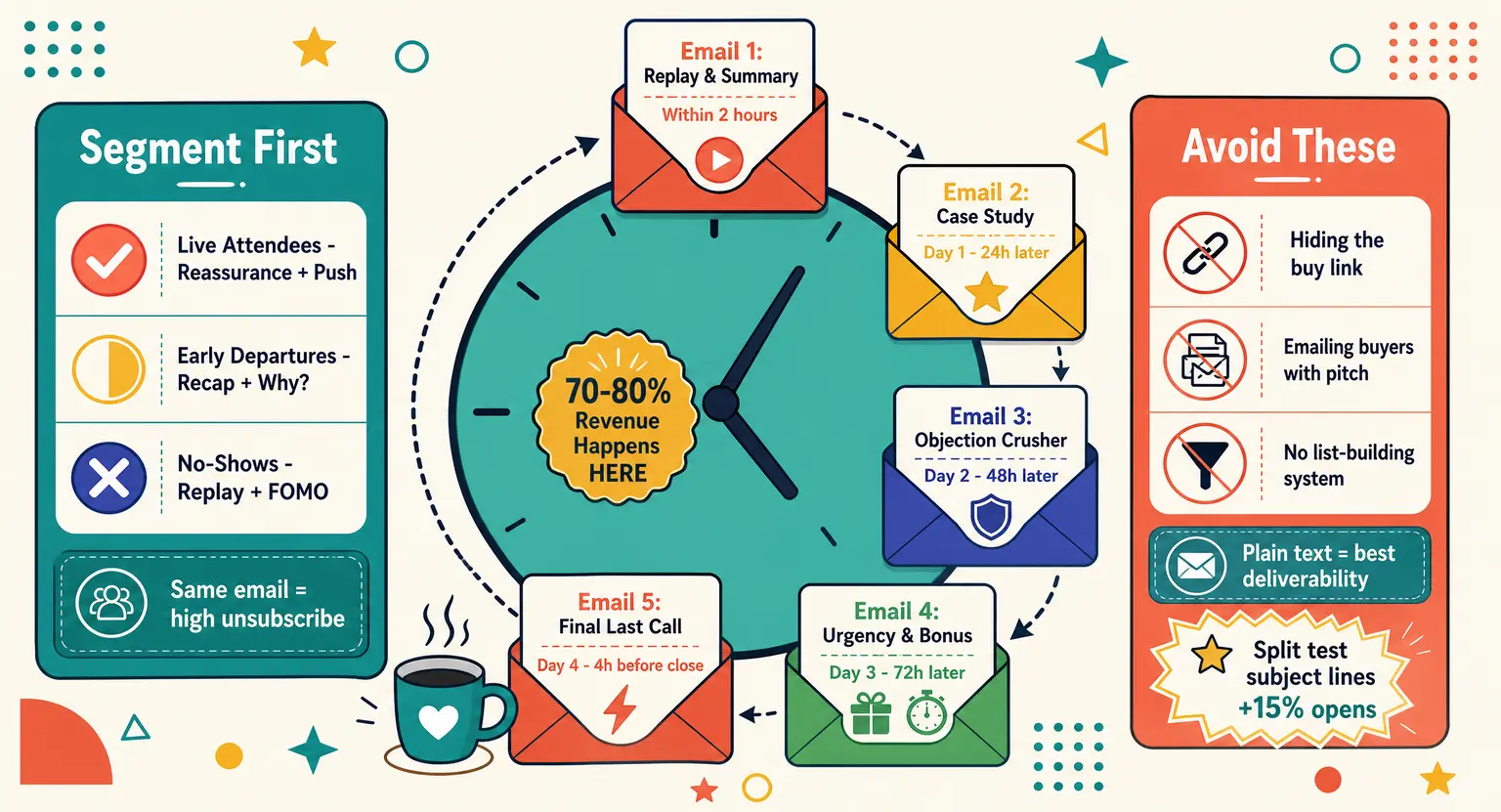
Statistically, 60% to 80% of sales happen after the first point of contact.
Well-written, segmented, and spaced-out follow-up emails are one of the most direct ways to increase revenue from a launch without expanding your audience.
With LearnyMail, you can set up automatic follow-up sequences triggered by your prospects' behavior - opened but didn't click, visited the sales page but didn't buy, abandoned their cart.
Ignoring your existing customers
Acquiring a new customer costs, on average, 5 to 7 times more than selling to an existing one.
Yet most infopreneurs pour 90% of their energy into acquisition and only 10% into retention and upselling.
That imbalance is expensive.
Underinvesting in automation
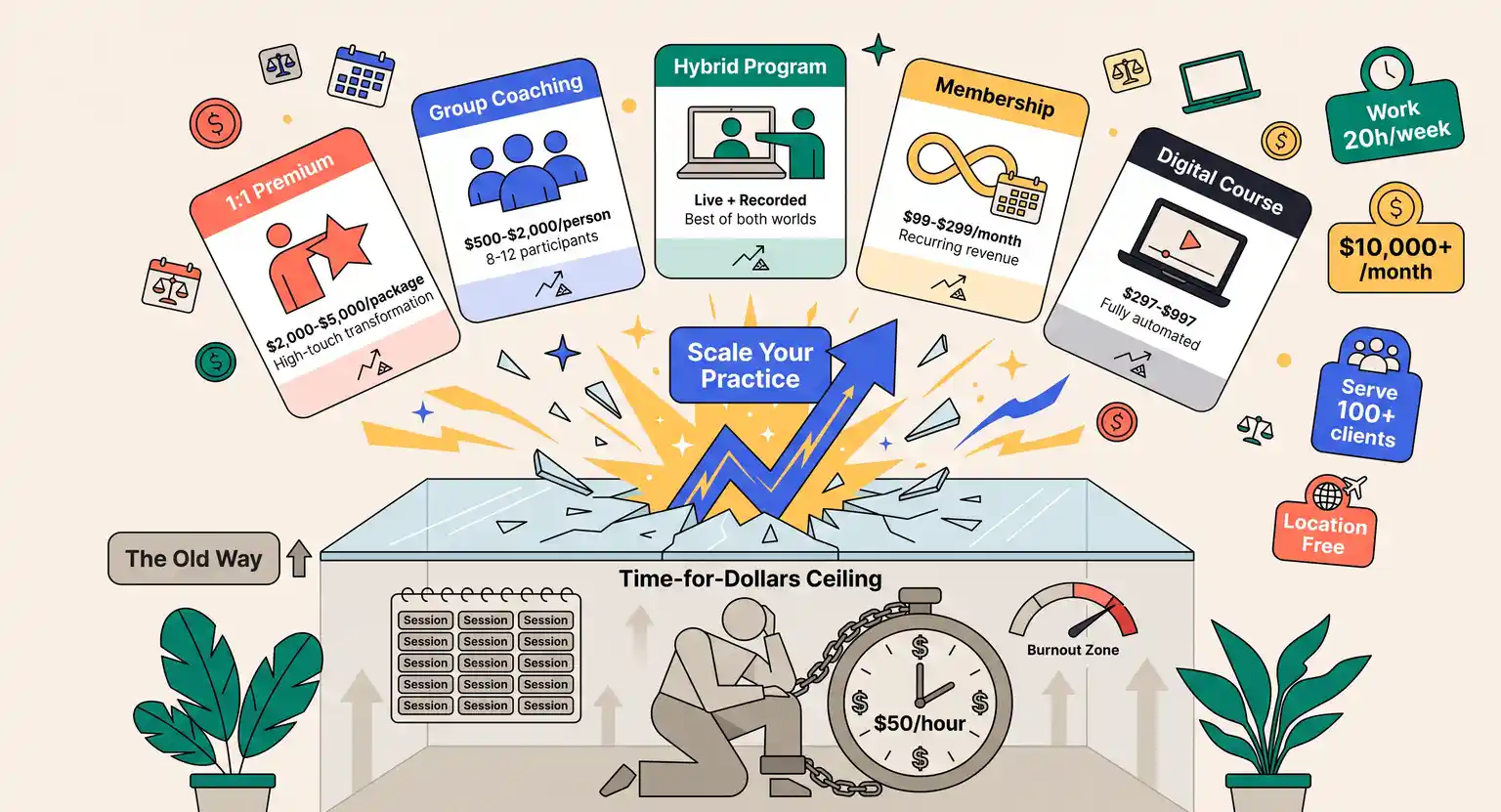
An infopreneur who does everything manually cannot scale.
At some point, your time becomes the bottleneck. Automation - sales funnels, email sequences, evergreen webinars - is what lets you multiply your revenue without adding to your working hours.
10. LearnyBox : the platform that maximizes your infopreneur revenue
An infopreneur's revenue depends largely on the efficiency of their systems.
And those systems depend directly on the tools you choose.
That's why LearnyBox was built as an all-in-one platform designed to maximize every step of your sales funnel.
What LearnyBox lets you do that separate tools can't
-
Track your entire funnel from a single dashboard - from opt-in to sale, including email and webinars.
-
Automatically follow up on abandoned carts and leads who visited your sales page without buying.
-
Offer one-click upsells right after checkout, with no redirect to an external tool.
-
Manage subscriptions, installment payments, and discounts through LearnyPay - with Apple Pay and Google Pay built in.
-
Run automated evergreen webinars that generate continuous sales without your presence.
-
Create and manage a complete affiliate program - tracked links, commissions, affiliate dashboards, all in one place.
Real savings on your fixed costs
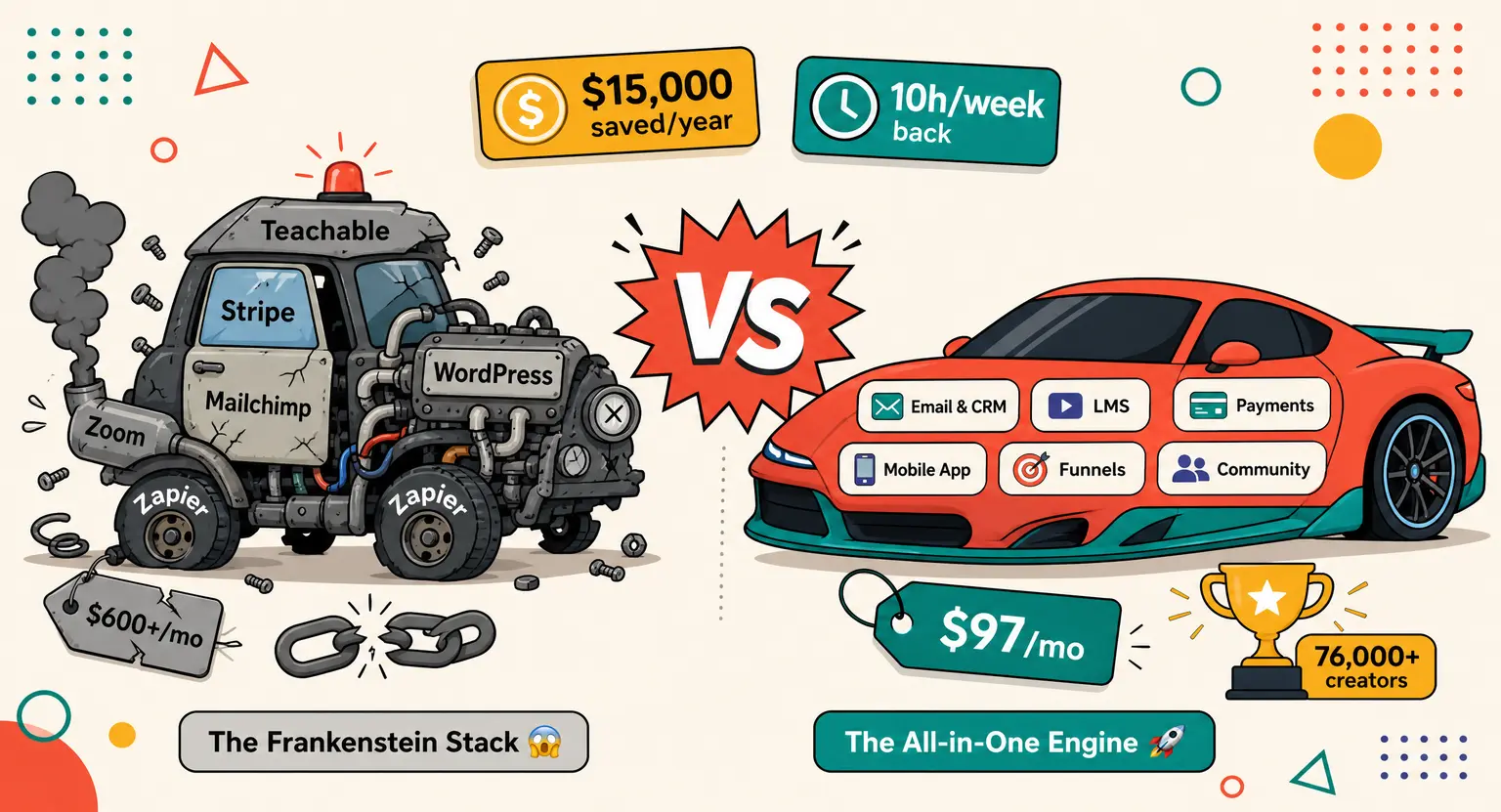
On average, an infopreneur juggling a course platform, an email marketing tool, a webinar solution, a website builder, and a payment processor spends over $150/month - plus several hours a week on maintenance and tool-switching.
LearnyBox replaces all of that starting at $49/month.
Over 12 months, that's a potential savings of over $1,500 - money that stays in your net revenue.
Check out LearnyBox's pricing and get started for free - no credit card required, no commitment.
Conclusion
An infopreneur's income doesn't happen by accident - it's built methodically, variable by variable.
Your niche, your value proposition, your audience, your sales system, your pricing, your launch frequency, and your automation : these are the seven levers you can directly control.
The encouraging part is that every one of these levers improves with time and experience.
Your first launch will likely disappoint compared to your tenth. Your first sales funnel will be rough compared to the one you've optimized after six months of data.
That's completely normal - and it's exactly how every successful infopreneur makes progress.
LearnyBox is built to support you at every stage - from your first sale to your first million.
✨ Get started for free today ✨
No commitment. No credit card required.
FAQ - Frequently Asked Questions About Infopreneur Income
How much does an infopreneur earn on average?
There's no meaningful average, as situations vary enormously.
As a general reference : infopreneurs in the startup phase (0 to 12 months) typically generate between $0 and $2,000 per month.
Those in the consolidation phase (1 to 3 years) often reach $3,000 to $10,000 per month.
Established infopreneurs with a full product ecosystem and automated systems can exceed $15,000 to $30,000 per month.
Can you make a living from infopreneurship in the first year?
It's possible, but not the norm. Most infopreneurs who go full-time take 12 to 24 months to reach a sustainable primary income.
Those who get there faster generally already have an existing audience, a strong professional network, or a highly specific niche with strong demand.
What types of online courses sell best?
The niches that consistently generate the best conversions in the online education market are : digital marketing and online entrepreneurship, personal development and life coaching, health and wellness, personal finance, and professional skills training (accounting, photography, languages, and more).
But the niche isn't everything - a precise positioning within any field can work very well.
Does offering installment payments really increase sales?
Yes, significantly - especially for offers priced between $200 and $1,500. A 3-installment payment option typically lifts conversion rates by 15% to 30%.
LearnyPay handles this natively, with no additional costs on your end.
How many subscribers do you need to make a living selling online courses?
Fewer than you might think. With a well-targeted email list of 2,000 people, a $500 offer, and a 2% conversion rate, a launch generates $20,000.
The size of your audience matters less than its quality and the relevance of your offer.
Infopreneurs with 800 highly engaged subscribers regularly outperform competitors with 10,000 disengaged ones.
Is infopreneur income stable?
Not naturally - revenue built around one-off launches is, by definition, irregular.
That's why experienced infopreneurs build two complementary revenue streams : launch revenue (significant spikes, 3 to 4 times a year) and steady evergreen revenue (automated funnels + memberships).
The combination of both produces revenue that is dynamic and predictable at the same time.
What expenses and taxes should I expect on infopreneur income?
This varies by country, legal structure, and income level. As a general rule of thumb, self-employed creators in most markets should budget 25% to 35% of gross revenue to cover taxes and social contributions combined.
The higher your revenue, the more valuable it becomes to work with a CPA or tax advisor to choose the right business structure and optimize accordingly.






 How to Create a Course Refund Policy (Templates & Best Practices for 2026)
 How to Run a Beta Version of an Online Course (2026 Guide)
 How to Create a Cohort-Based Online Course (2026 Guide)
 How to Sell an Online Course With a Quiz Funnel (2026 Guide)
 How to Sell an Online Course Through a Sales Call (2026 Guide)