







How to Package Your Expertise: The Ultimate Guide to Scale Your Knowledge in 2026
How to Package Your Expertise
Key Takeaways :
-
Stop trading hours for dollars; shift from hourly consulting to outcome-based digital assets.
-
Identify your sweet spot by aligning your hard-won experience with a specific market pain.
-
Select a packaging model (courses, cohorts, or templates) that fits your lifestyle and operational tolerance.
-
Price for the depth of transformation, never for the volume of video hours you record.
-
Optimize your delivery by building on an integrated, all-in-one platform to sell online courses engine.
Let's be completely honest with each other : trading your time directly for money is a trap!
It does not matter how brilliant you are, how long you went to school, or how high your hourly rate is. There are only twenty-four hours in a single day, and you cannot work through all of them without burning out.
Maybe you are an executive with decades of logistics wisdom,
perhaps you are a developer who knows how to optimize complex databases in your sleep,
or maybe you are a designer who builds stunning brand systems…
If your primary source of income depends on you showing up to a meeting, your business is not fully scalable.
So, how do we fix this? The answer lies in learning how to package your expertise.
It is about taking the complex, messy stuff inside your brain and turning it into a structured, repeatable format that people can buy, consume, and benefit from without requiring your physical presence.
When you transform what you know into a reliable system, you build assets. Those assets can generate real passive income for creators while freeing up your calendar for creative pursuits, strategic advisory work, or simply enjoying your life.
Let's break down the step-by-step roadmap to make this transition a reality this year.
Stop Selling Your Time : The Psychology of Productization
The biggest mental hurdle most professionals face is shifting from a service-delivery mindset to a product mindset.
When you act as a consultant or service provider, you sell your presence - clients pay for your eyes, your hands, and your hours.
But when you productize, you sell an outcome. Clients do not actually care how many hours you work. They care about the specific speed, ease, and certainty of the result you deliver.
If you can help a company grow its sales by thirty percent, they do not care if it took you fifty hours of meetings or three hours of highly structured video frameworks.
Think about it. If you continue working as an hourly contractor, you are financially punished for getting faster. If you solve a problem in one hour instead of ten, you make less money.
That is backward logic - packaging your knowledge corrects this incentive structure.
It rewards you for efficiency and depth, letting you serve hundreds of people simultaneously instead of maxing out at five or six intensive clients.
Step 1 : Extract and Map Your Real-World Value
The first step has nothing to do with buying cameras or writing slide decks. It starts with a brain dump. You need to write down every process, framework, and strategy you use to solve problems for your clients.
Begin by asking yourself a few simple questions :
What is the one question people ask you over and over again?
What are the common roadblocks your clients always hit right before they succeed?
What is the step-by-step pathway you walk them through to get results?
Do not dismiss things that seem obvious to you. Often, your zone of genius is so natural to you that you assume everyone knows it, and that is a massive mistake.
The things that feel like second nature to you are exactly what others are willing to pay hundreds of dollars to learn.
Look for the intersection of three simple traits :
-
Your deep, proven experience in a specific discipline.
-
A painful, expensive problem that individuals or businesses actively need resolved.
-
A marketplace of buyers who have money to spend and are looking for speed.
If you need inspiration on how to categorize your skills, explore some of the most profitable online course ideas in modern micro-niches.
Finding that specific focus protects you from being a generic generalist, allowing you to establish immediate authority.
Step 2 : Choose the Right Vehicle for Your Offer
Once you know what you are packaging, you have to decide on the structural delivery vessel.
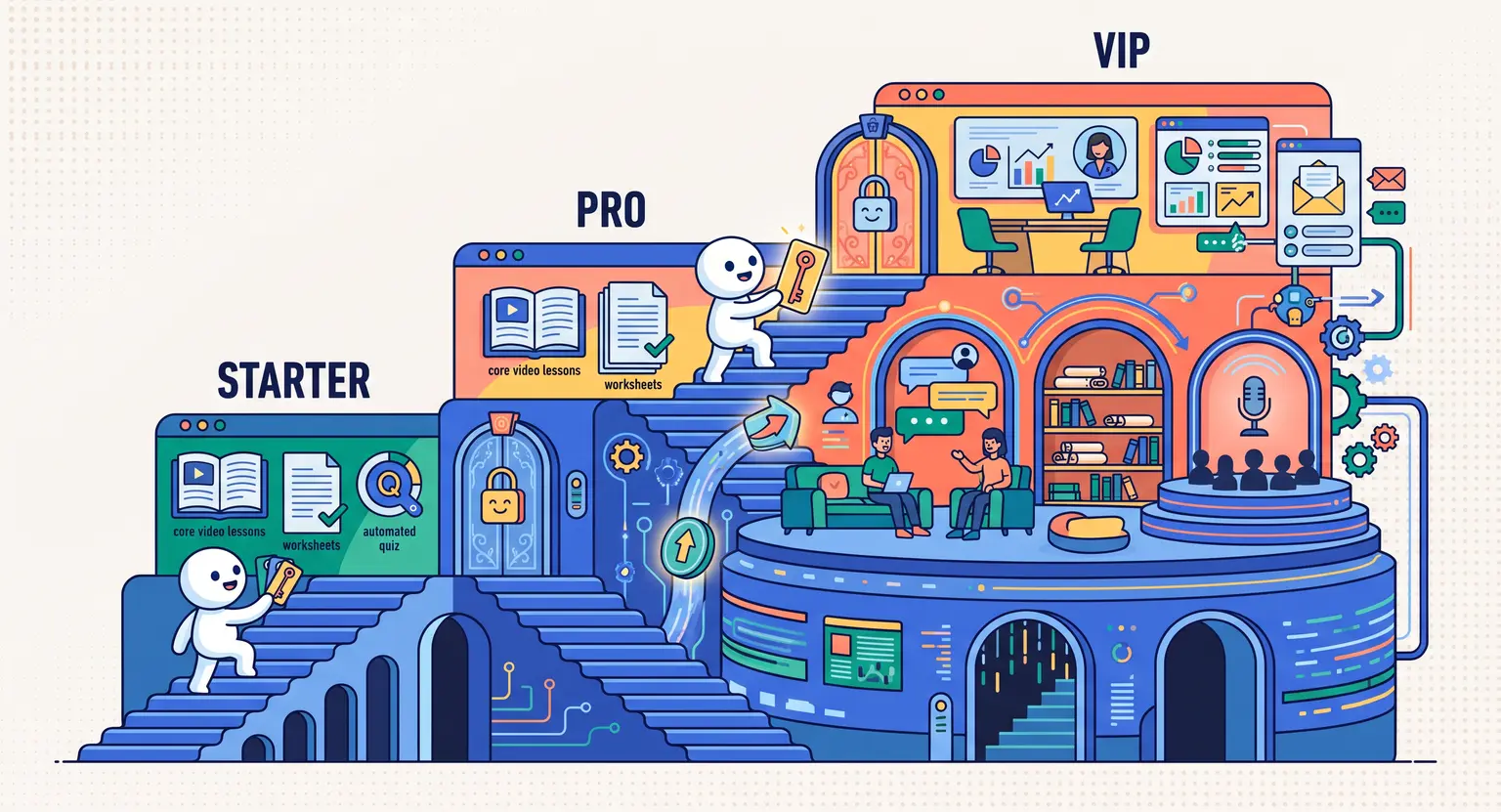
There is no single correct way to package knowledge. The right choice depends on your lifestyle design, how much personal contact you want with buyers, and how much setup time you are willing to spend.
Let's look at the main options available right now :
-
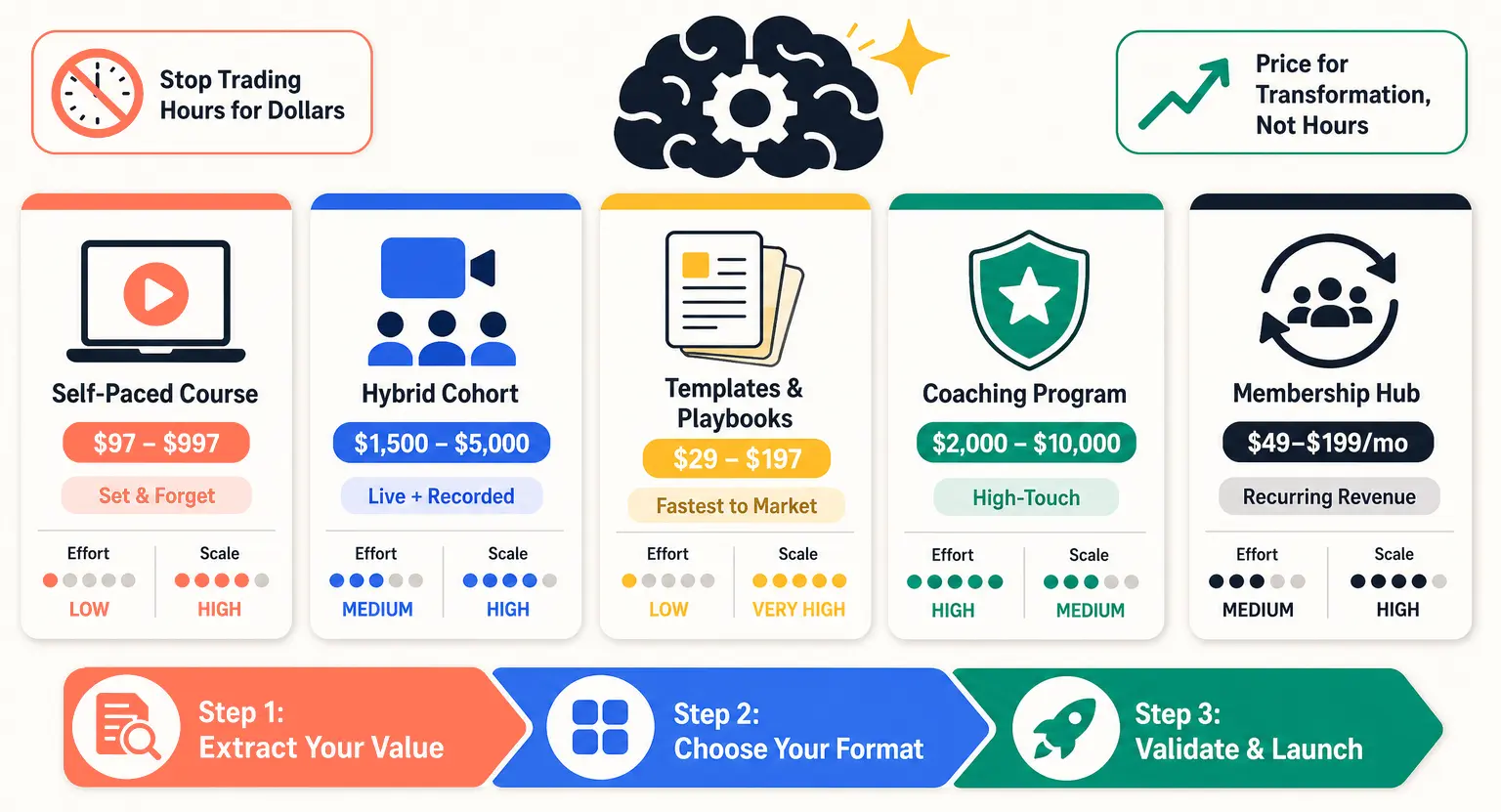
Self-Paced Digital Courses : the gold standard for passive scaling. You record the lessons once, upload them to a secure system, and let students work through the materials on their own schedule.
-
Hybrid Group Cohorts : you combine pre-recorded video lectures with weekly live strategy sessions. This lets you command a premium price tag while keeping your direct involvement capped to a couple of hours per week.
-
Digital Templates and Playbooks : for those who want the fastest path to market. Instead of teaching people how to build something, you sell them the actual templates, spreadsheets, standard operating procedures, or swipe files they need to get the job done instantly.
-
High-Ticket Coaching Programs : if you want to transition slowly, you can learn how to become an online coach by selling high-value, highly structured transformational packages rather than simple hourly sessions.
But how do these options compare in terms of effort, margin, and student retention?
Let's break down the operational realities of each asset format to help you make an informed decision.
Analysis of Knowledge Packaging Models
To give you a clear, honest overview of the landscape, here is a detailed breakdown of how these distinct packaging models match up against each other across key metrics :
| Packaging model | Pricing potential | Creation complexity | Operational maintenance | Best for |
|---|---|---|---|---|
|
Self-paced course |
$97 - $997 |
Moderate to high. |
Extremely low (set & forget). |
Scalable educational blueprints and foundational training. |
|
Hybrid group cohort |
$1,500 - $5,000+ |
Moderate. |
Moderate (live Q&A sessions). |
Interactive learning, networking, and high-impact accountability. |
|
Workbooks & swipe files |
$29 - $197 |
Low. |
Almost zero. |
Action-oriented professionals who want immediate plug-and-play tools. |
|
Structured coaching group |
$2,000 - $10,000+ |
Low to moderate. |
High (direct strategic access). |
Deep professional transformations and executive advisors. |
|
All-in-one membership hub |
$49 - $199/month |
High (continuous content). |
Moderate (community upkeep). |
Long-term community building, continuous updates, and resource hubs. |
Step 3 : Structure Your Material for Transformation
But how do you actually turn raw ideas into an effective educational product?
Many experts make the critical mistake of thinking a digital course should look like an encyclopedia. They dump everything they've ever learned into fifty hours of boring, unstructured slides.
Do not do that. Your students do not want an endless wall of lectures. They want a straight line from point A to point B, they want the shortest possible path to victory.
Start by clearly defining point A (their current frustrated state) and point B (the dream outcome they want to achieve).
Next, map out the milestones they must pass to cross that bridge.
Every single module in your product should represent one major milestone.
Every lesson within that module should solve one small, actionable micro-problem.
Make sure you balance theory with immediate action. For every video lesson you record, include a workbook, template, or automated checklist. This keeps your students engaged, helping them secure small wins early in the process.
If you want to craft a structured framework that keeps learners highly motivated, check out the guide on how to structure an online course configurations for practical templates.
Keep your videos short. A five-minute lesson that delivers a lightning-fast breakthrough is infinitely more valuable than a rambling forty-five-minute lecture that leaves students confused. Focus on clarity and ease above all else.
Step 4 : Establish an Outcome-Based Pricing Model
Pricing is where a lot of brilliant creators lose confidence.
They look at what other people are charging on mass-market discount sites and assume they have to match those race-to-the-bottom rates… but you are not selling commodity content.
You are packaging years of hard-won expertise, operational stress, and refined strategy.
You should price based on the financial or emotional value of the solution you provide.
Ask yourself : what is the cost of the problem if it remains unresolved? If a marketing program helps a freelancer sign just one extra high-paying retainer client per month, that program is easily worth a thousand dollars.
If a life coach helps an executive save their relationships, the emotional value is immeasurable.
And remember, charging a premium actually improves student outcomes. When people pay more, they pay closer attention. They do the homework, they watch the lessons, and they implement the strategies.
When they buy a cheap, ten-dollar course, it sits on their digital shelf gathering dust.
For a detailed analysis of how to position your offer across different market levels without losing competitive ground, take a look at our framework for an online course pricing strategy that matches your target buyers' expectations.
Step 5 : Put Your Tech Stack on Autopilot
You do not need to be a software engineer to package and sell your knowledge anymore.
The era of duct-taping ten different software tools together is officially over. You do not need to waste weeks trying to connect database tools, landing page builders, checkout carts, and video hosts with fragile, expensive integration links.
Your goal is to focus on what you do best : creating great content, guiding your students, and telling people about your products. You should let a modern, integrated platform handle the administrative work for you.
By using a comprehensive dashboard, you can build elegant sales pages, deliver high-quality video content, send automated email campaigns, and collect payments in one place.
Choosing the best platform to sell online courses ensures that your student experience is seamless, professional, and entirely headache-free.
But when you evaluate platforms, make sure you look for features that scale with you :
-
Smooth, distraction-free video playback across all devices.
-
Built-in email workflows that trigger automated follow-ups based on student progress.
-
A clean, professional checkout flow with secure payment methods.
-
Robust analytics to monitor student retention and highlight areas where users get stuck.
Step 6 : Validate Your Offer Before You Build It
One of the most painful errors you can make is spending three months locked in a room recording video scripts, only to launch to total silence - that is why you should always validate your offer before you record a single minute of video.
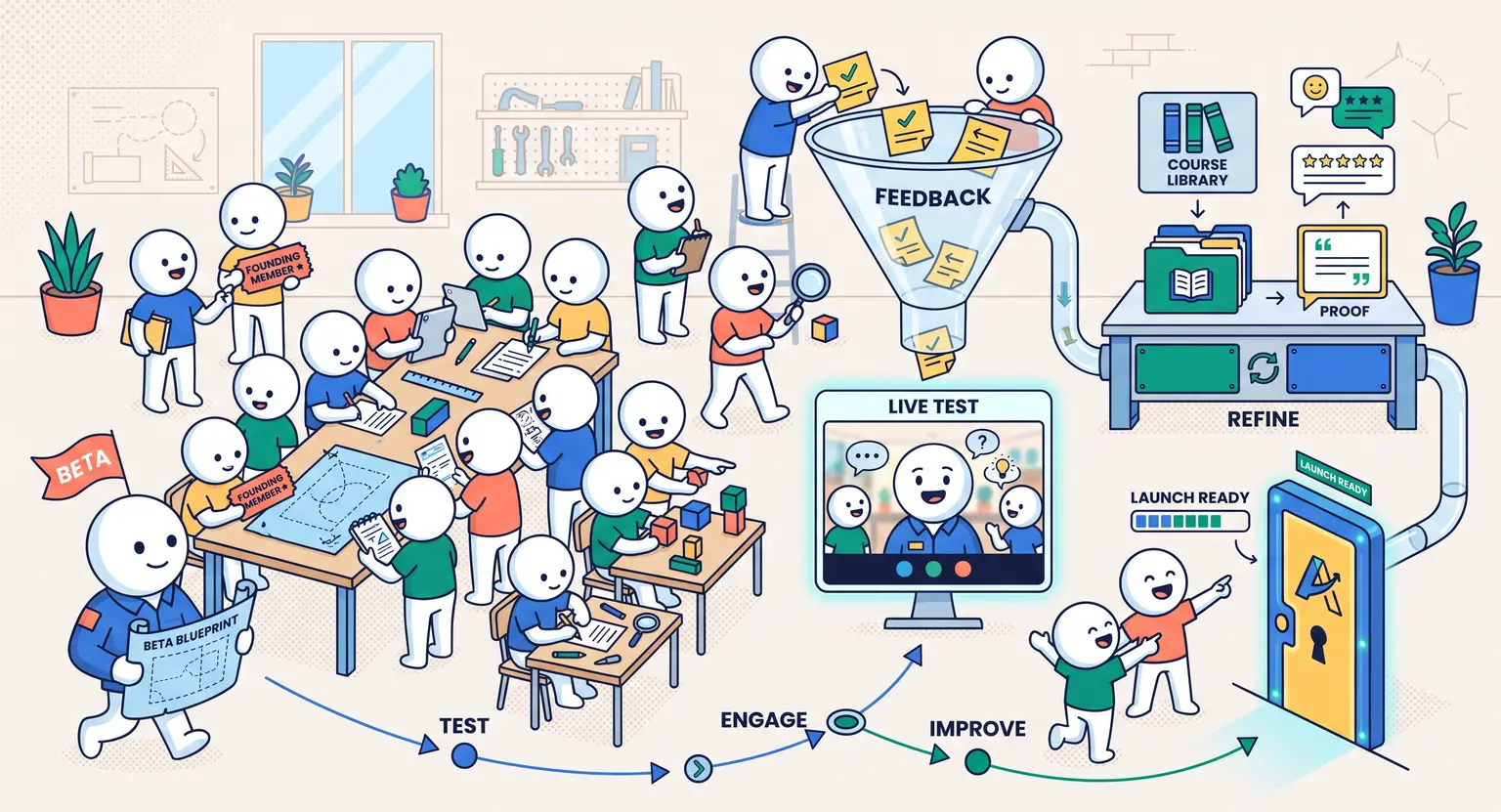
Validation means securing commitment. It means ensuring that people are willing to open their wallets and pay actual money for your proposed solution. You can do this by pre-selling your initial concept or launching a beta version of your course.
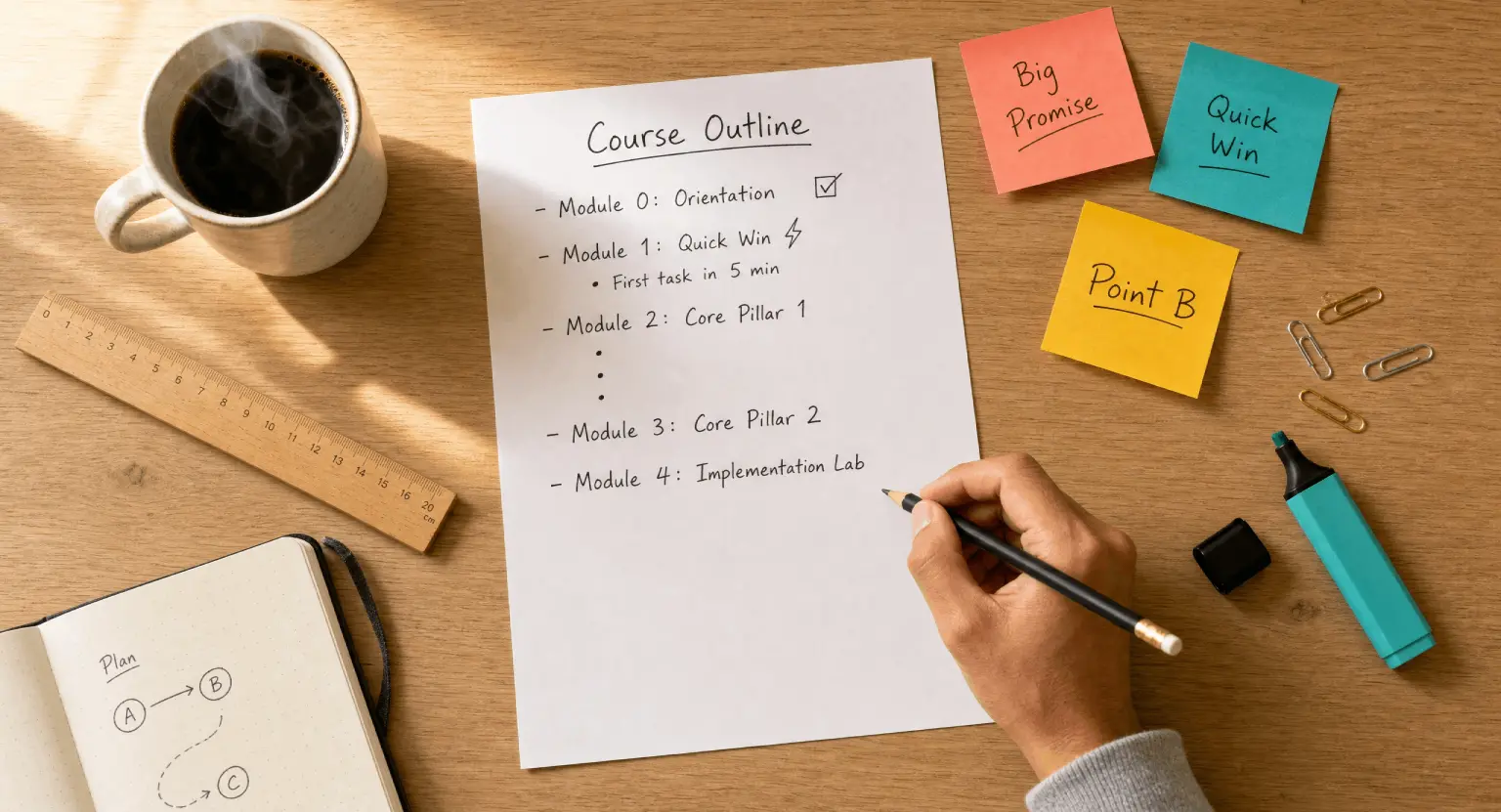
First, draft a simple outline of your curriculum. Next, present that outline to your existing network, social audience, or email subscribers.
Tell them you are launching a live beta program at a steep discount, and explain that they will get to help shape the final curriculum in exchange for their direct feedback and testimonials.
If you easily cross your target threshold of pre-sales, you have validated your concept. You can then build the modules week-by-week alongside your enthusiastic beta students.
If you struggle to get anyone to sign up, it is a clear sign that you need to adjust your offer positioning.
If you need step-by-step guidance on how to secure validation without wasting time, check out this guide on how to validate an online course idea successfully.
But once your idea is fully validated and your beta program is complete, how do you take it to the wider market? You need a clear, repeatable launch sequence.
This process transition helps move you from a quiet soft launch into a systematic, predictable sales ecosystem. Read our ultimate breakdown on how to launch an online course to maintain stable momentum throughout your promotional window.
Final Thoughts : Your Expertise is an Asset
So, what is the alternative to packaging your knowledge?
It is continuing the endless cycle of trading hours for dollars, chasing clients, dealing with scope creep, and hit-or-miss income months. You are sitting on a goldmine of experience that could be helping hundreds of people achieve their goals right now.
But you have to make the decision to package it.
Commit to picking one micro-problem, mapping out a simple milestone path, and launching a beta model to a small group.
You do not need to have a perfect studio or a giant catalog of complex courses.
You just need a proven, structured solution that delivers real results for real people.
The tech is ready, the market is actively waiting, and your experience is already locked inside your head. It is time to get it out there.
Related Material & Resources :
-
Turn passive knowledge assets into passive income for creators with zero stress.
-
Break out of consulting and understand how to become an online coach with scalable programs.
-
Save weeks of technical stress by picking the best platform to sell online courses.
Frequently Asked Questions
What is the best way to package expertise for beginners?
The best strategy is to start small by structuring your intellectual property into a self-paced digital course.
This format forces you to organize your ideas clearly while minimizing ongoing administrative tasks. By packaging your knowledge, you build a scalable foundation that lets you experiment with your message before introducing higher-stress products like live cohorts or group advisory memberships.
How do you decide what knowledge to turn into a product?
Find the sweet spot where your deepest, highly specialized skills intersect with a painful, expensive issue that a specific group of buyers is actively trying to solve.
Look for recurring questions in your emails, client consultation notes, or corporate challenges.
If clients are already paying you for custom work to resolve a specific problem, there is solid market demand to package that solution into a scalable digital asset.
Can I productize my skills if I do not want to be on camera?
Absolutely. You do not need to act like a typical influencer or show your face on camera to build a highly successful information business.
Screen-share presentations, text-based guides, step-by-step spreadsheets, design assets, code libraries, and resource playbooks are incredibly valuable.
Many professionals generate substantial revenue purely by selling highly practical, faceless resources that save their buyers time.
How much should I charge for my packaged knowledge offer?
Price your offer based on the value of the transformation, not the amount of content you create.
If your package helps a client save time, avoid expensive mistakes, or increase profits, price it accordingly.
Self-paced digital courses typically range from ninety-seven dollars to four hundred ninety-seven dollars, while interactive group cohorts and high-ticket mastermind packages easily command thousands of dollars from motivated buyers.



 How to Create a Course Refund Policy (Templates & Best Practices for 2026)
 How to Run a Beta Version of an Online Course (2026 Guide)
 How to Create a Cohort-Based Online Course (2026 Guide)
 How to Sell an Online Course With a Quiz Funnel (2026 Guide)
 How to Sell an Online Course Through a Sales Call (2026 Guide)