






How to Protect an Online Course From Piracy (2026 Security Guide)
How to Protect an Online Course From Piracy
Key Takeaways
Securing your online course today is about smart design and robust tools. By combining encryption with interactive community elements, you can keep your digital assets safe and profitable.
-
Focus on dynamic watermarking and secure hosting to block automated downloaders.
-
Use personal, interactive elements like live Q&As that can't be copied.
-
Establish legally sound policies under the advice in our guide on how to protect your intellectual property as a course creator.
-
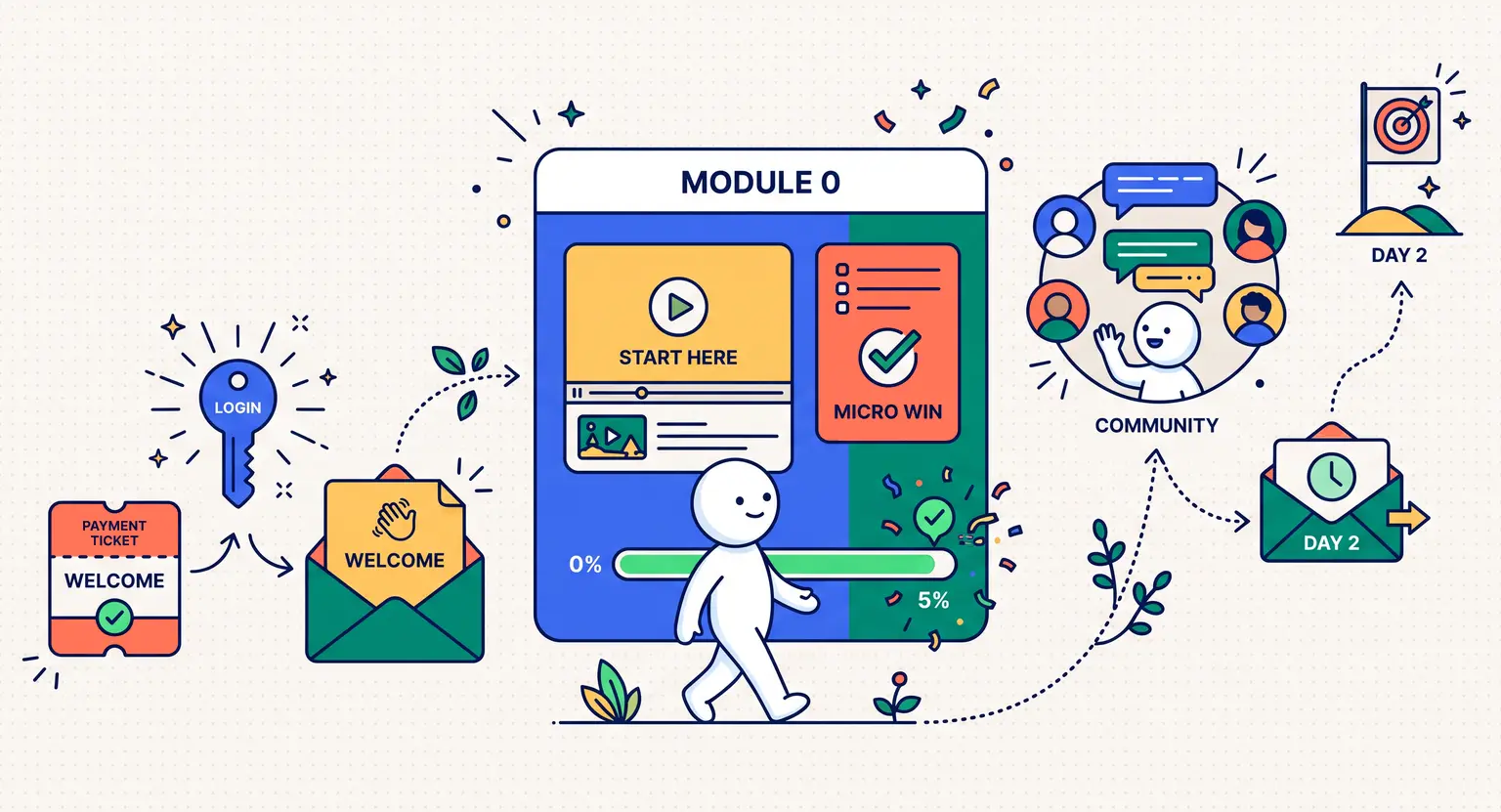
Build strong relationships with students by learning how to design an online course student onboarding experience.
Let's be completely honest : finding your hard work showing up on a shady reseller forum or a sketchy Telegram channel for next to nothing is an absolute punch to the gut…
You worked hard. You spent months planning, recording, and editing, only for someone to scrape your entire curriculum in five minutes.
But here is the good news for 2026 : you don't have to live in fear. While you can never completely eliminate every single bad actor, you can make stealing your content extremely difficult and deeply unprofitable.
To run a successful business, you must play both defense and offense. Defense means locking down your digital assets technologically. Offense means creating an engaging experience that cannot simply be downloaded into a basic MP4 file and stored offline.
Let us explore the exact strategic roadmap to protect your hard-work assets while scaling your brand safely as an industry expert.
Secure Content Delivery : The Technical Firewall
First, stop using simple unlisted YouTube or Vimeo links. They are incredibly easy to scrape using free browser extensions. If you want real defense, look at how you deliver your content.
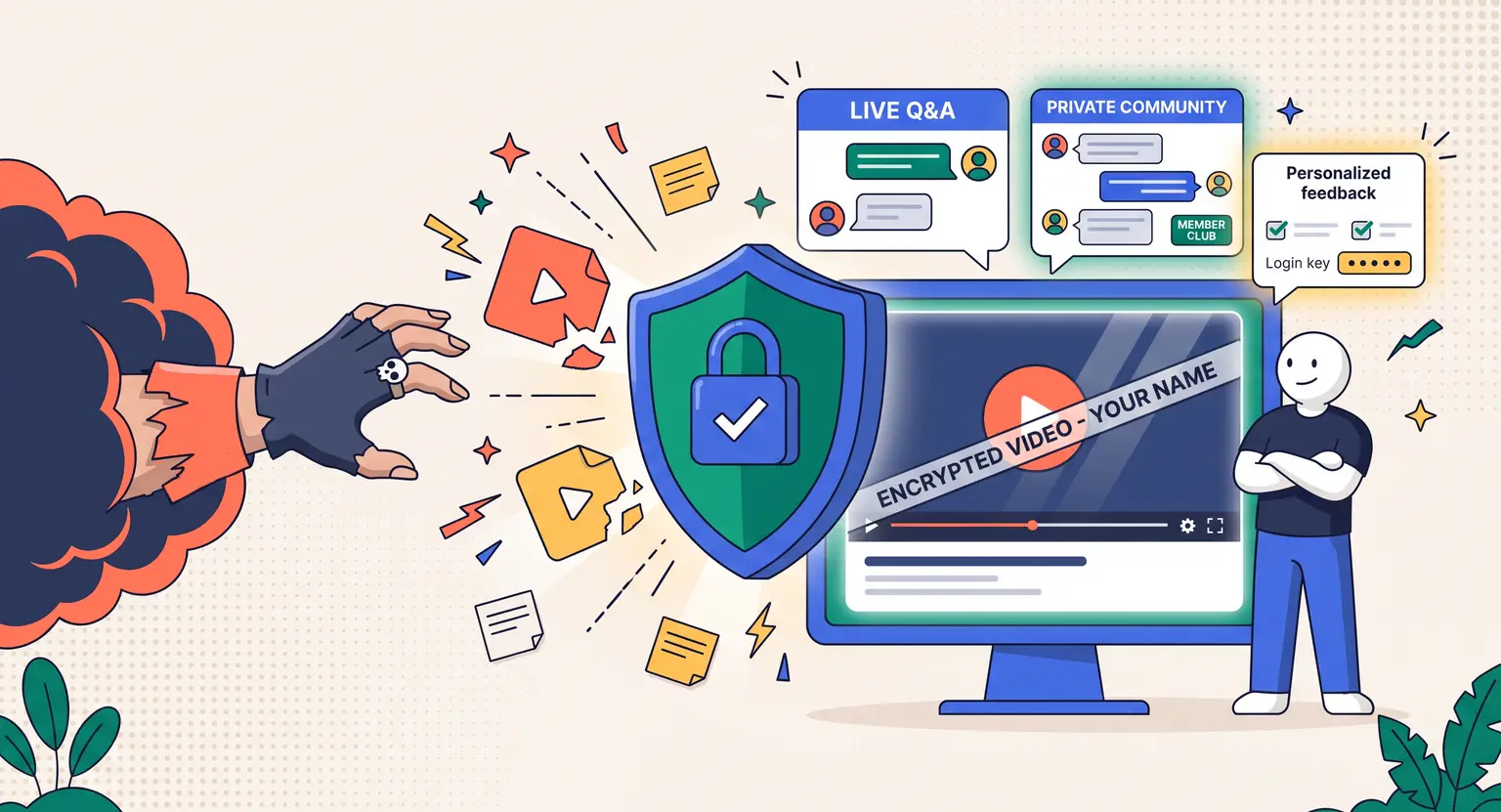
Modern online academies leverage encrypted HLS (HTTP Live Streaming) and DRM (Digital Rights Management). This technology breaks your videos into tiny encrypted chunks, changing the keys constantly during playback.
If a student tries to download the stream using standard media grabbers, they just get a broken, useless file that cannot be played anywhere.
You also need dynamic watermarking. Dynamic watermarks display the logged-in student's email address or IP address on screen at random intervals.
It is incredibly effective - no one wants to share a bootleg copy on Reddit when their personal details are splashed across the screen for everyone to see… It destroys their anonymity instantly.
Also, pay attention to access credentials. Many creators make the painful mistake of allowing unlimited simultaneous logins. Ensure your system blocks concurrent user sessions so one purchase does not translate into twenty people using the exact same password.
Modern platforms allow you to set session limits easily with a single toggle in your backend settings, solving this issue completely with zero effort.
If you want to dive deeper into this issue, our guide on how to prevent students from sharing paid course access outlines concrete strategies to stop credential pooling.
Lock Down Your Legal Bases & Policies
Technology is only half the battle; you also need a strong legal framework.
Before a student even views their first lesson, they should agree to terms of use that explicitly spell out limits on media access, copyright restrictions, and consequences of distribution. This acts as a powerful psychological barrier for potential leak sources.
To build a legally sound infrastructure, you need to understand online course copyright : who owns the content. This knowledge gives you a solid foundation when issuing formal complaints and intellectual property claims.
When setting up your backend legal security, make sure you have :
-
A robust terms of service agreement displayed clearly at checkout.
-
An explicit IP licensing clause explaining personal versus commercial use restrictions.
-
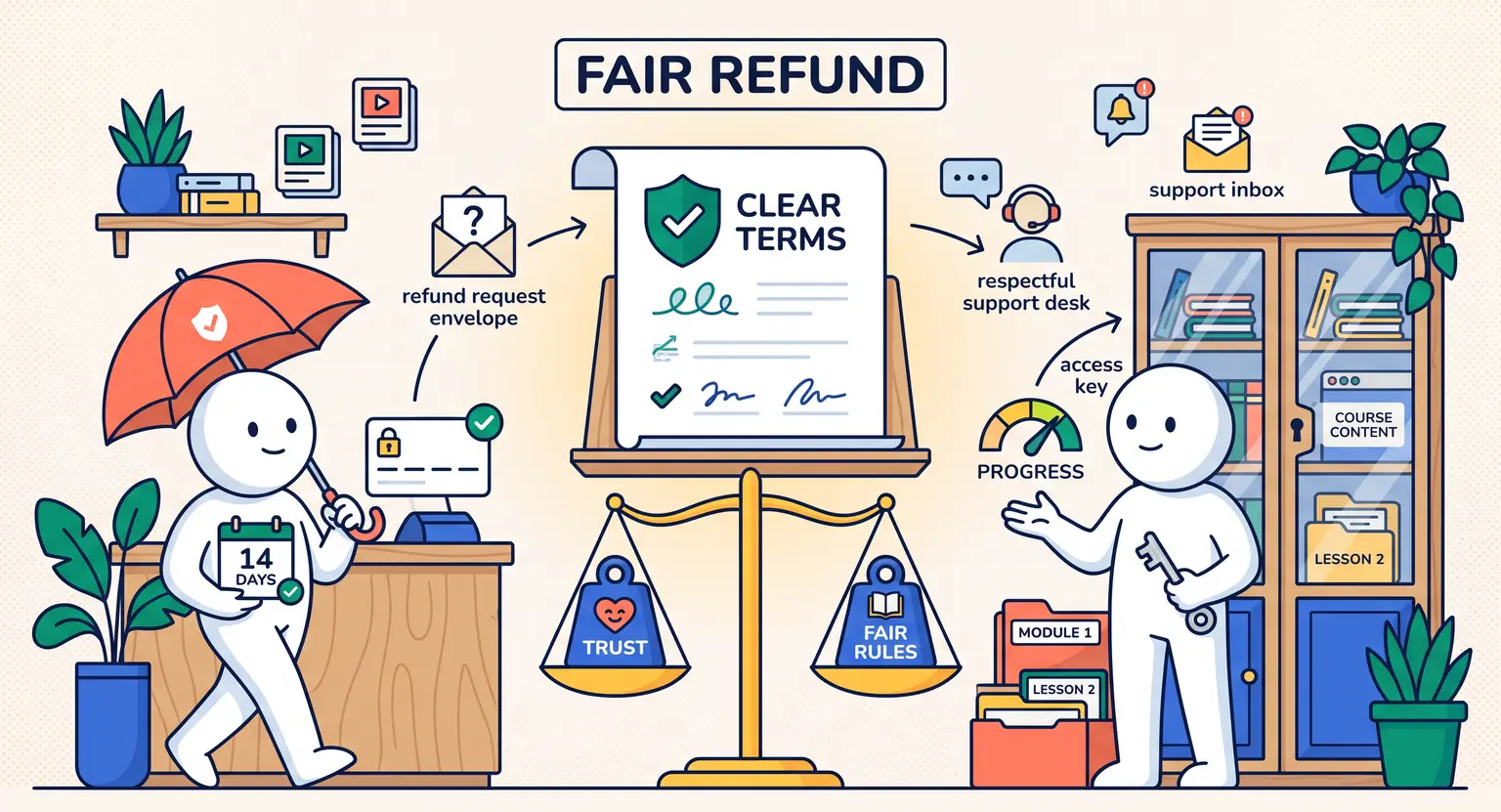
A clear refund and cancellation policy to handle potential access disputes cleanly.
Additionally, make sure your website hosting has proper terms ready. Figuring out what legal pages an online course website needs protects you against liability and sets strict rules for your audience.
If you do find a leaked copy of your material, do not panic; act quickly. Sending a DMCA takedown request can resolve things in hours - it might feel frustrating, but learning how to handle copyright infringement of your online course is a vital skill for modern digital business owners.
Focus on Uncopyable Learning Experiences
Here is a dirty secret of course piracy : pirates only steal files. They cannot steal community, live Q&A sessions, tailored feedback, or interactive tests.
If your course is nothing but a series of boring pre-recorded videos, it is highly vulnerable to thieves. But if your curriculum relies on direct community interactions, custom feedback, and group workshops, it becomes completely uncopyable.
Consider putting your material behind a premium, closed-door portal. Using an all-in-one platform to sell online courses ensures that your lessons are nested in a secure, authenticated workspace with built-in discussion boards, progress tracking, and live modules.
When you design your digital product, avoid common mistakes to avoid when creating online courses. Make sure interactive engagement is a core component. Group chats, live feedback, and real-time support make the stolen version of your course virtually useless.
Let us compare different protection methods so you can balance security against user convenience :
| Security level | Protection method | User friction level | Best use case |
|---|---|---|---|
|
High protection |
DRM video hosting with dynamic individual watermarks. |
Very low. |
Core video content you spent months writing and producing. |
|
Moderate protection |
Disabled right-click actions and concurrent user login blocks. |
Low. |
Everyday course student portals and basic textual materials. |
|
Maximum protection |
Interactive cohort-based community with live video coaching check-ins. |
Zero friction (high value). |
High-end mastermind forums and premium cohort coaching. |
|
Low protection |
Uploading unlisted regular cloud files with default settings. |
Very low. |
Free lead magnet chapters or simple video instructions. |
Finding your course on a sketchy torrent platform is a major headache, but it doesn't mean your business is doomed. Focus on secure platforms, leverage dynamic watermarks, and build interactive, value-driven spaces.
When your students buy your course, they aren't just buying static video files - they are buying progress, guidance, personalized help, and real community. Protect your creative tech, but invest deeply in your people. That is the ultimate pirate defense.
Frequently Asked Questions
Can I completely stop screen recording of my course?
Not entirely. While modern DRM can black out video streams on standard web browsers when screen-recording software is active, determined pirates can still use an external physical camera to film their monitor.
However, dynamic watermarking makes doing this highly risky because their personal registration information will be permanently stamped on the stolen footage.
What is the fastest way to get a pirated course taken down?
Your best tool is a formal DMCA takedown notice sent straight to the web host of the pirate platform or the domain registrar.
Most legal hosts will immediately pull the content to protect themselves. You can also file search engine removal requests to delete the pirated links directly from Google search indices, which cuts off their traffic source quickly.
Does locking down my course hurt my honest students?
It should not. Excellent protection functions silently in the background of your host. Things like modern secure video streaming and basic parallel session blocks are completely invisible to genuine students logging in naturally from their personal devices.
Avoid complex passwords or annoying hurdles that damage user satisfaction during their onboarding process.



 How to Create a Course Refund Policy (Templates & Best Practices for 2026)
 How to Run a Beta Version of an Online Course (2026 Guide)
 How to Sell an Online Course With a Quiz Funnel (2026 Guide)
 How to Sell an Online Course Through a Sales Call (2026 Guide)