







2026 Online Course Pricing Strategy: The Expert Expert Guide to Premium Profits
Online Course Pricing Strategy : The Expert Guide to Premium Profits (2026)
Key Takeaways for 2026 Pricing
-
Stop charging by the hour or the number of videos; charge for the result.
-
Three-tier pricing (Good, Better, Best) typically increases total revenue by 30%.
-
In 2026, human access is the high-ticket "gold" that justifies $1,000+ price tags.
-
Start with high-value lucrative niche concepts to avoid the commodity trap.
-
Test your pricing early - it's easier to lower a price than it is to raise it later.
Let's get real for a second.
You've probably spent weeks, maybe months, pouring your heart and soul into your content. You've researched, recorded, and edited until your eyes blurred.
And now, you're stuck on the one thing that can make or break your success : the price tag.
I see this all the time. Creators get caught between the fear of overcharging and the burnout of underpricing. But here's a secret that most "gurus" won't tell you.
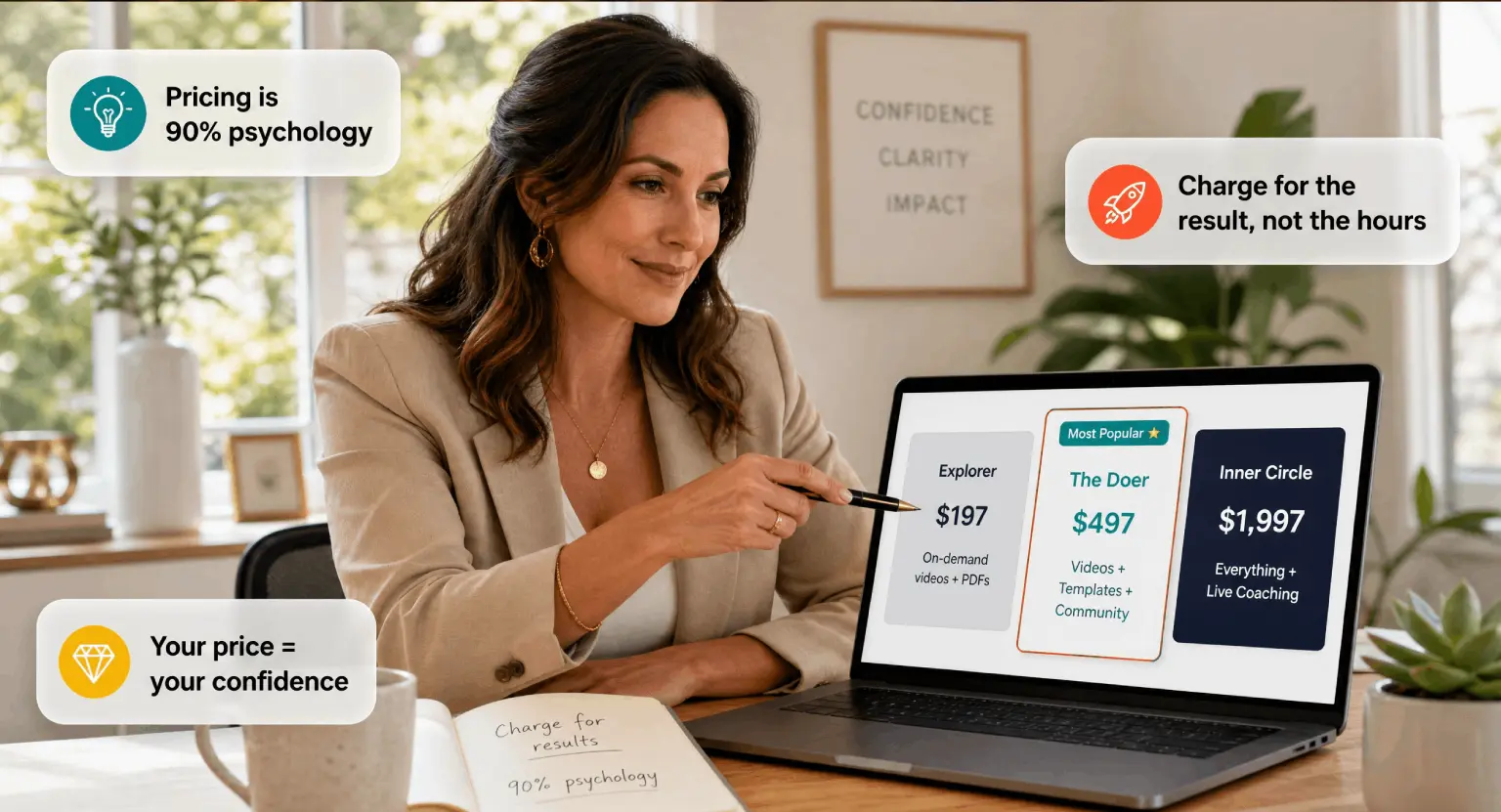
Pricing is 10% math and 90% psychology.
In 2026, the digital landscape has shifted. We aren't just competing with other courses anymore; we are competing with AI assistants and free content that is surprisingly good.
To win, your pricing needs to reflect a transformation that code can't provide.
You aren't selling information; you are selling a shortcut, a result, or a transformation.
If your student can go from zero to a paid skill in ten days, that is worth thousands, even if it only took you five hours of video to explain it.
Never forget that your audience pays for the speed of their victory, not the duration of your labor.
So, how do we find that "sweet spot"? It starts by looking at your methodology. When organizing your educational content, you need to identify the "Big Win."
If your Big Win is a career change, you're looking at a premium tier.
If it's a hobby improvement, you might lean toward a mid-range accessibility model.
But don't ever settle for being the "cheapest" option. The cheapest guy always goes out of business first because they can't afford the marketing required to find new students.
The Transformation Matrix : Shifting from Info to Impact
I want you to think about your course in three specific buckets : Information, Implementation, and Transformation. Most beginners stay in the Information bucket. They charge $47 for a few PDF files and some screen recordings.
There is nothing wrong with that, but it is hard to build a lifestyle business on $47 sales alone unless you have a massive, massive audience. You have to work twice as hard for half the reward.
Implementation is where you add templates, checklists, and maybe a community forum. Now you can charge $197 to $497. Why? Because you are making the information easier to use.
Transformation, however, is the promised land. This is where you offer direct feedback, live Q&A sessions, or group coaching.
In 2026, this is where the real money is. People are lonely and overwhelmed by automated systems; they want to talk to a human.
For this, you can easily charge $997, $2,000, or even $5,000.
Think about it. If you help a business owner save $50,000 in taxes, is a $2,000 course expensive? No, it's a bargain.
But if you help someone learn to knit, $2,000 might be a stretch. You have to align your price with the economic or emotional value of the outcome.
If the emotional payoff is high - like saving a marriage or finding a dream job - your price should reflect that weight.
Don't be afraid of the "high ticket" label; it often attracts the most dedicated and successful students who are actually willing to do the work.

Mastering the Three-Tier Model
If you only offer one price point, you are leaving money on the table. It is as simple as that. The Three-Tier Model (often called the "Goldilocks" strategy) works because it gives people a choice.
It moves the conversation in their head from "Should I buy this?" to "Which version should I buy?"
This subtle psychological shift is incredibly powerful for conversion rates. It puts the control back into the hands of the learner.
The "Standard" tier is your entry point. It's the "I just want the facts" option. The "Pro" tier is your middle ground and usually where you want about 60% of your sales to happen.
This includes the extras - the community, the templates, the "Implementation" tools we discussed.
Then, you have the "VIP" or "Platinum" tier. This is priced significantly higher. Even if only 5% of people buy it, the sheer presence of this high price makes the middle price look like a massive steal.
This is called anchoring.
When you look at your software investment options, you'll notice that the best platforms allow you to set up these tiers with ease.
You don't want to be manually upgrading people in a spreadsheet. You want a system where they can click a button and get the level of support they are ready to pay for.
It's about creating a ladder of value that they can climb as their needs - and their trust in you - expand over time.
| Tier name | Price point (2026 avg) | What's included? | Typical buyer goal |
|---|---|---|---|
| The Explorer | $97 - $197 | On-demand videos + PDF summaries | Quick knowledge acquisition |
| The Doer (Most Popular) | $397 - $697 | Everything in Explorer + Templates, Community access, Q&A recordings | Structured success and support |
| The Inner Circle | $1,497 - $4,997 | Everything in Doer + Live coaching calls, direct feedback, private Slack | Accelerated results and accountability |
| The Enterprise | Custom / Multi-seat | White-label access, corporate licenses, dedicated account manager | Scalable team development |
Psychological Pricing Triggers You Can't Ignore
Human brains are funny things. We don't process numbers in a vacuum; we process them in context. One of the most effective ways to increase your conversion rate is by using "Charm Pricing." You've seen it everywhere : $197 instead of $200.
Does those three dollars really make a difference? Scientifically, yes.
We read from left to right, so the brain registers the "1" in 197 as significantly lower than the "2" in 200. In 2026, ending in a .97 or .95 is still the industry standard for a reason - it works.
Then there's the concept of Scarcity and Urgency. But I want to warn you : stop using fake timers. People are smarter now. If the timer hits zero and nothing happens, you've just lost their trust forever. Instead, use real urgency.
Offer an "Early Bird" discount for the first 50 students, or include a special bonus for anyone who signs up during your launch week.
This creates a legitimate reason to buy now rather than "thinking about it" (which is the polite way of saying they'll forget you exist in ten minutes).
Payment plans are another massive lever. If you have a course priced at $497, offering a 3-payment plan of $185 can often increase your sales by 15-20%.
Yes, the total paid is slightly more ($555 vs $497), but that extra cost covers the risk and administrative effort of managing payments.
It makes your course accessible to people who have the motivation but not the immediate cash flow. Just make sure you use a solid payment processor that handles failed payments automatically so you aren't chasing people for money.
The Cost of Underpricing : Why Cheap is Dangerous
I see so many talented experts charging $27 for their life's work. It breaks my heart. Not only are you undervaluing yourself, but you are also hurting your students.
When people pay a "pizza price" for a course, they treat it like a pizza.
They consume it quickly, or worse, they forget they even bought it. There is zero "skin in the game." Higher prices demand higher commitment levels. If someone invests $500, they are going to show up and do the exercises.
Low prices also create a support nightmare. If you sell 1,000 copies of a $10 course, you have 1,000 people who might need technical help or have questions. That's a full-time job.
But if you sell 10 copies of a $1,000 coaching program, you have the same revenue with only 1% of the support overhead. You can actually give those 10 people your best energy and ensure they get the results they paid for.
That is how you build a reputation that lasts for decades.
Also, consider your advertising costs. In 2026, the cost per lead on social platforms has risen.
If your course is only $50, you probably won't be able to spend enough on ads to get a customer and still turn a profit. You need a higher average order value to sustain a growing business.
High-priced courses give you the "oxygen" (profit) to buy more traffic and reach more people. It's a virtuous cycle.
Low pricing is a death spiral.
Structuring Your Offer for Higher Conversions
Price is only "high" in the absence of value. To justify your strategy, you need to "stack" the value on your sales page.
Don't just list the modules.
List the bonuses.
List the time saved.
If you include a template that took you forty hours to build, tell them that. "You're getting 40 hours of my life in a 5-second download." That frames the value in a way that makes the price seem tiny by comparison.
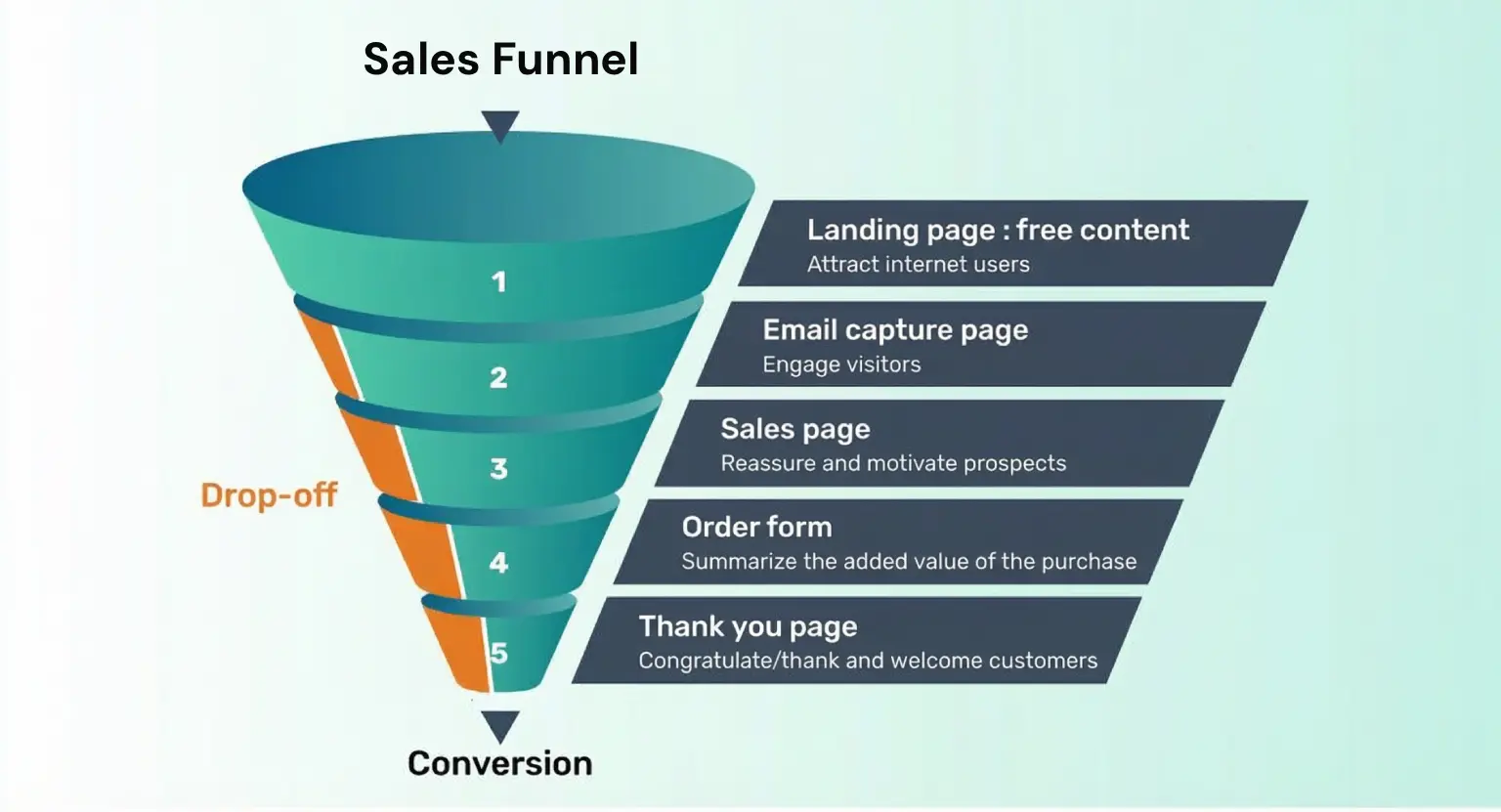
Many successful creators are now moving toward running high-converting live sessions to sell these premium packages. A webinar allows you to build rapport and demonstrate your expertise in real-time.
By the time you reveal the price at the end, your audience has already seen the value you provide.
They aren't wondering if the course is worth it; they are wondering if they can afford to miss out on the results you've just shown them are possible.
And remember, your pricing isn't set in stone. You should be auditing it every six months.
If your refund rate is high, your marketing might be over-promising, or your price might be misaligned with the content.
If your conversion rate is insanely high (over 10% on cold traffic), you are probably underpricing!
Experiment.
Raise your price by 20% for your next launch and see what happens. You might be surprised to find that you make more money with fewer, better customers.
Setting your price is an act of confidence. It's you telling the world, "I know what I'm talking about, and this will change your life."
When you price with authority, you attract students who treat your teaching with respect. So, take a look at your offer today.
Are you playing small, or are you ready to build a premium brand?
Your expertise is worth it.
Now, go out there and price like the expert you are.
Explore Further : Mastering Your Digital Business
Looking to take your educational empire to the next level? Check out these deep-dives :
- Discover why experts choose a complete ecosystem for digital teaching over duct-taping five different tools together.
- Stuck on what to teach? Browse our latest list of high-demand niche topics for the coming year.
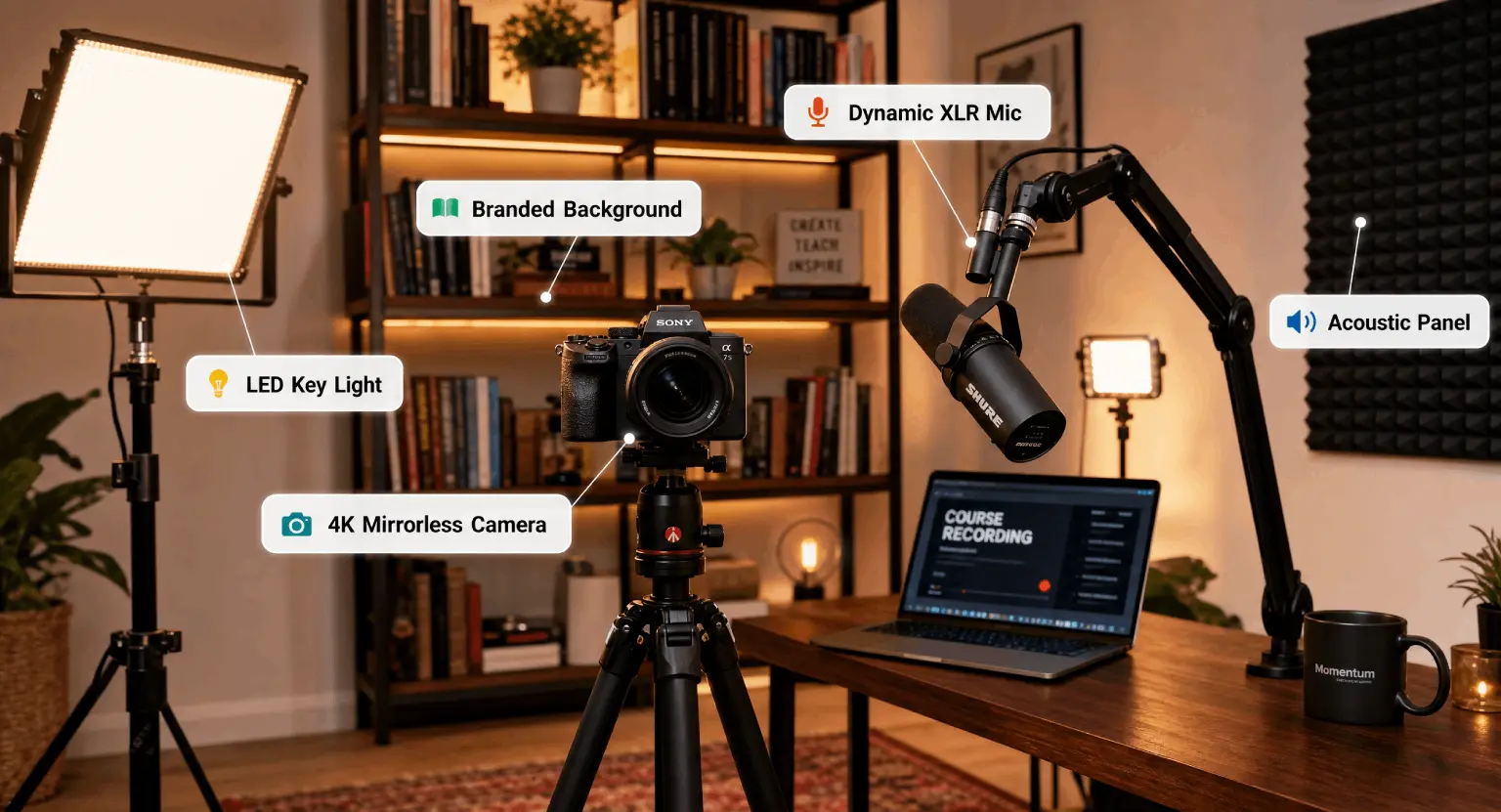
- Get the technical side right with our guide on professional recording techniques for educators.
Common Pricing Strategy FAQ
Should I offer my course for free initially to get reviews?
I wouldn't recommend "free" to a broad audience.
Instead, offer a "Beta" price that is 50-70% off in exchange for honest feedback.
People who pay nothing usually provide zero feedback because they aren't invested.
A small payment ensures you get people who actually use the material and give you the testimonials you need to launch at full price later.
How do I know if my course price is too high?
If you are getting traffic and people are spending time on your sales page but leaving right at the checkout, you might have a price-value gap.
This doesn't always mean the price is too high; it often means you haven't explained the value well enough.
However, if your target audience is college students and you're charging $3,000, you might want to reconsider your positioning or offer a robust payment plan.
Can I change my price after I've already launched?
Absolutely. In fact, you should. It's common to launch at a "Founding Member" price and then raise it as you add more content, more testimonials, and more features.
Just be transparent.
Tell your list : "The price goes up on Friday because I've added three new modules." This actually creates a natural urgency that drives sales.
Is there a specific "sweet spot" for 2026?
While it varies by niche, we're seeing a massive trend toward $497 for mid-tier courses. It's high enough to be profitable but low enough that it doesn't require a 1-on-1 sales call to close the deal.
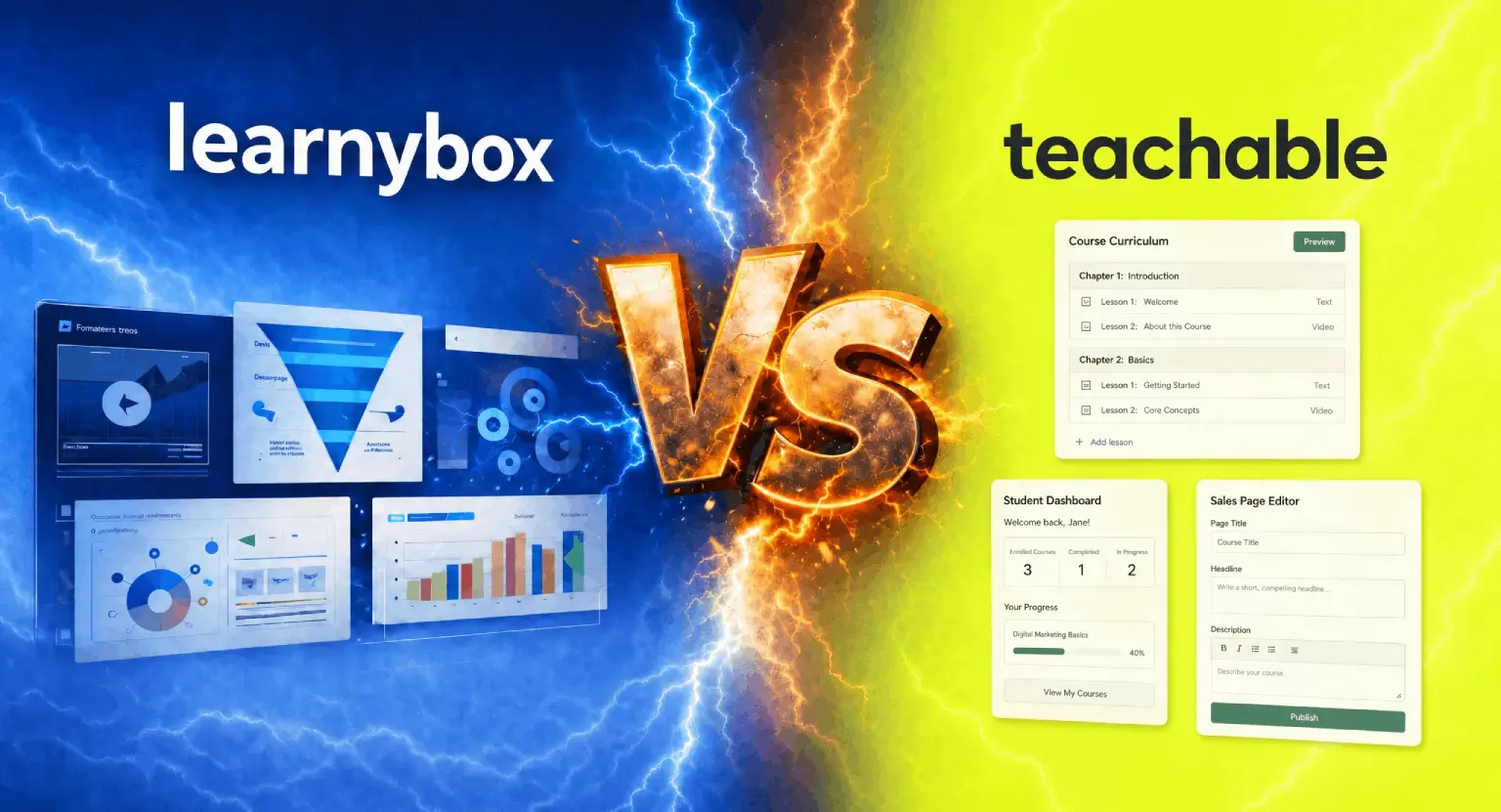
For coaching-hybrid models, $1,997 is currently the high-performance benchmark on LearnyBox.







 How Long Should an Online Course Be? (2026 Guide for Experts)
 How to Record an Online Course : The Expert Guide to High-Conversion Video (2026)
 Best Equipment for Recording Online Courses (2026 Expert Guide)
 How to Retain Students after Purchase