







Build a Profitable Affiliate Commission Structure
Affiliate Commission Structure
Setting up an affiliate system is easy on paper, but designing a commission layout that keeps partners hungry without eating your profit margins is a real balancing act.
You cannot just pick a random percentage and hope it works out.
If it is too low, creators will ignore you.
If it is too high, you might go out of business.
Let us look closely at how to build a commission format that rewards your partners and scales your business. We will break down the pricing models, dynamic adjustments, and structural templates that get results today.
If you build it right, your affiliates become your hardest-working sales force.
Key Takeaways :
-
Choose percentage payouts for digital products and fixed fees for individual physical goods to keep your profit margins predictable.
-
Incorporate progressive tiers that reward your top earners, giving partners a real incentive to promote your brand continuously.
-
Use a highly stable program setup to manage tracking and payouts. (See how to start an affiliate program without experiencing any complex developer or technical hurdles.)
What Is an Affiliate Commission Structure and Why Is It Critical?
What is a commission setup anyway? It is the rulebook that tells your partners exactly how they get paid for bringing in sales.
It determines the percentage, flat rate, or incentive system you use. A solid payout strategy is more than a cost; it is your ultimate tool to win the battle for attention.
But here is the catch. Your structure dictates who applies to your program.
High flat fees attract quick-win marketers who might dump poor-quality traffic on your site. Long-term recurring commissions attract high-authority content creators who will build steady traffic channels.
So, you have to match the framework directly with your product type. Digital creators, SaaS companies, and physical store owners all have vastly different balance sheets.
Let's make sure yours makes sense for your dynamic profit margins.
And it goes beyond basic arithmetic. Your payout structure signals your brand's integrity.
When creators see clean, transparent schedules combined with reliable tracking systems, they commit and write extra articles promoting your brand to their active audiences.
This establishes mutual trust from the very first day of collaboration.
The Classic Payout Models You Need to Know
Let us look closely at the primary ways you can distribute payouts. Most modern brand programs rely heavily on one of these core setup structures to launch successfully and keep operations lean while attracting talent.
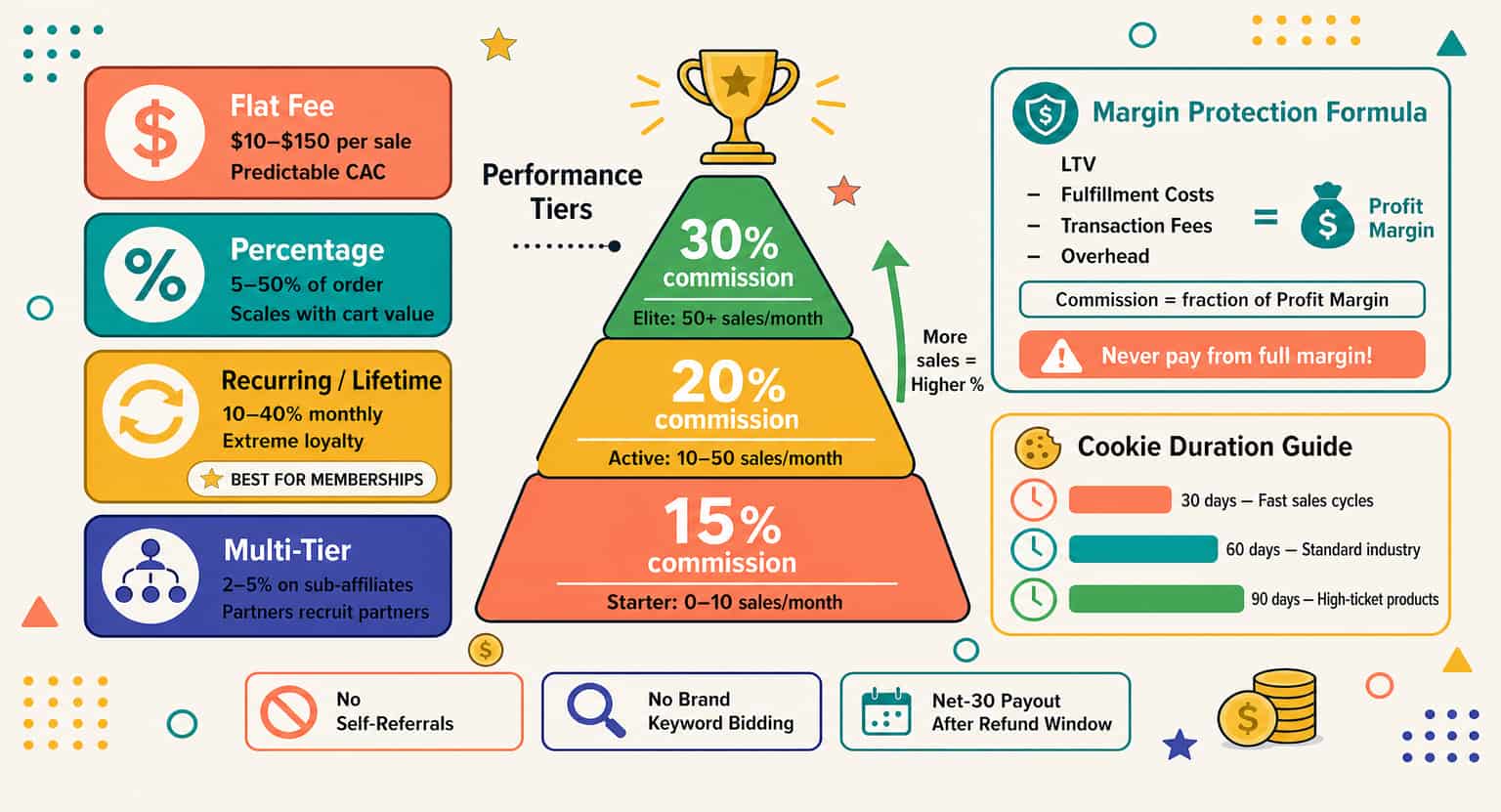
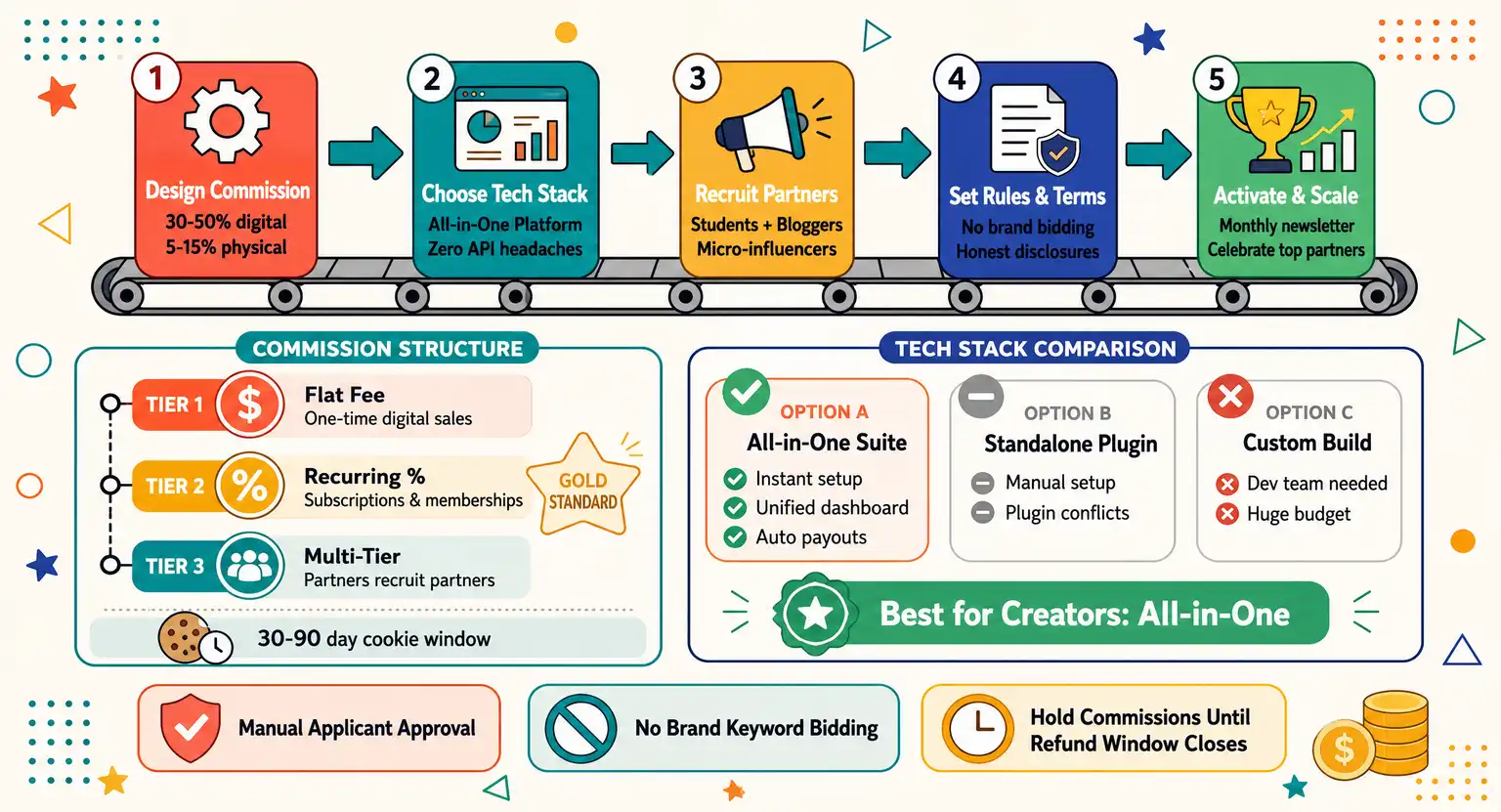
Percentages : This is the gold standard for digital products and online coaching.
You pay a percentage of the total cart value, often ranging from 20% to as high as 50% for digital products - But it also works for physical items too, though the rates drop to 3% to 10% because of physical inventory costs and shipping expenses.
Flat Fees : This model works beautifully for high-ticket services, medical programs, or specific subscription boxes.
You pay a set amount - say $50 - per transaction regardless of final order size - This is great for keeping your customer acquisition costs fully predictable, reliable, and easy to manage.
Both systems have their distinct place in your playbook.
If your product inventory is fluid and overhead is low, percentages keep your affiliates happy because high-value sales mean bigger checks, but if your margins are razor-thin, flat fees prevent unexpected spikes from draining your cash reserves immediately without warning.
Advanced Structures That Drive Elite Affiliate Performance
If you want your program to stand out, plain percentages will only get you so far. Top modern brands use dynamic commission setups to keep promotional partners active.
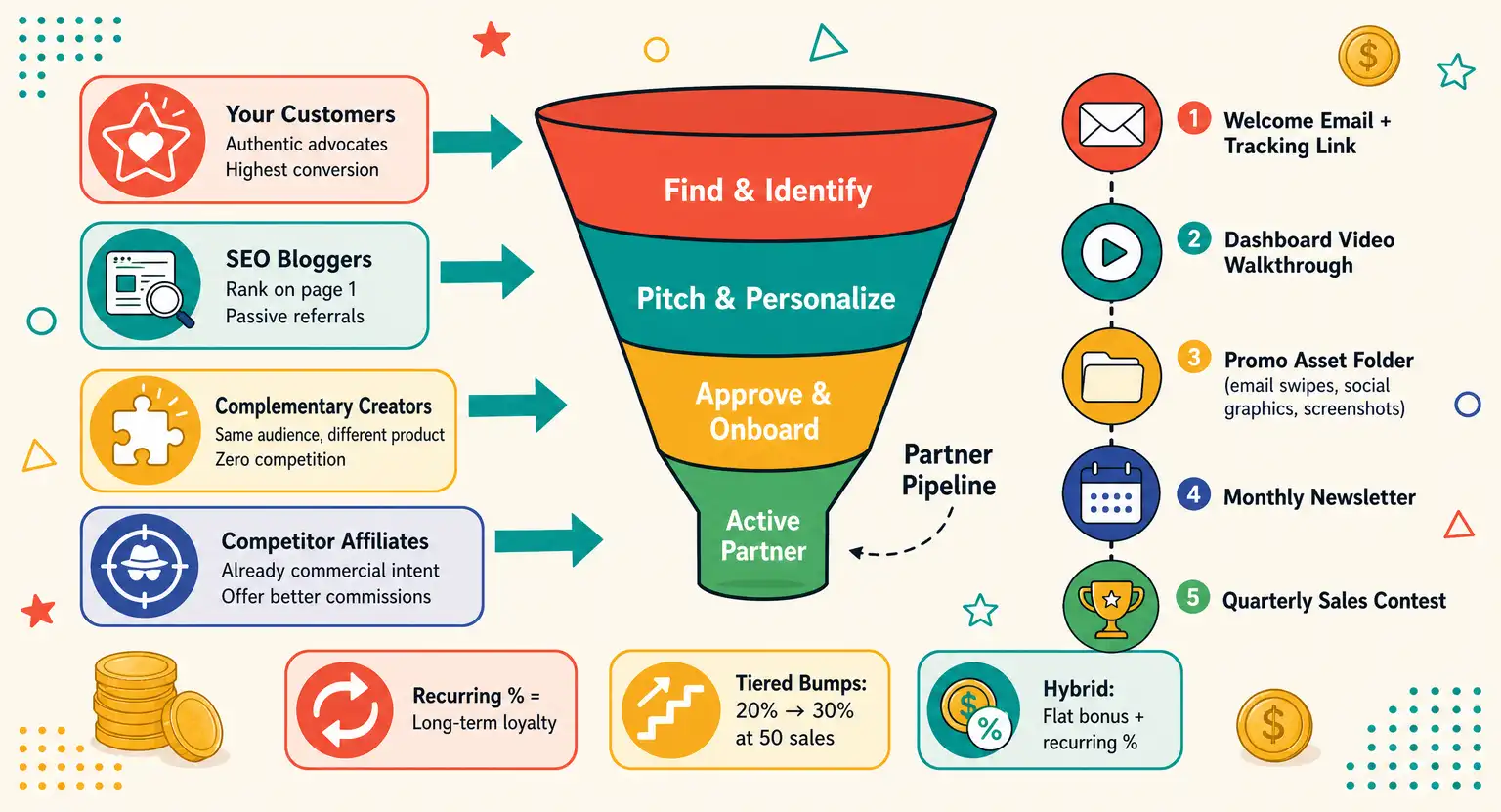
Performance-Based Tiers : The more they sell, the more they make.
For instance, an affiliate might start at a 15% commission rate,
Once they refer 10 sales in a single month, their payout bumps to 20%,
If they hit 50 sales, they unlock 30%.
This structure turns passive referrers into highly active brand ambassadors.
Recurring Commissions : This is extremely common in software systems and continuous education.
If you run a membership community, you pay your partners every single month the referred user stays active. It is incredibly attractive for creators because it builds predictable recurring income.
If you are focused on this niche, adjusting your strategy for affiliate marketing for course creators can change how you attract long-term educational partners.
Lifetime Commissions : Here, the affiliate earns on all future purchases the referred customer makes, even months or years down the line.
It is a premium way to reward partners who introduce highly valuable customers to your digital ecosystems.
And these dynamic systems create long-term momentum - When affiliates realize that a single referred user can generate income for months or years, they switch to building entire funnels centered around your company.
Designing a Structure That Protects Your Margins
Do not let initial excitement cloud your real financial math. Over-promising to affiliate partners is a fast track to cash flow issues.
You must calculate your maximum Customer Acquisition Cost before setting your rates.
Start by subtracting your baseline fulfillment costs, transaction charges, and essential overhead from your dynamic customer lifetime value. What is left is your profit margin. Your commission must come from a fraction of that margin, never the whole thing.
Another critical element is the cookie duration. If you offer a thirty-day cookie, affiliates only get paid if the buyer converts within thirty days. Shorter cookies favor brands with fast sales cycles, while ninety-day cookies are great for expensive goods.
But how do you handle tracking, refunds, and actual program deployment?
Getting software that does the heavy lifting makes a massive difference.
You can try a comprehensive backend on LearnyBox to build, monitor, and scale your sales partner network with minimal friction.
This system handles your administration, saving you hours of manual tracking.
Comparing Popular Commission Architectures at a Glance
To help you decide which setup fits your business model, look closely at this detailed side-by-side comparison of standard choices.
| Structure type | Average payout range | Best suited for | Key pro | Key con |
|---|---|---|---|---|
|
Flat fee (pay-per-sale) |
$10 - $150 per lead or sale. |
Physical items, insurance lead gen, single digital masterclasses. |
Highly predictable payout expenses. |
Does not incentivize larger order values. |
|
Percentage of order |
5% to 50% depending on product format. |
E-commerce, digital templates, software memberships. |
Naturally scales with high-value cart sizes. |
Harder to track if massive discounts are applied at checkout. |
|
Recurring / lifetime payout |
10% - 40% monthly recurring fees. |
SaaS, membership forums, subscription boxes. |
Extreme affiliate loyalty and long-term promotion. |
Can eat into margins if retention rates drop sharply. |
|
Performance-tiered commission |
Incremental scales (e.g., 10% to 30%). |
High-volume retail brands, aggressive digital launches. |
Motivates moderate promoters to step up sales volume. |
Requires robust software to automate tier shifts and payouts. |
|
Multi-tier (sub-affiliate) |
2% to 5% on secondary tier sales. |
Course networks, complex B2B programs. |
Affiliates naturally recruit other promoters for you. |
Can quickly look like MLM if not managed cleanly. |
This direct comparison shows that no single system is perfect. The key is combining these elements to fit your unique customer journey and purchase funnel seamlessly.
Crucial Rules to Avoid Program Failure and Fraud
Before you launch, you must build strict fences around your payouts. One of the biggest mistakes brands make is leaving the door open to bad actors.
For starters, draft a comprehensive affiliate agreement. Explicitly ban self-referrals - this is when customers sign up as affiliates to buy their own products at discounts.
This costly loophole ruins profit margins.
Define clear rules on brand bidding. If an affiliate runs search ads on your company name to steal organic sales, they are hijacking your traffic. Make it clear that they cannot bid on your brand terms in search networks.
So, how do you find high-quality partners who respect your guidelines?
Learning the right practical tactics on how to recruit affiliates will keep your program clean, professional, and highly profitable.
Setting Up Your Payout Schedule With Trust in Mind
Affiliates care deeply about when and how they get paid. If your payment cycle is confusing or unreasonably slow, people will quickly lose trust and stop promoting your business.
Most successful programs run on a standard net-thirty payout schedule.
Why? Because you absolutely need a safety window to handle customer refunds first, protecting your money. Always wait for this refund period to expire completely before finalizing any payout balance to your partners.
Establishing reliable, transparent payments keeps your top promoters motivated to work hard for your business.
Explore Further
-
Build your host framework and learn more about setting up your marketing backend directly on the LearnyBox home page.
-
Discover the best practices for handling educational sales and partnerships with our affiliate strategy for online programs.
-
Step-by-step masterclass on launch options : review the blueprint on how to start an affiliate program today.
-
Scale your recruitment efforts : read the playbook on how to recruit affiliates without wasting outreach time.
Frequently Asked Questions About Affiliate Commissions
What is a good starting commission rate?
A good starting point depends on your product type.
For physical items, 5% to 12% is typical due to production and shipping overhead.
For digital products like eBooks or software, you can easily offer 20% to 40% because of near-zero duplication costs.
Always analyze your margins first before finalizing your rate.
What are progressive affiliate commission tiers?
Tiers are milestones that increase a partner's payout percentage as they refer more sales.
For example, a baseline tier pays 15% up to 10 sales, but jumps to 25% once they exceed that milestone. This incentivizes your best promoters to run focused campaigns for your brand.
How can I prevent self-referrals and affiliate fraud?
You can prevent fraud by using tracking platforms that flag matching IP addresses or cookie manipulation. Make it clear in your terms of service that buying through one's own referral link leads to an immediate ban and complete forfeiture of all unpaid commissions.
This keeps your ecosystem clean.
What is the difference between single-tier and multi-tier systems?
A single-tier program only pays the partner who directly referred the buyer.
A multi-tier program allows partners to recruit other affiliates. The original partner then earns a small, secondary percentage of any sales generated by their recruits, which helps grow your program exponentially.
How long should my program's cookie duration be?
Most programs offer a 30-day or 60-day cookie window.
This gives potential buyers enough time to make their purchase decision, but if you sell high-ticket items, offering a 90-day cookie window is highly attractive because the sales cycle for expensive products naturally takes much longer.






 How to Recruit Affiliates: The Modern Partner Acquisition Guide
 How to Start an Affiliate Program in 2026: The Complete Guide