






Online Course Certificates vs Digital Credentials: What's the Difference?
Online Course Certificates vs Digital Credentials : What's the Difference?
Key Takeaways for Course Creators & Learners
-
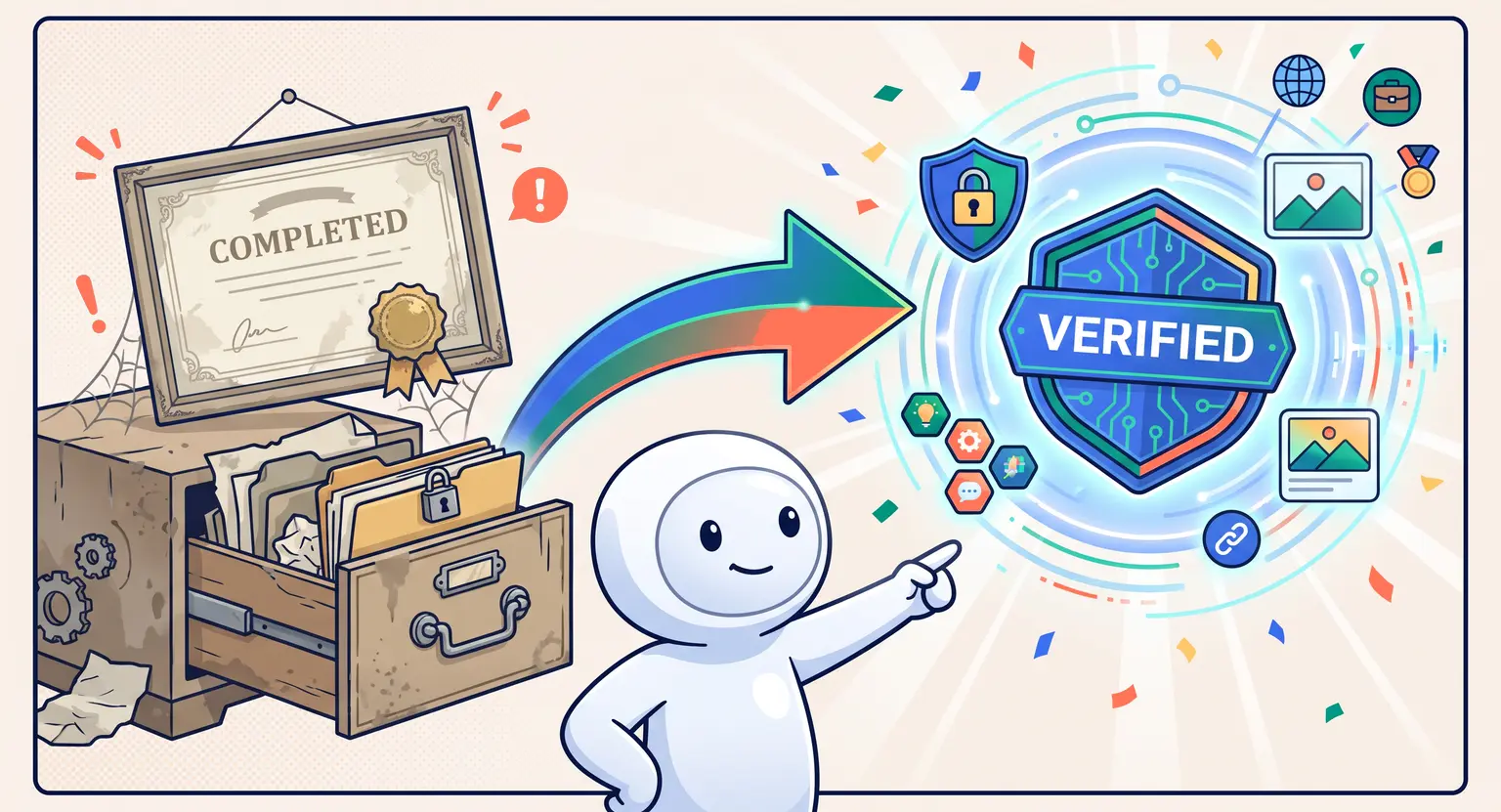
Certificates mark completion : traditional certificates simply confirm that a user reached the final lesson or passed an introductory test, often distributed as static PDF files.
-
Credentials prove competence : digital credentials carry cryptographic proof, granular skill tags, and dynamic verification hosted on decentralized ledgers or credential servers.
-
Fraud protection : PDFs are trivial to forge in graphic design software, whereas modern digital credentials rely on tamper-evident digital signatures.
-
Career mobility : human resources teams and automated ATS filters look for machine-readable micro-credentials rather than unverified certificate uploads.
-
Explore how our insights on credentials & professional education help modern academies transition toward industry-grade validation.
Every online educator reaches a pivotal moment where they want to reward students for finishing a program.
For years, the default answer was simple : design a handsome graphic in Canva, slap a gold ribbon image on it, write the student's name across the center, and email over a PDF. That was your certificate of completion.
Things look drastically different now. The e-learning landscape has evolved into a hyper-competitive market where students invest not just for leisure, but for measurable career advancement, promotions, and freelance credibility.
At the same time, employers have grown weary of unverified claims on resumes.
This brings us to a fundamental shift : the contrast between a simple online course certificate and a verified digital credential.
While people often throw these terms around interchangeably, they represent two completely different paradigms in instructional design, technical architecture, and real-world utility.
Let us unpack what sets them apart, why the distinction matters for your business, and how you can position your educational products for maximum authority.
What Is a Traditional Online Course Certificate?
A traditional online course certificate is essentially a digital receipt of participation or completion.
When a student marks every video as watched and submits the final assignment, the learning management system generates a visual document with their name, course title, date, and instructor signature.
Historically, these certificates served as a pleasant psychological pat on the back. They gave students something visual to print out, frame on a home office wall, or attach to a message when celebrating a milestone. In practical terms, however, traditional certificates are static artifacts.
They live as flat image files or standard PDF documents. Unless someone picks up the phone or emails the course creator directly to check student rosters, there is no built-in mechanism to confirm whether the document is genuine or modified.
Characteristics of Traditional Course Certificates
-
Delivered primarily as downloadable PDF, JPG, or PNG files.
-
Focused on attendance, participation, or basic course completion.
-
Zero real-time data verification or cryptographic backing.
-
Lacks structured skill metadata readable by recruitment databases.
-
Vulnerable to tampering and simple image manipulation.
These limitations explain why certificates rarely sway technical recruiters or hiring managers. They show enthusiasm and effort, but they rarely serve as standalone proof of demonstrated expertise.
What Is a Modern Digital Credential?
A digital credential is an interactive, cryptographically verified token of proven achievement.
Rather than functioning as a plain picture, a digital credential is a data-rich package that adheres to open web standards like 1EdTech Open Badges or W3C Verifiable Credentials.
When an organization issues a digital credential, the badge is permanently tied to a unique decentralized identifier or cryptographic hash. Anyone who clicks on the credential can instantly view its verification panel.
This panel displays the exact issuing authority, the date of issue, the rigorous assessment criteria required, and the specific competencies mastered by the learner.
If you want to understand how this differs from institutional oversight, look at our deep dive into online course accreditation vs certification to see where formal compliance intersects with skills verification.
Because the credential contains structured, machine-readable JSON-LD metadata, it integrates directly with talent search engines, applicant tracking software (ATS), and social networks without requiring manual phone calls or paper transcript reviews.
The Technical and Structural Anatomy of Digital Credentials
To grasp why credentials are revolutionizing professional learning, you have to look under the hood. A true digital credential contains layers of embedded information that a basic PDF certificate simply cannot accommodate.
Let us examine the foundational building blocks that make up a standardized credential :
-
The Assertion : the digital record declaring that a specific individual has earned the award, identified by a cryptographic signature or verifiable claim.
-
The Badge Class or Criteria Schema : a permanent URL describing the exact competencies tested, grading rubrics applied, and hours of hands-on coursework required.
-
Issuer Verification : cryptographic keys proving the badge originated from an authenticated domain, eliminating identity spoofing.
-
Evidence Links : optional but powerful links directly to the student's capstone project, GitHub repository, design portfolio, or interactive code sandbox.
-
Alignment Frameworks : direct tagging to recognized industry skill frameworks like ESCO, O*NET, or national educational taxonomy databases.
When a hiring manager clicks a candidate's digital badge on LinkedIn, they do not just see a graphic. They can inspect the actual project criteria that the learner had to complete to pass the course.
Comparing Certificates and Digital Credentials Head-to-Head
Choosing between these two approaches depends on your target audience, learning outcomes, and technical stack.
The following comprehensive comparison highlights how both models stack up across critical operational vectors.
| Feature / attribute | Traditional online certificate | Verified digital credential |
|---|---|---|
|
File format & delivery |
Static PDF, PNG, or printed paper export. |
Standardized JSON-LD metadata, Open Badges 3.0, W3C cryptograms. |
|
Verification mechanism |
Manual. Requires contacting the instructor or reviewing internal logs. |
One-click real-time cryptographic validation via public key or blockchain ledger. |
|
Fraud resistance |
Low. Easily modified in PDF editors or visual graphic suites. |
High. Tamper-evident; altering any byte invalidates the digital signature. |
|
Granular skill metadata |
None. Usually displays only course name, student name, and date. |
Detailed. Contains explicit competency tags, skill levels, and assessment rubrics. |
|
Portability & wallets |
Stored in local folders, cloud drives, or email attachments. |
Portable across digital credential wallets, profile badges, and HR systems. |
|
Assessment rigor |
Frequently granted solely for 100% video playback completion. |
Tied to measurable assessments, projects, and proctored testing. Learn how to configure these with our guide on how to create quizzes for online courses. |
|
Industry employer trust |
Moderate to low for professional placement. |
High. Widely recognized by corporate talent development and tech recruiters. |
Why the Transition to Digital Credentials Matters in 2026
The online education space is no longer in its infancy. In the early days of MOOCs, finishing a course was novel in itself, but today, the sheer volume of self-published material means employers need reliable filters to identify authentic talent.
Here are the key reasons why forward-thinking educators and training companies are replacing static PDFs with micro-credentials :
1. Combatting Resume Inflation and Document Fraud
Because anyone with basic software skills can modify a PDF certificate, hiring managers have grown skeptical of generic course claims...
Digital credentials eliminate this friction by providing instant verification.
A single click confirms the authentic identity of the graduate and proves the issuing organization is legitimate.
2. Empowering the Skills-First Economy
Modern enterprises are moving away from rigid degree requirements in favor of skills-based hiring.
Recruiters want to know specifically what tools, programming languages, methodologies, or project frameworks an applicant has mastered.
Digital credentials package this information into indexed metadata that applicant tracking systems can automatically parse.
3. Boosting Course Completion Rates and Organic Viral Reach
When students earn a verifiable badge, they are significantly more likely to share it across their professional networks.
Unlike a static image that gets saved to a desktop, an interactive badge that links to LinkedIn or an online portfolio drives curiosity.
Every shared badge turns your graduate into an organic brand ambassador, bringing qualified leads back to your course landing page.
When Should You Use a Certificate vs. a Digital Credential?
Does this mean simple certificates are completely obsolete? Not necessarily.
Both tools have their place, provided you match the format to your instructional goals and student expectations.
Use a traditional online course certificate if :
-
Your content is lifestyle, hobby, or personal enrichment focused (e.g., watercolor painting, home gardening, meditation).
-
Students participate purely for self-improvement and do not plan to present completion proof to an employer or client.
-
You run a free lead-generation course where administrative overhead must remain minimal.
-
The curriculum involves no strict testing, graded projects, or identity validation.
Use a verifiable digital credential if :
-
You teach professional skills such as programming, digital marketing, project management, or data analytics.
-
Your students expect to use the course on their CVs or LinkedIn profiles to land clients, job offers, or salary bumps.
-
You assess student work through rigorous milestone projects, practical coding tests, or proctored exams.
-
You want to build a long-term enterprise training academy with recognized industry partnerships.
If you are planning a high-ticket program, reviewing our resource on online course pricing strategy will show you how pairing verifiable credentials with practical curriculum helps justify higher enrollment fees.
How to Implement Digital Credentials in Your Online Academy
Adopting digital credentials does not require an enterprise engineering team. Today's modern learning infrastructure allows independent creators and training organizations to issue badges smoothly upon course completion.
To implement this successfully, start by defining explicit learning milestones.
Break your course into distinct competencies rather than treating it as a continuous monolithic video stream. Align each module with practical assignments so that every badge issued represents genuine hands-on execution.
Next, connect your learning management platform with a recognized badge engine or credentialing provider.
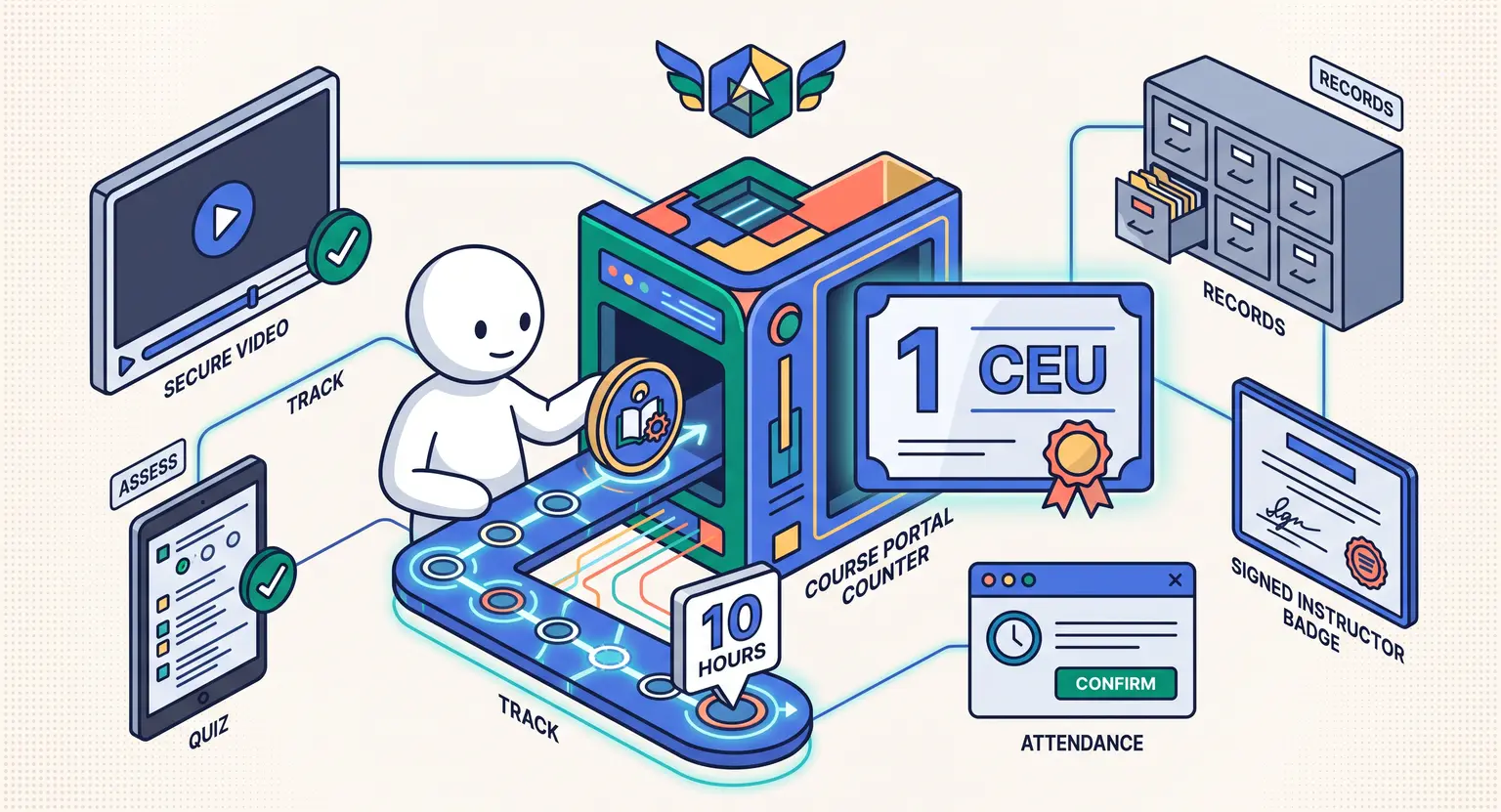
Ensure that your system triggers badge delivery automatically once a student fulfills all passing thresholds - This keeps administrative friction at zero while delivering immediate gratification to your graduates.
If you are evaluating software solutions to host your curriculum, assess students, and automate certification workflows, you can utilize an all-in-one platform to sell online courses that handles both content delivery and student management seamlessly.
Frequently Asked Questions
Can an online course certificate be converted into a verifiable digital credential?
Yes. If an educator captures course assessment records, criteria, and learner identity data, they can issue modern Open Badges or W3C verifiable credentials by wrapping the original learning outcomes into standardized JSON-LD metadata.
Why are employers skeptical of standard PDF course certificates?
Standard PDFs can be easily edited using basic graphic design tools.
Without real-time cryptographic verification or embedded proof of work, employers cannot quickly verify if the learner actually completed the coursework or simply typed their name onto a downloaded template.
Do small creators need digital credentials, or are standard certificates enough?
For casual hobby courses, simple completion certificates work fine, but if you teach career skills, technical workflows, or professional development, offering verifiable digital credentials dramatically raises course perceived value and justifies premium pricing.
How do digital credentials integrate with professional networks like LinkedIn?
Digital credentials connect directly with LinkedIn Licenses & Certifications via 1-click publishing.
They display dynamic issuer validation, issued dates, and clickable skill metadata instead of static unlinked text.




 How to Create a Course Refund Policy (Templates & Best Practices for 2026)
 How to Run a Beta Version of an Online Course (2026 Guide)
 How to Create a Cohort-Based Online Course (2026 Guide)
 How to Sell an Online Course With a Quiz Funnel (2026 Guide)
 How to Sell an Online Course Through a Sales Call (2026 Guide)